Iran

Examining the Sanity of Saner Climes

By Amir Abdulazeez

Several decades into the global modern era, Africans, Asians and Latin Americans continue to be held hostage by their colonially indoctrinated inferior mindsets engineered by the blackmail and mythology of Western moral supremacy. This error is not in observing Western virtues, many of which are real. The error is in the uncritical veneration that renders their vices invisible and their judgements unchallengeable. It is evident from the events of the last three decades alone that the so-called saner climes of Europe and North America are the primary architects of global chaos and instability of nations, all in the name of injecting sanity into ‘less sane’ societies.

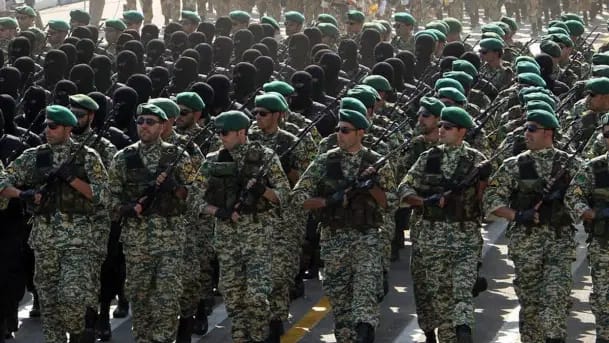
The ongoing US-Israel war on Iran, launched in the midst of Ramadan, is a typical doctrine of the saner climes, exhibited in its most naked form. Iran’s Foreign Minister had said three days before the war was declared that a nuclear agreement was ‘within reach’ after a third round of indirect talks in Geneva. 

The IAEA itself confirmed there was no evidence of a structured Iranian nuclear weapons programme at the time of the attack. Yet, the surprise assault assassinated Supreme Leader Ali Khamenei, killed his family members and damaged schools, hospitals and even UNESCO-recognised cultural heritage sites. This is a typical catalogue of barbaric war crimes for which the West has condemned others across generations. 

The Donald Trump administration, whose seemingly rude, dishonest and arrogant officials, has offered a menu of rationalisations and a handful of conflicting justifications for the war. However, when Amnesty International confirmed that the United States was responsible for a strike that killed at least 160 primary school girls, the US officials chose arrogance through denials instead of remorse. 

In fact, the Head of the Federal Communications Commission simultaneously intimidated his own press, threatening the withdrawal of broadcast licenses of American news outlets whose war coverage he deemed unfavourable. Another trademark saner-climes mythology, muzzled in a way only a few non-saner climes can imagine. 

Meanwhile, in all these, it is the ‘lunatic’ Iran that is supposed to apologise and do nothing while it is attacked. The Iranian Regime, branded as autocratic on the premise that it compels women to cover their hair in public, is being lectured by leaders of societies whose women go out naked in the name of civilisation and whose governments topple, kill and abduct Heads of state of other countries for recklessly greedy reasons. 

Now imagine if the erratically behaving Donald Trump were the leader of any African Country, the West would have since declared him incoherent and unstable to deal with or labelled his citizens stupid for voting for him. Worse still, imagine if the Epstein scandal happened in Asia or Latin America. All these contradictions reveal with crystal clarity that Western principles are instruments of convenience. 

To understand the foundations of all these, let us revisit some history. Britain’s Industrial Revolution was fertilised by the profits of the transatlantic slave trade and the systematic plunder of India, a country whose share of global GDP fell from about 25% at the onset of colonial rule to barely 4% at independence. 

France financed much of its republican grandeur on the forced labour of West Africa and the Caribbean. Belgium’s King Leopold II transformed the Congo into a private abattoir, severing the hands of Africans who failed to meet rubber quotas, leaving behind a traumatised country that still bleeds today. 

To speak of the sanity of those climes without acknowledging that they were partly built from organised insanity inflicted elsewhere is to ignore the background to what we are witnessing today.

In the last fifty years alone, the so-called saner climes have unleashed a level of violence and destabilisation that would shame any regime they have ever deemed fit to condemn. The United States, the self-acclaimed sentinel of the free world, has engineered irrational regime changes in Chile (1973), Iran (1953 and subsequently), Guatemala (1954), Nicaragua, Panama, Libya, Iraq, Afghanistan and Syria, among others. The 1973 CIA-backed coup against a democratically elected socialist president of Chile, Salvador Allende, installed Augusto Pinochet, under whose reign thousands were tortured, disappeared, or executed. Henry Kissinger, the American architect of that atrocity, received the Nobel Peace Prize from his fellow saner clime comrades. 

The French Government, through its notorious Françafrique policy, maintained a neocolonial empire across West and Central Africa long after the 1960s, propping up murderous dictators and conducting military interventions to protect economic interests, with a consistency that made a mockery of every democratic principle France professed to uphold.

The invasion of Iraq in 2003 by Western Governments is perhaps the most consequential act of manufactured catastrophe of the modern era. The war resulted in the deaths of an estimated 200,000 to one million Iraqi civilians, the obliteration of the country’s infrastructure, the rise of ISIS from the ashes of a disbanded Iraqi army and the triggering of a refugee crisis that continues to destabilise the Middle East. No one was held accountable. George W. Bush and Tony Blair are living happy lives in their saner countries. The International Criminal Court, which has indicted multiple African heads of state on much lesser crimes with considerable alacrity, found no jurisdiction to examine any of them. Meanwhile, the people of Iraq, Syria and Libya who were dismantled in the name of liberation still live in the ruins and pains of what the saner climes call democracy.

While the West was busy bombing the Middle East, Africa, the so-called backward continent, was largely attending to its own affairs of conflict resolution with a remarkable degree of maturity. The African Union mediated crises in Burundi, the Gambia and Lesotho without firing a single bullet. ECOWAS brokered peace agreements in Sierra Leone and Liberia and deployed peacekeeping forces with genuine multilateral mandates, without the casual trigger-happiness of Western powers. 

Western attitude towards violence is shamelessly selective. When Russia invaded Ukraine in 2022, the Saner Clime’s response was swift, comprehensive and morally unambiguous: sanctions, weapons, diplomatic isolation and a media chorus of civilizational solidarity. This response was appropriate anyway. But the problem is its stark contrast with the Western posture toward other invasions. When Saudi Arabia launched its war on Yemen in 2015, the United States and the United Kingdom did not merely decline to intervene; they allegedly supplied the bombs, refuelled the warplanes and provided intelligence for strikes that killed thousands of Yemeni civilians and engineered one of the worst humanitarian crises on earth. 

Many argue that the actions of Western governments do not accurately reflect what their citizens stand for. This is debatable, especially when one examines certain incidents. During the Obama presidency, Edward Snowden revealed that the US National Security Agency was conducting mass, warrantless surveillance of American citizens and foreign governments, including the personal telephone of former German Chancellor Angela Merkel, in flagrant violation of constitutional protections and international diplomatic norms. The response was not accountability but exile for Snowden and a classification of his revelations as treason. 

The United States has the largest prison population on earth, both in absolute numbers and per capita, administered under a system in which Black Americans are incarcerated at five times the rate of their white counterparts, in conditions that the United Nations has described as cruel. Since 1968, gun violence has claimed more American lives than all of America’s foreign wars combined. One might be inclined to believe that these controversies are ones ordinary Western citizens may not approve of.

Climate change is another damning indictment of Western moral authority in the twenty-first century. The Industrial activities enriching Europe and North America still depend on burning carbon at a scale the planet has never experienced. The United States, historically the world’s largest cumulative emitter of greenhouse gases, withdrew from the Paris Climate Agreement under Donald Trump. 

Australia, another clime reputed to be considerably saner than most, has built its prosperity on coal exports and resisted meaningful emissions reduction. Some Pacific Island nations face sea submersions within this century as a consequence of decisions made in saner capitals. When these nations’ leaders speak at the United Nations with tears in their voices, the saner climes offer symbolic but empty sympathy before later returning to preserving their industrial prerogatives. 

The Western Media’s tactical twisting of narratives regarding other climes is another issue. For example, CNN may not run primetime documentaries on the Swiss banking system’s complicity in laundering the proceeds of African kleptocracy, but will rather concentrate on the primary kleptocrats. The BBC does not lead with investigations into the role of British arms dealers in sustaining African conflicts. The New York Times does not dedicate its front page to the tax avoidance schemes through which Western corporations drain billions of dollars annually from African economies (more than the continent receives in foreign aid).

In addition to all this, there is something more worrisome. The bulk of support received by these saner climes comes from their victims in the third world. In Nigeria, for instance, the blind sympathy for religious affiliations drives people to support the brazen oppression and cruel injustices perpetrated by the West. Our solidarity should be among ourselves, not with those who see and treat us as worthless humans and more like animals because of their superior moral hypocrisy. 

Additionally, our bootlicking governments, which are considered close to valueless in the International arena or even insane just like us, must stop intimidating their own citizens who decide to speak up against Western double standards. Let’s remember, the phrase “saner climes” is a moral verdict and a devastating condemnation of everywhere else except Europe and North America. Africans and all peoples of the marginalised world are owed the intellectual inheritance of critical discernment.

The world does not need more or fewer saner climes; it needs a more honest accounting of what sanity actually requires. It requires consistency: the same rules applied to the powerful and the powerless alike. It requires humility: the acknowledgement that no civilisation holds a monopoly on wisdom. 

And it requires accountability: not the selective justice of indicting the weak and glorifying the mighty, but the universal application of standards that do not bend before a Security Council veto or the impulse of a self-serving superpower. Until that accounting arrives, the presumption of Western moral authority deserves not deference, but fearless interrogation; the kind that the so-called saner climes have always claimed to celebrate and so rarely been prepared to receive.

Switzerland Suspends Arms Exports To US Over Iran War

Switzerland has halted the approval of licences for weapons exports to the United States due to the ongoing conflict involving Iran, citing its policy of neutrality.

The Swiss government announced the decision on Friday. It said the measure would remain in place for the duration of the war.

“The export of war materiel to countries involved ⁠in the international armed conflict with Iran cannot be authorised for the duration of the conflict,” the government said.

“Exports of war materiel to the USA ‌cannot currently be authorised,” it added.

The development comes as the US-Israel war on Iran approaches its third week. The conflict has worsened the humanitarian situation across the Middle East and pushed global energy prices higher.

Swiss authorities have also shut their airspace to US military flights connected to the war. Last weekend, officials rejected two requests from the US for overflight linked to Iran operations, although three others were approved.

Switzerland’s neutrality law guides decisions on arms transfers. A federal act adopted in 1996 requires export licences for military equipment. The law is based on respect for human rights and the country’s neutral stance.

Since the war began on February 28, Switzerland said it has not issued any new export licences to the United States.

The government noted that it has not granted definitive licences for arms exports to Israel for several years. The same position applies to Iran.

Existing licences issued to the US will now undergo periodic review by a panel of experts. The group will assess whether further action is needed under neutrality rules.

Officials also confirmed that exports of dual-use goods and certain military items will face regular checks.

“A restrictive approach is already in place with regard to Israel,” the government said.

Data from Swiss authorities show that the United States was the second-largest buyer of Swiss arms last year. The total value of exports stood at $119 million.

Switzerland has taken similar steps in the past. It blocked the transfer of Swiss-made weapons to Ukraine after Russia’s invasion in 2022. It also imposed restrictions on flights and arms exports during the US-led Iraq war in 2003, although those measures were later lifted.

Switzerland Suspends Arms Exports To US Over Iran War

Switzerland has halted the approval of licences for weapons exports to the United States due to the ongoing conflict involving Iran, citing its policy of neutrality.

The Swiss government announced the decision on Friday. It said the measure would remain in place for the duration of the war.

“The export of war materiel to countries involved ⁠in the international armed conflict with Iran cannot be authorised for the duration of the conflict,” the government said.

“Exports of war materiel to the USA ‌cannot currently be authorised,” it added.

The development comes as the US-Israel war on Iran approaches its third week. The conflict has worsened the humanitarian situation across the Middle East and pushed global energy prices higher.

Swiss authorities have also shut their airspace to US military flights connected to the war. Last weekend, officials rejected two requests from the US for overflight linked to Iran operations, although three others were approved.

Switzerland’s neutrality law guides decisions on arms transfers. A federal act adopted in 1996 requires export licences for military equipment. The law is based on respect for human rights and the country’s neutral stance.

Since the war began on February 28, Switzerland said it has not issued any new export licences to the United States.

The government noted that it has not granted definitive licences for arms exports to Israel for several years. The same position applies to Iran.

Existing licences issued to the US will now undergo periodic review by a panel of experts. The group will assess whether further action is needed under neutrality rules.

Officials also confirmed that exports of dual-use goods and certain military items will face regular checks.

“A restrictive approach is already in place with regard to Israel,” the government said.

Data from Swiss authorities show that the United States was the second-largest buyer of Swiss arms last year. The total value of exports stood at $119 million.

Switzerland has taken similar steps in the past. It blocked the transfer of Swiss-made weapons to Ukraine after Russia’s invasion in 2022. It also imposed restrictions on flights and arms exports during the US-led Iraq war in 2003, although those measures were later lifted.

Iran Declares Global Threat, Says Parks, Tourist Sites Unsafe For US, Israeli Officials

By Sabiu Abdullahi

Iran has issued a strong warning to officials of the United States and Israel, stating that they are no longer safe anywhere in the world after recent attacks linked to both countries.

The warning came from a senior Iranian military spokesperson, Abolfazl Shekarchi, who said the risks faced by their adversaries may extend beyond traditional battle zones.

In a statement aired on Iranian state television, Shekarchi said, “From now on, based on the information we have about you, even parks, recreational areas and tourist destinations anywhere in the world will no longer be safe for you.”

The statement signals a sharp rise in tensions, as Tehran suggests it could widen the scope of its response to what it views as hostile actions.

The development follows a series of reported strikes connected to the United States and Israel. Iranian authorities have since pledged a firm response, which has added to fears of further escalation.

Observers say the latest remarks reflect growing concern over a possible expansion of the conflict, as threats continue to intensify between the sides.

The situation has also been fueled by reports of Israeli operations that led to the killing of senior Iranian officials, which has further deepened hostilities.

Meanwhile, the crisis appears to be drawing in more regional actors. The leader of Yemen’s Houthi Movement, Abdul-Malik al-Houthi, has announced support for Iran in the ongoing confrontation with the United States and Israel.

In a televised address monitored on Friday, Al-Houthi accused Washington of supporting Israel’s military actions in the region. He warned that any US involvement against Iran would be seen as a direct threat to Yemen and the broader “Islamic nation.

“Because he considers it the biggest obstacle in the way of accomplishing his plan,” Al-Houthi said.

He added, “Therefore, any attack or US aggression supporting the Israeli enemy against Iran within the framework of the goal itself, is a throw to empower the Israeli enemy from controlling the entire region. And this is what cannot be silenced.”

The comments mark a notable escalation from the Iran-aligned group, which has previously targeted shipping routes in the Red Sea and launched attacks linked to Israeli interests. Analysts warn that the growing rhetoric and alliances could push the region closer to a wider conflict.

Drones Reportedly Spotted Over U.S. Military Base Housing Top Officials In Washington

By Sabiu Abdullahi

Fresh security concerns have surfaced in Washington after unidentified drones were seen flying over a sensitive United States military installation.

The Washington Post reported that the drones were detected above Fort McNair, a facility where Secretary of State Marco Rubio and Pentagon chief Pete Hegseth are accommodated. The report cited three individuals who were briefed on the development.

Officials have not determined where the drones came ⁠from, the report said, citing two of the people familiar with the matter, leaving questions over their origin unanswered.

The situation has led to internal discussions within government circles about whether Rubio and Hegseth should be relocated from the base due to safety worries. Despite those concerns, both officials are still at the facility. A senior administration official confirmed this, according to the report.

The newspaper also noted that the U.S. military has increased its surveillance of potential threats. This comes amid heightened alert levels linked to the ongoing conflict involving the United States and Israel against Iran.

Reuters reported it could not independently verify the development at the time.

Meanwhile, both the Pentagon and the U.S. State Department have not issued official statements on the matter. When approached by the Washington Post, Chief Pentagon spokesperson Sean Parnell declined to provide details.

“The department cannot comment on the secretary’s (Hegseth’s) movements for security ⁠reasons, and reporting on such movements is grossly irresponsible,” he told the Post.

US Intel Chief Says Iran Posed No Nuclear Threat At Time Of Strikes

By Sabiu Abdullahi

The United States Director of National Intelligence, Tulsi Gabbard, has stated that Iran did not present an active nuclear threat at the time American forces carried out strikes on the country.

Her position challenges a key reason advanced by former President Donald Trump for the military action. Mr Trump had cited what he described as an imminent danger from Iran.

In written testimony submitted to the Senate intelligence committee, Ms Gabbard said Iran had not taken steps to rebuild its nuclear programme after it was damaged in a joint US-Israeli operation in June 2025.

“As a result of Operation Midnight Hammer, Iran’s nuclear enrichment program was obliterated. There have been no efforts since then to try to rebuild their enrichment capability,” Ms Gabbard said in the testimony to the Senate intelligence committee.

However, she did not include this conclusion in her oral presentation to lawmakers. When questioned by a Democratic senator, she explained that time constraints prevented her from presenting the full contents of her written submission. She did not dispute the findings.

Mr Trump has repeatedly defended the strikes, insisting they were necessary due to an “imminent threat” from Iran. After the operation in June 2025, he said US forces had “obliterated” Iranian nuclear facilities. He later claimed the country was only weeks away from producing a nuclear weapon.

Many analysts have disagreed with that assessment. Their views also contrast with ongoing diplomatic efforts aimed at restoring a nuclear agreement with Tehran.

During her remarks to senators, Ms Gabbard acknowledged that recent attacks had significantly weakened Iran. She referenced major developments, including the killing of former supreme leader Ali Khamenei. Despite this, she maintained that the country’s government structures were still functioning.

Earlier in her political career as a congresswoman, Ms Gabbard had opposed military action against Iran.

Meanwhile, Joe Kent, a senior aide to Ms Gabbard, resigned earlier this week. He argued there was no “imminent threat” from Iran. Mr Kent, who previously served as a counterterrorism director, alleged that he and other officials were not given the opportunity to present their concerns to Mr Trump.

Mr Trump dismissed the criticism. He said he had always considered Mr Kent “weak on security” and added that individuals who did not see Iran as a threat had no place in his administration.

Reports on Thursday indicated that the FBI has opened an investigation into Mr Kent over claims that he disclosed classified information.

In an interview with commentator Tucker Carlson, Mr Kent said key officials were excluded from the decision-making process that led to the strikes.

“A good deal of key decision makers were not allowed to come and express their opinion to the president,” he told Mr Carlson.

“There wasn’t a robust debate,” he said in the interview.

He also supported Ms Gabbard’s earlier assessment on Iran’s nuclear capability.

“No. They weren’t three weeks ago when this started, and they weren’t in June either,” he said, referring to claims that Iran was close to building nuclear weapons.

Mr Kent further alleged that Israeli Prime Minister Benjamin Netanyahu and other officials lobbied Mr Trump directly, often relying on information that had not been verified by US intelligence.

“When we would hear what they were saying, it didn’t reflect intelligence channels,” Mr Kent said.

He also recounted a conversation with conservative activist Charlie Kirk before his death, stating: “He looked me in the eye and said, ‘Joe, stop us from getting into a war with Iran’.”

Mr Kent went on to suggest, without providing evidence, that Israel may have been involved in Mr Kirk’s death. His remarks, along with claims about an “Israeli lobby” influencing US policy, have attracted criticism from several groups who described the statements as anti-Semitic.

Trump Denies U.S. Involvement In Israeli Strike On Iran’s South Pars Gas Field

By Sabiu Abdullahi

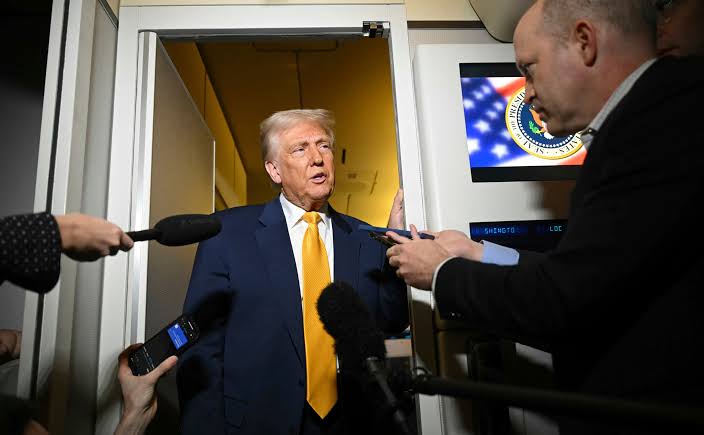
U.S. President Donald J. Trump has firmly denied any American participation in the recent Israeli attack on Iran’s South Pars gas field, the country’s largest gas facility. He also warned that Israel will not conduct further strikes on the site.

In a post on his Truth Social page, Trump said, “Israel, out of anger for what has taken place in the Middle East, has violently lashed out at a major facility known as South Pars Gas Field in Iran,” adding that “a relatively small section of the whole has been hit.”

He emphasized that “the United States knew nothing about this particular attack,” and made clear that “the country of Qatar was in no way, shape, or form, involved with it, nor did it have any idea that it was going to happen.”

Trump accused Iran of responding without full understanding of the situation, stating that Tehran “unjustifiably and unfairly attacked a portion of Qatar’s LNG Gas facility.”

The president further stated, “NO MORE ATTACKS WILL BE MADE BY ISRAEL pertaining to this extremely important and valuable South Pars Field,” unless Iran escalates tensions. He also warned that any future strikes on Qatar’s gas infrastructure could trigger a powerful response from the United States.

“If Qatar’s LNG facilities are hit again,” Trump said, “the United States of America, with or without the help or consent of Israel, will massively blow up the entirety of the South Pars Gas Field at an amount of strength and power that Iran has never seen or witnessed before.”

While highlighting the gravity of such action, he added, “I do not want to authorize this level of violence and destruction because of the long term implications that it will have on the future of Iran, but if Qatar’s LNG is again attacked, I will not hesitate to do so.”

South Pars represents the Iranian portion of the world’s largest natural gas deposit. Iran shares the resource with Qatar, a close U.S. ally that hosts America’s largest military base in the Gulf.

The ongoing conflict has seen Tehran target not only Israel but also U.S. diplomatic and military facilities in the Gulf, while warning neighboring countries against hosting attacks on Iran.

Earlier reports from SaharaReporters indicated that Qatar’s main gas production hub, Ras Laffan Industrial City, was struck by a missile fired from Iran. The attack caused extensive damage and prompted immediate emergency operations.

QatarEnergy confirmed in a statement, “that Ras Laffan Industrial City on Wedy was subject of missile attacks.” The company added, “emergency response teams were deployed immediately to contain the resulting fires, as extensive damage has been caused,” noting that “all personnel have been accounted for and no casualties have been reported at this time.” QatarEnergy also assured that it “will continue to communicate the latest available information.”

The Qatari Ministry of Defense said, “the State of Qatar was subjected today, Wednesday, to an attack involving (5) ballistic missiles launched from the Islamic Republic of Iran.” The ministry explained that “Our Armed Forces, by the grace of God, successfully intercepted (4) of the ballistic missiles, while one missile fell in Ras Laffan Industrial City, causing a fire.”

Trump Faults Israel Over Iran Gas Field Strike, Issues Warning After Retaliation

United States President Donald Trump has criticised Israel’s recent strike on Iran’s South Pars gas field, as tensions escalate across the Middle East with retaliatory attacks hitting key energy facilities in several countries.

In a message shared by the White House on X early Thursday, Mr Trump stated that the United States had no involvement in the Israeli operation. He said, “Israel, out of anger for what has taken place in the Middle East has violently lashed out at a major facility known as South Pars Gas Field in Iran.”

He added that further attacks on the facility would not occur under certain conditions. According to him, “NO MORE ATTACKS WILL BE MADE BY ISRAEL pertaining to this extremely important and valuable South Pars Field…” unless Iran continues its strikes on Qatar.

The US president also condemned Iran’s response, which targeted gas infrastructure in Qatar. He warned that any additional assault on Qatar’s facilities would trigger severe consequences, including the destruction of “the entirety of the South Pars Gas Field.”

The developments follow reports that Iran launched missiles at the Ras Laffan Industrial City in Qatar. QatarEnergy confirmed that the strike caused fires and “extensive damage.” The company later disclosed that multiple liquefied natural gas facilities were hit, leading to “sizeable fires and extensive further damage.”

Authorities had evacuated the site earlier after Iran announced plans to strike several locations in the region. The move was described as retaliation for earlier attacks on the South Pars gas field, which Iran attributes to Israel and the United States. Washington has since denied any role in that incident.

Beyond Qatar, Iran extended its response to other parts of the region. Two refineries in Saudi Arabia were struck, while the Habshan gas facility in Abu Dhabi was also targeted. The United Arab Emirates subsequently shut down the affected facility.

There has been no official response from Iran regarding Mr Trump’s warning as of the time of filing this report.

Analysts say the latest attacks on critical energy infrastructure could deepen the global gas supply crisis. Prices of gas and other petroleum products have already climbed sharply since late February, when the United States and Israel launched strikes on Iran.

The ongoing conflict has claimed more than 1,500 lives, with most of the casualties reported in Iran.

US Intelligence Says Iran Not Rebuilding Nuclear Enrichment After 2025 Attack

By Sabiu Abdullahi

United States intelligence agencies have concluded that Iran has not resumed efforts to rebuild its nuclear enrichment programme following the destruction of key facilities in a joint US-Israeli strike in June 2025. The finding contrasts with President Donald Trump’s justification for his ongoing military campaign.

Director of National Intelligence Tulsi Gabbard disclosed the assessment in a written submission presented during an annual threat review before the Senate intelligence committee. However, she did not repeat the position while addressing lawmakers in person.

“As a result of Operation Midnight Hammer, Iran’s nuclear enrichment program was obliterated. There has been no efforts since then to try to rebuild their enrichment capability,” Gabbard said in the testimony to the Senate intelligence committee.

When questioned by a Democratic senator over the omission during the hearing, Gabbard explained that time constraints prevented her from reading the full statement. She did not dispute the conclusion.

President Trump has consistently defended the February 28 strike on Iran, which was carried out alongside Israel. He cited what he described as an “imminent threat.” After the 2025 bombing, Trump stated that Iran’s nuclear facilities had been completely destroyed. More recently, he has claimed that Tehran was close to producing a nuclear weapon. That position is not widely supported by analysts and comes amid ongoing negotiations over a possible nuclear agreement.

Meanwhile, a senior aide to Gabbard stepped down on Tuesday. The official said there was no “imminent threat” and argued that Trump had been misinformed by both Israel and sections of the media.

In her remarks to senators, Gabbard noted that Iran had suffered significant damage in recent weeks of attacks. The strikes included the killing of longtime supreme leader Ayatollah Ali Khamenei. Despite this, she said the country’s governing system remains in place.

The US intelligence community “assesses the regime in Iran to be intact but largely degraded due to attacks on its leadership and military capabilities,” Gabbard said.

She added that if the current leadership remains, it may attempt to rebuild over time.

“If a hostile regime survives, it will likely seek to begin a years-long effort to rebuild its military, missiles, and UAV forces,” Gabbard said.

Iran Confirms Death Of Top Security Official Ali Larijani In Alleged Israeli Strike

Iranian state media has announced the death of Ali Larijani, the Secretary of Iran’s Supreme National Security Council, following reported Israeli air attacks carried out overnight.

The confirmation came after Israel’s Defence Minister, Israel Katz, stated that Larijani and Basij commander Gholamreza Soleimani were killed during the strikes.

In a statement issued by his office, Katz alleged that both men lost their lives in the operation.

“I have just been updated by the Chief of Staff that Larijani, Secretary of the Supreme National Security Council, and the head of the Basij — Iran’s central repression apparatus — (Soleimani), were eliminated last night,” Katz claimed in a statement released by his ministry.

Earlier reports from Israeli media indicated that Larijani was the intended target of the overnight assault.

The development marks a significant escalation in tensions between Iran and Israel, as both sides continue to exchange accusations over ongoing military actions.