Inflation

NLC to embark on nationwide strike over fuel subsidy removal

By Uzair Adam Imam

The Nigeria Labour Congress (NLC) has reportedly threatened to embark on a nationwide strike next month over the bitting economic hardship caused by the fuel subsidy removal in the country.

The Congress Spokesperson, Ben Upah, made this disclosure on Wednesday, adding that the they give seven days to the federal government go address the demand.

The Daily Reality recalls that President Bola Tinubu had, during his inauguration on 29 May, announced the removal of fuel subsidy.

The action had suddenly pushed up the price of the product, making life more difficult for the poor.According to Upah, the congress gave a nationwide strike notice beginning on 2 August to protest the removal of fuel subsidy by the federal government.

“Yes, the nationwide strike will commence on 2 August 2023. We will soon issue a communique to that effect,” Upah said.

This is coming a few hours after the National Association of Resident Doctors (NARD) began an indefinite strike in the country.

The doctors are demanding the implementation of a one-for-one replacement policy for healthcare workers, immediate payment of all salary arrears, implementation of a Consolidated Medical Salary Structure, and a new hazard allowance, among others.

University don questions Nigerian governors for donating millions to pilgrims

By Muhammadu Sabiu

A German-based Nigerian lecturer at the University of Cologne, Germany, Dr Muhsin Ibrahim, has taken to his social media handles to question some Nigerian governors for donating a huge amount of money to Nigerian pilgrims in Makkah, Saudi Arabia.

The Daily Reality understands that some of the governors who made the donations include Abba Kabir Yusuf of Kano State, Dikko Radda of Katsina State and Bala Abdulkadir Mohammed of Bauchi State.

According to reports, Governor Kabir gave 6,166 Kano pilgrims N65 million; Governor Radda gifted N278 million to Katsina pilgrims, while Governor Bala gave over 300 pilgrims 300 Saudi riyals each.

Questioning the governors’ actions, the lecturer asked what the essence of this is, looking at Nigerians’ critical situation.

His words, in Hausa, and translated into English: “For God’s sake, what is the essence of donating millions of naira to pilgrims by some governors?

“Giving out is good, but is this gift a “priority”, especially at this critical moment people are in? Hmm.”

Nigerians are in a critical situation characterised by the inflation of almost every consumable product nationwide.

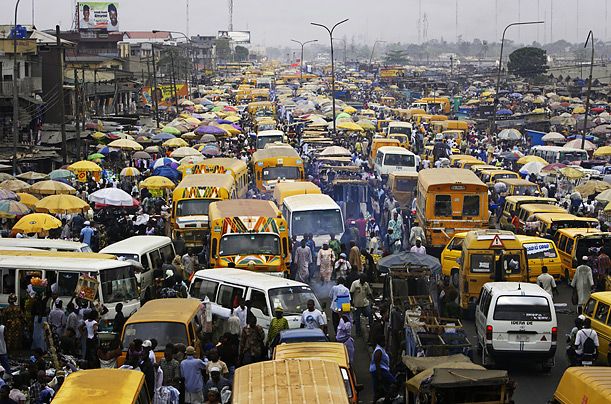
Recall that an announcement of fuel subsidy removal by President Bola Tinubu during his inauguration triggered an increase in the prices of petrol by over 100%, leading to a significant increase in transportation fares and the prices of commodities.

Reflections on inflation and our ineffective population

By Nusaiba Ibrahim Na’abba

The ongoing unexpected outrageous hike in prices of goods and services stringed by inflation is not all new to our survival in Nigeria as we’ve learnt the hard way to navigate through hurdles and thorns to manage our lives. Simply put, things are at the moment not falling apart but in their right places – exactly where we want them to be. And by extension, we are reaping the seeds our predecessors sowed.

Contextualizing the global outrage on inflation unveils how our population crises are highly influential to the inflation catastrophe we are recently experiencing in Nigeria. Conversations around our incapacitated population have always been cumbersome. People keep reproducing to demonstrate their selfish reasons and associating them with religion, even when they’re fully aware of their inability to cater for their needs – a lifetime debate. Due to cultural and religious reasons, overpopulation is always quite a sensitive issue. Religious gatherings, cultural discussions and even governmental activities deliberately skip them to avoid chaotic scenes.

For reasons best known to the Nigerian government, the census that was supposed to take place a year after President Buhari assumed office in 2016 was unfortunately not prioritized in the list of essential development activities. There wasn’t even a convincing explanation for why it did not occur. I buy that the President was out of office as he severely fought to regain sound health. Still, his deputy, Prof. Yemi Osibanjo, was acting President until he recovered. He also didn’t give it the much significance it deserves. The worth of a National Census isn’t that shabby to escape their radar, as it assumes an unchallenged role in catalyzing the development of every society and nation-building.

Well, as it stands, many international sources now place the Nigerian population to have surpassed 200 million. But, referring to our precedents, the past administrations were unwilling to manage rapid population increase by corroborating it with needed economic, financial and health opportunities, among others. Instead, they were more or less obsessed with starting gigantic projects to leave them halfway done when leaving offices. Regrettably, from budgets, policies and programs among myriad activities, the population is often not carefully factored in.

At this point, explaining the statistical representations of our ailing population is almost unnecessary, especially since we are gradually failing to comprehend the magnitude of our plight in statistical terms. Presently, there exists a colossal number of youths that are desperately seeking jobs. Not only that, they are unemployed. Some are drug addicts, miscreants, and even kidnappers and whatnot. Their realm also includes people still hopeful for job opportunities, including a handful employed but in deep struggles, as they continue to shoulder countless responsibilities. This fraction is the largest among the demography of our country and, sadly, the most ineffective.

Then we have children, who contribute a fair share to the general population. A disturbing figure is that of out-of-school children due to their being part of the lower class and a lot who are quadrupling in number as insecurity is not slowing down in forcing them out of their communities. Visibly, most of them embrace street hawking and begging while others aimlessly litter the streets and little girls into forced labour. Picturing our population from a pie sketch, we also have the elderly, many of whom have delivered relentless service to the nation but have only been rewarded unkempt wretched feet as they search for their legitimate hard-earned pensions. And I don’t forget that we have People Living with Disabilities (PLWDs) who wallow in poverty. This is a fair elucidation of Nigeria’s population pie sketch.

Indeed, how inflation is ripping us apart in this country is an incredibly devastating experience. Development activities here have always journeyed long, and even more terrifying is that slow processes in everything aren’t much valued in today’s fast-paced world. As frightening as it appears, the race to the 2023 general elections is already painting a horrible scene for us. The primary elections recently concluded with alleged countless irregularities and corruption aren’t appealing. Hence, it becomes challenging to collate one’s thoughts regarding how life will likely be as we fight to forge ahead.

In a way, this current plight provokes the young minds who are already out of viable options to embark on deadly voyages to Europe. They risk their lives in search of a better life there. It is terrifying to know that the number of youths clamoring for these voyages includes graduates and those earning petty stipends and are well conscious of the dangers involved. However, they aren’t blameworthy for viewing their lives from angles of their responsibilities.

Many optimists, including myself, are hopeful about Nigeria’s transformation for the best. But, until alternative routes to utilizing our teeming population for efficient development are incurred, we’ll keep chasing the uncertain light at the end of the tunnel. Nigeria is behind schedule on capitalizing on effective strategies to breed an efficient population, opposing its self-anointed maxim of “no dey carry last”. We must reinvent this unfortunate wheel of inefficiency by adopting a knowledge-based economy model to harness the enormous potential of our massive population for the best.

Nusaiba Ibrahim Na’abba is a master’s student from the Department of Mass Communication, BUK. She is a freelance writer and researcher. She can be reached via nusaibaibrahim66@gmail.com.

Is this inflation a global problem?

By Salisu Yusuf

I was discussing with a friend who’s an auto broker and an arbitrage specialising in buying and selling goods from Benin Republic, Niger Republic and Nigeria. Our topic of discourse was the so-called global inflation put forward recently by the pro-government campaigners to defend our economic limbo.

From around 2000 to date, he argued cogently, the prices of goods and services were stable and fixed in Niger, Benin and Saudi Arabia – the economic reference points and benchmarks of our so-called economic analysts. They depend blindly on the economic malfeasance that befalls our country. The only change, he argued, is the exchange rate of our Naira to any foreign monetary denominator as our Naira plunges daily in value due mainly to our poor economic managers.

For example, around 2000, the tokunbo golf car was sold at 800,000 CFA Francs. Each 1000 CFA francs was exchanged then at ₦600. So, around that time, you could buy the car brand at around ₦768,000. Today, the same car is sold at the same 800,000 CFA francs. What only changes is the rate of exchange due to the Naira depreciation. Each 1000 CFA francs is exchanged at ₦960 instead of ₦600. So, the same car sold at ₦768,000 is now sold at ₦1.7m in the Benin Republic. 

Moreover, a bag of rice that could be purchased at 18,000 CFA francs, equivalent to ₦10, 800, for the CFA francs, was sold at a lower rate. Today, the same bag of rice is sold at the same price of 18 CFA francs as two years ago, but at a high price of around ₦22,080 because of the Naira devaluation.

Some people measure this so-called global inflation theory with the price of a meal in  Saudi Arabia. A friend once told me that a meal in a Saudi Arabian restaurant could cost you ₦5000, whereas ₦1000 could buy you a meal in Nigeria. I laughed at his low-level economic analysis. The ₦5000 Saudi meal is only realised if you exchange it for our depreciated Naira. If you calculate the number of Saudi Riyals exchanged for the ₦5000 is a low amount for a  person living in Saudi Arabia. In other words, the Saudi Riyal is only valuable if, and only if it’s changed to Naira! This is the same economic scenario I explained earlier in the CFA francs/naira ratio. 

The rate of exchange between Naira and Riyal, CFA Francs/ Naira, explains the economic limbo being faced by our country. This further illustrates the Federal Government’s resolve to increase the Hajj value-added tax from 5 per cent to 15 per cent. Moreover, it also hints at the government’s Hajj subsidy removal – hence, the exponential rise in 2022 Hajj fares to nearly ₦2.5m for the participating Nigerian pilgrims.

In the Niger Republic, prices of commodities are stable and fixed, as they do not fluctuate like in Nigeria. This is because President Bazoum manages the economy well; the government implements a protectionist economic policy, where Nigeriene goods are protected against their Nigerian counterparts through restrictions against export or putting high tariffs and handicaps placed through import quotas. Though many Nigerienes export petroleum in massive quantity from Nigeria, President Bazoum has restricted exporting of gas to Nigeria and restricts its consumption internally. Defaulters are taxed. Sometimes the products and their means of transportation are confiscated by gendarmes. 

Meanwhile, the high inflation rate has affected the price of our internal commodities. For instance, the gas imported from Niger is much cheaper than ours in Nigeria. Daily, hundreds of motorcycle riders import the Nigeriene gas on a large scale without paying any import tariff. Antithetically, Nigerian petroleum products are being exported into Niger without paying for excision to the Federal Government because of the border closure. 

Therefore, smugglers from, especially Niger, play their trump cards as they usually export our products freely, sell them in CFA francs at an exponential price in Niger, come back to our border and exchange the CFA into Naira, rebuy our commodities and go back to sell at a bargain price.

While we expect Mr President to cap up his swansong with a socio-economic legacy, we are daily disappointed that the man will finally end his tenure as a colossal failure, a disappointment to a poor talaka that stood blood, toil, tears and sweat to vote for this man.

Salisu Yusuf wrote from Katsina via salisuyusuf111@gmail.com.

Rising food prices in northern Nigeria

By Sumayyah Auwal Ishaq

Nigeria seems to be plunging into a new dimension of economic crisis as food inflation reached a new high in most of the northern region, hitherto considered the country’s food basket.

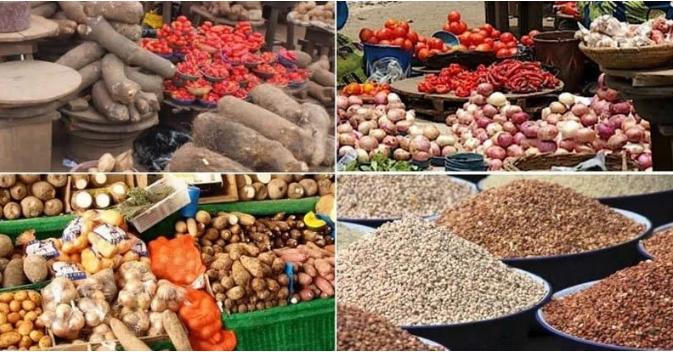
The prices of essential food items are rising astronomically, preventing many Nigerians from feeding adequately. The rising cost affects domestic and imported foods like rice, beans, tomatoes, pepper, onion, flour, egg, oils, bread, plantain, fruits, frozen foods, and yam. These staple foods that Nigerians consume daily. This coincides with a season of national economic downturn, high inflation, and depreciation of the national currency. 

A random survey conducted across major markets in Kaduna and other parts of the country by The Daily Reality this week has shown that a 50 kilogram (kg) of foreign rice sold for N27, 000 earlier in the year, sells for N34000 today. The same size of local rice sold for N19, 000 between January and April now sells between N25,000 and 28,000, depending on the brand.

The cost of beans, regarded as a meal for the lower class, is anything but disheartening. Presently, a bag of 50kg beans that previously sold for N27,000 rose to N37,000 and now sells for N47,000.

In the Bakin Dogo market, the prices of tomatoes, sweet potato, Irish potato, and onions have all doubled, making it difficult for many Nigerians. In February this year, one litre (or bottle) of palm oil was N400, while five litters was N2,000. But now, 1 litre of palm oil went up to N900; 5ltrs was N2,000. And as of September, 1ltr and five litres of palm oil had gone up to N700 and N3,500. A bottle of palm oil sold for between N250 and N300 is N800. A bag of onions is N24, 000, as against N12, 500 it sold in March this year.

Items whose prices have shot up are endless. Beyond food items, groceries, transport fare, school fees, house rent, cooking gas, and everything that concerns a man’s livelihood has seen their prices skyrocket, much to the chagrin of Nigerians, particularly low- and fixed-income earners.

Is Nigeria the new Greece?

By MA Iliasu

In May 2021, a lecturer of Managerial Economics stood before his graduating students and raised a question: “What is the benefit of government intervention?” And as any man with as little as second-hand knowledge of the economic theory would expect, the response was dominated by arguments raised along market inefficiency corrections. However, the lecturer didn’t seem convinced. He asked once again: “What market inefficiency has the interference of the Nigerian government ever corrected?”. Similarly, the class went silent, a poverty of options so revealing for a graduating year that champions Keynes and government intervention. And for an endeavour so rich with controversy and a lecturer of investment-banking speciality known with open admiration towards a free market, the mood was that he was trying to discredit the whole notion of government intervention, as do many new classicals and monetarists at the encounter with Keynesianism. And who had sufficient reason to blame him?

Meanwhile, while the teacher had a point to discredit government intervention with evidence from Nigerian experience, the encounter also reminds us about the dilemma of the economic society in which unreasonable applied entities bring shame to reasonable economic principles. Indeed, learning the dynamics since the loop in 2008 warrants the argument of government intervening to stimulate the economy proving more viable and efficient than any policy prescription on the alternative, which exonerates the logic of intervention and asks what’s the Nigerian government doing? Yet, it equally seeks to discover what is wrong that’s demoralising the Keynesian tolerance and even the benefit of doubt borrowed by classroom experts?

Inflation in Nigeria is at an all-time high. Productivity is nearing an all-time low. Debt status is rising. The value of the domestic currency is depreciating. The exchange rate is unfavourable. Deficits are being recorded regularly in the balance of payment. At the same time, the impact of the unemployment rate is proving possibly the most threatening phenomenon seen in the country since the Civil War. Among many other disastrous economic signals last seen rallying together, they formed a coalition that devastated a whole economic society in Greece.

The economic culture in Nigeria proves childish at both national and individual levels. A beleaguered government that’s living beyond its means – expenses weigh more than incomes – taking loans from international institutions to cover its deficits with no respect for the weakening revenue base. The inspiration to sustain whose child play also comes from the expectation of bailout in the event the game can no longer be played – which is the likeliest outcome, which at this trend of the global economic crisis is also utterly ill-advised. And the cancerous logic is extending within the economic society.

The individual households whose position proves more difficult have been deliberately imitating the culture in their search for economic escapism. Records show when the Covid-19 loans were made available for employees and business owners to reduce the pain caused by the pandemic, the applicants rallied up to enjoy the incentives without thinking that someday they are expected to pay back. The popular belief is a satirical question that asks: “when the government comes looking for a payback from an insolvent beneficiary, of what grave would be the consequence?” – so much like an institution of government which lost the plot and economic agents who have resented to a carefree, self-destructive autopilot culture.

The fact is when a loan applicant predicts insolvency by the expected time of repayment before even securing the loan in the first place; questions need to be asked on the logic, responsibility and the economic motive behind it. Because it seems like a ploy to use the money on non-renewable and nonrefundable ventures – funding consumption deficits caused by inflation – which is an endemic culture so common among Nigerian economic households. One which was effortlessly taught and subconsciously propagated by the assembly of the states and federal governments that apply for foreign loans to service non-renewable and nonrefundable ventures, mainly covering deficits caused by a high recurrent expenditure that can’t be tamed by achievable income streams, which is also a consequence of the very actions both the government – that’s expecting repayment from people while in itself doesn’t know how to repay its own – and individuals who are swimming deeper into the norm. Such a devastating comedy of errors!

The circle eventually ends up like the Greece economy, where the government was cuffed by debt with no viable formula for repayment. Half of the populace was insolvent and unable to repay loans. The other half came together to endure the torture of the ever-rising inflation, causing more unemployment and a significant reduction in productivity. The unreasonable printing of money in the name of the so-called quantitative easing also destroying the effectiveness of monetary policies by causing the velocity of money to outweigh the productivity. The consequence is more inflation and even lesser productivity.

Meanwhile, such wasn’t the initial logic of government intervention. Securing loans to cover deficits was meant to fund renewable expenditures that shall bring back profitable economic value capable of boosting the repayment process and the fluidity of market efficiency. Rather than amputating the currency and foreign exchange values to secure loans that’ll not only be misused in servicing pensions and luxuries but paradoxically damage the work rate and the effectiveness of hardworking economic enterprise in Nigeria.

An intermediate macroeconomics lecturer once asked in a test: “would Keynes agree with [the] Nigerian government if he was to come back?” during my third year in college. As the lecturer taught, the correct answer was yes because the government embarked upon the Keynesian prescription of the budget deficit and fiscal intervention as unmistakably stated in the annual budget. But I trusted the application of the policy to be so wrong as learnt in the vivid results of the quarters that I couldn’t betray my conscience as to answer yes. No, in my results-backing opinion, Keynes wouldn’t agree with Buhari or any brain in the economic cabinet for that matter. The attempt, whether deliberate or not, is a mockery of the policy. Which instead of stimulating the economy, it’s ending up destroying the engine beyond an easy repair. The Greeks can attest by experience, as shall any Nigerian who’ll live beyond now. So if yes was the correct answer, then no was even a more accurate answer. If all were to be judged from it, Nigeria is the deepest loophole that happens to the logic of intervention. The economy just couldn’t have done any worse in total free-market mode.

Intervention means intervention anywhere in the world. But some interventions are closer in reason to the actual rationale behind intervention than others. To which Nigerian experience is immune. The comedy of errors witnessed in the country is no more than an institution of government subjecting the economy like a nomad does a cow to get milk. How sympathetic of a nomad to feed the cow and ensure its health before milking? Nigerian government can’t say the same with our economy with the direct negligence and the alarming-albeit-avoidable debt culture. A tragedy to the principles! A field day to the policy alternatives! And an absolute joke of applied departments! Lord have mercy!

MA Iliasu is an economist who writes from the ancient metropolis of Kano. He can be reached through his email: muhada102@gmail.com.

Eid al-Kabir: Prices of rams skyrocket in Bauchi

By Muhammadu Sabiu

Slaughtering of animals on the tenth day of Zul-hijja is one of the core forms of worship for that day. Those animals include rams, sheep, goats, cows, camels. However, the ram is always preferable to the other animals, especially with respect to the tradition of the Holy Prophet Muhammad (SAW).

In Islam, this tradition of slaughtering originated since Prophet Abraham (AS), when Allahu (SWT) commanded him to slaughter his son as a form of sacrifice. However, on laying him to the ground to slaughter him, the divine command changed. Then the Almighty sent him a ram to slaughter instead of his beloved son.

With the coming of Prophet Muhammad (SAW), the final Messenger sent by Allah to preach to humankind, the tradition of slaughtering got attached a full-fledged form of worship.

As part of “ibadat”, it’s highly recommended for every sane, financially capable Muslim to get any of the animals mentioned above—preferably a ram—to slaughter on the tenth day of Zul-hijja.

Looking at how the nation has plunged into an economic quagmire that bites harder, ram buyers are groaning over the high prices of ram in Bauchi. We, therefore, tried to survey the cost of rams and a comparison as to how they were sold in 2020 and how they are sold this year.

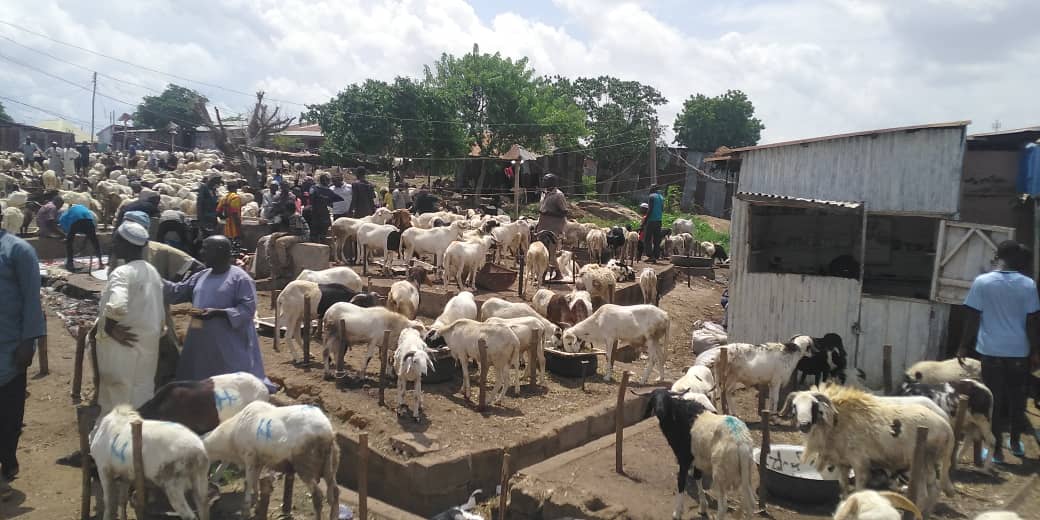
A buyer of ram, who bought a ram from Durun market in Bauchi State alongside his other two friends and who pleaded anonymity said, “Rams that ranged from ₦30,000 to ₦31,000 now cost from ₦48,000 to ₦50,000 thereby amounting to an increment to the tune of ₦20,000 each. Each of us bought rams, whose prices were ₦48,000, ₦49,000 and ₦50,000.”

Also, a seller of rams, who also wanted his name not to be mentioned, said, “First of all, I am engaged in the business of selling animals, and Eid el-Kabir is just around the corner. But there is one problem.”

When asked what the problem was, he added, “The animals have become untouchable because their prices are too high. Money is not circulating among people. Only those that are financially strong come to buy. Common people no longer come; they can only buy a goat worth like ₦12,000 or ₦13,000 and get back home. Last year, people had money, unlike this year.”

He confirmed that there had been an increase of about ₦20,000 when compared to last year. “And again, a ram that was worth ₦30,000 last year would now cost up to ₦50,000,” he added.

Tuesday, July 20, was declared Eid Day and, thus, a public holiday in Nigeria.

Eid-el-Kabir: Kaduna ram sellers decry low patronage

Ram sellers in Kaduna famous Zango Cattle Market on Monday decried low patronage barely 24 hours to the 2021 Eid-el-Kabir celebration. The ram sellers said that customers were not forthcoming, and their hope for a brisk business this year seems to have been dashed due to the poor state of the nation’s economy. According to some ram sellers, the situation has forced many of them to sell on credit.

A livestock dealer at the market, Malam Samaila, said that the ram business was not flourishing as before due to the economic and insecurity situations in the country.

Investigation reveals that a medium-size ram is sold at N40000 against its previous price of N25000, while a well-bred ram is sold for between N90000 and N150000. The prices of sheep and goats also indicate similar hikes as they are sold at N20,000 and N25000 against their previous prices of N15,000 and N10,000, respectively.