INEC

2023 elections most authentic since independence – FG

By Uzair Adam Imam

The Federal Government of Nigeria has described the recently concluded 2023 general elections as the most authentic ever held in Nigeria since independence.

The Minister of Information and Culture, Lai Mohammed, disclosed this yesterday while fielding questions from journalists after the FEC meeting.

He stated that despite efforts by the opposition parties to delegitimize the election, it was the most transparent, freest and authentic ever held in Nigeria.

Muhammed disclosed this as one of the reasons President Muhammadu Buhari refused to interfere with the Adamawa State poll debacle.

He added that the issue was strictly the responsibility of the Independent National Electoral Commission to sort out the matter

According to the Minister, it is not in Buhari’s character to micromanage the government’s institutions.

Mohammed said: “I don’t think that this government has ever intervened in the way the Independent National Electoral Commission conducts its elections.

“So, there’s no need for us to intervene. It was an entirely INEC matter, and INEC handled it.

“The chairman of INEC is in charge of all employees in INEC, and he’s handling it. So, what do you want the government to do?”

Declaration of guber election winner in Adamawa null and void, says INEC

By Muhammadu Sabiu

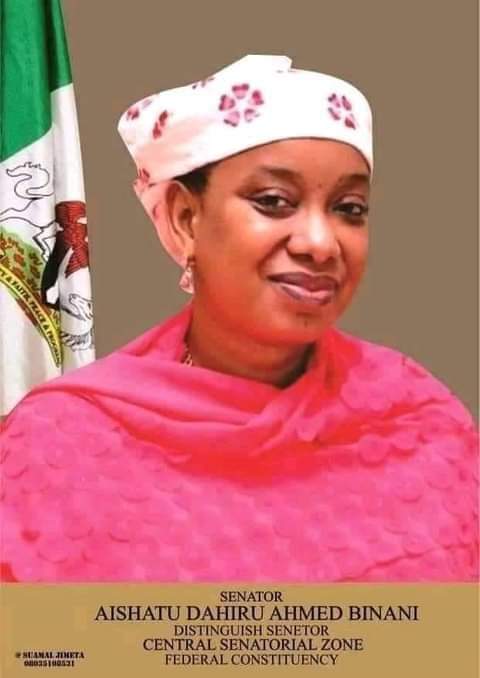
The Independent National Electoral Commission has declared null and void the declaration of Mrs Binani as the winner of the Adamawa supplementary gubernatorial election.

In a statement released through the commission’s verified social media handles, Barr. Festus Okoye, National Commissioner for Information and Voter Education, noted that the commission had suspended all the processes of the supplementary election.

The statement reads, “The attention of the Commission has been drawn to a purported declaration of winner in the Adamawa Governorship election by the Resident Electoral Commissioner (REC) even when the process has clearly not been concluded.

“The action of the REC is a usurpation of the power of the Returning Officer. It is null, void and of no effect.

“Consequently, the collation of results of the supplementary election is hereby suspended. The REC, Returning Officer and all involved are hereby invited to the Commission’s Headquarters in Abuja immediately.

The statement added that a “detailed statement” would follow shortly.

The rise of Nigeria’s electoral process

By Bilyamin Abdulmumin

Nigerians yearning to return to the path of democracy saw the light of day in 1999 when the military head of state, the late Sani Abacha, succumbed to the pressure to plan the Democratic transition. The Independent National Electoral Commission was therefore (established in 1998) and tasked to oversee the election process of the young democracy.

In its maiden election, INEC adopted a secret ballot system. This was a departure from the 1993 election: an open ballot system where voters lined up behind the poster of their candidate of choice. Although this system of voting was seen as the fairest, safest, and cheapest but on other hand, it was dubbed as a violation of voter’s choice privacy.

Other developments brought by INEC in the 1999 election were improved voter cards, transparent ballot boxes, and invitations from foreign observers. Despite irregularities in some areas, the reports said the 1999 election was free and fair. This is evidenced by the relative spread of victory across political parties in the election.

But, things began to go wild in the next election. Again, the incumbents would hold tight. They would fight tooth and nail to ensure their re-election. To make matters worse, the 2003 election (like 1999) was fragile and vulnerable, courtesy of the manual process, from voter registration to accreditation and collation.

The quality of the election process went further down the hill in 2007. When this time around, the incumbent swore to anoint their successors. And transparency and information were not in the public domain compared to the current election process.

But the election process improvements began to take off after 2007. When the winning presidential candidate Umar Musa Yar’adua not only conceded the irregularities in the election that brought him but pledged to improve the election process. He would be committed to his promise and set up a Justice Muhammad Uwais committee.

Although Umar Yar’adua’s determination threatened to hit a glass ceiling with his untimely death but his successor, Good Luck Ebele Jonathan, continued with the electoral reform. As a result, Prof. Attahiru Jega, a widely respected technocrat with an unassailable good track record, took charge of the umpire. From 2010 to 2015, when he led the commission, he brought game-changing policies such as electronic accreditation, the academics for results collation, security features on form EC 8A series as well as ballot papers, provision of clusters (for timely movement of polling team to polling units), and creating voting points to decongest Polling Units.

Like the 1999 election, national and international observers praised the outcome of the results. The 2015 General Election brought back hope to many Nigerian electorates. For the first time in the history of the Nigerian election, the incumbent President would be removed from office by the opposition. The then president Jonathan conceding to the defeat was equally remarkable and unprecedented.

The 2019 and 2023 General elections saw the electoral process in Nigeria blossom. However, professor Mahmoud Yakub will raise the bar even higher. Thanks to the electoral act 2022, Yakub would not consolidate Prof. Jega’s gains only but add other innovative developments: online voter registration, BVAS, IREV, e-school, and chatbot (for public education and effective training on the election process), provision of PVC collected in the margin of lead principle (to reduce the prevalence of “rerun”), finance tracking (to checkmate politicians excessive spending). And that is not all. He converted voting points to polling units, widening the ad-hoc number (collation officers and SPOs). In short, the election process went digital, from registration and accreditation to collation.

The progressive timeline success of INEC was made possible due to the continuity of development from one chairman to another, the dedication and perseverance of the entire INEC staff (both ad hoc and permanent), and the public unreserved scrutiny. With this steady improvement in the election process, the most touted electronic and even voting ahead of election time are not far-fetched.

Bilyamin Abdulmumin can be contacted via bilal4riid13@gmail.com.

Uba Sani, Kaduna legislators receive Certificates of Return

By Sumayyah Auwal Ishaq

The Governor-elect, Kaduna State, Distinguished Senator Uba Sani, and his deputy, Dr Hadiza Sabuwa Balarabe, were issued Certificates of Return by the Independent National Electoral Commission (INEC) on Friday.

This came after their victory at the March 18 governorship election in the state. Accordingly, the issuance of the certificate of return included lawmakers-elect to the Kaduna State House of Assembly.

Senator Sani, who won the election on the All Progressives Congress (APC) platform, garnered 730,000 votes to defeat his closest rival, Peoples Democratic Party’s (PDP), Isah Ashiru, who polled 719,196 votes.

YOSPIS calls on INEC to learn from Kano guber poll’s mistakes

By Ahmad Deedat Zakari

Youth Society for the Prevention of Infectious Diseases and Social Vices (YOSPIS) has called on the Independent National Electoral Commission (INEC) to forestall the recurrence of the mistakes that pervaded the Kano State gubernatorial election. 

YOSPIS made the appeal in a press statement signed by its Executive Director, Zainab Nasir Ahmad, on Wednesday. 

In the statement, the group outlined their observations of the election and recommended what INEC should do differently in subsequent elections. 

Some of the group’s recommendations include reducing the number of party agents at the polling unit, addressing the technical issues of BVAS, and the security of electoral materials, amongst other things. 

The group congratulated the Kano governor-elect, Abba Kabir Yusuf and wished him the best in his administration.

INEC fixes date for supplementary elections

By Ahmad Deedat Zakari

The Independent National Electoral Commission (INEC) has fixed Saturday, April 15, for the conduct of all supplementary elections. 

On Monday, the commission made this known in a press statement signed by its National Commissioner and Chairman Information and Voter Education Committee, Mr Festus Okoye. 

Part of the statement reads: ” The Commission has fixed Saturday, 15th April 2023, for the conduct of the supplementary elections in the affected polling units nationwide.

We appeal to all political parties, candidates and stakeholders to note the date and locations of the supplementary elections. The earlier accreditation for polling and collation agents, observers and the media still subsists for the supplementary elections.”  

As regards the gubernatorial polls, voting is expected to take place in Kebbi and Adamawa states on the said date. 

The governorship elections in Adamawa and Kebbi states were earlier declared inconclusive by INEC owing to cancelled votes, which were more than the margins between leading candidates.

INEC will also conduct supplementary elections for federal and state parliamentary elections, which were declared inconclusive on the said date.

Breaking: we never called for the review of Kano guber poll – Observers

By Ahmad Deedat Zakari

The Kano State Transition Monitoring Committee, TMG, has denied calling for the review of Kano guber election results and cautioned people with evil intentions not to smear the integrity of credible civil society organisations in the state.

TMG, in a joint press release with the Civil Society Legislative Advocacy Centre ( CISLAC) and the Kano State Civil Society Elections Situation Room, gave the advice in Kano on Saturday.

The organisations totally denounced the reports that they called for the cancellation and review of the governorship election in Kano State.

According to them, unscrupulous persons in the state are hell-bent on sneering at the integrity of civil society groups that have been working hard over the years to ensure electoral integrity in Nigeria.

“For obvious selfish and politically motivated reasons, some faceless groups in conjunction with some willing elements in the media have cooked up fake stories about civil society organisations calling for cancellation of the governorship election in Kano State and other parts of the country. ” The Group disclosed.

They stated that the news is fictitious malicious, and worrisome, and they will not condone attempts to be dragged into the mud.

“The spread of this fictitious and malicious news, in a time when the political space in Nigeria is already heated up, is not only worrisome but also has the potential to further overheat the polity. As champions of democracy, we will not allow sneer-campaigners and people with politically motivated reasons drag credible civil society organisations in Kano State and, indeed, in Nigeria at large into political wars with political parties.”

The group, therefore, called on individuals to disregard the reports making rounds that represented credible organisations in a bad light. They also urge media organisations to filter facts before reporting.

Senator Hanga: A beacon of hope for Kano Central

By Mubarak Umar

With the Supreme Court judgment affirming Senator Rufai Sani Hanga of the New Nigeria Peoples Party (NNPP) as the Senator-Elect, Kano Central Senatorial District, the people of Kano Central have reason to rejoice.

Kano Central is genuinely abuzz with excitement following the judgment. Senator Hanga challenged the Independent National Electoral Commission’s (INEC) declaration of Malam Ibrahim Shekarau as the winner of the February 25, 2023, senatorial election in Kano Central.

This victory of Senator Hanga is a significant boost for the NNPP. It also demonstrates the importance of pursuing justice through the appropriate legal channels rather than resorting to violence or other unlawful means. This is a win for democracy and the rule of law, a testament to his resilience and determination to fight for his right.

I am delighted that Senator Hanga has been elected to represent Kano Central at the National Assembly. With his experience and dedication to public service, I believe he will be an effective advocate for his constituents and a valuable asset to the Nigerian government.

A graduate of Accountancy, one-time member of the House of Representatives (1992-1993), and senator who represented Kano Central from 2003 to 2007, Hanga chaired several committees. They include Chairman Senate Committee on Drugs, Narcotics and Financial Crimes; Chairman Senate Sub-Committee on Housing and Urban Development; Chairman Sub-Committee on Finance; Vice Chairman, Senate Committee on Tourism and Culture; and Vice Chairman, Senate Committee on Special Duties.

These positions contributed to Senator Hanga’s deep understanding of Nigeria’s political and economic landscape. In addition, he has shown himself to be a skilled negotiator and collaborator, able to work effectively with others to achieve common goals. These qualities will serve him well as he navigates the complex issues facing the Kano people, particularly his constituents.

Senator Hanga has demonstrated a solid commitment to developing his community and the nation. His focus on education, healthcare, and infrastructure has been commendable. I am confident that he will continue to work tirelessly to address these and other critical challenges facing his constituents.

He is a politician with an impressive track record of public service, making him a valuable asset to any government. With years of experience working at various levels of government, Senator Hanga has developed a deep understanding of the political process, the needs of his constituents, and the challenges facing the country. His wealth of experience and expertise will undoubtedly prove invaluable in driving positive change and development initiatives in Kano Central.

Kano Central Senatorial District, located in northern Nigeria with fifteen local government areas, is known for its political and economic importance. It is the metropolitan commercial city of Kano, one of the largest cities in Nigeria.

One of the major reasons Kano Central needs good representation at Nigeria’s National Assembly is to ensure that the interests and needs of its people are adequately represented and addressed at the national level. This is important because the National Assembly is responsible for making laws that affect the entire country. It is also crucial that the laws made are fair and just for all Nigerians, including those in Kano Central. Now, the voices of Kano Central people will be heard, and their needs will be addressed in the national discourse.

Senator Hanga’s representation at the National Assembly should ensure that Kano Central gets its fair share of the national resources. This includes funds for infrastructure development, education, healthcare, and other social amenities. Moreover, with his effective representation, the district will not be left behind in terms of economic development, as policies that promote economic growth and development are made at the national level.

Furthermore, Kano Central is facing several challenges that require urgent attention from the National Assembly. These challenges include insecurity, unemployment, poverty, and a lack of access to clean water and electricity. Effective representation at the National Assembly can help to address these challenges and improve the standard of living of the people of Kano Central.

The importance of good representation at Nigeria’s National Assembly cannot be overemphasized. The National Assembly is the highest legislative body in Nigeria, responsible for making laws that govern the country. Therefore, good representation is crucial for developing any district or constituency.

Kano Central is in dire need of infrastructure development. The district is home to several markets, industries, and transportation hubs, making it a hub of economic activity in the state. However, the lack of good roads, electricity and other basic amenities hinders economic growth. A good representation of Senator Hanga at the National Assembly should ensure that the district receives adequate funding for infrastructure development.

Kano Central has several tertiary institutions, including Bayero University, Kano State Polytechnic, and Yusuf Maitama Sule University. However, the education sector in the district needs significant improvement. His representation at the National Assembly should ensure that these institutions receive adequate funding to improve the quality of education and provide better facilities for students.

Kano Central is also in dire need of better healthcare facilities. The district has several hospitals and health centres, but most are understaffed and lack adequate medical equipment. Senator Hanga should ensure that the district receives proper funding for healthcare facilities and training and medical personnel recruitment.

Kano Central has a high rate of unemployment, especially among the youth. Senator Hanga now has the opportunity to use all means of legislation that can attract foreign investors to the state and promote entrepreneurship, leading to job creation and economic growth.

Kano Central has experienced several security challenges recently, especially phone snatching, political thuggery, and burglary. Senator Hanga should ensure the district receives adequate security funding to combat these challenges and maintain peace.

I am excited to see what Senator Hanga will accomplish during his time in office. With his dedication to public service, commitment to his constituents, and extensive knowledge of the Nigerian political landscape, I am confident that he will be a valuable and effective representative for Kano Central. I wish him all the best in his new role, and I look forward to seeing his positive impact on the people of Kano and Nigeria.

Mubarak Umar can be contacted via mubarakumar96@yahoo.com.

Nigeria’s failure is a combination of the individual and collective disgrace of the system

By Nura Jibo

Nigerians living within and staying in the diaspora should start a self-cleansing effort to seek Allah’s forgiveness. Already, the people of the country have wronged God. Unfortunately, the current leadership does not want to agree with this position. However, let me start with the individual failures before I descend to the collective disgrace and abuse of the system.

1. The recent presidential election overtly exposed the INEC chairman’s unpreparedness. He was highly unprofessional and produced a very abysmal and disappointing outcome. In the history of Nigeria’s electoral commission, there has never been a time that a lump sum of money amounting to N335 billion was spent on a presidential election under the pretext of the Bimodal Voter Accreditation System (BVAS) or IReV (portal) or whatever parlance Prof. Mamud Yakubu wants to call it. This guy ended up giving Nigerians the most controversial and expensive presidential election in the entire history of the world. As a professor of history, he went to Chatham House and bragged to Prof. Alex Vines and co. that in his office, “There is one of his engineers that even promised him to design a voting machine that could sense voters’ body odour.” He was telling this open and brazen “invention” to global audiences at Chatham House even when he ended up giving Nigerians the most terrible BVAS and IReV technologies that, up until now, he is struggling to fix by postponing the Guber elections by a week!

2. The N335 billion that Henry Omoru of Vanguard reported that Prof. Mamud asked from the Federal Government to conduct this kind of election was an upshot of the initial INEC budget of N305 billion plus an additional N10 billion. This stupendous amount is enough to build eight state universities in each of the 36 states of the federation, including Abuja, with a take-up grant of N1 billion each!

3. According to Dennis Amata’s analysis of the INEC 2023 election budget that appeared in Dataphyte, “The Federal Government spent N444.5 billion to conduct the country’s last three general elections, and a total of N255 billion was wasted due to the low voter turnout recorded in each of the elections.”

4. And if it is true that Mamud is a first-class historian from Usman Danfodio University, Sokoto, Nigeria, and he used his historical antecedents to brag at Chatham House and, in the end, give Nigerians this BVAS melodrama, then his first-class degree is now subjected to the vagaries of his incompetence and lack of ICT knowledge. And this is why! His poor BVAS and IReV performances had already reduced him to a local champion or, better put, a local history professor overrated in Nigeria.

5. A cursory look at the INEC’s nine (9) key items that it budgeted for the conduct of the 2023 election shows that there was a very depressing procurement of hi-tech/advanced ICT facilities such as BVAS and a hi-tech result storage database that could safeguard the security of online and offline result submittals and transmittals, as Mamud wants us to believe. Indeed, Mamud is not aware of or lacks knowledge about the disadvantages of using BVAS as a voter accreditation system. On the contrary, he was probably carried away by it because INEC was told that it could eliminate electoral malpractices and prevent multiple registrations.

6. But Mamud, as a “first-class” academic and Professor of Political History, ought to have known that using such a biometric voter identification and transmitting apparatus for instant results collation is always problematic for developing countries such as Nigeria because there is no adequate network in African countries that could effectively allow the use of BVAS and IREV portals (transmission). In fact, the incessant network failures in Nigeria and, by extension, Africa are enough to get Mamud informed of the disadvantages of using this failure-prone network facility. Moreover, as a learned history professor, this ought to have informed him how this kind of network failure gave President Yoweri Museveni an advantage to impose an internet blackout that cut off access to news, social media, and messaging services ahead of the Ugandan presidential election.

Seriously, Mamud, as a professor, needs to know better than anybody the calamity in the erratic supply of electricity that could ravage his entire BVAS and IREV efforts. In 2019, I had an international conversation with Volkswagen’s Head of Sustainability in Madrid. I tried to persuade him to patronize African countries by supplying electric cars to Nigeria and other African countries. The Volkswagen giant quickly checked my ideas by saying thus: “There is no constant supply of electricity in Africa that could charge the batteries that will drive the cars”. Therefore, Prof. Mahmud and co. ought to have known this simple arithmetic. They could have visualized that no ample network or electricity in Africa could make BVAS and IReV function well!

Fellow Nigerians, friends, and colleagues of Nigeria, that was Mamud Yakubu’s disgrace to Nigerians!

And one wonders what the likes of Mohammed Haruna are doing at INEC as Resident Commissioners by allowing Mahmud to use Nigeria’s ample resources and, in the end, put the entire country into global shame! Whenever I see Mohammed Haruna sitting beside Prof. Mahmud with his hand akimbo, I know that Nigeria does not have a future. Because if a combination of Mohammed Haruna, who spent a significant part of his life writing long essays about Nigeria’s underdevelopment and democratic misgovernance, and Yakubu could disgrace Nigeria this far in the name of INEC staff, then we need to call it off for Nigeria. Indeed, there are so many Mamud Yakubus and Mohammed Harunas in the land that time and space will not allow us to exemplify most of them in this analysis. Therefore, we can only mention a couple of Mahmud’s similar disgraceful elements that constitute the Nigerian system’s individual failure before narrowing down to the specific scenarios that have thrown the country into a global failure and a pariah state.

7. Therefore, the next individual’s disgrace worth mentioning here is that of Adamu Adamu, the current Nigerian Minister of Education. Adamu took ample time to write his folklore about ASUU and how to make it better. But in the end, he goofs up Nigeria’s education by forcing the entire system to suffer universities’ strike action for over seven months! Courtesy of Adamu’s Taqiyya Amana, which he displayed amidst growing educational tensions that distract Nigeria by throwing it backwards by two-semester backlogs.

We can go on and on! But to cut the story short, the colossal loss to Nigeria on this INEC’s BVAS and IReV drama has successfully reduced its chairman to a local champion who made his country not reap the benefit(s) of the huge monies that he spent on this so-called BVAS without giving Nigerians value for their money. It is a shame that for all the money he asked for, he could not provide Nigerians with an enabling environment to come out en masse and cast their votes. Mamud and co. sincerely deceive themselves by hiding under the pretext that Nigeria’s democracy is the biggest in Africa. He also brags about this point anytime he is given a chance to speak. He doesn’t know that several African countries are fairing better than Nigeria. Unfortunately, Prof. Mamud doesn’t know that his country is lagging behind certain African countries regarding voter turnout and conducting fair elections without BVAS! Here I will conclude by quoting extensively Ray Ekpu’s take on the need for INEC to wake up from its slumber and engage in a serious campaign on voter turnout.

According to Ray Ekpu, “Many African countries have done far better than Nigeria in combating voter apathy. Their voting figures are close to 100%. Look at these: Rwanda’s 2017 presidential election produced a 98.2% voting record; Equatorial Guinea (2016): 92.7%; Angola (2017): 90.4%; Seychelles (2016): 90.1%; Guinea-Bissau (2019): 89.3%; Zimbabwe (2018): 84.2%. For Nigeria to deepen its democracy, the voting figures have to go up drastically. That means that all concerned must work on improving voter education.

Voter education can also help in checking election rigging. Election rigging can only happen when there is collusion among the triumvirate, namely, politicians, INEC officials, and security personnel. Where there is no collusion, no rigging of fundamental significance can take place. There is no perfect election anywhere in the world, but rigging can be substantially reduced once people are interested in ensuring that their votes count. But in Nigeria, poverty is an issue. Many of the people who sell their permanent voters’ cards are poor. For them, those cards mean little or nothing, but a few thousand naira can mean a lot to them. It can mean the difference between a full stomach and an empty one”.

Nura Jibo is a Lifetime Member of the West African Research Association (WARA), African Studies Centre, Boston University, United States. He can be reached via jibonura@yahoo.com.

Democratic failure and increased voters’ apathy in Nigeria

By Zaharaddeen Muhammed

It is a general psychological belief that individuals tend to keep repeating things that benefit them and help reduce their suffering. In politics, too, citizens believe that the essence of participating in the political life of their country is to maximise their benefits through attaining improved living conditions, say, for example, security of lives and properties, food, a better health care system, more employment opportunities, stable electricity and so on.

You don’t need statistical data to conclude that, since 1999, when Nigeria returned to a democratic system, the sufferings of Nigerians coming out to vote for a better life increased. As such, many citizens choose not to exercise their franchise as it does not benefit their lives.

Abraham Lincoln’s definition of Democracy as a government of the people by the people and for the people seems irrelevant in Nigeria because some of the leaders who served political offices in the past were suspected to be products of statistical inflation during elections, not by choice of the majority. Thus, they are not by the people; our leaders are considered to serve themselves rather than the general populace. That is why they strive to get into power by hook or crook.

The Independent National Electoral Commission (INEC) reported that during the 1999 general election, out of 58 Million Nigerians that registered to vote, only 30 million were able to vote, 42 out of 61 million registered voters voted in 2003, only 35 million out of 62 million in 2007, 39 million out of 74 million cast their votes in 2011, 29 million out of 67 million in 2015, 29 million out of 82 million in 2019 and, sadly, in the recent 2023 presidential election we have witnessed the lowest turnout whereby of all the 93.46 million eligible registered voters we have, only 24.97 million came out and cast votes.

Though many factors like; lack of voter education, electoral malpractices and vote buying during primary elections, which produce uninspiring candidates in the general elections, rigging during the general election, and the activities of political thugs are contributing factors to political absenteeism during elections, the major factor that converts responsible citizens into political absentees is bad governance resulted by poor- performing elected officials and political parties.

To respond to this signal of “not having feelings” citizens about the political affairs of our dear country, resulting from a lack of efforts from the side of our political leaders to improve people’s situation, I see it that the best way to lure people back to the polls is to promote people’s welfare. Campaigns and sensitisations are less effective these days—only action matters.

Take, for example, the issue of vote buying. You can’t convince someone who lives from hand to mouth, similarly being denied the opportunity of going to market on election day to get what to eat, not to collect a bag of grated maize for a vote—relief materials matter.

Zaharaddeen Muhammed wrote from Azare and could be reached via zahmuhaza@gmail.com.