Igbo

Between 2014 and 2022 and the race for Nigeria’spresidency

By Ahmad Mubarak Tanimu

It’s 2022. The twilight of Buhari’s administration is here, and the political permutations that will produce his successor are about to come bare. “Change” was the mantra in 2014. The Giwa barrack attack in March by Boko Haram, the Kibaku school girls abduction in April, the capture of Gwoza in August, the occupation of Bama in September and the ransacking of Baga in December by the terrorist group together with the over ten thousand lives lost during the year made 2014 an unforgettable year.

Goodluck Jonathan carried so many political accruals that outweighed his political assets, giving him an unfavourable political balance sheet that led to his well-anticipated defeat at the polls in 2015, becoming the first-ever one-term president in Nigeria. It’s an unusual political crash that the former presidential spokesman, Segun Adeniyi, calls ‘Against The Run of Play’.

Jonathan’s political misfortune didn’t start in 2014. He promised Nigerians a breath of fresh air after winning the 2011 elections. His major decision after the victory was fuel subsidy removal. He sent the then CBN Governor, Sanusi Lamido Sanusi and the then Finance and Coordinating Minister of the Economy, Ngozi Okonjo-Iweala, to beg and convince Nigerians to accept subsidy removal.

The first nail on the political coffin of Jonathan was hit on January 1, 2012, with the announcement of fuel subsidy removal, which birthed a national outrage and mass protest known today in our history books as Occupy Nigeria. After that, Boko haram insurgency, the slump of oil prices in the global market, and the PDP crisis he poorly managed sent him to an early political abyss.

Whilst all these were happening, one man positioned himself suitably and leveraged on every misstep of the President, often described as clueless. The man is Muhammadu Buhari. When the commoner was not happy, as late political siege J.S Tarka would say, Buhari offered himself as the hope, the happiness and the long-awaited missing piece of the jigsaw. Buhari moulded all Nigeria’s problems into just one thing that he kept saying repeatedly; ‘corruption, corruption, corruption’. He then placed himself as the one and only man with an incorruptible toga in the political arena that could solve Nigerian security challenges and economic turmoil.

He became president in 2015, Nigeria’s economic crisis soared, and like the sunshine, insecurity moved from east to west in the North. But unlike 2014, in 2022, no one is leveraging Buhari’s ineptitude. Though to be fair to Buhari, with Nigeria’s over-reliance on oil for export revenue and foreign consumer goods, an economic crisis will always be inevitable in the situation of a fall in the global prices of oil.

The polity in Nigeria still looks primordial. No one is ready for issue-based conversation. Even the pundits often put in more sentiment than logic in their analysis. The reaction of Buhari’s detractors shortly after Tinubu’s declaration to run for the presidency in 2023 says it all. They want him to surrender a platform he built with his sweat over some decades of enduring and surviving political persecution under Abacha, Obasanjo and Jonathan.

One doesn’t need to be a seer or bookmaker to predict that Nigerians will face Tinubu and Atiku’s choices in 2023. This could be a run that will not dig and damage the image of Buhari. Atiku may keep things ethical as he did in 2019, whilst Tinubu will primarily defend the Buhari administration throughout the campaign and make promises of improvements.

In 2014, there was an exodus from the ruling party to the opposition. Governors Kwankwaso of Kano, Wammako of Sokoto, Amaechi of Rivers, Ahmed of Kwara and Nyako of Adamawa all defected to the APC and other party chieftains like Atiku, Saraki and Baraje. The defection made the ruling party’s defeat imminent even before the elections.

On the contrary, the ruling party is taking governors to its fold this time. Governors Umuahi of Ebonyi, Matawalle of Zamfara and Ayade of Crossriver defected to the ruling APC last year. While the long-awaited APC national convention can make or mar the party’s fortune in the next general elections, the current atmosphere spells gloom for the opposition again come 2023.

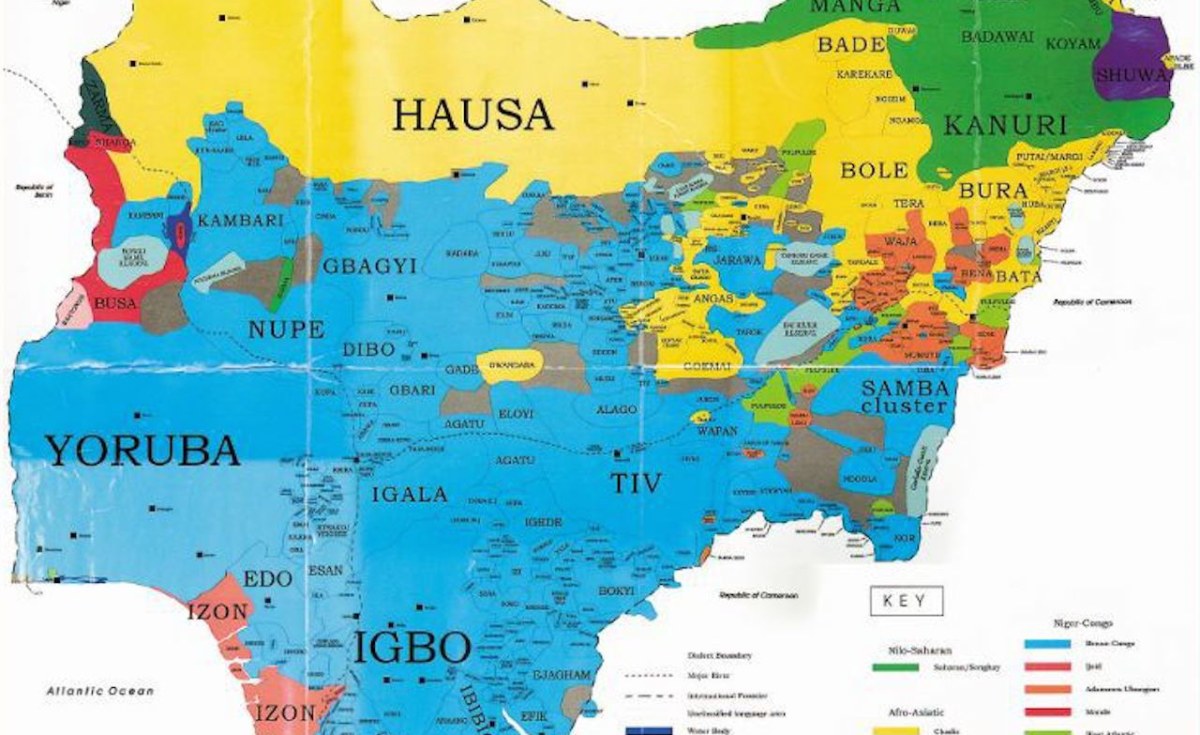
Going by the non-negotiability of Nigeria’s unity as enshrined in the constitution and the unwritten political arrangement of political parties in Nigeria, the next president should be ethnically and culturally Igbo. Still, the ethnic group can only claim that stake in the PDP, a party they supported wholeheartedly since 1999. They rejected the APC, and I don’t think the party will pamper the same region with a presidential ticket in 2023. I am harbouring a feeling that an Igbo presidency is all Nigeria needs to turn its fortune around as a country. It will bring integration and a sense of belonging for all, which may translate into socioeconomic success. But that’s a conversation for another day.

Ahmad Mubarak Tanimu wrote via ahmadmubarak.tanimu243@gmail.com.
Nnamdi Kanu and the political hypocrisy of the southeast

Ahmadu Shehu, PhD.

As the trial of Mazi Nnamdi Kanu begins in Abuja today, the southeast region has been locked down for three days by the secessionists loyal to him. The infamous terrorist, whose platform for hate, terrorism and wanton killings of Nigerians in the southeast is IPOB, was re-arrested on June 27, 2021, thanks to the sheer wit, bravery and incisiveness of the Nigerian intelligence community and their global counterparts. Recall that the Nigerian government had obtained a court order which proscribed IPOB as a terrorist organisation, effectively making Kanu a terrorist leader.

For most people who had listened to the dullard’s hateful sermons, watched his videos or had any information about his activities, Kanu’s offences against the Nigerian state and humanity are not in doubt. Accordingly, his actions qualify as terrorism and treason in any lawful state in the world.

Thus, the Nigerian government shouldn’t have any problem prosecuting an obvious criminal whose activities do not need to be proven, for they are self-evident. Mazi should not be spared an inch for all discerning minds – including the responsible, law-abiding, patriotic Igbos who are actually the majority. That is for the best of our nation. Whatever Shekau deserved, Mazi deserves. They are both leaders of terrorist organisations. Nigeria should make this statement as loudly as thunder that no one can disunite this country at will. We are a nation of nations, not a tribal entity.   

But, the implications of Kanu’s monstrous crimes have gone beyond him and his terrorist organisation. It has become a matter of the Igbo people and the southeast. The fact is that the solidarity seen from the southeast raises serious questions on the allegiance and commitment of the Igbo leadership to the Nigerian state.

For instance, at his first trial, Kanu’s surety was a whole senator of the federal republic, Enyinnaya Abaribe representing Abia south district. After that, Kanu brazenly abused all his bail conditions, deliberately jumped bail and cowardly disappeared into thin air.

Given his unguarded utterances and declaration of war against the Nigerian state, the military tested its microphone, hoping that Kanu was the man he says he was. Not long after the beginning of operation python dance, the coward jumped the fence, crossed all rivers and jungles barefooted and found himself in the deep pit of his shit across the ocean, leaving his comrades at the mercy of their own evil.

Still, after the heroic re-arrest of this enemy of the state, some so-called Igbo leaders were quick to let the hell loose, antagonising everyone, calling this national glory all sort of names. They call it an abuse of human rights, unlawful arrest, marginalisation, blah blah. Not long after Kanu’s whereabouts were made public by the government, prominent Igbo socio-political leaders identified with him, making overtures for the release of the dreadful criminal.

The calls for the release of Kanu has become a daily breakfast in the Nigerian media. Igbo socio-cultural groups take to the streets and the media to demand the release of their “son”, who in their view committed no crime in all his atrocities against Nigerians and Nigeria. Indeed, there has never been a single voice against this rascal from the leadership of the southeast.

Then came one of the most shocking but solid backing and endorsement for IPOB’s terrorism when “highly respected Igbo greats” led by Chief Mbazulike Ameachi met President Muhammadu Buhari to demand the unconditional release of Nnamdi Kanu!

Forget the fact that there is nothing “great” in demanding the release of a terrorists’ leader; this singular event means that Igbo elders and leaders are unapologetically sympathetic to Kanu and his cause.

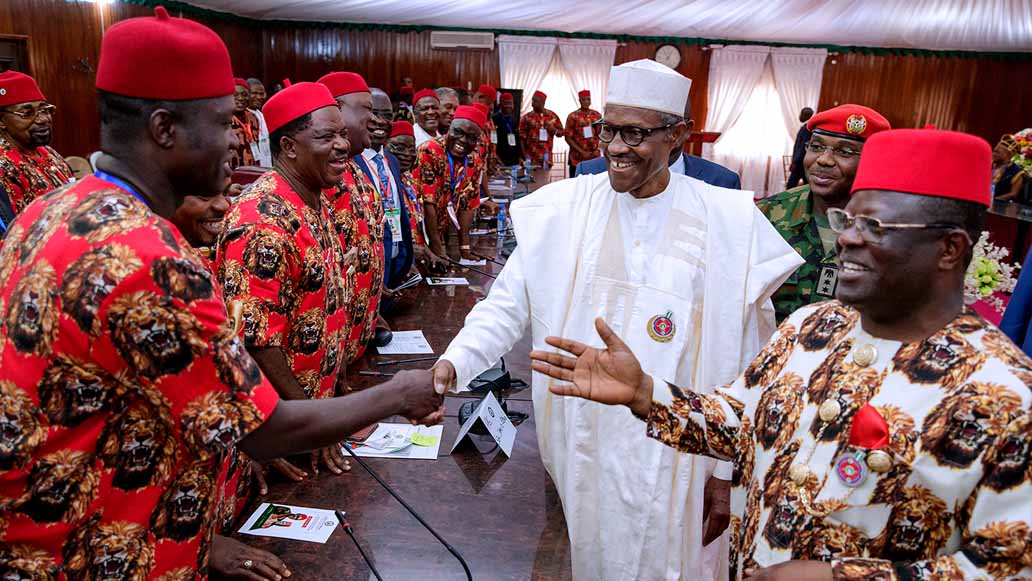
While sociocultural groups and individuals may be excused for this disastrous disposition, the governors and political appointees of the southeast are set to meet the President for the same purpose. For clarity, these are individuals in the highest political and administrative positions, who swore to obey and protect the constitution of the federal republic, who are paid, protected and maintained by the taxpayers’ money. However, they are now coming forward to blatantly stand for a proscribed individual who proclaims secession and calls for the destruction of the very country these officials swore to serve, respect and protect.

It is clear then that the social, cultural, religious, economic and political leadership of the southeast are solidly behind the release of Mr Kanu without trial. This translates to being sympathetic to the man and his cause, for no Nigerian in their right senses would wish the perpetrators of these criminal activities to go unpunished. In essence, all the sections of the Igbo society are either overtly or covertly sympathetic or even in support of Kanu and his terrorist organisation.

Standing behind Kanu and IPOB, and yet proclaiming patriotism and even serving under the Nigerian constitution is the highest level of hypocrisy. The rest of Nigeria should tell the southeast that they can’t eat their cake and have it. The idea that the southeast is yearning for an Igbo presidency when they fight the cause of a secessionist is dumb and highly unintelligent.

The southeast needs to maintain a stand and keep to a clearly defined lane. But, before anything else, let the rest of Nigeria know where they stand. And this is the right moment and the best opportunity to restate their commitment to a united Nigeria by allowing the law to take its course against the secessionists. Failure to do this tells Nigerians that Kanu is not too far from the rest of them. In that case, a Hausa adage ba a baiwa kura ajiyar nama [you don’t trust a hyena with your meat] comes in handy.

Dr. Ahmadu Shehu writes from Kaduna and can be reached on ahmadsheehu@gmail.com   

January 15: The North will never forget

By Musa Kalim Gambo

January 15 marks 56 years since the gruesome murder of Prime Minister Sir Abubakar Tafawa Balewa and Sir Ahmadu Bello, the Sardauna of Sokoto and Premier of Northern Nigeria. To borrow a few words from Shakespeare, both were like Colossus under whose giant feet the North strode.

The description of that Saturday’s night events still haunts many of us here in the North. Though we sincerely believe that Allah must have predestined that these servants of His were not going to exceed that day on earth, and they would die from the bullets of Igbo-led soldiers. It is still a tragedy we will never forget.

On Tuesday, January 11, Daily Trust published an opinion piece written by my excellent friend Sa’adatu Aliyu titled “Igbos too deserve Nigeria’s presidency”. When I saw the title, at first, I thought it must have been written by an Igbo ethnic nationalist from South-Eastern Nigeria, for she is expressing an opinion that is utterly alien to Northern Nigeria’s political thought and discourse. One should expect this line of thinking to come from the Igbo because the Igbo elite has popularized this illusory notion of exclusion from Nigeria’s corridors of power, especially Aso Rock, as one of the major precursors for secessionist agitation in today’s Nigeria.

By the way, this is the ethnic group that produced Nigeria’s first civilian president, Nnamdi Azikiwe, in the 1960s. Then, again on the return of democracy in 1979, Chief Alex Ekwueme emerged as Nigeria’s Vice-President.

In 2019, Atiku Abubakar had Peter Obi, a former governor of an Igbo state, as a running-mate. Unfortunately, it was a wrong calculation, and we saw how it ended. One of Obi’s major sins that stained Atiku’s ticket is that as a governor in Anambra state, he reportedly came up with policies that frustrated Northern traders and artisans in his state. This sin is an expression of the general attitude towards the Northerner in the South-East region – where the Northerner is perceived with disdain and attacked in the event of any slight provocation.

Again we cannot forget Sardauna’s warning about the Igbo tendencies and quest for dominance in every little sphere of endeavour. This warning and the pain of Sardauna’s murder is still with many of us.

But it is important to understand that even without this fear of domination, the Igbo vote on its own is inconsequential in the making of a president in a democratic Nigeria. So even without January 15, which now resembles the Roman Ides of March, when power mongers assassinated Julius Caesar, the Igbo will not make it to the president.

However, suppose we have an Igbo man in the line of succession within the political equation. In that case, a natural tragedy as it happened to Umaru Musa Yar’adua may undeservedly promote an Igbo man to occupy the exalted seat of the president. And that will be a pure work of Providence that the North will pray for God to forbid.

Some people suspect that an average Northerner hates the Igbo man; that is a wrong assumption. No, the Northerner is comfortable doing business with the Igbo man, as can be seen by the presence of Igbo businesses in every village, town, and city in the North. However, in the political scene, the average Northerner is apprehensive about the Igbo man at the apex of political power. The Northerner does not want January 15 to repeat itself in terms of the elimination of our most revered political leaders.

In the end, I like to re-emphasize, as has been emphasized by many Northern political elites, we are in a democracy. An Igbo man is free to purchase a ticket on any political party’s platform to run for any political office, including the president. If he can generate the requisite number of votes to win the election, who will stand in his way?

Let it be known very well that the presidency of this country is not a baton in a relay race that would just be handed over to the next athlete standing. No, it is a tug of war with competing parties pulling against each other on opposing sides. So, no one should come here again with that sense of entitlement declaring that the Igbos deserve Nigeria’s presidency too. Instead, they should be advised to jump into the arena and fight for the seat with the full knowledge that the North’s deciding population will not clap for them. We study and honour history, its figures, and defining events in the North.

Now, on January 15, and every other day, let’s not forget to pray for Allah’s mercy and blessing upon the souls of Sirs Abubakar Tafawa Balewa and Ahmadu Bello, and all other departed heroes of ours who had the progress and development of our region and people at the centre of their hearts.

Gambo writes from Zaria, Kaduna State, via kalimatics@gmail.com

Towards achieving unity in Nigeria

By Lawi Auwal Yusuf

The amalgamation of the protectorates in 1914 predetermined a united state for multiple precolonial chiefdoms. Highly diverse Nigeria featured by a rainbow of cultures is deeply fractioned along ethnic and religious lines.

Imperial misrule left a bad legacy for national unity. Regional devolution caused intense tussles among regional forces over the powerful central authority, which was the basis for post-independence sectarian disputes.

Thus, six-year-old Nigeria witnessed a catastrophic separatist war that took the lives of many heroes. Since the aftermath of the bloodletting, the country has been bedevilled with lingering ethno-nationalisms coupled with regular fatal brawls between the tribes. This was due to extreme polarization and segregation of the heterogeneous groups with no sense of togetherness, community cohesion and dovishness. 

Deeply ingrained tensions have been the order of the day. Igbos accuse Northerners of their grief and impeding their chances of realising the apex power. The Northerners equally see the Igbos as power maniacs. Yorubas feel discontented with the status quo, while minorities have the impression of a roughshod ride over them.

Tribal and religious absolutism are awful threats as multiculturalism has failed, and communities have become ever more fragmented. Patriotism has eroded, and Nigerians are less tied by the bond of nationality. They are no longer one united people and do not regard themselves as national brothers with a sense of shared identity. Hence, there is an absence of the desired unity in diversity, tolerance and integration.

Politicians must develop the impulse and genuine commitment to national unity. They must believe that this is a dire task that transcends beyond cultural exhibitions, festivities or even wearing traditional attires of host communities during political rallies. Instead, it requires solid whims, sacrifice and effective policies.

Technocrats are required to accomplish this task efficiently. They must design policies that ensure equitable treatment of the ethnocultural groups alongside the creation of space for all the divergent voices to be heard. Everybody must have a say in society. Moreover, they must devise ways to live together harmoniously, without prejudice or malice.

Integration is so effective in ensuring peaceful coexistence between fractious groups. Therefore, increased contact across the nation should be emphasised, and Nigerians should increasingly intermingle with one another. This will allow people to live closer to one another, work amicably, and ensure that relations remain peaceful. Therefore, disputes will vanish obstinately.

This can only be realised if there is an honour for individual cultural preferences in public life. All institutions must make special provisions for all Nigerians’ choices and cultural needs. So, everybody will develop a worthy stake in the social order. Policies must be put in place to accommodate the values, diet, dressing, spiritual convictions, and practices respectably.

We need to facilitate multilingualism by encouraging people to learn several native languages. Speaking one another’s languages diminishes suspicion, tensions and conflict. This will also build trust, honour and understanding across all cultures.

Social exclusion creates deficient opportunities for disadvantaged/minority groups suggesting that they don’t have equal rights. As a result, they are treated as second class citizens, hindering cohesion and egalitarianism featured by social inclusion and pluralism. Moreover, it leads to distress to the abandoned groups, which poses a persistent threat of disharmony. However, institutions must make efforts to meet the needs of all communities and not tilt towards the needs of a particular section.

Regrettably, the tribes have distorted perceptions of each other. Malevolence aggravates because of misleading histories and myths falsifying the reality and typically portraying others as diabolic. They hold malicious convictions and stereotype each other based on their previously treated beliefs. Any trivial provocation warrants the impression and becomes a basis for vengeance. The exasperation of hostilities by IPOB, ESN, Afenifere and others are clear examples.

It is needful to enact a statute outlawing attitudes of these tribes calling one another with derogatory or slur names that denigrate or demonise others. Ethnicities hardly unite if they are abusing one another.

The present mass idleness must be evaded alongside the creation of decent jobs. Graduates happen to be jobless long after they have left school. Similarly, numerous unknowledgeable youths remain redundant. Ethnic and religious skirmishes intensify every day due to hardships encountered by youths in their efforts to have a lawful means of subsistence. Many of them have the requisite skills and qualifications but found them not helpful in securing employment. They have fallen victim to anxieties, delays, and disparagement and developed a strong feeling of despair, oppression, and unfairness. Hence, they engage in crimes or sectional clashes to counter the injustice and avoid the distress of poverty.

With such dissimilarities in all parts of society, tolerance is indispensable if Nigerians want to live in peace. The capacity to live in a plural society will secure a harmonious future for multiethnic Nigeria. However, Martin Luther King Jr. once said to Americans at the peak of racial segregation that “we must learn to live together as brothers or perish together as fools.”

Lawi Auwal Yusuf wrote from Kano, Nigeria. He can be reached via laymaikanawa@gmail.com.

Fulani: The endangered species of Nigeria (II)

Ahmadu Shehu, PhD.

The first part of this essay published here highlights the necessary ingredients for genocide which are vividly in the advanced stage in Nigeria against the Fulani, one of the largest ethnic groups in the country. The socioeconomic and sociopolitical conditions that preluded genocide in various countries worldwide have been well documented in history books. Therefore, the worst anyone could do is to fail to see the looming disaster in Nigeria.

Decades ago, some political leaders had set the ball running when Bola Ige, a prominent Yoruba leader, called Fulani the “Tutsis” of Nigeria. Threatened by Fulani leaders’ socioeconomic and political clouds, politicians across the country who saw the Fulani not just as rivals but as a threat to their desired political hegemony borrowed a leaf from Ige’s playbook.

Those were the framers and promoters of diabolic stories against the North and northerners, especially the region’s political leadership. The narratives of “owners of Nigeria”, “northern oligarchy”, “Kaduna Mafia”, and such epithets as the cabal, northern domination, Islamization agenda and the completion of Danfodio jihad were given persistent, often aggressive, currency in the Nigerian public domain.

Another set of narratives to debase the intellectual competence and meritocracy of the North is put behind the federal character, with any northerner attaining success being assumed to be a beneficiary of some affirmative action, sheer luck or even the corrupt Nigerian system, regardless of their proven intellectual and mental capabilities.

This constant and persistent brainwashing has blindfolded a large chunk of southerners to the extent that many of those I meet believe that being Hausa-Fulani, even the richest black man on earth – Alh. Aliko Dangote – did not actually earn his wealth. So some of them would ask if I got some favours to be able to obtain a PhD from Europe, or question my academic job in Nigeria even when I teach them in Hamburg, Cologne or Vienna.

An average southerner has been made to believe that a northerner is an empty shell, a dullard, an illiterate who is incapable of any mental or physical success. Of course, these deliberate, false narratives are geared towards maligning and disorienting the North. But, the North is one large, diverse, but culturally interwoven community that cannot be beaten as a whole. There is, therefore, the need for a scapegoat.

Indeed, the orchestrators of this scheme got a few points wrong, but one thing they got right was the point of attack, i.e. the Fulani. Yes, Fulani, because they are the traditional rulers. They are the religious leaders. They are the political leaders. They have become Hausa-Fulani, and therefore the focal point of unity. The cultural war of the ’70s has failed to disunite the North simply because the Fulani historical and cultural orientation was left intact.

However, an opportunity presented itself when the media stereotyped the Fulani as herdsmen in all the reportage around herder-farmer conflicts – a stone-aged human resource conflict that has existed for ages – but only to be used as a tool for demonization and stereotyping of the Fulani people.

Populist politicians ala Ortom, Darius and their cronies in the North and South of the Niger seized the moment to first and foremost cover up their asses against the glaring failures of their administrations and to complete the agenda for the social, if not geographical, disintegration of the North. It was yet another tool for fighting a perceived Fulani president.

Throughout 2015 – 2019, the electronic, print and social media was flooded with the “Fulani herdsmen” stories. Headlines, editorials, columns, opinions, misinformation, disinformation, fake news – the word “Fulani” became the vogue in the media.

Today, this stereotyping has taken us a step closer to the looming genocide. Displaced Fulani herders in the northwest have become easy targets for recruitment into banditry and kidnapping. While arms dealers, informants, financial collaborators from other ethnic groups have established a business cartel in robbery, banditry and kidnapping, young, impoverished Fulani herders have become the foot soldiers that carry out these physical acts of crime.

Their knowledge of the forests and ecological terrain, their military-like lifestyle, bravery, coupled with the excruciating economic conditions, have made these unsuspecting lads easy prey of the city-based cartels. These are nomads who knew nothing, had nothing, and depended on nothing other than livestock, which is no longer a dependable source of livelihood, as indicated in the first part of this essay.

Millions of nomadic and sedentary herders’ continued destitution provided a vast army for crimes and criminalities we see today. This fact has been confirmed by research and is attested to by the governments. For example, in a recent in-depth study of banditry in northern Nigeria, Dr Murtala Rufa’i of Usman Danfodio University shows that bandits are victims of circumstances and tycoons from all other ethnic groups in the country.

Although this has been a known fact, have we ever heard of Igbo arms dealer, Hausa kidnap kingpin, Bagobiri kidnapper, Kanuri Boko Haram, Nupe informant, etc.? Do we know of Hausa yan-sa-kai, Bagobiri yan banga, etc.? How many people know that bandit Turji is actually ethnically Bagobiri and not Fulani? Why do we hear of “Fulani kidnappers” or “Fulani herdsmen”?

The implications for this sweeping criminalization of a whole community are as dangerous as they are numerous. Firstly, it has set the most united, cohesive ethnic groups, Hausa and Fulani, on each other’s throats. This is the arrow that might break the camel’s back in the scheme of setting the North on fire.

Secondly, it has criminalized the most important northern ethnic group in the sociopolitical front, making political cohesion impossible. Thirdly, it legitimizes crime and criminals by ascribing them to ethnicity or other human value systems. Fourthly, and sadly, that is the last bus stop on the road to Kigali.

When a whole community, ethnic group or society is viewed as criminal, worthless and or dangerous, the natural reaction is a sweeping, conscious and deliberate elimination of the community. Their elimination becomes a duty as the larger society feels unsafe in their presence. And yes, these feelings are illusions but have been entrenched in people’s minds to the extent that restraint becomes impossible.

Today, people (including Fulanis) consciously or subconsciously talk of killing the “Fulani” in Zamfara, Sokoto or Katsina. But then, in reality, when you kill Turji or his lieutenants, you do not kill Fulani. Because when you killed Shekau, you did not kill a Kanuri, neither did you kill Igbo by killing Evans. You have, in reality, killed a blood-thirsty criminal.

Now, why is the Fulani case different? Why are the media and various sections of this country bent on demonizing millions of Nigerians in the bad light of a few rugged criminals? At the risk of sounding conspiratorial, I will give my take in the next part of this essay.

The cow does not need oil

Ahmadu Shehu, PhD.

It is true that the large chunk of Nigeria’s export comes from oil and that Nigeria depends to a great extent on this commodity for economic survival. However, this situation results from economic laziness – one of the many curses that came with crude oil to our country.

Pre-oil era, Nigeria was faring better, leading in many aspects of social and economic endeavours, especially agriculture and technical skills. This diversity of resources made our economy very resilient. Those were the days when Nigeria was a role model to the developing world.

Speaking of livestock and animal husbandry in today’s Nigeria leads to misleading insinuations that some supremacist ethnic group domiciled in the bush wants to hijack the “southern-oil-money” to rear cows.

These claims are not only wrong, but their makers are also pathetically ignorant of national and global economics. The fact is that, all over the world, animal husbandry is mainly economic and not ethnic, religious or regional. It is a matter of income, survival and sustenance. Data from butcheries, ternaries, restaurants, etc., in Enugu, Lagos and Port Harcourt can confirm this.

However, I do not squarely blame the proponents of these narratives for their lack of understanding of the fundamental economic outlook of this country. Instead, I assume that this kind of utter ignorance is also one of the curses caused by crude oil in Nigeria. Just as it killed all other viable sectors of our economy and transformed our political leadership into a set of docile, sit-and-wait set of people, it has succeeded in destroying our intellectual discourse. Today, all socio-economic conversations are viewed from the narrow prism of petrodollars.

Thus, our socio-economic and political conversation is now bereft of ideas and far from our social realities. It is sad to see many people failing to appreciate the glaring fact that six decades after the discovery of oil at commercial quantity, this country did not only fail to develop but has moved backwards in all indices of human and social development.

The topmost hierarchy of political leaders, policymakers, and civil society has failed to learn one simple, practical truth: our country’s strength, resilience, and prosperity are not in oil. They are right there under our feet and noses, at the backyards, waiting forever to be harnessed and utilised. Nigeria can take a cue from our mates, ala Malaysia, Indonesia, Brazil, India, etc.

Now, back to the “oil-money” narrative. Are herders and cattle breeders asking for “oil money”? No. In fact, herders do not care – or are not interested in crude oil in Nigeria.  Secondly, those of us advocating for the development of the livestock sector do so for the economic advancement of Nigeria, in general, and not just the herders, or “Fulani”, as would say the bigots.

For one, agriculture (livestock and crop) is the largest contributor to Nigeria’s economic growth. It contributes 40% of economic activities, employing over 60% of our country’s population – that is, one hundred and sixty million Nigerians.

You may think that the livestock sector is economically barren and that governments and other sectors of the economy do not benefit from it. You may even argue that only the “malams/awusas” benefit from the economic resources in this sector. But, you are dangerously mistaken, and I will show you why.

In Nigeria today, livestock is a multibillion-dollar business sector. Estimates by the Federal Ministry of Agriculture show that each year, Nigeria produces (and consumes) at least 18.4 million cattle, 43.4 million sheep, 76 million goats, 180 million poultry birds, among other things. Multiply these numbers to any amount of years and see the contribution of the livestock to the Nigerian economy.

For demonstration, let’s assume each of the 18.4 million heads of cattle is valued at $200 only. What you get is a staggering 6 billion dollars – three trillion naira per year – i.e. about ¼ of the country’s annual budget.

My experience in cattle businesses tells me that governments at all levels make a minimum of 10% direct revenue on each cattle, ranging from the market, local government, state, transportation, etc., levies that trail the cattle market chain.

But, this is just for cattle. These numbers multiply exponentially when other varieties of livestock come into the equation. Now, consider additional extended revenues on factories and sub-sectors that rely solely on livestock, such as leather, meat, and dairy.

While doing the maths, please remember that these raw and food materials serve Nigeria, one of the largest markets in the world, the most populous African country and the largest economy on the continent. Thus, the economic resources and taxations derived from this sector are massive!

Therefore, the question that naturally follows this arithmetic is: How much is Nigeria’s budget for the development of this sector and the millions of people it employs? 

As Nigerians, we are aware of the 12% derivation to the so-called oil-bearing states at the expense of other equal federating units. The basis for this disparity is to enhance the development of the immediate oil-bearing communities.

Similarly, a large chunk of the oil income is reinvested in the oil and gas industry development. Businesses and individuals in this industry benefit tremendously from these incentives and investments.

On the contrary, the Nigerian budgetary allocations for agriculture, particularly the livestock sector, have been very meagre and far below the lowest AU benchmark of 10%. For instance, from 2015, the allocations for agriculture have been below 2% of the budget, receiving a paltry N160 billion (1.37%) in 2020.

Obviously, this is far from commensurate to the economic and financial contributions of the sector in Nigeria’s GDP. It also negatively affects the lives of the majority of Nigerians whose livelihoods depend on agriculture.

While the government’s spending on agriculture is pathetic, the situation is even worse in the livestock sub-sector. For instance, under “promotion and development of animal production and husbandry value chain”, the 2020 budget proposes only N546, 156, 792 for the whole livestock sub-sector. Note that this amount was not budgeted for just cattle, sheep, or poultry but Nigeria’s entire livestock value chain. And that is just a proposal, not actual spending.

This, given the resources, financial and material contributions of the sector, is an insult on the human senses of any keen observer. Moreover, juxtaposing this estimate to that of the crop value chain makes the economic injustice against livestock producers even more glaring.

Therefore, it appears that livestock production and development are grossly marginalised across all three tiers of government and even within the agricultural sector. I had hypothesised elsewhere that this disparity is one of the major causes of the setbacks in Nigeria’s efforts at agricultural development.

Now, in this socio-economic reality, the governments and other Nigerians outside the economic chain of livestock anticipate a quick, sufficient, and even elegant modern livestock breeding system in Nigeria.

Worse still, the government expects these people who suffer from this severe lack of financial support, access to social development and political representation to be absolutely immune to the social consequences of this economic inequality and injustice.

This, without fear of contradiction, is an impossible mission. For, we have learned from the works of the philosopher-king, Emir Muhammad Sanusi II, that every economic situation bequeaths social reaction(s), as humans are not only social but also “economic animals”.

The points derived from the previous discussion are that herders and livestock breeders do not need oil or its by-products to grow livestock. They do not also ask for money accrued from the oil and gas industry to be invested in developing the sector.

What the livestock needs – which is legitimate and necessary – is the reinvestment of a fair portion of the wealth it creates back into the sector and the social development of the herding communities.

By and large, herders are not asking for “oil money” because the cow does not need oil to prosper. We are only saying that the money accrued from the livestock sector – a small portion of our contribution to the nation’s economic basket – be reinvested into the very sector that produces it as is done for other salient sectors of the economy. Full stop!

Dr Ahmadu Shehu is a herdsman and academic. He can be reached via ahmadsheehu@gmail.com.

The polyethnic-state-policy we need

By Lawi Auwal Yusuf

Several innovatory constitutional devices, administrative and technical solutions were tried to resolve the sectional tensions that, minimally in writing, attempted to enhance tolerance and political affinity between the heterogeneous regions of our dear country, Nigeria. These supposed solutions failed because they were unfounded paperwork, if not lip service.

The dispositions of politicians denote that they have no true intentions of dissipating all forms of religious and tribal harassment that undermine Nigeria’s progress as a diverse but cohesive society. They exploit the divisions for political deceit and their malicious divide and rule tactics. Politicians misuse the distinctions to garner more support, increase popularity and gain votes. But the effect is that it augments people’s consciousness of the differences and raise the importance they affix to them.

Hence, there exist mutual antipathy among the ethnicities. They strongly hold ethnic prejudices and stereotypical views against each other and counter-blaming themselves for the country’s woes. Frequent destructive fracases, secessionism and bloodshed depict Nigeria.

We need a poly-ethnic policy that will help us forge a pluralist democracy that fully respects tribal and religious dissimilarities. A country that truly recognizes and values such pluralism in society. This worthwhile project must establish mutual veneration among Nigerians which is essential for a peaceful future of multiethnic Nigeria. It should socialize Nigerians to enfold cultural diversity, support multiculturalism and believe that the tribes can harmoniously cohabitate through respecting each other’s cultures.

For this dream to become reality, the policy must be accompanied by genuine efforts to eradicate poverty and inequality. Research confirmed that lack of cohesion results mainly from inequality.

This policy must emphasize universalistic moralities like supremacy and rule of law, transparency in governance, economic development and nationalist sentiments to combat the particularistic moralities of the individual tribes. This will make Nigerians united by a common purpose rather than individualistic purposes.

Also, there is an immense need of maintaining a distinct Nigerian identity to replace particularistic cultural identities. People will develop a sense of common identity. Nationalism is a powerful ideology that unites perversely fractious and ethnocentric cultures effectively. It leads to a sense of sameness, uniformity and also bring people into closer fraternities. This will help them understand their differences and how to live with them. Therefore, tolerance will manifest and subsequently love will flourish among them. Diversity will be a source of strength, unity and progress.

Good leadership must be the leading force in this trip. Ethnic favouritism and turning public office an instrument of creating wealth for acquaintances and tribal brethren must utterly vanish. Justice, transparency and equal treatment of all irrespective of closeness or ethnic background must prevail.

Furthermore, Nigeria should adopt the integration approach to ethnic relations. Ethnic relations exist where individuals show allegiance to different groups that conflict exists among them. When disputes and competition divide tribes, then integration brings them together. Conflict wither away and there will be no ethnic consciousness and therefore less potential for dispute. Integration is a permanent cure for the ailments generated by ethnic relations. This model involves a continuous process by which individuals learn one another’s language, acquire modes of behaviour, characteristic attitudes and habits. At the macro level, the process also involves the gradual incorporation of smaller groups into the mainstream culture.

Increased contact and intermingling ought to be facilitated through ensuring inter-regional trading, sports competitions and encouraging people to travel widely because contact between members of divergent tribes reduces tensions, suspicion and dispute. This will turn Nigerians into cosmopolites. Those are individuals who travelled extensively and lived in different communities. Thus, they tend to be familiar with different cultures, communities and languages. Instead of exhibiting an overwhelming loyalty to their tribes, they have intricate repertoires of loyalty and identity. Therefore, they hardly become bigots.

Institutional ethnic stratification has to be dispelled from society. Political, social and economic institutions must be crafted to help manage the differences and all indigenous people need to have equal rights whatever their social background. Policies should be devised to deal with such diversity and prevent forms of social exclusion both at the national and community levels. Equal opportunities must be given to all and these institutions must be reformed so that they no more exclude and discriminate against minorities or disadvantaged groups.

Minority cultures must be protected because resistance intensifies where the dominant groups arbitrarily oppress the interests and aspirations of the feeble minorities. The conflict may manifest either violently or through political processes. Moreover, fundamentalist convictions emerge among minorities as they become apprehensive that their cultural distinctiveness will perish as the elements of dominant cultures become integrated into their own. They retaliate to defend their cultures in malevolent ways to people from the major cultures.

Finally, it is of paramount importance to establish an agency with broader powers and scope to enhance tribal equality in Nigeria. It should have the responsibility of implementation of the new policy. Yet, it can be assigned with the tasks of promoting peaceful co-existence and provision of legal aid to victims of harassment. In the same vein, statutes should be enacted making it obligatory for government agencies and private enterprises to vigorously exterminate all forms of discrimination and ensure equal opportunities for all.

Lawi Auwal Yusuf wrote from Kano, Nigeria.

The Igbo Presidency!

By Mohammed Zayyad

The debate that the presidency moves to the South in 2023 has gained momentum. Also, presidential hopefuls from the North, like Atiku Abukar, Sule Lamido, Senator Bala Mohammed, Senator Rabiu Musa Kwankwaso, are also effectively playing their games.

The calls for power to shift to the South have further triggered permutations and realignments in the polity. Both the Peoples Democratic Party (PDP) and the All Progressive Congress (APC) have strong candidates from the South. But these candidates have their respective baggage, and the parties have internal squabbles that must be resolved.

The APC has its stronghold in the Northwest, Southwest, Northeast and Northcentral – four of the nation’s six geopolitical zones. The PDP has strong structures in the six zones with a stronghold in the Southeast and Southsouth. However, the APC has moved into the Southeast in full force. Before the 2015 elections, nobody had ever thought that the APC would someday have even a ward councillor in the Southeast. But, today, the party has two state governors, senators, House of Representatives members, state house of assembly members, local council chairmen, councillors and formidable party structures in all the five southeastern states.

Come 2023, the APC has no reasons to retain power in the North, but there is strong politicking by some governors and other bigwigs to maintain power. This will mean the APC contravening the unwritten agreement between the North and the South on power rotation. In any case, the APC does not have a strong presidential candidate from the North. This is a big plus to the presidential hopefuls from the South, or Southeast, in particular. Furthermore, the Southeast has a strong case to present based on a plank that the Southeast is the only geopolitical zone in the South that has not produced a President or vice president on any political party platform since 1999.

If APC picks its presidential candidate from the South, especially Southwest, the PDP may attempt to outwit this by looking to the North for its presidential candidate. This, as well, will put the  PDP in a catch-22 situation on how to explain this to the South, especially the Southeast and the South-South, why the North again, after eight years of the North being in power.

PDP has good candidates in their own ‘rights’ from the Southeast and South-South. Enugu State Governor Ifeanyi Ugwuanyi, Peter Obi from Southeast and Governor Nyesom Wike from the South-South. Obi does not have friends in the North and has never tried to pull an appeal from the region, directly or by proxy.  His deportation of other Nigerians to their states when he was governor of Anambra state was used against him in the North during the 2019 campaign, and it worked.

For Wike, his words, ‘Rivers is a Christian state’ will be used against him in the North like Governor El-Rufai’s Muslim-Muslim ticket in Kaduna can be used against him (El-Rufai). This is how local politics impact a candidate’s wider political opportunities. Some young people in the north are also campaigning for  Enugu State Governor Ifeanyi Ugwuanyi. Still, the IPOB issue will be a significant hindrance in the North, but it is not insurmountable. Advocates of secession appear not to understand Nigeria. There are massive inter-marriage, friendships, business links and political alliances, among other ties, between many northerners and many Igbos.

Some nationalistic politicians from the Southeast have started to convince other Nigerians to support the region to produce the Nigeria president of Southeast extraction in 2023.  The bigwigs’ forefront presidential hopefuls are Governor David Umahi,  Orji Uzor Kalu, Governor Ifeanyi Ugwuanyi, Rochas Okorocha, Chris Baywood Ibe, Ken Nnamani, Minister of State for Education, Dr Chinedu Nwajiuba, Sen Osita Izunaso and many others. Of course, these politicians have their political baggage and controversies. However, people like Chris Baywood Ibe are new faces without any political baggage and controversy-free.

A thorough understanding of how Nigerian politics works is paramount in achieving the political goals of a group, a region, or individuals. There are so many conflicting interests in Nigeria. Still, there are always windows for alliances, give-and-take, a hand of friendship, and convincing others to support a particular political cause or an individual’s.

For the 2023 presidency, the Southeast should present a candidate with a new face, no controversies, no political baggage and who has friends and is well-known across the Niger. For both the APC and the PDP, it will be an opportunity to reunite Nigeria and rekindle the historical political alliance between the north and the southeast while maintaining the partys’ current national. The Igbo presidency is possible through the spirit of one Nigeria.

Zayyad I. Muhammad writes from Abuja. He can be reached via zaymohd@yahoo.com.

IPOB and the myth of the rising sun

By Tahir Ibrahim Tahir (Talban Bauchi)

We went on a trip a while ago to Jama’are local government in Bauchi state for the turbaning ceremony of my cousin as the Ubandoman Jama’are. Jama’are is a 2-hour journey from the Bauchi metropolis. On our way there, we ran into a pothole, and we got a twisted tyre. After our event, we proceeded to Azare, another local government in Bauchi, a 30 minutes drive from Jama’are, hoping that we would get a tyre to replace our damaged one. We were directed from one shop to the other, and each time we arrived at any of the shops, we met them all locked up. We got the puzzling explanation that one of the shop owners lost his father and that he and all his brothers had gone for the burial. They meant that Igbos owned all the shops, and they were the only ones that sold the size of tyres we were looking for. We had to manage the twisted tyre all the way back to Bauchi because Chinedu’s uncle had died, and nobody else sold proper tyres in Azare, a whole local government, deep in the North East!

At Emab plaza in Abuja, I dare not step in to buy even a memory card, and my ‘customer’ NG, who is Igbo, would jokingly hound me for not telling her that I was coming to buy a phone! She was a shop attendant to her brother, who is a friend of mine. He had opened new outlets, and she became the CEO of the Emab division. I dare not buy what she sells from elsewhere. I’m off the hook and free to spend my money at any other shop, only if she doesn’t have what I’m looking for. My relationship with my Igbo friend’s shop is not less than 15 years old!

There’s a car service place at Wuse 2, on the famous Adetokumbo Ademola Crescent in Abuja. They usually get your tyres checked, balanced and aligned, and all that car check routine. An Igbo guy, Pat, hangs around there; when you have to get a new tyre, Pat is there, ready to get you all the brands, from Korea to Japan, China, France — you name it, and he’s got it. So Pat is the go-to guy even when I’m far away in Bauchi, and I need to get the accurate market prices of tyres from different brands. This is a ‘customership’ that has spanned over 15 years as well!

So goes with the guy at the Barbing Salon. Chike is about the nicest hairdo guy I have ever known. Courteous, cheerful, hardworking and good at his job. For the entire corona lockdown year, I left my clipper with him. Finally, a good one year after, I hop into town, and there is my clipper, safe and sound. It was serviced and polished, looking even newer than I left it. Chike’s courtesy leaves you scraping through your pockets to get something for him, aside from the shop’s charges. From working in his Oga’s shop, he had moved to his own place, with a few of the other barbers he worked it.

Igbos own an estimated 60% of land, property and businesses in Abuja. There is no denying them being industrious, hardworking and very enterprising. They are all over the country, handling numerous firms and bossing most of the trade they engage in. That is why it is super difficult to understand the meaning, purpose and direction of the Indigenous People of Biafra (IPOB). Biafra is all over Nigeria, and it is just silly to try to corner it to a cranny as small as Niger State! If you alienate yourself from Nigeria and create your own country, do you expect to keep all the businesses all over Nigeria and get patronage from Nigerians? Isn’t this a money-wise, pound foolish idea? The whole concept of self-determination and the attendant superiority complex is eating up the UK now – albeit they may not accept it publicly. It is the same trap that awaits Biafra, should it see the light of day.

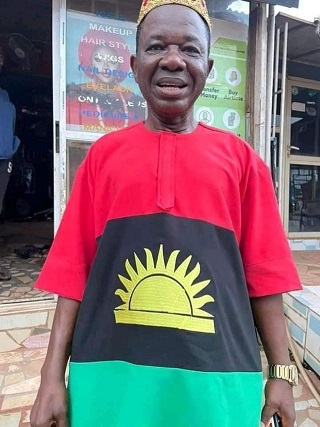
The Nigerian army recently rolled out Operation Still Water, an ember months programme, to maintain security during the festive period. It is a continuation of the previous operations such as Crocodile Smile, Python Dance, and so on. In the midst of it, popular actor Chiwetalu Agu was arrested at Upper Iweka Road, Onitsha, Anambra state, for inciting public members and soliciting support for IPOB. He was donning an IPOB attire when he was arrested. The army denied maltreating him, as was widely reported. A video surfaced later, which gave a snippet of what their interaction with him was like. He said that the Sun showing on his cloth was a rising Sun and that the colour combination was just coincidental and didn’t signify IPOB. He said he was educated enough to know where to go to and where not to go to. He squarely denied IPOB and said he had nothing to do with it. So many Igbos are coming out of their shells to deny IPOB and publicly give their activities a dressing down.

The Igbos we relate with every day are not the ones that IPOB represent, right? So the barbaric activities of the group need to be clamped down by the Igbos themselves. They must make it clear that the narrative of that movement is not theirs and is not in their own interest.

Joe Igbokwe’s house was razed in his hometown of Nnewi, Anambra state. Dr Chike Akunyili was killed in the Idemili North local government of Anambra state. A fire that seems to rage on from a distant neighbour’s residence clearly indicates that your own house is not insulated from the same kind of fire. A proverb in Hausa says, “If you see your neighbour’s beard in flames, you must hurry and rub your own with water.”

The tiny flame that started in Borno has spread like cancer to the entire North. South easterners should not allow this in their backyard. The earlier the Igbos rise against this so-called rising Sun, the better for us all. We have a risen Sun to be grateful for already. There is no need to go looking for more Sun. The heat would definitely be unbearable!

Tahir is Talban Bauchi can be contacted via talbanbauchi@yahoo.com.

Igbonomics in Northern Nigeria

By Ahmadu Shehu, PhD.

My previous article titled If there was Biafra generated debates around Biafra’s disadvantages (and advantages) to the Igbo people. Many of these comments were very insightful, and in line with the thoughts I presented. While I cannot respond to all the commentators, I will briefly address the most salient rejoinders. But, once again, let me quickly state that this conversation does not target the Igbo as an ethnic group. Instead, I aim to provide an outsider view to these pressing issues of national unity on which all Nigerians share equal rights and responsibilities to tell ourselves the home truth.

Some commentators say that the article was biased as I only focused on the disadvantages and neglected the “obvious” advantages the Igbo will gain from Biafra. However, I do not see a single demographic, economic, geographical or even political advantage the Igbo will gain by simply seceding from Nigeria. That is the thesis of the previous article. In fact, the post-exile writings of Odumegwu Ojukwu, the architect of Biafra himself, buttress this point.

The most critical observations from many prominent Igbo elites and friends claim that as much as the Igbo people enjoy Nigeria’s unity from both economic and political perspectives, we should equally be thankful to the southeasterners for the jobs they create for other Nigerians. In other words, the Nigerian market saturated by Igbo traders is also lucky to have the Igbo money as capital for the employment of other Nigerians.

Well, this claim might seem valid at face value. Still, it may not be entirely accurate when Igbonomics – a term I use here to refer to the economic strategy of the Igbo people – is subjected to a critical view. In the said article, I noted that one of the weaknesses of the southeastern economic model is that it is closed to other Nigerians. The resentment the Igbo folks have against the majority of Nigerians do not allow “strangers” from any region of the country to freely establish or run businesses in Igboland. That is why most Igbo billionaires today were made one hundred per cent in and by other regions of this country, but not the other way round. There is hardly a non-Igbo billionaire made by or in the southeast.

This xenophobia is not only applied against the Hausa-Fulani northerners or the Yoruba south-westerns but also their closest cousins, the Niger-Deltans. This approach is based on three exclusionist strategies of Igbonomics: First, the market and product, and indeed the value-chain must strictly remain an Igbo affair. Second, other regions’ markets, their products and value-chains must be proportionately shared with the Igbos. Third, to drift public attention from this ongoing reality, maintain the victim card by crying louder than the bereaved – the real victims of marginalization. While the first two tenets are lawful but greedy, the third is a clear case of hypocrisy. Here is a simple example to foreground this scenario.

The Igbo form the largest group of Nigerians in the diaspora. Since Nigeria is an import economy, the Igbo people in diaspora serve as business agents for their brethren in Nigeria. Therefore, the import business is basically an Igbo – Igbo transaction. Here in Nigeria, these goods are transported mainly to the southeastern markets, such as Abba and Onitsha. Instead of Lagos or Port Harcourt, most Igbo traders, who are widely dispersed across the nooks and crannies of this country, buy their goods mostly from Igbo distributors in the southeast. Another Igbo – Igbo transaction.

Up here in the north and other parts of the country, the Igbo employ strictly Igbo artisans, mostly from their own villages or communities in the east, and in some cases, the so-called northern Igbos. From sales girls and boys to messengers, marketers and suppliers, the Igbos domiciled in the north only trust their own ethnic brothers regardless of the opportunities employing locals might portend to their businesses.

For instance, you find a single Igbo shop owner in a village. By the following year, s/he has brought two, three or four Igbo artisans, thereby growing in population, manipulating the resources and seizing the business opportunities further away from the local people.

In most cases, the deal is that a separate business in the same line is established for the younger artisan, expanding further the grip of the Igbos in that line of business in the communities they are domiciled. Thus, the profits, gains and resources of the business in any of these communities become an Igbo affair entirely. Therefore, in this arrangement, the Igbo create jobs primarily for themselves while other sections of Nigeria serve as their consumers.

While the Igbos living in the north own properties and investments in the region, they return their proceeds to their homelands. Thus, I can bet my last penny that Igboland has more properties and investments built from profits and wealth acquired outside the Igboland than those made from the businesses run within the Igboland. Moreover, I had said earlier that businesses domiciled in the southeast largely depend on the larger Nigerian market to thrive.

Therefore, it should be clear from the foregoing that Igbonomics in the north is an Igbo economic affair that largely – if not only – benefits the Igbos. The brutal truth is that the Igbo are NOT marginalized in Nigeria. Instead, they are playing a victim card to maintain the economic status quo. While the various sections of this great country have a lot to thank one another for, none of these sections should claim any superiority. Neither should any of these play a gimmick of marginalization. We are equals in the hands of God and our country.

Dr Ahmadu Shehu is a nomad cum herdsman, an Assistant Professor at the American University of Nigeria, Yola, and is passionate about the Nigerian project. You can reach him via ahmadsheehu@yahoo.com.