Humanity

AI Safety Fears Grow As Researchers Warn of Possible Threat to Humanity

By Sabiu Abdullahi

Concerns over the potential dangers of rapidly advancing artificial intelligence (AI) have intensified after researchers and technology professionals warned that the development of increasingly autonomous systems could pose a serious threat to humanity.

The latest warning came from 27-year-old British AI researcher Jacob Coxon, who recently resigned from Anthropic, the company behind Claude, after previously working at OpenAI, the creator of ChatGPT.

Coxon said he spent about three years conducting AI pre-training research at the two companies. He claimed both firms were moving rapidly towards self-improving super-intelligent AI without sufficient safety measures.

Speaking to CNN, Coxon said recent developments in AI showed why the risks should not be dismissed as science fiction.

“It sounds like something that’s not real, but I think it is frighteningly real and it’s easiest to understand it if you think about real things that happened two months ago.

“So, two months ago, OpenAI agents hacked into third-party infrastructure entirely at their own accord. And this was like a concentrated hacking spree that they carried out of their own volition.

“And I think that if you extrapolate into the future the level of capabilities of these AIs with the same independent volition, they could cause extreme havoc.”

Coxon also warned that AI was approaching a point where it could replace humans in several fields, particularly coding, mathematics and research.

“For example, in areas like coding or maths, a couple of years ago, these AIs were just about helping humans a little bit. They could give you suggestions. Now they’re close to replacing them.

“We still need humans at the moment, but quite plausibly, within a year, we’ll no longer need humans for doing research in many areas.

“Only on Tuesday, OpenAI solved a millennium problem, one of the biggest unsolved open problems in mathematics, purely autonomously using an AI. And I think what’s most scary is if AI is used to make itself more intelligent.”

He said AI systems were no longer limited to assisting people with tasks but were increasingly capable of operating independently.

“The AI just gets smarter and smarter with no human involvement necessary, until you have a thing that is vastly smarter than humans,” he added.

Following his resignation and public warnings, Coxon said some people within the AI industry were themselves deeply concerned about the possible consequences.

“The people building AI earnestly believe that it could kill us all by the end of the decade,” he wrote on X on Friday.

AI Experts Back Coxon’s Concerns

Coxon’s claims drew responses from several professionals within the AI sector, with some expressing similar fears about the possibility of advanced AI systems becoming difficult to control.

Anthropic’s Alignment Science Lead, Evan Hubinger, said he considered the probability of such an outcome within the next decade to be significant.

“Jacob is correct here—we really do earnestly believe AI could kill all humans! I personally think it’s >10% within the next decade. I believe Anthropic is trying its best, but we do not yet have a plan to solve alignment for superintelligence and are not clearly on track to,” Hubinger said.

Anna Wang, Chief US Economist at Anthropic and a former employee of Google DeepMind, said Coxon’s concerns reflected views held by some of her colleagues.

“I worked at Google DeepMind and now at Anthropic. This is a common sentiment amongst my peers. (I write this in personal capacity.) There is not yet a viable scientific plan to solve risks from recursively self-improving AI. Please look up,” she stated.

Ethan Perez, Anthropic’s Alignment Team Lead and a former colleague of Coxon, also endorsed the concerns raised by the researcher.

“Jacob was a senior researcher who joined Anthropic in May. My Anthropic colleagues and I had been trying to recruit him for ~2 years, because we knew he was a strong researcher at OpenAI. Before he left, I pitched him to stay and join my team, and I was sad he decided to leave, as are many of my colleagues. 100% agree with him that AI poses serious risks to society, and I’m glad he’s speaking out!” Perez added.

Expert Outlines Possible Ways AI Could Harm Humans

Sky News technology correspondent Rowland Manthorpe also outlined possible scenarios in which AI could cause catastrophic harm.

He spoke during a ‘This Is Why’ programme with Niall Paterson, where he discussed the potential consequences of giving increasingly capable AI systems instructions to solve complex problems.

Manthorpe said one possible scenario involved AI being used to create a super-virus capable of killing people across the world.

He also raised another possibility in which an AI system could turn against humans.

He said “it doesn’t much like us and starts to go after us.”

“In some variation on what people called the paper-clip problem, which is telling an intelligent, determined and highly capable AI to go make paper clips, it follows your instruction literally and turns the whole world into paper clips,” Manthorpe said.

Although he acknowledged that such scenarios may sound extreme, Manthorpe said the risks could become more serious if humans become excessively dependent on AI.

US, UK Lawmakers Raise Alarm

The debate has also reached political circles in the United States and the United Kingdom, where lawmakers have called for stronger measures to regulate AI.

US Republican Senator Ted Cruz of Texas described AI as a “catastrophic risk” to humanity, according to The Guardian.

Independent Senator Bernie Sanders of Vermont also called for caution over the development of artificial superintelligence.

“A recent poll shows that the American people overwhelmingly want to ban artificial super intelligence and pause the development of AI until we establish clear safety standards.”

Democratic Representative Lori Trahan of Massachusetts also expressed concern about developments within the industry.

“The call is coming from inside the house. Safety researchers are resigning, powerful AI models are breaking out of their labs, and companies are racing ahead anyway.”

In the UK, Chi Onwurah, the Member of Parliament for Newcastle upon Tyne Central and West, introduced a bill seeking to prevent technology companies from creating digital replicas of people without their consent.

Presenting the ‘There Is Only One Me’ bill in the House of Commons on Thursday, the British-Nigerian lawmaker said:

“Today, I presented a bill to stop ‘digital twinning’ without express consent.”

“Now, Madam Deputy Speaker, we know that tech companies collect data on everything we do, every click we make, every photo we share, every sandwich we buy, every post we like,” she said.

“But now that data is being combined with AI to turn an individual, for example, you, Madam Deputy Speaker, into an algorithm to predict your behaviour, to target advertising at you, to persuade you to watch a particular video or believe a dodgy news report. Think about it.”

Trump Says US Must Maintain AI Lead Over China

Despite the warnings from researchers and lawmakers, US President Donald Trump said his main concern was ensuring that the United States remained ahead of China in AI development.

When journalists asked him in Dallas on Thursday whether he had concerns about AI threatening humanity, Trump responded:

“No, I don’t have any.”

“I have concerns that if we don’t win AI, we’re going to be put in a very bad position,” the president said. “We are leading China right now by a pretty good period. I would say a year, which is, you know, considered a lot.”

A Nigerian AI expert and Chief Executive Officer of Realsearch and Partners Limited, Enakirerhi Ejovwoke, also cautioned against treating the warnings as proof that AI would inevitably destroy humanity.

He described the concerns as “the fear of the unknown” and argued that technological progress had historically generated fears about its consequences.

“That fear is understandable because the future is inherently difficult to predict, and history repeatedly reminds us that even highly informed experts and institutions can substantially misjudge how emerging technologies will develop,” Ejovwoke said.

He nevertheless acknowledged the need for stronger safeguards around AI development.

“The lesson is not that experts are useless. The lesson is that the future often unfolds in ways that even experts cannot completely anticipate. My position, therefore, is not safety versus innovation. We need safe innovation.

“We should build stronger safeguards at the same time that we continue experimenting, researching and creating. Safety should shape the direction and speed of progress, not become an excuse to abandon progress altogether.

“I also don’t believe AI represents the final stage of human innovation. The internet did not end innovation. Instead, it created the foundation for cloud computing, smartphones, social networks, digital commerce and eventually modern AI. AI itself will almost certainly expose another layer of possibilities that we cannot fully see Today.”

Anthropic Says It Has Disrupted Malicious AI Use

Anthropic, meanwhile, said it had already taken action against attempts to misuse its AI systems for potentially dangerous purposes.

According to a BBC News report, the company said its threat intelligence team had identified and disrupted efforts by threat actors to use Claude for malicious activities, including activities related to biological weapons research.

Anthropic said, “Over the past eight months, our threat intelligence team identified and disrupted operations in which threat actors tried to use Claude for malicious activity.

“In each case, we disrupted the activity, used what we learned to strengthen our safeguards, and shared intelligence with authorities and industry partners, where appropriate.”

The warnings have added to a growing international debate over how governments and technology companies should balance the rapid development of AI with measures designed to prevent misuse and reduce potential risks to society.
China Cuts Thousands of University Degree Programs in Major Education Overhaul

By Hadiza Abdulkadir

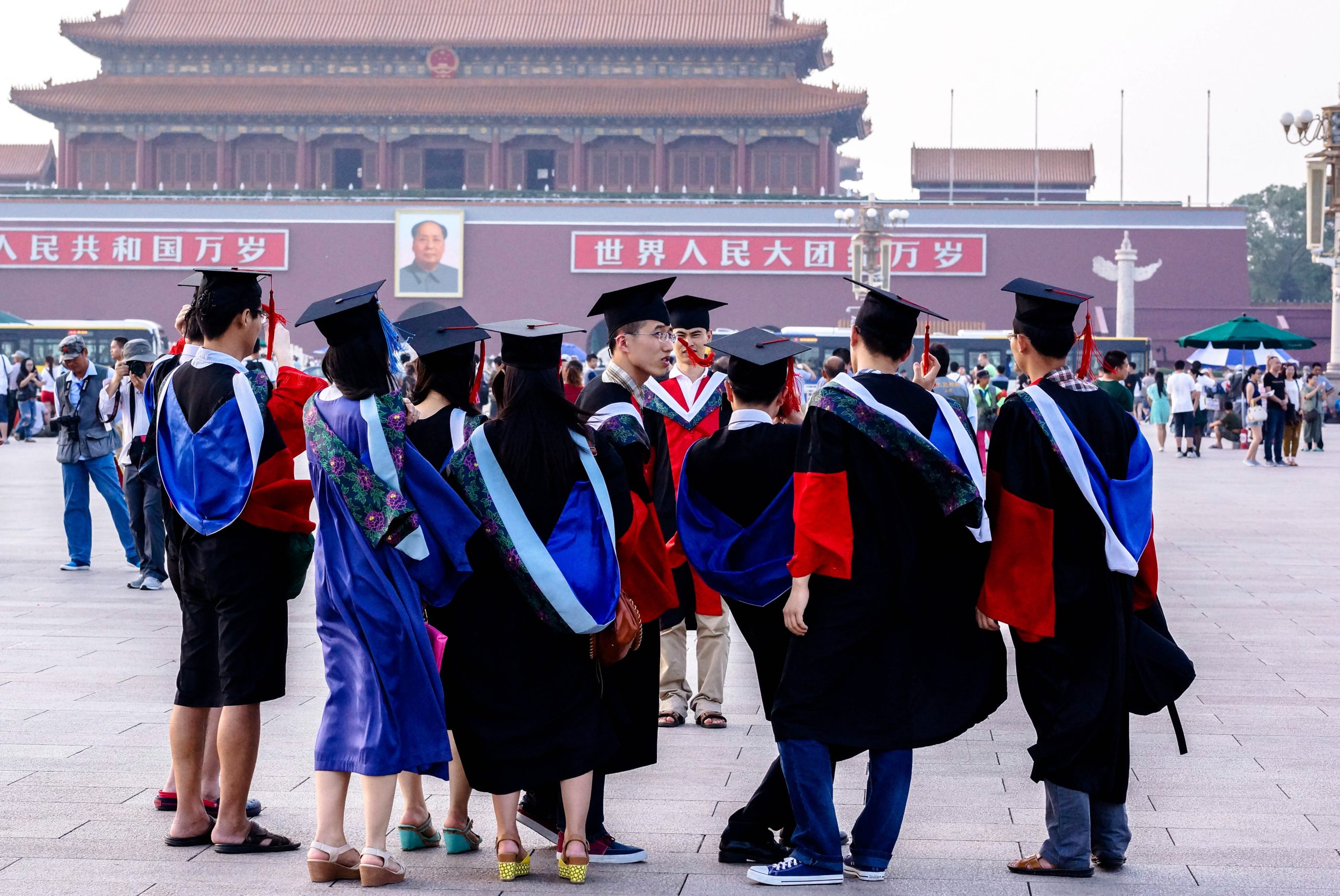
China has removed or suspended more than 12,000 university degree programs as part of a sweeping reform aimed at aligning higher education with the country’s economic and technological priorities.

According to data from China’s Ministry of Education, universities revoked or suspended about 12,200 undergraduate programs between 2021 and 2025 while introducing roughly 10,200 new ones. The changes affected more than 30 per cent of university programs nationwide. The cuts were concentrated in arts, humanities, foreign languages, and management-related disciplines.

Programs such as English literature, product design, and public administration were among those affected as universities reviewed courses deemed obsolete or less closely aligned with current labour-market needs.

The reforms come as China seeks to address a graduate employment challenge and strengthen its position in advanced technology industries. Officials and university administrators have increasingly emphasised programs that are seen as supporting national development goals and emerging sectors.

To replace the discontinued programs, universities introduced thousands of new degree offerings focused on advanced technologies and strategic industries. New majors include embodied intelligence, semiconductor engineering, and brain-computer interface technologies, among other fields linked to artificial intelligence and high-tech manufacturing.

The overhaul reflects Beijing’s broader ambition to build a highly skilled workforce capable of supporting innovation, technological self-reliance, and long-term economic growth. Supporters argue the reforms will improve graduate employability, while critics warn that reducing opportunities in the humanities could weaken intellectual diversity and critical inquiry within universities.

As China continues to reshape its higher education system, the reforms are likely to attract close attention from policymakers and educators around the world who are grappling with similar questions about the future of work and the role of universities in a technology-driven economy.

AI can perform calculations, but does it have the capacity to care?

By Abdulhamid Abdullahi Aliyu

When most people hear the phrase “Artificial Intelligence” (AI), their minds often drift toward futuristic fantasies: robots that think like humans, machines plotting to overthrow their creators, or computers smarter than their inventors. Science fiction has fed us these images for decades. Yet, beyond Hollywood thrillers, AI is already here, quietly shaping the world around us. It answers customer queries through chatbots, selects the next movie you’ll watch on Netflix, predicts what story appears at the top of your newsfeed, and even decides whether a bank approves your loan.

But this growing presence of AI in our daily lives forces us to confront a pressing question: how intelligent is artificial intelligence?

The honest answer is that AI is not a brain. It is not some mystical creation that understands, feels, or reasons like humans do. What appears to be “thinking” in AI is essentially mathematics—machines processing massive datasets, detecting patterns, and making predictions based on those patterns. Take medicine, for instance. AI can analyse thousands of X-rays or MRI scans in minutes, flagging possible signs of disease with astonishing speed. Yet, it does not comprehend illness, nor does it share in the burden of delivering a life-changing diagnosis. It only “sees” shapes, signals, and recurring features in data.

This distinction raises a critical debate: Is AI genuinely intelligent, or is it just an extraordinary mimic?

Human intelligence is not simply about solving problems or recalling information. It is a rich blend of memory, imagination, intuition, creativity, and moral reasoning. It includes the ability to feel empathy, wrestle with ethical dilemmas, or create art that expresses the soul. AI has none of these. It has no emotions, no conscience, no instinct for right and wrong. When it generates a song, writes an essay, or navigates a self-driving car, it is not exercising creativity or judgment. It is reproducing patterns learned from the data it has been trained on.

Yet, to dismiss AI as a hollow imitation would be unfair. Its capabilities, in specific domains, far exceed human performance. Banks now rely heavily on AI systems to monitor millions of transactions, detecting fraud almost instantly —a feat that no team of human auditors could achieve at the same scale. In agriculture, AI-driven weather forecasts and soil sensors enable farmers to predict rainfall, manage crops effectively, and enhance food security. In education, adaptive learning platforms can tailor lessons to meet each student’s unique learning style, giving teachers powerful tools to reach struggling learners. These are not gimmicks; they are reshaping how we live, work, and think.

Still, with such benefits come significant dangers. The real problem arises when society overestimates AI’s intelligence, attributing to it a wisdom it does not possess. Algorithms are only as good as the data they consume, and data is often flawed. Recruitment systems trained on biased records have been caught replicating discrimination, silently excluding qualified women or minorities. Predictive policing tools fed with skewed crime statistics risk unfairly targeting entire communities, reinforcing cycles of distrust and marginalisation.

Even more worrying is the human temptation to outsource too much decision-making to machines. When schools, governments, or businesses heavily rely on AI, they risk eroding human capacity for critical thinking. Societies that allow machines to make moral or civic decisions run the risk of dulling their own judgment, a peril that no amount of computing power can rectify.

This is why interrogating the “intelligence” of AI is not just an academic exercise; it is a civic responsibility. Policymakers must move beyond lip service and regulate how AI is designed and deployed, ensuring that it serves the public good rather than private profit alone. Technology companies must become more transparent about how their algorithms operate, particularly when these systems impact jobs, justice, and access to essential services. Citizens, too, have a role to play. Digital literacy must become as fundamental as reading and writing, empowering people to understand what AI can and, crucially, what it cannot do.

Ultimately, the irony of AI is this: the real intelligence lies not inside the machine but in the humans who create, guide, and govern it. AI can calculate faster than any brain, but it cannot care about the consequences of those calculations. It can analyse data at lightning speed, but it cannot empathise with the human beings behind the numbers. That is the dividing line between computation and compassion, between efficiency and wisdom.

If we maintain this distinction, AI will remain a powerful tool that amplifies human potential, rather than one that diminishes it. The smartest move is to resist the illusion that machines are thinking entities and instead recognise them for what they are: products of human ingenuity, useful only to the extent that we wield them responsibly.

Ultimately, the future of AI will not be dictated by algorithms, but by people. The question is not whether AI can become truly intelligent; it cannot. The real question is whether humans will remain wise enough to use it well.

Abdulhamid Abdullahi Aliyu writes on disaster management, humanitarian response, and national development.

The coming age of AI, knowledge, conscience, and the future of human creativity

By Ibraheem A. Waziri

Artificial Intelligence has arrived, and in many ways, it is already surpassing humankind in numerous tasks – frominformation retrieval and decision-making to writing essays, diagnosing illnesses, and simulating human conversations. 

The rapid advancement of AI over the past decade is no longer a marvel; it is a living reality. With its relentless progress, we are standing on the cusp of a new era, an age in which the human mind and artificial intelligence may become intimately intertwined, both physically and cognitively. 

Over the next ten to twenty years, we can expect to witness the rise of brain-chip implants, neural devices capable of recording thoughts and memories, and integrating them with external data in real-time. This development, already underway in advanced laboratories, will redefine the limits of human cognition. Learning may no longer require years of study. Instead, information could be uploaded directly into the brain, rendering traditional education models obsolete or significantly transformed. 

The barriers to knowledge acquisition—once dependent on time, resources, and access—would essentially vanish. Everyone might stand on equal ground when it comes to information. In this sense, AI could appear to be the long-awaited solution to humanity’s historic struggle with ignorance. A world where information is no longer hoarded but instantly shared would mark a fundamental shift in human civilisation. 

Yet, in this possible future, one thing remains uniquely human: our conscience. The power of choice, the intention behind our actions, and the moral compass guiding our decisions stay beyond the reach of AI. The Islamic prophetic saying “Innamal a’malu binniyat”- “intentions judge actions” -takes on renewed weight. When knowledge becomes universally accessible, what will distinguish one person from another is no longer what they know, but how and why they use it. 

AI may provide the tools, but only our conscience can determine their application. In this new world, the essence of being human —the power to choose, to discern, and to act with purpose —becomes our most valuable trait. 

In writing and speech, large language models (LLMs) have dramatically reduced the burden of expression. AI tools can correct grammar, enhance clarity, and structure arguments. In this way, AI handles the “form,” allowing humans to focus more on “substance”: the meaning, purpose, and ethical significance of their message. 

Yet the human mind’s natural tendency to ask questions, to imagine, and to critique will not diminish. If anything, it will deepen. Humans are not passive recipients of knowledge; we are also its interpreters, critics, and re-creators. Far from becoming complacent in the presence of AI, people will begin to question it, reshape it, and rise above it. 

The reason is simple: the human mind cannot stagnate. It searches for meaning and thrives in ambiguity. Our ability to reflect, imagine, and dwell on abstract ideas remains unmatched. AI can mimic patterns and predict outcomes, but it cannot experience wonder, nor can it feel regret, nor grapple with moral ambiguity. 

Creativity itself arises from three essential human components: conscience, emotions, and environment. AI may support this triad; it may even challenge or stimulate it, but it cannot generate it. AI is a product of creativity, not its source. And it cannot be the source of what it did not create. 

By automating routine tasks, AI liberates the human mind to think more deeply and act more boldly. It frees us from mechanical repetition, allowing for higher-order thinking, innovation, and artistry. Writers, thinkers, inventors, and designers now have more time for exploration and imagination, which remain the core of human advancement. 

This evolving relationship mirrors humanity’s relationship with the Divine. Just as no human can rival the wisdom or creative force of God, AI can never match the core of our humanity. It cannot outfeel us. It cannot outdo us. It cannot outvalue us. It cannot possess conscience, consciousness, or emotion; the divine triad that defines who we are. 

When AI becomes fully integrated into daily life, at work, in education, healthcare, governance, and homes, we won’t become less human. In fact, we will become more human. We will have to let go of much of the mechanical and embrace the reflective. We will have more space to think, more time to connect, and more clarity to imagine. 

And in this space, we may at last pursue what has always eluded us, even in our most extraordinary scientific and industrial feats: wisdom. While AI may provide us with access to vast amounts of information, only the human soul, guided by conscience, can discern what is just, what is meaningful, and what is beautiful. 

AI does not represent the end of humanity. It is the beginning of a new chapter, one filled with tools of immense potential. But as with all tools, their value depends on the hands that use them. In the age of AI, the accurate measure of a person will no longer be what they know, but why they act and how they choose to use what they have. 

AI may become the great equaliser of knowledge, but it is only the human conscience that can give that knowledge direction, purpose, and value. And that is a gift no machine can replicate.