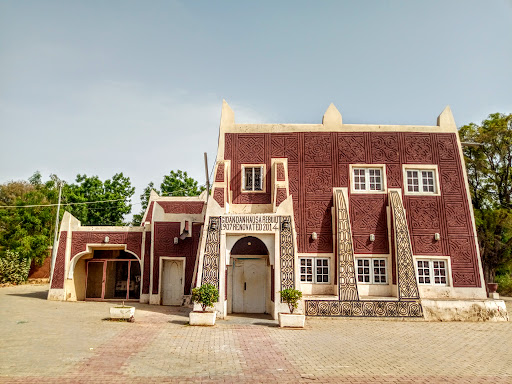
Hausa people

Hausa community in Russia forms caretaker leadership

By Abdullahi Muhammad 

The Hausa Community Organization, Al-Ummar Hausawa Mazauna Rasha, appointed caretaker leaders to oversee operations. New officials include Abubakar Abdullahi Musa as Public Relations Officer (PRO), Aminu Taura as president, and Ahmad Garba Yakubu as vice president.

Founded in 2023 by Arewa youth, the organization fosters unity and collaboration among Hausa people in Russia. It supports students, professionals, and workers by providing a platform for their interests and promoting cultural and social engagement.

Last week, the community held its second online meeting with Hausa participants from various regions of Russia. The agenda focused on selecting interim leaders to guide the organisation during its formation.

Following discussions, nominees for key positions were identified, and messages were sent to confirm appointments. The caretaker team is expected to oversee the organization’s structure, engage members, and outline objectives that align with community goals.

Speaking on his nomination, Abubakar Abdullahi Musa expressed gratitude and commitment to serving the Hausa community in Russia. He noted that the organisation represents an opportunity to strengthen bonds among Hausa individuals and provide solutions to challenges members face in a foreign land.

The Hausa Community Organization in Russia anticipates continuous progress under its newly established leadership. It aims to strengthen the sense of belonging and solidarity among its members.

AFCON 2023: Who divides Nigeria?

By Sani Bello Hamza

When Ola Aina, the Super Eagles fullback, missed the penalty during the semi-final of AFCON 2023 against South Africa, someone close to me uttered an abusive word in the Hausa language. He said, “shege Bayarabe.” From the way he voiced it, you could tell it was not intentional. He was unconscious, as we all were, and it came out of his subconscious mind. That is a typical example of what Nigerians are and how we hate one another.

A South-easterner feels isolated and does not want to be associated with the North. A Northerner also feels the South-easterners are “arna” and sees no need to relate or intermingle with them. I once came across someone who is happy and thanking God for the blessing of not visiting a particular region. You will sometimes think hatred is naturally instilled in us.

Malam Nasir El-Rufai was once seen on air lamenting how Nigerians from various parts of the country react to his social media posts. Whenever he posts an update, no matter how small, the Northerners would be there to hail and applaud him. While his counterparts from the South would abuse and curse the former governor. Why is this the case? Is it because he is from the North?

Anyway, what made me happier after the penalty shootout was not only the fact that Nigeria advanced and made it to the final, but how I saw my fellow students, regardless of their gender, age, religion, social class, and political affiliation, celebrate the significant win for our dear country. It was one of the joyous moments of my life.

Not only at ABU, I came across videos of students from other universities and communities celebrating the great win. Others went ahead to celebrate with the family of our unbeatable keeper, Nwabali. They refused to let anyone stop them.

The same thing happened during the final when we all turned up at various locations to support and cheer the Super Eagles. Even though we did not clinch the title, the outcome of the final will be a topic for another day.

Okay, back to the subject matter.

After the jubilations were over, a question popped into my mind. I said to myself, “Who is dividing Nigeria and Nigerians? Who is spreading hatred among Nigerians? Who is fueling and igniting the fire of hatred among us?”

An Igbo man is always looking for an opportunity to curse a Hausa man, and a Hausa man is always scouting for an opportunity to unleash his abusive prowess on Igbos or Yorubas for the slightest reason.

How come do we sit under the same umbrella, supporting and praying for the Super Eagles to win? Who then is creating these divisions in our country?

To answer the question above, I believe that the root of our division in Nigeria lies in rumors and mere speculations. Most of the people fueling the fire of hatred are those who have either not traveled outside their jurisdiction or refuse to open their minds to accommodate people from other regions. They limit their thinking to their regions and consume whatever they find in the media.

The above answer may not be sufficient, but as people living in the same region, if we do not speak the same language or wear the same attire, we share the same history and are meant to be together—this is undeniable. The richness and strength in our diversity are stronger than the weaknesses. So why should we opt for the weaknesses? Come on, fellow compatriots, think!

We must learn from the lessons of the 2023 AFCON: to shun our peculiarities and differences if we must progress as a nation. Our diversity should be a source of pride, not the opposite.

Sani Bello Hamza is a Law student at Ahmadu Bello University Zaria. He writes from Zaria and can be reached via sanibellohamza@gmail.com.

What will people say?

By Hafsat Ja’afar

Whatever you do, no matter how, no matter what, the mouth that eats salt and pepper must speak ill or otherwise of you to your ears or behind your back. Chin up and do whatever you want anytime, anywhere, with any person of your choice, as long as it is in line with your religion and culture. Wherever you find yourself, your self-esteem and dignity come in handy.

“What will people say?” They won’t stop talking about what doesn’t matter to you anymore. Everybody should bear his father’s name; why take Panadol for someone’s headache?

Your choice of clothing is too modest for my liking. Look elegant, captivating and seductive to show them you’re single and ready to mingle. Wrapping yourself like Shawarma, sandwiching that voluptuous body you have with baggy clothes and a gigantic veil won’t get you a ‘civilised guy’. You’ll be mistaken for a married woman.

These are the dumbest pieces of advice of the century ever. Living life to the fullest mostly comes with a penalty. As social animals, it is evident that we must respect society. But living for the community can be a nightmare sometimes.

During a chat with colleagues, a woman in her mid-forties confessed that she keeps two sets of clothes for every occasion when going out. One is for neighbours, and people of her community (modest wears), and the other set is for the event she’s attending, covered and dazzling in Swarovski, a see-through veil, and expensive jewellery. She can’t get dressed at home, for what people will say.

As a classroom teacher, I was told to stop telling people what I do for a living. Instead, I should refer to myself as a businesswoman. I asked what am I selling then? Just tell them you’re into selling turaren wuta [incense business] and atampa online; that suits you better. You may be looked down upon, and people gossip about you being an ordinary teacher.

Minding your Business 001 should be part of a secondary and tertiary education curriculum. It should be made a core course, not an elective, for people to learn when and how to mingle into the affairs that suit them.

Stop peeping with a 1000-megapixel eye for the mistake of others as your topic of discussion. Sweetheart, keep your eyes off things that are out of your league. Channel your energy towards positivity, not negativity and negative thoughts.

Everybody is entitled to his opinion and the life they choose to live. Make yours a memorable one.

Hafsat Ja’afar wrote from Kano via jaafarhafsat@gmail.com

This is the time for women to be financially independent

By Aisha Mahmud Yusuf

A few days ago, Dr Muhsin Ibrahim shared a story about a divorcee whose ex-husband refused to pay her medical bills. This is a familiar story as it happens to many people in our society.

I know of a divorced woman with three kids who has nowhere to go. Another woman was in an abusive marriage. When asked why she wouldn’t leave her husband, she said that he took care of her financial needs.

There’s also this woman whose husband was a serial womaniser and a drunkard, yet she couldn’t leave him because she has no means to sustain herself as her parents are dead.

In this society, a woman will be married off with no skill or education. Then get divorced and be left to start from scratch, thanks to the stigma attached to divorcees. No woman should be in an abusive marriage or miserable because she lacks financial independence.

Parents should let their girls finish at least secondary school and ensure they learn a skill. Those who finished higher institutions should be allowed to work or engage in business. The time to stay idle for women has passed. We should not let this poverty and misery cycle continue.

A woman should be financially independent regardless of her marital status. In case of divorce or the husband’s death, she should be able to care for herself and her children at least.

There’s no denying that our marriage institution needs reform, and the time to do so is now. Alhamdulillah, our scholars are now discussing it, but we need action. There is a need for sensitisation across rural as well as urban communities.

Girl-child education should be supported. There are many opportunities for learning that women can learn in the comfort of their homes, and they should be encouraged to do so.

 Aisha Mahmud Yusuf wrote via aishatyusuf63@gmail.com.

Body shaming, self-loathing and the quest for validation

By Maimuna Abubakar

People’s opinions of others have always psychologically impacted their social relationships and behaviours without considering an individual’s mental state and capacities. Many people say things to each other that are more painful than some physical injuries. Often that has detrimental effects on the psychological well-being of the parties involved. The issue of body shaming often results in self-loathing and even compels people to yearn for people’s validation.

Body Shaming is the act of humiliating a person by mocking, making jest, or making critical comments about their physical appearance in the form of the person’s body size, shape or weight.

Often, those who body-shame others claim to be just joking. However, the negative impacts of body shaming are numerous; it makes victims self-conscious, brings about issues of low self-esteem and poor self-confidence, and makes victims question their self-worth. Mentally, it creates the feeling of self-disgust or shame in the victims, while some feel like they have some biological defects like something is wrong with their biological makeup.

The media, especially social media and some product marketers, have succeeded in projecting what an “ideal body type” should look like, which is where most body type critics derive their inspiration. They believe that one has to be at least close to those “ideal body types” or that such a person is lacking in their physical structure.

Although fat shaming is the most common form of body shaming, people must understand that ‘skinny shaming’ is just as hurtful as fat shaming. Because some people are naturally thin or fat, it is in their genetics. Therefore, they can’t just gain weight or lose it simply because people say they should.

Body shaming has led many people to develop eating disorders that can be fatal to their general health, such as Bulimia Nervosa and Anorexia Nervosa.

Bulimia or Bulimia Nervosa is a serious disorder that occurs chiefly in females, characterised by compulsive overeating usually followed by self-induced vomiting and is often accompanied by guilt and depression.

Anorexia or Anorexia Nervosa, on the other hand, is another serious disorder in eating behaviour characterised by a pathological fear of weight gain leading to faulty eating patterns such as prolonged starvation.

Eating disorders are currently the mental conditions with the highest mortality rates, as research statistics show in Japan, the USA and other cities worldwide (BMC Psychiatry: 2020).

Body shaming has led to so many attempted suicide. Victims of body shaming, over time, begin to hate themselves as they view themselves through the lenses their critics see them. So many potentials are not discovered because victims of body shaming dread people’s criticism about their physique and, as a result, prefer to keep themselves hidden.

When I opened up a discussion about body shaming with some of my friends and classmates, it surprised me how many of us have, at one point in life, suffered at the hands of body type critics, and some are still suffering.

One of such friends, who is chubby, told me that when she was in her second year at the university, her roommate pleaded with her not to conceal her beauty by putting on the hijab over her well-tailored dress. When she refused to oblige, her roommate accused her of being insecure about her body weight and diagnosed her with an inferiority complex. She said that comment made her see herself differently and that throughout that academic session, she questioned her every action, constantly assessing herself until she deliberately learned to love herself for who she is.

Another close friend recounted how her close friends, immediate and extended relatives, would say things like: “Ina zaki kai wannan jiki haka?”, “Da dai kin rage cin abinci ya fi ye maki saboda maza bã sã son mace mai qiba“, “Wacce ko kyau ba ki yi ba. Wannan qiba haka wazai kwasa?” Her friends will joke about her body size, “me kike ci ne haka, muma a san ma na mu ci mu yi qiba“.

They possibly may not intend to hurt her feelings, but little did they know that such comments shatter their friends’ and families’ self-esteem.

Another said that her professor kept addressing her as a married woman, always asking her about her husband and children in class. Her classmates would laugh about it, and she would laugh too. Still, it hurt her every time he made such comments because she believed he assumed she was married simply due to her plus size.

A very close friend said that when she was a teenager, she hated herself so much that she always had suicidal thoughts because people kept telling her that she was too thin, too skinny, too bonny, shapeless etc. “Don’t put on tight-fitting jeans; it’ll expose your thinness”, “Put on baggy dresses to conceal your shapelessness”, “You look more like a boy than a girl”, “You’re ugly and unattractive, please eat some fatty foods to help you gain weight so that you’ll look presentable”, etc.

Although females get more body shamed, men, too, are victims on several occasions. A cousin has refused meals several times because anytime he sits to eat, his parents remind him how fat he is growing and how he needs to watch his weight. They will always compare his size to his friends and other cousins. These are his very own parents!

Another 20-year-old I met recently told me she wished God hadn’t created her because when she was in secondary school, some of her classmates and neighbours always complained about how thin and unattractive she was. It made making friends difficult for her because she couldn’t discern who liked her for real and who was just tolerating her. She, therefore, grew up in solitude, always alone. But now she finds herself in the university and realises she can’t continue her solitary life, yet she doesn’t know how to approach people. She was literally scared of even talking to me.

So, to the parents who see fault in their children’s biologically inherited physical structure, I hope you remember your role in bringing such a child to life. If you find their body size, shape or weight repulsive, remember that your genetics created them.

To friends ( or so-called), relatives ( immediate and extended ) and other members of society, please DO NOT verbally abuse people with your judgemental, unsolicited opinions of them. There’s no nice way of body shaming; “I was just joking” is only an excuse to humiliate people whose daily struggles your feeble mind may not be able to contain.

Finally and most importantly, to the victims of people’s insensitive, inhumane criticism about how you look and why you look that way, know that YOU DO NOT need anyone’s validation to be whom you want to be. Work on yourself, eat healthy, exercise to avoid illness, and keep a healthy head space.

Maimuna Abubakar is a Sociology student at Ahmadu Bello University, Zaria. She sent this article via maimunaabubakar200@gmail.com.

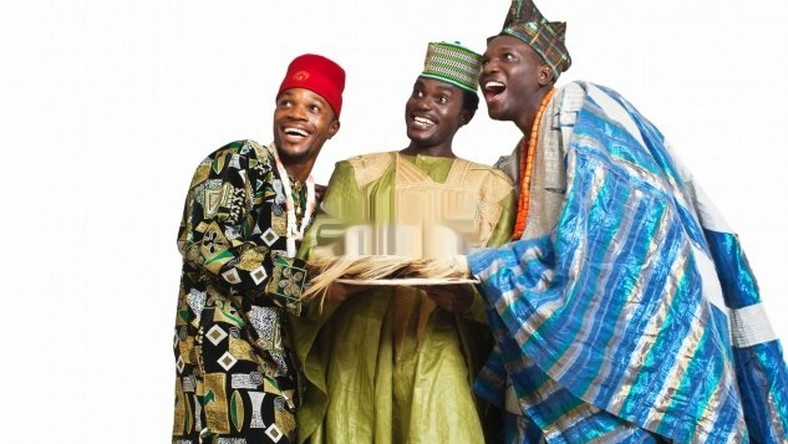
Cultural heterogeneity: Where it comes from, how to confront it?

By Safwan Suhaib Ibrahim

Culture, just like science, is never static. As we read more, travel more and impinge more and more on one another through trade, schools, international and religious organizations, our culture and behaviour patterns become heterogeneous – more cosmopolitanised. As people who are committed to the acquirement of wealth and knowledge for the power and insight they give, we must accept the challenges (?) they come with, which is, “Cultural Dynamism”.

Culture, to put it in a mild way, does not only centre on customs and attitudes inherited from our predecessors or the circulation of folktales by word of mouth. It’s also a formal way of training the young in a body of knowledge or creed, borrowing techniques and fashions of others, adopting and selling new ideas or products. Thus, cultural homogeneity is our – everybody’s – way of life.


It’s often not realised, least of all by a layman, that culture is a step further from people’s traditional food, dress, language, music and ceremonies; rather, it’s the people themselves and the society they live in. The human being is an evolutionary animal who is always assimilating new changes brought about by the socioeconomic wind. As we live, we design our culture and we also get designed by it. The everyday flirtation of native dress, songs, dances and language, skin colour or faith are never what exactly our culture is; they only represent a wee portion of it. Our ideas, our ties, our standards and the logic we reflect on a specific problem that confronts us speak more about our culture. 


We – Hausa – have perpetually claimed to be a unique breed of people who despise, or claim to despise, copying others, especially the Western world, though our current moral attitudes and ceremonies are in no way different from theirs. We’re now men of two worlds. So, It’s, of course, a sheer delusion for some of us to pretend to reject everything they’ve acquired from foreign culture simply because it’s “foreign”, but it’s not foolish to rescue one’s culture from total extinction. There’s a need for the revival of awareness of Hausa culture with its great philosophy and epos of music and poetry, dress and language and its ancient literature, but not a total rejection of foreign or alien culture; for that’s as illusive as self-defeating. 


Lest I be misunderstood, I’m not denying that foreign culture or ideas cannot have a destabilising influence on us (of course they do), but I believe there are some that impart a new impulse that prods us to create a new method of organisation and new hope for development. Thus, before we start thinking of driving those alien cultures and ideologies away, we need to study our culture and our people well. We need to start from the basics. That’s, I think, there’s a wider conception of our culture which we give little or no particular emphasis that needs to be tapped now.

Our respect for elders, hospitality to strangers, our feeling of brotherhood and community, our mutual aid for the provision of support and development of services like health protection and education, our freedom of expression, our readiness to provide an economic surplus to neighbours which was so deep-rooted in us that none was allowed to starve, wander in the street or suffer when there’s anything could be done to help him out, and our democratic statecrafts are all but an adventure to us and our progeny. Don’t you think the fight should be on our abstract, not physical culture? 


Safwan Suhaib Ibrahim sent this article via bagwaisafwan@gmail.com.

Isa Abba Adamu: the unsung hero

By Salisu Yusuf

Sunday, 8th of August, 2021 was a black day for the family of Malam Isah Abba Adamu, the BBC Hausa Service, its listeners, Kano people, the Hausa community in London, and the Hausa community globally over the sudden death of the Kano-born, renowned broadcaster, Malam Isa Abba Adamu. He was the first Black person to have headed the BBC Hausa Service. He was also the Executive Editor of BBC Africa Service.

Malam Abba Adamu has made an enormous contribution in the Hausa language policy formulations, which are policies put forward by ethnologists for language sustenance against language attrition (waning and death). For example, it’s a well-known fact that the Hausa Service has contributed a lot in the lexical modernisation of some new words to Hausa, especially the recent computer terminologies: kwamfuta, na’ura maikwakwalwa, megawati, etc.

Nowhere has late Isa contributed than in areas of translation. Millions of Hausa users will miss his voice, translation skills and interpretative nuance, especially from English news and reports to their exact Hausa versions.

Stations like BBC Hausa (in which Malam Isa was a figurehead and contributor) have attracted many non-Hausa speakers to news in Hausa. This has contributed to the increase in the Hausa speech community. Ethnologue estimated that over 47 million people now use the Hausa language as second language users. Language prestige is another factor in language development because a language attracts more users worldwide. The Hausa language enjoys high patronage as one of the most widely used mediums in the world. People such as the late Malam Isa are among the factors responsible for the prevalent use of the language in Nigeria and all over the world, where it’s used for literacy and information dissemination.

Lastly, the BBC Hausa is also involved in Hausa corpus planning. This involved creating a standard variety of language in spelling and grammar. BBC Hausa uses the Kano dialect in its broadcasts as it’s considered more standard even though with some modifications.

Late Malam Isa Abba Adamu will be remembered for his sonorous voice and more for his catchphrase during broadcasts: “Ana sauraron Sashen Hausa na BBC ne daga tsakiyar London, ni kuma nine Isa Abba Adamu.”

May the Lord in His infinite mercy forgive Malam Isa Abba Adamu and grant him Jannatul Firdaus, amin.

Salisu Yusuf writes from Katsina. He can be contacted via salisuyusuf111@gmail.com.