Hausa-Fulani

Buhari condemns murder of pregnant woman, Harira, 4 kids by IPOB

By Uzair Adam Imam 

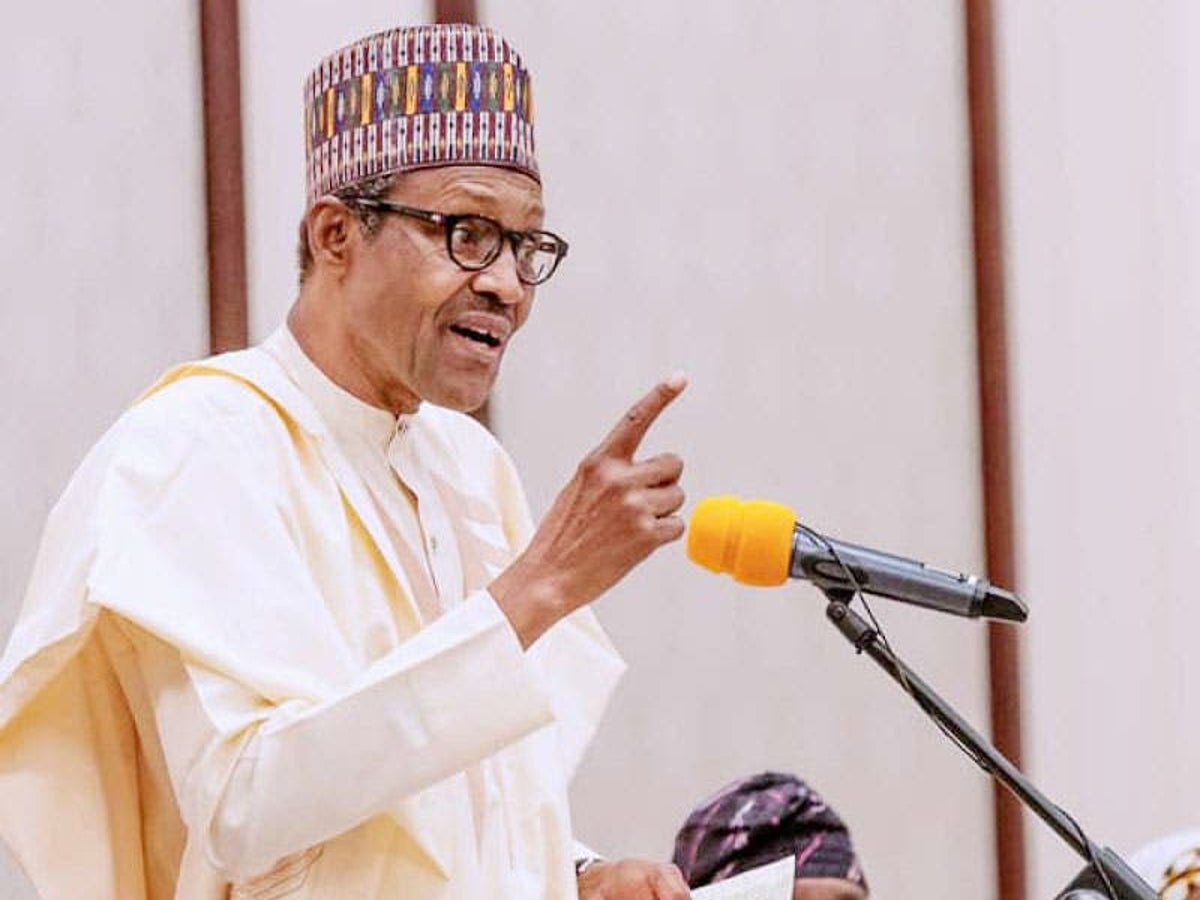
President Muhammadu Buhari has reacted to the barbaric killing of Harira Jibril and her four kids, threatening that the Indigenous People of Biafra (IPOB) should expect a tough response. 

The president criticized the killing of innocent people in the South East and other parts of the country. 

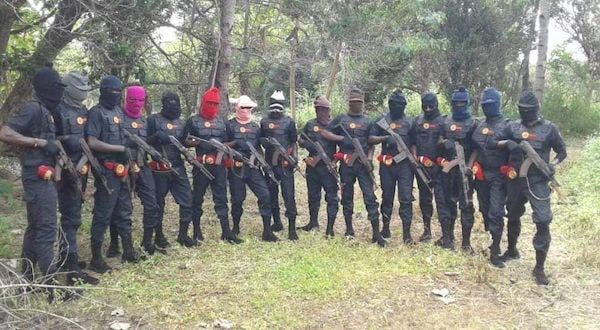
Recall that the Daily Reality reported how the outlawed terrorist group, Indigenous People of Biafra (IPOB), has mercilessly murdered a pregnant woman and her four innocent kids in Anambra.

The woman identified as Harira Jibril was killed alongside her four kids and six other persons of northern extraction on Sunday, May 23, 2022. 

The Senior Special Assistant on Media and Publicity to the president, Malam Garba Shehu,  disclosed this in a statement signed Wednesday, May 25, 2022.

However, the president described the incident as “wild, barbarous and wanton killings of innocent people.”

Buhari further urged citizens to avoid hasty steps or conclusions that could exacerbate the situation.

He cautioned that the general public should allow the law to take its proper course.

He added that “the public is against the indiscriminate sharing of posts on social media so as to deny vested interests who seek to divide us and create disturbance the chance to do so.”

Early marriage: Groom, 18, weds bride, 16

By Tijjani Muhammad Musa

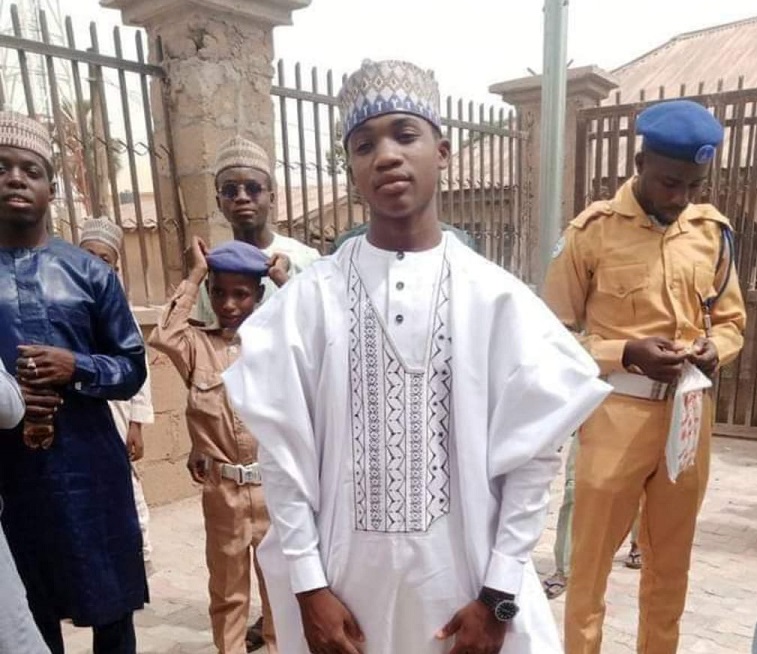
On a Friday, Tilden Fulani in Toro Local Government of Bauchi State witnessed something unique and rare in the marriage nikah of 18 years old Muhammad Ahmad Salihu and his bride Sumayyah Adam Ibrahim who is just 16!

According to our sources, the event which took place at the Ahlussunnah Wal Jama’a Izala Central Mosque of Tilden Fulani town was conducted in peaceful, exciting celebrations and fanfare.

With the Muslim Fulani lot of Northern Nigeria, it is a common thing to marry young. Marriage is often the preferred option once love and mutual understanding are arrived at rather than engage in illicit sex outside matrimony.

“And marry the unmarried among you and the righteous among your male slaves and female slaves. If they should be poor, Allah will enrich them from His bounty, and Allah is all-Encompassing and Knowing.” [Qur’an, 24:32]

The Messenger of Allah (SAW) said: ‘O young men, whoever among you can afford it, let him get married, for it is more effective in lowering the gaze and guarding chastity, and whoever cannot then he should fast, for it will be a restraint (wija’) for him.’ [Sunan an-Nasa’i, 3209]

So a sincere and hearty congratulations to the Ango (groom) and his Amarsu (bride). May Allaah SWT bless this early nuptial union. May He grant them peace and bless them with blissful offsprings and means of daily sustenance, amin.

Probe JUTH over anti-Hausa-Fulani activities – MURIC

News Desk

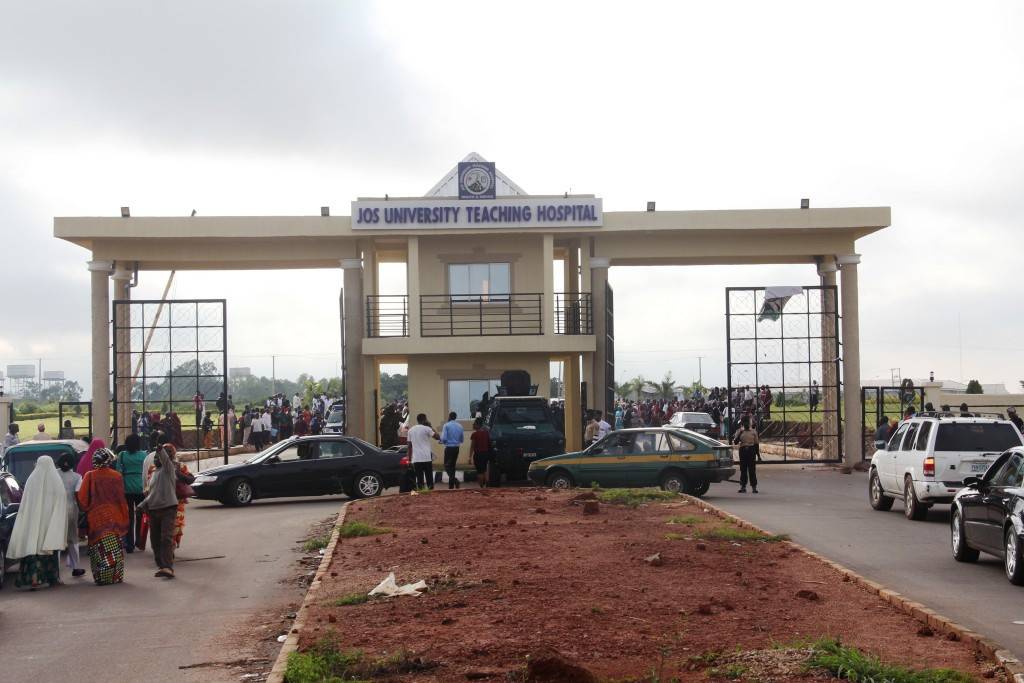
An influential newspaper, the Daily Trust, yesterday published a damning report on discrimination against Hausa-Fulani Muslims resident in Jos, Plateau State, who are being forced by record officers at the Jos University Teaching Hospital (JUTH) to change their states of origin and local government areas before they can register to see a doctor.

Meanwhile, an Islamic human rights organisation, the Muslim Rights Concern (MURIC), has waded into the matter. The organisation described the forceful change of states of origin as ethnic cleansing and unlawful de-indigenisation. MURIC demanded a probe into the allegation.

This was contained in a press statement issued on Sunday, March 20, 2022, by the director of MURIC, Professor Ishaq Akintola.

The statement reads:

“An influential newspaper, the Daily Trust, yesterday published a damning report on discrimination against Hausa-Fulani Muslims resident in Jos, Plateau State, who are being forced by record officers at the General Out-Patient Department (GOPD) of Jos University Teaching Hospital (JUTH) to change their states of origin and local government areas before they can register to see a doctor.

“This, indubitably, is ethnic cleansing and unlawful de-indigenisation. It is horrendous, detestable and despicable. It is the most odious and insidious marginalization and encroachment on Allah-given fundamental human rights of any tribe that ever happened on Nigerian soil. It is unlawful, illegal, illegitimate and unconstitutional. We, therefore, demand full investigation which should start with immediate effect.

“It is highly appalling. We cannot imagine such inhuman practice happening to Nigerian citizens in a Nigerian state. Such audacity is criminal. There must be consequences for such temerity for the culprits, their sponsors and those who are encouraging them.

“The probe should unearth the identities of all the victims from the time the evil practice started with a view to reversing the wicked acts and restoring the states of origin and local governments of the victims.

“We are shocked that such a discriminatory practice is being allowed in a federally funded hospital where people’s state of origin should not matter at all, particularly for health care delivery. It points to the likelihood of more egregious and horrifying things happening in hospitals belonging to the Plateau state government.

“There is no doubt that the state government is complicit and should be held responsible. It is impossible that this highly reprehensible practice is happening without the knowledge and tacit approval of the state government. It is a big shame that this kind of illegality is being promoted by a state governor who swore to uphold the constitution and to provide welfare services to people of the state. Conscienceless power is subjugating powerless conscience.”

AFCON 2021: Nigeria at home in Garoua – Residents

By our Reporter who is in Garoua


Hours ahead of Nigeria’s Group D opener against the Pharaohs of Egypt, many residents of Garoua have expressed their support for the Super Eagles and vowed to cheer the Nigerian national team to victory. 


After a grand opening ceremony, the twice-postponed Africa Cup of Nations finally kicked off on Sunday in Yaounde. The opening match ended with the hosts, Cameroon, beating Burkina Faso 2:1 to lead Group A.


Nigeria, playing in Group D alongside Egypt, Sudan and Guinea-Bissau, will get into action Tuesday evening against the Mohamed Salah-led Egyptians. All Group D matches will be played at the Roumde Adjia Stadium in Garoua.


Thousands of Super Eagles fans have stormed the Northern Cameroon town “to offer their maximum support” for Nigeria’s national team “to emerge victorious”. While many arrived by air, fans mostly from northern Nigerian states crossed the land and water borders between Nigeria and Cameroon through Adamawa state.


Garoua, a predominantly Fulani Muslim town, is wearing a new look with all major roads and streets adorned in Cameroon flags alongside flags of other participating countries. Nigerian flags can be sighted in many different locations, including on cars and motorbikes, signalling the level of support the Super Eagles have among Cameroonians as well as Nigerians residing in the country.


Many residents interviewed by TDR throw their weight behind the Super Eagles in the promising encounter against the North African opponents “in the spirit of good neighbourliness”, they said. 


“Though I like Salah (Liverpool star who is expected to lead the Egyptian onslaught against Nigeria), I will support Nigeria. When they play against Cameroon, I will support my country”, said a uniformed Cameroonian man who chose to remain anonymous. His position was echoed by Adamu (27) and Usman, a Cameroon-based Chadian.


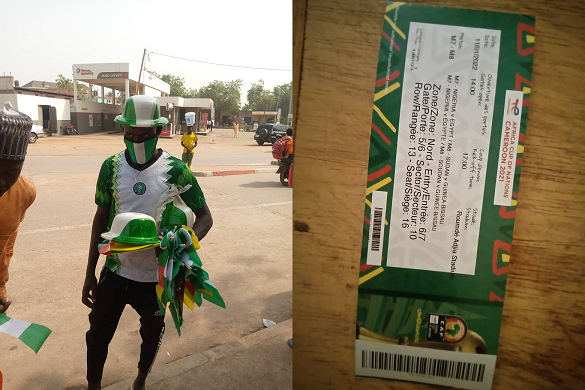
This reporter caught up Tuesday morning with a group of vuvuzela blowing Cameroonian youths along one of the busiest roads in Garoua. “Nigeria is at home”, the over-excited youths told TDR as they chanted and waved Nigeria’s flag.


Meanwhile, the sale of tickets is ongoing at various locations in Garoua ahead of the crucial Group D tie expected to record a massive attendance.

Fulani: The endangered species of Nigeria (II)

Ahmadu Shehu, PhD.

The first part of this essay published here highlights the necessary ingredients for genocide which are vividly in the advanced stage in Nigeria against the Fulani, one of the largest ethnic groups in the country. The socioeconomic and sociopolitical conditions that preluded genocide in various countries worldwide have been well documented in history books. Therefore, the worst anyone could do is to fail to see the looming disaster in Nigeria.

Decades ago, some political leaders had set the ball running when Bola Ige, a prominent Yoruba leader, called Fulani the “Tutsis” of Nigeria. Threatened by Fulani leaders’ socioeconomic and political clouds, politicians across the country who saw the Fulani not just as rivals but as a threat to their desired political hegemony borrowed a leaf from Ige’s playbook.

Those were the framers and promoters of diabolic stories against the North and northerners, especially the region’s political leadership. The narratives of “owners of Nigeria”, “northern oligarchy”, “Kaduna Mafia”, and such epithets as the cabal, northern domination, Islamization agenda and the completion of Danfodio jihad were given persistent, often aggressive, currency in the Nigerian public domain.

Another set of narratives to debase the intellectual competence and meritocracy of the North is put behind the federal character, with any northerner attaining success being assumed to be a beneficiary of some affirmative action, sheer luck or even the corrupt Nigerian system, regardless of their proven intellectual and mental capabilities.

This constant and persistent brainwashing has blindfolded a large chunk of southerners to the extent that many of those I meet believe that being Hausa-Fulani, even the richest black man on earth – Alh. Aliko Dangote – did not actually earn his wealth. So some of them would ask if I got some favours to be able to obtain a PhD from Europe, or question my academic job in Nigeria even when I teach them in Hamburg, Cologne or Vienna.

An average southerner has been made to believe that a northerner is an empty shell, a dullard, an illiterate who is incapable of any mental or physical success. Of course, these deliberate, false narratives are geared towards maligning and disorienting the North. But, the North is one large, diverse, but culturally interwoven community that cannot be beaten as a whole. There is, therefore, the need for a scapegoat.

Indeed, the orchestrators of this scheme got a few points wrong, but one thing they got right was the point of attack, i.e. the Fulani. Yes, Fulani, because they are the traditional rulers. They are the religious leaders. They are the political leaders. They have become Hausa-Fulani, and therefore the focal point of unity. The cultural war of the ’70s has failed to disunite the North simply because the Fulani historical and cultural orientation was left intact.

However, an opportunity presented itself when the media stereotyped the Fulani as herdsmen in all the reportage around herder-farmer conflicts – a stone-aged human resource conflict that has existed for ages – but only to be used as a tool for demonization and stereotyping of the Fulani people.

Populist politicians ala Ortom, Darius and their cronies in the North and South of the Niger seized the moment to first and foremost cover up their asses against the glaring failures of their administrations and to complete the agenda for the social, if not geographical, disintegration of the North. It was yet another tool for fighting a perceived Fulani president.

Throughout 2015 – 2019, the electronic, print and social media was flooded with the “Fulani herdsmen” stories. Headlines, editorials, columns, opinions, misinformation, disinformation, fake news – the word “Fulani” became the vogue in the media.

Today, this stereotyping has taken us a step closer to the looming genocide. Displaced Fulani herders in the northwest have become easy targets for recruitment into banditry and kidnapping. While arms dealers, informants, financial collaborators from other ethnic groups have established a business cartel in robbery, banditry and kidnapping, young, impoverished Fulani herders have become the foot soldiers that carry out these physical acts of crime.

Their knowledge of the forests and ecological terrain, their military-like lifestyle, bravery, coupled with the excruciating economic conditions, have made these unsuspecting lads easy prey of the city-based cartels. These are nomads who knew nothing, had nothing, and depended on nothing other than livestock, which is no longer a dependable source of livelihood, as indicated in the first part of this essay.

Millions of nomadic and sedentary herders’ continued destitution provided a vast army for crimes and criminalities we see today. This fact has been confirmed by research and is attested to by the governments. For example, in a recent in-depth study of banditry in northern Nigeria, Dr Murtala Rufa’i of Usman Danfodio University shows that bandits are victims of circumstances and tycoons from all other ethnic groups in the country.

Although this has been a known fact, have we ever heard of Igbo arms dealer, Hausa kidnap kingpin, Bagobiri kidnapper, Kanuri Boko Haram, Nupe informant, etc.? Do we know of Hausa yan-sa-kai, Bagobiri yan banga, etc.? How many people know that bandit Turji is actually ethnically Bagobiri and not Fulani? Why do we hear of “Fulani kidnappers” or “Fulani herdsmen”?

The implications for this sweeping criminalization of a whole community are as dangerous as they are numerous. Firstly, it has set the most united, cohesive ethnic groups, Hausa and Fulani, on each other’s throats. This is the arrow that might break the camel’s back in the scheme of setting the North on fire.

Secondly, it has criminalized the most important northern ethnic group in the sociopolitical front, making political cohesion impossible. Thirdly, it legitimizes crime and criminals by ascribing them to ethnicity or other human value systems. Fourthly, and sadly, that is the last bus stop on the road to Kigali.

When a whole community, ethnic group or society is viewed as criminal, worthless and or dangerous, the natural reaction is a sweeping, conscious and deliberate elimination of the community. Their elimination becomes a duty as the larger society feels unsafe in their presence. And yes, these feelings are illusions but have been entrenched in people’s minds to the extent that restraint becomes impossible.

Today, people (including Fulanis) consciously or subconsciously talk of killing the “Fulani” in Zamfara, Sokoto or Katsina. But then, in reality, when you kill Turji or his lieutenants, you do not kill Fulani. Because when you killed Shekau, you did not kill a Kanuri, neither did you kill Igbo by killing Evans. You have, in reality, killed a blood-thirsty criminal.

Now, why is the Fulani case different? Why are the media and various sections of this country bent on demonizing millions of Nigerians in the bad light of a few rugged criminals? At the risk of sounding conspiratorial, I will give my take in the next part of this essay.

The cow does not need oil

Ahmadu Shehu, PhD.

It is true that the large chunk of Nigeria’s export comes from oil and that Nigeria depends to a great extent on this commodity for economic survival. However, this situation results from economic laziness – one of the many curses that came with crude oil to our country.

Pre-oil era, Nigeria was faring better, leading in many aspects of social and economic endeavours, especially agriculture and technical skills. This diversity of resources made our economy very resilient. Those were the days when Nigeria was a role model to the developing world.

Speaking of livestock and animal husbandry in today’s Nigeria leads to misleading insinuations that some supremacist ethnic group domiciled in the bush wants to hijack the “southern-oil-money” to rear cows.

These claims are not only wrong, but their makers are also pathetically ignorant of national and global economics. The fact is that, all over the world, animal husbandry is mainly economic and not ethnic, religious or regional. It is a matter of income, survival and sustenance. Data from butcheries, ternaries, restaurants, etc., in Enugu, Lagos and Port Harcourt can confirm this.

However, I do not squarely blame the proponents of these narratives for their lack of understanding of the fundamental economic outlook of this country. Instead, I assume that this kind of utter ignorance is also one of the curses caused by crude oil in Nigeria. Just as it killed all other viable sectors of our economy and transformed our political leadership into a set of docile, sit-and-wait set of people, it has succeeded in destroying our intellectual discourse. Today, all socio-economic conversations are viewed from the narrow prism of petrodollars.

Thus, our socio-economic and political conversation is now bereft of ideas and far from our social realities. It is sad to see many people failing to appreciate the glaring fact that six decades after the discovery of oil at commercial quantity, this country did not only fail to develop but has moved backwards in all indices of human and social development.

The topmost hierarchy of political leaders, policymakers, and civil society has failed to learn one simple, practical truth: our country’s strength, resilience, and prosperity are not in oil. They are right there under our feet and noses, at the backyards, waiting forever to be harnessed and utilised. Nigeria can take a cue from our mates, ala Malaysia, Indonesia, Brazil, India, etc.

Now, back to the “oil-money” narrative. Are herders and cattle breeders asking for “oil money”? No. In fact, herders do not care – or are not interested in crude oil in Nigeria.  Secondly, those of us advocating for the development of the livestock sector do so for the economic advancement of Nigeria, in general, and not just the herders, or “Fulani”, as would say the bigots.

For one, agriculture (livestock and crop) is the largest contributor to Nigeria’s economic growth. It contributes 40% of economic activities, employing over 60% of our country’s population – that is, one hundred and sixty million Nigerians.

You may think that the livestock sector is economically barren and that governments and other sectors of the economy do not benefit from it. You may even argue that only the “malams/awusas” benefit from the economic resources in this sector. But, you are dangerously mistaken, and I will show you why.

In Nigeria today, livestock is a multibillion-dollar business sector. Estimates by the Federal Ministry of Agriculture show that each year, Nigeria produces (and consumes) at least 18.4 million cattle, 43.4 million sheep, 76 million goats, 180 million poultry birds, among other things. Multiply these numbers to any amount of years and see the contribution of the livestock to the Nigerian economy.

For demonstration, let’s assume each of the 18.4 million heads of cattle is valued at $200 only. What you get is a staggering 6 billion dollars – three trillion naira per year – i.e. about ¼ of the country’s annual budget.

My experience in cattle businesses tells me that governments at all levels make a minimum of 10% direct revenue on each cattle, ranging from the market, local government, state, transportation, etc., levies that trail the cattle market chain.

But, this is just for cattle. These numbers multiply exponentially when other varieties of livestock come into the equation. Now, consider additional extended revenues on factories and sub-sectors that rely solely on livestock, such as leather, meat, and dairy.

While doing the maths, please remember that these raw and food materials serve Nigeria, one of the largest markets in the world, the most populous African country and the largest economy on the continent. Thus, the economic resources and taxations derived from this sector are massive!

Therefore, the question that naturally follows this arithmetic is: How much is Nigeria’s budget for the development of this sector and the millions of people it employs? 

As Nigerians, we are aware of the 12% derivation to the so-called oil-bearing states at the expense of other equal federating units. The basis for this disparity is to enhance the development of the immediate oil-bearing communities.

Similarly, a large chunk of the oil income is reinvested in the oil and gas industry development. Businesses and individuals in this industry benefit tremendously from these incentives and investments.

On the contrary, the Nigerian budgetary allocations for agriculture, particularly the livestock sector, have been very meagre and far below the lowest AU benchmark of 10%. For instance, from 2015, the allocations for agriculture have been below 2% of the budget, receiving a paltry N160 billion (1.37%) in 2020.

Obviously, this is far from commensurate to the economic and financial contributions of the sector in Nigeria’s GDP. It also negatively affects the lives of the majority of Nigerians whose livelihoods depend on agriculture.

While the government’s spending on agriculture is pathetic, the situation is even worse in the livestock sub-sector. For instance, under “promotion and development of animal production and husbandry value chain”, the 2020 budget proposes only N546, 156, 792 for the whole livestock sub-sector. Note that this amount was not budgeted for just cattle, sheep, or poultry but Nigeria’s entire livestock value chain. And that is just a proposal, not actual spending.

This, given the resources, financial and material contributions of the sector, is an insult on the human senses of any keen observer. Moreover, juxtaposing this estimate to that of the crop value chain makes the economic injustice against livestock producers even more glaring.

Therefore, it appears that livestock production and development are grossly marginalised across all three tiers of government and even within the agricultural sector. I had hypothesised elsewhere that this disparity is one of the major causes of the setbacks in Nigeria’s efforts at agricultural development.

Now, in this socio-economic reality, the governments and other Nigerians outside the economic chain of livestock anticipate a quick, sufficient, and even elegant modern livestock breeding system in Nigeria.

Worse still, the government expects these people who suffer from this severe lack of financial support, access to social development and political representation to be absolutely immune to the social consequences of this economic inequality and injustice.

This, without fear of contradiction, is an impossible mission. For, we have learned from the works of the philosopher-king, Emir Muhammad Sanusi II, that every economic situation bequeaths social reaction(s), as humans are not only social but also “economic animals”.

The points derived from the previous discussion are that herders and livestock breeders do not need oil or its by-products to grow livestock. They do not also ask for money accrued from the oil and gas industry to be invested in developing the sector.

What the livestock needs – which is legitimate and necessary – is the reinvestment of a fair portion of the wealth it creates back into the sector and the social development of the herding communities.

By and large, herders are not asking for “oil money” because the cow does not need oil to prosper. We are only saying that the money accrued from the livestock sector – a small portion of our contribution to the nation’s economic basket – be reinvested into the very sector that produces it as is done for other salient sectors of the economy. Full stop!

Dr Ahmadu Shehu is a herdsman and academic. He can be reached via ahmadsheehu@gmail.com.
Viral video shows how IPOB insurgents decapitate 2 Muslims

By Muhammad Sabiu

A viral video clip shows how some suspected terrorists working for the Indigenous People of Biafra (IPOB) beheaded two Northern Nigerian Muslims.

Daily Nigerian, an online newspaper, reports that the terrorists could be seen displaying the heads near an open fire, as they were jubilating “their feat and identifying the nose and forehead of one of the victims as “Hausa”.

As they were chanting different inciting words, juggling one of the two heads, one of the perpetrators said in the Igbo language, “This is a Hausa man now”, while another argued that the head was of a Fulani man.

Recall that IPOB terrorists maimed one driver of the Ɗangote trailer and some of his assistants in the past weeks.

IPOB has been notorious for killings and setting government and other detention facilities on fire.

The group leader, Nnamdi Kanu, was some months ago apprehended abroad and repatriated, and he is currently standing trial for treason, jumping bail and illegal possession of arms.

Rethinking the NYSC redeployment and service in absentia

By Bilyamin Abdulmumin

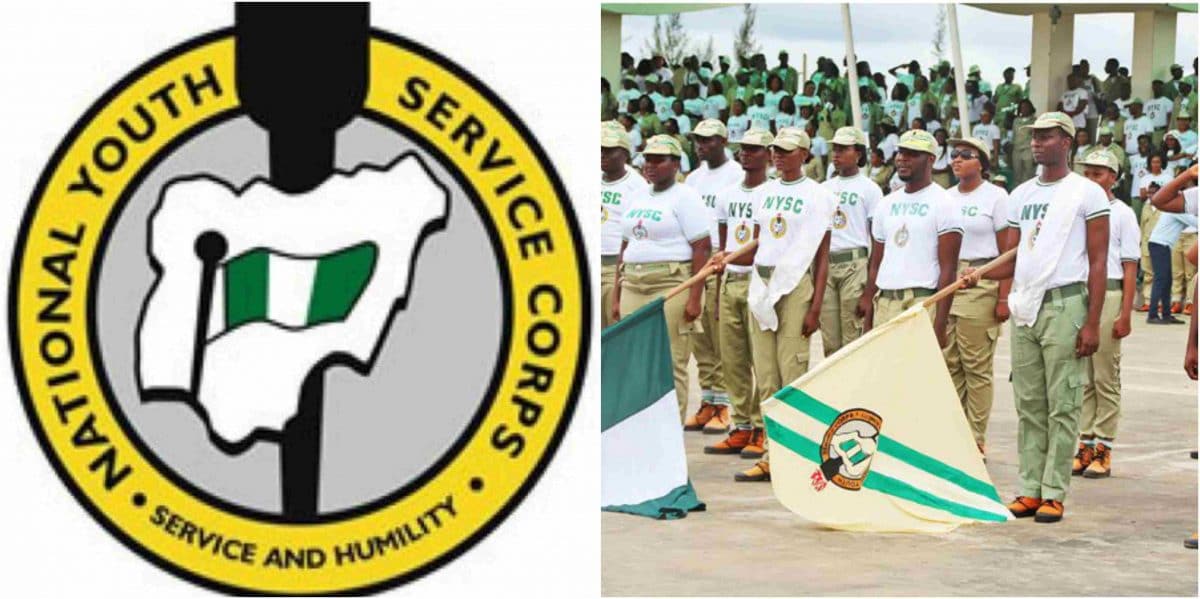
After the ugly event between 1967 and 1970 in Nigeria that threatened to end the country’s years of coexistence, the then Federal Government sought to mend the fences by mandating one year of National Youth Service  Corps (NYSC) for university and, later, polytechnic graduates.

The program was made effective by ruling that prospective Corps are deployed interchangeably across regions and states. This provides a platform to understand better the country’s cultural diversity and catalogue other differences among Nigerians.

To many, the NYSC scheme is a brainchild to later life achievements, building connections that lead to many things such as jobs, skills acquisitions, marriage or lifelong friendship.

However, out of not knowing, many prospective Corps members risk missing out from this one-lifetime experience in the name of redeployment or service in absentia.

At the tail ends of the NYSC three-week orientation camp, one thing that dominates the exercise is relocation application.

The NYSC commission has provided the options for relocation after completing the three weeks orientation camp from one state of service to another on the grounds of many reasons such as health, marriage, security and what have you.

Many Corp members would seek to outsmart this relocation window, intentionally citing health grounds, among many other reasons, for the relocation. Last Thursday, during the ongoing orientation camp, Gombe State chapter DG had echoed that: “There is no need to invite sickness you do not have upon yourself for the sake of relocation”

It doesn’t take careful observation to note that most applicants are typical northerners, aka Hausa-Fulani.

This leads to an intriguing conclusion; Hausa-Fulani folks are home loving-people. Therefore, they do not want to explore other regions apart from their familiar environment despite the enormous possibilities attached with that.

These home-loving youths would come home after redeployment only to continue from where they stopped; the circle of routine activities but little do they realize that the bet wasn’t worth it.

In education, unarguably where the NYSC scheme found its most important use, many secondary schools poised as Place of Primary Assignment (PPA), especially the public ones, would improve their teaching capacity with these agile youth (bubbling with fresh ideas) who came from different backgrounds. In addition, many students would get their inspiration for future careers from these  Corp members. I’m a living witness, and I have come across many friends who testified to that.

Those Corps who came away from their PPAs have only the service to offer; therefore, they are the most dedicated to their service. Service at home is a deterrent to the prospective Corp members from giving their best; therefore, it makes redeployment to home non-recommendable. On the other hand, service in absentia deprives the host PPA; it will also come back hunting the Corp members involved.

Sometimes later, whenever there is a discussion on the NYSC memories period while those who served in absentia are sent into oblivion, the deployed youths will just be cut short with little to reminisce. However, many of them never hesitate to voice their regret for being deployed to their homes or even from rural to urban cities.

When it comes to having eventful memories, serving in the rural areas is the bomb. That is where NYSC youth Corps members are treated with glamour or grandeur, unlike in urban areas. Perhaps the lack of due recognition to NYSC in the urban areas is because of the high number of youths who were once members; the society became used to the scheme.

Initially, when deployed to a particular environment, primarily rural, it depends on how rural the area is; the writing will be all over the wall that a significant readjustment is necessary, the hopeless loom large on the horizon. Cortisol level overshoot, the less tough youth (female) breakdown crying. Yet, at the same time, men who are more practical with emotions keep it within them. This traumatic experience would soon make the relocation processes continue at an unprecedented rate or invoke planning ideas of serving in absentia either by showing up just during the monthly CDSs or abdicating completely with impunity.

However, the enigma of the arrival would naturally fade away; the cortisol level would come down and, after given sufficient time, the codes of living in the newfound environment begin to be deciphered. One can then manipulate the environment to his taste until at a point after settled. Then, one begins to imagine the wind-up is fast approaching or even fantasy for an extension of the programs.

Dear Corps members currently on the camps or those coming later, avoid plunging into remorse later and shortchange the PPA community. It would be best if you rethink the idea of redeployment or service in absentia.

Bilyamin Abdulmumin is a PhD candidate, Chemical Engineering, ABU Zaria. He can be reached via bilal4riid13@gmail.com.

The danger of ‘otherization’

By Mukhtar Garba Maigamo


The trending video that surfaced after President Buhari attended the UNGA in New York, showing an unprovoked assault on some people that are considered “Hausa-Fulani” or “Northern Muslims” by their provocateurs on account of their facial countenance and, or the apparels in them, is a perfect example of the deep-rooted hatred, obsessions and insecurities bedevilling many people in some parts of this country which translated into this dismissive ‘othering’.


It is even very possible that these two or three people in the video who are being verbally assaulted with a barrage of racist abuses and the most opprobrious language, share no cultural or ethnolinguistic affinities with Fulani, but because of the fact the racialization of the Buhari/APC government has taken a firm root, the entire people of the North are lumped together as either Fulani or Hausa-Fulani (whatever that means) and demonized by many people in the South, including even the most educated ones. What a profoundly ignorant mischaracterization!


This sort of ignorance has historically also manifested in the ‘Aboki’ and ‘Gambari’ ethnic slurs these people used with profound contempt.


But the striking irony is that there are many people here in the North or even residents of Daura (hometown of Mr President) who might have felt disillusioned with the Buhari’s administration, who could also share cultural, ethnic and religious affiliations with him. Still, they are worst-off today, and there are those also who do not share these features with the president. Still, by their circumstances or by way of geography, they are lumped together and mischaracterized as Fulani or Hausa Fulani.


But the danger of this otherization and the racialization of APC is that it could provoke ethnic and religious sentiments during elections and make people rally around a maligned candidate- whether he is the right choice or not, in terms of capacity and ability to deliver.


When, because of your pathological hatred of a single person, his party or associations, you pigeonhole an entire stock of his ethnic nationality and derogate as dregs of the country, you are invoking his people’s consciousness to rise against you whether or not they love him.


This same thing happened during GEJ when some clannish zealots otherized the entire country, but south-south. Under GEJ watchful eyes, Edwin Clerk and his passengers went about with rhetorics and threatened fire and brimstone against anyone who raised eyebrows against their posturing.


His wife also went about demonizing the North as the habitat of almajiri (the almajiri that are menacing the North too, and whom many people in the North were campaigning against).


Her infamous diatribe, “our people no dey born shildren wey dem no dey count. Our men no dey born shildren throway for street. We no dey like the people from that side” was the final straw that galvanized the anger of people to rise and rally around ethnic solidarities to defeat GEJ.


The victory of APC in 2015 and 2019 was, therefore, a combination of many factors, including the idealization and evocation of sentiments for candidates put forward by the party.


And this will continue to play out if the antipathy like the one we’ve seen in this video continues.


Mukhtar Maigamo writes from Kaduna. He can be reached via mgmaigamo@gmail.com.