Hausa Films

Gidan Badamasi (Season 7) – A Short Review

To Kannywood audiences, the TV series Gidan Badamasi needs no introduction. It is arguably the most successful comedy series since the industry’s migration to YouTube/TV series production. There have been other popular comedy series, such as Zafin Nema and Jikokin Maigari. However, none has matched the reach and longevity of Gidan Badamasi.

After six successful seasons, Gidan Badamasi now returned with Season 7. Only two episodes have been released so far, yet the new season already shows the potential to surpass its predecessors. This is due to its thematic preoccupation, which tackles the issue of insecurity in Northern Nigeria and the problematic framing of the Fulani ethnic group as terrorists without distinction. The new season rightly reinforces a crucial truth: that terrorism has no religion or ethnicity.

The first episode opens with Alhaji Badamasi (Magaji Mijinyawa) and his aide, Taska (Falalu Dorayi), being abducted by kidnappers. The kidnappers’ kingpin, Dan Tsito, is portrayed as Fulani.  However, the narrative shows that Dan Tsito’s criminal path begins within his own community (Rugga), before extending into the forest, where he operates alongside criminals from other ethnic groups. 

The series obviously avoids ethnic reductionism and offers a more balanced portrayal of terrorists and terrorism in Nigeria. It also dismantles the notion of selective victimhood by presenting Alhaji Badamasi, a Hausa Muslim, and his aide as victims. This challenges how the international community often wrongly assumes that terrorism in Nigeria targets only Christians, and how films like The Herd (2025) subtly reinforce that misleading narrative.

The director, Falalu Dorayi and the creative team deserve commendation for addressing this sensitive issue with courage and clarity. This is the kind of storytelling Northern filmmakers must prioritise – telling their own stories truthfully rather than allowing outsiders to define their realities.

The series is also technically solid. Both picture quality and sound design are commendable. However, based on the two episodes released so far, the makers need to be more restrained with unnecessary comic scenes. A more disciplined approach would allow the series to do full justice to the seriousness of its subject matter.

In conclusion, Gidan Badamasi Season 7 shows strong promise. It remains as entertaining as previous seasons while effectively blending important social issues into its narrative. I highly recommend it.

Reviewed by

Habibu Maaruf Abdu

Habibumaaruf11@gmail.com

Kannywood Best Performances of 2025

In 2025, the Hausa film industry, popularly known as Kannywood, witnessed a clear shift, with series films completely overshadowing feature-length productions. Apart from Mansura Isa’s Faliha and Falisha, no major Kannywood movie was released in cinemas throughout the year. This is, of course, troubling, as series films alone do not define the strength and global reach of any serious film industry.

However, series films attract more audience commitment, offering extended runtimes, deeper character development, and closer engagement with social realities. They also give filmmakers and actors the room to explore complexity in ways feature-length films often cannot.

After following several Kannywood series throughout the year, six clearly stood out for viewership, audience engagement, and the level of conversation they generated. They are as follows:

  1. Labarina (Season 14), 
  2. Wata Shida
  3. Garwashi
  4. Jamilun Jidda
  5. Zabi Biyu, and 
  6. Taskar Kannywood (Da Na Sani)

The above series were considered for the year’s best performances. Nominees were first identified within each series, after which an overall winner was selected for each category based on consistency, depth of performance, narrative impact, and contribution to the series as a whole.

  1. Best Actor of the Year 

Top Nominees:

  1. Adam Garba (Abba Galadima in Labarina [season 14], and Sameer/Dahiru in Wata Shida)
  2. Abubakar Waziri [Bado] (Malam Sani in Garwashi)
  3. Ali Nuhu (Professor Nuri in Jamilun Jidda)
  4. Yakubu Muhammad (Mudan in Garwashi)

Winner: Adam Garba (Abba Galadima in Labarina [S14], and Sameer/Dahiru in Wata Shida)

Adam Garba’s contributions to two of the top series clearly set him apart from other nominees. In Labarina (season 14), he delivers a calm, grounded performance as Prince Abba Galadima. However, his portrayal of Sameer/Dahiru in Wata Shida demands duality and emotional balance, all of which he handles with impressive control.

  • Best Actress of the Year 

Top Nominees:

  1. Fatima Abdulahi Washa (Sumayya in Labarina [Season 14])
  2. Fatima Hussaini (Zahrah in Wata Shida, and Ruth/Fatima in Jamilun Jidda)
  3. Fiddausi Yahaya (Ma’u in Garwashi, and Jidda in Jamilun Jidda)

Winner: Fatima Hussaini (Zahrah in Wata Shida, and Ruth/Fatima in Jamilun Jidda)

Although Fiddausi Yahaya left a strong impression as Ma’u in Garwashi and the title character in Jamilun Jidda, Fatima Hussaini maintains a stronger performance quality across different projects. The confidence she showed as Zahrah in Wata Shida, and her dual role in Jamilun Jidda prove her versatility, as she navigates contrasting identities effectively.

  • Best Supporting Actor 

Top Nominees:

  1. Rabi’u Rikadawa (Baba Dan Audu in Labarina [Season 14])
  2. Kabiru Sani (Gaddafi in Garwashi)
  3. Isah Feroz Khan (Kasim in Garwashi)

Winner: Kabiru Sani (Gaddafi in Garwashi)

Each of these actors delivered memorable supporting performances, but Kabiru Sani, alias International, stands out for the complexity and freshness he brought to the role of Gaddafi in Garwashi. The character is a blend of thuggery and humour. This combination could easily have messed up in less capable hands. However, Kabiru International plays it naturally. His performance felt confident and fully formed.

  • Best Supporting Actress

Top Nominees:

  1. Faiza Abdullahi (Lawisa in Garwashi)
  2. Bikisu Safana (Shatty in Wata Shida)
  3. Aisha Humaira (Samira in Garwashi)

Winner: Faiza Abdullahi (Lawisa in Garwashi)

The reason why Fa’iza Abdullahi wins is the way she adjusted her physicality, voice, and mannerisms to fit in the thuggish character of Lawisa in Garwashi. Her performance reminds you of Alia Bhatt’s finest performance in Gangubai Kathiawadi, which earned her the prestigious Indian National Film Award.

  • Best Villain of the Year

Top Nominees:

  1. Hauwa Farar Lema (Kilishi, Labarina [Season 14]) 
  2. Balaraba Abdullahi (Baba Lami, Garwashi)
  3. Magaji Mijinyawa (Kawu Nakowa, Wata Shida)

Winner: Hauwa Farar Lema (Kilishi, Labarina [S14])

Hauwa Farar Lema’s portrayal of Kilishi in Labarina (Season 14) stands out for her deep understanding of the character’s motivations and emotions. Her performance feels realistic. She looks fearsome and conveys the essence of her malicious character through threatening glances and expressions.

  • Star of the Year

Winner: Fiddausi Yahaya (Ma’u in Garwashi and Jidda in Jamilun Jidda)

While some critics question her acting prowess, Fiddausi Yahaya is undoubtedly the star of the year. As a relatively new actress, she suddenly became a household name, gained a massive fan following, trended widely on social media, and began appearing in multiple big-budget projects such as Garwashi and Jamilun Jidda, among others. She is a subtle performer and has shown steady improvement in acting quality with every new role.

  • Best Breakthrough Performance of the year

Winner: Amina Shehu [Lulu] (Samira in Da Na Sani)

A breakthrough performance is a role that elevates an actor’s visibility and reputation. This happens to Amina Shehu after delivering an intense and emotionally layered role of Samira, nicknamed Kwaila, in “Da Na Sani”, the seventh film from Taskar Kannywood collection. Da Na Sani became the most-reviewed film, and her performance in it was probably the most widely acclaimed of the year. 

  • Most Promising Actor of the Year

Winner: Murtala Yahaya Musa Sarauta (Bello in Zabi Biyu)

Judging by how convincingly he handled the role of Bello in Zabi Biyu, only a few roles would truly challenge him. He may appear too mature and lack the conventional swagger of Kannywood heroes, but his acting skills are too solid to be overlooked. With the right story that suits his personality, Murtala is really an actor to watch.

  • Most Promising Actress of the year

Winner: Hassana Ibrahim (Safiyya, Zabi Biyu)

The debutante Hassana Ibrahim demonstrates exceptional potential in her powerful lead performance in Zabi Biyu. She portrays emotional depth and control, particularly in scenes that require vulnerability and internal struggle. She has a commanding screen presence, delivers her dialogue effectively, and complements it with appropriate gestures

  1.  Best Comic Performance

Winner: Isiyaka Jalingo (Zabi Biyu,and Garwashi)

Isiyaka Jalingo is not merely funny; he generates humour through behaviour and mannerisms while still serving the story. His roles are not designed solely for comic relief; instead, the humour emerges organically from the way he speaks and acts in every scene he features. His roles in Garwashi and Zabi Biyu, though small, leave a huge impact.

Written By

Habibu Maaruf Abdu

habibumaaruf11@gmail.com

Kannywood in London: Actors bring Northern Nigerian culture to the global stage

By Aliyu Abubakar

Kannywood actors Ali Jita and Ali Nuhu recently took to the stage at Success Hall in London on Saturday, April 22, 2023, showcasing the talent and artistry of Northern Nigerian culture for the first time as part of the 2023 Eid celebration party. Their performance not only highlighted the cultural richness and diversity of the Hausa and Arewa people but also demonstrated Kannywood’s growing reach and influence beyond Nigeria’s borders.

As Ali Jita and Ali Nuhu performed in London, their fans watched in awe as they seamlessly blended music and dance to showcase the beauty of Hausa and Arewa culture. The audience was treated to a stunning performance that celebrated the talent and creativity of the actors and showcased the unique heritage of Northern Nigeria.

For those who may not be familiar with Kannywood, the film industry produces movies in the Hausa language in Northern Nigeria. It has been gaining popularity recently, with a growing following among Nigerians and beyond. The success of Ali Jita and Ali Nuhu’s performance in London is a testament to Kannywood’s increasingly global reach and influence.

This achievement is a proud moment for the actors, their fans, and the entire Kannywood industry. Moreover, it marks a significant milestone in the growth and development of Northern Nigerian culture, highlighting the resilience and creativity of its people.

Ali Jita and Ali Nuhu’s performance in London was significant for the Kannywood industry and the Hausa and Arewa communities in the diaspora. For many Northern Nigerians living outside their homeland, the performance reminded them of their culture and heritage, bringing a sense of pride and joy to their hearts. In addition, the event provided an opportunity for the diaspora community to come together, celebrate their traditions, and connect with their roots.

The success of Ali Jita and Ali Nuhu’s performance in London also reflects the power of culture in fostering cross-cultural understanding and promoting unity. The event brought together people from different backgrounds and cultures, providing a platform to showcase the beauty and diversity of Northern Nigerian culture. It also helped to break down stereotypes and promote a deeper appreciation of the vibrant cultures that exist in Nigeria and Africa as a whole. As Kannywood continues to grow and gain global recognition, it has the potential to serve as a bridge between different cultures, promoting understanding and fostering unity.

In conclusion, Ali Jita and Ali Nuhu’s triumphant performance at Success Hall in London as part of the 2023 Eid celebration party is a significant milestone for the Kannywood industry and a proud moment for the Hausa and Arewa people. It celebrates the beauty and richness of Northern Nigerian culture and showcases the talent and creativity of the region’s actors and filmmakers. Furthermore, the event has helped promote cross-cultural understanding and foster unity, highlighting Kannywood’s potential to serve as a bridge between different cultures. As the industry grows, we can look forward to more exceptional performances from Northern Nigeria’s talented actors and filmmakers.

Aliyu Abubakar is the MD. Rbm e-Tech and Digital Services, Hadejia, Jigawa State. He can be reached via aliuabubakar852@gmail.com.

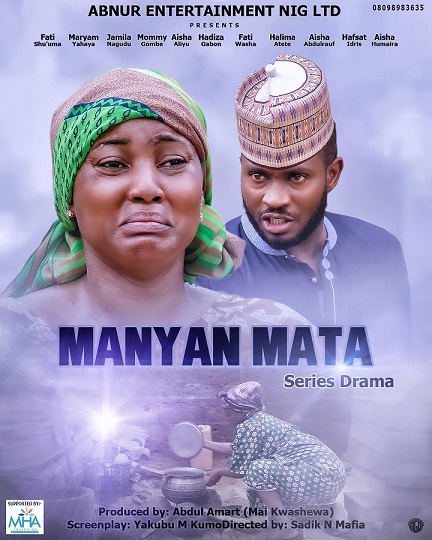
Manyan Mata: A new, worth-watching Hausa series

By Salim Toro

Yesterday, after meeting with Usman Toro, I returned home immediately to have dinner before retiring to bed. My siblings were watching a Hausa web series, Manyan Mata. So, while having dinner, I caught half of the episode they were watching. I found it captivating and worth watching.

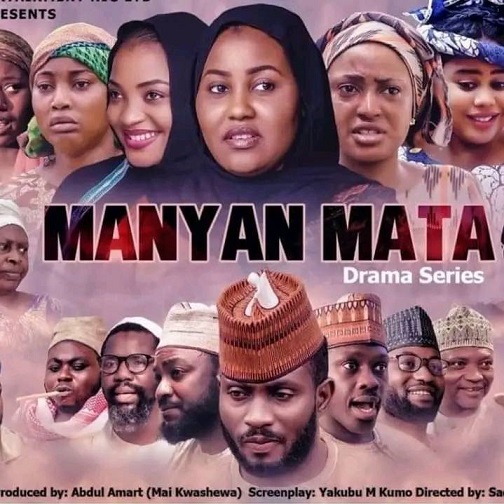
I later learned it’s a new Hausa web series that premieres on YouTube and airs on Arewa24 every Saturday at 9 pm. The series is produced and directed by Ahmad Amart and Sadiq N Mafia, respectively. It brings all the leading Kannywood actors and actresses, such as Ali Nuhu, Adam A Zango, Sadiq Sani Sadiq, Hadiza Gabon, Fati Washa, Saratu Gidado, Momee Gombe and much more.

The storyline of the series is fascinating, entertaining, and educational as well. It highlights and depicts most of the trendy issues in our society (Arewa), such as marital and parental responsibility, girl child education and Almajiranci.

While I find the series riveting and worth watching, I recommend it to everyone here. Rest assured that you will benefit from it in one way or another. Happy watching!

Salim Toro sent this via salimabdulhamid0909@gmail.com.

Quick takeaways from the premiere of Manyan Mata!

By Mahmud A. Zukogi

This much-awaited, much-talked-about and star-studded film series, which incidentally will hit your screens today, Saturday, February 11, 2023, at nine o’clock this evening on Arewa 24, was premiered on February 4 at the Film House, Ado Bayero Mall, Kano.

The event, which was graced by the invited guests and Kannywood’s veteran, reigning and emerging stars, was full of the usual fanfare, excitement and expectations associated with the premiere of any new film. The red carpet was lit with beautiful lighting and stars, and guests took turns to pose to the beauty and demand of the evening.

The industry is gradually exploiting the opportunities that film serialisation provides, no thanks to the exciting marketing platform made available by the leading entertainment television, Arewa 24. It is to the eternal credit of the television that such films as Dadin Kowa, Gidan Badamasi, Labarina, Kwana Casa’in, Gidan Danger, etc., have become popular and a must-watch by the teeming audience of the industry. It is obvious, therefore, that the art of film serialisation has gained currency in the industry, and Manyan Mata is coming to compete for space and attention. How it is able to do this will depend largely on the techniques and the staying power of the crew, especially the producer and the director.

Manyan Mata is produced and directed by two of the industry’s iconic duo, Abdul Amart (Maikwashewa) and Sadiq Mafia. What the film brings to the table can be summarised into three: innovation, diversity and topicality of motif. Abnur Entertainment is known in the industry for innovations that have opened a window of opportunities to the core stakeholders, from the producer down to the end of the ladder in the entertainment chain.

The film is highly diverse because of the array of stars it could gather under one roof. As far as the Kannywood industry is concerned, it takes great power, confidence and directing abilities to handle these stars, each with his/her ideals and idiosyncrasies. Thus, if any outstanding star is left out of the film, it could be a result of unavoidable oversight or a logistical glitch. But getting Ali Nuhu and Adam Zango, the northern and the southern poles of the industry, in one set is no doubt speaks of the commendable effort of the producers. Talk of the leading female stars of the industry; name them, and they are all there.

What, then, are the central motifs of the film and which has made it outstanding and a must-watch? The Almajirci question, the girl-child abuse/prostitution and the male overload of the women under the guise of marriage have been juxtaposed to educate, entertain and, most of all, draw public empathy to the raging social issues putting us down as a people.

The premiere opens with electrifying scenes of these social motifs, and this drew great excitement from the audience, who expressed individual understanding and appreciation of the representations in the film and its many expectations.

Veterans of the industry were well represented, ranging from Kabiru Maikaba, Shehu Hassan Kano, Hajiya Saratu Gidado Daso and the like. No less represented were the leading directors in the industry who came to support one of their own. There were expressions of appreciation and critique of the film, which was well received by the directing crew.

Overall, the premiere evening was full of life, excitement, and encomiums for the head of Abnur Entertainment, Abdul Amart, for his creativity and vision.

The greatest oversight is the industry’s inability to tap into the opportunities provided by the university which is next door. As far as the industry is concerned, there has not been a concerted effort to establish the needed relationship between and gown, a beneficial relationship that would help to grow the industry and take it to a whole new level of growth and worldwide visibility.

Strong institutional linkage is desperately needed to grow the art and economy of this under-tapped multibillion-dollar industry. I’m aware that scholars such as the respected Professor have invested so much energy in intellectual research that would have propelled the industry to the worldwide heights it ought to be. Same for Professor Yusuf Adamu, Ibrahim Malumfashi and, lately, Dr Muhsin Ibrahim, who has published widely and recently completed his PhD on a topic related to the industry at the University of Cologne.

Yours sincerely and his colleagues were only there in their individual capacity and not on institutional representation, which shouldn’t be the case.

It is thus necessary and about time that this costly oversight is remedied. The industry needs to open up and embrace change, and the best way to do this is to key into the opportunities they stand to gain by establishing a solid relationship with the university to improve its art and human capacity. I also believe this should be a two-way process, so the university should take the industry into confidence and dispel its image of unapproachability.

Mahmud Zukogi can be reached via mabuzukogi78@gmail.com.

Top 5 Kannywood films of 2022

By Habibu Ma’aruf

The year 2022 has not been great for the Kannywood film industry. There was a substantial decline in feature film production as the popularity of series films soared, piquing the interest of more producers. Cinematic releases were at a premium throughout the year, with just nine films, making it a ratio of less than one release a month. The situation was so severe that no major production was shown at cinemas, even during the Eid ul-Fitr festivities.

However, while some of the few releases fell flat on their faces, others have managed to make it in the trying year. Find below the top 5 Kannywood films of 2022. Please note that only feature films were considered for this list.

  1. Aisha

Directed by Hafizu Bello, the movie, Aisha, is critically and commercially successful. It beats Kayi Nayi (Dir, Gumzak 2021) to become Kannywood’s biggest grosser by earning over ₦5.5 million during its elongated run in two cinemas. This is not surprising as it’s a production of ‘the box-office king’ Abubakar Bashir Mai-Shadda. The story revolves around the eponymous character, Aisha (played by Amal Umar), who dies after being raped, and her parents’ struggle for justice. The plot is uncommonly twisted but perfectly pieced together. The film has a strong message and a realistic narrative. It exposes the grim reality in some higher institutions where students commit serious misconduct. It stars Amal Umar, Nura Hussaini, Adam A. Zango, Sani Danja, and Shamsu Dan Iya, among others.

  1. Lamba

Before the premiere of this Ali Gumzak-directed comedy, there had already been an overwhelming craze for its title song. This has helped the film to rake in ₦1.32 million on the first day, beating the previous record first-day collection of ₦1.25 million by Fanan (Dir. Alolo 2021). Produced by Abubakar Bashir Maishadda, Lamba is a social satire set against the backdrop of ‘Audio money’ (a slang term for the fake display of wealth). It tells how some three young men (Adam A. Zango, Umar M. Sharif and Ado Gwanja) flaunt false riches to impress the classy girls they meet on social media. The unveiling of their true identity is later shown in brilliantly executed, hilarious scenes that get the audience laughing throughout.  The film lacks an innovative script, but it’s an excellent comedy that succeeded in tickling the funny bone. Other casts include Aminu Sharif (Momo), Maryam Booth, Maryam Yahaya, Bilkisu Abdullahi, Aisha Najamu, etc.

  1. Nadeeya

Although the eponymous movie Nadeeya wasn’t initially meant for cinematic release, it still managed to get a large audience while showing on the big screen. The film is an issue-based drama about ‘upbringing’. It depicts how some parents spoil their kids, specifically daughters, and the practical difficulties such children face in life. The story focuses on a pampered daughter, Nadeeya (acted by Rahama Sadau), who faces similar challenges after marriage. The film is hard-hitting and very meaningful. It shows that children’s first learning begins at home, and their personalities and morals depend largely on their upbringing. The actor’s performance is also impressive.  It was produced by the leading actress Rahama Sadau and directed by Yaseen Auwal. Other casts include Umar M. Shareef, Rabi’u Rikadawa, Asma’u Sani, etc.

  1. Hikima

This movie is a murder mystery specially made with a considerable budget to meet the requirements for showing on Netflix. It’s, however, yet to show on the online viewing platform. The film, which premiered in cinemas in late 2021, was released to the wider public in 2022. It tells the story of a philogynist lecturer, Sadiq (Nasir Naba). It begins from a court session with Sadiq being accused of murdering his female student. The film is richly suspenseful, but many audiences criticise it for having a convoluted plot. Moreover, the cinematography and actor’s performance, among others, place it ahead of its peers this year. Hafizu Bello directed it, while Mustapha Ahmad (Alhaji Sheshe) was the producer. It stars Nasir Naba, Ishaq Sidi Ishaq, Sarah Aloysius, Sani Mu’azu, Maryam Yahaya, etc.

  1. A Bikin Suna

A Bikin Suna tells the story of Mustapha (Ali Nuhu) and his wife Ummulkhairi (Mommy Gombe). They have been married for five years without giving birth to a single child. This fact makes Mustapha’s relatives accuse Ummulkhairi of infertility. She becomes pregnant afterwards, and everyone begins to like her. However, a new conflict erupts when the young baby gets missing during the naming ceremony. The film is generally enjoyable. It’s directed by Yasin Auwal and produced by Danjuma Salisu. Other casts include Saratu Daso, Musa Mai-Sana’a, Maryam Yahaya, Shamsu Dan Iya, Rahama MK, etc.

Habibu Ma’aruf Abdu wrote from Kano. He can be reached via habibumaaruf11@gmail.com.

Movie Review: Dan Jarida

By Habibu Maaruf Abdu  and Muhsin Ibrahim

It’s well known that series movies have recently dominated the Kannywood film business. As a result, some major producers in the industry have already abandoned features for the production of TV series. As the trend develops, the famous producer Abubakar Bashir Maishadda gets on board with the big TV drama Dan Jarida [The Journalist].

The hyped Maishadda debut series, directed by Hafizu Bello, is a thought-provoking thriller mainly about journalism. It is notable for featuring an ensemble of reigning stars in a never-before-seen avatar. A Duniya famed Daddy Hikima, who consistently portrays a villain, is playing a positive leading role in the latest series for the first time.

Launched on Sunday, 25 December 2022, the show will continue to be aired weekly on Arewa24 TV and Maishadda Global Resources YouTube channels. The first episode exposes a tiny part of the story arc. It begins with some crooks chasing a reporter Fauziyya (acted by Amal Umar), who videotapes them while killing and burning someone. They eventually catch and mutilate her to death. Everything keeps revolving around this conflict until the episode’s end…

The first episode is an auspicious start to what promises to be an exciting crime-thriller. It gathers momentum right in the few reels, taking viewers to the background of its major characters. They are; a criminal mastermind Madugu (Sha’aibu Kumurci), who disguised as a philanthropic politician, and Sadiq (Daddy Hikima), Fauziyya’s boss and a media company manager with dogged determination and integrity.

The drama is a delight to watch, at least by how it goes so far. It also promises to be more so when the rest cast of Lawan Ahmad, Tijjani Asase, and Isah Ferozkhan (Presido), among others, enter the next episodes. The camera work particularly captures the intense nature of the film, and the background score gives it full support in generating the desired tone.

Besides depicting the exhaustion, uneasiness and risks associated with journalism, Dan Jarida drama reminds journalists about the importance of doing their job right. It is also a great attempt to provide real insight into the causes of various crimes that are ubiquitous in our society today.

Beyond the positive aspects mentioned above, smoke, as used in the series to create cinematic depth, could be enhanced. For instance, there is little or no need for a smoke when Magudu and his henchmen capture Fauziyya. One may assume it is the exhaust of their cars, which cannot be. In other instances, the smoke is too thick, and its colour looks unnatural.

Finally, while recommending the new series to all and sundry, particularly the Kannywood audience interested in journalism and politics, we appeal to the makers to refrain from exploiting the promising story for commercial purposes. Moreover, they should refrain from extending it beyond reasonable length as producers of some contemporary YouTube series do.

AFMAN Kano elects new leaders

By Habibu Maaruf Abdu

The Arewa Film Makers Association of Nigeria (AFMAN) Kano chapter has elected new executives to pilot its affairs for the next two years.

The ten-member exco were elected unopposed in an uncontested election held on Saturday, December 3, 2022, at the Social Welfare Centre, Court Road, Kano.

Captain Musa Gambo emerged as the union’s new chairman, succeeding Jamilu Yakasai who had been holding the position since 2019.

Other members of the new exco include:

Mansurah Isah – Vice chairperson

Mustapha Anwar – Secretary

Abubakar Adamu G. Boy – Treasurer

Hassan Maiwada – Financial secretary

Zaharaddeen Muhammad – Press secretary 1

Abubakar Alaramma – Press secretary 2

Ali Worth Me – PRO 1

Rahama M.K. – PRO 2

Maimuna Muhammad (Wata Yarinya) – Welfare officer

2023 elections: Kannywood members join APC presidential campaign team

By Muhammadu Sabiu

The All Progressives Congress, APC Campaign Council’s Director-General, Governor Simon Lalong, has approved select Kannywood members to join the council ahead of the 2023 presidential election.

Lalong made the comment in a statement published in Jos, the state capital, signed by his spokesperson, Dr Makut Macham.

The inclusion of film practitioners, according to the director general of the APC’s presidential campaign, was done to increase the involvement of artists from the northern region in the campaigns.

According to Lalong, Bola Tinubu, the APC presidential candidate, recently visited Kano and spoke with group members, which led to the approval.

He added that the APC presidential candidate had pledged to give Kannywood members a chance to participate in the campaigns, showcasing their skills while also aiding the party in winning the upcoming general elections.

The Kannywood group has Abdul Amart as Director, Ismail Afakallah as Deputy Director and Sani Mu’azu as Secretary, with other leaders heading different divisions.

Kano International Film Festival holds its maiden edition

By Habibu Maaruf Abdu

The maiden edition of the Kano International Film Festival was held from 28th to 30th September 2022 in Kano, the iconic epicentre of Northern Nigeria’s Kannywood film industry. The festival, organised by Classical Film Modern Academy, is billed to hold annually to promote the film industry and build its personnel’s capacity. The Kannywood filmmakers have fully participated in the festival, which came a few months after their collective boycott against a similar event, the Zuma International Film Festival (ZUFF 2022).

Themed ‘Content Connectivity’, the festival received over 50 films from 15 countries. Among its 20 official selections are Harsh Living (UK), Wade in the water (US), The Irish Barn Dance (Ireland), Cemetery Hunt (Brazil), Everything collapses (Italy), I am a chance (Belgium), and Love trap (Cameroon).It also featured paper presentations, panel discussions, a masterclass, a film screening, and Award Ceremony.

The three-day occasion kicked off on Wednesday, 28th September 2022, with paper presentations and round table discussions at the Grand Central Hotel in Kano city. The first paper on  ‘Film regulation’  was presented by the zonal director of the National Film Censorship Board, Mr Umar Fagge. It was followed by papers on  ‘VFX technology’ and  ‘English subtitle’ by Mal. Inuwa Tofa and Kabiru Musa Jammaje, respectively.

The second day of the festival saw its founder, Captain Musa Gambo, leading a masterclass at the Classical Film Modern Academy in the morning before the event later moved to Platinum Cinema to screen the Kannywood films nominated for awards in different categories. The films include Murjani (Dir. Sadiq N. Mafia, 2018), Sadauki (Dir. Hassan Giggs, 2019), Bana Bakwai (Dir. Ali Nuhu, 2020), Tsakaninmu and Sarki Goma Zamani Goma (both Dir. by Ali Nuhu in 2021), and more.

The historic film festival ended Friday, 30th September 2022, with an award ceremony at the Grand Central Hotel. The award event, hosted by Jamilu Yakasai, recorded a massive turnout of actors, directors, and producers, alongside dignitaries such as the SSA to the Kano state Governor on Kannywood affairs, Mal. Khalid Musa, and the industry’s pioneer trade analyst, Mr Usman Jibril (Solo). However, superstars like Ali Nuhu, Adam Zango, and Maryam Yahaya, who are also part of the award winners, were absent from the ceremony.

On the other hand, Kannywood’s highly respected elder, Alhaji Ibrahim Mandawari, whose name was alleged to be unjustly removed from the recipients of the ‘Life Time Achievement Award’ in this year’s edition of the Zuma Film Festival, has received the same ‘Life Time Achievement Award’ at the event.

Below is the complete list of winners:

Best Actor: Adam a Zango for Sadauki

Best Actress: Maryam Yahaya for Sarki Goma Zamani Goma

Best Supporting Actor: Alhassan Kwalle for Sadauki

Best Supporting Actress: Aisha Najamu for Sarki Goma Zamani Goma

Best Director: Ali Nuhu for Sarki Goma Zamani Goma

Life Time Achievement Award: Ibrahim Mandawari

Best Film: Sarki Goma Zamani Goma (Abubakar Bashir Mai-Shadda)

Best Series: Izzar So (Lawan Ahmad)

Best Screenplay: Yakubu M. Kumo for Sarki Goma Zamani Goma

Best Cinematograhy: Murtala Balala for Sarki Goma Zamani Goma

Best Production Design: Mairo Abdullahi for Sadauki

Best lighting: Usman Usee for Sarki Goma Zamani Goma

Best Sound: Shamsu Glo/Sani Candy for Sarki Goma Zamani Goma

Best Editor: Mailafiya Abdullahi