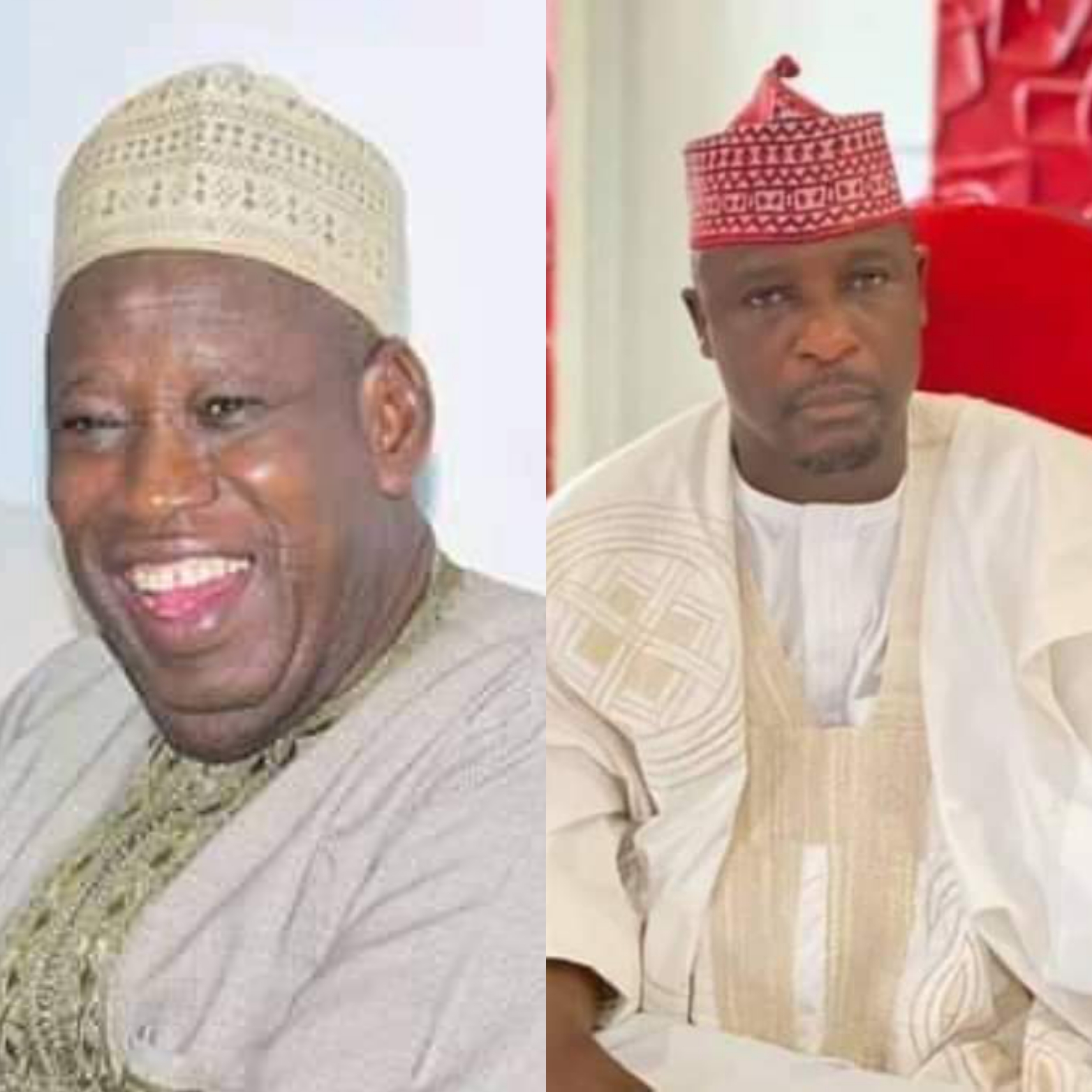
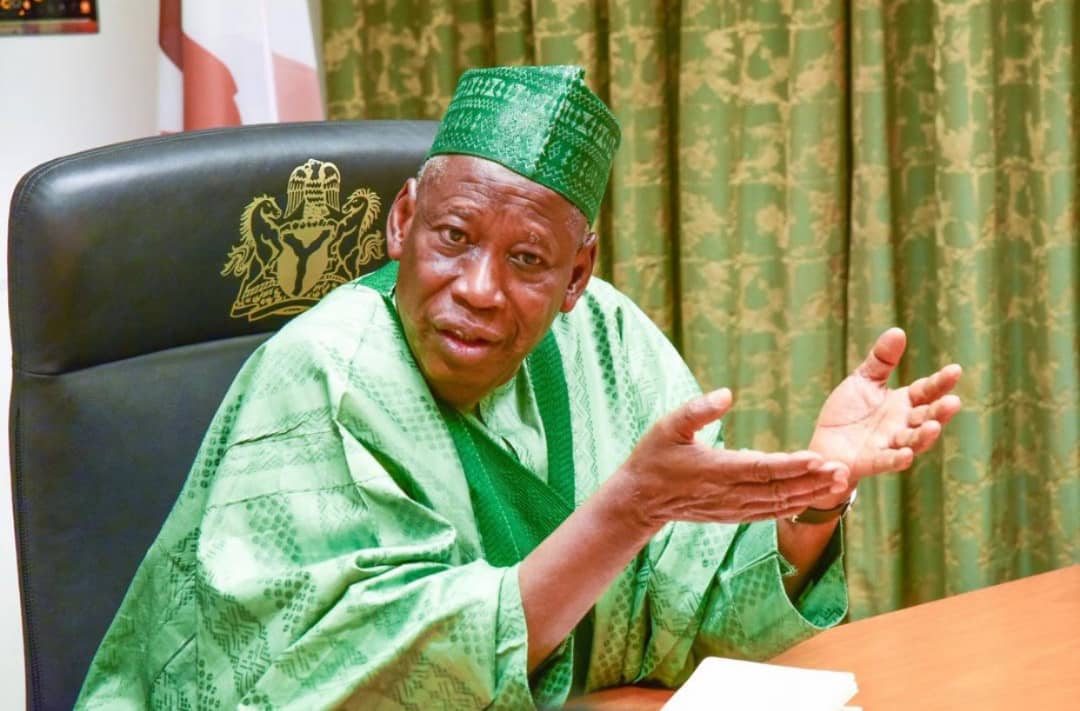
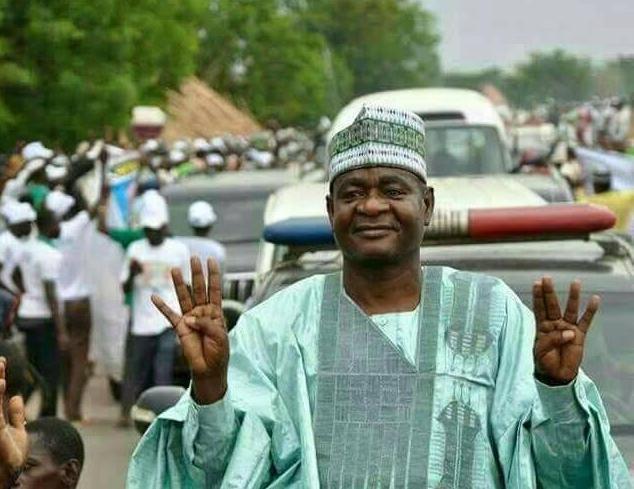
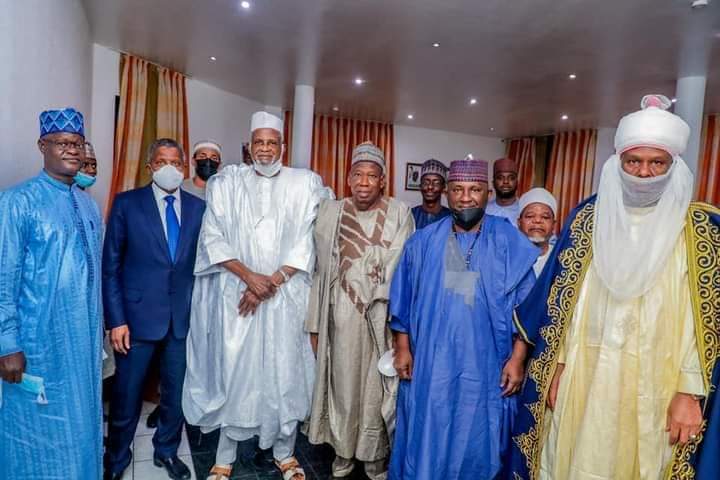
Governor Abdullahi Umar Ganduje

Kano Gov’t settles NECO fees, includes PWDs, female students

By Muhammad Aminu

Kano State Government has said that all students who passed its qualifying examination would write the 2022 Senior School Certificate Examination organised by the National Examination Council (NECO).

Kano State Commissioner of Information, Malam Muhammad Garba, told journalists in Kano on Monday that the Kano State Government had settled part of its debt with the examination body.

Malam Garba further debunked what he called “erroneous reports” that the State owes NECO N15 billion naira.

He confirmed that 15, 313 students would sit for the examination as planned.

Mal Garba also hinted that the examination would not hold on Monday as it is only the Test Interpretation Practical for teachers to come up with modalities for the practical exams that would be held Monday.

He said the State Government also paid examination fees for over 1000 students with special needs in public schools to enable them to write this year’s examination.

He said: “We have settled for 15,313 Students with nine credits and the essay part of the exam is commencing on 4th July while the State still paid for 1,018,000 Disabled Students, which means that the story that Kano is holding N15 Billion Debts is untrue”.

According to the Commissioner, 7,500 female students’ registration fees had been also settled as part of a special intervention to promote girl-child education in Kano State.

He added that LGAs cumulatively also sponsored 5,400 students for the examination.

“15,313 students that had 9 credits from qualifying examination; 1,018 students living with disabilities, as well as 7,300 for Special Intervention which is basically for Girl Child Education; and local government councils paid for 5,400 students,” the Commissioner explained.

The Daily Reality reported earlier that Kano students may not write the examination due to debt settlement conflict between Kano State Government and the examination body.

The examination body demands settlement of N700m of the N1.5bn before the students will be allowed.

He said the state government had paid NECO N356m last week and would finalise their discussion any moment to resolve the impasses.

N10bn loan: NLC pleads with Ganduje to prioritise outstanding gratuities

By Muhammad Aminu 

The Nigerian Labour Congress (NLC) Kano State Chapter has pleaded with Kano State Governor Abdullahi Ganduje to prioritise payment of outstanding retirement benefits than installing CCTV in the State.

The Union described the recently-approved loan for security infrastructural development in Kano as a misplaced priority in the face of over N27 billion outstanding retirees’ benefits.

In a statement co-signed by NLC Kano Chairman, Comrade Kabiru Minjibir and Acting Secretary Hussaini Budah on Friday,  the Union urged the Governor to secure another loan to settle retirees’ benefits.

“We wish to appeal to His Excellency the Executive Governor to make a case to the State House of Assembly for their assent to secure another loan to settle the outstanding gratuity and other retirees’ benefits in the best interest of justice and humanitarian consideration. In fact, what is good for the goose is also good for the gander.”

“While the Congress is not in any way against improving the security of lives and properties or its Citizens, which is one of the sole responsibilities of the Government, we are of the opinion that, in the face of over 27BN outstanding retirees benefits, such a step amounts to robbing Peter to pay Paul.

“The congress acknowledges the giant strides by the Government in providing security to the citizens, we wish to argue that providing CCTV in the name of improving security is curative, while payment of gratuity and other retirees benefits is preventive, taking into consideration the multiplier effects.”

The Union acknowledged that the outstanding gratuity is cumulative from previous administrations, it, however, said it is time for the incumbent administration to do the right thing in order to make a difference in the spirit of its “change mantra”.

“We are hopeful and optimistic that His Excellency would consider this our ‘save our souls’ submission in view of the multiple advantages such a positive step by the Government will provide.”

It can be recalled that The Daily Reality reported that the Kano State House of Assembly had approved a loan request of 10 billion naira for Gov Ganduje’s security Infrastructure development in Kano.

NNPP condemns Ganduje’s N10b loan request, cautions banks

By Muhammad Aminu 

The Kano State Chapter of the New Nigeria People’s Party (NNPP) has condemned the Kano State Government’s plan to secure a loan of N10 billion for CCTV installation in the State.

The party, in a statement signed by Kano State Chairman, Hon. Umar Doguwa described the loan as mortgaging the future of Kano children by the incumbent Governor.

The statement read: “The New Nigerian Peoples Party (NNPP), condemned in totality, the Kano State Governor, Abdullahi Umar Ganduje’s fresh demand of N10 billion loan request from Acess Bank to install CCTV cameras in the State. 

Governor Ganduje seems to be using his seat of power to mortgage the future of the State and that of our children.”

Hon. Doguwa stated that despite the acute water shortage in Kano, the Governor chose to fund insignificant projects.

“Ignoring the fact that the State is experiencing widely increased water scarcity, the Governor chooses to borrow to fund a project as insignificant as CCTV installation.

“The NNPP can’t sit down to watch this clueless administration stockpiling debts in the state without a commensurate achievement on the ground,” he added.

He lamented that the administration refused to settle secondary school students’ examination fees, which led to students dropping out despite taking loans in the name of reforms in education.

“Due to the failure of Ganduje’s government to pay their Senior Secondary School examination fees, countless students have been forced to drop out of school, and others are on the verge of dropping out.

“Kano people can vividly recall that Ganduje had borrowed the sum of fifteen billion naira on education reform, but the money was diverted to something else, and today, a significant number of our students dropped out from schooling as the government cannot cater for their common interest examination and senior secondary school examination,” he said

While appealing to the State Assembly to desist from granting such approval in the future by putting Kano’s interest ahead of Governor’s desire, Doguwa warned that should NNPP win the 2023 gubernatorial election; it will not honour the agreement.

“We wish to categorically draw the attention of all commercial banks and other financial lending institutions within and outside the country to be cautious with the Ganduje’s demand for loans as the next administration will not in any way honour such reckless borrowings.”

He stated, “Our great party is urging the State House of Assembly to refrain from granting trivial demands from the Governor like these.

“We implore honourable members to put the needs of Kano’s good people ahead of the Governor’s insatiable desire to wreck the future of the State before we defeat them in the 2023 election.

“We also call on the Access Bank to resist any temptation to advance any loan to the borrowing Governor Ganduje, who is hellbent on mortgaging the state to satisfy his self ends.”

He chided Ganduje’s administration for its failure to maintain CCTV installations deployed by the Kwankwaso administration only to plan to borrow funds for the same purpose.

“With a sense of nostalgia, the general public remembered that in the past, our party’s presidential hopeful, Engr, Dr Rabiu Musa Kwankwaso, deployed CCTV in strategic locations throughout the State.

“However, the current administration, that seeks N10 billion loan to install new ones, failed to handle them, and the good people of Kano can’t trust a governor with the installation of new ones at their detriment,” he noted.

It can be recalled that The Daily Reality reported that the Kano State House of Assembly had approved a loan request of 10 billion naira for Gov Ganduje’s administration to install CCTV installation in Kano to tackle security challenges.

Kano assembly approves fresh N10 billion loan for Ganduje

By Muhammad Aminu

The Kano State House of Assembly has approved a loan request of ten billion naira (N10,000,000,000.00) by Governor Abdullahi Ganduje. The request was contained in a letter forwarded to the Assembly by Governor Ganduje and read by the Speaker, Hamisu Chidari.

According to the letter, the loan will be used for security infrastructure development in Kano. The Daily Reality gathered that part of the security infrastructure to be developed includes an installation of CCTV cameras in Kano to improve the security architecture.

In the letter, Gov. Ganduje said the development became necessary considering the recent security challenges facing the State.

In another development, the Kano State House of Assembly has appointed Magaji Zarewa as its deputy majority leader, following the resignation of Alhaji Abdullahi Iliyasu Yaryasa.

Yaryasa resigned his appointment after dumping the All Progressives Congress (APC) for the New Nigeria People’s Party (NNPP).

The speaker, Hamisu Chidari, who read Yaryasa’s resignation letter at a plenary, wished him well in his new party and thanked him for his numerous contributions to the house.

Zarewa, who represents the Rogo constituency, appreciated the house for finding him worthy of the new appointment.

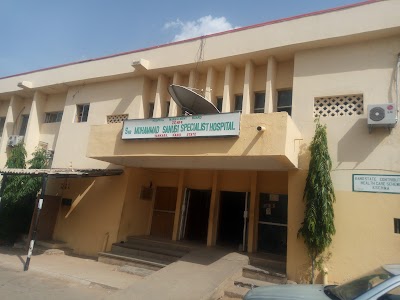
Inside Kano hospital where patients use sachet water to bath, flush toilets

By Uzair Adam Imam 

The level of dilapidation in Sir Muhammadu Sunusi Specialist Hospital, Yankaba, Kano, has graduated something not less monstrous.

Despite the Kano State Government’s claim that Governor Abdullahi Umar Ganduje’s second tenure would pay more attention to health and education, patients in the hospital have recounted their harrowing tales of how they live miserably without water and light.

Our reporter visited the hospital. He met some patients in dire situations, fighting excessive heat with their hand fans, which has thrown many of them into a dilemma.

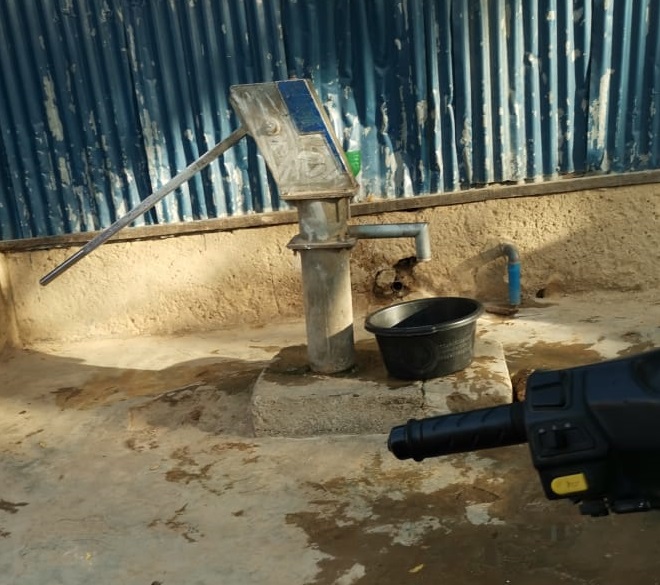
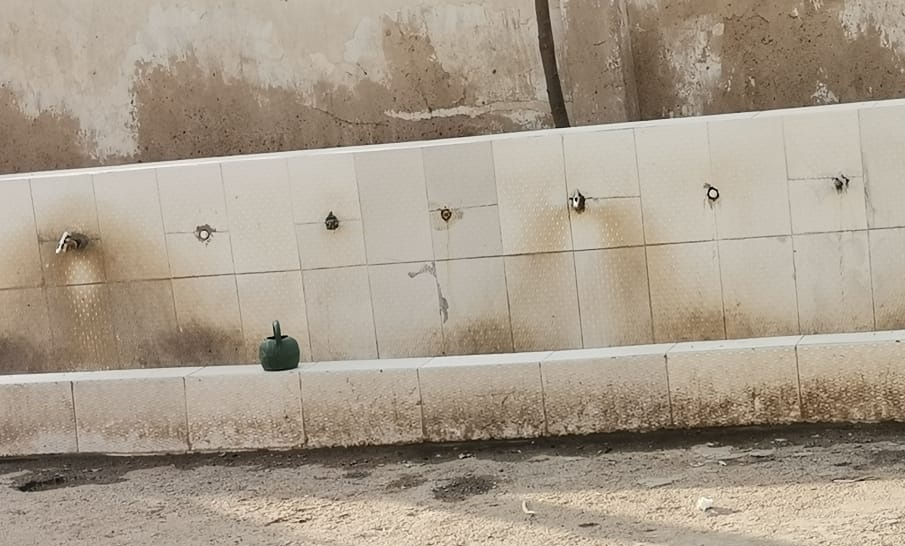
The Daily Reality learned that all the taps in the hospital are not working, except one borehole, which the patients said works for less than one hour every day.

Recounting their experiences, some patient sitters complained that they used sachet water, alias pure water, to bathe, flush toilets, make ablutions and wash their dishes. 

They also complained about the lack of electricity, which they said was responsible for many problems in the hospital. 

A patient, who pleaded anonymity, complained that he spent days without bathing because almost all the sources of water in the hospital were dead.,

He said, “I spend days without bathing because there is no water. Sometimes our brothers go outside the hospital and call a water vendor (“dan garuwa“).

“Also, after all these difficulties, we slept in the dark without light at night. Mosquitoes exploit the opportunity to disturb our nights. The situation is just terrible.” 

Also, a patient sitter, Mukhtar Muhammad (not real name), stated that they really faced difficulties mainly at night.

He said, “There is neither electricity nor water in the hospital. Thus we live in the heat with mosquitos singing and biting our patients and us.

“I have wanted to use water since yesterday. But there is no water in the tap. So I had to go outside in search of a water vendor.”

No water to wash new-born babies 

Aishatu Isma’il decried that it was indeed a slap on the face for a big hospital like Sir Sunusi to allow this problem to be exacerbated.

“How can you imagine the state of a hospital without water or electricity? You would have shaded tears if you see women as they gave birth; there would be no water to clean the mother or her baby,” she bitterly said.

Dry taps

A group of four women, who happened to be patient sitters of their relatives, confided in our reporter that they used sachets water for there was no water in the hospital. 

They added that there was no water in the hospital to even flush the toilets after being used.

They added that the condition of the hospital’s pharmacy too was deplorable as one would only get one or two medicine out of the five or six he was looking for. 

The patients also urged the Kano State Governor, Dr Abdullahi Umar Ganduje, to set up a committee to investigate the matter.

Responding, the Managing Director of the hospital, Dr Abdussalam Usman Danjaji, told our reporter that all preparations to address the issues were in top gear.

Danjaji said, “Due to the electricity problem, the diesel provided to us by the government was never enough to use for thirty days.

“And we don’t want to add additional charges to what people are paying. If we do that, we can provide people with light, only that many people cannot afford to settle their bills,” he added.

Tension in Kano APC as Garo mulls over defection to NNPP

By Uzair Adam Imam 

Another political crisis is rocking the Kano chapter of All Progressives Congress (APC) as the endorsed deputy governorship candidate, Murtala Sule Garo, is reportedly mulling over defection to the New Nigeria People’s Party (NNPP).

Governor Abdullahi Umar Ganduje endorsed Garo to pair with the current deputy governor, Nasiru Yusuf Gawuna, as governor in the 2023 gubernatorial election.

However, Garo was said to have felt slighted following a peace parley between Governor Ganduje and his political arch-enemy, Senator Barau Jibrin.

Recall that Ganduje had reconciled with Barau and agreed to step down for him for the Kano North senatorial ticket after the senator abandoned his gubernatorial ambition. 

According to a source who preferred not to be named, Garo plans to discuss the issue with his associates for a final decision.

He said, “he is planning to meet with his associates and make [a] concrete decision, but he is still very sad about the development (Barau back in the fold), but he has not defected or abandoned the ticket,” one source, who asked not to be named, said.

Revenue is not a substitute for healthy environment, let’s tell Baba Ganduje

By Murtala Uba Mohammed

Governor Ganduje’s romance with capital project is too obvious and apparent. Only a bias mind can deny him his love for billion of Naira capital projects such as construction of some urban roads, underpasses and flyovers which qualify the city to lead in terms of transport infrastructure all over the country. Governor Ganduje’s interest in commerce and revenue drive is quite vivid considering his bias towards conversion of every available inch of land in the metropolis into commercial property. This is in addition to the proliferation of shops created in over ten markets in Kano Metropolis. In his zeal to generate revenue, Baban Abba has transformed Kano Road Traffic Management Agency (KAROTA) from law traffic enforcement to tax collection agency!

History of Kano would definitely remember this government of converting some of the most sacred spaces such as prayer grounds, cemeteries and historical places into commercial plots. While, Colonel Idris Garba has found it wiser to relocate Kano City Animal Market from its old location to accommodate the increase demand for bigger Kano Central Eid Ground and to give the ancient city a kind of Eid ground it deserves; Ganduje felt it is necessary to downsize it to nearly one fifth of its original size in order to make way for his dearest commercial land use. In fact, governor Ganduje’s romance with commerce qualified him to have national honour award of commercial order for Niger (CON)!

It is also obvious that governor Ganduje has given Kano more than what it requires as centre of commerce by converting the remaining open spaces, green areas, blue ecosystems and city’s recreational gardens into commercial plots, leading to the emergence of multi-million plazas in all parts of the already gentrified city. The case of destruction of the last phase of the city wall along BUK road, the Freedom pond along Gwarzo Road, the Dan’agundi on BUK Road and many other smaller water bodies are just tips of Ganduje’s land conversion icebergs. A case of city garden along Maiduguri is another justification for his romance with commerce.

Also, many waste collection centres were either allocated to Ganduje’s political lieutenants to develop it for commercial use or sold to a highest bidder. No thanks to irrational desperate attitude of Kano people to land acquisition which Bandirawo capitalized upon and coupled with the creation of plots on many state’s parks located in peri-urban local government under the forestry department of Ministry of Environment. Ganduje would have converted city’s Zoological Garden to commercial plot if not for the outcry and serious pressure from good sons and daughters of the State.

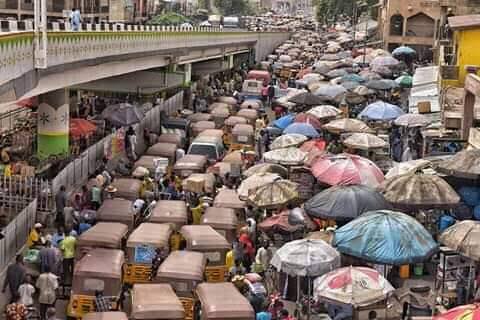
While, expanding the commercial land use and (possibly) enlarging what goes into supposedly state IGR, the government action is negatively affecting the environment. The governors love for the building of commercial areas at the expense of other landuses affects the functioning of the ecosystem there by distorting the near equilibrium state of the environment. A city without parks and green areas is just like child whose nose was covered or severed; suffocation is inevitable and death is the end point. Our governor (whom the law saddled with responsibility of land protection) should be reminded that the green areas are not just for decoration, they are carbon sink meant to absorb harmful air like Carbon dioxide, Sulphur oxides, chlorofloro carbons and other pollutants which are hazardous to human health. They also help in moisture retention, groundwater recharge, check soil erosion and ecosystem stability. The importance extends to social and economic contribution by providing revenue, connecting people with past and providing shades. Kano City is already noisy, building more roads and destroying greens which this administration is supporting and encouraging, make people to own more cars and reduce the functional attenuation city’s noise. In a city where transport is not regulated and left at the mercy of highly informal private individuals, one will just end up with a growth that is going in a reverse way. Today, only God knows the number of tricycles in Kano that pollute the air and colliding with peoples’ vehicles.

Nowhere, water and blue infrastructure is as important as dryland, however, unfortunate the protector turns destroyer. The city therefore is witnessing urban drought due to water table dwindling. The city dwellers now buy water from cart-pusher, whose hygienic condition is terribly bad, at the rate of 50 to 100 naira per 25 litre jerrycan. The state’s own water supply is just a nightmare.

Kano city now witnesses intrusion of newly emerged hills, not of lava, rather of refuse. This is a clear pointer to the problem of rush in privatizing the long-time government’s REMASAB to a very little-known private company. Surprisingly, rather leasing the formal areas (where pilot testing were done through Franchisee System), the government decided to include the informal areas where residents are overwhelmingly poor and unlikely to afford commercial waste service. The government had successfully improved its revenue by not shouldering part of its social responsibilities, but it had traded-off the health and well-being of the public for worthless amount of money. The city-folk now pay the price through living in the mid of waste.

No matter how crucial it is, revenue is not in any way akin to destruction of environment. One can get good revenue without depriving the environment its decency. This can be achieved through verticalization of buildings where shop demands can be met without losing open and green areas. Also, city’s green and open spaces can be privatized in their natural state to generate more revenue. The recent proliferation of Event centres and sport Centres can utilize the city’s ponds and open spaces without necessary building up permanent structure.

While the state makes a lot of noise on domination of public transport by Adaidaita sahu tricycle where revenue was difficult to generate, not much was done to introduce more formal public mass transit such as Bus Rapid Transit and Bus Mini Transit that would fetch more revenue to the government with less damage to the environment. It is still not late for the government to reverse and rethink of best ways to manage the waste generated. Commercial, industrial and formal areas can be made to pay for waste services, but not slum and shanty areas. Let the state engage radically in educating and reorienting the citizens, this will make people to be more formal in their businesses, and which will eventually boost the state’s revenue.

It is important to note that for every city to be liveable, certain ecological services and resources must be retained at all cost. Failure to keep them is tantamount to exhibiting nonchalant attitude to nature despite that Nigeria is a signatory to most environmental treaties. It implies that one is at war with descent living. I am afraid, history will judge this administration for destroying the little it inherits of environmental heritage in the name of foolhardy capitalism. I hope His Excellency was not punishing us for someone’s faults. Other individuals might have done some wrongs to him, but let him remember that he has no place like Kano. Let us give Kano a descent ecosystem, not only for us but for the yet to be born generations.

Murtala teaches Geography at Bayero University, Kano.

How Kano workers spend Sallah festivities without salaries

By Uzair Adam Imam

Amidst Sallah (Eid-el-Fitr) celebration, when people jubilate the end of Ramadan in new clothes and different sorts of delicious dishes, civil servants in Kano have seen their 4th day of a new month without salaries, the development they said has thrown them and their families into dilemma.

Reacting with dismay, the workers said the government has failed to keep to its promise of paying the salaries on the 25th of every month.

The Daily Reality learnt that some workers had to hide because they could not make any provision to welcome and host their friends and relatives as usual.

The workers who bitterly complained about the government’s carelessness towards their wellbeing said they remained indoors on the Sallah days because they were economically depressed.

Eid-el-Fitr is the period when the Muslim faithful happily celebrate the end of Ramadan. The days are usually welcomed with beautifully sewed clothes, different sorts of delicious foods, and meats of all kinds provided they are Islamically lawful, and relatives from all walks will call on their family and friends to celebrate the day.

Salary delay leaves a big hole in our minds

One of the civil servants who spoke to our reporter said that he went ahead to embrace his old craft of sewing for a living. The civil servant, who our reporter found busy sewing in a tailoring shop, said this delay has left in their minds a very big hole.

He added, “I can not do what I used to do on Sallah days. I couldn’t afford to buy a single chicken for my family. We did not cook anything nor did we have any new clothes to wear.”I used to sit with friends after Eid to exchange greetings and share pleasantries. But this time around, as I was depressed, I remained indoors until 4 pm when I came out to pray,” he added.

Another source, Ibrahim Shu’aibu, decried the experience as horrendous as they largely depend on their monthly income for a living.

Shu’aibu said, “The experience is horrendous. The effect is deep. It has affected almost all aspects of our lives as civil servants. More than half of the civil servants rely on salaries to cater for themselves, their families as well as some members of their relatives.”

In the same vein, this incident has deeply affected many businesses in many states in this country, Kano in particular.”

Personally speaking, this Eid-el-Fitr has passed like an ordinary day. I had to hide because I didn’t make any provision to welcome and host my friends and relatives as usual,” he stated.

Also, another source who pleaded for anonymity confided in our reporter that this Sallah is one of the worse situations he ever found himself in. He said, “We didn’t cook anything for this Sallah because I was broke. And I couldn’t afford to buy Sallah attire for my small kids. Here we are living like baggers.”

The worst part of it is that the government keep mute about the issue. I think the government should have addressed us. But sadly enough, what we only hear or see from the government officials is their beautifully snapped pictures at Umara.”

Another worker, Sulaiman Abdullahi, not his real name, said they found it difficult to handle the situation as they mostly live from paycheck to paycheck.

He said, “that’s why most of the workers are indebted beyond settlement. As we receive our salaries, we go ahead to pay the debt. I know you can imagine how hard we civil servants live our lives.”

Kano economy in a chain – Economist

An economist teaching in one of the Kano institutions lamented that the state economy is in a chain, leaving a lot many sectors affected. The economist said the delay in this month’s salary has affected many businesses, leading to the stop in the facilitation of goods and services in the state.

He further stated that “generally, the state economy is the dependent economy. It is dependent because it depends on workers’ salaries. When workers get paid at the end of every month, they will take their income into circulation by purchasing goods and services.

“At the end of this month, workers have not been paid. The facilitation of goods and services from various markets in the state will stop.

“The welfare of workers and their families will be affected. The state economic facilitation and activities are also stopped. And in long run, it will give a gap in which businesses will be dropped. And if it dropped it will create losses,” he said.

Could Kano State Government respond?

In line with balancing this report, our reporter contacted the Kano State Chief Press Secretary, Malam Abba Anwar, to know the cause of the delay in this month’s salary payment. However, all attempts were proved abortive despite huge complaints by the workers about the government’s silence on the issue.
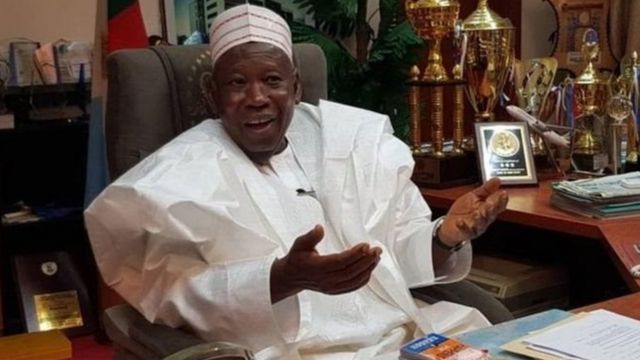
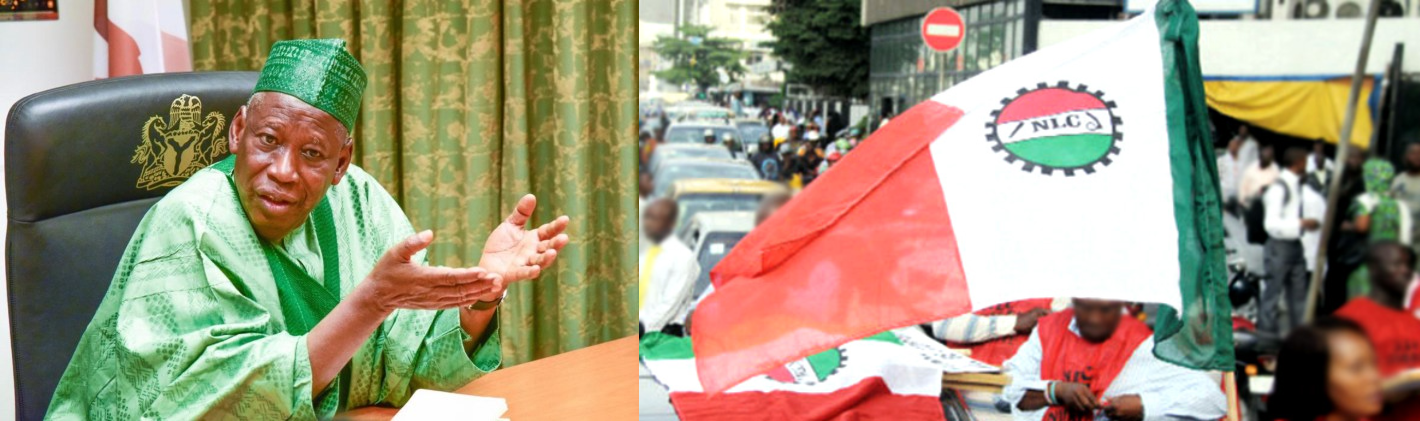
Ganduje’s directive pushes Kwankwaso to resign as commissioner 

By Uzair Adam Imam 

The Kano State Commissioner for Rural Development, Musa Ilyasu Kwankwaso, has resigned to contest for the House of Representatives in the 2023 general election. 

Kwankwaso resigned barely hours after Governor Abdullahi Umar Ganduje gave political appointees wishing to run for elective offices 24 hours to quit.

The Daily Reality learnt that Kwankwaso wishes to contest for membership in the House of Representatives representing the Kura, Madobi and Garun Malam federal constituency.

In a statement Sunday by his Chief Press Secretary, Governor Ganduje has directed all his political appointees that want to contest for elections in 2023 to resign.

The governor said all appointees are given between now and Monday, April 18, to tender their resignation.

The statement partly read: “Governor Abdullahi Umar Ganduje directed all political appointees running for elective offices in the forthcoming 2023 general elections to resign from their respective positions.”

Dangote, Dantata, others named members of Zakkat Commission in Kano

By Muhammad Sabiu

Governor Abdullahi Ganduje of Kano State has named Aliko Dangote, his uncle Aminu Dantata, and Abdulsamad Rabi’u to the state Zakkat and Hubsi Commission on Wednesday.

Zakkat means a Muslim’s obligation to donate a particular percentage of their wealth to charitable causes each year.

According to the News Agency of Nigeria (NAN), the Commissioner for Information, Malam Muhammad Garba, made a declaration on the subject.
Dr AbdulMutallab Ahmed, commissioner I, and Dr Lawi Sheikh Atiq, commissioner II, are the Commission’s other members.

Following the approval of the Kano State Executive Council, the Board of Kano Zakkat and Hubsi Commission was reorganized, with Dr Ibrahim Mu’azzam Maibushira as Executive Chairman.

Representatives from the state’s five Emirate Councils, the Ministry of Information, the Ministry of Religious Affairs, as well as the Kurmi, Rimi, Kwari, and Singer markets, are among the other members.

The council also approved the formation of the Committee for Screening of International Islamic Organizations.