Gombe State

Gombe: Government to pay ₦70,000 minimum wage

By Abdullahi Mukhtar Algasgaini

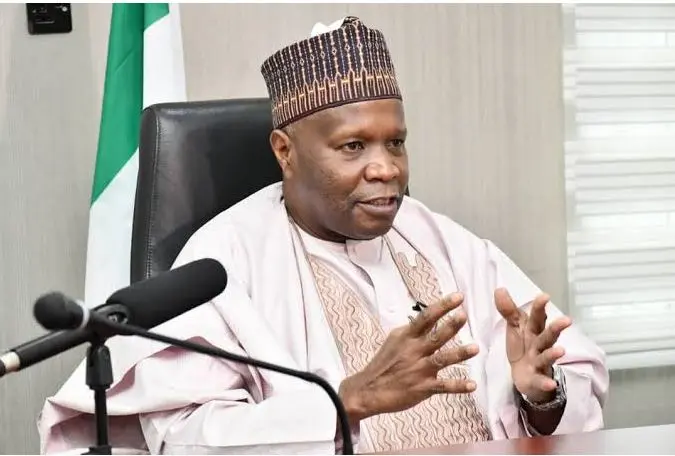
The Governor of Gombe State, Muhammadu Inuwa Yahaya, CON, has announced his intention to pay the ₦70,000 new national minimum wage to workers in the state.

The position of the governor was presented by the Deputy Governor, Manassah Daniel Jatau, PhD, who is also the Chairman of the Tripartite Committee on Minimum Wage Negotiation, Gombe State, during a press briefing at the conference hall of the Deputy Governor’s Office, Gombe.

Represented by the State Head of Civil Service, Alh. Ahmed Kasimu Abdullahi, during a Press briefing ,the Deputy Governor explained that the governor is highly committed to ensuring that civil servants in the state enjoy the 70, 000 new national minimum wage so that they can put in their best in serving the state.

He said, the governor has set a machinery in motion and the standing committee has been fine-tuning to see to the implementation of the new minimum wage.

“Government has set the machinery for the implementation of the new national minimum wage in Gombe State. Let me assure you that His Excellency the Governor is fully determined to pay the minimum wage. Unlike what you have been hearing in some quarters that the governor said he won’t pay. No, not at all. His Excellency is one of the governors in the fore front of payment of the new minimum wage”.

He said Governor Inuwa Yahaya has been magnanimous enough to willingly pay a 10,000 palliative in form of a wage award since September last year, across board to all civil servants in the state to cushion the effect of fuel subsidy removal which, automatically brought the minimum wage to 40,000 naira when other states couldn’t pay the 30,000 minimum wage.”

In the magnanimity of the Governor to alleviate the hardship occasioned by fuel subsidy removal, he approved the payment of 10,000 across board to all civil servants without anyone putting any pressure on him in order to make the civil servants feel better in the discharge of their duties. The additional 10,000 naira was because of his concern, feeling and regard to civil servants and it has made the minimum wage 40,000 instead of 30, 000 even when other states couldn’t pay the 30,000″.

He however pointed out that the negotiation committee has decided to separate the monthly salaries from the 10,000 palliative pending when conclusion is reached in order to prepare the Civil servants on knowing their exact salaries when the minimum wage is finally agreed upon.

“Effective from this month of August, the normal salary will be paid, then after two days the ten thousand naira palliative will be paid to help the worker know his actual salary and this will continue until the new minimum wage is agreed upon. We are now waiting for the salary table from the federal government before we commence the negotiation. Once we reach an agreement the implementation will begin and the 10,000 naira palliative will stop”.

The Nigeria Labour Congress Chairman, Mr. Yusuf Aish confirmed that this was the position reached at the tripartite committee meeting on the new minimum wage.” we had a brief discussion during our negotiation in the last 30,000 naira minimum wage due to some balance of some payment where we have agreed that this committee is a standing committee of minimum wage negotiation in the state. As a result this same committee met to begin negotiation on the new 70,000 naira national minimum wage. However,in our tripartite committee meeting we have agreed to wait for the time the new minimum wage table as approved by the federal government will be released. Whenever it is released we will start full negotiation with a view to reaching an agreement on what is to be paid in Gombe State”.

He also explained that civil servants will receive two alert messages beginning from this month of August, being the normal salary and that of 10,000 naira palliative urging the civil servants to be patient pending when the negotiations will be concluded.

Investment Drive: Gombe pioneers NIPC certification programme

By Abdullahi Mukhtar Algasgaini

Gombe State has made a significant stride in its investment drive by becoming the first state in Northern Nigeria to benefit from the Nigeria Investment Promotion Certification programme, which is being implemented by the Nigerian Investment Promotion Commission (NIPC). The programme is funded by the United Nations Development Programme (UNDP). 

This was disclosed by the UNDP representative, Adejumobi Fashola, at the opening session of a three-day workshop for officials of the various Ministries, Departments, and Agencies in Gombe state on building the state’s competence to provide information capable of attracting investment for sustained economic growth and development.

According to Fashola, the selection of Gombe as the first beneficiary in Northern Nigeria underscored the state’s strategic importance and the potential it holds for attracting both local and foreign investments, emphasising sectors such as agriculture, solid minerals, and renewable energy, which have been identified as key drivers of the state’s economic growth.

“The goal of this programme is to build the capacity of state MDAs to effectively engage with investors and create a conducive environment that will encourage sustainable investment. 

“Gombe State has demonstrated a strong commitment to this process, and we believe the outcomes of this workshop will significantly enhance the state’s investment profile,” the UNDP representative said.

“The Nigeria Investment Promotion Certification Process (NIPC) aims to standardise and enhance the capabilities of MDAs at state levels in promoting and facilitating investments by equipping them with the necessary skills, tools, and knowledge to create a more conducive and attractive environment for both local and foreign investors. 

It focuses on improving the efficiency, transparency, and effectiveness of investment promotion activities, ensuring that states become competitive and preferred destinations for investment in Nigeria”, he added. 

Speaking at the event, the Permanent Secretary/Sole Administrator of the Gombe State Investment and Property Development Company Limited, Mohammed Abubakar Bello Kumo, expressed Governor Inuwa Yahaya’s commitment to transforming Gombe into an investment hub, noting that the state government has been working tirelessly to improve the business climate by implementing reforms and infrastructure projects that will attract investors.

“We are honoured to be the first state in Northern Nigeria to benefit from this programme. This is proof of the ongoing efforts of Governor Inuwa Yahaya to make Gombe State a business-friendly environment. This workshop will equip our MDAs with the necessary skills to attract and retain investment, which is crucial for the economic development of our state”, Kumo stated.

He also acknowledged the role of UNDP and NIPC in supporting Gombe State’s development agenda, particularly in fostering partnerships that will lead to job creation, poverty reduction, and improved living standards for the people of Gombe.

Some of the participants who spoke at the event expressed their appreciation for the opportunity to learn from industry experts and engage in practical sessions that will help them apply the knowledge gained in their respective MDAs. 

They noted that the training provided them with valuable insights into how the state can leverage its unique resources to attract investment.

Gombe: Governor inspects newly completed Kumo General Hospital

by Abdullahi Mukhtar Algasgaini

Governor Muhammadu Inuwa Yahaya, CON, inspected the 200-bed-capacity ultramodern General Hospital in Kumo, Akko Local Government Area of Gombe State.  

The hospital replaced an earlier dilapidated facility and is designed to provide comprehensive healthcare services as a referral centre.

Governor Inuwa said, “The complete reconstruction of this hospital is part of our larger plan to provide quality and affordable healthcare services to the people. We inherited a completely moribund General Hospital that could not provide the required healthcare services due to a lack of necessary equipment. We had no choice but to rebuild it from the ground up.”

“We built the hospital to international standards so it can function as not only a general hospital but also a facility that can provide tertiary health services,” the governor added.

He explained that the state government has also established similar hospitals in Kaltungo and Bajoga and revitalised at least one primary healthcare facility in each of the state’s 114 political wards.

“Our performance in the health sector, from human resources to infrastructure, is evident for all to see”. 

Strategically located, the Kumo General Hospital will serve the local population and travellers along the Gombe-Yola road. 

The Commissioner for Health, Dr. Habu Dahiru, conducted the governor around the facility and said it can handle complex medical cases, including heart surgeries and other medical complications.

He highlighted its modern equipment and potential to become a leading healthcare centre in the state and across the Northeast.

“In this theatre, multiple operations can be performed simultaneously, making it ideal for emergency situations and life-saving interventions,” he noted.

The Governor inspected the well-equipped laboratories, wards, maternity unit, accident and emergency complex, mortuary, powerhouse, and mini water treatment plant, among other facilities.

Kumo youths welcome gov Inuwa with enthusiasm, patriotism

By Abdullahi Mukhtar Algasgaini

A massive crowd of youths enthusiastically welcomed Governor Muhammadu Inuwa Yahaya with the green-white-green Nigerian flag during his visit to Kumo, the Headquarters of Akko LGA.

The display of patriotism was a stark contrast to recent events in other parts of the country where some youths were seen waving foreign flags.

The governor was received by a jubilant crowd from the outskirts of Kumo, who accompanied him throughout his visit, expressing gratitude for the development projects undertaken in the area.

Governor Inuwa, who inspect the newly completed ultra-modern general hospital, commission road projects and flag-off new ones, commended the youths for their patriotic spirit.

“While in some places you see the flags of other countries being raised, here, you see support and love from the people,” he said, expressing optimism about the nation’s future with such a positive youth demography.

“The enthusiasm and patriotism displayed by these young people today give me great hope for Nigeria’s future. Peaceful and patriotic youths are indeed the bedrock upon which a brighter Nigeria will be built,”Gov. Inuwa asserted.

He called on the people to maintain peace and harmony, assuring them of the government’s commitment to improving their lives.

Gombe gov’t dispatches essential food items to vulnerable persons across 11 LGAs

By Abdullahi Mukhtar Algasgaini

Gombe State government has dispatched truckloads of essential food items to all 11 local government areas of the state for onward distribution to the most vulnerable persons. 

This follows the approval of Governor Muhammadu Inuwa Yahaya, who has continued to demonstrate commitment to the welfare of the people. 

Each LGA has been allocated 1,000 bags of 50 kg sorghum, 1,000 bags of 25 kg rice, and 1,000 cartons of spaghetti pasta. 

Beyond the distribution to the 11 LGAs, an additional 5,000 bags each of rice and sorghum and 5,000 cartons of spaghetti pasta will be distributed to a wide array of groups, including faith-based organizations, civil society groups, trade unions, student unions such as the Gombe State Students Association (GOSSA) and the National Association of Nigerian Students (NANS), and Tsangaya and Almajiri schools. 

Special consideration has also been given to youths and women groups, and people living with disabilities, as directed by the Governor to ensure that the relief package reaches those who are mostly in need, especially in the face of the current economic hardship. 

This distribution is just one of many efforts by the government to support the citizens during difficult times. 

Governor Inuwa Yahaya remains committed to implementing effective measures to support the citizens and ensure their resilience, fostering social stability amid economic challenges.

The Governor also remains grateful to President Bola Ahmed Tinubu for his numerous interventions and initiatives to address the economic challenges facing the nation in this challenging period.

Gombe students receive African Union scholarship awards

By Abdullahi Mukhtar Algasgaini

Six indigenes of Gombe State made the list in the 200 Scholarship Award of the African Union Development Agency in the New Partnership for Africa’s Development (AUDA-NEPAD), in partnership with the Renewed Hope Initiative (RHI), of the First Lady, Senator Remi Tunibu.

The commissioner of education, Prof Aishatu Umar Maigari, stated this on Thursday in Abuja while leading the successfully selected students from Gombe State to the award presentation.

The program according to the commissioner was designed to support secondary school graduates particularly from the less privileged families to further their education at the tertiary level.

Speaking at the unveiling, held at the Banquet Hall of the State House Abuja, the First Lady Senator Remi Tinubu said President Bola Ahmed Tinubu’s administration will continue to prioritize education as evident in the various policies and programmes been implemented in the sector since inception.

Senator Tinubu also emphasised that education and empowerment of the Nigerian girl-child will consistently be given priority attention to fill the gap with their male counterparts in receiving comprehensive formal education, which she said has brought about the need for the establishment of Alternative High Schools For Girls across the country.

In a remark, the Minister of Education, Prof. Tahir Mamman, described the First Lady as an Education champion who is always concerned about the education of the younger generation and commended her initiatives under the Renewed Hope Initiatives, which are geared toward complementing the educational policies of the Tinibu-led administration.

The successful students to benefit from the initiative from Gombe State as approved by the office of the First Lady, Senator Tinubu, include Abdullahi Abubakar, Kamal Abdulsalam, Elisha Eglah, Muhammad Abdul-Azeez, Hajibukar Mohammed and Yunusa Umar Farouq.

They have since been inaugurated with others across the country and presented with their Award letters in a colorful event.

Pantami’s three faces

By Zayyad I. Muhammad 

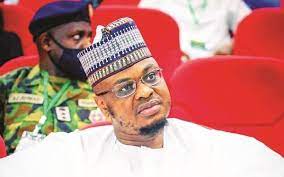
Isa Ali Ibrahim Pantami, former Honourable Minister of Communication and Digital Economy, an Islamic sheikh, and a UK-trained Ph.D. holder, has found himself in a triangular situation: an Islamic sheikh, a politician, and an academic. This revered status means any issue that affects his personality will always be a hot topic and attract public scrutiny.

Pantami’s full transformation into a politician who is eyeing the ‘ballot box’ was noticed during this year’s Ramadan Tafsir; his style of delivery and the content of his messages were noticeably altered. Traditionally known for his sticking to religious contents during tafsirs, this time, the sheikh took every opportunity to showcase his extensive knowledge of the economy, geography, and global politics. This shift did not go unnoticed by the audience and observers.

Pantami’s discussions were peppered with references to economic policies, geographic strategies, and the intricacies of international relations, signalling a significant change in his focus and priorities. Pantami continues to align himself more closely with political aspirations, and his body language has also evolved to reflect this new ambition. 

Recently, controversies, debates, and discussions have emerged about Pantami’s books, Skills, Rather than Just a Degree and A Scholar’s Journey: Navigating the Academia. These books trended for a while and reignited old controversies about how he obtained his professorship. This situation has also awakened Pantami’s political adversaries, who view his behind-the-scenes early efforts to enter the Gombe state governorship race as an encroachment on their territory.

Many politicians, especially in his home state of Gombe, are upset with Pantami because they view him as an outsider who seized opportunities to occupy their ‘slots,’ first as the Director-General of NITDA and later as a federal minister representing Gombe State. However, after eight years of working independently, he now seeks their support to establish himself in their domain.

Conversely, the majority of Pantami’s critics regarding his appointment as a professor are academics. In contrast, most of those who backed the critics were Pantami’s political opponents and their supporters.

One of Pantami’s critics was reported to have penned this: 

“Mr. Pantami was only for the most part a Lecturer 1 or 2 where he first served and didn’t spend a whole working career in the university system or in a university’s employment,” he was “made” a Professor by a university where he never worked, taught, sat in its Senate, worked in its committees, never examined or marked UG or PG exam scripts, and his whole promotion papers were never processed at the departmental and faculty levels, and, indeed, he never had a payroll number… Mr. Pantami was thus never a scholar in the classical or academic sense of that word. I wonder whether he’s now teaching or giving classes or seminar papers at any university after his leaving office in May 2023.”

On the other hand, supporters of Pantami’s professorship encompass academics with a fondness for him, members of religious groups, his students, and his political associates. 

In fairness to Pantami, having held a ministerial position, he is already entrenched in politics. Moreover, the criticisms in his books predominantly consist of one-off comments rather than comprehensive analyses or academic discourse. Furthermore, Pantami’s challenge for a debate on his book is yet to take place. 

The debate about Isa Pantami’s books, professorship, and foray into politics has three divides: his adherents, his opponents, and those sitting on the fence. The views of his followers and critics are well known and are often based on their perspectives. However, those sitting on the fence have, on many occasions, provided valid points both for and against Pantami.

Isa Ali Pantami’s transition from an Islamic scholar to a politician and professor has sparked both controversy and applause. His political opponents view his entry into politics as an intrusion into their territory, while his academic critics regard his professorship as ‘unearned.’ On the other hand, his supporters perceive his multifaceted identity—as a sheikh, a politician, and a professor—as exceptional among his peers.

Zayyad I. Muhammad writes from Abuja via zaymohd@yahoo.com.

Call for Accountability: Reallocating priorities in Gombe State budget allocation

By Muhammad Umar Shehu

The recent budget allocation by Governor Inuwa Yahaya of Gombe State has sparked concerns among citizens, particularly regarding the disproportionate allocation of funds. While a significant portion of ₦43.130 billion is earmarked for constructing a new governor’s residence, high court, and house of assembly complex, only ₦10 billion is allocated for road construction. This disparity raises questions about the state’s priorities and resource allocation strategy.

It is disheartening to witness such a large sum allocated to luxurious infrastructure projects while essential infrastructure like roads receives comparatively meagre funding. This allocation pattern reflects a misplaced sense of priorities and neglect of critical needs in the state.

As responsible citizens, it is imperative that we hold our leaders accountable and challenge decisions that do not align with the people’s best interests. We cannot afford to stand by idly while our state resources are mismanaged and squandered on unnecessary projects.

The people of Gombe deserve transparency and accountability in governance. We must demand greater scrutiny of budgetary allocations and ensure that public funds are effectively used to better our communities.

There is an urgent need to reallocate priorities to address pressing needs such as infrastructure development, healthcare, education, and poverty alleviation. Our leaders must be reminded of their duty to serve the people and prioritise projects that have a tangible impact on the lives of ordinary citizens.

As concerned citizens, we must unite and advocate for a more equitable distribution of resources to meet the needs of all residents of Gombe State. Together, we can hold our leaders accountable and work towards a brighter future for our state.

May Gombe State and Nigeria as a whole prosper and thrive. Amin.

Muhammad Umar Shehu wrote from Gombe via umarmuhammadshehu2@gmail.com

Sardaunan Samarin Gombe: A portrait of excellence

By Usman Muhammad Salihu

Usman Umar, also known as Sardaunan Samarin Gombe, is a figure whose name resonates not only within his community but also among his peers and colleagues. His persona is one of remarkable achievement, characterised by a relentless pursuit of excellence in every endeavour he undertakes.

From his formative years, Usman Umar has displayed an unwavering commitment to academic and personal growth. His journey as an exemplary student in secondary school paved the way for a trajectory marked by consistent success and distinction.

What sets Usman Umar apart is his academic prowess and innate ability to inspire and uplift those around him. Whether it’s through his words of encouragement or his actions that speak volumes, he has a way of leaving a lasting impact on everyone he encounters.

Beyond his academic achievements, Usman Umar is a shining example of resilience and determination. His unwavering dedication to his goals, coupled with his ability to overcome obstacles, serves as a source of inspiration for aspiring individuals.

Usman Umar’s commitment to service and community development is another defining aspect of his personality. He understands the importance of giving back to society and actively seeks opportunities to make a positive difference in the lives of others.

In essence, Usman Umar embodies the qualities of a true leader – someone who leads by example, empowers those around him, and remains steadfast in his pursuit of excellence. His story serves as a testament to the power of determination, resilience, and service in shaping a life of significance and impact.

Usman Muhammad Salihu writes via usmande5363@gmail.com.

Bugaje in Gombe, the question of competence

By Musa Kalim Gambo

To start with, it must be easily concluded that Usman Bugaje is an excellent speaker for any gathering that seeks to place Nigeria on a microscopic slide to analyse its minutest of details. Therefore, Gombe State University made the best choice when it invited Bugaje to serve as the keynote speaker for the 10th,11th, 12th, and 13th pre-convocation lectures of the university last week.

Given Bugaje’s multi-disciplinary background, there could have been no doubt about his competence to speak on the theme of the pre-convocation lecture “Education and Development: The Challenge of Content, Competence, and Character in Nigerian Universities”. While a topic of this nature may sound like a cliché-ic abstraction of the troubles in the Nigerian university system, Bugaje’s treatment and perspective of the topic are both fresh and passionate.

Bugaje was out on a journey to establish the nexus between education and development. With the oft-repeated argument that there can be no meaningful progress without education, it is clearly established that Africa has had a flourishing system of knowledge transmission until the coming of the colonials. When they came, they suffocated the existing system in favour of their own.

Among the gathering, mostly the graduating students who listened to Bugaje’s lecture, not many may be aware of Africa’s glorious past and pioneering role in the development of universities around the world. Indeed, not many may be aware that what the West regards as an Arab contribution to education is largely a veil over the combined Persian and African efforts. It is a clear attempt to obscure the true position of Africa as a pacesetter in the world of knowledge and the evolution of civilisation. As poignantly described in his citation, Usman Bugaje is a pan-Africanist. This simple description as a pan-Africanist will not allow him to deliver such an important lecture without exposing the true fallacies that represent Western intervention in African education.

In many respects, Bugaje’s generation of the past benefited from a functional, effective, and not defective education system. It was such a system that prepared them to be competent for a diverse set of roles within the country and around the world. As a matter of doubt, were they so well equipped or was it simply the scarcity of manpower at that time? I have listened to many elderly people, mostly those who studied in Nigerian universities in the ‘70s and ‘80s, who, in their critique of the education and governments of today, make mention of the number of jobs they had at their disposal when they graduated. What was the Nigerian population size at that time? What was the manpower needed? And what was the economic power of the country then? These are questions that must be answered before a comparison is made between the glorious past and the gloomy today of our nation.

With the bulk of information, and indeed knowledge at the disposal of the student today, competence should not be a problem. Unfortunately, it is in many areas of modern endeavour. Within the educational system, quality of content and competence of output are intertwined, like the Staff of Asklepios or the Caduceus Wand, a symbology of the healthcare background of Bugaje.

An educational system where teachers have problems of competence across all levels will definitely have to deal with the complex question of the quality of content imparted to the students. The issues at stake here are – the relevance of the content being taught and the capacity of the teacher to deliver.

A friend of mine from one of the first-generation universities in Nigeria narrated the difficulty of his lecturer. This lecturer has taught the same content in phytochemistry for almost twenty years. He was on the verge of becoming a professor in that field of chemistry. However, he has this handwritten note that has spanned his career in this field.

In spite of being an expert in this phytochemistry, any day his handwritten note was not with him, his class would not hold. There was a day my friend and his colleagues sat for a very tough test by this soon-to-be professor of phytochemistry. They were asked to draw the chemical structure of a certain phytochemical, which was passively mentioned as an example during one of their sessions. Most of the members of the class couldn’t get the correct structure. They, therefore, requested the lecturer to help answer the question. It was quite interesting that this soon-to-be professor of phytochemistry could not answer the same question he set for his students. This suggested that in spite of his years of experience teaching the course, he would have failed if he sat for the same test.

This interestingly sad anecdote paints the picture of the Nigerian university in response to the question of competence.

Kalim writes from Zaria via gmkalim@hotmail.com.