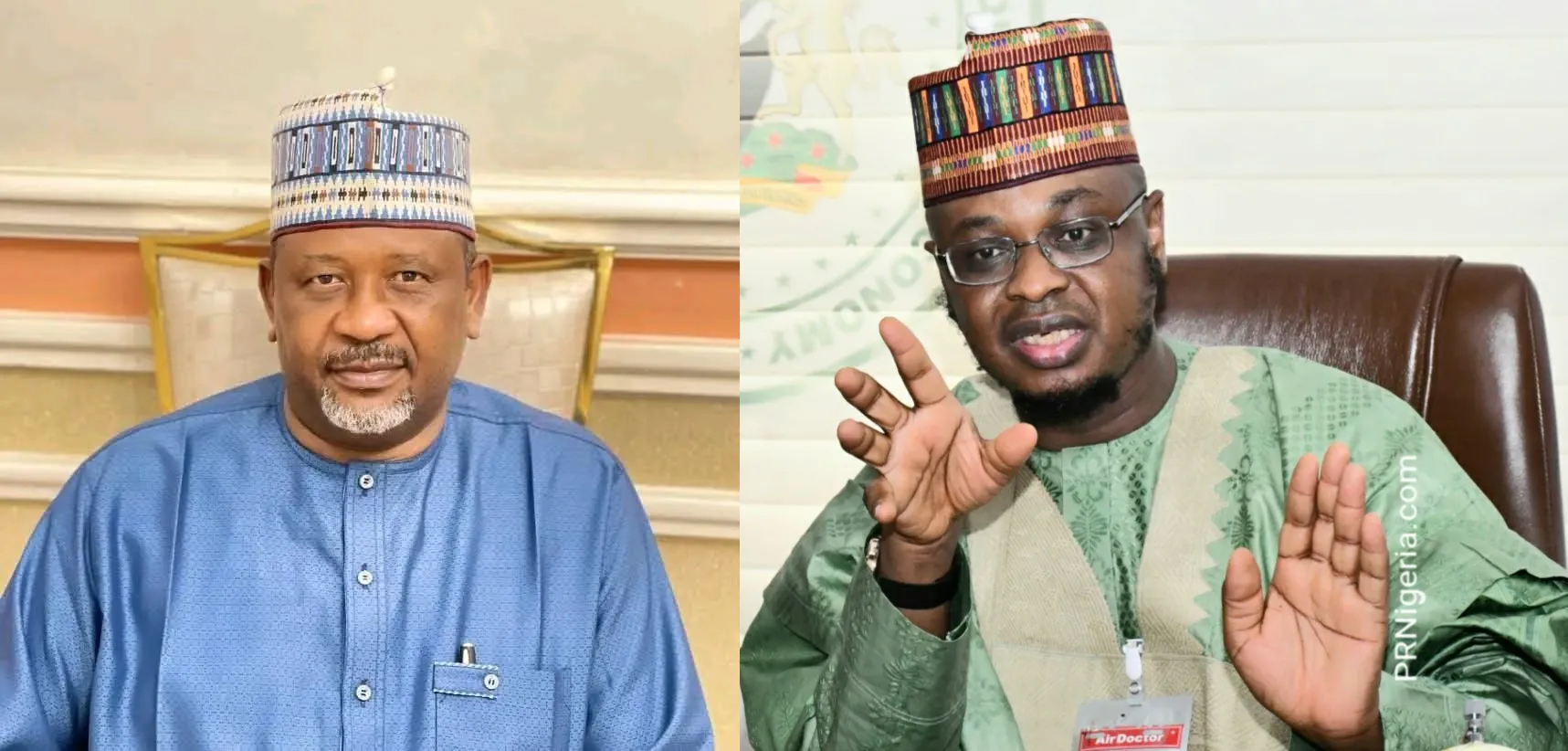
Gombe State

Gombe PDP Dismisses Illegal Primaries, Affirms Pantami as Gubernatorial Candidate


By Abdullahi Mukhtar Algasgaini

The Peoples Democratic Party (PDP) in Gombe State has distanced itself from what it describes as an illegal primary election conducted by a faction of disgruntled members, insisting that the party remains united and has already concluded all nomination processes.

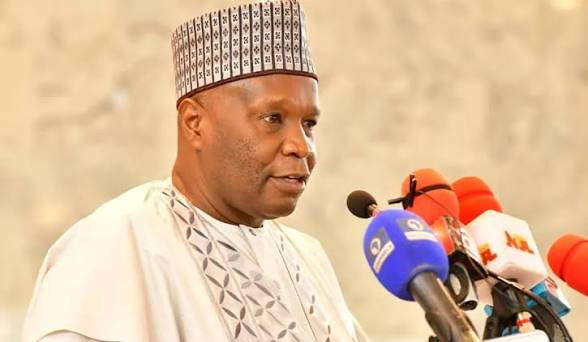
In a press statement issued on May 30, 2026, the state party leadership, led by former Governor Senator Ibrahim Hassan Dankwambo (Talban Gombe) and state Chairman Major General Amnon Kalaye Kwaskebe (Rtd), said the actions of certain mischief-makers pose a threat to party unity and democracy.

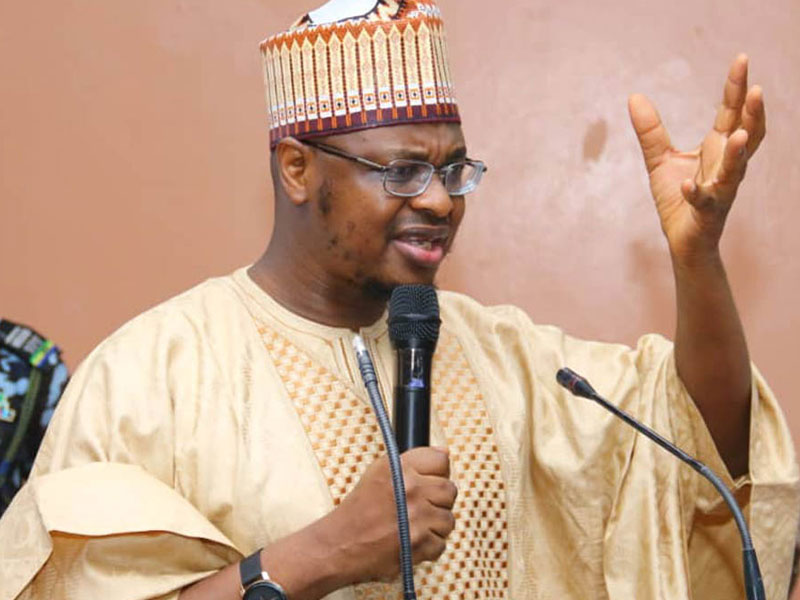
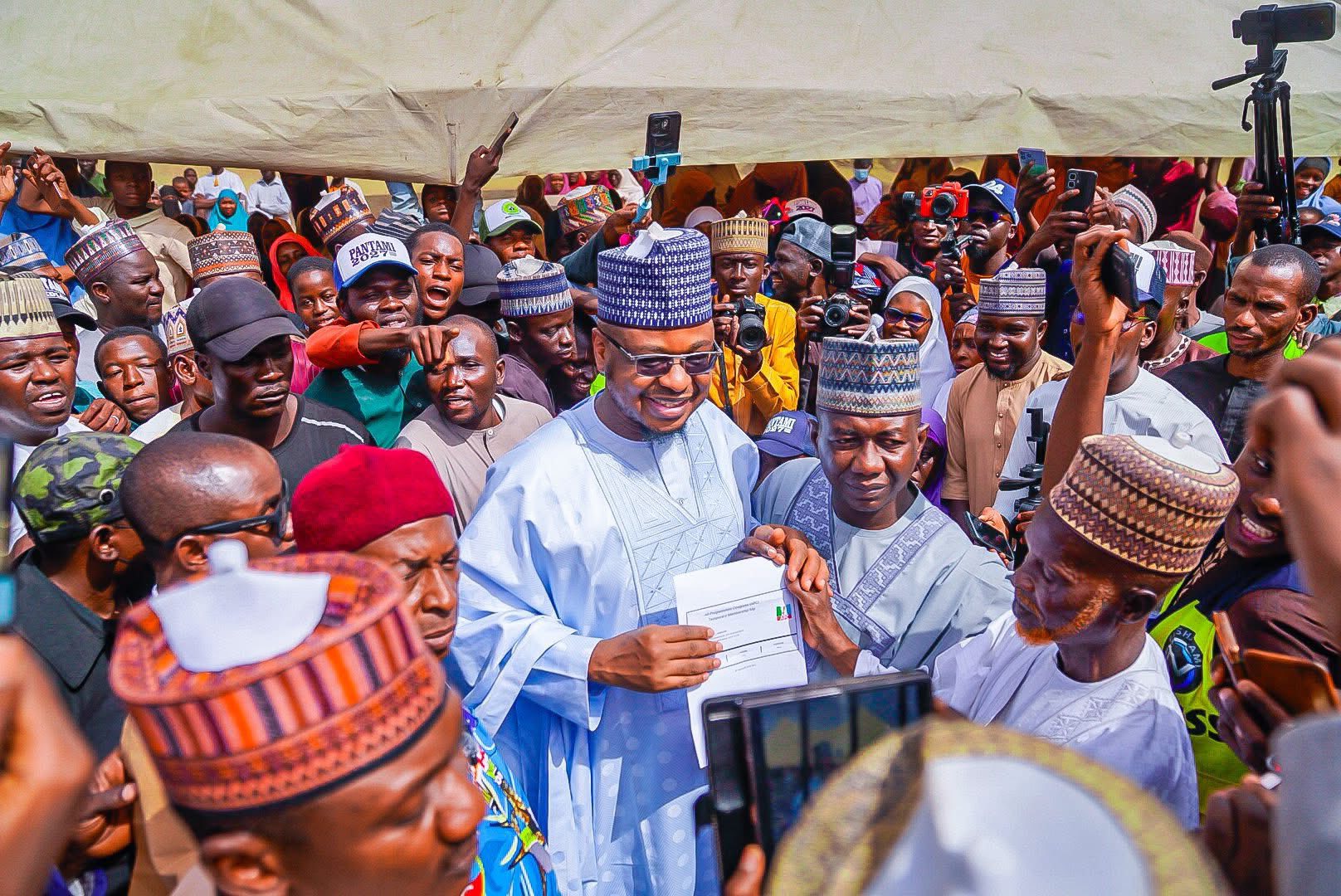
According to the statement signed by the State Publicity Secretary, Abdulkadir Ahmad Dukku, all PDP primary elections in Gombe State have been completed, and the party has no faction. The leadership specifically confirmed the recent affirmation of Professor Isa Ali Ibrahim Pantami as the party’s gubernatorial candidate for the 2027 general elections.

“The PDP in Gombe State is one united family without any faction and cannot stand to watch mischief elements causing confusion within the party ranks,” the statement read. “We therefore disassociate ourselves from such unconstitutional acts capable of causing division among party members.”

The party advised all stakeholders, members, and supporters to ignore the activities of what it called unpatriotic elements who do not want the progress and development of Gombe State.

Why Pantami May Win the Gombe Guber Election

By Ukasha Kofarnassarawa 

Like almost everyone, I saw that Sheikh Ali Isa Ibrahim Pantami is now PDP’s gubernatorial flag bearer for Gombe State. Congratulations to him. Pantami is now everything he once criticised. But that’s not my focus here; the internet has receipts for anyone interested in digging.

The real calculation:

Amid all the “consensus-coronation” drama unfolding nationwide, many observers expected Sheikh to defect to either ADC or the NDC, which are seen as the strongest opposition blocs. But Abuja is playing a different game. This looks calculated.

Right now, the entire core North — both North-West and North-East — is held by APC governors, except Bauchi, which lately switched to APM. The party’s structure and acceptability are widely seen as weak, and the state is likely to return to APC in the next election, given its current flag bearer, the former governor of the state.

For the President’s party, having zero opposition across the whole core north would be a dangerous optics problem. It would look like a monopoly. To avoid that, Abuja needs to “sacrifice” 2  core northern states to the opposition, just to create balance. One in the northwest and the other in the northeast.

And among all opposition parties, PDP is the “lesser evil” from Abuja’s view because one of its sons controls a major faction there. So Pantami decamped to the PDP, which functions as an extension of the APC. The plan: he gets “appointed” governor to create the illusion of balance, then switches to the main APC immediately after winning.

Abuja’s handwriting is not hard to understand.

Ukasha Kofarnassarawa wrote via Ukasha_sani@yahoo.com.

PDP Crisis Deepens in Gombe as Aspirant Rejects Pantami’s Emergence

By Muhammad Abubakar

A major crisis has erupted within the Peoples Democratic Party in Gombe State following the emergence of former minister Isa Ali Ibrahim Pantami as the party’s governorship candidate ahead of the 2027 election.

One of the aspirants, Alhaji Abdulkadir Hamma Saleh, alongside other contenders including Khamisu Ahmed Mailantarki, Usman Aliyu Garry, and Monica Kaltho, rejected the outcome of the PDP primary held on Tuesday. Pantami was declared winner through a voice vote after delegates affirmed him as the party’s sole candidate.

The aggrieved aspirants argued that Pantami was ineligible to contest the PDP primary because he had only recently left the ruling All Progressives Congress after participating in its internal political process. They claimed electoral laws do not permit a politician to contest in two different party primaries within the same election cycle.

Saleh also questioned the sudden postponement of the PDP primary from Sunday to Tuesday, describing the process as unfair and unlawful. He confirmed that his legal team had begun preparations to challenge Pantami’s emergence in court and urged his supporters across Gombe State to remain peaceful while the matter is resolved legally.

Pantami, who recently defected from the APC after criticising the party’s consensus arrangement that produced Jamilu Isyaku Gwamna as a candidate, said his decision to join the PDP was driven by a desire to tackle poverty and improve governance in Gombe State.

Pantami Withdraws From APC Governorship Primary in Gombe

By Sabiu Abdullahi


Former Minister of Communications and Digital Economy, Prof. Isa Ali Ibrahim Pantami, has pulled out of the All Progressives Congress (APC) governorship primary election in Gombe State.

Pantami announced his withdrawal on Tuesday through a statement issued by Barrister Ibrahim M. Attahir on behalf of the Pantamiyya Movement.

The former minister said his decision followed alleged violations of the Electoral Act 2026 and what he described as the APC leadership’s failure to provide information needed for a transparent and credible primary election.

According to the statement, Pantami joined the race after pressure from political leaders, women, youths and other stakeholders in the state. It added that he complied with the party’s guidelines and fulfilled all requirements expected of aspirants.

The statement also noted that Pantami was the only APC governorship aspirant who sent a representative to the Peace Accord meeting organised by the Nigeria Police Force, Gombe State Command, on May 14, 2026. It said his representative was also the only one who signed the agreement during the meeting.

Pantami, however, accused the party of denying him access to important details concerning the conduct of the direct primaries.

The statement said letters written by his solicitors to party officials over concerns surrounding the exercise were neither acknowledged nor answered.

“In a democracy, the law must guide the process. Non-compliance with the Electoral Act 2026 and the party guidelines renders the exercise unsafe and illegitimate,” the statement said.

It further alleged that irregularities marred the APC National Assembly direct primaries conducted in the state on May 16 and 18.

“The people of Gombe State witnessed what transpired during the direct primary ‘elections’ for the National Assembly held on 16 and 18 May 2026,” the statement added.

Pantami maintained that many grassroots party members, especially women and youths who form the bulk of his support base, were excluded from the process.

The statement said the former minister decided to withdraw after consultations with stakeholders across the state.

“After extensive consultations with stakeholders and careful reflection on the developments in Gombe State, Prof. Pantami has taken the difficult decision to withdraw from the APC governorship primary election scheduled for 21 May 2026, under protest. Peaceful protest is a fundamental pillar of democracy,” it stated.

The movement also accused party leaders of ignoring directives by President Bola Ahmed Tinubu on the need for free and credible direct primaries.

According to the statement, details relating to accreditation of agents and observers, voting procedures and collation centres were not provided to aspirants before the exercise.

“Even though President Bola Ahmed Tinubu insisted on the necessity of free, fair, and credible direct primaries, his directives were, unfortunately, not implemented,” the statement said.

Pantami also expressed appreciation to supporters who contributed money for the purchase of his nomination and expression of interest forms through crowdfunding.

The statement disclosed that donations ranged from ₦5,000 to ₦4 million and were publicly acknowledged online.

He thanked youths, women, campaign coordinators, elders and members of his media and campaign teams for their support.

Pantami urged his supporters to remain peaceful and law-abiding despite the development.

“Democracy rests on the rule of law, peace, and security,” the statement added.

The Pantamiyya Movement said it would announce its next political steps in due course.

North-Eastern University and the Emergence of Gombe as a Higher Education Hub

By Muhd El-Bonga Ibraheem

Founded in 2022 as the first private university in Gombe State, North-Eastern University has rapidly emerged as one of the most ambitious and forward-looking institutions in Northern Nigeria. The university was established to bridge several educational gaps, and since its inception, it has continued to grow from strength to strength across nearly all facets of academic and institutional development. 

In barely a few years, the university has distinguished itself through academic excellence, infrastructural expansion, research, technological innovation, and professional accreditation, positioning Gombe State as an emerging hub for higher education and specialised professional training.

Most notably among its many milestones, the university recently recorded a landmark achievement with the successful securing of full accreditation for its Architecture programme by the Architects Registration Council of Nigeria (ARCON). This accreditation confirms that the programme meets the national professional standards for architectural education in Nigeria and enables graduates to proceed toward professional registration as architects. More significantly, North-Eastern University, Gombe, following my recent interaction with its Deputy Vice Chancellor—my brother, Prof. Sani Isyaka—is currently the only university in the entire North East region with full ARCON accreditation, and one of only three universities in northern Nigeria to possess this distinction. This milestone places both the institution and Gombe State at the forefront of architectural education and built-environment training in the region.

Additionally, although still in its fledgling stage, the university has demonstrated an admirable pace of growth and institutional development. For instance, it was the first among the newly licensed private universities to commence academic activities in the 2022/2023 academic session and quickly became the first institution to fully implement the National Universities Commission’s Core Curriculum and Minimum Academic Standards (CCMAS). This magnificent feat subsequently earned the university a Gold Medal for successfully completing all CCMAS development stages within its first year of operation, alongside a distinction rating in the NUC’s Virtual Institute for Capacity Building in Higher Education trainings.

Today, thanks to persistent efforts, the university runs 27 undergraduate programmes across four faculties, 16 departments, 7 directorates, 1 academy, and 2 centres, all approved by the National Universities Commission (NUC). Over the years, the young university has witnessed an exponential rise in enrolment, with its diverse student population across many strata of society growing rapidly to about 2,000 undergraduates, making it one of the fastest-growing private universities in the North East sub-region. To accommodate these growing numbers, the university recently passed a resource verification exercise by the NUC for the creation of new, highly sought-after undergraduate programs in Artificial Intelligence and Information Systems, as well as a Doctor of Pharmacy (Pharm D).

What particularly sets the institution apart is its investment in research and specialised facilities. Recently, the university established the Centre for African Medicinal Plants Research, equipped with advanced laboratories dedicated to natural products research, microbiology, synthesis, and pharmaceutical formulation. It also houses specialised scientific facilities rarely found in many universities across the country.

Given the pervasive rise in technology integration, especially in the post-COVID-19 era, the institution has equally prioritised technology-driven learning and global academic engagement. Through its CISCO Academy and the adoption of the Octopus Learning Management System, the university has embraced blended learning supported by several online learning platforms. It has also established research and academic collaborations with globally recognised institutions, including the University of Surrey, Universiti Teknologi Malaysia, and several others across Africa and beyond.

As a mark of excellence, following several tours whenever I visit the school, the university equally boasts of fully furnished lecture halls, auditoria, solar-powered electricity, science laboratories, Mass Communication studios, an Architecture studio, Moot Court facilities, modern hostels, ICT centres, and the state-of-the-art Justice Abubakar Jauro Law Library. Nonetheless, ongoing campus expansion projects, beautification initiatives, and student-friendly facilities further reinforce its commitment to creating a modern academic environment.

In many respects, the rise of North-Eastern University symbolises the growing educational and intellectual aspirations of the North East sub-region. Through strategic investment in quality education, research, infrastructure, and professional standards, the university is increasingly building a reputation as one of Nigeria’s emerging centres of academic excellence. 

With the massive development the university has experienced in virtually all dimensions over the past few years, amid sustained momentum of outstanding achievements, the university aims to achieve the founder’s long-term vision of becoming one of the best universities in Nigeria within the next 10 to 15 years.

El-Bonga can be reached via miabba40@gmail.com

Indeed, Pantami — The North Must Tell Its Own Story

By Abubakar Musa Idris

During a recent Ramadhan Tafseer session in Abuja, former minister Isa Ali Pantami made a remark that ought to trouble every Nigerian who cares about media fairness. The North, he argued, needs a strong media presence capable of projecting its narratives to the world. This was not a regional call. It was a practical response to a structural imbalance that leaves Northern perspectives underrepresented both within Nigeria and beyond.

Two concepts explain what Pantami identified. The first is agenda-setting: when news platforms decide what to cover, they are effectively deciding for millions what matters. The second is the battle for narrative control: the competition to shape public conversation. He who wins this battle helps set the agenda. He who has no platform is spoken for by others. This battle plays out globally, where international outlets shape how the world sees Nigeria, and nationally, where the concentration of media houses influences which stories receive prominence.

Consider Nigeria’s media geography. Most major privately owned networks are headquartered in Lagos. This is not a conspiracy; it is a commercial reality. Lagos is the natural home of advertising revenue and media infrastructure. Consequently, perspectives from that region receive sustained national attention not out of malice, but simply because journalists live there. When newsrooms are concentrated in one area, other regions struggle for airtime. The North is reported on rather than reporting. This absence of strong Northern media with national reach is not favourable to accurate national discourse.

The international dimension is equally urgent. Global wire services—Reuters, AP, BBC, CNN, Al Jazeera function as gatekeepers of the world’s agenda. Their choices shape the understanding of billions. Research confirms that coverage of developing nations is almost entirely limited to stories of war and disaster. If a region cannot feed its perspectives into these channels, its stories will be told by others, whether incompletely or inaccurately, sometimes with hostile intent.

Consider what happened on February 19, 2026, when suspected Lakurawa terrorists attacked Kebbi State, killing thirty-four Muslims fasting for Ramadan. The next day, gunmen massacred thirty-eight more in Zamfara. Earlier that week, gunmen in Plateau abducted an imam and seven mosque committee members. Where was the sustained national coverage? Where were the front-page stories? Coverage existed, but it was minimal relative to the horror.

Not because these deaths mattered less. They received less attention because the institutions with the power to amplify them are far from affected communities, and because the North lacks platforms to project these tragedies into national consciousness.

Now contrast this with another narrative that dominated global discourse throughout 2025. Between January and October, a story alleging Christian genocide in Nigeria gained significant traction. Investigators traced this coordinated campaign to networks affiliated with IPOB. The narrative reached 2.83 billion impressions on X alone. It influenced the United States to designate Nigeria a Country of Particular Concern. It shaped discourse around the Sokoto airstrike. It is now cited in discussions about sanctions against Northern figures and proposals to label Fulani groups as terrorist organisations. 

One side had an army of storytellers. The other had none. Agenda-setting power shifted accordingly in Abuja and Washington. The absence of strong Northern media is not favourable in such a landscape.

The proposed sanctions and scrutiny of the Fulani illustrate where this leads. As analyst Yushau Shuaib observed, criminal elements exist across every line. But the Fulani are a diverse population numbering in the millions. Collective blame is profiling. 

Yet profiling becomes easier when only some perspectives dominate discourse. The Fulani have no platform to tell their own story, their history, their contributions, their humanity. They risk being defined solely by what others say. This is about ensuring all Nigerians can represent themselves accurately when the world is watching.

Pantami also pointed inward, critiquing Northern media that prioritize entertainment over substantive reporting. Insecurity, education, industrial revitalisation, issues that shape daily life receive far less attention than partisan conflicts. The stakes are higher for regions with limited platforms. When local media fails to set a serious agenda, it becomes distraction. 

But the problem is also reaching. Numerous Northern stations exist, but many broadcast locally in Hausa, limiting national influence. Reliance on NTA alone is insufficient. The absence of strong, English-language, professionally run Northern media with national ambition is simply not favourable.

Pantami also called for a world-class station broadcasting in English, French, and other global languages. Its purpose: to speak to Nigeria and the world. To feed alternative narratives into national and global ecosystems and claim power to help set the agenda. He pointed to Al Jazeera.

 Before Al Jazeera, the Arab world was narrated by Western outlets. After, Arab perspectives could not be ignored. The channel succeeded not as propaganda, it faced criticism from all sides but because it invested in professional journalism and built credibility. A Nigerian equivalent could do the same.

Consequences extend beyond the North. When any community cannot tell its story, the nation’s image is shaped by whoever has the loudest platforms. International sanctions and diplomatic decisions are increasingly influenced by narrative control. So too are national decisions: budget allocations, security responses. If Northern realities are not part of the national conversation, they will not be part of the national response. Without professional media projecting Nigerian perspectives, the country will be defined by whichever voices dominate existing platforms. This is not favourable to national cohesion.

Pantami spoke during a religious gathering, but his message was strategic. He identified a vulnerability and proposed a solution. The question is whether Northern elites will redirect resources toward building the media infrastructure the region desperately needs. The North must tell its own story. Not because its story matters more, but because every community deserves to represent itself. Nigeria needs multiple voices engaging with the nation and world.

Today, many platforms shaping perceptions of Northern Nigeria are headquartered elsewhere. This is not an accusation. It is media geography. And geography can be changed. The North can build. It can invest. It can tell its own story. Not through propaganda, but through professionalism. Not by silencing others, but by adding its voice.

Abubakar Idris wrote via abkidris99@gmail.com.

Transportation Minister Alkali Resigns, Sets To Join Gombe Governorship Race

By Abdullahi Mukhtar Algasgaini

The Minister of Transportation, Senator Saidu Alkali, formally resigned from President Bola Tinubu’s cabinet on Tuesday, paving the way for his anticipated entry into the race for the Gombe State governorship.

His exit, announced by the State House media office, came hours ahead of the March 31 deadline set by the President for political appointees nursing elective ambitions to step down.

Alkali, a native of Gombe State, met with President Tinubu at the Presidential Villa on Tuesday evening before finalizing his resignation. He is widely expected to contest for the state’s top seat in the 2027 general elections, aiming to succeed Governor Inuwa Yahaya, whose second term is set to conclude in May 2027.

The former minister’s departure adheres to a directive issued by the President through the Office of the Secretary to the Government of the Federation on March 17, which mandated all appointees seeking public office to vacate their positions by the end of March.

Reflections on Prof. Pate’s Tenure as Third Vice-Chancellor of FUK

By Muhammad Nasiru Yaya

Leadership in academia is often measured not only by policies and projects, but by stability, service, and the enduring footprints left behind. For Prof. Umaru A. Pate, the outgoing 3rd Vice-Chancellor of the Federal University of Kashere (FUK), the end of his tenure marks not just a transition but the close of a chapter defined by commitment, resilience, and purposeful leadership. As he bows out with the words, “I have served, I am happy to leave”, he does so as a fulfilled and happy man—having delivered on the responsibilities entrusted to him.

On the 18th December, 2020, Professor Pate was appointed the 3rd substantive Vice Chancellor of the University of Kashere by the Governing Council of the institution, under the leadership of Barrister Yakubu A.H Buba (SAN), in a seamless and transparent exercise. On Wednesday, 10th February, 2021, he took over the mantle of the Federal University of Kashere as the 3rd Vice Chancellor, with a solemn pledge to transform the University into one of the great fortresses of learning not only in Nigeria but also in Africa. 

In his first impression as VC he fully praises the Almighty Allah for choosing him to occupy the exalted seat- promised to make his dream of transforming the University a reality by adoption of six-points agenda which involves, physical and academic development, maintenance of standards and quality assurance in the system, provision of an excellent town and grown relationship, improved staff and students warfare as well as making investment on Information and Communication Technology. He believed these are essential for any serious institution yearning for academic excellence and development, to ensure global visibility and to reach out within and beyond for resource mobilisation. He promised to work with relevant stakeholders to ensure the institution has sufficient resources to execute and achieve its goals.

On the day of his arrival, he declared that he would do his utmost best to ensure that he didn’t disappoint the confidence reposed in him. He said, and I quote, “Mine will be to consolidate and further build on what the first and second Vice Chancellors were able to lay. This is the system that will outlive us. It never occurred to me that one day, I would also be part of the process. And today I am here, in Sha Allah, we shall do our best to make Federal University of Kashere a great institution.” 

He further added that “what you sow today may germinate in many, many years to come. If you sow evil, you will harvest evil. If you sow good, you will never tell the extent of the fruit you are going to benefit from; therefore, we are going to sow a seed that will be counting in us long after we must have left this place.” However, these are not just statements; they are a declaration of commitment, resilience, and purposeful leadership. 

Within just a year, the institution started to see changes across various faculties and research centres, as well as academic and non-academic standards.  Within a short time, he visually transformed the institution for the better in all aspects. Two years down the line, the Federal University of Kashere had become a hub of academic excellence. He also sponsored more than 45 people for International workshops, and proposal writing on Grand Menard and Management, and promoted multiple stand academic staff to professorial careers. 

In 2024, more than three years into his stewardship, the University had maintained its standards through innovative research and a conducive learning environment, which had garnered national recognition. Under his leadership, in the 2024 National University rankings in Nigeria, the institution secured the 29th spot among the country’s best universities, alongside Covenant University, the University of Ibadan, and the Federal University of Technology, Akure. In 2025, the University was placed as 28th overall in the country.

In the same way, during his tenure, Pate upgraded the SIWES and General Studies Unit to a Directorate and its own, and he also granted approval for the commencement of part-time undergraduate degree programmes at the university. In the same vein, he also established the IJMB programme at the University. He also established a college of Medical Sciences. He is fully accredited for about ten undergraduate programs from the National University Commission (NUC), including Mass Communication. He also established three academic centres of excellence for Sugar Research and Development, Peace and Security Studies, and Environmental and Climate Studies.

In addition, the Federal University of Kashere has consistently recorded commendable achievements and projects under the leadership of Prof. U.A. Pate. The University, in collaboration with the United Nations International Children’s Emergency Fund (UNICEF), signed a Memorandum of Understanding (MoU) to promote the study of communication for social and behavioural change. 

However, Under the administration of Prof. Pate, Federal University, Kashere has become a beehive of construction activities, notable among these projects are, completion of Lectures Theater 3, 350 Capacity, completion of 30 number of professorial offices, completion of Lecture Room C, completion of the Other wing of the 250 Twin Lecture Theater, LT2, as well as completion of Prof. Jibrin Aminu College of Medical Sciences, he also secured multi-million FUK Guest house in Asokoro Abuja, the groundbreaking of FUK Christian Chapel, the ongoing new University Senate building and new 500 capacity Lecture Theater. 

On 12 December, 2022, Prof. Pate established the Broadcasting Complex, which contains both TV and Radio Studios, with the aim of supporting student learning. Within the last five years, Prof. Pate has signed a number of MoUs and collaborated with notable organisations and institutions, both locally, nationally, and globally, to reach out to prominent personalities in the state and beyond and attract funds to execute more projects on Campus.

Throughout his tenure as Vice Chancellor, Prof. Pate has maintained a cordial relationship with staff and students of the University; to say that, Prof. Pate has more than justified his appointment as leader of this great fortress of learning. Now that he leaves, FUK has been further repositioned as a great institution for higher learning.

As Prof. Umaru A. Pate steps away from office, he leaves behind more than records and reports—he leaves a university steadier than he met it, a community shaped by service, and a legacy anchored in duty fulfilled. His tenure as the 3rd Vice-Chancellor of the Federal University of Kashere will be remembered not for noise, but for substance; not for length, but for impact. Indeed, he came, he served, he delivered—and he left a happy man.

Muhammad Nasiru Yaya, a graduate of Mass Communication, writes from home.

Mohammadnasiryaya@gmail.com.

Pantami, Power and the Burden of Moral Clarity

By Abdulhamid Abdullahi Aliyu

A Hausa proverb warns that you cannot run at full speed while scratching an itch. The saying captures, with striking simplicity, the dilemma now surrounding Sheikh Isa Ali Pantami as conversations about his political ambitions gain momentum.

Public life demands clarity of role and consistency of purpose. When an individual seeks to occupy two morally and structurally conflicting spaces simultaneously, momentum is lost, and credibility is strained. This is the core tension in Pantami’s current trajectory: the attempt to remain a preacher with clerical authority while simultaneously stepping into partisan politics.

The problem is not ambition itself. It is role conflict. Clerical authority depends on moral certainty and spiritual distance from power, while politics thrives on negotiation, compromise, and moral ambiguity. Attempting to inhabit both worlds simultaneously risks weakening the integrity of each.

This tension becomes even more consequential in a plural society like Nigeria, where religion carries deep emotional authority and political power must remain anchored in constitutional legitimacy. Once religious influence is injected into partisan competition, power risks acquiring a sacred character. Political disagreement can then be reframed, subtly or overtly, as moral failure or spiritual deviation rather than a contest of ideas and interests.

Some have argued, including respected commentators like Jaafar Jaafar, that religious clerics should avoid politics altogether because political space is inherently compromised by bargaining, corruption and ethical trade-offs. Others counter with a seemingly reasonable question: if the aim is to sanitise politics, why not allow upright clerics like Pantami to participate?

That question, however, misunderstands the core concern. The issue is not whether a cleric is personally virtuous. It is about the separation of religion and the state. Democracy relies on pluralism, persuasion and accountability. When religious authority enters partisan politics, votes may be influenced not by policy debate, but by guilt, fear, or claims of divine sanction. That is a dangerous precedent in any diverse society.

The concern deepens when the individual seeking political office has, in the past, described politics itself as immoral or ungodly. Such a record invites legitimate questions of coherence. Has politics suddenly become virtuous, or has it merely become useful? Citizens are entitled to ask not out of prejudice, but out of democratic caution.

More troubling still are historical associations with ideological currents that have openly viewed democratic participation not as a means of strengthening institutions, but as a strategy to hollow them out from within — the well-known shiga daga ciki a gyara argument. In societies that have suffered from extremism and institutional fragility, such histories cannot be brushed aside or dismissed as irrelevant.

None of this is about excluding religion from public life. Faith has always shaped values, ethics and social responsibility in Nigeria. But there is a difference between moral inspiration and political authority. When religion becomes a substitute for constitutional legitimacy, the democratic project itself is weakened.

Politics, by its nature, is a flawed human enterprise. It requires compromise, negotiation and accountability to citizens, not to spiritual hierarchies. Clerical authority, on the other hand, rests on moral clarity and trust. Mixing the two without a clear break risks eroding both.

If Professor Pantami intends to pursue politics, the burden before him is not merely electoral. It is moral and institutional. He must offer clarity, openly reckon with past positions, and demonstrate consistency over time. Nigerians are not asking for perfection. They are asking for coherence.

In the end, democracy survives not on sacred claims, but on transparent choices, accountable leadership and the acceptance that political authority derives from citizens, not sanctity. That distinction must remain clear — for the sake of both faith and the republic.

Abdulhamid Abdullahi Aliyu is a journalist and syndicate writer based in Abuja.

Gombe governor raises alarm over missing children, orders security action

By Sabiu Abdullahi

Governor Muhammadu Inuwa Yahaya has expressed concern over the safety of children in Gombe State, revealing that no fewer than 48 minors have gone missing under suspected cases of abduction and trafficking.

The governor made this known on Friday during the launch of the state’s Ramadan palliative distribution programme in Gombe.

He described the situation as a serious security and humanitarian issue that demands urgent attention from both authorities and residents.

According to him, official data gathered by the state government shows that the missing children are mostly between the ages of two and five. He added that the victims were allegedly taken to unknown locations, while their parents remain in the state.

“Available information before us shows that 48 children from Gombe State within the age bracket of two to five years have been taken away to unknown destinations,” the governor said.

“Their parents remain here, but we cannot say where the children are or whether they will be found.”

The governor did not give details about when the incidents occurred or the specific communities affected. However, he noted that the pattern of the disappearances points to organised criminal activity.

He also referred to a recent abduction in the Orji Estate area. He linked the incident to emerging security gaps following the partial easing of the state’s motorcycle restriction policy. Although the kidnapped child in that case was later rescued, he said the development highlights the risks children face.

Governor Yahaya called for collective efforts to tackle the threat. He urged residents to stay alert and provide useful information to security agencies.

“We must collectively confront these emerging threats if we want peace restored,” he said.

“There was a time Nigerians lived more peacefully. We must ask ourselves what has changed and take decisive steps, no matter how difficult.”

He further appealed to community leaders, parents, and residents to support ongoing government efforts aimed at safeguarding lives, especially those of vulnerable children.

The disclosure has heightened concerns among residents and civil society groups. Many have called for stronger child protection systems and more effective measures to combat human trafficking across the country.