Genocide

Letter to Northern Nigerian Christians

By Abdussamad Umar Jibia 

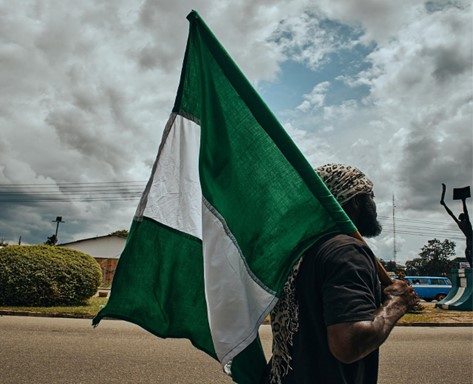
Finally, you are there. Your “brother” from America has spoken. He is coming to “your disgraced country” to wipe out your enemy, an enemy who has lived above your pettiness. This enemy does not give attention to your blackmail, an enemy in whose presence you always feel inferior. That enemy is I, the Muslim Northerner. Out of your inferiority complex, you have given me different names, the most widely used of which is Hausa-Fulani.

I am Hausa-Fulani, even if I am Kanuri, who can speak no single word of Hausa or Fulfulde. I am Hausa-Fulani even if I was born to one of the minority tribes of Gombe, Bauchi, Kogi or, in fact, a Birom. To qualify as a Hausa-Fulani, I require only to be a non-Yoruba, non-Igbo Northerner who prays five times a day. 

At last, I have caught the attention of your big brother, who has never been to Nigeria, a person who has no respect for a black man like you and me. All you are now waiting for are his bombs and rifles to make you greater than the Hausa-Fulani, to make your presence arouse hate and fear in others, just like you feel when I am around. Congratulations. 

Your hatred towards me has a history which cannot be ignored. You and I have lived side by side for centuries. This is where our creator has decided to place us, just like He placed the Chinese in China, the Indians in India, the Arabs in Arabia, etc.

Living together always generates experiences, sweet and bitter. You have always emphasised the bitter experiences of living with me as the reason for disliking me. For example, you believe that before the coming of the British, you were oppressed by me through my emirs, who carried regular raids on your villages to catch slaves; slaves they sold to Arabs and your newfound brothers in Europe and America.

When the British came as colonisers, they no longer needed slaves. So, even though they ruled you through my emir, they banned slavery the way it was done at that time. However, because they sensed no wisdom in you, they taught you that the worship of one God, as done by your neighbour, was wrong. They taught you about three gods that can be considered as one. Depending on who taught you Christianity, you believe that these three gods (or parts of God) are the Son, the Father and the Holy Ghost or the Son, the Father and the holy ghost. Even if it didn’t make sense, it was handy. At least, you now had a religion just like the Hausa-Fulani had one. 

This raises one question. Are you a Christian because you genuinely believe in Christianity, or are you in Christianity because you want to compete with me? Actions are said to speak louder than words. Your later actions would answer this question.

For example, even before Europeans arrived in this part of the world, we travelled to Makkah, now located in Saudi Arabia, for the annual pilgrimage. To date, we have saved our money to go on Hajj without waiting for the Government. Even without Government agencies, we would continue to go on Hajj on our own because it is an article of our faith. Don’t worry, I know how your mind is working. You would be happy if your American brother would bomb the place we go to annually. To your chagrin, that wouldn’t change anything. We shall still perform hajj even if the Kaába is demolished. Islam has provided for that possibility.

Unfortunately, Christians do not have an organised system of worship that provides for an annual pilgrimage. Out of ignorance, you thought Israelis are your brothers because their grandfather is mentioned in the Bible. You thus put pressure on the Government to create diplomatic ties with Israel so that you can go there for pilgrimage, just like Muslims go to Saudi Arabia. So, you annually come back to tell stories about Israel just like Muslim pilgrims share their experiences in Saudi Arabia.

One thing you have forgotten is that Israelis do not even believe in Christianity. As far as they are concerned, Jesus Christ is an illegitimate child of an adulterous woman, and Christians are idol worshippers. Yet, you still believe that Israelis are better than you because they are the “God-Chosen”. I don’t even know which god chose them. Is it the God they claim to have killed, or is it another God? In any case, you need a solution to your slave mentality. 

You are very unlucky to be a tiny minority; otherwise, I would have been cleansed long ago. Your record of violence against Muslims in the few areas you control is well established. In some cases, like Tafawa Balewa, Zangon Kataf and Saminaka, you wiped off/displaced entire Muslim communities. In many other cases, you killed as many as you could by intercepting Muslim travellers, attacking them during prayers, etc., as you did many times in Plateau state.

You were enjoying your violence and playing the victim with the support of the Christian press when the Fulani herders conundrum began. The word “herdsmen” is a misnomer used to avoid ethnic profiling. The correct words are criminals, armed robbers, or bandits. These groups of people have no respect for human lives and property. The least they do is to drive their cattle into farms to devour crops, and when farmers react, they fight them without mercy.

In the extreme, they attack a village, hamlet or innocent travellers and kill, rape, maim, steal and/or kidnap for ransom. Thank goodness, the ‘’herdsmen’’ kept you in check as they always return whatever fire you release with multiples of it. Both of you are criminals, but they are more vicious and sophisticated. This is even as it is in record that your youth allegedly received training in Israel to fight Muslims.

In any case, you would agree with me that I have suffered from banditry more than you did. The whole thing began in Zamfara and spread to Katsina, Sokoto, Niger and Kaduna before it reached Plateau and Southern Kaduna. Yet, you go about lying that your fellow criminals are Muslims carrying out genocide against Christians. Your shamelessness is awful.

Once more, accept my congratulations. Your lies have paid. You may, however, be disappointed to know that Americans have never solved any problem. Whichever country they enter, they would be worse off after leaving it, except in Afghanistan, where they were shamed out. Should they come in here, we are determined to resist and drive them out like they were driven out of Afghanistan. We shall die honourably or triumph with grace, in sha Allah. For us, submission to the enemy is not an option.

Finally, let me note that there are many exceptions to the above. I have respect for peace-loving Christians from the North, and there are many of them.

Abdussamad Umar Jibia wrote from Kano, Nigeria, via aujibia@gmail.com.

Trump: What should Tinubu do?

By Zayyad I. Muhammad 

1. Immediate Actions: Dispatch a high-level delegation to Washington: President Asiwaju Bola Ahmed Tinubu should immediately send a high-powered delegation composed of respected Nigerian statesmen, business leaders, and senior government officials to engage with U.S. authorities.

The team should include former President Olusegun Obasanjo, former Head of State General Abdulsalami Abubakar, Chief Bola Ajibola, business mogul Aliko Dangote, Rev. Hassan Matthew Kukah, and the President of the Christian Association of Nigeria (CAN), Most Rev. Dr Daniel Okoh, His Eminence Sultan of Sokoto, representatives of Religious groups, NGO, etc.

From the government side, the delegation should include the Minister of State for Foreign Affairs, the Secretary to the Government of the Federation, and the Governors of Benue,  Plateau, Niger, Katsina, Kaduna, Zamfara, Borno, Yobe and Adamawa States, given the security relevance of their regions.

2. Re-engage the U.S. Mission in Nigeria: The Presidency should task the Ministry of Foreign Affairs and other well-placed Nigerians with deepening communication with the U.S. Mission in Abuja and the Consulate in Lagos to strengthen diplomatic rapport, address misperceptions, and align mutual strategic interests.

3. Reach out to U.S. allies and partners: Nigeria should actively engage with other influential U.S. allies across Europe, the Middle East, and Asia to rally broader international support for Nigeria’s security and development agenda.

3. Seek U.S. assistance in defence cooperation: President Tinubu should formally request more support from the Donald J. Trump administration in providing modern weapons, intelligence-sharing technology, and counter-insurgency training to bolster Nigeria’s fight against terrorism and violent extremism.

4. Immediate appointment of ambassadors: Nigeria’s diplomatic missions have remained without substantive ambassadors for too long. Swift appointments of competent, credible, and globally respected diplomats will help restore Nigeria’s voice and visibility on the international stage.

5. The Minister Yusuf Tuggar should be reassigned to another portfolio, and a new Minister of Foreign Affairs, preferably one with strong international connections and more diplomatic weight, should be appointed. This will send a clear signal that Nigeria is repositioning its foreign policy and engagement strategy.

6. Launch a global public relations drive: Nigeria must embark on a robust, well-coordinated international PR campaign to reshape global perception. This should highlight the Tinubu administration’s economic reforms, anti-corruption measures, and counter-terrorism efforts, while showcasing Nigeria as a stable, investment-friendly democracy that protects all faiths and ethnicities

7. On the Security and Communication Front: The office of the National Security Adviser and the high military command are doing well; thus, to further boost the effort, they should further re-align the war against insurgency and banditry. The battle against bandits, terrorists, and other insurgent groups must be comprehensively restructured. This includes better coordination among the armed forces, improved intelligence gathering, community-based security initiatives, and enhanced welfare for frontline troops. A unified national security strategy will yield faster and more sustainable results.

8. Strengthen media visibility of Nigeria’s counter-terrorism efforts: Nigeria’s efforts in the fight against terror are often underreported or misrepresented internationally. There should be massive, transparent media coverage, both traditional and digital, to showcase the government’s ongoing efforts, victories, and human stories of resilience. This will help counter misinformation, boost public morale, and attract global understanding and support.

Zayyad I. Muhammad writes from Abuja via zaymohd@yahoo.com.

On Donald Trump’s decision against Nigeria

By Saidu Ahmad Dukawa 

Introduction

At last, the President of the United States, Donald Trump, has made the decision he had long planned against Nigeria, following complaints by some Nigerian Christians who alleged that they were victims of religious persecution in the country.

Trump had once placed a similar sanction on Nigeria during his first term, but after he lost the election to Joe Biden, Biden reversed that “rash and unfair” decision.

This new ruling, however, requires Nigeria to take certain actions in line with America’s interests — or face a series of sanctions. For example, these “American interests” could include the following:

1. Any Nigerian state practising Sharia Law must abolish it.

2. Any law that prohibits blasphemy against the Prophet Muhammad (peace be upon him) must be repealed.

3. Any location where Christians wish to build a church must grant them permission to do so.

4. Anything that Christians claim makes them “uncomfortable” in the country — such as businesses involving halal trade — must be stopped.

5. All businesses that Christians desire, such as the alcohol trade, must be freely allowed across the nation.

These are just examples of the complaints made by some Christian groups to the United States, which may also include political and economic demands.

This action by Trump mirrors what America once did to Iraq under Saddam Hussein — accusing the country of possessing weapons of mass destruction, just to justify an invasion.

If true justice were the goal, then both sides — the accusers and the Nigerian authorities — should have been listened to, including Muslim organisations that provided counter-evidence.

Even among Christians, many reasonable voices have spoken against these exaggerated claims, yet their words are ignored. Clearly, a plan against Nigeria had already been set in motion.

So, what is left for the Nigerian government and its citizens to do? Here is my opinion:

WHAT THE NIGERIAN GOVERNMENT SHOULD DO

1. Use diplomatic channels to inform the Trump administration that the situation is being misrepresented. Even if America remains adamant, the rest of the sensible world will know that any step America takes against Nigeria on this basis is pure injustice, and that knowledge itself will have benefits.

2. Reduce dependence on the United States in key areas such as trade, education, and healthcare. Nigeria should instead strengthen its ties with other countries, such as Russia, China, and Turkey.

3. Unite Nigerians — both Muslims and Christians who do not share this divisive mindset — to resist and expose any malicious plots against the nation.

WHAT THE NIGERIAN PEOPLE SHOULD DO

1. All Nigerians — Muslims and Christians alike — should begin to reduce their personal and travel ties with the United States, especially visa applications, as it may no longer be easy to obtain them.

2. Those who hold large amounts of US dollars should consider converting their funds into other global currencies.

3. Muslims with good relationships with Christians should not let this tension destroy their friendships — and vice versa. Let unity prevail.

4. Muslims must not lose hope or courage. They should realise that they have no powerful ally. Non-Muslims are the ones with global backing. The Jews can commit atrocities against Muslims, and America will support them. In India, Muslims are being killed — America is silent. In China, Muslims face persecution — America is silent.

In Nigeria, there is no single town where Muslims have chased out Christians, but in Tafawa Balewa, Christians expelled Muslims and took over the town. Terrorists who kill indiscriminately in Nigeria have taken more Muslim lives than Christian ones — yet Trump publicly declared that only Christian lives matter.

Still, Muslims can take comfort in one fact: Islam is spreading fast in both America and Europe. Perhaps, one day, when Islam gains ground there, justice and fairness will finally return to the world — because today’s problem is rooted in the injustice that Western powers built the world upon.

5. Nigerian Christians themselves need to wake up to the truth — that the Western world does not honestly care about Christianity, only about controlling resources and power.

If they really cared about Christian lives, they wouldn’t have ignored what’s happening in Congo — a country with one of the largest Christian populations — where Christians kill one another. The same goes for Haiti, South Sudan, the Central African Republic, and Rwanda.

There are numerous examples of Christian nations facing crises. And when Nigerian Christians think of running to the US for refuge, they will realise that America will not take them in. Therefore, it’s wiser to live peacefully with their Muslim brothers and sisters here in Nigeria.

6. Finally, it is the duty of all believers to constantly pray for Nigeria — that God protects it from every form of harm and evil.

Peace and blessings of Allah be upon you all.

Dr Saidu Ahmad Dukawa wrote from Bayero University, Kano (BUK).

Rethinking the “Christian Genocide” narrative: Reflections from Wilton Park

By Dr Samaila Suleiman Yandaki

Nigeria is once again in the global spotlight in the wake of its redesignation as a Country of Particular Concern and the accompanying threat of U.S. military action by the Trump administration to save Nigerian Christians from “genocide”. This narrative is as dangerous as it is familiar, evoking the old imperial logic that simplifies and distorts our complex realities to justify external intervention. As a student of the politics of history and identity conflict, I find this portrayal beyond perturbing and perilous. 

I witnessed firsthand how such perilous narratives were debated in international policy circles when I joined other Nigerian and British stakeholders at a high-level summit at Wilton Park in February 2020 for a dialogue on “Fostering Social Cohesion in Nigeria”. Situated in the serene estate of Wiston House, Steyning, West Sussex, Wilton Park is an Executive Agency of the UK Foreign, Commonwealth and Development Office, widely recognised as a global space for peace dialogues and post-conflict reflection. The meeting was part of the UK government’s follow-up to the Bishop of Truro’s Independent Review on the persecution of Christians worldwide, in which Nigeria was identified as a major flashpoint of “religious violence.” The Truro Report asserted that Nigerian Christians are facing systematic persecution and called upon Western governments to do more to protect them. 

At Wilton Park, we were offered more than an interfaith forum to dialogue; we were given the opportunity to deconstruct the dangerous oversimplifications that have come to characterise Western discourses on Nigeria. Unlike the imperialist gimmicks and threats emerging from Washington today, the British government, through the Foreign and Commonwealth Office, convened diverse stakeholders from Nigeria and the UK – religious leaders, politicians, diplomats, academics, and civil society representatives – to deliberate on the multifaceted security challenges confronting Nigeria and explore ways of building social cohesion. I am not permitted by the Wilton Park Protocol to name participants or cite their specific interventions, but suffice it to say that, with few exceptions, those present were individuals who matter in Nigerian and British policy circles.

The participants spent three days discussing the farmer-herder crisis, the Boko Haram insurgency, and the persistent communal conflicts in the Middle Belt. What struck me most was the consensus among Nigerian participants — Muslims and Christians alike — that the “Christian persecution” framing was profoundly misleading. We emphasised that the reality was far more complex than the narrative of religious persecution suggests. The problem, as several participants observed, is not that Christians do not suffer violence, but that violence in Nigeria is indiscriminate, affecting all communities. To single out one group as uniquely persecuted is to misread the nature of the crisis. 

The Wilton Park approach reflected a subtle but significant shift– the need to appreciate the broader social, political, and environmental dynamics of violence in Nigeria. While the Truro Report relegated these factors to the background, we strongly highlighted them, showing that Nigeria’s crisis is a shared national tragedy rather than a targeted religious war. The goal was to nurture a more nuanced understanding, one that resists the reductive opposition between Muslim perpetrator and Christian victim. 

The meeting concluded on a high note with consensus around the “sensitivity and diversity of conflict narratives,” recognising that every victim’s voice deserves to be heard. It was agreed that shifting the narrative from “Muslims against Christians” and other binary categories must therefore be a priority if we are to avoid deepening existing divisions. The meeting recommended that the Nigerian government should “commission and fund independent, credible research on climate change, number of attacks, crime victims, cattle routes and patterns; develop strategy on how to use data to proactively educate, myth-bust and shape narratives for both sides of the argument; justice and peace training to be included in schools; Government of Nigeria to appoint a National Reconciliation Adviser; establish a Joint Religious Coalition to ensure accountability of government for insecurity and politicisation of conflict; develop religious engagement strategy; and commence dialogue to facilitate creating ‘Code of Conduct’ for religious leaders,” among other actionable recommendations. This later became the groundwork for further peacebuilding engagements between Nigerian and British stakeholders. The Wilton Park dialogue is a model of thoughtful engagement, the kind of thoughtful diplomacy the world requires in times of conflict, not the militarised moralism coming from Washington. 

The question is, what are the true intentions of Trump? Is he genuinely motivated by a humanitarian desire to protect Nigerian Christians, or is this another exercise in the US geopolitical and imperial crusade? History offers little reason for optimism. We know that humanitarian and messianic pretexts always precede Imperial interventions. In the 19th and 20th centuries, colonial logic was a “civilising mission”; today it is “defence of persecuted Christians”. The language changes, but the logic remains the same —define and rule, borrowing from Mahmood Mamdani. The Palestinian literary critic Edward Said describes this imperial habit of defining how others are perceived and how their suffering is interpreted. Therefore, classifying Nigeria—a complex, plural, and Muslim-majority nation—as a persecutor of Christians is a convenient casus belli for Trump, masquerading as a humanitarian concern. 

Meanwhile, I congratulate the proponents of the “Christian genocide” narrative in Nigeria and beyond. We are now officially a Country of Particular Concern, polarised and divided. As the advocates of the narrative await, with self-righteous anticipation, an American-led “rescue mission”, I want to remind them of the devastation that American invasion has brought to nations in the name of salvation: Libya, Iraq, Afghanistan, Syria, Vietnam, Somalia. Each intervention was couched in the language of freedom, yet each left behind broken societies and deepened resentment.

The “Christian genocide” narrative is doubly dangerous: while deepening domestic divisions, it legitimises foreign intervention. This is not to deny the suffering of Christians in parts of Nigeria. Their pain is real and deserves acknowledgement. But this is equally true of Muslims and others who have suffered the same fate. The question is not who suffers most, but how that suffering is framed. 

Ultimately, the Nigerian state bears the greatest responsibility for its failure to protect all its citizens. Endemic corruption, elite impunity, and the persistent inability to provide security for Nigerians have created fertile ground for such divisive narratives to thrive. Unfortunately, the citizens themselves have collectively failed to hold the government accountable for these failures. Instead, they are busying themselves competing for victimhood, thereby creating the conditions for external powers to intervene discursively and politically. It is this vacuum that the Trump administration is filling.  

The task before Nigerian scholars, faith leaders, and policymakers is to reclaim the narrative, not through denial, but through a more honest, inclusive, diplomatic and historically grounded understanding and framing of its own complex realities. The federal government must strengthen its security institutions and reassert the primacy of equal citizenship. All lives matter in Nigeria—Christian, Muslim, and traditionalist alike.

Dr Samaila Suleiman writes from the Department of History, Bayero University, Kano.

How the “Christian Genocide” narrative could cost Tinubu his 2027 re-election

By Misbahu El-Hamza

President Bola Tinubu has finally responded to the false accusation of a “Christian genocide” in Nigeria, a narrative that surfaced in late September. Yet as this claim gains traction in U.S. conservative circles, he should be more worried about his political prospects. The narrative—and U.S. President Donald Trump’s recent call to redesignate Nigeria as a Country of Particular Concern (CPC)—could give Washington both motive and cover to oppose Tinubu’s re-election in 2027, just as former President Goodluck Jonathan alleged of the Obama administration in 2015.

Former President Jonathan publicly claimed that he lost the 2015 election because of U.S. interference. Two issues broadly defined the diplomatic rift between the two governments. The first was Boko Haram’s insurgency and the abduction of the Chibok girls. In a 2018 BBC interview, Jonathan lamented that Nigerians in the U.S. joined public protests there, one of which famously featured Michelle Obama holding a placard with the slogan #BringBackOurGirls.

At the October 2025 launch of ‘SCARS: Nigeria’s Journey and the Boko Haram Conundrum,’ by former Chief of Defence Staff Gen. Lucky Irabor (retd.), Jonathan recalled: “When I was in office, one of the major scars on my government, and one I will retire with, is the issue of the Chibok girls. As Bishop Kukah said, no plastic or cosmetic surgeon will remove it.” The then-opposition under Muhammadu Buhari, which included Tinubu, exploited insecurity for political advantage, a factor that clearly contributed to Jonathan’s loss.

The second, and in my opinion, more damaging rift was Jonathan’s stance against same-sex marriage, reflecting the convictions of most Nigerians. In 2014, he signed the Same-Sex Marriage Prohibition Act, shortly after the Obama administration’s 2011 pledge to “use all the tools of American diplomacy” to promote gay rights globally. Washington’s reaction was swift. The White House warned of possible cuts to HIV/AIDS and anti-malaria funding, while Jonathan’s government held firm. Nigerians applauded him for that. But during the 2015 campaign, the Obama administration’s outreach, including direct appeals to Nigerian voters and a high-profile visit by Secretary of State John Kerry, was widely viewed as tacit support for Buhari, which many Nigerians, including Jonathan himself, believe shaped the election’s outcome.

Insecurity also played a domestic role in Jonathan’s downfall. Nigerians were increasingly alarmed by unrelenting violence—beyond Boko Haram, currently compounded by communal, ethnic, and religious clashes and by banditry mostly in northern Nigeria—that claimed hundreds of innocent lives. Regardless of how the world described it, the reality was and is still tragic. It eroded public trust and patriotism. Yet successive governments, rather than restoring security, have often appeared more concerned with foreign perceptions than with rebuilding national confidence and truly working to end the bloodshed of innocent Nigerians.

So, while Jonathan’s administration angered the Obama White House over the same-sex marriage law, many believe that Tinubu’s has irritated Washington for another reason.

In early September, U.S. Senator Ted Cruz introduced the Nigeria Religious Freedom Accountability Act of 2025 (S.2747) to the U.S. Senate. The bill seeks to sanction Nigerian officials allegedly complicit in “Islamist jihadist violence against Christians and other minorities” and those “enforcing blasphemy laws”. Blasphemy remains an offence under Nigeria’s criminal code and in the twelve northern states operating shari’a law. Yet, the Cruz bill’s language raises serious questions: how would the former officials be identified, and on what evidence? If Washington possesses proof, it has not presented any. Within Nigeria, such accusations often surface in political rhetoric but rarely withstand scrutiny.

Still, Nigeria’s greater “offence” under Tinubu—at least to American conservatives like Bill Maher, Mike Arnold, Ted Cruz, Riley Moore, and now Donald Trump—is its unwavering support for the Palestinian people. Successive Nigerian governments, whether Christian- or Muslim-led, have consistently condemned Israel’s occupation and called for a two-state solution as the only path to peace. This position, long-standing and bipartisan in Nigeria, clashes directly with Washington’s pro-Israel consensus.

After Nigeria’s firm statement at the 80th UN General Assembly in September, Maher went on his HBO show and declared, “I’m not a Christian, but they are systematically killing the Christians in Nigeria,” comparing it to Gaza and calling it “a more serious genocide.” Such claims, amplified by Trump’s rhetoric about “defending Christians,” serve U.S. political optics more than global justice. Recall Trump’s 2020 CPC designation for Nigeria. It was largely symbolic and carried no enforcement before he left office. His renewed posturing appears equally opportunistic.

Tinubu may believe U.S. pressure arises from concern for Christian victims of Islamist violence and that this aligns with Nigeria’s large Christian population. Yet the U.S. record tells a different story. The same establishment that condemns persecution in Nigeria supports Israel’s war in Gaza, where many casualties are both Muslim and Christian Palestinians.

If Nigeria accuses Washington of selective advocacy, it may find sympathy at home, but not in Washington, where lobbying interests dominate the narrative. Assuming that the “Christian genocide” argument will shield Nigeria from criticism would be a miscalculation.

Tinubu is not yet where Jonathan stood in 2015, but the parallels are unmistakable. The Obama administration’s posture during Jonathan’s re-election bid showed how U.S. influence can shape Nigerian politics. A sustained clash with U.S. policy on religious freedom and Palestine, coupled with insecurity and governance failures, could become a tipping point. Avoiding that outcome will require strategic diplomacy (which we have no doubt our president possesses), credible reform, and a domestic agenda rooted in accountability. Nigerians must see real action towards ending Boko Haram and banditry.

This moment demands political acumen and the disciplined management of both security and foreign relations. Tinubu cannot afford to repeat Jonathan’s missteps. In global politics, misreading Washington’s signals has previously cost Nigerian presidents, and history may not be kind to those who fail to learn from it.

Misbahu writes from Kano and can be reached via email: misbahulhamza@gmail.com

Over 100 killed in Israeli strikes on Gaza amid ceasefire dispute

By Maryam Ahmad

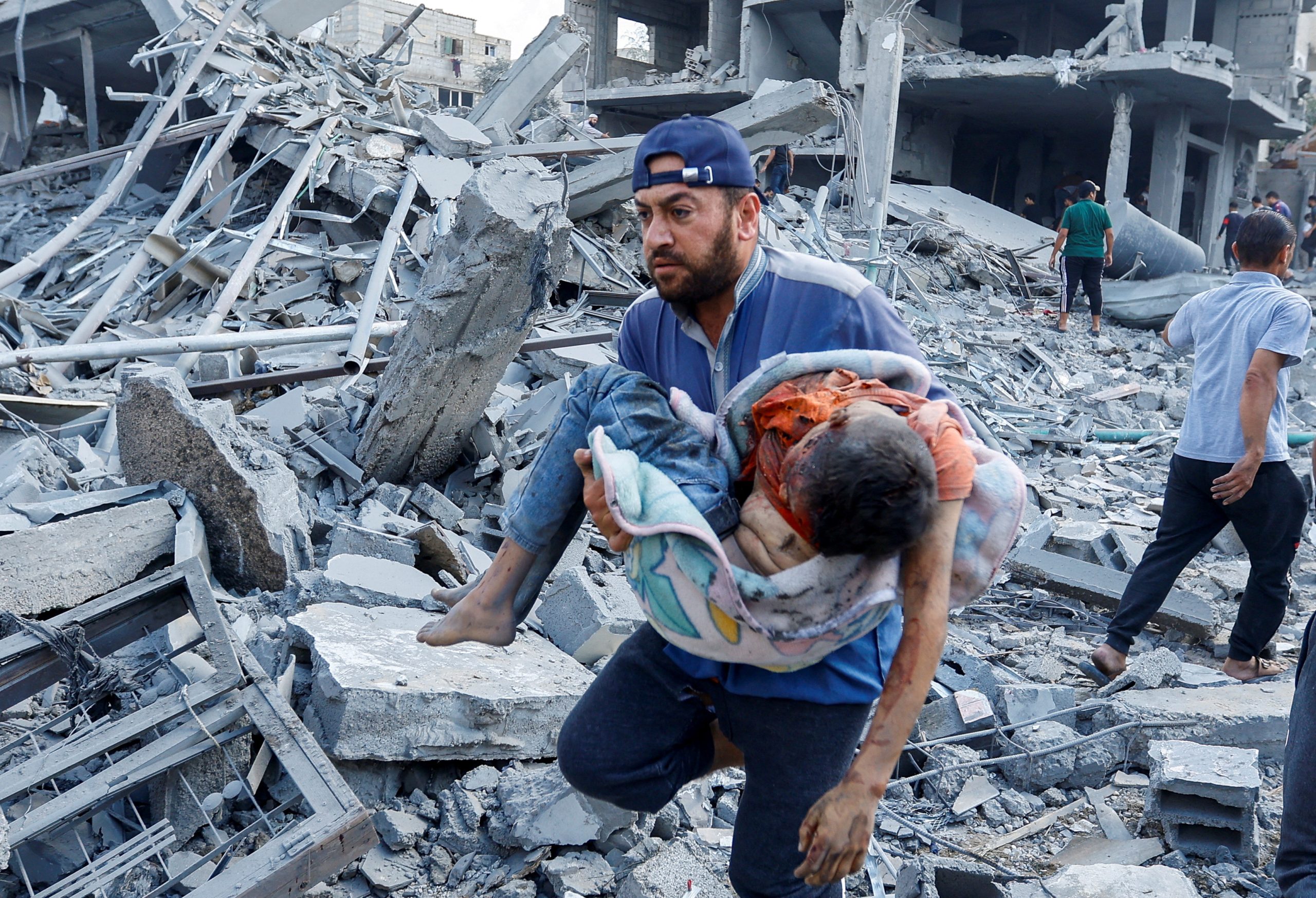
More than 100 people were killed in a series of Israeli airstrikes across Gaza on Tuesday, according to health officials in the enclave. The strikes came shortly after Israel accused Hamas of violating a fragile ceasefire agreement — an allegation Hamas has denied.

Palestinian health authorities said the attacks targeted several densely populated areas, leaving scores of civilians among the dead and many others injured. Rescue teams continued to search through the rubble for survivors late into the night.

In a statement, Hamas rejected Israel’s claims of ceasefire breaches and accused Israel of deliberately escalating the conflict. The group also said Israeli authorities had prevented the return of the bodies of Israeli hostages who were killed during earlier clashes.

The renewed violence has raised fears of a broader breakdown in the ceasefire, which had offered a brief respite after months of devastating fighting. International calls for restraint have grown as humanitarian conditions in Gaza continue to worsen.

CAN rejects claims of Christian genocide in Nigeria

By Muhammad Abubakar

The Christian Association of Nigeria (CAN) has denied claims of a Christian genocide in Nigeria, calling such reports misleading and lacking a consistent pattern, as reported by The Guardian (Nigeria).

The claims gained attention after U.S. comedian Bill Maher and Senator Ted Cruz accused Islamist groups and Nigerian officials of persecuting Christians. Cruz even proposed sanctions through the Nigeria Religious Freedom Accountability Act. 

At the same time, U.S. lawmaker Riley Moore urged the U.S. government to halt arms sales and label Nigeria a “Country of Particular Concern.”

In response, Nigeria’s Presidency denied any religious war, stressing that the violence affects all citizens regardless of faith.

CAN’s Director of National Issues and Social Welfare, Abimbola Ayuba, acknowledged widespread killings but said they were not targeted solely at Christians. He noted that both Christians and Muslims have fallen victim to terrorist attacks, adding that bullets “don’t look for a Christian or spare a Muslim.”

Ayuba cautioned against foreign interference and urged Nigerians to work collectively to end the insurgency through local institutions rather than seeking sympathy abroad.

Ulama Forum refutes claims of 500,000 Christian deaths in Nigeria

By Hadiza Abdulkadir

The Ulama Forum in Nigeria has condemned what it describes as false and inflammatory allegations by some international media outlets, including Fox News, Radio Genoa and American talk show host Bill Maher, claiming that 500,000 Christians were killed in Nigeria last year.

In a statement signed by Convener Aminu Inuwa Muhammad and Secretary Engr. Basheer Adamu Aliyu, the Forum described the claims as “entirely unfounded, reckless, and designed to misinform the international community.” 

It added that Nigeria’s security challenges—terrorism, banditry, and farmer-herder clashes—affect both Muslims and Christians, not any single religious group.

The Forum noted that Muslim communities, particularly in the Northwest, have “suffered disproportionately,” with thousands killed in repeated attacks ignored by international coverage. It warned that spreading false genocide narratives could inflame tensions and undermine peace efforts.

Quoting the Qur’an, the Forum reaffirmed Islam’s prohibition of killing innocents and called for unity among Nigerians “to resist attempts by foreign actors to manipulate false narratives.” 

It also urged the government to intensify security measures and advised international media to report responsibly and respect Nigeria’s diversity.

Italy gripped by strikes over weapon shipments to Israel

By Muhammad Abubakar

Italy is witnessing widespread labour unrest as dockworkers, unions, and students have launched strikes and demonstrations to protest the shipment of weapons to Israel amid the Gaza conflict.

In Ravenna, Mayor Alessandro Barattoni and local authorities stopped two trucks carrying explosives meant for Haifa, citing solidarity with Palestinians and concerns over loopholes allowing arms transit through Italy.

In Genova, dockworkers participating in a strike have blocked access roads to the port and rallied under the banner of preventing Italian ports from facilitating arms transfers. Similar protests are underway in Livorno. Public transportation services have been disrupted in cities such as Rome and Milan, and several schools have been closed.

Unions are demanding that the Italian government suspend both commercial and military cooperation with Israel, close legal loopholes related to transit of arms, lift any humanitarian blockade on Gaza, and formally recognise the State of Palestine.

The protests highlight increasing internal tensions in Italy’s politics, especially under Prime Minister Giorgia Meloni’s government, which has traditionally aligned more with Israel diplomatically. Observers suggest the strike actions test if citizen and labour moral pressure can influence the government to curb arms exports and transit.

Canada, Australia and UK formally recognise Palestinian state

By Muhammad Abubakar

In a historic diplomatic shift, the governments of Canada, Australia, and the United Kingdom have formally recognised the State of Palestine. The announcement, made in a joint statement on Sunday, marks a significant moment in international support for Palestinian statehood.

Leaders of the three countries said the recognition was aimed at advancing a just and lasting peace in the Middle East, reaffirming their commitment to a two-state solution. They urged both Israel and Palestine to return to negotiations and called for an immediate halt to violence in the region.

The move has been welcomed by Palestinian officials, who described it as a “courageous step towards justice and self-determination.” However, Israel has expressed strong opposition, warning that such recognition could undermine peace efforts.

The decision by three of the world’s most influential Western nations is expected to increase pressure on other countries to follow suit, potentially reshaping the dynamics of the Israeli-Palestinian conflict on the global stage.