Fuel subsidy

FG unveils N150b economic relief package for businesses amid fuel subsidy removal aftermath

By Sabiu Abdullahi 

The federal government has introduced two disbursement programmes, the Presidential Conditional Grant and the Presidential Palliative Loan, to inject a total of N150 billion into the economy. 

According to a statement from the Minister for Industry, Trade and Investment, Dr. Doris Uzoka-Anite, the programmes are strategically designed to support businesses grappling with the aftermath of the fuel subsidy removal implemented on June 1. 

Under the Presidential Conditional Grant Programme, the government plans to disburse a grant sum of N50,000.00 to nanobusinesses across all 774 local government areas in the country.

Collaborating with various stakeholders, including state and local governments, federal legislators, federal ministers, banks, and others, the programme aims to provide relief to the most grassroots-level enterprises.

Eligible nanobusiness owners are required to furnish proof of residence or business address in their local government area, along with personal and bank account details, for identity verification. 

The government has also earmarked N75 billion for Micro, Small, and Medium-sized Enterprises (MSMEs) and an additional N75 billion specifically for manufacturers.

The loan facilities, offered at a single-digit interest rate of 9 percent per year, aim to stimulate growth and address financial challenges faced by businesses. 

MSMEs can access loans up to N1 million with a three-year repayment period, while manufacturers can secure up to N1 billion for working capital with repayment terms of one year for working capital or five years for machinery and equipment.

The application process for these loans involves submission through a dedicated portal, with access facilitated through participating banks.

Applicants are required to meet their respective banks’ risk assessment criteria. 

Noting its commitment to economic development and empowerment, the Federal Government believes these initiatives will foster entrepreneurship, spur job creation, and contribute to the overall economic recovery of the nation.

Interested parties can find more information and apply on the dedicated website for the programmes.

As oil subsidies made a comeback

By Yusufu Musa

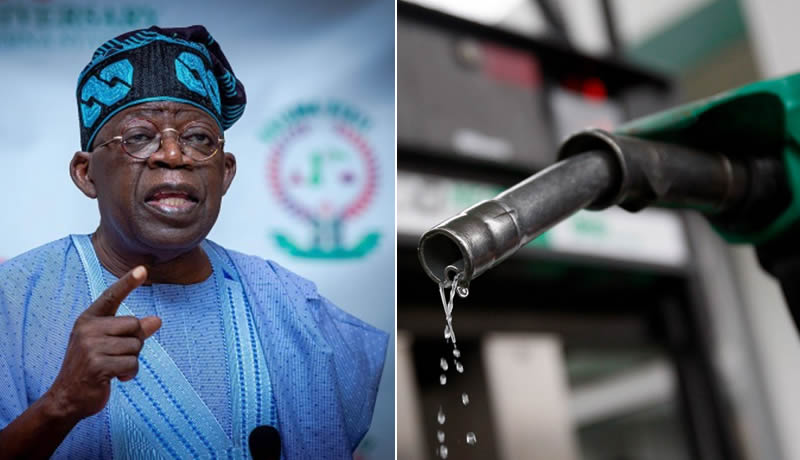
During his inaugural address, President Bola Tinubu made what appeared to be a bold statement – ‘fuel subsidy is gone’- which I received, as many people who advocate for channelling public resources to nation building,  in an inexpressible ecstasy. Though discontinuing subsidy payments made the list of his campaign promises, like his close rivals, the duo of Peter Obi of the LP and Atiku Abubakar of the PDP, the declaration came sooner than expected. 

After watching his debut speech as president, many people were unsure when the order would come into force. For instance, a news item made the rounds in the first quarter of this year, suggesting that the immediate past government had dropped its plans of removing the PMS subsidy. The then minister for finance, Zainab Ahmed, swiftly issued a release to discredit the story. She said the public misunderstood their stance.

According to her, the government only expanded the hitherto planned implementation of the subsidy removal team to allow for the participation of representatives of the incoming government. She insisted that the federal government made estimates for subsidy payments until June 30, and there would be no funds for that after this date. 

We gathered that Nigerians would continue buying fuel at the subsidised rate of N195 per litre. We misinterpreted it. A day later, the NNPCL raised its pump price to N550. But, had the company waited until July 1 to adjust, Nigerians would have spent long hours in petrol retail outlets. Marketers would have hoarded the fuel to create an artificial scarcity to ‘cash out’ after July 1.

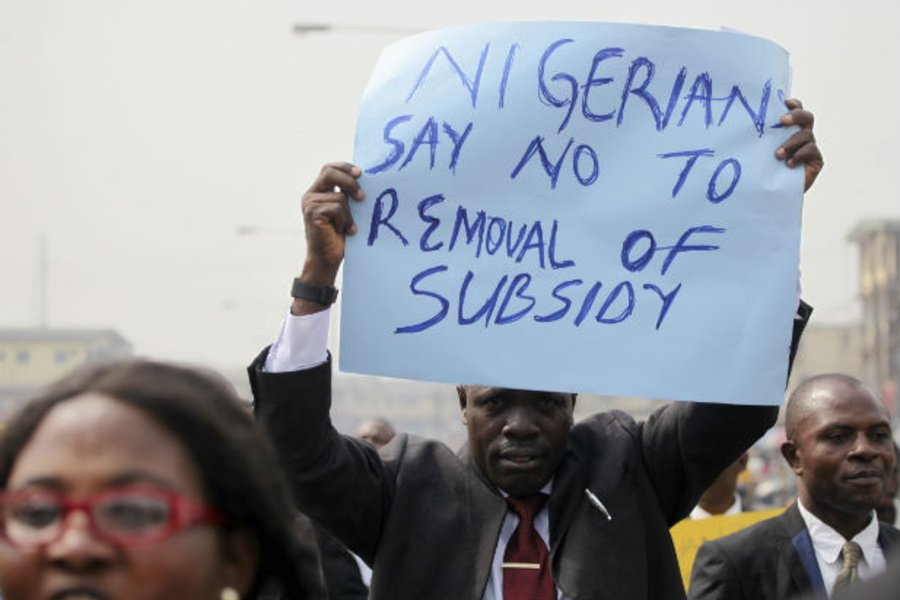
It took Nigerians not long to feel the attendant effects of the policy. Transport fares immediately tripled, and prices of consumable goods have been on the increase. However, an average Nigerian is convinced that the action is necessary and is for our collective good. So, we are ready to make sacrifices for the nation. Two, a worker in Abuja who boards a cab to go to his workplace and visits his hometown only during festive thought that big men fuel their motorcades and the government only subsidises their ostentation.

From Jonathan to Buhari, corruption in the system is the loudest criticism against the subsidy. Critics of it argued, and still do that it benefits a handful of people, ‘the oil cabal’. For instance, Malam Isah Yuguda, a chieftain of the APC, disclosed that one of the cabal members approached President Buhari to say they were tired of making money [from subsidies]. Another reservation is that some marketers illegally export the product to our neighbours such as Niger, Cameroon and Benin, thus placing a heavier burden on our government to pay subsidies for what other countries enjoy. They told us that our daily consumption was not consummate with our needs. 

In 2012, Ngozi Iweala, the then coordinating minister of economy, was in Lagos to tell proponents of subsidies that the subsidy funds would reduce maternal deaths in the country and the infrastructural deficit. Sanusi Lamido Sanusi followed the same pattern of thought. Their articulate points could not help convince Nigerians that paying subsidies was evil.

President Buhari was the fiercest in putting forward arguments against subsidies. He is credited with a question he did not answer in his eight years as our president – ‘Who is subsidising who?’  One of those being subsidised was in his office, but he did not take the opportunity to ask him questions. Nonetheless, his administration undertook to let the subsidies go, but in phases. The plan was to go after the PMS subsidy in the final phase.

Governors, who budget billions of naira in the name of security votes whose details are never in the public space, were angry that Buhari was too slow in abolishing subsidies for the health of the country’s economy. 

With borrowing that became a ritual under the last government and the constant blame on the subsidy as the greatest impediment to our development as a nation, we were looking forward to departing from the tradition to set the economy on the path of prosperity.

Four months after making one sentence, which we believed ended the subsidy regime, several papers reported that the government paid about 162bn for subsidy in August.  Onlookers have a reason to ask whether this removal will answer its purpose. Despite the hardship in the country, this news is utterly bad for Nigerians.

If the system encouraged corruption in the past and the government did away with it, how does it intend to convince Nigerians that large-scale corruption would not continue now that the subsidy is back? What assurance would the Tinubu’s government give Nigerians that importing the product to other countries will no longer continue? 

Continuing to vote for such a big figure in enriching oil titans, it repeatedly pointed out they are the actual beneficiaries of subsidies, which means it has no satisfactory cause to starve the poor Nigerians any longer. The philosophy has been thrown out. The amount is not much different from what the previous governments were paying. It should unconditionally reverse the policy. 

Suffering is pronounced in towns and villages. Practical strategies to alleviate the hell are not forthcoming. The government, last month, considered distributing food items to the poor. It went as far as handing funds to state governors. That is not sustainable. It would be difficult, if not impossible, for one man to take more than a sack of grain home. This man has, say, five wards under his roof. There is another chapter of life after the palliative is gone. 

Yusufu Musa writes from Kaduna.

Tinubu’s 100 days: The ticking time bomb and the danger of the elite’s silence

By Abdelghaffar Amoka

It is 100 days in office and six months after President Bola Ahmed Tinubu won the election, and the government seems directionless. It is more news that the hardship that President Muhammadu Buhari introduced us to has multiplied. Whether he removed the fuel subsidy or Buhari did, he has no excuse to be clueless for the past six months on the way forward. He asked for the job.

My problem is how our leaders are comfortable putting burdens on the people, burdens they have not prepared them to carry. There was a plan to remove the fuel subsidy. Common sense should tell them that it will affect purchasing power. It is that simple. But why was it so difficult to put up a parallel plan to stabilise the purchasing power of the people once the subsidy was removed? How some people are comfortable with a policy that does not follow the natural law of growth and development beats my imagination.

When a child is born, he is nurtured and trained to become an adult. He is either sent to school or learns a trade and gets empowered to take responsibility. He then gets a wife, has kids, and starts to take responsibility. Imagine giving the boy a wife with kids at 15 without empowering him to take care of the responsibility and expecting him to be fine. It is against the law of nature to burden anyone without preparing him for it.

Fuel subsidy removal was a long battle, and many people have campaigned to remove fuel subsidies since 2010. They made it look like the removal would save the government money for infrastructure and do wonders. But they never discussed the consequences of the removal on the people. How much have we saved for 100 days, and what have we achieved with it? What infrastructure is better than the general well-being of the people?

Funny enough, some of the advocates of the subsidy removal are currently complaining about the hardship on the land. That made me wonder what they were thinking when advocating for the removal. Some are even intellectuals. They thought subsidy was like a tap that you just switch off, and everything is fine. They think it’s that simple. The state government has now given money to share some stuff as palliative. Is 5kg of rice or Semovita all we need to overcome this heartless burden? Who are the people giving them economic advice?

There are three schools of thought on the post-fuel subsidy removal. Those benefitting from the removal will never see anything wrong with it. Those who feel we should endure the hardship and wait for the government to invest in infrastructure. Then, those who see everything wrong with the removal instead of fighting the corruption that shrouded fuel subsidies.

We are being advised to cut our expenses. They seem to have agreed with Buhari’s “Sharholiyah” (wasteful spending) principle. Where is the waste to cut? Those people think everyone has as much as they have to spend. How do you expect a junior staff working at the federal secretariat earning about N40k monthly to cut his expenses and manage? What will he cut? How do you expect a graduate working at the federal secretariat and earning about N60k monthly to cut costs? What will he cut?

For the first time since I became an adult,  federal government workers are being asked to work 2 or 3 days a week to reduce the cost of going to the office. Unfortunately, that will not help reduce the cost of living.

Fuel subsidy is removed, and we are expected to be patient and cope. School fees have increased due to the present economic reality, as acknowledged by FG, and we are expected to come with it. Floating naira to dollar in a country that imports 80% of its needs is a disaster.

The danger of keeping quiet.

It is no more news that crime rates have increased over the last months and are getting worse. Meanwhile, there are three classes of people: the upper, middle, and the lower class. The upper class is inaccessible. They have security escorts, bulletproof cars, tall fences, and gigantic gates with security dogs. The kids are abroad or well-secured. The middle class is accessible and lives not far away from the lower class. As far as the lower class is concerned, the upper and middle classes ( a fast-depleting class) are responsible for the difficulties they are experiencing.

As long as you can still manage to drive your car and feed, you belong to the haves as far as the lower class is concerned. As the crime rate soars, your house will be the first target to be vandalised and bugled. This narration from my friend, Muhammed Hashim Suleiman, keeps ringing the bell in my ear. The narration keeps reminding me of our likely danger in this situation. 

He managed to muster the courage to buy a few litres of petrol for his old Tokunbo car. The petrol station was swarming with people, young and old, not buying petrol but waiting for any buyer to saunter in, and they descended on that unlucky buyer begging for alms. After he purchased the few litres he could afford, entering his car became a struggle because the beggars were begging between him and the car. He silently ignored them and found his way inside the car. Then, a very old woman stood before the car until the petrol attendant shouted at her. 

Instead of leaving the front of my car, the old woman walked towards the driver’s side. On reaching his window, in a cold voice, she said: “Kun kwashe kuɗin ƙasar, kun bar mu da yunwa, yanzu muna roƙon ku abun da zamu ci amma kun hana mu. Wallahi, idan muka mutu da yunwa, sai Allah ya kama ku.” That: “You people have stolen the nation’s money and left us in hunger, now we are begging you for what to eat, but you won’t give us. If we die of hunger, I swear God will never allow you free.”

We are all victims of public embezzlement, but the old woman who happened to belong to the lower class is unaware of it. As we keep quiet adjusting to living with the burden placed on us by these elitists in government, know that the lower class that has been driven far below the poverty line has placed you on the same page with those that have stolen the nation’s money.

It is 100 days of disaster. I hope the government gets its acts together and be purposeful. Any government that fails in the general well-being of the people is a failed government.

Dear Nigerians who are supposed to be in the middle class but tending towards the lower class, If nothing is done and the time bomb should explode, you will be the first casualty. Your silence will cost you a lot. That will be a double casualty for a crime you and I are victims of.

Abdelghaffar Amoka Abdelmalik, PhD, wrote from Ahmadu Bello University, Zaria. He can be reached via aaabdelmalik@gmail.com.

NLC declares nationwide warning strike amid mass suffering

By Muhammadu Sabiu 

The Nigeria Labour Congress (NLC) has declared a two-day nationwide warning strike set to take place on September 5th and 6th, with an ultimatum for the Federal Government to address the dire plight of the masses. 

This announcement was made by NLC President Joe Ajaero during a press conference held at the conclusion of the National Executive Council (NEC) meeting on Friday in Abuja. 

Ajaero, while delivering the communiqué jointly signed by Mr. Emmanuel Ugboaja, General Secretary of the Congress, emphasized that these decisions were the result of extensive deliberations within the NEC. 

The NLC has put the government on notice, stating that if no action is taken, a total and indefinite shutdown of the nation may occur within the next 14 to 21 working days. 

The primary objective of this strike action, Ajaero stated, is to compel the government to address the excruciating mass suffering and impoverishment experienced across the country.

Mr. President, subsidy removal is good but…

By Lawan Bukar Maigana

The removal of fuel subsidy by President Bola Ahmed Tinubu has had far-ranging consequences, amplifying the existing economic hardships faced by millions of Nigerians. The nation is currently grappling with an unprecedented inflation rate in essential commodities, transportation and other services. As a result, a large proportion of Nigerians find themselves living below the poverty line, struggling to make ends meet. 

This development has directly contributed to the spiraling inflation rate, which has hit the prices of foodstuff, transportation and essential services the hardest. This has created a burden on the average Nigerians, as their meager income is further stretched, making it increasingly difficult to afford necessities. 

As I write this article, the bus fare from Maiduguri to Abuja is N10,500 which was previously N7,500 as reflected on a circular released by Borno Express Cooperation on June 1st, 2023. Kaduna to Maiduguri, which used to be N6000, is now N9000. 

In the event whereby vehicles are scarce at the garage, travelers pay N12,000 from Maiduguri to Kano which was formerly N6,500, a non-Borno Express driver confirmed. This is unbearable and unacceptable!

The economic downturn occasioned by subsidy removal has disproportionately affected the most vulnerable segments of society as many Nigerians are now living below the breadline, struggling to feed their families and maintain a decent standard of living. 

Nobody is spared from the unbearable consequences of the removal of fuel subsidies. Not even the bourgeois elites’ empire in the country. They, too, hide and cry. Who the subsidy removal benefits then? 

Civil servants, especially those working in state and local governments are among the primary victims of the removal of fuel subsidies as many of them can’t feed their families. A 100% increase in their salaries is a necessary step to restore their purchasing power and improve their quality of life. 

Additionally, an increase in civil servant salaries would contribute to the overall improvement of public services. It would attract and retain talented professionals who are essential for efficient service delivery. Adequate compensation would motivate civil servants to perform at their best, leading to a more productive and effective public sector.

Now, what about the unemployed and jobless massive population in the country? How would their well-being be improved? Who would provide for them? A larger portion of Nigeria’s population is suffering in silence as a result of the monstrous inflation rate occasioned by the removal of the stubborn fuel subsidy. Some people eat once a day while others, the better-rich eat twice a day, skipping lunch. Therefore, President Tinubu must acknowledge the grave consequences of the current economic situation and the suffering experienced by Nigerians. 

As the leader of the nation, he has the power to reverse the economic downturn and alleviate the suffering of Nigerians. It is imperative that the President takes into account the plight of the citizens and work towards restoring their faith in the government. 

While the road to economic recovery may be challenging, President Tinubu needs to consider the long-term benefits of prioritizing the well-being of Nigerians by implementing a 100% increase in civil servant salaries and creating job opportunities for our overwhelming jobless population thereby contributing to poverty reduction, improving living standards, and restoring hope for the nation’s future. 

Lawan Bukar Maigana writes from Yobe State and can be reached via email:lawanbukarmaigana@gmail.com

PDP slams Tinubu over hardship caused by new petrol price

By Uzair Adam Imam

The Peoples Democratic Party (PDP) has slammed President Bola Ahmed Tintubu over the bitting economic hardship caused by the recent hike in the pump price of fuel from N534 to N617 per litre in Nigeria.

Mr. Debo Ologunagba, the National Publicity Secretary of PDP, mounted this challenge in a statement he made available to journalists.

Ologunagba also described the new price as provocative and extortionate, adding that the recent increment worsened the already suffocating economic situation under the leadership of the APC.

The statement read in part, “Our party insists that the N617 per litre of fuel is excessive, unacceptable and cannot be justified under any guise. This is especially given the economic potential and prospects within our country.

“It is appalling that instead of seeking ways to stabilise and grow the economy, the APC administration has abandoned the welfare of Nigerians which is the primary purpose of government under Section 14 (2)(b) of the Constitution of the Federal Republic of Nigeria, 1999 (as amended) and left the citizens to the vagaries of market forces and exploitative cabal; a disposition that is characteristic of a government that is not accountable to the people.

“The PDP is alarmed that with its ill-thought out, badly planned and hurriedly-executed policies, the APC is running Nigeria’s economy aground with the value of naira rapidly plummeting, businesses and production shutting down; citizens losing their means of livelihood, commercial and social activities crippled, with millions of families no longer able to afford their daily needs as the costs of food, medication and other essential goods and services continue to skyrocket.

“Indeed, this is not the nation that Nigerians yearned for after the abysmal, harrowing and inhuman eight years of the Buhari-led APC administration as the situation has currently gone from a frightening bad to a terrifying worse with no hope in sight,” the statement said.

According to Ologunagba, “Even with the removal of subsidy on petroleum products, with a deft, transparent and innovative management of resources, economic potentials, national comparative advantage and expanded value chain in refining capacity, fuel should not sell for more than N150 per litre in Nigeria.”

Subsidy Removal: A welcome development for Nigeria and its people

By ImamMalik Abdullahi Kaga

The removal of fuel subsidies has been a hotly debated and controversial topic in Nigeria for many years, especially now that President Bola Ahmed Tinubu has made the pronouncement. For the longest time, fuel subsidies represented a significant portion of government expenditures, and many Nigerian leaders refused to remove them for fear of political backlash from their citizens. However, President Tinubu’s bold decision has been a critical step towards transforming the Nigerian economy and helping the poor.

The Nigerian government spent an average of  $6.2 billion annually on fuel subsidies, and despite this, the country’s economy did not improve significantly. The fuel subsidy was primarily a means of subsidising fuel prices for Nigerian consumers, and the government aimed to keep the domestic fuel prices low, which, in turn, would help fight inflation and improve the economy. However, the fuel subsidy did not achieve this goal; instead, it distorted the market, leading to corruption, smuggling, and inflation.

Furthermore, fuel subsidies are often perceived as socially unjust because it benefits wealthier individuals more than the poor.  Studies have shown that the richest 10% of Nigerians receive up to 60% of the subsidy, while the poorest 10% only receive 1%.

It is well-known that the country’s wealthy motorists and industries benefit most from the subsidy, not the poor. Hence, the benefit did not trickle down to the poor but only helped the rich acquire fuel more cheaply. However, since most of the poor Nigerians are not benefitting from the fuel subsidy, it’s a commendable effort that the president made.

The removal of the fuel subsidy will create jobs in the downstream sector, increasing the availability of fuel and reducing smuggling, which will contribute significantly to the Nigerian economy’s growth.

Moreover, the government’s removal of the fuel subsidy will allow it to redirect the average amount, $6.2 billion, towards investing in critical sectors such as education, healthcare, agriculture, security, and infrastructure, which will help reduce poverty levels and create employment opportunities for Nigerians. The government’s commitment to investing in these critical sectors will reduce the dependency on oil, the country’s primary source of revenue, and make the economy more resilient to oil price fluctuations.

Tinubu’s fuel subsidy removal will also reduce government corruption, a significant problem in Nigeria. With the fuel subsidy, many government officials’ fraudulently inflated the amount allocated to the subsidy scheme, which was further used to enrich themselves. Removing the subsidy will prevent the exploitation of government funds by corrupt individuals, which will be an essential step toward improving the Nigerian economy.

I urge Nigerians to be patient and prayerful as Tinubu Administration has a lot in store for us– poor Nigerians.

Subsidy removal: Kwara announces three-day workweek

By Ahmad Deedat Zakari

Kwara State Government has reduced workdays to three days for the state public servants. 

The Chief Press Security, Office of the Head of Service, Murtala Atoyebi, revealed the development in a press statement on Monday. 

According to Mr Atoyebi, the action became necessary owing to the need to put measures in place to cushion the effect of the removal of fuel subsidy on workers in the state.

Part of the statement reads:

“The State Head of Service, Mrs Susan Modupe Oluwole announced today that the State Governor, Mallam Abdulrahman Abdulrazaq, has directed that the workdays be reduced from five days to three days per week for every worker.

“Mrs Oluwole directed all Heads of Ministries, Departments and Agencies (MDAs) in the State to immediately work out a format indicating the alternating work days for each worker under them.

The Head of Service however, warned the workers not to abuse the magnanimity of the Governor, stressing that the regular monitoring of MDAs by her office would be intensified to ensure strict compliance.”

“Subsidy is gone”: A simple explainer


By Abdulhaleem Ishaq Ringim

The enactment of the Petroleum Industry Act 2021 was intended to mark a significant shift in the regulation of the downstream petroleum sector. The act aimed to align petrol prices with market dynamics, phasing out the fuel subsidy regime. However, despite the planned full deregulation in February 2022, the government continued to allocate funds for subsidies, leading to financial strain and mounting debts.

Under the Petroleum Industry Act, the government ought to have terminated fuel subsidies and allow petrol prices to reflect the general market rates six months after its enactment. However, the government continued to provide for subsidy costs in its budget. Due to financial constraints, the government could not back the subsidy provisions in the 2022 and 2023 budgets with financing, resulting in unpaid subsidy costs. The Nigerian National Petroleum Company Limited (NNPCL), acting as the supplier of last resort, offset these costs. This resulted in the accumulation of debt of N2.8 trillion for the government in the process.

The new President, Bola Ahmed Tinubu, has pronounced the termination of the subsidy regime. This is in line with the law and is further necessitated by the inability to finance subsidy commitments since February 2022. The removal of subsidies means that petrol prices will now fluctuate based on market dynamics rather than being fixed. 

While the arguments continue on whether the announcement approach was systematic or not, it has to a certain extent, saved the country from the intense speculative buying activities that would have resulted from scheduling the announcement and other implications that would have marred such gradualism. I consider it a welcome development and commend the President for such uncommon courage, which has been missing in the governance space for long. 

However, the repercussions extend beyond price adjustments. The rise in price will naturally raise the costs of transportation, which will, in turn, further pressurise the country’s inflation rate. The government’s lack of resources to offset subsidy liabilities since February and the outstanding debt to NNPCL means there will hardly be any room for reinvestment, including allocating funds for palliatives or post-subsidy shock alleviation. Moreover, it is crucial to note that even when the government was able to offset the subsidy costs, it relied on borrowing rather than revenue to cover the costs, exacerbating the financial burden.

With the subsidy officially and finally gone, the government must prioritise strategies to repay NNPCL’s debt of N2.8 trillion and other subsidy-related debts while refocusing on the productive sectors of the economy and social welfare. This commitment demands immediate attention, as the accumulated debt poses a significant liability and might impede the effective utilisation of government revenues.

An encouraging prospect arises from the current situation as we grapple with outstanding subsidy debts. Once the government’s financial circumstances improve, its focus will permanently shift away from the subsidy regime and towards prioritising crucial areas such as education, health, infrastructure, and other significant sectors. This shift is anticipated and underscores the government’s intention to allocate resources towards enhancing public value and renewing national hope. 

Meanwhile, the government should advisably prioritise the enhancement of public transport systems and collaborate with state governments to improve mass transit systems and infrastructure, especially by incorporating more diesel-based buses into the stock of public transport vehicles in their various states. The situation should also serve as an incentive for state governments to renew focus on developing Bus and Light Rail Transit systems. 

To consolidate this hard decision, the government should consider the privatisation of state-owned refineries to enhance efficiency and promote private sector participation in the downstream sector. By opening up the refineries to private investment, the government can improve their operational performance, output and overall local refining capacity. As the Dangote refinery gets ready to begin operations, the government should also support other private oil-refining projects like the BUA refinery in Akwa Ibom.

Additionally, the Nigerian National Petroleum Company Limited (NNPCL) should explore the possibility of an initial public offering (IPO) to raise capital and expand its operations. Emphasising the development of the gas sector could also be beneficial, considering its potential for revenue generation and reducing dependency on imported fuels.

Abdulhaleem Ishaq Ringim is a political/policy/public affairs analyst. He writes from Zaria and can be reached via haleemabdul1999@gmail.com.

FG mulls ending fuel subsidy after 2023 general election

By Muhammad Aminu 

The Federal Government (FG)has proposed June 2023 after the general election to eliminate subsidising fuel in Nigeria.

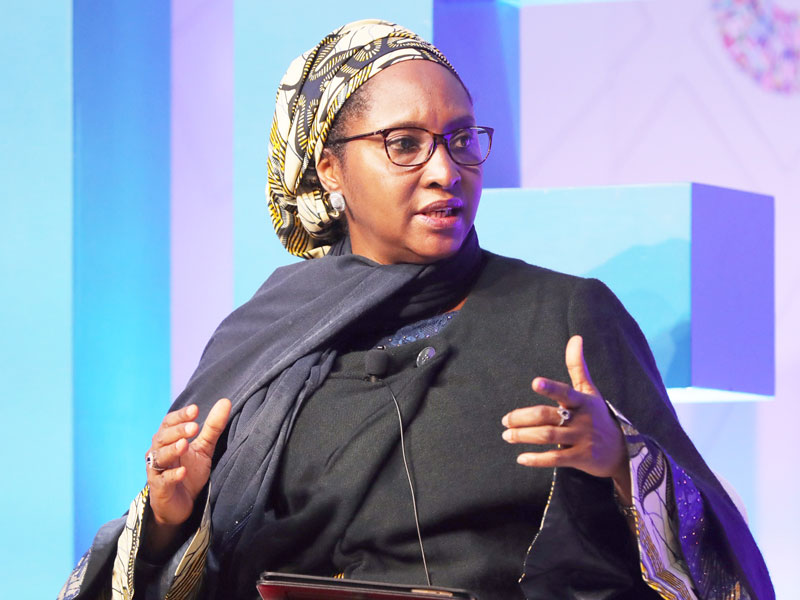
Minister of Finance, Budget and National Planning, Zainab Shamsuna Ahmed, disclosed this at the hearing of the House of Representatives Ad Hoc Committee Investigating the Petroleum Products Subsidy paid between 2013 to 2022 on Thursday.

Ahmed, who disclosed that the FG is planning a new date to end payments on under-recovery between the landing cost and regulated pump price of PMS, stated that the subsidy regime was not sustainable and may force more borrowing in 2023.

She said that the government, in the 2023-2025 Medium Term Expenditure Framework and Fiscal Strategy Paper planned for payment of the subsidy for only the first six months of 2023. 

Ahmed further disclosed that President Buhari transmitted the MTEF/FSP to the Senate and the House of Representatives as approved by the National Economic Council and the Federal Executive Council.

“One thing that stands out in the Medium Term Expenditure Framework was that if the nation holds on to fuel subsidy as it is designed now, we will be incurring from January to December a subsidy cost of N6.4tn. But we suggested to the Federal Executive Council, and the council approved that maybe, we could look at the option of exiting the subsidy (regime) for half a year. So, if we did that, then the cost would be N3.35tn, which is half of the N6.7tn.

 “The Federal Executive Council approved the second option. That is the option that was conveyed by His Excellency, the President, to the National Assembly. But Let me also say that even though this is a reduced option, it would mean that we are borrowing more than we would have borrowed if we did not have fuel subsidies.  In 2022 we are carrying the cost of subsidy throughout the whole year.

“Recall that the initial MTEF and approval by the parliament was for us to exit the subsidy by June of this year. But during the course of the year, making assessment of the difficult fiscal challenges in the economy and the hardship that our citizens are bearing due to high inflation and other challenges, we were asked to re-submit our plans and review them to include provision for fuel subsidy throughout the year 2022. That was how we came back to parliament with an incremental expense from N443bn which we had planned to up to N4tn subsidy expense in 2022,” the minister said.

She added that“This situation is not desirable and it is not sustainable. It is putting the country in a very serious, dire financial situation and we do hope that we will be able to exit this subsidy regime in the shortest possible time.

“The N3.35tn in the approved MTEF that is now before the National Assembly for consideration could have been funds that would apply to other vital sectors of the economy such as health, education and social protection. So, we are carrying a burden and we must sit back as citizens and really assess whether it is beneficial for us to continue to do so.”

The minister also presented a breakdown of withdrawals from the Consolidated Revenue Fund and the Excess Crude Account for payments to oil marketers under the subsidy regime.

She said, “Deduction of PMS under recovery shortfall by NNPC for the period 2013 to 2022: We are reporting that there is a total sum of N4.436 trillion which was deducted as PMS under-recovery by NNPC for the period January 2013 to December 2021.

“In this report, we are reporting the sum of N1.774 trillion has been paid to independent oil marketers as subsidies from 2013 to 2016.

“I will like to call the attention of the committee to note that the total sum of N6.210tn – that is the N4.4tn plus the N1.774tn – was expended on PMS under-recovery by NNPC as well as payment of subsidy to independent oil marketers from 2013 to 2021.

“I want to report on the funding of subsidy payments to independent oil marketers for 2013 to 2016. Payments that have been made to them were directly from the domestic Excess Crude Account through the reduction of Sovereign Debts Instruments that we call the SDIs.

“The SDIs are negotiable short-term instruments that were issued by the government at that time to give marketers comfort and enable them access financial support from their bankers for the importation of PMS. The instrument was approved by the then President in 2010.”

 She added, “It is also important to note that there were instances where funds were transferred from the Consolidated Revenue Fund to the domestic Excess Crude Account for subsidy payments.

 “For 2015, there are two instances: N31bn from the FGN’s excess domestic account, transferred from the CRF. Again in 2015, N156.1bn transferred from the CRF in another instance to the domestic Excess Crude Account.”

The minister, however, told the committee to request the statement of account of the NNPC from the company directly.

The committee resolved to request documentary evidence of the beneficiaries of the N500bn after some members expressed their reservations about the payments, especially without knowing the actual volume of PMS consumed daily.