Federal Government of Nigeria

FG disburses N330bn to 8 million poor Nigerians -Tinubu

By Anwar Usman

The President of Nigeria, Bola Tinubu, on Wednesday stated that his administration has disbursed N330 billion to eight million households under the Federal Government’s social investment programme, designed to support poor families and vulnerable Nigerians.

The president disclosed this in his 65th Independence Day broadcast, noting that the disbursement was part of his administration’s resolve to cushion the impact of economic reforms on the most disadvantaged groups.

He noted that many of the beneficiaries had already received one or two out of the three tranches of N25,000 each.

“Under the social investment programme to support poor households and vulnerable Nigerians, N330 billion has been disbursed to eight million households, many of whom have received either one or two out of the three tranches of the N25,000 each,” Tinubu said.

The President further admitted that Nigeria had for many years failed to make critical investments in infrastructure, power, and public services, leaving a heavy burden on the present generation.

“Fellow Nigerians, we are racing against time. We must build the roads we need, repair the ones that have become decrepit, and construct the schools our children will attend and the hospitals that will care for our people,” he said.

According to him, the neglect of the past has resulted in poor electricity supply, crumbling roads, and a lack of modern facilities that can compete globally.

He further stated, “We have to plan for the generations that will come after us. We do not have enough electricity to power our industries and homes today, or the resources to repair our deteriorating roads, build seaports, railroads, and international airports comparable to the best in the world, because we failed to make the necessary investments decades ago. Our administration is setting things right”.

The President assured Nigerians that his government was already implementing corrective measures to reverse the country’s decline in infrastructure and the economy.

He praised Nigerians for their resilience in enduring tough times, pledging not to betray the trust that had been reposed in him.

Kaduna commuters groan as Nnamdi Azikiwe Bypass project stalls

By Malam Aminu Wase

For yet another day, commuters along the Nnamdi Azikiwe Express Bypass in Kaduna were left stranded in long queues of traffic, lamenting the hardship occasioned by the snail-paced road construction. What ought to be a symbol of progress has instead become a nightmare for motorists, traders, and workers who rely on the route daily.

The project, awarded years ago to construction giant Dantata and Sawoe under the supervision of the Federal Government, remains far from completion. Instead of providing relief, the road has degenerated into a corridor of pain, littered with potholes, construction delays, and traffic disorder.

Residents and road users have accused both the Federal Government and the contractor of negligence and insensitivity to the plight of ordinary Nigerians. Every day, we waste hours here. Government officials don’t pass through this road, so they don’t care. The contractor is not even serious about the work.

The Nnamdi Azikiwe Bypass is a critical artery in Kaduna, designed to ease traffic pressure and promote economic activity. Yet, the slow pace of work reflects poorly on the government’s commitment to infrastructure delivery and raises questions about accountability in contract execution.

As things stand, Kaduna residents are left to bear the brunt of abandoned promises. If urgent measures are not taken to fast-track the project, the bypass will remain a monument of inefficiency, another reminder of how governance failures continue to suffocate the lives of ordinary Nigerians.

Kano beyond educational boom: A call for federal intervention to fuel growth 

By Ismaila Abdulmumini

Kano, renowned for its rich history, cultural vibrancy, and socio-economic vitality, marked 57 years of statehood a few days ago. A long journey of sacrifices and transformations, usually one at a time, gives Kano the new look we see and admire today. Kano is now carving a new identity as Nigeria’s educational powerhouse, boasting four federal universities, three state-owned institutions, and over five private universities, in addition to state and privately funded colleges and polytechnics. 

Equally, quantifiable challenges and rubble need to be put together to build the Kano of our dreams—the one we revere and would be proud of. The state’s transformation into a learning hub has inadvertently exposed systemic gaps in critical sectors, gaps that demand urgent federal intervention to unlock Kano’s full potential.  

Despite its academic strides, Kano grapples with erratic electricity, which stifles the industries that support its institutions. Students and entrepreneurs alike face daily blackouts, which undermine research, innovation, and productivity. Experts argue that federal investment in renewable energy projects and grid modernisation could ignite industrial growth, creating thousands of jobs while sustaining the educational sector’s momentum. 

Kano’s healthcare system, chronically underfunded and overburdened, struggles to serve its 15 million residents. State-run hospitals lack essential equipment, and medical personnel are stretched thin. Federal input through facility upgrades, increased funding, and partnerships with the private sector could reduce pressure, improve public health outcomes, and attract medical tourism, turning a cost centre into a revenue stream.  

In Kano’s bustling large markets that serve Africa, such as Dawanau’s grains, Kwari’s fabrics, and Singa’s groceries, transactions remain stubbornly analogue. This “brick-and-mortar” mentality, experts say, stifles economic scalability in the twenty-first century. “Digitisation isn’t optional; it’s survival,” argues tech entrepreneur Aisha Musa. Federal grants to build a robust digital ecosystem, e-payment platforms, online marketplaces, and broadband expansion could connect Kano’s markets to global consumers, boosting GDP and curbing youth unemployment.  

Kano’s agricultural landscape is littered with bad, indefatigable innuendo. Farms teem with tomatoes, peppers, and livestock, yet the state imports processed dairy goods. The absence of modern processing facilities leaves farmers vulnerable to waste and price fluctuations. A federal push to establish agro-industrial zones with cold storage and meat-processing plants could transform raw abundance into export-ready products, slashing Nigeria’s $10 billion annual food import bill and strengthening the naira. 

Potholed roads and inefficient rail networks cripple trade, inflating costs and deter investors. Upgrading transport infrastructure, which relies heavily on the federal government, would streamline the movement of goods from farms to ports, link markets to neighbouring countries, and position Kano as a logistics hub. “Better roads mean cheaper goods, happier consumers, and a thriving economy,” notes logistics expert Tunde Okoye.  

The blueprint for Kano’s renaissance is clear: targeted federal investments in energy, healthcare, digitisation, agro-industry, and transport. Such interventions promise to generate employment, diversify revenue streams, reduce import dependency, and fortify Nigeria’s economy. As the state stands at a crossroads, the message to Abuja is unequivocal: Empower Kano, and you empower the nation. Kano’s story does not need to be one of unfulfilled promises. With strategic governance, Africa’s “Centre of Commerce” could reclaim its title, this time, as a beacon of inclusive, 21st-century growth.

Ismaila Abdulmumini wrote via ima2040@outlook.com.

President Tinubu approves key appointments across federal agencies

By Abdullahi Mukhtar Algasgaini

President Bola Tinubu has approved the appointments of several prominent Nigerians to head key federal agencies and institutions. The appointments, which reflect a mix of political, professional, and regional considerations, aim to strengthen governance and service delivery across sectors.  

Among the notable appointees are former Senate President Sen. Ken Nnamani (Enugu) as Chairman of the Nigerian Institute for Policy and Strategic Studies (NIPSS), and former Edo Deputy Governor H.E. Philip Shaibu as Director-General of the Nigerian Institute of Sports.

Other appointments include Omobolanle Akinyemi Obe (Ondo) as DG of the National Senior Citizens Centre, Dr. Segun Aina (Osun) as DG of the Academic Staff College of Nigeria,

and former Senate President Sen. Anyim Pius Anyim (Ebonyi) as Chairman of the National Merit Award Committee. 

Additionally, Hon. (Dr.) Asabe Vilita Bashir (Borno) was named DG of the National Centre for Women Development, while Sen. Jalo Zarami (Yobe) and Hon. Dr. Joseph Haruna Kigbu (Nasarawa) were appointed as Federal Commissioners in the National Population Commission

The President expects the new appointees to bring their expertise and commitment to advancing Nigeria’s developmental goals in their respective roles.

When Plateau dies and FG watches

By Abdulhamid Abdullahi Aliyu

In the early hours of Friday, April 12, 2025, Zike village in Bassa Local Government Area of Plateau State was reduced to a theatre of blood. At least 40 people, including women and children, were brutally killed by armed assailants who invaded the community under the cover of darkness.

Homes were set ablaze, farmlands destroyed, and hundreds displaced — once again. This is not an isolated tragedy. In less than four months, Plateau State has lost over 400 lives to mindless violence across Mangu, Bokkos, Riyom, Barkin Ladi, and Bassa LGAs.

According to data from local community leaders and humanitarian groups, more than 150 villages have been attacked since January 2024, with thousands displaced and properties worth billions destroyed.

Yet, the response from government authorities has been chillingly muted. Standard condolence statements have followed each carnage, but little in the way of justice or proactive security. For many in Plateau, it feels like being condemned to die in silence.

The question is painfully simple: for how long will this continue? The victims of these attacks are not armed militias or combatants. They are primarily farmers, traders, women, and children — people asleep in their homes, utterly unprepared for war but caught in its crosshairs.

The attackers, on the other hand, are described as well-coordinated, heavily armed, and operating with an eerie sense of impunity. The carnage in Plateau should not be seen as just a “communal crisis.” It is terrorism — plain and simple.

Any act that involves the targeted killing of innocent civilians on such a consistent and organised scale deserves to be treated as a national security emergency. The lack of urgency from both the federal and Plateau State governments is not just disappointing — it is dangerous.

The time has come for both levels of government to stop playing to the gallery and act. President Bola Ahmed Tinubu and Governor Caleb Mutfwang must rise above politics and confront this crisis with the seriousness it demands.

Enough of the empty press statements. The people of Plateau need protection, justice, and healing, not promises. There must be an immediate and thorough investigation into the Zike killings and all previous attacks across Plateau State.

The security agencies must identify and arrest the perpetrators. Communities cannot continue to bury their dead while those responsible roam free. Beyond this, a special joint military-police operation should be launched in Plateau — not as a temporary show of force, but as a sustained mission to flush out criminal elements and restore peace across all hotspots.

Such an operation should be intelligence-led, with active engagement from community leaders, local vigilantes, and civil society actors. Security operatives must also be adequately funded, equipped, and monitored to ensure professionalism and accountability in the course of duty.

Furthermore, there should be a comprehensive resettlement plan for displaced persons. The IDP camps in Plateau are filled with women and children who have been forgotten by a country that swore to protect them.

The government must support rebuilding destroyed homes, schools, and clinics in the affected communities. Most importantly, the culture of impunity must end. When killers are not punished, others are emboldened.

When justice is denied, peace remains a fantasy. Nigeria cannot claim to be fighting insecurity on one hand and tolerating unaddressed massacres on the other. This country must no longer treat the deaths of rural Nigerians as a footnote in national discourse.

The tears in Plateau are real. The graves are real. The trauma is real. And so must be our response. Plateau State is bleeding. Its people are tired. And the time to act is now — not with words, but with swift, firm, and visible action.

Abdulhamid Abdullahi Aliyu writes from the Centre for Crisis Communication (CCC) in Abuja.

President Tinubu appoints new ambassadors after 18-month diplomatic hiatus

By Hadiza Abdulkadir

President Bola Ahmed Tinubu has approved the appointment of new ambassadors to represent Nigeria in its foreign missions. This ends an 18-month diplomatic vacuum that began after all ambassadors were recalled in September 2023.

The recall, which impacted both career and non-career ambassadors, was due to funding constraints and a wider restructuring of Nigeria’s diplomatic engagements. However, sources within the presidency confirm that the financial issues have now been resolved, clearing the path for new appointments.

The selection process for the new envoys is already underway, with security agencies conducting background checks on nominees before their formal announcement and confirmation. The move is expected to restore Nigeria’s diplomatic presence globally and strengthen bilateral relations with key partners.

Nigeria currently operates over 100 embassies and high commissions worldwide, and the prolonged absence of ambassadors has raised concerns about the country’s foreign policy direction. Despite these challenges, President Tinubu’s administration has prioritized economic recovery, allocating N302.4 billion ($198.3 million) in the 2025 budget for Nigeria’s foreign missions.

During meetings with foreign leaders, President Tinubu assured that vacancies would be filled soon, recognizing the need for a strong diplomatic corps to advance Nigeria’s global interests. The new appointments are expected to refresh Nigeria’s foreign policy and enhance its influence internationally.

Observers note that the new ambassadors will foster economic partnerships, attract foreign investments, and promoteNigeria’s image abroad. With their deployment approaching, stakeholders are watching how the diplomatic team navigates the global landscape to advance Nigeria’s interests.

BREAKING: FG, labour reach agreement on minimum wage

By Uzair Adam Imam

The Federal Government and the organised labour have reached an agreement on the minimum wage, ending the strike action that started on June 3, 2024.

The agreement was signed on Monday night after a meeting that started at 5:00 pm and ended at 11:00 pm.

Although the details of the agreement are not yet public, the Secretary to the Government of the Federation, George Akume, confirmed that the government is committed to paying a minimum wage higher than N60,000.

He also assured that no worker would be victimized for participating in the strike.

The national tripartite committee on minimum wage will meet daily for the next week to finalize the details of the agreement.

The labour leaders and government officials expressed optimism that the agreement would bring an end to the strike and restore normalcy to the country.

The strike, which started on June 3, had paralyzed economic activities in the country, with many businesses forced to shut down.

The agreement is seen as a positive development, and many are hoping that it would bring an end to the strike and restore normalcy to the country.

Yobe Assembly appeals to FG to rehabilitate bad roads

By Muhammad Suleiman Yobe.

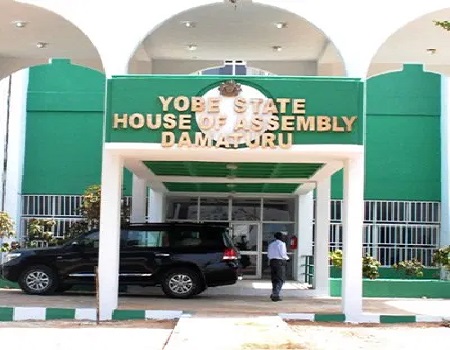
Yobe State House of Assembly has appealed to the Federal Government of Nigeria to rehabilitate dilapidated federal roads in the state. 

The House made the plea in a motion presented by the majority leader of the House, Hon. Nasiru Hassan Yusuf, on behalf of all members. 

Presenting the motion, the majority leader of the House said the federal roads constructed over the years are now dilapidated and need to be built for effective and efficient transportation within the state. 

Hon Nasiru Hassan Yusuf said most of the bridges and culverts at the federal roads that linked Potiskum to Jakusko, Babbangida to Bayamari, Buni Yadi to Gulani and Gujba to Ngalda was destroyed in last year’s flood and need federal government intervention. 

The majority leader of the House, who spoke at length on the importance of the roads to the development of the economy, said the poor conditions of the federal roads have affected the state’s commercial activities. 

In their separate contributions to the motion, the members representing Geidam, Damaturu,  Mamudo, Gujba and Machina constituencies described the motion as apt and timely. 

They expressed dismay over the delay in completing some federal roads awarded over the years in the state. 

Presiding over the sitting, the speaker of the House, Rt Hon Chiroma Buba Mashio, appealed to members of the National Assembly representing Yobe to present the matter at the upper chamber for quick response by the federal government.

Hike in registration fee in Nigerian varsities: A result of FG’s negligence

By Najeebullah Lawan

It becomes a new normal that the Academic Staff Union of Universities (ASUU) embark on a strike to press demand on one issue or another almost every year in Nigeria. This menace has been here since 2009, with each year’s strike becoming worse than the previous one. The feud between ASUU and the Federal Government (FG) has badly, as it is clear, affected the education system in Nigeria.

The battle corners include revitalisation of the universities, providing infrastructure, enhancing research conducts, and reviewing lecturers’ salaries and allowances, among others, as contained in the MoU signed by the Nigerian government and ASUU.

It is essential to note that ASUU is a union of Academic Staff of Universities consisting of [except a few] lecturers from the Nigerian public universities.

These lecturers have wives, children and relatives in the schools they teach nationwide who are under their sponsorship from their hard earnings.

I believe these people will never do anything that could temper with the system because their close relatives and children benefit from it.

Moreover, our lecturers spent decades without substantial review of their salaries despite all the hikes in the price of foodstuffs and other necessities in Nigeria. It is heartbreaking that a university professor earns less than the salary of some government appointees – SAs and PAs.

It is unbecoming to leave these people alone fighting the government that leaves them without the good welfare their counterparts enjoy, even in many African countries. This fight is for all of us.!

In 2020, ASUU stood up to fight for their rights and the students in general, which led to the total closure of all universities in Nigeria. However, the coronavirus pandemic also contributed immensely to the longevity of this strike, making it one of the worst and longest strikes ever in the history of Nigerian universities.

Unfortunately, the Nigerian government did nothing to stop the strike. It betrayed the university lecturers, leaving them and their students stranded amidst a dilemma.

Again, in 2021, there was another strike by the university lecturers who demanded FG to fulfil its promises made in 2012 and 2020. This strike lasted eight months, and the lecturers were not paid a single kobo. As I write this, FG still owes lecturers months’ salaries and areas.

For all the struggle by ASUU, they were doing this for the betterment and standardisation of higher institutions nationwide. However, they got nothing from most of the students and parents in return except insults and mocks.

As of that time, ASUU warned students and parents that if FG defeated them in that fight, there would be a serious problem for students and parents that not everyone could bear.

Defeating ASUU, the Federal Government deliberately refused to fund its universities with enough funds.

As a result, in 2023, there was an increment in registration fees by many universities, such as the University of Maiduguri, University of Benin, University of Lagos, ATBU, ABU and a host of others. However, the one by Bayero University, Kano (BUK), brought a loud noise in the entire north, probably due to its status. Here are some clarifications:

1:- We heard that the university Vice-Chancellor, Prof. Adamu Abbas, made an explanation concerning the situation of the universities in Nigeria, saying that everything related to running the administration of the university is costly.

2:- Recently, ABU extended the resumption date for students due to an outage by the Kaduna Electric Distribution Company (KAEDCO) over alleged millions of Naira debt, which ABU owes KAEDCO.

3:- The monthly budget for running Bayero University is close to N100m. This money is spent on KEDCO for power, diesel, water and security.

4:- The FG is giving only N11m, which represents only 1% out of 10% BUK is spending every month, and the management of the university manages to utilise the system with the little they are getting from the government.

5:- The current economic situation of Nigeria and the Federal Government’s manner towards universities has left the management of Bayero University, Kano, with no option but to increase the central registration fee for students.

Despite these, BUK remains the cheapest Federal University in the entire north except for a few varsities currently in the second semester, and a review of their registration fees could be seen as something inevitable.

Regarding the just concluded points, we can say that ASUU does not hate education, and its fight is for the system’s revival. Also, the increment of university registration comes from negligence by the Federal Government. Meanwhile, without this kind of increment, the system will undoubtedly collapse.

Najibullah writes from Kano, Nassarawa Local Government. He can be reached via najeebullahlawan@gmail.com

MURIC to FG: Give Muslims non-interest loans

By Muhammad Abdurrahman

President Bola Ahmed Tinubu offered some palliatives in his address to the nation yesterday, 31st July 2023. Among the palliatives were interest loans of about N75b at 9% interest, N500,000 loan to N1 million at 9% and another N100 billion transportation loan also at 9%. However, an Islamic human rights organisation, the Muslim Rights Concern (MURIC), has requested soft loans for Nigerian Muslims instead of interest loans.

In a statement circulated among journalists on Tuesday, 1st August 2023, by the group’s Executive Director, Professor Ishaq Akintola, the group explained that it is haram (forbidden) for Muslims to receive or give interest on loans.

Akintola spoke further :

“President Bola Ahmed Tinubu offered some palliatives in his address to the nation yesterday, 31st July 2023. Among the palliatives were interest loans of about N75b at 9% interest, N500,000 to N1 million loan at 9% and another N100 billion transportation loan also at 9%.

“We appreciate the concern of President Bola Ahmed Tinubu for Nigerians, particularly in these difficult times. The offer of loans to cushion the effect of the withdrawal of oil subsidy shows that the president cares about the citizenry.

“However, Nigerian Muslims cannot and will not take interest loans as the latter is capable of constituting a wedge between Nigerian Muslims and their Creator (Almighty Allah). We prefer the everlasting peace of al-akhirah (the Hereafter) to the material gains of this world.

“Interest is haram, and Allah explicitly forbids it when He said, “Oh you who believe, fear Allah and give up that interest which is still due to you if you are true believers. But if you do not desist, then you are warned of the declaration of war against you by Allah and His Messenger….” (Glorious Qur’an 2:278 – 279).

“The interest loan being offered by President Tinubu cannot benefit Muslims in this country. We, therefore, suggest that the Federal Government (FG) should arrange soft loans for the Muslim population in particular and any other citizens who may desire it.

“One of the problems with Nigeria is that the system bequeathed to us by the colonial master is not Islam-compliant. It, therefore, conflicts very often with the Islamic way of life. This is why FG needs to prepare alternatives for Muslims,who are more than 130 million in the country, in the name of fairness, equity and justice.

“We reiterate that interest loan is haram, and Muslims will not touch it with a long pole. FG should therefore expedite action on introducing Islam-compliant palliatives such that it is made available for Muslims at the same time that interest loans are accessible to others because hunger is spreading fast among the populace as prices sky-rocket daily.

“We advise FG to consult Islamic scholars regularly, particularly on policy issues, in order not to cause misunderstanding between the government and Nigerian Muslims. We also suggest that an expert in Islamic finance should be a member of the National Economic Council (NEC).”