Sanusi Traces Nigeria’s Insecurity To Divisive Ethnic, Religious Politics
By Sabiu Abdullahi
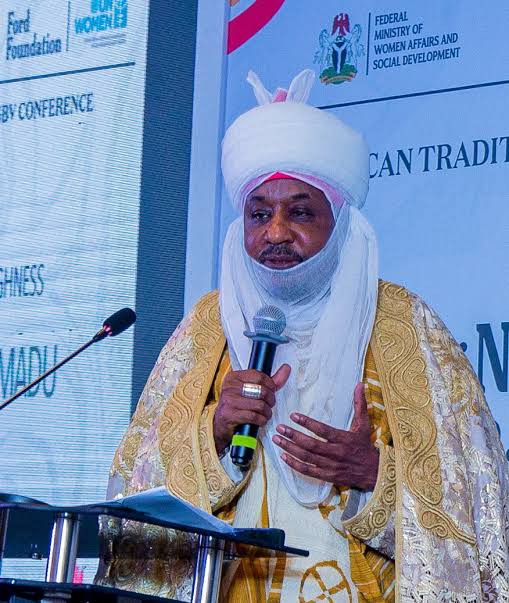
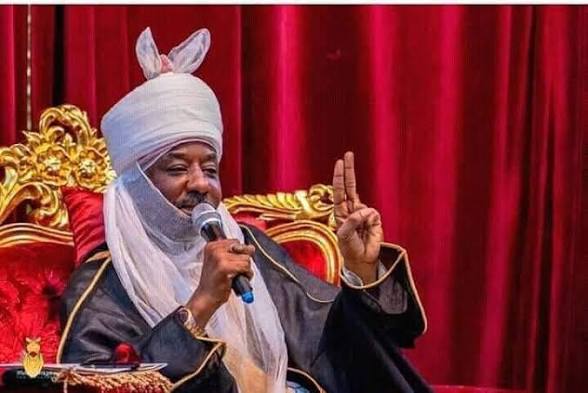
The Emir of Kano, Muhammadu Sanusi II, has attributed the persistence of insecurity in Nigeria to years of ethnic and religious divisions that, according to him, were fuelled by political rhetoric and public discourse.
Sanusi made the remarks in Abuja on Wednesday at the launch of a biography chronicling the tenure of retired Lieutenant General Tukur Yusufu Buratai as Chief of Army Staff.
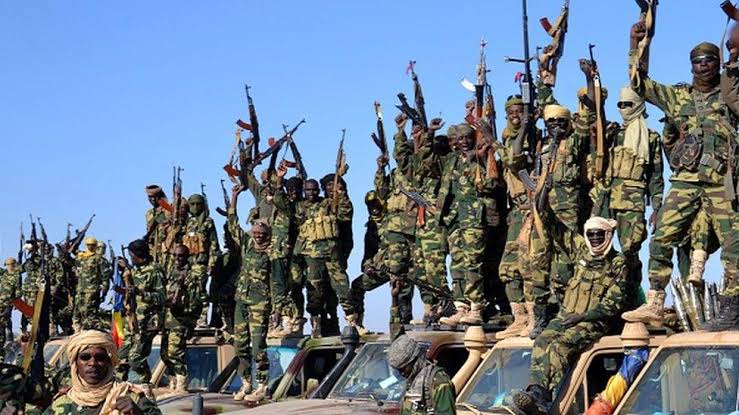
The former Central Bank of Nigeria governor said the roots of Nigeria’s security challenges went beyond the emergence of Boko Haram, banditry and terrorism. He argued that the country’s present difficulties were preceded by a pattern of political and media discourse that divided Nigerians along regional, religious and ethnic lines.
“The fundamental point I wish to emphasise is that the security crisis in this nation did not commence with violence as we currently witness it, nor did it commence with banditry. It did not commence with Boko Haram and terrorism. It originated with the violence inherent in language that appeared in newspapers and emanated from political discourse, wherein we commenced categorising ourselves not as Nigerians, but as Northerners and Southerners, Muslims and Christians, Yoruba and Igbo and Hausa, thereby establishing an environment that facilitated the emergence of these movements,” stated the former Governor of the Central Bank of Nigeria.
Sanusi warned that the country could face another cycle of violence if political leaders and other influential groups fail to move away from the use of ethnicity and religion as tools of political mobilisation.
“We are only laying the foundation for a new round of violence. We have to go back to seeing ourselves as Nigerians, as people committed to this country, and focus on what is important, which is the development of our people. It is not the responsibility of politicians to give us religion. They are there to give us education, to give us healthcare, to give us an economy and allow the religion to be in the hands of those who are religious leaders.
“It is also not the duty of religious leaders to get into politics. Right now, there is no distinction between imams and bishops and senators and how everybody is a politician. We’ve got to start tracing ourselves. Otherwise, we create these interests that feed and benefit from insecurity.
“The moment we all get absorbed into the projects of politicians, we cannot hold political society in check. We cannot have a country that we want because we need to have those institutions who are not there on elections, the army cannot think in four-year cycles. The police cannot think in four-year cycles. The central bank cannot think in four-year cycles. We have to think 20 years, 30 years, 50 years, whereas elected officers are thinking in four-year cycles.”
Also at the event, retired Lieutenant General Domenico Giani, Inspector General of the Corpo della Gendarmeria, the police and security force of Vatican City, spoke about leadership, institutional accountability and the need to assess the legacy of those who command security institutions.
Giani said lasting institutional progress should be judged by the strength of institutions, protection of civilians and public trust.
“Transformation is measured by institutions strengthened, civilians protected, trust earned.
“Boko Haram was not born in 2015. Its roots lie in the poverty and distrust of the early 2000s North-East. After Yusuf’s death in 2009, it hardened under Shekau. Chibok in 2014 revealed what Borno, Yobe and Adamawa had endured. By 2016, it had split into JAS and ISWAP, fragmented, mobile, adaptive.
“A terrorist organisation that changes form must be met by a state that learns faster than its enemy. Intelligence and regional cooperation are essential, but so are schools, justice and opportunity. If the state arrives with weapons but not services, the vacuum returns.”