Economic Policies

Mr President, adjust your economic policies

By Tajuddeen Ahmad Tijjani

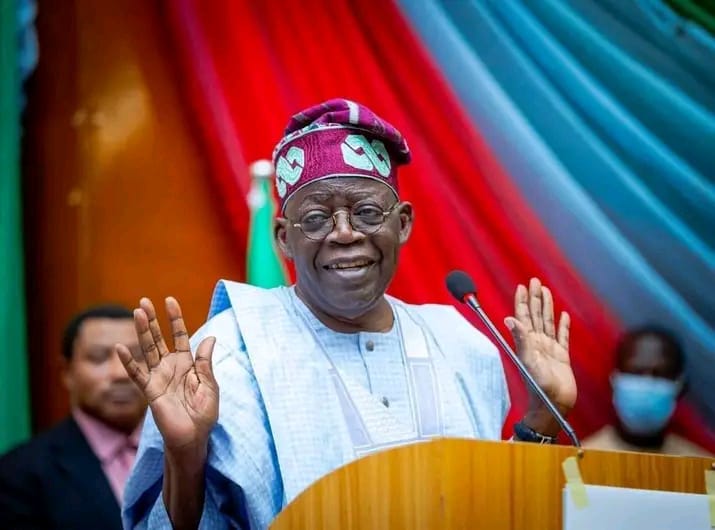
On Tuesday, August 13, 2024, President Bola Ahmad Tinubu presided over a significant Council of State meeting. Former Presidents, Vice Presidents, a former Chief Justice of the Federation, and several key ministers were in attendance. The highlight of the meeting was the President’s stance that Nigeria’s democracy must not be undermined. “Any change of government must be through the ballot box, not through violence, insurrection, or any other unconstitutional means,” he asserted. This is a position I, along with all patriots, fully support.

However, while the President’s commitment to democracy is commendable, his economic policies must reflect the urgency and needs of the people. The excuse of “fixing the economy” cannot be used to justify slow progress. Nigerians expect the leadership to hit the ground running from day one. The Council of State must convey the truth to the President: the nation is in a precarious state, and decisive, people-centred action is required.

Today, wealth in Nigeria is increasingly concentrated in the hands of a select few. At the same time, the majority struggle without access to necessities like quality education, healthcare, housing, and employment. It’s not that Nigerians envy the success of the rich; instead, they want access to the essentials for a decent life.

Unfortunately, greedy leaders deliberately subject many ordinary citizens to hardship. Endemic corruption has become the norm, and the promise of equal opportunities seems like a distant dream despite the blessings of natural resources across the six geopolitical zones.

Poverty remains a pervasive issue. Nigeria is rich with potential—oil and gas in the South, commerce in the Southeast, and fertile land in the North. There is no excuse for hunger or deprivation. The government should prioritize modern farming systems, where a single machine can achieve in an hour what once took a thousand hands.

State governors must fully support federal initiatives, but these efforts must go beyond the token gestures like distributing rice, which too often ends up siphoned off by officials or recycled into the market. Nigerians are not beggars; we have the talent and drive to achieve greatness, but we need an enabling environment, affordable fertilizers, and access to reliable electricity.

The time for excuses is over. The government must adjust to the realities on the ground. Removing fuel subsidies and floating the naira has brought unbearable hardship to ordinary people. These policies need to be revisited. We elected this government to make Nigeria work for everyone, not just the privileged few. A stitch in time saves nine: adjust the policies before it’s too late.

Tajuddeen Ahmad Tijjani wrote from Galadima Mahmoud Street, Kasuwar Kaji Azare, Bauchi State.

NEC appoints Governor Inuwa as Polio Mitigation Committee chair

By Abdullahi Mukhtar Algasgaini

The Governor of Gombe State, Muhammadu Inuwa Yahaya, has been appointed Chairman of the Committee on Polio Recurrence Mitigation in several states across the country.

This was announced during the National Economic Council (NEC) meeting, chaired by Vice President Kashim Shettima at the Presidential Villa, where key national issues were deliberated.

Briefing reporters after the meeting, the Deputy Governor of Gombe State, Dr. Manassah Daniel Jatau, Ph.D., who represented Governor Inuwa Yahaya, stated that the governor’s appointment was driven by his leadership as the Chairman of the Northern Governors’ Forum and his remarkable achievements in the health sector, particularly in vaccination efforts.

Dr. Jatau explained, “During the NEC meeting, chaired by Vice President Kashim Shettima, we addressed critical issues affecting the states and the nation, including the resurgence of polio in five states—Kano, Katsina, Sokoto, Zamfara, and Kebbi. With Bill Gates and Aliko Dangote in attendance, the gravity of the situation was recognized, and it was decided to establish a polio committee, with the Governor of Gombe State appointed as chairman.”

He added that the meeting also tackled the destruction of roads and bridges caused by recent flooding.

The Vice President directed states to submit detailed reports of the damages, including photographs, by Monday next week.

Dr. Jatau used the opportunity to share insights from Gombe’s inclusive governance approach, where traditional, religious, and community leaders, alongside stakeholders, play active roles in decision-making and implementation to ensure more efficient and effective outcomes.

“When the discussion on vaccines arose, I highlighted our commitment in Gombe, where we apply a system theory approach by involving traditional rulers, religious and community leaders in healthcare efforts to achieve comprehensive coverage. Engaging these leaders builds public trust, leading to stronger support for health programs,” he noted.

He also addressed the challenges posed by “socially hard-to-reach groups,” where cultural, philosophical, and ideological barriers limit access to vaccination.

The Deputy Governor emphasized the importance of addressing these barriers to ensure optimal vaccine coverage and called for research into local herbal remedies as a pathway to affordable healthcare.

“I urged donor agencies to sponsor research into the production of vaccines and medicines from indigenous plants. Since many imported medicines are derived from plant and animal products, and we have similar resources in abundance, tapping into our local potential would be a better solution.”

On nutrition, the meeting emphasized identifying local food sources that can provide balanced diets to reduce malnutrition. Dr. Jatau stressed that proper nutrition is vital to public health, which in turn supports the growth of other sectors of the economy.

Advocating for Africa’s economic self-reliance

 By Umar Umar Namadi

Africa faces significant challenges from declining global aid and economic transitions, as highlighted in the Africa Policy Research Institute (APRI) publication, “The African Union vs ‘the End of Development.'” The report stresses the urgency for Africa to achieve self-reliance, innovate financially, and ensure the success of the African Continental Free Trade Area (AfCFTA) to achieve Agenda 2063. 

Navigating Reduced Global Aid:

Africa’s longstanding reliance on external aid for development is increasingly unsustainable. Recent trends show a significant reduction in aid from traditional donors. For example, UK development aid to developing nations has dropped sharply since 2019, with cuts of 55%, 49%, and 49% for Least Developed Countries, Lower Middle-Income Countries, and Upper Middle-Income Countries, respectively. This decline necessitates a strategic pivot towards self-sustaining financial strategies.

Enhancing Economic Freedom:

One effective way to mitigate the impact of reduced aid is to enhance economic freedom within African nations. Research consistently shows that countries with higher economic freedom experience more robust economic growth. Botswana is a prime example, where market-friendly policies have led to significant economic advancements. By improving economic freedom across the continent, Africa could attract essential foreign direct investment (FDI), which brings in capital, technology, and expertise critical for development.

Focusing on Education and Human Capital:

Investing in education is another crucial strategy for fostering self-reliance. The APRI report highlights the strong correlation between higher educational attainment and economic freedom. By enhancing their education systems, African nations can equip their populations with the necessary skills to drive economic growth and innovation, thereby addressing the continent’s long-term job creation needs. A well-educated workforce is pivotal for adapting to and harnessing new technologies and sustaining economic progress.

 Prioritising Strategic Autonomy and Intra-African Trade:

The successful implementation of the AfCFTA is fundamental to Africa’s economic integration and growth. This trade agreement could reduce dependence on external markets and bolster intra-African trade, leveraging the continent’s collective strengths. The African Union (AU) must prioritise AfCFTA’s implementation, ensuring it is shielded from geopolitical and economic uncertainties. By fostering intra-African trade, the continent can create a more resilient and self-sufficient economic bloc.

 Tapping into Intra-African Strengths:

Beyond the AfCFTA, Africa must look within to tap into its collective strengths. The AU should promote policies encouraging collaboration between African nations, focusing on sectors where the continent has a comparative advantage. This could include sectors like agriculture, mining, and technology. By building robust supply chains within the continent, African nations can reduce their dependence on external markets and create more resilient economies.

Innovating Financial Strategies

In the face of declining global aid, African nations must innovate their financial strategies. This could involve tapping into alternative funding sources, such as diaspora bonds, sovereign wealth funds, and public-private partnerships. Additionally, enhancing domestic revenue mobilisation through tax reforms and improved financial management can provide the necessary funds for development projects.

The Role of the African Diaspora

The African diaspora represents a significant potential source of investment and knowledge transfer. By engaging the diaspora community through targeted policies and initiatives, African nations can attract investments and leverage the expertise of Africans abroad to drive development. This includes creating favourable investment climates and incentivising diaspora engagement in local economies.

Conclusion

The future of Africa hinges on its ability to adapt and innovate in response to global challenges. African nations can chart a path toward sustainable development by promoting economic freedom, investing in education, and focusing on strategic autonomy. The AU must spearhead this initiative, proving that Africa can drive its growth despite the global narrative around “the end of development.” The continent’s progress depends on pragmatic strategies emphasising self-reliance and intra-African collaboration.

Umar Namadi wrote via namadijunior@gmail.com.

A stark warning for economic hardship

By Bilyamin Abdulmumin

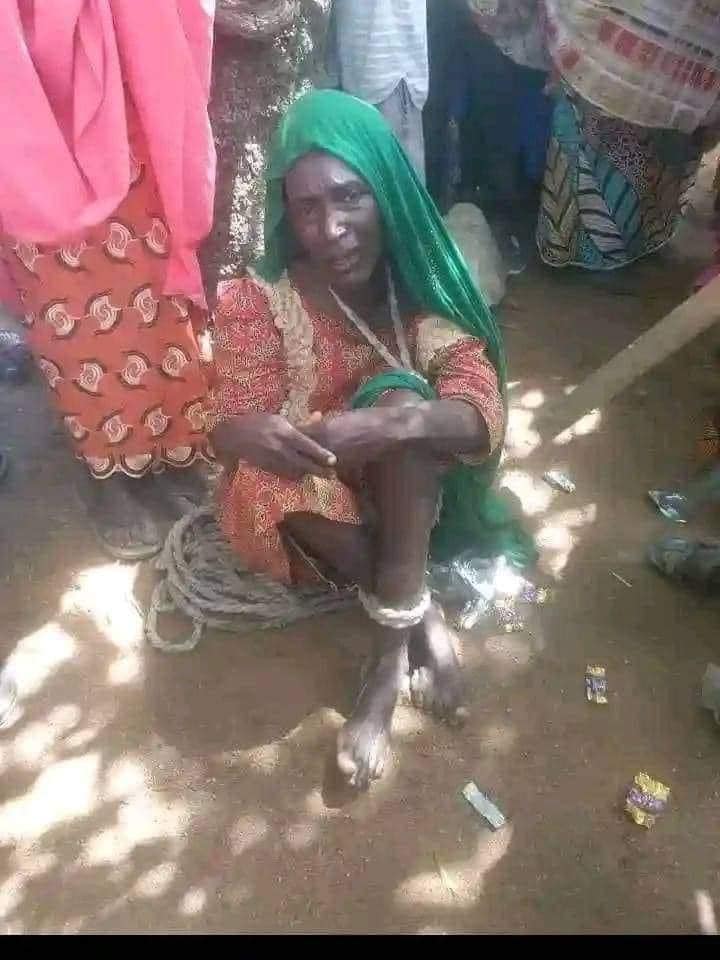
For some weeks, witchcraft news has been making rounds in the North. Several trained bloodsuckers were rumoured to be sucking blood from their victims. Videos of such incidents went viral on social media, especially Facebook and WhatsApp. Some individuals, particularly women who appeared to be victims themselves, were allegedly caught in the act of trying to suck their victims’ blood.

In one video, a woman alleged to be a witch was seen surrounded by a swarm of youth while another lady fainted, her body lying on the floor. To resuscitate her, the purported witch woman was asked to skip her, and intriguingly, she woke up. But in another video, the victim couldn’t wake up, so voices from the background kept shouting: skip three times!

Many burning questions arise when it comes to claims of witches. Challenging this perception, one Islamic scholar presented a compelling argument. He asked, ‘Why are the victims always poor and destitute?’ According to the Sheikh, he has never heard of a governor’s mother, a minister, or any public figure’s mother being paraded as a witch. This argument deals a significant blow to proponents of witchcraft.

Another similar question is: Why do claims of witchcraft usually originate in rural environments? The more rural the area, the greater the belief in witch existence. I discussed this scenario with a roommate some years ago, and he mentioned that he also had reservations about the issue of witches. He shared an anecdote about their younger sister, whose alleged ‘witchiness’ would never surface except when it was time for her to return to boarding school. She would always be fine at other times, but whenever school resumption was near, she would seem to change, which raised suspicions of foul play. However, this guy would climb down the pedestrian; he seemed torn between his thoughts and societal beliefs. In the same conversation, he defended the notion that rural areas have more witches because they have forests everywhere. What a ditch in logic!

I have once turned around to make a prank on witch allegations. While Nigeria was at a crossroads, a time in 2014 when Boko Haram, the partial removal of fuel subsidies, and the depreciating value of the naira to the dollar combined to wreak havoc on the masses. Similar rumours erupted, claiming that when one received a call from a certain number, their blood would be sucked away. I decided to play a prank. I saved my number as that controversial number in my friend’s phone contact and then called him. Immediately, he began reciting every prayer known to him.

Several theories have been put forward to explain the phenomenon of witchcraft in the North. One theory suggests that the nation’s predicament could have given birth to such rumours. Bulama, a famous cartoonist, also lends credence to this opinion. He created a cartoon depicting a man happily devouring at a food junction. Upon seeing him, a passerby paused to ask his companion, ‘Isn’t he the person being witch-hunted?’ The other person, intrigued, replied, ‘He’s being witch-hunted by hunger.

Another theory also suggests that it could be government propaganda. According to this view, the government might be making a clandestine move to divert public attention amid economic hardship. This theory can’t be outrightly denied because, as the saying goes, ‘biri yayi kama da mutum’ (Monkeys resemble humans!).

Public belief could also play a significant role. Doctors have told us several times that the efficacy of medication has a strong correlation with the patient’s beliefs. In other words, the more patients believe in the potency of the drug, the more effective it is. For instance, our Fulani herders are said to never recover from illness without injections. The average Fulani herder believes that injections are the only way to recover from illness. So, when they are down with malaria, for instance, they have to get an injection to recover, whereas city dwellers can recover with just drugs.

The issue of rumour-mongering during periods of instability is not unique to Nigeria or Africa alone. After the Second World War, the atmosphere was filled with fear and uncertainty, and everybody was looking for someone or something to blame. Suddenly, the myth of the Bermuda Triangle (Devil’s Triangle) emerged. With several aircraft and ships disappearing mysteriously without a trace, this section of the North Atlantic Ocean was believed to possess some supernatural power that not even a bird could dare cross. Several decades later, the myth survives.

Bilyamin Abdulmumin can be reached via bilal4riid13@gmail.com.