Ebola outbreak

NCDC Approves ₦100,000 Weekly Support for People Isolated Over Ebola Outbreak

By Sabiu Abdullahi

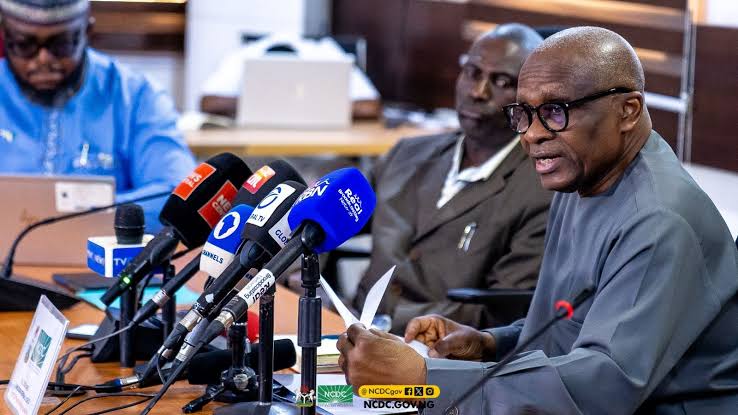
The Nigeria Centre for Disease Control and Prevention (NCDC) has approved an emergency payment of ₦100,000 per week for individuals placed in isolation or quarantine as part of efforts to contain the Ebola outbreak in the Federal Capital Territory (FCT).

The agency’s Director-General, Dr Jide Idris, disclosed this during a press briefing in Abuja on Sunday, October 25, 2026.

According to Idris, the financial support was introduced after some individuals being monitored raised concerns about the cost of feeding, accommodation and providing for their families while in isolation.

“We introduced the payment after some contacts raised concerns about feeding, accommodation and how to take care of their families while under monitoring. The support is to ease their financial burden and encourage them to cooperate with health officials,” Idris said.

He explained that the payment was not part of the initial outbreak response plan but became necessary after the concerns were raised.

“This was not planned for, but it is an emergency. We will continue to review it as we go along,” he said.

The NCDC director-general also urged state governments to make adequate financial and logistical preparations for public health emergencies.

Idris stressed that the responsibility for containing disease outbreaks should not be left to the FCT alone, noting the importance of preparedness and cooperation among state governments.

The emergency support is intended to ease the financial pressure on affected individuals while they comply with isolation and quarantine measures.

Tinubu Approves N10bn Ebola Fund, Sets Up Presidential Task Force


By Abdullahi Mukhtar Algasgaini

President Bola Ahmed Tinubu has approved the immediate release of N10 billion for emergency preparedness against a possible Ebola outbreak in Nigeria, following the resurgence of the virus in the Democratic Republic of Congo and Uganda.

The President also established a Presidential Task Force on Ebola Virus Disease Preparedness and Emerging Public Health Threats, to be chaired by the Chief of Staff to the President, Femi Gbajabiamila.

The fund will strengthen the operational readiness of the Nigeria Centre for Disease Control and Prevention (NCDC) and support critical national public health emergency response activities, according to a statement issued on Tuesday by Bayo Onanuga, Special Adviser to the President on Information and Strategy.

The decision followed a stakeholder meeting convened by the Chief of Staff to review Nigeria’s preparedness and develop strategies against the possible importation of Ebola. The meeting brought together representatives from the Ministry of Interior, the Federal Airports Authority of Nigeria (FAAN), the Nigeria Immigration Service (NIS), the Nigerian Civil Aviation Authority (NCAA), and the Lagos State Government, among others.

President Tinubu directed all states hosting international airports and border corridors, as well as relevant Ministries, Departments, and Agencies (MDAs), to submit their plans, funding requirements, and intervention needs for coordinated implementation.

The Presidential Task Force’s membership will draw from MDAs and state representatives. It is mandated to put in place several measures, including intensified passenger screening at all international airports, enhanced temperature checks, and crowd-control protocols.

Other measures include enhanced monitoring of passengers arriving through high-risk airline routes. Air Uganda, Rwanda Air, Air Tanzania, Air Angola, Kenya Airways, and Ethiopian Airlines — and immediate activation of referral and isolation centres at Lagos and Abuja international airports, with other airports to follow.

The Task Force will also enforce a mandatory QR code-based pre-arrival health declaration system for passengers originating from or transiting through designated high-risk countries. Disinfection of departure halls, cargoes, baggage areas, and airport facilities will also be carried out as precautionary environmental measures.

The President mandated the advisory group to consult with security, diplomatic, and aviation bodies to regulate flights from affected and high-risk countries. The Task Force is further directed to designate specific airports or terminals for high-risk flights to enable controlled screening and isolation procedures, and to consider adjusting flight timings to minimise interaction between high-risk passengers and others.