Deforestation

Deserting Desertification

By Abubakar Idris Misau

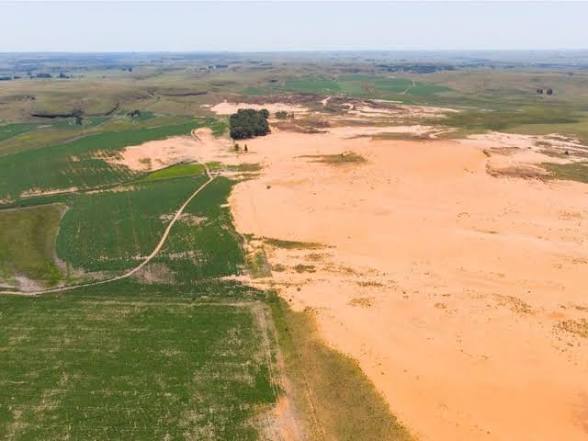
At first glance, the words “Deserting” and “Desertification” sound almost identical and, taken together, seem to make no sense; ironically, however, especially as intended here, they are the antagonists who jointly tell us what we must do to save life on Earth. Sorry, let me explain.

It was my elementary school Maths teacher who first taught me that multiplying two negative numbers yields a positive result. I had to concede later that this isn’t a conspiracy. If it were, it would never have been corroborated by our English teacher. The two core-subjects’ teachers were staunch enemies [I mean, non-friends]; yet the latter said there’s a similar rule in linguistics and semantics about what is called the “double negatives”.

Since deserting literally means abandoning something, it seems negative. By contrast, desertification, the process by which fertile, productive land becomes arid and desolate, is so dangerous that it no doubt qualifies as another negative. Following the arithmetic-linguistic logic of double negatives, therefore, “deserting”, as used in this piece, becomes an honourable cause. Simply put, deserting desertification does not mean running away from what one needs to care for, but rather abandoning our harmful habits that are turning our green, fertile lands into dry, lifeless deserts. In other words, desertification is a call to action to change how we treat the surface of our dear mother Earth.

Come to think of it, Mother Earth is the only mother whose children are hell-bent on turning her barren, out of greed. We do this by double-dealing, on the one hand with the mother and on the other with her enemies. It seems to me as though we love coming to her in the morning, saying “Oh, Mama, give us today our daily bread”, and then going behind her back and setting the bakery on fire at night! I mean, it’s no different when the so-called most intelligent species, numbering up to 8 billion, dedicates its intellect to deforestation, overgrazing, poor agronomic practices, open-pit mining, and other unsustainable land-use practices that strip land of vegetation, exhaust soil nutrients, and disrupt the water cycle; all while expecting the mother to keep providing us with every ecosystem service as if nothing happened. But it is simply an “inevitable consequence of nature” [to borrow from Prof. Brian Cox] that when we stretch dryland ecosystems to their breaking points, they turn into arid wastelands – read: deserts – or, more appropriately, “sandlands”.

As a matter of fact, whichever way one sees the bad guy, the truth is that Mr Desertification hardly ever acts alone. In the Sahelian ecological region of Northern Nigeria and other regions globally, he almost always works with Madam Earth’s children to damage her reproductive organs. Now, that’s a bad revelation. Meanwhile, the good news is that not all her children are the same. Some good Samaritans have even been working to extinguish the fire, in which case they deserve some support; some conspire against her out of ignorance, in which case they can do with some education; and so on – hence this call to action.

Here, forgive me for introducing the Greek philosopher Aristotle. It was his idea that writers, in fulfilling their duty, should try to structure arguments around the three fundamental pillars [modes] of persuasion, the rhetorical triangle: Ethos, Pathos, and Logos. Ethos concerns the communicator’s credibility; Pathos, the audience’s emotions; and Logos, the logical reasoning contained in the presentation.

Long story short, since this writer is not an authority on the subject in question, he ought not to suggest any social behavioural change straight out of his moro-moro head. He is simply to convey the message of the world’s most credible Who’s Who on the issue: namely, the United Nations Convention to Combat Desertification (UNCCD).

According to the UNCCD, humanity destroys about 10, 20, 30, 40, 50 …100 million hectares of productive land every year. The first time I read this, I was shocked. I knew that we cleared up to 10 million hectares of forest land annually, but I didn’t know that we were destroying the rangelands, grasslands, and so on at that rate. For perspective, damaging 100 million hectares of land annually is equivalent to losing the whole of Egypt. Or, better still, destroying the equivalent of four football fields every second. Most probably, this message would make more sense to us if the changes were happening right before our eyes. Imagine two countries playing a game in the ongoing World Cup, only for the stadium to turn into a total desert in a second. The World Cup would likely be asked to give way for an emergency UNCCD Summit.

In fact, there is no doubting it, the more land we allow to desert encroachment, the more likely we are to go to war with each other. That is why, in 2020, during a UN Security Council meeting to discuss ‘Maintenance of international peace and security: the humanitarian impact of environmental degradation and peace and security’, Ibrahim Thiaw, Executive Secretary of UNCCD, said: “In arid lands, such as in Africa’s Sahel region, violence often erupts over competition for access to depleted land and scarce water resources.” He then went on to outline three factors that are adding fuel to the fire: over-dependence on natural resources by rural dwellers; shrinking resources due to land degradation, drought, and climate change; and high population density.

All of these are self-evident. In Northern Nigeria, the conflict between farmers and herders over scarce natural resources is a vivid case of that. It’s also common knowledge that Lake Chad has lost up to [a staggering] 90% of its surface area since the 1960s, shrinking from 26,000 km2 in 1963 to as low as <1,500 km2 in 2018 when the United Nations Environment Programme (UNEP) published the story “Tale of a disappearing lake”. These affect millions of people.

There is no question whatsoever: drylands are the closest bus stops to deserts and are therefore the major victims of desertification. Now, let’s go back to Bonn to collect some statistics from the UNCCD again. Covering up to 41% of the earth’s land surface, mainly in developing countries of Africa and Asia, drylands are home to more than 2 billion people. And because more than 70% and 20% of them are rangelands and grasslands, respectively, half of the world’s livestock and up to 44% of crops are produced from drylands. How essential are they?

Meanwhile, right now, as scientists say, up to 40% of the world’s land is already degraded, directly affecting over 3.2 billion people. Also, land degradation and droughts cost the global community an estimated eye-watering $878 billion every single year. Isn’t that a lot of money to squander on making the earth look like the surface of Mars, huh?! For me, turning the green planet into another red planet is a cold, dry, bitter joke.

As the Roman Philosopher-Emperor Marcus Aurelius put it 18 centuries ago, “You can commit injustice by doing nothing”. Indeed, this is an issue on which neutrality is complicity. It now makes more sense to me what one of my mentors once told me, for which I must quote him verbatim: “Mr Idris”, he said, “you see, doing nothing is such an expensive hobby…” Suffice it to say that if we continue to ignore this crisis, the financial and physical hangover will be brutal. Well, it actually already is.

I don’t want to go into a discussion of the need for governments and big corporations to invest $1 billion a day until 2030 to meet global land restoration targets, which, in fact, is precisely required. I know it might sound like a hefty price tag, but it is actually the ultimate buy-one-get-one-free deal. We know for a fact that for every $1 invested in healthy land, the economic return ranges from $7 to $30. It turns out that, under this realistic assumption, saving the planet is highly profitable.

While not everything can be detailed in an article this short, addressing desertification isn’t rocket science. We know how to do it well enough. The solution simply requires a massive shift. We first need to address deforestation and work toward restoring already degraded lands. Farmers need to switch to smart agricultural methods that protect the soil. If we can save rainwater and give the soil periodic holidays to “fallow”, we definitely can stop the deserts from winning. I tell you all these because I have a modest understanding of the basics. After all, I am a development practitioner who envisioned a climate-resilient, food-secure sub-Saharan Africa and whose work and current focus span sustainable land-use practices, assisted natural regeneration, and agroforestry and livelihood systems in Nigeria.  

In 1994, the UN General Assembly established the UNCCD and declared June 17 as the World Day to Combat Desertification and Drought. Since then, June 17 has been commemorated to raise awareness of solutions to land degradation, drought, and desertification. The theme for this year, 2026, is “Rangeland: Recognise. Respect. Restore.” As this writer presumes we all know what rangelands are, it’s fair to allow relevant MDAs, such as the Ministries of Agriculture, Environment, and Livestock, and initiatives such as the African-led Great Green Wall Initiative, to deliver their mandates in peace. At the same time, we equally do our parts as individuals and as groups.

Therefore, the choice before us is simple, yet likely embarrassing depending on how we manage it. We can either continue on our current path, in which case we will watch our favourite green spaces turn to dust, or we can take a stand today to save life on land. Because if we don’t desert our destructive habits right now, the desert is going to move in and claim our dessert (dessert, not desert). My ancestors would say, “Dabara ta rage wa mai shiga rijiya.”

There I lie.

Abubakar Idris Misau, a Forestry and Wildlife graduate from the University of Maiduguri, writes from Akure, Southwest, Nigeria. He is reachable via email abubakar.consult@gmail.com.

Forest critical to Ekiti food security agenda – Oyebanji

By Hadiza Abdulkadir

Ekiti State Governor Mr Biodun Oyebanji has described sustainable forests as critical to his administration’s food security agenda.

Speaking in Ado Ekiti at the 2025 International Day of Forests, the Governor reaffirmed his commitment to sustainable forest management and environmental conservation.

Oyebanji, represented by the State Head of Service, Dr. Folakemi Olomojobi, spoke on the theme “Forests and Food” and emphasized the crucial role of forests in biodiversity conservation, climate change mitigation, and food security. 

The Governor stated that forests are not only sources of timber but also sustain livelihoods, ensuring food security for millions of people.

He urged a unified commitment to preserving the state’s forest resources to ensure the sector significantly contributes to the economic development of the state.

In his remarks, the Vice Chairman of the State House of Assembly Committee on Environment, Hon. Oladele Ogunsakin, hailed the inclusion of environmental sustainability as a sub-agenda in the 6-pillar of the Oyebanji-led administration.

Ogunsakin emphasised the importance of enhancing afforestation efforts, urging all stakeholders to engage actively in forest conservation.

Additionally, the Commissioner for Environment and Natural Resources, Erelu Tosin Aluko-Ajisafe, praised the Governor Oyebanji-led administration for its dedication to forest preservation aimed at enhancing food production.

Aluko-Ajisafe, represented by the Ministry’s Permanent Secretary Mr. Tunde Balogun, praised the courage of Non-Governmental Organizations for raising awareness about the importance of discouraging deforestation and bush burning.

Earlier, the Chairman of the State Forestry Commission, Mr. Idowu Akinlabi, stated that the annual celebration aims to highlight the various values of forests and to share experiences on how forests and trees enrich lives and theenvironment.

Akinlabi, who noted that preserving the forest was necessary for food security, called on communities and individuals to support the government in protecting the ecosystem.

In his remarks, the Executive Secretary of Ekiti State Forestry Commission, Mr. Sunday Adekunle, thanked the governor for his steadfast support of forestry initiatives in the state. 

Adekunle raised concerns about deforestation and overlogging in some communities in the northern part of the state, warning that this could lead to environmental degradation.

While urging collaborative efforts to combat deforestation in the state, the Executive Secretary announced the distribution of 100 seedlings to each participating school to foster a culture of environmental conservation among young people.

The event was attended by key government officials, including the Commissioner for Information, Rt. Hon. Taiwo Olatunbosun; the Permanent Secretary in the Ministry of Agriculture and Food Security, Mr. Babatope Ojo; and his counterpart in the Ministry of Environment and Natural Resources, among others.

Bauchi State and politics of deforestation

By Abdul Ahmad Burra

Recently, a committee was inaugurated by the Bauchi State Governor, Dr. Bala Abdulkadir Mohammad to implement the Government’s White Paper on the report of administrative committee on land use abuse, illegal allocation and farmers and herders clashes in local government areas of the state.

This news, to some extent, soothed our hearts that have been burning helplessly for several months because of the impunity and lawlessness being perpetrated by government officials and politicians in our local governments which endangered everybody’s life in the State.

The scandalous sale and allocation of the historic Lame-Burra Game Reserve and Burra-Tamba Grazing Reserve by a group secretly formed by local government officials and local politicians is the heaviest blow we have ever suffered as community and environmental activists.

About two decades ago when we started our activism to protect our forests and reserves against deforestation and other harmful activities so as to avoid environmental disasters and other negative effects, we thought by now, the problem of deforestation in our area would have been reduced or eliminated completely.

Unknown to us that the menace would not only grow beyond our capacity but would reach the level that even the forests and its components would be put to sale by people who have the mandate of protecting them.

The Lame/Burra Game Reserve, which covers about 2,351.92 km2, is situated in Toro and Ningi Local Governments Area and the second largest after Yankari Game Reserve. The area was designated for nature reserve and maintenance of a natural habitats.

One will never expect that this Game Reserve being one of the greatest treasures and tourism attraction sites of the State will be carelessly managed and left to the hands of local politicians who subsequently decided to sell it to the highest bidders.

The intensive atrocity against our environment started after the local government election last year. The new local government officials and some local politicians set up the so called anti deforestation committees that masqueraded as tax collection outfit to collect monies from loggers.

Motivated by greed and the huge amount money they generated without hitches, the local government officials, local politicians and a certain bureaucracy of our traditional institution decided that more money would come if they allocate some of the forest reserves in the local government to themselves, cronies and any interested buyer. They immediately commenced their grand plan with unbundling and allocation of farmlands in the famous Burra-Tamba Grazing Reserve which is under the control of Ningi Local Government Council. The Reserve is located along Burra-Ningi road and used to be the beautiful forest with beautiful landscape and topography that welcome and attract travellers to Burra. Trees and other plantations were cleared, loggers and charcoal producers dominated the Reserve.

Their next grand plan was to sell out the Ningi Local Government’s portion of Lame-Burra Game Reserve to people but unlike the grazing reserve, it is under the control of the State Government, thus they don’t have its absolute control, but they hatched a plan. They formed a herders and farmers peace forum and made some religious and PDP leaders, Fulani leaders, farmers and politicians as members. The Forum voted some millions of naira and visited a certain Director in the ministry supervising the Game Reserve. They presented a request for allocation of the Reserve to farmers because it became hideout of criminals. They also claimed that the Toro Local Government’s portion of the Reserve has already been allocated to farmers and the Ningi portion is being encroached by the people of Toro.

The Director reportedly gave them approval to sell out the Reserve. Allocation commenced in which they started with collection of two hundred thousand naira and one hundred and fifty naira from farmers for allocation of farmlands. They also allocated hundreds of hectres of farmlands to themselves, politicians, traditional institutions and some notable individuals. When the news of the allocation spread, people from far and near trooped to the Forum for allocation. The price skyrocketed to one and two millions for allocation because Fulani herders from Zamfara, Sokoto, Katsina, Kaduna, Kano, Plateau and many states saw opportunity in acquiring the Reserve. In a short period of time the Forum generated millions of Naira. Loggers from all parts of the country trooped to the former former Game Reserve and up to today, the Reserve is the new mecca for charcoal, timber and firewood.

What is more dangerous in the activities of this Forum is that they don’t care about the profile of these herders coming from far and near to buy land in the Reserve. All they care was the money. It is alleged that many fleeing bandits and kidnappers from Zamfara and Katsina used proxies and relatives to buy farmlands in the Reserve.

Environmental activists and community leaders alarmed the government on the scandal and dangerous trend in the local government which is capable of plunging the State into serious security and environmental disaster. These local politicians would politicize any move to stop these activities and this slowed down any reasonable action from the Government.

Whenever an attempt is made to stop the atrocities, they would take bags of money and see the people at the top. It reached a level that these people have bribed almost every individual or institution we think we could get help. Also all attempts by some officials from the State to visit Burra and see the situation would be blocked in Ningi by the local government officials and certain bureaucracy of the traditional institution.

The District Head of Burra Alhaji Ya’u Shehu Abubakar has been the greatest force in the fight against deforestation but he is lone in the fight thus he watched them helplessly. Knowing that he was the major threat in their deforestation and farmlands allocation business, the local government officials connived and got him suspended from office. They used politics and other administrative tactics to hang him. The suspension of Sarkin Burra aided the smooth running of their atrocities up to today because the fear of Sarkin Burra has been one of the major factors that protected our forests from being destroyed for many years.

Later the State Government cancelled all the allocations in the reserves and set up a committee to investigate. But this didn’t stop the atrocities. They paused on the allocation and concentrate on logging and massive production of charcoal from the Reserve. Logging is now business of the day in all forests of Burra. This continue to fetch them money in which they use to carryout out some personal and political activities.

It’s obvious that local politicians see our forests as political bounties. Whenever an election is held, the target of the members of the winning party is to take control of forests and reserves in their communities. This twist of politics started more than a decade ago but worsened from 2020 to date.

The 2020 local government election in Bauchi State has produced set of leaders and officials who have strong desire to accumulate wealth by hook or by crook, to live a flamboyant life and to prepare for 2023 election in which many of them are nursing ambition. Because there is little money to steal from the local government treasury, the officials and local politicians with connivance of traditional institutions resorted to logging, illegal allocation of lands and forest reserves and other sharp practices. The legacies that stood the test of time are being destroyed by these local politicians.

Nobody will think that after many actions taken by Governor Bala Mohammad against the then caretaker chairmen of Ningi, Darazo and Misau as well as some traditional rulers on their involvement in deforestation and farmers and herders clashes, there will be any local government official or traditional ruler that will support or take part in these nefarious activities. But the crop of leaders and politicians we have at the local governments are doing more atrocities to the reserves and the environment and fueling more ill feeling and chaos among farmers and herders.

Most government officials and local politicians don’t share the vision of the present administration in protecting the environment and preventing farmers and herders clashes and it is clear that the warnings and policy pronouncements by Governor Bala Mohammad are falling into their deaf ears.

When I heard the Chairman of the State Independent Electoral Commission saying another local government election will take place in Bauchi State next year, my heart sank. With the massive urge for corruption and desire to destroy legacies bequeathed to local governments including forest reserves, lands and properties with impunity and audacity by local government officials, local politicians and bureaucracies of traditional institutions in Ningi and other local governments, I have the opinion that we don’t need any local government election in Bauchi State. Local politics in many local governments is about allocation of land and deforestation. This trend if left unchecked, will worsen security, social and environmental problems in the State.

The DIG Sani Muhammad led White Paper implementation Committee has a lot of work to do in investigating the institutionalized destruction of forest reserves in the State. Many big names in local governments are involved. The magnitude of the negative effects of these activities should be great thing of concern for any patriotic son of the State. Thus they should spare no one in their task.

I am also of the view that after punishing all people found wanting in these atrocities against the State, Government should come up with workable policy about all forest reserves in the State with a view to protecting and strengthening them for the optimal benefits of the State.

Burra is a farmer and teaches Mass Communication at Bauchi State Polytechnic

Abdul Ahmad Burra teaches Mass Communication at Bauchi State Polytechnic.