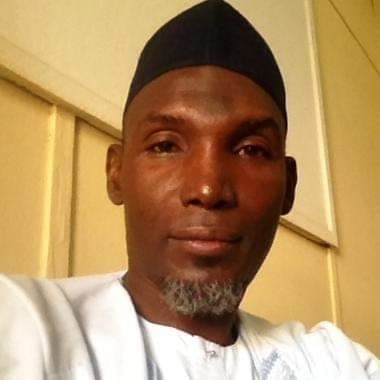
Coalition of Kano Ulama

On the Kano Coalition of Ulamas’ giant efforts in promoting sanity and peace in the state

By Salihi Adamu Takai

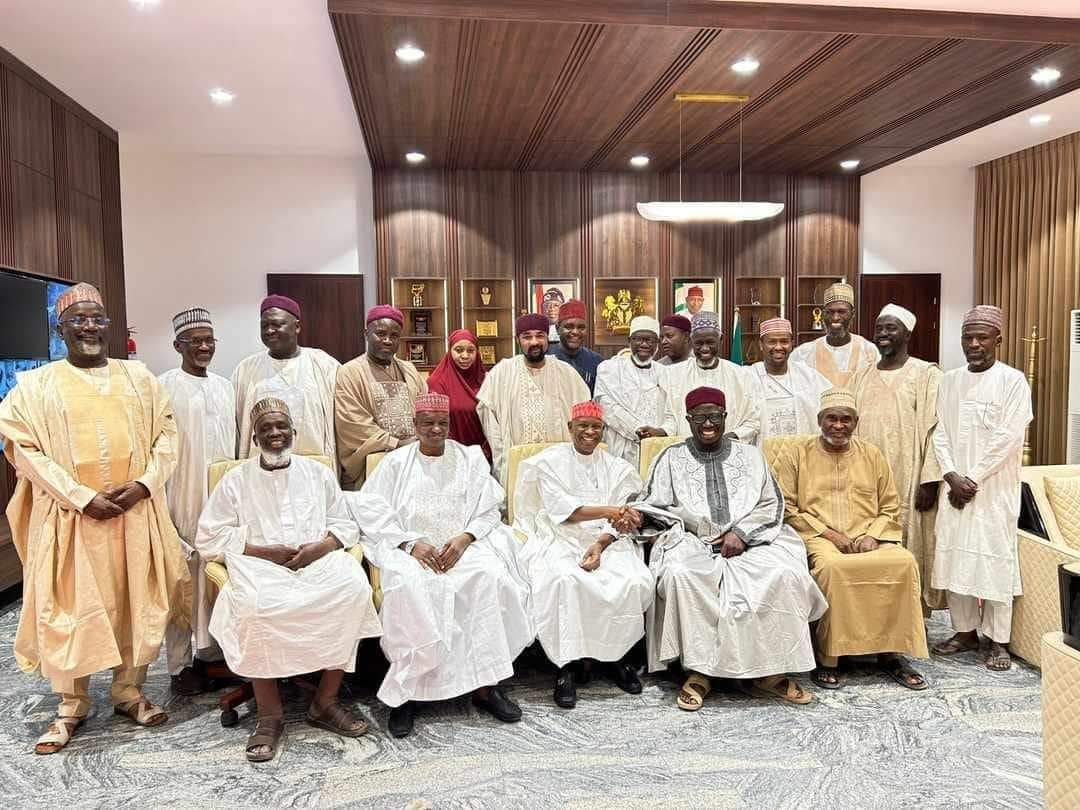
Kano State Coalition of Ulama comprises the great Islamic clerics of Kano from different sects to promote sanity and peace. The coalition is headed by Sheikh Abdulwahab Abdullah (Imam Ahlussunnah). The clerics, who grouped themselves in the religious effort of making the work of Almighty Allah effective in the state, are very important scholars of impeccable characters.

Kano State happens to be the ancient city in the northern part of Nigeria that is very popular for its religiosity. It is one of the first states in Africa to receive the light of Islam. Many scholars have revealed that Islam was received in the state through Wangarawa and Arab merchants.

The spread of the Islamic religion in the state has made it a very religious city—and the religious aspect has become very sensitive in the state. After some years of the spread of the Islamic religion in the city, there has been the existence of Sufism and other sects of beliefs.

The Islamic reformers played very vital roles in sanitizing the aspects of the religion. They focused vehemently on the teachings. They gave more emphasis to the seeking of knowledge of Islam. This aided the reformation in the religious activities of the State.

The spread of Sunnah came and knocked on every door. The objective of the Kano State Coalition of Ulama is to reform religious teachings to accommodate morality. Despite people having embraced religious knowledge and Western education, there is also a need to reform teaching activities and their adoption.

Sometimes, people have the knowledge, but they need to be guided on how to apply it to their teaching and learning. So, the reformation needs a coalition for its success. It is for the Muslims.

The Coalition of the Ulamas has been intervening in matters of religion. They are very keen on promoting sanity in religious activities. They call for peace—and peace signifies the best way of depicting Islam.

To also achieve the aim of their activities, they refer to themselves as the Coalition of Ulama of Kano. This means they comprise different Ulamas from different sects; from Izala, Qadiriyya, and Tijjaniyya.

The Coalition could also be the source of understanding one’s teachings amongst the Ulamas. The Tijjaniyya Clerics in the Coalition could understand some aspects from those Sunni Scholars.

Moreover, the Coalition led by Sheikh Abdulwahab Abdullah reconciled Sheikh Aminu Daurawa with Governor Abba Kabir Yusuf following their misunderstanding about the conduct of the Hisbah corps. Today, Daurawa has resumed his position as the Hisbah Commandant. This is one of the thousands of achievements of the Coalition. They intervene in every matter that affects the public.

May Almighty Allah continue to support the Coalition in achieving their goals, and may He reward them, amin.

Salihi Adamu Takai wrote via salihiadamu8888@gmail.com.

Blasphemy: Abduljabbar Kabara knows fate Thursday 

By Uzair Adam Imam

The case of Sheikh Abduljabbar Nasiru Kabara, a famous Kano-based controversial cleric, accused of defamation, has continued to attract a great deal of public attention.

The entire Kano population is eagerly waiting to see what the court will decide on the fate of the embattled sheikh on Thursday, December 15, 2022.

However, while the court decision on the case remains unpredictable, the two parties, Kabara and the Kano State Coalition of Ulama, wish to win the case.

On July 10, 2021, Kano State Government organised a debate between Kabara and some of the state’s scholars to defend himself over what the Ulama Coalition described as blasphemy.

However, according to the statement made by the judge of the debate, Professor Salisu Shehu, Kabara failed to clear his name or defend his utterances.

‘Where Abduljabbar gets it wrong’ – Awaisu Al’arabee Fagge

In several commentaries and reading sessions, the embattled cleric assumes himself more knowledgeable than any other Islamic scholar of his time and history. He also disregards and criticises any view that does not sit well with his belief.

Holding to this belief, Kabara lambasts any legal pronouncement by the prophet’s companions and, worse, defames Prophet Muhammad (SAW) himself in his subsequent preaches, which he falsely attributes to some Islamic scholars. 

However, Kabara’s counterparts in Kano stood up to put an end to his unsavoury teachings and controversies while bringing many books, including rejoinders some of the scholars published.

The Kano State Government also organised a debate between Kabara and some of the state’s scholars, where, as judged, he failed woefully.

Kabara drags to the court after his defeat

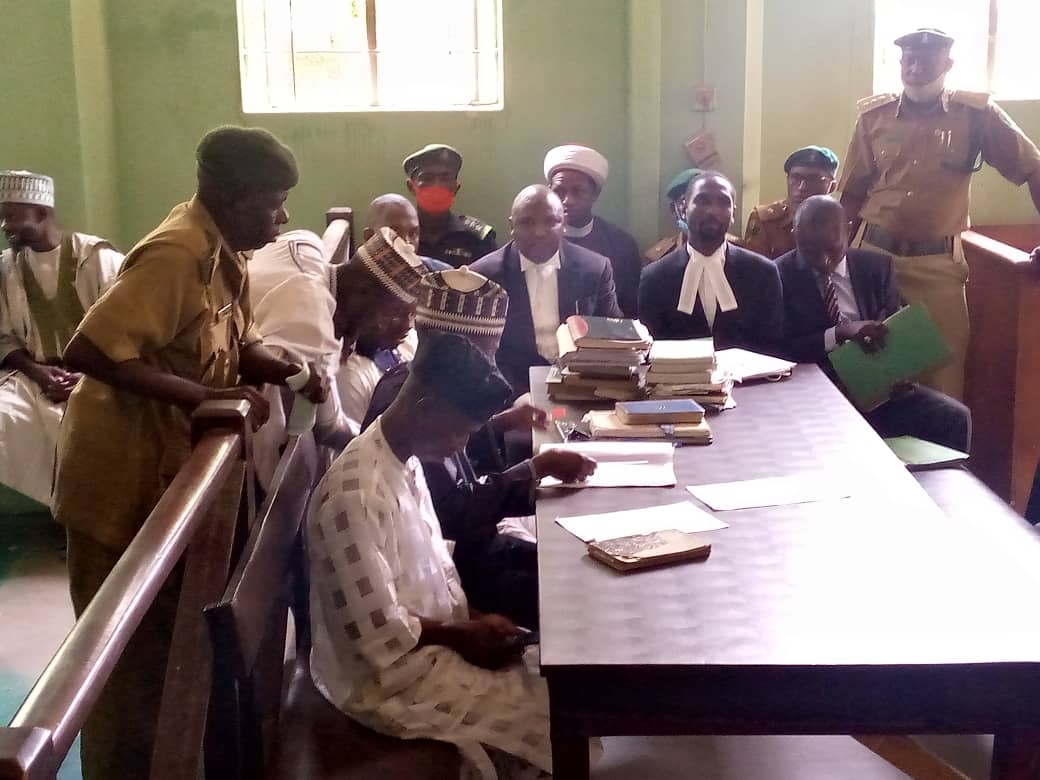
Abduljabbar was subsequently arraigned on Friday, July 16, before an Upper Sharia Court Judge, Kofar Kudu, Alkali Ibrahim Sarki Yola, where the charges included blasphemy, incitement, and sundry offences were mentioned.

The development followed the receipt of the First Information Report from the police by the Office of the Attorney General and Commissioner for Justice, which prepared charges against the cleric.

However, something dramatic happened at the court as Kabara alleged that his attorney, Dalhatu Shehu Usman, received N2 million as a bribe to influence the Upper Shari’ah court judge presiding over the case.

“My lawyer told me he gave the judge N1.3 million, another person N200,000, and he himself took N500,000,” Kabara alleged.

Thus, the cleric continued to quarrel with his lawyers and laid claims and allegations against them since the beginning of the court sitting.

All this comes to an end tomorrow, Thursday, 15 December 2022.

From false dignification to blasphemy: My take on Abduljabbar Nasiru Kabara (II)

By Alkasim Harisu Alkasim

I think Abduljabbar hires out for the Western world. AlhamdulilLahi! Our learned scholars bird-dogged his heinous acts and pulled him down. In his illusions, he aspired to transform Islam and thought he could play sports with the scholars of Kano. He did this to buy himself a public advantage and attention. In his book, Minhajus Sunnah, the erudite scholar Ibn Taimiyyatal Harrani quoted Nana A’isha thus: the Prophet says that he who seeks public attention by sinning against Allah, Allah will draw the attention of people to him and make them love him. But in the end, Allah will turn people against him … (My paraphrase).

Truth be told, Abduljabbar is not well-read. As of late, he was asked by a government lawyer about his studentship. He affirmed that since his father’s death in 1996, which is 26 years now, he has stopped learning before a teacher. He has only been revising for all that long. For your information, when his father died, Abduljabbar was in his mid-twenties. I can bet my last dollar that, at that very moment, he could not have completed the study of the six books of hadith. I also doubt if he has ever read a single many-volumes book from start to finish. A person who knows Abduljabbar very well and shares blood with the family of Sheikh Nasiru Kabiru once told me that the former had not completed the jurisprudence book titled Almukaddimatul Iziyya when he fled the majlis his father taught people. 

How Abduljabbar translates and misinterprets prophetic traditions that do not sit well with his faulty faculty shocks many people. This leads him to ascribe to the Prophet what even the likes of Abu Lahab, Abu Jahl, Walid bn Mugira had never done to the Prophet. His mistranslating of prophetic traditions illustrates how he lacks the nitty-gritty of translation. The fact that he has never taken his time to be adequately mentored destroys him. I have never seen as big a laughingstock as Abduljabbar. He thinks he is glorifying the Prophet despite all these horrible things. How can one magnify the Prophet by describing him with names even Satan will feel angry when one addresses him with?

I suspect this man is selling the secrets of his religion. I was wondering if a sensible person would ever do this. I can remember a tradition he once cited that reduced the Prophet’s charm. The first time I glanced at it, I got physically numb. As I checked the reliability of the reporters in Alhafizuz Zahabi’s book Mizanul I’itidal fi Naqdir Rijal, the hadith turned out to be counterfeit thanks to the weakness of the reporters. Sure enough, such traditions he falsified are mind-boggling and should not be attributed to the person of the best of Allah’s creatures. Therefore, I advocate his refusal of such traditions.

What is funny with Abduljabbar here is his ignorance of the fact that there are books whose singular themes are the history of reporters of hadith. There are also those books that did not necessitate only authentic or sound traditions. Thus, one can find all sorts of traditions ranging from the authentic, sound, and weak to even false ones. While giving the history of a reporter, the scholars mentioned some of the traditions they reported through him, directly or indirectly. If the reporter were weak, they would exemplify (a) weak (a)hadith he had reported. Such books comprise Tariku Baghdad by AlKadibul Baghdadi; Tariku Dimashqa by Ibn Asakir, to mention a few.

What motivated the above scholars and their likes to write down these ahadith was their thirst to show their absolute lack of authenticity. They brought forth the ahadith under the history of a particular reporter, as said earlier. For instance, any reporter of hadith, whether strong or weak, provided he had ever been to either Baghdad or Dimashqa, they wrote about him. 

Additionally, there are hadith texts whose authors preoccupied themselves with reporting ahadith a la classifying their teachers in alphabetical order. Such authors did not care to report even false ahadith they heard from their teachers. For instance, AlMuujamul Kabir, Ausad and Sagir by AdDabarani. Therefore, one can say it is a sin to report or mention a false hadith. Thus, it is noteworthy that such hadith scholars reported counterfeit traditions to show the world their falseness for people to avoid them.

There are books singled out to mention only false traditions, such as Abdullahi Bn Adiy’s book Alkamil fi Du’afa’ir Rijal, etc. Strangely, Abduljabbar cited ahadith from this book, not knowing that it was purposely written to give accounts of weak hadith reporters. This faux pas has illustratively emphasised the ignorance of Albduljabbari. Therefore, this and other shockers are enough to discredit his scholarship.

The Scholars’ Verdict on Blasphemy

Doubtless, the abominable utterances Abduljabbar has made against the Prophet demonstrate him as blasphemous. Like it or not, he is a blasphemer who has tried to tarnish the image of the Prophet, his companions and their righteous followers. His badmouthing of the religion of Islam cannot be reduced to writing. The extent to which his muddy utterances have reached in reducing people to tears is enough to tell you about the gravity of the situation. A young girl listened to one of such unprintable assertions of this fake scholar and immediately broke into tears.

Indeed, any Muslim that blasphemes against Allah or His Prophet deserves death. After citing many other scholars, Iyad bn Iyad bn Musa and Ibn Taimiyyah ruled that any Muslim that blasphemes against the Prophet will be condemned to death even if he repents. His repentance neither spares him nor assures him Allah’s forgiveness. Contrarily, if a nonbeliever blasphemes against Allah or His Prophet, he can be spared if he converts to Islam. Otherwise, he will go to the gallows. 

Last, the right action should be taken against any blasphemer regardless of their rank in society. This is to make people revere the Prophet all the more and watch their tongue. May Allah guide us, amin.

Alkasim Harisu Alkasim wrote from Kano via alkasabba10@gmail.com.

From false dignification to blasphemy: My take on Abduljabbar Nasiru Kabara (I)

By Alkasim Harisu Alkasim

It took me a while to make up my to write on the embattled Abduljabbar Nasiru Kabara owing to the gruesome nature of what he has done. The misfortune still disturbs me. This controversial pseudointellectual prides himself on acquiring and accumulating an unmatched Islamic scholarship. He also boasts remarkable erudition and impressive oratory. But those who know him inside and out cannot be easily misled into believing this. In short, he fakes in-depth Islamic knowledge. Funnily enough, thanks to his persistent demand for a debate, the little braggart was granted his request. Abduljabbar has been blowing his own trumpet for as long as one can recall. He also despises the scholarship of the Kano ulema. He did not quit his prideful ways even when under house arrest.

In his wildest dreams, his scholarship surpasses that of everyone in the whole of Africa. He once boasted about knowing the Arabic language like the back of his hand and that nobody knows the language as he does in the African continent. He also claims super excelling in learnedness, hotshot scholar Nasiruddeenil Albani in the science of hadith – a field in which he had made a name for himself.

Abduljabbar also thinks he outclasses the Sheikhs Usaimin and his tutor, Bn Baz, in jurisprudence. Overall, he bests all the scholars that ever lived. As a wishful thinker, he wishes to renounce the traditions of the last Prophet. He means to cleanse prophetic traditions of impurities. But I don’t know the clearing up he is giving them. Because for a long, scholars have already worked on them. They have classified the authentic and the sound traditions and discriminated between the acceptable and the unacceptable traditions.

Abduljabbar is a charlatan aspiring to falsify ahadith. He considers any hadith his feeble mind fails to understand as a whopping lie against the Prophet. Shockingly, he judges Islamic rulings in line with his understanding – whichever he fails to comprehend, he, without much ado, invalidates. As a wish fulfiller, he describes Al-Bukhari as a concocter of traditions and a liar. He equates himself with Al-Bukhari and sometimes asserts that he is not even the match of this otherworldly scholar whose book has been prized as the second most authentic compendium after the Holy Qur’an (See Assuyudi’s Alfiyyatul Hadith and, AnNawawi’s Tadribur Rawi). This ill-intentioned fraud fakes profound knowledge. He is also a scatterbrain. Because he quickly forgets what he says, what transpires in court sessions, illustrates this. When given a chance to rack his brain, he can never remember what he had said in the past. I can remember listening to him contradicting himself and denying utterances he once made.

Abduljabbar’s denouncing some traditions in Sahih Al-Bukhari as false is hair-raising. He bragged about burning the midnight oil, reading and writing. This had become commonplace until the erudite hadith scientist Dr Sani Rijiyar Lemu revealed to the teeming public the sources from which he obtained his information. The hadith guru unveiled that Abduljabbar often copied the exact words of the scholars he plagiarised.

I could not help wondering how Abduljabbar keeps exaggerating his spending all night researching. The crooked pseudo-scholar did nothing but “copy and paste” in academic jargon. The deceitful Abduljabbar professionalises in plagiarism. Often, he ignorantly or knowingly plagiarises the works of occidentalism-inclined scholars and other orientalists. His concocted ideas and those of the Shiites are through and through worlds apart. A Shiite came out to deny ties with him not long ago. This had occurred a short while before that hot debate featured.

I was delighted at the news of the Mukabala. But my happiness prematurely died when the crude debater failed to prove himself and carry his points. The Mukabala demonstrated his utter incompetence all the more. On that day, he enormously flopped. He kept repeating himself and flip-flopping. He is used to switching to irrelevant topics whenever he runs out of ideas or feels slightly caught out. His Mukabala with the well-read and retentive Sheikh, Alkasim Umar Jibril Hotoro, exemplifies this. Fortunately, the one organised by the Kano State Government caused his empty boasts to run down. Surprisingly, he sweated all over in an air-conditioned room. “Mara gaskiya ko a A.C gumi yake” (loosely translates as the liar will sweat even in an air-conditioned room). This proverb is a remake of the familiar one, which reads, “Mara gaskiya ko a ruwa gumi yake” (the liar sweats even in water).

To defend his failure to speak for his views, Abduljabbar shamelessly said that the timeframe he was given to reply to questions was not enough. He said he could not clarify questions he took years discussing. He has forgotten, like the forgetful he has always been, that he often said he could answer any question when he awakens from a deep sleep. More so, as stated earlier, Abduljabbar bragged that even Albani, Bin Baaz and Ibn Taymiyyah could never catch him. Why the boast!

Look at the budding scholars that defeated him on that day. As a result, some of his fanatics parted company with him by calling it quits with his teachings. Finally, a person came out to declare his verdict in an audio clip. He bitterly regretted his keeping this Tartuffian scholar company. He announced that he had been with the fake scholar since his teaching one of his error-ridden books titled Asa Musa held at Gadon Kaya. When I read this book around 2015, as a budding student of hadith, I found unpardonable mistakes unexpected for a young student of hadith, let alone a guru. Even a toddler student of hadith could not make such enormously uncountable errors. Abduljabbar is not conversant with hadith jargon.

Alkasim Harisu Alkasim wrote from Kano via alkasabba10@gmail.com.

Sheikh Abduljabbar to undergo mental health evaluation

By Muhammad Abdurrahman

The hearing of the Kano State government lawsuit against Sheikh Abduljabbar Kabara over blasphemy ended with a new development today.

The court has ordered the cleric to undergo mental health evaluation before resuming its proceeding on September 16, 2021.

Recall that Sheikh Kabara was arrested and remanded in prison after he and some selected Ulama in Kano had a public dialogue over his teaching in July.

The Ulama and the presiding judge of the dialogue, Prof. Salisu Shehu, deemed parts of Kabara’s statements on Prophet Muhammad (SAW) and his companions as blasphemous.

Prof Maqari vs Dr Abdallah: A diversion from Abduljabbar’s heretic teachings?

By Dr Muhammad Sulaiman Abdullahi

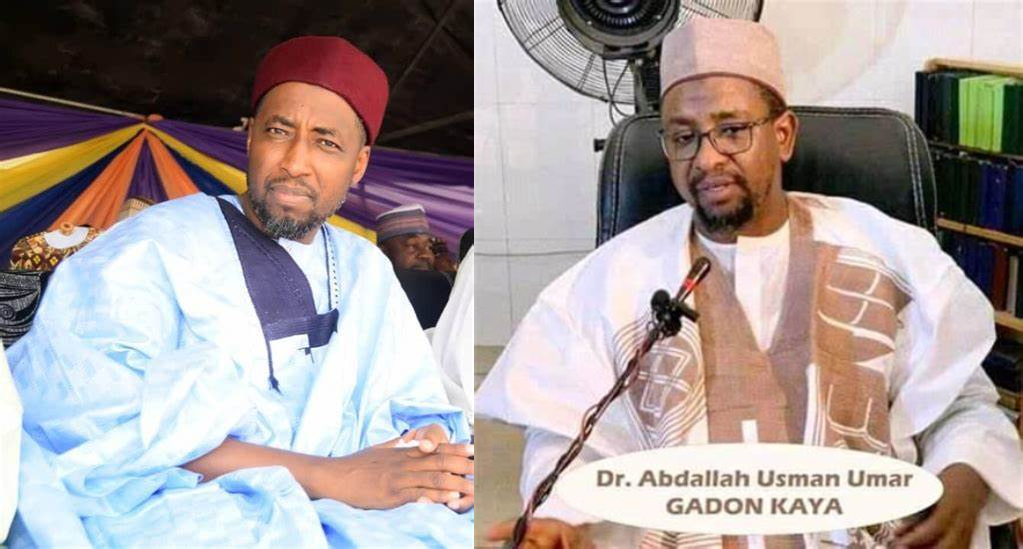
Tension grew as Prof. Ibrahim Maqari intends to sue Dr Abdalla Usman Gadon-Kaya based on what he (or his lawyers) called defamation of his character. It may be recalled that the main point of divergence between the two was their different religious affiliations, where Prof. Maqari subscribes to Tijjaniya Sufism, and Dr Abdalla is an Izala/Sunni scholar who preaches mostly against the teachings of Prof. Maqari and Tijjaniyya order in general.

Initially, the blasphemous and heretic teachings of Abduljabbar Kabara were the genesis of their misunderstanding, where Dr Abdallah erroneously cited a wrong reference when referring to an Abuja Imam. It was clear that the coalition of Kano Ulama, under the chairmanship of Dr Sa’idu Dukawa, lodged their complaint against what they found to be lies and concoctions against Bukhari, Muslim, some Sahabas, which in turn, ridicule and subject the sanctity of the Prophet’s household into questioning. These immoral teachings have negatively impacted some irate and ignorant youth, where they mockingly copy and paste anything from the sacred books and ridiculously call it a lie.

In response to this unprecedented religious turmoil, the scholars in Kano unanimously agreed to form a coalition to defend Islam’s sanctity. Abduljabbar directly targets Dr Abdalla and other prominent Sunni scholars in Kano as his reference point and as one of those at the forefront of exposing his evil antics. These altercations have taken a long time without Prof. Maqari featuring in the scene with either support or opposition to what Kano Ulamas have been doing.

After the debate session, the Muslims were happy as Abduljabbar failed to defend his heretical teachings. However, while everyone was happy and waiting for a verdict from the government, suddenly Prof. Maqari used his position from the Abuja Central Mosque and said that he perceived a form of propaganda in all that has been happening in Kano concerning Abduljabbar’s case. Thus, Prof. Maqari breathed life to all the supporters of Abdujabbar who died and buried their heads in shame.

Maqari’s submission made Dr Abdalla go berserk and even erroneously, out of emotions, mentioned many instances where an Imam in Abuja, which may be Prof. Maqari, used his position to delve into this – what no Imam in the history of Abuja Mosque ever delved into before. He cited instances where such an Imam said many things and even went to the extent of claiming to own classified audios of phone calls where that Imam, who may be Prof. Maqari, wanted to intervene in cases related to blasphemy.

In response, Prof. Maqari, in what shows his humility and humbleness, as usual, posted a video where he debunked all that Dr Abdalla said and called for peace. Later, Dr Abdalla also posted another video, clearly apologizing and calling for peace. Most poor innocent followers of these famous sheikhs were happy that the matter was settled amicably, only to wake up with another fresh video of Prof. Maqari saying he would go to court. I think this will be one of the first court cases that will generate high tension, cause a lot of damage, and divert people’s attention from the real cause of the trouble. It will indeed cause more harm than expected.

The decision may not ordinarily be  Prof Maqari’s. It may be that some people who are angry with Dr Abdallah may feel that this is the right time for them to score their cheap religious point by dragging Prof. Maqari and Dr Abdalla into the ring. How I wish it were done differently. How I wish it were not for Prof. Maqari and Dr Abdalla. Whoever knows Prof. Maqari knows a humble, soft-spoken, modest and religious personality. The way he doffs his Dara on his head can make everyone think of the kindest people of Magrib who devote their lives to the services of Islam.

On the one hand, Prof. Maqari is a Professor of the Arabic language, an Islamic scholar who triples as an Imam in the national mosque in Nigeria. He maintains a very cordial relationship with many people to whom he subscribes to their ways of religiosity and those he differs with. However, Prof. Maqari is tactically but unmistakably anti-Izali with a complete Tijjaniya Sufi disposition. These, he has never hidden and is found in many of his teachings. There are so many instances where he displayed anti-Izala inferences in his teachings, and this is not in any way bad as much as he is sure of his contrary opinions. Such disagreements and oppositions have been there among scholars since an immemorial time.

On the other hand, Dr Abdalla Gadon Qaya is a vocal, vibrant and versatile Islamic scholar who is also an Imam in an Izala mosque; he also triples as a lecturer of Islamic Studies at Bayero University, Kano. He has been known to talk during his Friday sermons fiercely against anybody who blasphemes, jokes, maligns or tries to tarnish the image of Islam. In addition, he has been known as a social media influencer, where he uses his position to viciously flatten his rude opponents, most of whom are not well-versed in Islamic studies, but trying to change the religious narratives, in the name of modernity or what they call modern Islam.

Looking at the delicate situation we are in now, I, therefore, call on these two gladiators in the ring to not allow their followers to use them to divide the Ummah further. We have many problems ahead of us, and that of Abduljabbar is not yet settled. Against whom are we to set our faces now? This may lead to another sectarian violence.

To me, both are good people. They are religious scholars; they are role models in their own rights. They are not infallible. Both have erred. Prof. Maqari emotionally chose the wrong time for his submission, while Dr Abdallah emotionally said something which Prof. Maqari didn’t say. All these are not supposed to come from Islamic scholars. Don’t allow those you call ‘YanBoko to play with your intelligence.

Your respected position will be trampled upon if you allow that. Both of you have lawyers who can give the last drop of their blood in protecting each of you; let these lawyers go and defend the sanctity of the Prophet. What will you gain if you see another person’s downfall just because you feel he wrongs you or he belongs to a different sect? What if the table turns? It isn’t socio-morally a welcome development for Islamic scholars to go to court. And who even initiated the idea of going to court? Who wants to use these reputable Malamai as his case study?

Finally, I am not in any way against going to court to look for justice. On the contrary, I support it. But, I won’t support scholars who are the mirrors to the Ummah to do that. What if one of your disciples learns from you that taking matters to court is the last good thing? Whether we like it or not, this will have sectarian colouration, and it will sow more rift than ever. Therefore, I kindly advise Malam Maqari to stop the court procession for good silently. I also kindly remind Malam Abdalla, Prof Maqari and all other Islamic scholars to guard and weigh their utterances and actions before uttering or doing anything.

Both clerics should silently sit, own the issue, discuss it and shame the detractors. Both Prof. Maqari and Malam Abdalla emotionally erred, and they apologised. That should have been enough reason to close the case. Why turning around and going to court? Otherwise, this will lead to digging more and more resolved issues by those rude supporters who don’t have much love for the religion, and it will lead to further disunity. Don’t we have other vital problems to deal with, please? And if both parties are doing it for the sake of Allah, then why court? Only the evil FOLLOWERS may propel their teachers to court cases just for them to laugh and continue to enjoy their ignorance.

Muhammad Sulaiman Abdullahi, PhD., is a lecturer at the Department of Nigerian Languages, Bayero University, Kano. He can be contacted via +234 80 65846225.
Sheikh Abduljabbar Kabara is a blessing in disguise

By Abdurrahman Nasir Salis

The emergence of Abduljabbar Kabara is a blessing and not entirely a curse to the Muslim Ummah from this part of the world. Abduljabbar is a common enemy to variegated clans of foes, to wit Izala, Tijjaniyya, Qadiriyya and Salafiyya, among other sects, who could neither share a shade to rest, mosque to preach and pray nor a home to shelter.

The aftereffect of fighting the common enemy has taught all the clans that the commonalities they share as Muslims far outweigh the differences. It taught all the sects that they have for long overtired themselves on trivialities that are neither a passport to paradise nor a ticket to hell.

Yesterday, I saw three or four different sects I mentioned hereinbefore, who, to an extent and often attribute infidelity or disbelief to each other gathered amicably in a mosque in Kano belonging to one sect (Tijjaniyya), preaching together and praying together. I saw their guards, “Yan Agaji“, working side by side in complete harmony and feeling of togetherness, considering themselves brother’s keeper.

From the onset, seeing Izala guards together with Qadiriyya’s and Tijjaniyya’s “Yan Agaji” at the doors of Tijjaniyya Mosque named SHEIKH IBRAHIM INYASS MOSQUE bewilderedly caught my eyes and attention. Despite the saying that curiosity kills the cat, I entered the mosque with no fear of being killed as the cat. I saw scholars of all the sects on a single table and a crowd of onlookers, the loud cheerers, from all the sects, listening to their Sheikhs filled with feelings of togetherness and inclusivity, and above all, seeing each other as Muslim with Islam at the top of the priority scale and pushing all other considerations to the bottom of the scale.

Life is indeed the best teacher. This happening is not just an ordinary incident that will pass by time. Muslims and their Sheikhs should take this as a lesson that should symbolise how we should behave like Muslims. Unity shall be our sigil. Let me conclude by the saying of the Almighty Allah in the Holy Qur’an Chapter 8 Verse 73: “The Unbelievers are protectors, one of another: Unless you do this, (protect each other), there would be tumult and oppression on earth, and great mischief”.

Abdurrahman Nasir Salis writes from Kano.

abdurrahman00800@gmail.com

+234 806 578 7324

Abduljabbar remains in police custody, awaits trial

By Uzair Adam Imam


The embattled Islamic cleric, Sheikh Abduljabbar Nasiru Kabara, remains in police custody since his arrest yesterday (Friday) evening.


Kabara is a famous Kano-based controversial cleric whose commentaries and preaching the Coalition of Kano Ulama describe as blasphemous. On July 10, 2021, Kano State Government organised a debate between Kabara and some of the state’s scholars to defend himself.


However, according to the statement made by the judge of the debate, Professor Sani Shehu, Kabara failed to clear his name or defend his utterances.


The Sheikh was charged for blasphemy, incitement and insulting Prophet Muhammad (SAW), his companions, among others. A statement issued by the Commissioner of Information, Malam Muhammad Garba, on Friday states that Abduljabbar will remain in police custody until Monday, when he would be sent to prison.


The statement, in parts, reads: “The development followed the receipt of the First Information Report from the police by the Office of the Attorney General and Commissioner for justice which prepared charges against the cleric.


“Abduljabbar was subsequently arraigned on Friday, July 16, before an Upper Sharia Court Judge, Kofar Kudu, Alkali Ibrahim Sarki Yola, where the charges that included blasphemy, incitement, and sundry offences were mentioned.”

AbdulJabbar and the free speech conundrum

By Muhammad Mahmud

The recent debate between AbdulJabbar and representatives of Kano Ulama on the former’s reprehensible method of uttering unprintable words on the person of the Messenger of Allah (Peace be Upon Him) on the pretext of deduction and/or inference has opened yet another question on the freedom of expression. Some few supporters of AbdulJabbar decided to hinge their support on the hype of freedom of expression, saying that they are supporting him because he represents their free speech advocacy.

Nevertheless, a simple glance will expose this fallacy because if criticising other ideas is sanctioned by the freedom of speech article, AbdulJabbar himself does not seem to believe in it given his radical stance on the right of different sects to propagate their understanding. He condemns other people (sometimes using all available invectives) for no reason other than expressing opinions that contradicts his stance. He attacks other sects with impunity, descending on the personalities of many revered sheikhs, who were not even aware of his existence, in order to hurt emotionally and psychologically injure their admirers who disagree with him on one issue or another.

It is, therefore, hypocritical to premise supporting the man on the shaky ladder of free speech advocacy. This is even more evident as the peddlers of this chicanery never, even for once, voiced their dissatisfaction with the man’s assault on others who spoke their minds.

Now that the issue of freedom of expression is introduced into the unfolding drama, it is pertinent to ask what precisely this freedom of expression is? What is its scope, length and breadth? To what extent is it applicable? Who determines what it is and who will decide who is guilty of violating its principles?

We must address this because without fully knowing and understanding these, we may never have the much sought “liberty” to express ourselves. Unfortunately, many questionable elements will hide under it to deny us our own right to express ourselves.

It looks like almost every blasphemer or assaulter of people’s sacred places and/or scripture will find a supporter among the advocates of freedom of expression. Are the majority of people whose religion is attacked NOT free to express their anger? Why the intolerance against intolerance? It seems we are faced with what we can call a tyranny of the minority.

Section 39 (1) of the Nigerian constitution says: “Every person shall be entitled to freedom of expression, including freedom to hold opinions and to receive and impart ideas and information without interference.” Why should this only be applicable when those opinions are from the minority?

Am I not free to hate and despise anyone who infringes on my liberty and attack me, my religion or culture? Put aside those reasons, am I not free to hate anyone, including AbdulJabbar, for no reason at all? Why should someone then try to gag me when I have a reason to hate and express my anger towards him when he attacks what I hold dear?

Some of them used to argue that we abhor dissent. This is also not true. We have been living with dissent throughout our history. Even after Sheikh Dan Fodio’s Jihad, there were non-Muslims who went about their businesses without any harassment. Throughout our towns, there are a handful of brothels known as Gidan Magajiya. There were singers and dancers. There were even ‘yan daudu in addition to prostitutes. They live here. None of them was reported to have been attacked by the people or the authorities, to the best of my knowledge.

Also, the Ulama differ. They write books for and against what they believe and what they do not believe. People follow any sect they feel they are more at home with. They form and join groups. All these existed in Arewa before Nigeria even existed; they still exist. What gave the impression that we hate dissent is yet to be enumerated. Therefore, this is not about disagreement; it is about attacking and insulting what people hold dear and sacred while waving the card of free speech.

Before the next ‘AbdulJabbar’ rears his ugly head

By Abubakar Suleiman

No thanks to his polemics, fiery tongue and boastfulness, AbdulJabbar Nasiru Kabara, the scion of the famous and revered Islamic scholar Shaykh Nasiru Kabara, has dominated the tongue and pens (though in the negatives) of most Hausa-speaking Muslims after the long-awaited debate has been laid to rest. He stirred the hornet nest and got stung from all directions.

Over the years, he has gained currency due to his unrestrained and unhinged attempts during preachments to create a hole in the validity of the Sunni Canons, especially Sahih al-Bukhari and Sahih al-Muslim. Plus, he has also never relent efforts in casting doubts into the minds of his gullible and unsuspecting followers on the narrative integrity of the Companions of the Prophet Muhammad (SAW). He is actually not the first to cast doubts on authentic Prophetic traditions, but he is the most reckless one I have come across.

Tellingly, in all his attempts, AbdulJabbar bucked context, methodological principles in the science of Hadith, Arabic nuances and even cultural conceptualisations or idiosyncrasies, especially in translations. And these translations ended up impugning the sacredness of the Prophet. Moreover, save for Allah’s intervention through the Kano state government, his dogmatism and preachings might have led to bloodshed and loss of lives and property.

This saga should once again bring to the front burner the issue of regulating preachers and preaching in Nigeria. One’s ability to translate Arabic text or to graduate from an Islamic university or a Christian theological seminary in Nigeria or abroad should not automatically confer on anyone the authority or absolute freedom to preach or use media houses to propagate ANY kind of religious ideology devoid of a vetting process.

There is no gainsaying that some religious clerics have exploited or abused the freedom of religion or expression for both personal and even political gains through dangerous indoctrination, misinterpretation of religious diktats and the preaching of skewed versions of religion. AbdulJabbar is a good specimen of how to throw decency to the dogs with the help of jarring sounds from a cheering and unsuspecting crowd in preference for personal gains.

Unfortunately, as a society, we most times abhor regulations on seemingly everything. Unfortunately, this nonchalant attitude has often come with a huge and devastating price, as we have witnessed in the case of Maitatsine and, now witnessing in the aftermath of Muhammad Yusuf’s death and the subsequent upsurge of the Boko Haram insurgency and, also AbdulJabbar’s preachments.

Regulation in religious matters is a sensitive issue. Still, it is a pertinent key in taming extreme tendencies, reducing margins of errors in religious fatwas and enhancing positive social policy and social integration. Yes, we can contemplate the government’s tendency to enact laws on preaching in erecting barriers that would insulate them from accountability or criticisms as humanly possible. However, we cannot underestimate the effects or the grave consequences of leaving preachers of any kind unchecked in our current realities.

The government at all levels should, as a matter of urgency, collaborate with relevant religious organisations in building or tweaking existing institutions which shall be backed by law. The institution should be shouldered with the responsibilities of, among others, screening and issuing a licence to preachers, judiciously and sincerely implementing the enacted rules and periodically revising and amending the laws in tandem with current realities or evolving peculiarities.

The solution, as mentioned earlier, is not a one-size-fits-all. Still, we desperately need a system or mechanism to check religious excesses and undue preachments before the next ‘AbdulJabbar’ or religious demagogue rears his ugly head and throws us into another quagmire that may be costly to our lives, religion, time and wealth.

Abubakar Suleiman writes from Kaduna and can be reached via abusuleiman06@yahoo.com.