Christians

Taraba Gov. Ishaku is a Muslim-hater – MURIC

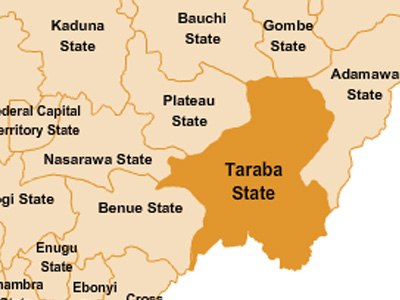
Governor Darius Ishaku of Taraba State has been accused of being a Muslim-hater. The allegation was made by an Islamic human rights organisation, the Muslim Rights Concern (MURIC) which claimed it has evidence that the governor has been sacking Muslim workers without following due process and replacing them with his Christian brethren.

This was disclosed in a statement issued by the group on Wednesday, February 9, 2022. The statement was signed by the group’s director, Professor Ishaq Akintola.

It reads:

“Contrary to the false public image of a Christian state governor who promotes peaceful and harmonious coexistence between Christians and Muslims under him, we have incontrovertible evidence that Governor Darius Ishaku has been using his office to put Muslims at a disadvantage through several administrative manoeuvres and misadventures.

“The governor recently claimed that the Taraba Muslim Council which accused him of marginalising Muslims in the state was inciting religious tension but that is far from the truth. The governor is simply trying to cover his tracks. But the wind has blown and we have seen the ruff of the hen.

“The truth is that Ishaku’s reckless violation of Allah-given fundamental rights of Muslims in his state is legendary. Although our office has been inundated with complaints of discrimination against Muslims, we will cite just one example today for the economy of space.

“The case of Mallam Nasiru Audu Baba is most striking. He was unceremoniously and illegally removed as the Managing Director and Chief Executive Officer of Taraba Microfinance Bank Limited in 2012. But the governor suspended him from office in 2016 without any reason and without a board resolution. The Central Bank rejected the suspension on grounds of lack of due process.

“But Governor Ishaku ignored the Central Bank’s advice and went ahead to set up a kangaroo committee which, however, neither indicted Mallam Nasiru nor the board of the bank. Nevertheless, the governor illegally terminated Mallam Nasiru’s appointment. The termination of his appointment was retroactive as it was issued on 13th February 2018 but with effect from 30th September 2016. Expectedly, a Christian woman was appointed in his place.

“Though a federal high court gave judgement in favour of Mallam Nasiru and the board of the bank. Instead of obeying the court order, Taraba State Government went to the appellate court which ruled that the matter should be taken to the industrial court.

“Mallam Nasiru and the board headed to the Supreme Court which is yet to determine the case. This and many other atrocities were committed against Taraba Muslims by Governor Ishaku. Although the board of the MicroFinance Bank renewed his appointment for another five years, his suspension and subsequent backdated dismissal was a manifestation of tyranny while the appointment of a Christian in his place exposed the governor’s tortuous policy of religious discrimination and favouritism.

“Governor Ishaku thinks nothing can be done to him by the Muslims since he is rounding up his second term but he has miscalculated. Many past governors are in the senate today because of their good performance while in office. Some of them are also aspiring to become ministers or the president of Nigeria.

MURIC’s advice to governors who are Muslim-haters like Ishaku, Ortom, Wike and Seyi Makinde is that they should not attempt to occupy any federal office. We have blacklisted Muslim-haters and Nigerian Muslims will ensure that they never get there.”  

Don’t stereotype people for their kinsmen’s ‘fault’

By Muhammad Isyaku Malumfashi 

People nowadays cease to understand that everything in this life is ‘do me, I do you’. Nonetheless, very few people have the discretion of paying good for the bad input. 

On several occasions, I have heard people complaining about why others don’t treat them as they had treated them or relate with them politely. But, unfortunately, even my humble self is not an escaped or sacred being to that temptation, to be honest. 

People want to be treated more kindly than they treat others. But we often forget that life is “reciprocal”. We don’t get in return more than what we do give. However, the clean-minded people would always do good even if otherwise was done to them and vice-versa. 

I recently witnessed fascinating neighbourly scenarios, which will be the foundation of this piece.

An elder brother from a distancing place narrated a heart-touching story between him and the community members in one of the states in the West. He lived there for a while as a civil servant. He left on transfer to another workplace.

That brother is a northerner who was lucky to have come from parents who nurtured good parental upbringing to their children so that they could live with others even when the parents are no more, and the children might still be young. 

His transfer announcement threw the entire mosque to sombre as if life was about to be lost. Now, come to think of it. This man was transferred from North to West for public service. Still, he understands that despite the seeming differences in culture and religion to some extent. We’re all humans and citizens of this beloved country, so we can still live in peace and harmony. And that was the secret behind his love by those people.

Similarly, a female Christian neighbour in our school’s postgraduate hostel was robbed on her way back home to  South-South from school for Christmas and New Year season. The news shocked us. We were all disturbed for not reaching out to her to sympathize because the phones were confiscated during the robbery, plus other valuables.

As a mature woman, she always takes precautions while interacting with us to maintain the opposite sex. You know North is very sensitive about religion. However, her friendly attitude made us so open to her. We once had a total blackout at the hostel for three weeks due to the theft of some expensive fuse from the transformer. This woman collected our laptops and phones down to the school’s clinic to charge. She still did that though their law didn’t allow anybody outside the clinic to charge there. Then, sometimes unknown to us, she would cook and take it to our rooms and plead with us to bless the food. 

Another case study was a female Christian corp member serving in our school. The corp member hails from West, but she’s that kind of person one could describe as snobbish. She stays in the PG hostel with us too, but you hardly see her talking or greeting people. Her case was not a familiarity issue as many females in the hostels socialize far better than many males.

Her fate came during Christmas and New Year seasons. I’m a living witness because I didn’t travel earlier for that break until I submitted my chapter three to my supervisor. One day, when coming from the town, I overheard her complaining to someone on the phone that she’s tired of this Katsina, adding that the people are not as hospitable and accommodating as being alleged. Nobody wished her Merry Christmas except those calling on the phone from distant places. She added that some people even frowned at her when they met as if they wanted to fight her. The submission came to me as a shock!

More so, a respected former corp member and brother from North Central who served in my local government area recently unfolded his ordeal on how some of our people maltreated him during his national service. Even though he deserved to be retained but nepotism didn’t allow it. 

Furthermore, I witness many such scenarios where in one way or the other, someone falls victim to “not being our tribe person or just for me been a Muslim and Hausa in the South”, but I never used that to stereotype the southerners. Because if some hurt me, I was accommodated and loved by others of the same tribe. Thus, every society has the good, the bad, and the ugly. 

May we be the reason why others will anticipate our race.

Muhammad Isyaku Malumfashi sent this via muhammadisyakumalumfashi@gmail.com.

387 persons killed in 2 years of Kaduna communal crisis – Gov. El-Rufai

By Muhammad Sabiu

Three hundred eighty-seven (387) people were murdered in the communal clashes in Kauru and Zangon Kataf, according to Kaduna State Governor Nasir El-Rufai.

On Wednesday, he stated this at Agwatyap’s palace in Atak Njei, Zangon Kataf.

The Commissioner of Internal Security and Home Affairs, Mr Samuel Aruwan, who represented El-Rufa’i at a meeting with traditional, religious and community leaders at the palace of Agwatyap, urged the communities in Kauru and Zangon Kataf to stick to the law and avoid generalizations that exacerbate the security situation in the areas.

He further called on the communities in Kauru and Zangon Kataf to keep recourse to the law.

During an emergency meeting with traditional rulers, Aruwan, who was escorted to the conference by security chiefs, also stated that the counter-killings were unacceptable.

Tinubu and the dilemma of the 2023 presidency

By Ismail Hashim Abubakar

Although the articulation of the presidential ambition of Bola Ahmed Tinubu (if actually this his real name) is seizing the attention of the public these days, Tinubu’s psyche might have likely become fraught with political confusion since 2020 when Mamman Daura gave the popular BBC interview on competence as the chief criterion for Buhari’s succession, rather than regional or ethnic consideration. 

This time around, the greed of  Bola Ahmed Tinubu seems even to surpass that of Atiku Abubakar. The man is using every channel to realise his (of course, legitimate) ambition while at the same time subjecting himself to more public shame. The man has become too wild in his bid to realise his dream of emerging as President, and there is a strong indication that he can go to any length to achieve his goal.

However, Tinubu is in a very disadvantageous position occasioned by the mixture of his ethno-religious and geographical inclination. The man is a Muslim, no one doubts, but of course, a very nominal Muslim who favours ethnic proclivities more than religious brotherhood and solidarity.

Based on clear historical evidence, to Tinubu, a Yoruba Christian is far better than a Muslim of any linguistic extraction. However, his hatred for the Hausa is beyond any human quantification. The series of brutal massacres of northern Muslims by government-backed OPC in the Southwest, especially Lagos when Tinubu was governor, still evokes gory memories in the minds of many Muslims, and this will play well as Nigeria approaches the general election in 2023.

Nevertheless, the shaky religious credentials of Tinubu, besides the status of his wife as Christian and his Christian handlers, do not at all make him a Christian or outside the fold of Islam. If that is the case, if, for example, he is nominated to contest for President, CAN and Nigerian Christians will never accept him as their representative, lest it means his running mate can be a Muslim.

Moreover, for most Muslims, especially in the North, Tinubu does not have enough moral credentials to be nominated as a Muslim candidate with any (northern) Christian candidate. Many northerners, in fact, will prefer a Christian from the South and a strong Muslim from the North to be paired to contest for the big office rather than Tinubu.

Tinubu’s visit to Kano a few days ago and his meeting with important and influential clerics in the city would not likely be sufficient to make his ambition sellable. Likewise, the many (courteous) praises showered on him by some Muslim scholars during the visit will not help him either.

So far, this is the dilemma that Tinubu has found himself in. My biggest fear, which I pray situations will not lead to that, is if all the above peculiarities tend to remain the huge stumbling block in the way of Tinubu to the Villa, and he may be left with no option but one: to publicly proclaim to accept Christianity. This decision will then mark his burial in the cemetery of Nigerian politics.

Ismail Hashim Abubakar wrote from Rabat and can be reached via ismailiiit18@gmail.com.

The drama that is 2023 general elections

By Idris Yana

Bola Ahmed Tinubu’s declaration of interest to contest for Nigeria’s presidency in 2023 is a prologue to the array of drama that we are going to witness in the next couple of months.

The 2023 presidential election will defy many political and analytical rationales.

Tinubu’s candidacy poses a challenge to both Tinubu himself and the Nigerian political philosophy. Currently, the unsigned sacred pact is that Nigeria cannot afford a president and his vice who belong to the same faith. Thus, Tinubu, being a Muslim, cannot have a Muslim vice-presidential candidate. Another “gentleman agreement” is that the president and his vice cannot come from the same part of the country. Therefore, this means that Tinubu’s running mate must come from the North and be a Christian. Though we must define where is North, at some point.

This is the epitome of the complexity (you can call it confusion) of Nigeria’s democracy. I will tell you why shortly.

The Northern Nigeria I know and live in can hardly support Christian to become Tinubu’s running mate. This, whether we say it out loud or not, is the mentality of an average Northern Muslim: A fact we all pretend does not exist.

While I cannot foresee an enduring strategy that Tinubu can use to navigate through this maze, I believe two parties stand a chance to benefit from his quagmire. The first is the current vice-President, Yemi Osinbajo. Although the witty professor-cum-pastor did not come out yet to declare his intention to run for the number one office, his body language and some events that have unfolded have already shown that he is in the race.

Osinbajo, being a Christian from the South, is very much aware that Tinubu’s dilemma is to his advantage. Many people in the North will prefer to have him as the presidential candidate so that they can field a Muslim running mate for him.

The other party that stands a chance to benefit from this is PDP. Like Osinbajo, I am sure PDP monitors the unfolding of Tinubu’s candidature and waits for the right time to make their move. They have many options to explore. One of such options is appealing the sentiment of the North by fielding a Muslim candidate from the part, most likely Atiku, and a Christian running mate from either South-South or South-East with Nyesom Wike as the most likely candidate. They have the option of reversing this and trying their luck.

Whatever happens in 2023, Nigerians will have multiple lessons to learn from. For me, the most important lesson is the dire and urgent need for the country to move away from the political ideology that favours primordial sentiments over competence. Instead, Nigerians must learn to elect a leader that is capable of saving us from us.

Idris Yana writes from Exeter, United Kingdom. He can be reached via idrishyana@gmail.com.

Person of the year? Definitely more than that

By Abdulrazak Iliyasu Sansani

I begin this piece with what may strike the readers as a puzzling title. Perhaps it is. But I write this is in respect of the festive period and a matter closely associated with it. It is that time of the year where organisations, newspapers, magazines, groups, and even individuals sit to award, eulogise their heroes and heroines, or write about their persons of the year. A tradition that commenced in 1927 in the United States, Time magazine. 

According to a Wikipedia entry, ‘The tradition of selecting a “Man of the Year” began in 1927, with Time editors contemplating the newsmakers of the year. The idea was also an attempt to remedy the editorial embarrassment earlier that year of not having aviator Charles Lindbergh on its cover following his historic trans-Atlantic flight. By the end of the year, it was decided that a cover story featuring Lindbergh as the Man of the Year would serve both purposes.

Since then, this has continued with different labels, such as Man of the Year, Woman of the year, until the current and apt denomination: Person of the Year. I write today in the euphoria of the moment. But not so engrossed with it, as I had never subscribed nor joined those who partake in awarding their persons of the year, which has become prominent on social media recently by this time of the year. I relish seeing people excel in life. Although, I had never felt the urge to engage in the voguish celebration by an avalanche of people who issue this award chiefly on social media. 

But experts say to every rule; there is an exception. Although, I am not joining the trendy giving of awards or rather announcement of one’s person of the year. I have to acknowledge one of the most disciplined, rational, affable, and respectful Nigerians I have ever met. At this distressing hour of our history as a nation, I believe it is only fitting that patriotic people who have exhibited unique understanding in a multi-ethnic, multi-religious, sharply divided country like ours are honoured, encouraged, or at least merely mentioned as a mark of appreciation for their selfless contributions to our nation. Through the prism they behold our country, this country stands any chance of overcoming its insurmountable challenges. I am in awe of whoever has proven beyond any iota of doubt to be of a commendable grasp of the intricacies of our diverse society. Hence, I am writing this to recognise a man who has served this country meritoriously and honourably retired. 

While I applaud all these, it is in the basics that hold our communities today that this distinguished Nigerian has been more actively involved and has magnetised me to him. The simplest things build our society. They hold the fibre of our communities closely knit. Even though this is lost on many, I comprehend the importance of nation-building, starting from the communities. 

Nigeria as a whole has been sitting on a powder keg. This makes it extremely easy for disgruntled elements or even criminals to make capital out of it. So, whoever stops those from exploiting this deserves every reverence they can get. However, my person of the year, a man of impeccable character, has mastered the art of living in peace with others in a diverse country like Nigeria, especially the state he comes from: I am glad to hail from the same state as him. Yes, he comes from my state. He is Baba Augustine, commonly called Baban Ella in our neighbourhood, while we both refer to each other as Kawu, Baban Ella being a Jenjo man. 

I will, for this reason, address him as we usually call each other. Kawu lives in our Sabon Gari neighbourhood in Jalingo. More people don’t profess the same faith with him in our street. Muslims mainly own houses. Kawu is a Christian. It is now a time Muslims and Christians find themselves jostling to relocate to neighbourhoods predominantly occupied by those who worship God the way they do in fulfilment of the polarised realities of our country majorly resided by adherents of the two faiths. But as I was reliably informed, Kawu has resisted countless times the pleas to transpose by those who have accepted the new order of doing things. They believe it is safer to live in places inhabited only by members of their faiths. However, there is only a semblance of security in some instances, even in these types of neighbourhoods. 

The nitty-gritty of the matter is not that he has flagrantly refused to move into another place. But he has continued to relate with people from all social strata with unmatchable grace, sincerity, dignity, and esteem. Moreover, the way he attends to society’s problems is refreshing, laudable, and gratifying. Wedding ceremonies, naming ceremonies, burial ceremonies, community meetings; name them, he is there and participates fully with the families of those involved in any of these regardless of their faith.

While I don’t necessarily fancy awards, I get excited seeing worthy awardees being awarded or even merely celebrating people who have distinguished themselves by living exemplary lives irrespective of their pockets, which draws many awards to personalities rather than refined manners that help nation-building. 

Nigerians must celebrate worthy people like Kawu. But, Nigerians should not only stop at that. They should go further to borrow a leaf from them and apply it in the arduous task of nation-building, which must begin with one being a better person before influencing the next person, the family, the next-door neighbour, friends, colleagues, and the country as a whole. 

Abdulrazak Iliyasu Sansani wrote from Turaki B, Jalingo, Taraba State. He can be reached via abdulrazaksansani93@gmail.com.

No Maulud procession in Plateau this year—Troops

By Muhammad Sabiu


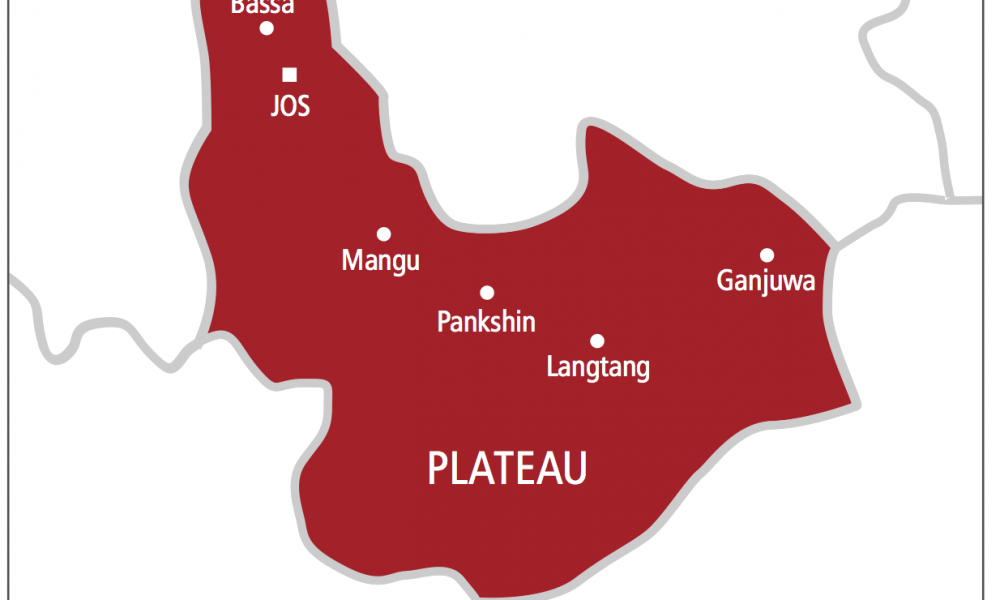
The troops saddled with the responsibility of maintaining peace and order due to the fragile peace in Plateau State have declared that there would be no Maulud procession across the state this year.

The Troops, also codenamed as Operation Safe Heaven, have in a statement signed by their spokesperson, Major Ishaku Takwa, said they had been directed “to ensure that no group organises any form of procession during the period of the Maulud.”

According to the statement, “Operation Safe Haven has noted the arrangement by some Muslim Youths on the Plateau to hold a procession to commemorate the birth of Prophet Muhammad SAW (PBUH) on Tuesday, 19 October 2021.

“Information received also indicated that the procession is organised without the knowledge of Jamaatul Nasir Islam (JNI), security agencies and the Plateau state government.

Nevertheless, the troops indicated that “While felicitating with the entire Muslim ummah on the birth of Prophet Muhammad SAW (PBUH) and recognising the right to such processions under different circumstances, it is, however, expedient to state that the fragile peace on the Plateau does not present a conducive atmosphere for any form of procession at the moment.

“Further to this, Operation Safe Haven, therefore, wishes to draw the attention of the youths and members of the public on the ban of any kind of protest and procession in force in the state.

“The Military task force encourages Muslim faithfuls to observe the Maulud without any form of procession.

“The Commander, Operation Safe Haven, Major General Ibrahim Ali has directed troops to ensure that no group organises any form of procession during the period of the Maulud.”

Recall that there were in recent months a series of ethno-religious violent attacks and reprisals that led to the death of many and many others sustained injuries.

Reminiscence of 7th September Jos Crisis

By Mohammad DonHussy

Tuesday was exactly 20 years since the breakdown of peace among communities and the beginning of the so-called ethno-religious conflict in Jos. Since then, thousands of innocent lives have been mercilessly killed, properties worth billions of naira destroyed, and hatred has been deeply entrenched, more than ever before, in the minds of the younger generation; vengeance has become a mantra on their lips. Thus, 7th September was a dreadful day that shouldn’t have repeated itself. But, unfortunately, it became the beginning of an era of chaos, conflicts and incessant killings.

Two things led to these horrible events. Firstly, religious leaders from both sides of the aisle did much to spawn the conflict either by abstaining from condemnation and reprimanding their audiences or fanning the flame with hate preachings. Secondly, and more morally reprehensible, politicians agreeably encourage the clash by not stepping up to quell the prerequisites that lead to the unrest. As a result, the conflicts have become a potent political weapon exploited by the elite to either consolidate power or amass luxury. Thus, the masses became pawns who reap the harmful consequences of the seed they never sow.

The crises have been heaped around many myths—that the conflict is an ethno-religious conflict is not only a hoax but an absurd claim that seeks to cast an illusion on the minds of the masses. Again, that Hausa-Fulanis have any grand plan to take over the helm of affairs in Plateau State is false. And, conversely, that the Christians are collectively responsible for the destruction of Jos Main Market, which plunged the Hausa’s into economic hardship, is equally false.

Few cabal members engineer these unfounded narratives to swerve the attention of the masses from demanding accountability from their incompetent leaders and have paved the way for kleptomaniacs and opportunists to reach up and embezzle our funds. To understand this better, reflect on what Samuel Ortom, the governor of Benue State, said, and I quote, “As Jesus died on the cross for Christians, I am prepared to die for Benue people.” The same person has now refused to pay civil servants their salaries and remain negligent on development and infrastructure. Scenarios similar to this are countless. By the way, Shari’a was once exploited by northern governors to mislead gullible Muslims. So it is more about vested political interests and amassing of wealth than faith or ethnicity.

Luckily, the panacea to this menace is within reach of the masses; all they need is the necessary introspection to grasp the problem for what it is: class warfare. And it’s also to resist the temptation of acquiescing in the vile tactics of divide and rule. If one scrutinises the conflicts, the masses, not elites, are constantly the victims of the mayhem. What sort of a people will be so adamant about inflicting such untold suffering to each other?

Does the killing of fellow humans strengthen anyone’s determination or make anyone’s life better? Why then the insanity and the insensitivity towards each other while those vultures are relentlessly sucking the masses and plundering the state’s treasury? The masses must understand that they share a common enemy, whether Christians or Muslims and that their enemies are within their respective faith or ethnic group. Regardless of any differences, the elite are hellbent on enriching themselves; neither their children nor closed ones participate directly in any conflict for whatever reason.

It is time for the masses to reflect on their actions, grasp reality and tolerate one other. The series of events that unfolded from the onset of the first crisis to today have caused indescribable suffering to the people of Plateau. It has slowed development and clogged prosperity. However, peace has no alternative, and tolerance is the only rational covenant.

Mohammad DonHussy writes from Jos. He can be reached via donhussy95@gmail.com.

There was no attack on luxurious buses in Jos—Plateau gov’t

By Muhammad Sabiu

The Plateau State government has debunked reports making rounds that two luxurious buses had been set ablaze in Jos.

The report indicated that 2 luxurious buses conveying about 156 Igbo passengers had been set on fire.

This is coming a few days after violence erupted, which saw about thirty people killed.

The violence led to the imposition of a 24-hour curfew in the Plateau State capital, Jos.

Debunking the purported story, Mr Lalong, in a statement signed by his Director of Press and Public Affairs, Dr Makut Simon Macham, said it“is purely the handiwork of crises merchants mischief-makers who want to create panic and instigate violence and fear among the people.

He added: “For the avoidance of doubt, the security situation in Plateau State is very much under control as security personnel have been deployed to all parts of Jos to enforce the 24-hour curfew still in force, as well as to ensure compliance with the dusk to dawn curfew in Jos South and Bassa LGAs.”

Prophetic treaty as blueprint for peace in Nigeria and beyond

By Abdullahi Adamu Faggo

There is nothing which, indisputably, guarantees peace and harmonious existence than justice. Justice alone can end banditry, kidnappings, communal clashes and ethno-religious crises, amongst others. A lack of it espouses the notion of reprisals, retaliation, and jungle justice within the affected areas. It allows marauding hoodlums, bandits and thugs to unleash an onslaught on equanimous, meek and defenceless communities. 

Islam promotes justice, provides practical solutions to lingering and inexorable brawls in different communities. Therefore, I expect that any perspicacious and sagacious leader/follower will accept that justice is the only mechanism that protects the inalienable right of everyone, guards against the plundering of properties by brigands and prevents the inviolable souls from being attacked. 

Further, most incessant attacks on various communities continue to linger because the culprits, accomplices, and syndicates usually go scot-free. For example, the recent attack on innocent Muslim commuters in Rukuba, Jos, where suspected disgruntled Christian militias killed about 28 of them in cold blood, unchallenged. The incident has portrayed the level of lawlessness and injustice in our society. Likewise, atrocities committed by some Muslim/Christian herders on both Christian and Muslim communities are also part of the examples of dominant and pervasive injustice by our leaders for deliberately refusing to bring the malefactors to book for justice to prevail.

In contrast, the system of justice, which was both advocated by Jesus and Muhammad (may Allah be pleased with them both), ensures proper retribution for the wronged, the subjugated, the oppressed and defenceless citizens. Exultantly, this system was the one that Prophet Muhammad (SAW) used to end the sustained hostility and animosity between Al-Aws and Al-Kazraz, who happened to be the archenemies of one another.

Thus, when Prophet (SAW) migrated to Madina, he signed a treaty between them (Aws and Kazraj), Muhajirun (immigrants) and even non-Muslim allies. This had provided lasting solutions that brought about peace and harmony between them. Below is part of the treaty they gave credence to in the presence of SAW, as contained in Ar-Rahiq Al-Maktoum:

1. They should resist and stand against injustice or seek to appropriate something unfairly, encroaches upon or causes mischief among believers;
2. They all should stand against one who does so even if he were one of their offspring;
3. If one kills a believer intentionally and there is evidence for that, he will be retaliated in like, unless the family of the slain person pardons him;
4. All believers are to take a stand against him;
5. A believer is not allowed to advocate or give shelter to an initiator of evil or troublemaker. 

If our society today will adhere to these teachings, extrajudicial killings will indubitably come to a standstill.

Abdullahi Adamu Faggo is an academic staff at the Bauchi State University, Gadau. He can be reached via abdullahiadamufaggo@gmail.com.