Christians

MURIC: Muslims blocked from RCCG camp to make transactions, check exams

By Uzair Adam Imam

The Muslim Rights Concern (MURIC) frowned at the Redeemed Christian Church of God (RCCG) decision to block Muslims from entering its camp to make a bank transaction or any other business in the camp located along the Lagos-Ibadan expressway.

MURIC also claimed that RCCG thwarts Muslims from entering the camp to check their WAEC, JAMB and other examinations.

Prof. Ishaq Akintola who frowned at the development disclosed this in a statement Monday and also demanded the relocation of examination centres from the RCCG camp.

“Our office has been inundated with complaints from Nigerian Muslims who have been denied access into the Lagos-Ibadan expressway camp of the RCCG.

“Among the complainants are Muslims who registered for the Joint Admissions Matriculation Board (JAMB), the West African Examinations Council (WAEC) as well as other examinations.

“Attempts by the candidates to enter the RCCG camp in order to check their examination centres are always rebuffed by RCCG security men who turn them back at the gates with clear messages that Muslims are persona non grata inside the camp.

“The second group of Muslims who are not allowed to enter are those who opened bank accounts in some of the banks located inside the camp like Eco Bank, Unity, Guaranty Trust Bank, FCMB, United Bank for Africa, Zenith and Access Bank. This ugly trend has been on for quite some time but the complaints have increased in number recently.

“It is even more interesting to note that those behind this obnoxious practice are Yoruba Christians while the victims are Yoruba Muslims. Those who talk about religious tolerance being rampant in Yorubaland have therefore missed the point.

“But the difference is the case in matters concerning religion where they operate as Christian or Muslim groups or as corporate entities. The same Christian teacher who lives in the same house with many Muslims without any problem is the same teacher who will snatch the hijab from the head of a female Muslim student in the school.

“Simply put, there is no religious tolerance in Yorubaland. That is the truth, the whole truth and nothing but the truth.

“The RCCG camp saga cited above is one good example. RCCG has used opportunities at its disposal to build a big camp on Lagos-Ibadan expressway. It has also equipped the camp with necessary infrastructural facilities including a university, schools, clinics, banks, residential houses.

“MURIC acknowledges the right of RCCG to do all these but at the same time members of the public should be given access to them. Failure to allow that access robs RCCG of an important quality and role in social relations, namely, neighbourliness and service to the people. Afterall many other entities have such facilities and keep them open to the public.

“As a way forward, we demand, first and foremost, the relocation of all public examination centres from the RCCG camp. This camp should be delisted by WAEC, JAMB, NECO and other examination bodies for practising religious apartheid.

“Any individual or institution that applies to examination bodies to host examinations must give access to the public, particularly the candidates. Anything to the contrary is arbitrary and alien to the culture of education. A situation whereby candidates of a particular religion are shut out of the premises of the examination venue is unfair, unjust and unacceptable by any standard.

“We advise Muslims to stop going inside the RCCG camp. It is private property where Muslims are not welcome. Muslims residing in the vicinity should patronise banks and other business concerns located outside the camp.

“However, we warn that banks and other business concerns located within RCCG camp may start losing their Muslim customers if they continue within RCCG camp. Our advice to the banks id to engage RCCG authorities in dialogue on this matter,” Akintola said.

On the unity of the elites and the disunity of the masses in Nigeria

By Hassan Ahmad

Isn’t it surprising that despite the widespread public outcry, there is no real effort by any arm of government, traditional rulers or influential individuals to resolve lingering strike action by university teachers? This is just one of numerous simple but logical questions we should ask ourselves. 

As diverse as Nigeria is culturally, religiously, regionally, and even developmentally, her elites are the most united people you can find. But this unity managed to be sustained with a price: making sure the masses were united in hunger, unemployment, insecurity, lack of good education, access to poor amenities and others too numerous to mention. 

For instance, only ignorance would make Christians in Plateau revolt against Ja’iz bank’s reconstruction of the Terminus market based on a PPP agreement with the state government. While a Christian-dominated government sees its benefits, the common Christian masses wouldn’t see it that way. 

Isn’t it poverty that makes the northern Muslim send his child to the city to be fed by the public under the façade of pursuing Islamic knowledge? This same man would use all his energy to defend a politician from his region because he doesn’t want another man from another area to be his president.

Then you’ll have another set of educated and informed masses. The elites use this set as defenders. They are the intermediaries between the elites and the ordinary people and serve as their social media warlords. They defend their misdoings and praise their good acts no matter how unsatisfying. These people are stuck on a narrow path. They are not meant to be offered jobs in “juicy” government organizations and parastatals according to the design made by the elites. 

President Buhari, in his Sallah message, mentioned, “We don’t have jobs in government anymore. With technology, governments are becoming smaller, nimble and efficient”. He did not lie, but the truth remains that there will always be jobs for the children of the elites. 

What is more frightening is that you’ll find even the educated folks among the masses fighting the shackles of poverty not to better themselves and show a pathway to others but to belong to the elite class and continue with the abysmal state of dualism. 

In making sure they create a small world for themselves and their progeny, the elites put aside their differences – religion, region or political affiliation. This, in no small measure, makes them comfortable. They know that no matter who is at the helm of affairs, their businesses, investments, properties and status remain intact and unchallenged. 

Hence, a business mogul from Kano can go to Lagos to establish a refinery without being uneasy about it. Likewise, another owner of a travelling company from the east can have his vehicles go round the country to fetch him money. Again, a Northern governor can give out his daughter in marriage to the son of a South-Western governor. 

But then, when you come down to the masses, the tomato seller from the North is the number one victim of regional tension in the South. So also, the Igbo trader who finds his way to the remotest village in the North becomes the victim of religious tension—forgetting that they are all victims of misrule and deliberate segregation from the elites. 

As the situation grows further, it becomes more dangerous from the masses killing their relatives in the northeast in the name of establishing an Islamic caliphate to those killing their brothers in the southeast as separatists and bandits from the northwest terrorizing the poverty-ridden villagers.  

In all these, while the masses are the perpetrators, the masses are also the victims. But things have already gone so bad. The elites, too, are not guaranteed safety if the advancing motorcade of the C-in-C can be attacked. 

At this stage, the elites are under necessary, if not compulsory, reciprocity to make Nigeria stable again. The country has done so much for them in the past. The chickens are back home to roost. There is no need to point fingers at each other. 

To do this, the government must make sure that social justice prevails over any sentimental arrangements that have been in place. The government must understand that there is too much illiteracy and poverty in the land, and since they are the primary tools that lead to criminality, efforts must be made to curb them. 

The next administration can be said to be the most important in the history of our country. It mustn’t get it wrong. 

To the masses, we should understand that we are at a crossroads. As we can see in our country’s situation, we need not be begged not to sell our votes. You can sell your votes at the expense of your safety. If things go south, the elites have places to go around the globe in their private jets. You and I will be left to face our deaths in the hands of exciting gun-wielding criminals. Some of us were already asked to take arms and defend ourselves in Zamfara and Katsina states. The handwriting is already written on the wall. 

So please, don’t sell your votes and vote wisely. 

Hassan Ahmad Usman is a student of economics at the Federal University of Lafia. He can be reached on basree177@gmail.com or 77hassan.a.u@gmail.com.

Tinubu-Shettima joint ticket and politics of religion in Nigeria

By Babatunde Qodri

The heated arguments for and against Bola Tinubu and Kashim Shettima’s joint ticket started when the presidential candidate of the ruling All Progressives Congress (APC) paid a courtesy visit to President Muhammadu Buhari in his hometown, Daura, Katsina State. The party’s flag bearer hinged his decision on the expedient need to perpetuate the stay of the ruling party in power. But, laudable as it may seem to APC lovers, Nigerians outside the ruling camp have faulted the decision citing likely consequences.

However, this short piece was inspired by a passionate conversation between one of my mentors and me. He frustratingly shared his view on the joint ticket, stressing that it is at variance with the country’s mood, especially regarding religion. According to him, the ticket became inevitable for the ruling party bent on winning elections without minding the implications for the people. He added it’s unarguably a design for electoral victory and will be tested at the polls. I agree with him.

Nigeria is a religiously polarized entity managed by politicians who deploy religion as a tool for political advantage. In a glaringly fragile country like ours, one would expect that every political decision should be underscored by the religious sensibilities of the people, at least for peace. But instead of politicians to consider this, they go about politics that stands detrimental to the country. This is what the APC Muslim-Muslim ticket suggests.

This is not to pander to the sentiments of some religious bigots whose outcry is rooted in what they stand to benefit from the calculation. Instead, it’s instructive to note that every political calculation that disregards the need for balance must be challenged. Of course, nations of the world develop without recourse to some silly religious sentiments. However, we need to be reminded that Nigeria, giving its very foundations, has been tied to religion, a consideration that political players must pay attention to.

Some might want to remind me of the June 12 1993, presidential election. Others might also talk about the 1979 election involving Azikwe-Audu and Awolowo-Umeadi combinations. Even in Nigeria of those innocent years, this presidential election ended in favour of Shehu Shagari, who used Alex Ekweme as his running mate. Nigeria is dreadfully divided along religious lines, thanks to our putrid politics. What about those who have justified the Tinubu-Shettima ticket based on competence? I have this answer for them.

Nigeria is a generously blessed country. We have Muslim technocrats who can do well in politics, so there are intelligent Christian politicians. The late President Musa Yar’adua, during his brief time in the office, used Goodluck Jonathan while Jonathan partnered with Namadi Sambo. These running mates did all they could in the course of serving their principals. If not for a decision made in response to the threat posed by influential candidates such as Atiku Abubakar (PDP), Peter Obi (LP) and Rabiu Kwankwanso (NNDP), what else explains the hypocrisy of the APC Muslim-Muslim ticket? Whatever it means to you, this decision would negatively affect the country in the following ways.

There would be an ethnoreligious tension in the country. There is no denying that ethnicity is inevitably bound to religion here. Our politics is deeply situated in religion and ethnic affiliations. Hence, people vote for a party based on how much such attunes to their religious and ethnic sentiments. And any political decision that trivializes these fundamentals might be thrashed away, and the country journeyed into needless rancour.

Plus, the ticket will hamper the chances of the ruling party in 2023. Some have argued that it’s not a threat since most votes come from the North, a region that overwhelming installed Buhari’s regime. Those people need to be told that such a point is stale in the context of reality today. Is this nice for the country in the long run? 2023 isn’t far.

Finally, a Muslim-Muslim ticket in a country beset by systemic killings and other vices inspired by religious sentiments isn’t an excellent idea. If our politics continue to disregard the fundamental polarity of Nigeria in terms of region and religion, then I am afraid the result won’t be friendly at all. However, all this is a reflection of Nigeria’s political retrogression. We need a new order where people will be convinced by neither region nor religion as the basis to choose who should lead them. I hope we get there soonest.

Babatunde qodri wrote via babatundelaitan@gmail.com.

Tinubu and the proverbial Hobson’s choice

By Sule Abubakar

The contention has recommenced, and I wonder why I should be worried over my enemy’s self-immolating adventure. The brouhaha has resurfaced, and with the usual vigour, social media has been littered with a weightless torrent of abuse, criticism and name-calling! Please, as Nigerians would say, “No dey take a panadol for another person’s headache”!

The highly controversial topic of a Muslim-Muslim ticket re-appeared soon after Bola Ahmed Tinubu officially announced Senator Kashim Shettima, the former Governor of Borno State, as his running mate for the 2023 general election. Tinubu had been on the horns of a dilemma. A situation like that demands wits because any ill-conceived decision might result in the ignominious internment of his political career.

So, Tinubu did the inevitable thing. However, in a rare moment of candour, picking a Muslim running mate is reprehensible, and, admittedly too, that’s the inescapable political cross Tinubu has to carry if really he is out to win the 2023 presidential election!

On June 14, 2022, I noted something in my article “APC, Tinubu and the Burden of a Muslim-Muslim Ticket”. I said: “First things first, one of the principal objectives of any political party is to win an election. So, without being politically correct, APC as a party is out to contest the presidential elections, and with the sole aim of winning! And since winning is their major target, they have the constitutional right to decide what could help them actualise their plans. If it’s a Muslim-Muslim, Christian-Christian, Muslim-Christian or Christian-Muslim ticket they think guarantees their victory; the sole decision is theirs to make. And if the plan unfortunately backfires, with calamitous results, it means they’ve been hoisted with/by their own petard. You can call that a Frankenstein monster!” This is still very relevant in today’s controversy over the Muslim-Muslim ticket.

The obvious truth is this, Tinubu has to pick a ‘politically relevant’ northern Muslim to strengthen his chance of winning the election because, strangely enough, that’s the only Hobson’s choice before him! Hobson’s choice simply means taking the only available option or nothing! And according to some people, making such an insensitive choice is self-immolating. But if you critically evaluate your ethno-religious sentiments, you will see that that’s the right thing any sane person in Tinubu’s shoes would do. No serious politician, especially in Nigeria, succumbs to the pressure of religious balance to their political detriment. 

Picking a Muslim running is not even destructive; not picking it would’ve been more disastrous for Tinubu and the APC! And if Tinubu had not made that objectionable choice, it would’ve even been the deadliest self-immolating political choice in his political career – because a true leader makes a seemingly unimaginable choice and firmly stands by it. And that’s what Tinubu has just done here!

According to the structure of Nigerian politics, which I have keenly observed so far, religion is only relevant to our politicians before elections. After all, elections are conducted, they jettison religion and then drift back to their sacrilegious activities. To most Nigerian politicians, religion is an art or a tool of fraudulence that they use to bamboozle gullible Nigerians. This has been happening for years, but it takes careful inspection to notice this. I laugh when I see people who blabber on social media. The earlier you know that the election isn’t won through your monotonous jeremiads and sentimental religious outbursts, the better for all of you. Please, take my analysis as one from an unbiased analyst. 

Politics thrives on the wings of numbers. That is why candidates go for running mates that give them numerical strength. Tinubu knows this; hence, his desire to go for a Muslim-Muslim ticket. So, please, you should allow him to do what he knows best for him and his party! The same way other candidates chose those they think have more electoral advantage, that’s the same way Tinubu also chose somebody he thinks has more electoral value or advantage.

But, of course, Tinubu has the right to do that because the electorate has the equal right not to vote for him. But strangely enough, that’s even Tinubu’s only Hobson’s choice! And since you all think Tinubu has reached his political plateau by choosing a northern Muslim as his running mate, you can all rejoice because of his self-defeating, self-destructive and self-immolating crapshoot! After all, in politics, the downfall of one’s opponent is savoury!

Sule Abubakar wrote via suleabubakarmark2020@gmail.com.

2023 Presidency: CAN hails picking of Kashim as Tinubu’s running mate 

By Muhammad Sabiu

The Borno State chapter of the Christian Association of Nigeria (CAN), under the leadership of Bishop Mohammed Naga, has expressed its joy over the emergence of a former governor of Borno State, Kashim Shettima, as Bola Tinubu’s running mate in the 2023 presidential election.

Recall that Mr Tinubu announced Kashim yesterday as his prospective vice president if the All Progressives Congress (APC) emerges victorious in the next year’s election.

Reacting to the development in a statement, Bishop Naga described Kashim as an unbigoted person, stressing that “those who are not from Borno State may not know, but you and I know better.”

His statement reads, “Gov. Shettima, in the history of Borno State, is the only Governor that has sponsored the highest number of Christian Pilgrims every year since 2011.

“I am speaking boldly without fear or favour because as CAN Chairman, I don’t receive salary or kobo from the Government or any institution, but the facts need to be told.

“For example, when Gwoza people were driven from their ancestral homes, they fled to Maiduguri, and the Governor personally came to CAN Centre in Jerusalem ward two times in June and July 2014. He gave N10 million for their upkeep at first instance, but the victims weren’t many. By the end of October 2014, the IDPs from Gwoza increased to 42,000 in that camp alone. Governor Shettima came again and gave another N10 million.

“He also gave an additional N5 million to Christians from Borno who fled to Cameroon to be returned home.

“Sincerely speaking, as a Christian and a preacher, absolutely, I have nothing to fear about Asiwaju’s picking a Muslim as his running mate because he is not a religious bigot, and I am happy he has made his mind known to the public in the person of his preferred running mate.

“Seeing another presidential candidate applauding him is a plus for him and supporters of Asiwaju. Congratulations to the awaiting president and vice president.”

However, the coming of a Muslim-Muslim ticket from the APC has caused a lot of reactions, with several social media-based activists vigorously kicking against it, citing the sensitive religious atmosphere of the Nigerian society as their reason for resistance.

2023: The imperative of a Muslim-Muslim ticket for APC

By Prof. Abdussamad Umar Jibia

The All Progressive Congress (APC) is undoubtedly a party that brings together some of the most outstanding politicians in Nigeria. However, what makes the APC most attractive is the fact that it is in power. It seized this power from the People’s Democratic Party (PDP), a party that ruled Nigeria for 16 years and was also adjudged a failure by the majority of Nigerians. That is why many people do not see PDP as the solution despite all the shortcomings of the APC-led government and the economic and security challenges confronting Nigerians.

One manifestation of the interest Nigerians have in the APC is the occupation of social media discussions, radio and television programmes and interpersonal group discussions by the APC Presidential ticket. Last week, Asiwaju Bola Ahmad Tinubu, a devout Muslim from Lagos, won the APC Presidential primary election with a landslide to qualify as the party flag bearer in the 2023 presidential election. As is the tradition, Alhaji Tinubu, a southerner, is expected to pick a Northerner as his running mate.

But there is also another tradition. Christian flagbearers usually pick Muslim running mates, and Muslim flagbearers choose Christian running mates. The examples are many. In fact, since Nigeria’s return to party politics, that has been the case. First it was Obasanjo/Atiku, then Yaradua/Jonathan followed by Jonathan/Sambo and now Buhari/Osinbajo. But in all these examples, the Muslims are Northerners, and the Christians are southerners. There is no problem since it can be said with a reasonable degree of accuracy that Christians are the majority in the South and a negligible minority in the North.

Now, should Asiwaju pick a Northern Nigerian Christian as his running mate? I listened to many arguments. The Governor of Kaduna State, Mallam Nasiru El-Rufai, for example, said religion does not matter in the choice of a running mate. What matters, according to him, is competence. This argument is faulty because democracy is about the choice of the majority, a choice characteristically influenced by many factors, including ethnicity, religion, gratifications, etc., in our country. If it is just about merit, candidates would be selected based on their performance in a standard examination on governance organized by my colleagues in Political Sciences Department.

The position of the Christian Association of Nigeria (CAN) is the most uncouth and uncivilized. CAN thinks they have a monopoly for violence and always use threats instead of valid logic. Suppose their position was backed by sound logic. In that case, all they have to do is present their arguments to Nigerians including Christians and non-Christians like every other individual and group does. The rest shall be for Nigerians to judge. Again, in politics, threat is the language of someone who has no one to influence, and it is obvious that peace-loving Nigerian Christians have lost faith in CAN and are no longer controlled by its rantings.

The fact is, any step taken by a political party preparing for an election is carefully handled to attract majority votes from the electorates. This includes the choice of its flagbearer and their running mate, its manifesto, which, unfortunately, most Nigerian voters do not read, its campaign strategy, etc.

Now, who are the majority voters in Northern Nigeria and what is their relationship with the minority? What would happen to the chances of APC if this majority realizes that the party is succumbing to threats like that of CAN to select its running mate? Is it by force to vote for the ruling party after all? Can’t they look and vote for an alternative?

Religion was not captured in the 2006 census. Still, we can have a good idea of the Muslim: Christian ratio in the North by considering the ratio of elected politicians in the North. Of the 19 elected governors in the North, 16 are Muslims representing 84.2 %, while three are Christians representing 15.8 % in the North and 8 % nationwide. Of the 58 senators from the North, nine are Christians representing 15.5 % in the North and 9 % in the entire country. In the North Central geopolitical zones, there are more Muslims than Christians. Four of the North Central elected governors are Muslims, with the other two being Christians.

These figures mean Northern Christians are a tiny minority compared to their Northern Muslim compatriots. Their number is even smaller when the country is considered as a whole and much smaller if we remember that most Christians in the North would not vote for APC regardless of its flagbearer or his running mate. You may wish to look at the voting pattern of Benue, Taraba and Southern Kaduna.

Over the years, activities of groups like CAN have set the Northern Christian minority against the Muslim majority. It is so bad that in any Northern Nigerian community where Christians are the majority, the story is about hate and violence against Muslims. The examples are many.

For example, as I am writing this piece, there is no single Muslim left in Tafawa Balewa, the hometown of the first Nigerian prime minister. The few Muslims who have not been killed have migrated to Bauchi and other places. Incidentally, that is the constituency of Yakubu Dogara, one of the Northern Christians being mentioned in the selection of a running mate for the APC flagbearer. In the event Dogara becomes the running mate of Asiwaju, the question every Northern Nigerian Muslim would ask is, is it compulsory for me to vote for my killer?

Other examples of Christian communities known for their violence against Muslims are Plateau State and Southern Kaduna. Over the last several decades, whole Muslim communities have been attacked and nearly wiped out in these places. Yet, when commissions of enquiry are set up, the grievances of the Northern Christians have always been that emirs dominate them, their great grandparents were enslaved, they are not given opportunities, etc.

Muslims have made many overtures in states where they have the majority in order to take Christians along and make them feel at home. An example of this is Kaduna state. It has always been ensured that the Deputy Governor of Kaduna is a Christian even though a Muslim-Muslim ticket can win with a landslide, as demonstrated in 2019. In their efforts to give Christians maximum opportunity, Muslim politicians were once suppressed to allow a Christian to become the governor. Where in the whole of the Christian world has this ever happened?

Moreover, chiefdoms were created for them by the Ahmed Makarfi administration to address Christians’ complaints of being traditionally ruled by emirs. After all these overtures, the same people killed over 1000 Muslims on one day in Zonkwa. Those who are saying that appointing a Christian as the running mate of Asiwaju would bring Christians and Muslims closer are probably not aware of this.

Compare the case of Kaduna with that of Plateau. Plateau has a population of Muslims equivalent to the population of Christians in Kaduna State. Yet, a Muslim has never been a Deputy Governor, much less a Governor. Attacks on Muslim communities in Plateau and Southern Kaduna only ceased because of the Fulani herders who, unlike the Hausa, would always take revenge when attacked. When the intolerant Christians realized it was a war they could not win, they had to declare peace.

That does not mean Muslim travellers are not intercepted in Plateau and massacred. We are very much aware of the murder of General Idris Alkali by Lafendeg non-Muslims. Yet, somehow, all the suspects arrested have been released due to the influence of the Governor, Simon Bako Lalong. We saw how he was running up and down between the state house and the Defence Headquarters to ensure that the culprits were not punished. Today, not even a fly of Plateau state has been convicted due to the murder of General Idris, a high-profile Muslim Army General.

Those pushing for Lalong to become Asiwaju’s running mate are probably ignorant of this. Suppose Lalong, who is only a Governor can successfully follow up to ensure that murderers of Muslims are not punished. What would happen if, tomorrow, he sits as the Acting President with full control of the country’s security apparatus and a similar thing happens?

Now take Babachir Lawal and the more charismatic Boss Mustapha. Both are from Adamawa State and were appointed by President Muhammadu Buhari only because he is Buhari, the darling of Northerners. The only question I have here is whether they have the political strength to defeat Atiku in their state. Certainly no. Outside Adamawa, other rules apply.

This write-up is not meant to malign any politician. On the contrary, all the Christian politicians I have mentioned above have APC dear to their hearts and wouldn’t like to see it lose at the polls. That is also the intention here.

Northern Nigerian Christians have not adequately prepared themselves for elections at the National level due to unnecessary inferiority complex and hate towards their Muslim neighbours. Of course, there are outstanding ones among them as no rule exists without exception. However, the collective behaviour of a community is used to assess people anywhere.

For now, Northern Christians may wish to set their house in order and plan for the future. Elections are not won by threats but by careful planning and building bridges.

Professor Abdussamad Jibia can be contacted via aujibia@gmail.com.

Arrest Owo church killers now – MURIC

  • News Desk

The Muslim Rights Concern has strongly condemned the terrorist attack on worshippers inside the St. Francis Catholic Church, Owo, Ondo State. The attackers killed dozens of worshippers during service today, Sunday, 5th June 2022. MURIC has called for the immediate arrest and prosecution of the attackers.

MURIC spoke via its director, Professor Ishaq Akintola. The statement reads :

“Dozens of worshippers were killed inside the St. Francis Catholic Church, Owo, Ondo State today, Sunday, 5th June 2022. We strongly condemn this act of unprovoked aggression. It is inhuman, heinous, horrific and horrendous.

“We call for immediate arrest and prosecution of the attackers. We charge the Inspector General of Police as well as the Ondo Police Command to find the killers without delay. They must be pursued to the most remote corners of Nigeria. These murderers must have no hiding place.

“In particular, we implore President Muhammadu Buhari to order the Nigerian Army to get involved in the search for the killers. This latest attack is indubitable evidence of the existence of Boko Haram in the South West after their penetration into Niger and Kogi States.

“Going by Boko Haram modus operandi, we warn that mosques and more churches may be the next targets because this was how they started in the North. We, therefore, ask for protection for all churches and mosques in the region.

“MURIC sympathises with victims of this barbaric attack. Our hearts go to the families of the dead. Our prayers also go to the wounded and their dependants. We stand in solidarity with the state governor, Arakunrin Oluwarotimi Akeredolu in this hour of deep sadness”.

Should Muslims go dialoguing? The roadmap to understanding ‘interfaith’ in Nigeria

By Sadiya Abubakar Isa, PhD

It appals me to see the Muslim North divided on a trivial yet substantial religious issue like ‘interfaith’. I have for long heard Muslim clerics discrediting the whole idea of interfaith since the establishment of its centre in Bayero University Kano – one of North’s prestigious universities, something which was otherwise not their business. Still, thanks to this institution, interfaith is now localized enough to get such stimulating clerical attention in Northern Nigeria.

Having had the opportunity to study Islamophobia exploringly, I would say interfaith is significantly relevant where the identity of Islam is greatly contested. By definition, interfaith, whether as a dialogue in research or academic discourse, revolves around the peaceful, complaisant, and constructive interaction between people of different faiths for mutual benefit. It involves striking balance, a tolerable understanding of such interrelationships and beneficial engagements through dialogues, academic events, and activities aimed at peaceful coexistence. To say all these aren’t relevant for a Muslim community is a dismal misunderstanding of the whole concept and reasoning of interfaith.

The world witnessed an unprecedented rise in Islamophobia shortly after 9/11; statistics show that Islamophobia reached its peak in 2016. If you reside in the Western world in the decade after 9/11, you will understand the intricacy of the threat Islamophobia puts Muslims into. Especially for Muslim women who are more obviously identified than their male counterparts. Muslim women were subjected to hate speech, discrimination, and abuse, thanks to the incessant misrepresentation of Islam and Muslims in the Western media. Since the Muslims are a minority in such Western countries, their religious identity was at stake. As such, the results were provocative political discourses, foreign policies and the whole activities of the Islamophobia industry vigorously tarnished the image of Islam beyond doubt.

Islam was always portrayed as an intolerant and backward religion that advocates terrorism. Muslim men are seen as utter misogynists, violent, barbaric, and bloodthirsty fanatics, while Muslim women are said to be oppressed, voiceless, helpless, and subordinate in dire need of immediate liberation. Now, this has been the case centuries before 9/11, but the Orientalism surged after 9/11 because there was an agenda to create fear of Muslims and control the world using that purported fear—New World Order?

Consequently, 9/11, subjugation of women in Afghanistan, terrorist activities by ISIS, Boko Haram etc., were leveraged as justifications for those claims. The average Westerner believes every accusation about Islam and has little or no interest in discerning the images. One may ask, so what if they believed?

The consequences are bigotry against Muslims, vandalism of religious places, hate speeches, discrimination, loss of jobs (or other vital opportunities), rejection in the community they ought to belong to, and the worst is loss of lives. We have seen so many Islamophobic attacks on the Muslims, the New Zealand mosque shootings, for example. This misconception renders the Muslim communities in the West vulnerable. It puts them in constant fear of perceived danger and, consequently, loss of faith. Yes, look at it from the perspective of younger generations struggling to fit in.

Among many other factors, I acknowledge the efforts of Yaqeen Institute by Sheikh Omar Suleiman, a Palestinian American scholar. He has taken the lead in fighting Islamophobia through interfaith dialogues, among other methods. Why shouldn’t the Muslims engage in interfaith dialogue when it has been an avenue for discussing the Muslims’ predicaments? It has given Muslims a platform to talk about their real lives and share their religious practices contrary to the media’s narrative.

Interfaith dialogue has helped quell the flame of hate. It has given Muslims the room to openly operate as an inclusive religion – with lots of global moves to ascertain cultural harmony. It has opened laypeople’s minds about Islam which they would otherwise have remained unaware of. It has opened the door for discussion of religious differences politely and positively, which pushed many non-Muslims toward studying Islam.

Do you know the result of this increased curiosity about Islam? Acceptance of Islam, the Christian West has seen rapid growth in conversion to Islam. So, where is that extreme hate of Islam/Muslims today? Alhamdulillah, there is a significant improvement in the situation, thanks to interfaith dialogue, among other efforts taken by anti-Islamophobes.


So is interfaith precarious to Muslims in Nigeria? Why all the debates?

Would Nigerians understand the need for an interfaith dialogue without foreknowledge of Islamophobia, global diplomacy and religious inclusiveness? It’s a fact that Muslims aren’t a minority in Nigeria, but ethno-religious crises are still ravaging, in the North especially; crises in Jos and Kaduna would have been addressed amicably if the interfaith dialogue was well embraced. It is utterly disconcerting to say that, in this age, people are having religious disputes.

Similarly, Boko haram has been synonymous with Islam in Nigeria in that it is always referred to as an ‘Islamic terrorist group’. Don’t we need to dispel the myth of Islam advocating terror in Nigeria? Are Muslims too big to have a peaceful inter-religious conversation in Nigeria? Are we blind to the fact that Islam is under attack in Nigeria? When professor Farooq Kperogi wrote on Islamophobia in Yorubaland, I was bemused because I never expected that of all the tribes in Nigeria, Yorubas would discriminate against their tribespeople based on religion. The rapidity at which Islamophobia is manifesting in Nigeria is quite alarming. Nigerian Christain’s support for Donald Trump in the last election spells out their desperation for Muslims’ continued exclusion.

Religious harmony is still farfetched in most regions of Nigeria. We are just pretending to be harmonious and tolerant. Little wonder how minuscule events easily trigger provocation. We need to talk about our differences positively and engage in healthy interactions to progress as a nation. Colonialists already bond us together, so unity in diversity becomes a necessity. Or do we wait until our children begin to ask us questions before we get to talk about our differences nicely? If not for anything, interfaith in Nigeria will allow non-Muslims to learn about your faith – Islam. Isn’t that a form of da’awa?

My research acknowledges how interfaith dialogue in the US, Europe and other parts of the world contributed to the curbing of Islamophobia by promoting peaceful coexistence. So to use religion to relegate the whole idea is quite imprudent. To quote Shafiq, Muhammad, and Mohammed Abu-Nimer, the authors of Interfaith Dialogue: A Guide for Muslims, “although a relatively modern term, interfaith dialogue has, in fact, had a long and enduring history for Muslims, underscored by a spirit of genuine inquiry and respectful exchange. The primary role of interfaith dialogue is to remove misunderstanding and accept difference….”

Some Ulamas in Nigeria have taken a critical stance on this matter. I listened to one yesterday opening that interfaith is an extension of secularism. While I appreciate his disposition, I beg to disagree that ‘we don’t need interfaith’ due to his stated reasons. It should be at the participant’s discretion to know the aim of every dialogue before engaging in one. My focal point is that whoever participates in interfaith dialogue should be cognizant of their religious jurisdiction and wary of their intentions. I kindly advise our Ulama to focus on ways to religiously liberate the Northerners from the abject poverty that has infested this region instead of the debates surrounding the appropriateness of interfaith – which is long overdue.

Dr Sadiya Abubakar Isa is interested in research related to Islamophobia. She can be contacted via sadeeyaa@yahoo.com.

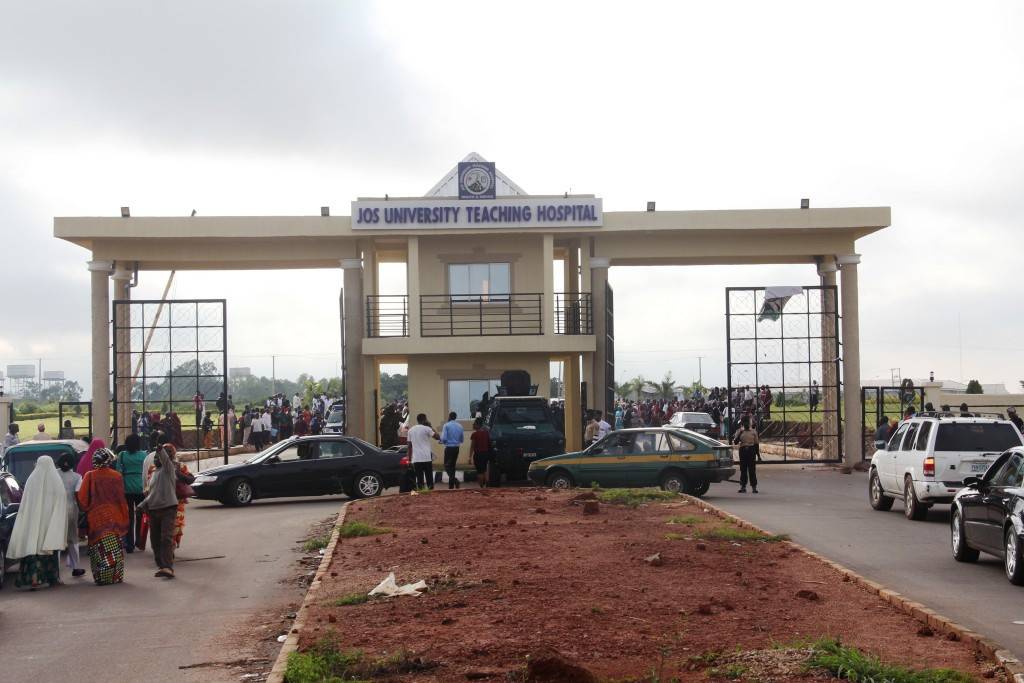
Probe JUTH over anti-Hausa-Fulani activities – MURIC

News Desk

An influential newspaper, the Daily Trust, yesterday published a damning report on discrimination against Hausa-Fulani Muslims resident in Jos, Plateau State, who are being forced by record officers at the Jos University Teaching Hospital (JUTH) to change their states of origin and local government areas before they can register to see a doctor.

Meanwhile, an Islamic human rights organisation, the Muslim Rights Concern (MURIC), has waded into the matter. The organisation described the forceful change of states of origin as ethnic cleansing and unlawful de-indigenisation. MURIC demanded a probe into the allegation.

This was contained in a press statement issued on Sunday, March 20, 2022, by the director of MURIC, Professor Ishaq Akintola.

The statement reads:

“An influential newspaper, the Daily Trust, yesterday published a damning report on discrimination against Hausa-Fulani Muslims resident in Jos, Plateau State, who are being forced by record officers at the General Out-Patient Department (GOPD) of Jos University Teaching Hospital (JUTH) to change their states of origin and local government areas before they can register to see a doctor.

“This, indubitably, is ethnic cleansing and unlawful de-indigenisation. It is horrendous, detestable and despicable. It is the most odious and insidious marginalization and encroachment on Allah-given fundamental human rights of any tribe that ever happened on Nigerian soil. It is unlawful, illegal, illegitimate and unconstitutional. We, therefore, demand full investigation which should start with immediate effect.

“It is highly appalling. We cannot imagine such inhuman practice happening to Nigerian citizens in a Nigerian state. Such audacity is criminal. There must be consequences for such temerity for the culprits, their sponsors and those who are encouraging them.

“The probe should unearth the identities of all the victims from the time the evil practice started with a view to reversing the wicked acts and restoring the states of origin and local governments of the victims.

“We are shocked that such a discriminatory practice is being allowed in a federally funded hospital where people’s state of origin should not matter at all, particularly for health care delivery. It points to the likelihood of more egregious and horrifying things happening in hospitals belonging to the Plateau state government.

“There is no doubt that the state government is complicit and should be held responsible. It is impossible that this highly reprehensible practice is happening without the knowledge and tacit approval of the state government. It is a big shame that this kind of illegality is being promoted by a state governor who swore to uphold the constitution and to provide welfare services to people of the state. Conscienceless power is subjugating powerless conscience.”

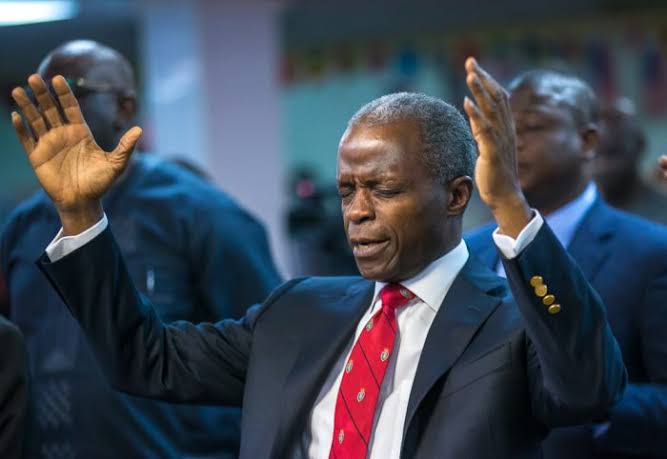
RCCG’s support for Osinbajo shows his narrow mindedness – Farooq Kperogi; others react to church’s political move

By Ahmad Deedat Zakari.

Professor of Journalism and Emerging Media at Kennesaw State University, Farooq Kperogi, has faulted the Redeemed Christian Church of God’s interest in partisan politics. 

Kperogi expressed his disdain regarding the church decision on his verified Facebook account on February 10, 2022, in an article titled “RCCG’s Dangerous Foray into Politics for Osinbajo.”

He said he was not surprised at the church’s sudden interest in partisan politics. 

“This isn’t really surprising, frankly, because Pentecostal Christians see Osinbajo as their representative in government and think he is the fulfilment of Pastor Enoch Adeboye’s oft-quoted prediction that one of them would become Nigeria’s president during his lifetime.”

Kperogi also threw a subtle jab at President Muhammadu Buhari, faulting Osinbajo’s rise to the presidency as a ploy to burn the notion that the president is a fanatical Muslim.

He also described Osinbajo as a pentecostalist whose inner circle are his fellow pastors and churchgoers. 

“Osinbajo himself defines his role in government in the narrow terms that his co-pentecostalists see it: as the materialization of a Pentecostal Christian theocratic dream. That’s why his inner political circle is almost entirely made of Yoruba RCCG members,” he wrote.

Kperogi further argued that Osinbajo is not fit to be president. 

“There’s no Christian in government in Nigeria’s history who has ever been as narrow-minded, as culturally clueless, and as insular as Osinbajo, which was why, a senior Yoruba Christian professor told me recently that Osinbajo would “create greater instability as president” than Buhari has because “The Sharia folks will confront [Osinbajo’s] Christian fundamentalism with more violence” which would precipitate disabling communal upheavals.”

Several people have also reacted to the development. 

Aisha Yesufu, a human rights activist, in a Tweet said there is nothing wrong with the church supporting Osinbajo

“So let’s assume RCCG is doing this for Osinbajo, what is wrong with that? Why shouldn’t RCCG support a candidate? If the candidate is good, we vote. If the candidate is bad, we do not vote! Simple! RCCG have (sic) as much right to be interested in politics as anyone else.” She tweeted

Also reacting to the news on the Daily Reality Facebook page is Mallam Muktar, who condemned RCCG’s political move, said that “religious leaders participation in politics will lead to divided allegiance”.

“It will be devastating to hand over Nigeria presidency to religionists/extremists whether pastor or Imam because their first allegiance will invariably go to their faith. They are the propelling force behind the clamour for religious configuration of contesting persons and religious blackmail of our electoral process. Who knows, they might also be behind the continuous blackmail of that notable SW Muslim presidential aspirant and political benefactor of their man, who may be perceived as their major obstacle to the presidential ticket.

“Nigeria doesn’t need such leaders. Nigeria needs [a] liberal Muslim and Christian who only fear God but [is] not bound by a non-displaceable religious creed or allegiance. We should resist and shake off religious politics in 2023 by demystifying religion configuration ticket and by voting for liberal candidates with total disregard to their faith,” he concluded.