Champions League

Ballon d’Or and the credibility question

By Amir Abdulazeez

I am writing on this not because I have any significant concern for the award or its credibility, or because it has any correlation with the well-being of anybody in need (which I am often more concerned about). I am doing so instead due to the massive perennial debate it generates, especially among youths in Nigeria, as well as the misinformed opinions surrounding it. 

Again, the Ballon d’Or, like football itself, has transcended sport to become part of international politics and history. I became shocked when I saw a globally renowned Muslim scholar congratulating Ousmane Dembele for winning the 2025 version and hailing its award to a ‘practising Muslim’. Obviously, the crown now carries political significance that stretches well beyond the pitch. 

Since its inception in 1956, the Ballon d’Or has been regarded as football’s most prestigious individual award. Founded by France Football (conceived by sports writers Gabriel Hanot and Jacques Ferran), the award was initially designed to honour the best European player annually, with Stanley Matthews of Blackpool becoming the pioneer winner. Later, it evolved into a global prize, celebrating many other icons. Many have rightly questioned the credibility of the award, but mostly on myopic grounds centred around player and club sentiments. However, as a long-time football observer, I believe there are much broader issues regarding the credibility of the award that are worth discussing. 

Let us start with the politics. During the Cold War (1947-1991), Eastern European players (more aligned to the Soviet Union) often struggled to receive equal recognition despite dazzling performances, while Western European stars (more aligned to the United States and friends) enjoyed more favourable media attention. Although Russian goalkeeper Lev Yashin won the award in 1963, many argue that his case was only the exception that proved the unwritten rule of ‘politics, geography, and media exposure consistently play decisive roles’. Today, the award continues to reflect broader inequalities in the sport of football. European clubs dominate global coverage, which inflates the recognition of their stars. Players performing in less visible leagues, whether in South America, Africa, or Asia, rarely receive consideration, even if their contributions are extraordinary. 

Another concern is the award’s inconsistent eligibility rules over time. Until 1995, only European players competing in European clubs were considered, excluding legendary figures such as Pelé and Diego Maradona from even receiving a nomination. It was only after a rule change that non-Europeans in European leagues became eligible, allowing George Weah to win in 1995. Yet, by then, the award had already excluded decades of worthy non-European and non-European-based winners. Mild allegations of racism also cast a dark shadow over the award. Many believe players like Didier Drogba, Samuel Eto’o, Yaya Touré, Sadio Mané and Mohammed Salah were routinely ranked below their pedigree. In 2021, French pundit Emmanuel Petit openly questioned whether African players were judged by double standards. 

The selection of voters itself raises concerns. Initially restricted to journalists, it later expanded between 2010 and 2015 after a merger with FIFA’s “World Player of the Year,” adding coaches and captains to the electorate whose votes often reflected tribal, national or club loyalties rather than merit. The 2016 reversion to journalist-only voting may be a tacit admission of voting flaws, thereby creating difficulties in making comparisons across eras. For example, Lionel Messi’s consecutive wins (2009-2013) under a global, mixed electorate cannot be objectively compared to Michel Platini’s (1983-1985) under a European-only jury. The current co-organisation with UEFA, which began in 2024, signifies another attempt to lend the award more institutional weight. However, the constant changes in its format and governing alliances suggest an award in search of a stable identity, struggling to balance its commercial ambitions with its original purpose.

Bias towards attacking players has been an emerging hallmark of Ballon d’Or selections. Legendary defenders like Paolo Maldini, Alessandro Nesta, Sergio Ramos and Roberto Carlos, who defined an era of defensive excellence, always fell short. The exception of Fabio Cannavaro in 2006, along with a few others in the past, after a World Cup-winning campaign with Italy, serves as a testament to the rarity of a defender being recognised. 

More recently, Virgil van Dijk’s 2019 narrow runner-up finish sparked debate about whether non-attacking players could ever realistically win in a sport increasingly obsessed with goals and flair. The award relies heavily on football journalists who often prioritise goal highlight reels, statistics and global recognition over tactical nuance and defensive brilliance. Strikers and playmakers dominate the headlines that directly feed into voting behaviour. 

To combat positional bias, a more revolutionary approach could be implemented: nomination by quota. Why not have separate shortlists and voting panels for goalkeepers, defenders, midfielders and forwards? The top three or five of these categories could then be considered for the overall voting and eventual award. This would ensure that the unique skills of each position are evaluated by those who best understand them, guaranteeing that players are judged on their specialisations rather than against others with contrasting roles. 

The criteria for judgment also lack clarity and consistency. Officially, the award considers individual performance, team achievements, talent, fair play and career consistency. In practice, however, voters often seem swayed by a single outstanding tournament or by sentimental narratives. Luka Modrić’s 2018 victory after Croatia’s World Cup run exemplified this. While Modrić was superb, critics argued that other players had stronger year-round performances, but the emotional weight of Croatia’s fairy tale run tilted the scales. But how come this same emotion did not sway voters to select any player from Leicester City’s 2016 Premier League incredible winning team? A pervasive, though often unstated, criterion for many voters is team success. 

To win the Champions League or a major international tournament has become almost a prerequisite for contention. This creates an inherent unfairness, elevating players in dominant teams while punishing extraordinary individuals in less successful sides. This inconsistency reveals a fundamental confusion: is the award for the “best player,” “most popular player,” or the “most successful player”?

The timing and calendar controversies are another issue. International tournaments occur every two years, creating periods where national team success heavily influences voting. World Cup years traditionally favour tournament winners, regardless of club form. The recent calendar change, from July to August, aimed to address this imbalance but created new problems, with voters now contending with assessing performances from overlapping seasons and tournaments. This temporal confusion affects not just voting patterns but also the public’s understanding of what the award represents: is it recognition for calendar year performance, season achievement, or tournament success? The 2013 Ballon d’Or win by Cristiano Ronaldo was criticised following timing inconsistencies due to odd deadline extensions. The current system, which allows a player to win a major tournament in the summer and have their performance rewarded a year later, creates a disjointed narrative. 

The question of authority is another big one. FIFA represents 211 national associations, UEFA oversees European football’s institutional framework, yet it is a private French publication that bestows football’s most prestigious individual honour. The comparison with FIFA’s The Best awards and UEFA’s Player of the Year exposes this imbalance. This raises the paradox: why should a magazine possess such outsized influence in determining football’s most prestigious individual accolade, overshadowing awards backed by governing institutions? While there is nothing fundamentally wrong with this, it only emphasises the need for France Football to show more responsibility by sanitising and standardising its award.

I am not in a position to coach France Football on how to reform its awards to minimise the credibility dilemma; they have much better experts who can do that. My concern is to see young football followers and analysts become more informed and equipped for deeper debates that are beyond sentiments. My other concern, which has little to do with the Ballon d’Or, is to see football giving a little back to its estimated 3.5 billion fans that have made it powerful. While fans give it a lot, the sport appears to be offering almost nothing significant in return. 

It is sad to see football remaining silent, biased and indifferent in the face of global oppression and injustice. While it took FIFA and UEFA just four days to suspend Russia after it invaded Ukraine in 2022, both bodies have remained criminally silent for over two years since Israel launched its genocide on the football supporting people of Palestine.

Amir Abdulazeez, PhD, can be reached via abdulazeezamir@hotmail.com.
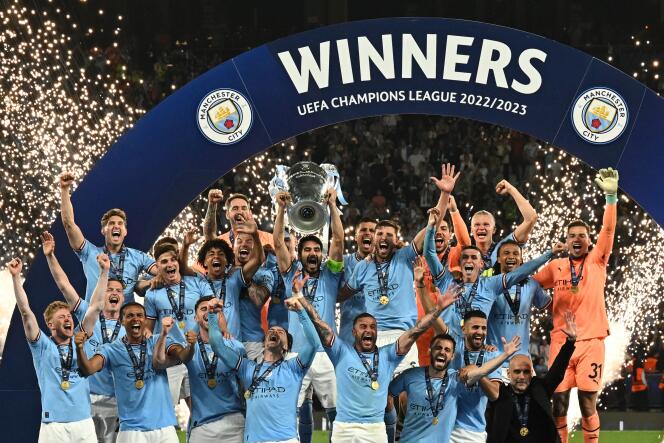
On Manchester City’s treble hangover

By Aliyu Yakubu Yusuf

It is challenging for any group of players that has won all the available trophies on offer to maintain the same focus and motivation the following season. There’s only one way for any club to win a treble of league title: UCL and the domestic cup. That way is downwards. In this context, I am not overly surprised about Manchester City’s struggles so far this season.

Pep Guardiola is a gaffer who prioritises control and patient buildup in the middle of the park. The current Manchester City team lacks these attributes. Their matches are often chaotic end-to-end affairs that produce plenty of goalscoring chances. This isn’t a quintessential Guardiola team that routinely deprives their opposition of a sniff of the ball, let alone scoring opportunities. I attribute Manchester City’s recent travails to three critical factors:

1. Rodri’s frequent suspensions

Manchester City have lost four games so far this season. A common denominator in all these games is that Rodri missed ALL of them. Make that what you will.

2. Kevin De Bruyne’s Injury

Do I even need to mention the importance of the blond Belgian to this team? Julian Alvarez has deputised in the KDB role, often admirably. However, the Argentine is no midfielder and will never bring the same midfield control and assurance.

3. Gundogan’s Departure/Kovacic’s Poor Form

Pep Guardiola signed the Croatian as a direct replacement for Ilkay Gundogan, who left for a Bosman ruling in the summer. The German was a cornerstone for Manchester City for several years. True, Kovacic is no Gundogan. Still, he has often been poor whenever he steps onto the pitch. He was subsequently relegated to the bench. Guardiola and City surely expected more from the former Inter Milan, Real Madrid and Chelsea man.

There you have it. For the record, I still expect Guardiola to sort things out and mount a title challenge as usual. Come the end of the season, the Citizens will be there or thereabout. Write them off at your own peril.

Aliyu Yakubu Yusuf wrote from Kano, Nigeria. He can be contacted via aliyuyy@gmail.com.

It’s all to play for at the Etihad Stadium

By Aliyu Yakubu Yusuf

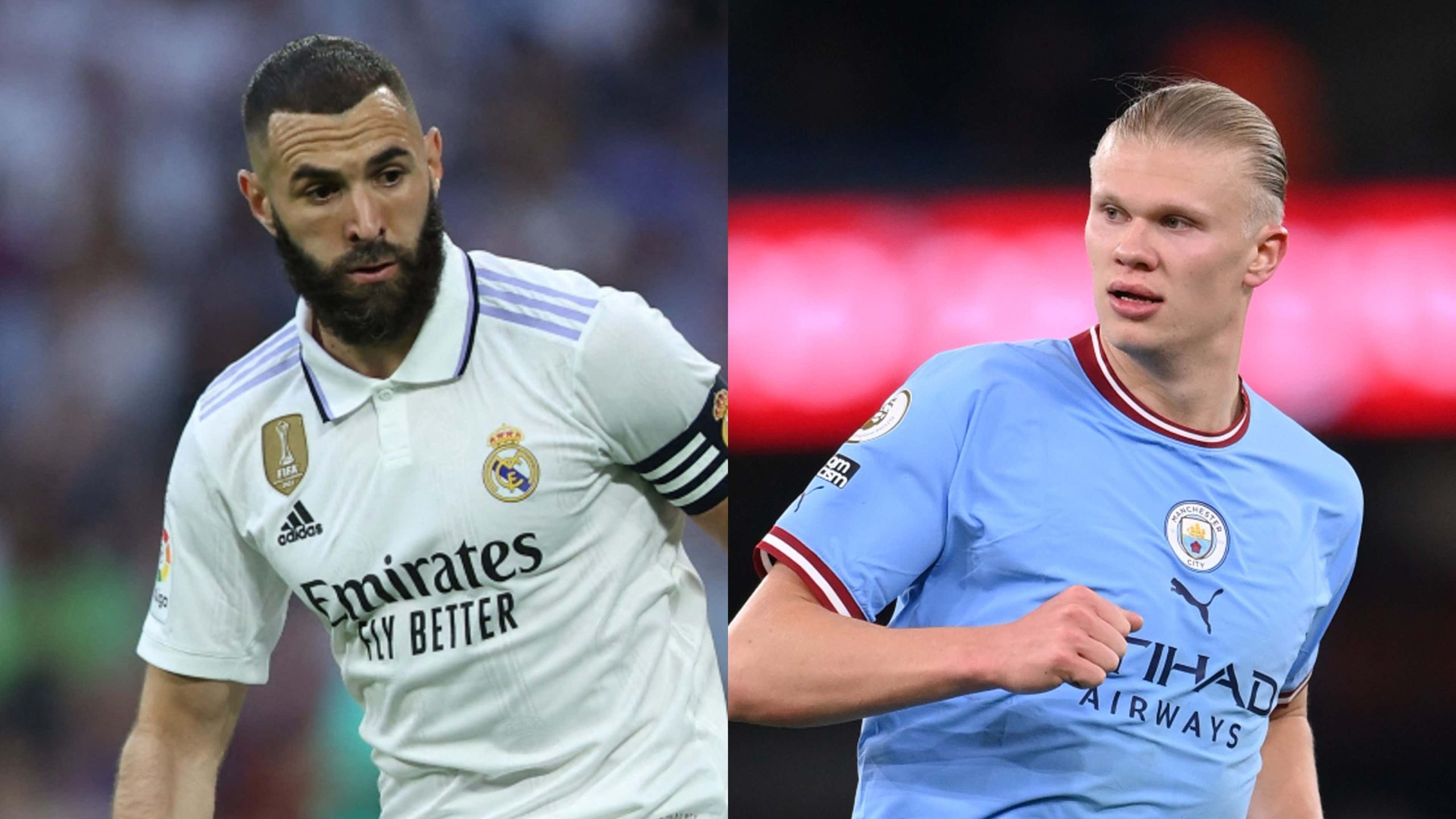
Real Madrid and Manchester City played quite an entertaining one-all draw at the Estadio Santiago Bernabeu. The much went as much as I expected it, with Manchester City dominating the possession, trying to dictate the tempo of the game and Real Madrid pressing the City players, trying to disrupt their rhythm and attacking at full pace through the electric Vinicius Jnr and the young prodigy, Rodrygo Goes.

That was the pattern for much of the game. Real Madrid will be a bit disappointed for not registering a win (no matter how slender) ahead of the second leg next week. Of course, it’s easy to criticise Guardiola for settling for a draw. But come on! We are talking about a FIRST LEG of a UEFA Champions League semi-final. Do you seriously expect any serious coach to attack Real Madrid all guns blazing and risk getting hammered via counter attack?

True, Manchester City players looked tired and disjointed in the closing stages of the game. I expected Guardiola to introduce Mahrez, Alvarez and/or Foden in place of largely ineffectual Bernardo and Grealish. But do I think I know better than Pep Guardiola?

This game can still go either way. Expect that when you are playing against Real Madrid in the UCL. However, from the result of the first leg, Manchester City will be the happier side. They played largely well below their capabilities (thanks to Real Madrid’s game plan and management) and still came out of the mighty Santiago Bernabeu unscathed.

On for the second leg!

Aliyu Yakubu Yusuf wrote from Kano and can be reached via aliyuyy@gmail.com.

Bayern suspend Mané for punching Sané

By Muhammadu Sabiu 

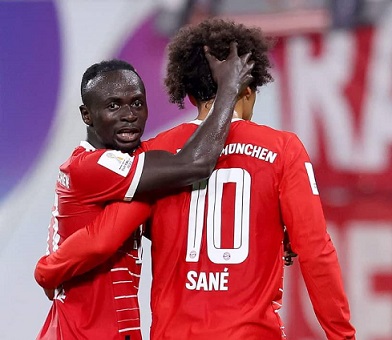
Bayern Munich have suspended Sadio Mané after he punched his teammate Leroy Sane.

Following Bayern’s 3-0 loss to Manchester City on Tuesday night, Mane and Sane got into an argument in the dressing room.

The Senegalese international confronted Sane after the game because he was upset with how Sane treated him on the pitch.

He lost his cool and hit Sane in the face, leaving him with a bloody lip.

The suspension, according to reports, is until further notice.

Giroud to the rescue as the Maldini dynasty continues

By Musa Abdullahi Kaga

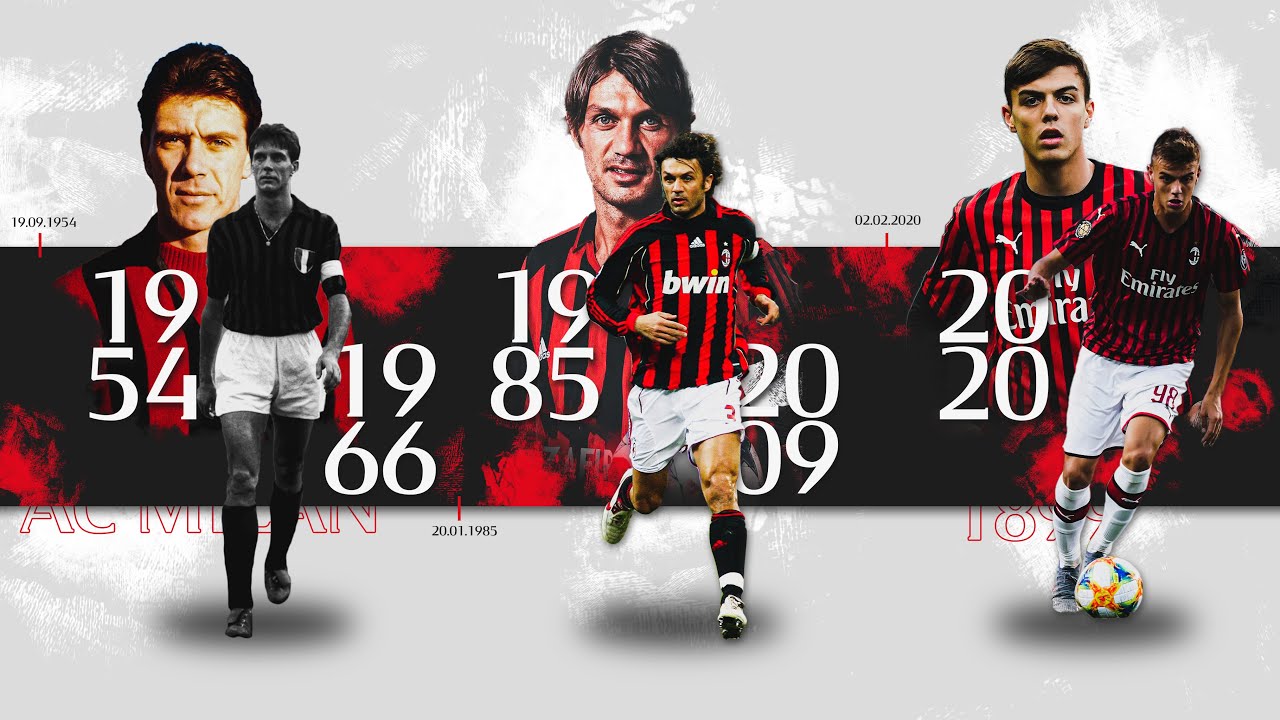
The name Maldini is synonymous with Milan, as it is impossible to talk about Milan’s history without mentioning the Maldinis. In fact, the name is almost synonymous with football itself. Just as the likes of Maradona, Pele and Cryuff, the Maldinis have crafted their names on the golden stones of football history, only that there’s was even more spectacular – Grandfather, father and now the son, all following the same path.

The dynasty began in 1954, when the Italian centre-back, Cesare Maldini, made his debut for the Rossoneri. Due to his impressive leadership qualities and team spirit, he was rewarded with the captain’s armband just a year after his move to Milan from Triestina. He had 12 illustrious seasons with Milan, lifting four league titles and a European cup (now Champions League) in the process. Cesare had the privilege of being the first Italian to lift the then European cup, and of course, Milan was the first Italian team to win the title.

Cesare, named after the Roman emperor, had excellent technique and passing range. He was known to be imposing in aerial duels and had an outstanding reading of the game with anticipation. As a defender, despite having hundreds of caps for both club and country, he was only booked five times and sent off once in his entire career, solidifying his place in the list of the greatest defenders to have graced the game – the likes of Sergio Ramos could only dream.

Cesare Maldini made his final Milan appearance in a 6-1 triumph over Catania on May 22 1966, only to return as a coach six years later. The dynasty continued as a certain 16-year-old boy made his Milan debut in 1984 – Paolo Maldini, making an incredible 902 appearances during an illustrious 25 years career, winning 23 major trophies in the process. One of the few ‘one club men’ was an elegant and cool defender known by his iconic no. 3 jersey, deservedly retired, just like the legendary Baresi’s no. 6. The ambipedal defender has, despite being a left-back, adequately occupied all the defensive positions, forming a formidable partnership with Milan and Italy legend Franco Baresi. The duo, while playing together, conceded only 29 goals in 196 games – astonishing? Legendary rather.

Paolo succeeded the retiring club captain, Franco Baresi, in 1997, after 20 years of service. Following his father’s footsteps, he captained Ac Milan till his retirement after the 2008/2009 season. The Maldini era was seemingly coming to an end until his unexpected return to Milan as sporting strategy & development director. He was, however, promoted to Technical director after a year. He was instrumental in the acquisition of the likes of Theo Hernandez, Rafael Leao and Mike Maignan. Among the new faces was a player with a very familiar and historic surname, coming through the youth ranks, Daniel MALDINI, your guess is right, the son of the legendary Paolo Maldini. Lo, a new chapter in the Maldini dynasty beckons.

Daniel, unlike his ancestors, plays as an attacking midfielder. Last season, in a very difficult match away to Spezia, Coach Pioli gave him his first Serie A start. The then 19-year-old did not disappoint, as he made history by scoring a header, becoming the third member of the Maldini family to score for Milan. Due to limited playing time, the 21-year-old was loaned out to Spezia this season. He started on Saturday evening against his parent club and, surprisingly, scored a curler to cancel out an early Theo Hernandez strike. A ‘Maldini‘ has scored in Sansiro again, precisely 5,333 days after Paolo’s goal against Atalanta in 2008 – Tradition.

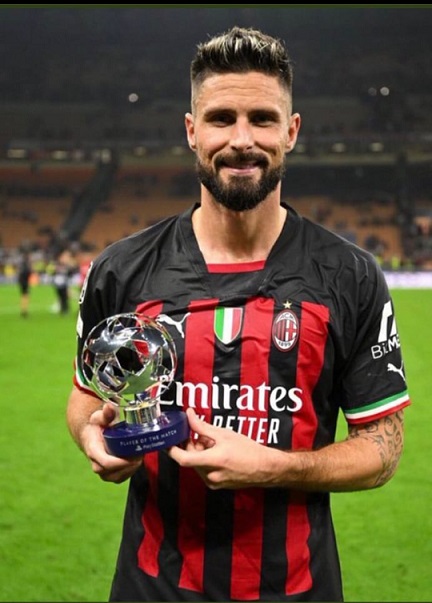
Daniel would have rescued a point barring the intervention of Olivier Giroud. Milan thought they got the winner after Sandro Tonali’s screamer. However, VAR cancelled out the goal for a foul in the build-up. In the 89th minute of regular time, with incredible dexterity, from a tight angle, Oliver Giroud gave Milan a well-deserved victory again through a spectacular acrobatic volley – typical Giroud grand style.

The adrenaline was high, as you’d expect of any late winner. Hence, Giroud pulled out his shirt during the wild celebrations. Consequently, he was penalised for a second booking and eventually sent off. He was captured with a ‘mea culpa’ face in tears after the match. Cheer up, sins forgiven, Olivier!

Forza Milan!

Musa Abdullahi Kaga wrote via musaakaga@gmail.com.

King of Match – Olivier Giroud

By Musa Abdullahi Kaga

“I try to do my job. When I’m in the area, I always try to be in the right place at the right time,” – Giroud

When Olivier Giroud’s rumoured move to Milan – from Chelsea – surfaced on the Internet, many Milan faithful were unhappy. Already battling with 39-year-old Zlatan’s fitness, most fans thought a 35-year-old wasn’t an ideal transfer target.

A token was paid to Chelsea for the transfer of the world cup winner, which has been paying off since then. His elegance and goal-scoring finesse were never in doubt. Olivier seamlessly settled into the team, as you’d expect of any experienced player of such calibre.

Everyone expected a rivalry between the former Arsenal star and Zlatan for the starting spot. However, it eventually proved to be a complementary role. He stood ably while the Lion (Zlatan) was nursing his injuries. When asked about the possibility of playing as a deputy to Ibrahimovic, he responded, “I don’t want to think about who will play; my job is also to be a big brother for the young players”.

After a seven-year absence from the Champions League, Milan desperately looked towards Zlatan Ibrahimovic for a solution. He eventually helped them to a second-place finish in the Italian Serie A. However, with the acquisition of Giroud the following year, the target was to build upon the success. He did that by contributing 11 goals and winning his second career league title, the first with Montpellier in 2012.

Naturally, big game players tend to be fan favourites, and Giroud was able to cement that status immediately with his super performances against the big guns. Most notably against Inter earlier in February, his brace assured the 3 points despite the defending champions taking the lead first. He followed that up with a star performance against Napoli, scoring the game’s only goal. Then, in the recent Derby win against Inter, he scored one of the three goals to claim the maximum points.

On the final day of last year’s league campaign, Milan only needed a draw to be crowned champions of Italy. Giroud showed up with pride and contributed two goals in the 0-3 triumph in the Magpie stadium. Last night, in the last game of the UCL group stage, Milan needed a draw to grace the knockout stage after a nine-year break. Their hero, Olivier Giroud, is at it again, with four goals contribution (two assists and two goals) in a commanding 4-0 win in front of a packed San Siro. He never gets old. At 36, he graced the game with a spectacular performance.

Grande Olivier!

Musa Abdullahi Kaga wrote via musaakaga@gmail.com.

Barcelona at risk of crashing out of UCL after Inter defeat

By Muhammadu Sabiu

After losing 1-0 to Inter Milan on Tuesday, Barcelona is in danger of not making it out of their Champions League group.

They now have three points from three games as a result of the outcome.

At the San Siro stadium, Hakan Calhanoglu scored the game’s lone goal to give Inter all three points.

Bayern Munich leads the group with a perfect nine points after defeating Barcelona 2-0 in the most recent round of games.

With six points, Inter is in second place, ahead of Barca, as there is still no point for Viktoria Plzen.

Next week’s matchup between Inter and Barcelona will take place at Camp Nou.

Barcelona have also gone five games in a row in the Champions League without scoring.

Five absurdities at the FIFA Best Awards 2021 ceremony

By Aliyu Yakubu Yusuf

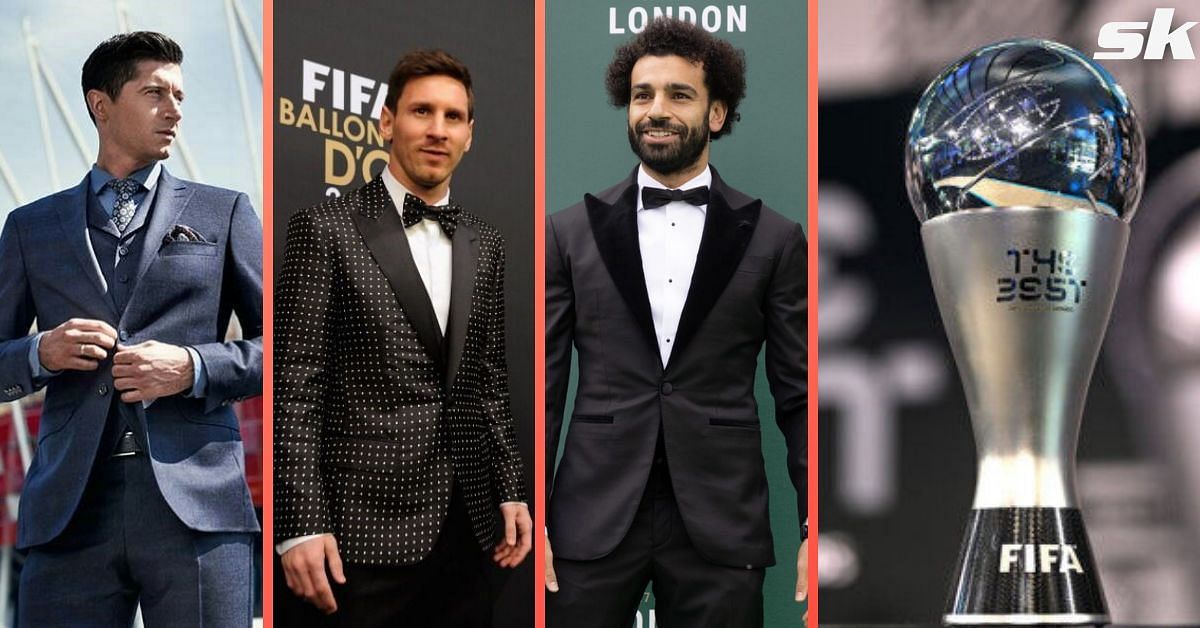
The annual FIFA Best Awards 2021 ceremony took place yesterday, January 17, 2022, in Zurich, Switzerland, amidst glitz and glamour. Many awards were contested and won by deserving players. Bayern Munich Polish marksman, Robert Lewandowski, was the biggest winner, as he scooped the prize of the FIFA the Best Men’s Player for the second year running. However, a few controversies left fans watching the event on TV and social media scratching their heads in disbelief. I will highlight just five of them.

  • Robert Lewandowski, Lionel Messi, and Mohamed Salah were selected as the three best players in this order. However, in the annual FIFPro World XI, there was no place for Mohamed Salah. In other words, the Egyptian who was deemed good enough to be the third-best player for the year was considered not good enough to be in the team of the same year. If this is not utterly dumbfounding, I don’t know what is. And somehow, FIFA managed to include Cristiano Ronaldo and Erling Braut Haaland, who were ranked lower than Salah, in that team. Ridiculous!
  • A similar scenario played itself out again in the goalkeeping category. Chelsea Senegalese custodian, Edouard Mendy, was chosen as the Best Men’s goalkeeper. But somehow, he was overlooked for the same FIFPro World XI. Instead, the PSG Italian shot stopper, Gianluigi Donnarumma, was selected. Fans all over the world were left fuming with this absurdity. How can you choose a player as the best in his position and then fail to select him in your best team of the year? Inexplicable!
  • Barcelona Spanish player Alexia Putellas won FIFA the Best Women’s Player in the women’s category but was omitted from the FIFPro Women’s World XI. In other words, the best player of the year was deemed not good enough to have a place in the best team of the year. In case you don’t know, Alexia Putellas won the Ballon d’Or just two months ago. But still, FIFA decided that there were better players to be in the World XI than the double award-winning Spaniard. Baffling!
  • Barcelona Women’s team won a treble last year. They won the women’s equivalent of La Liga, Copa Del Rey and the Champions League. Yet, none of their players was chosen in the FIFPro World XI, not even the aforesaid Best Women’s player, Alexia Putellas. Controversial!
  • Barcelona Women’s treble-winning coach Lluis Cortes was somehow not chosen as the women’s coach of the year. Instead, the award went to Chelsea Women’s coach, Emma Hayes. By the way, Lluis Cortes and his Barcelona destroyed Emma Hayes and his Chelsea team 4-0 in the Women’s Champions League final late last year. Absurd!

Surprisingly, despite these apparent inconsistencies, there were no cries of robbery, no rubbishing of the awards, no nothing. SMH!

Aliyu is a lecturer at the Department of English and Literary Studies, Bayero University, Kano. He can be reached via aliyuyy@gmail.com.

Messi: He came, he saw and he conquered

When former Barcelona Director of Football, Carles Rexach, signed Lionel Messi on a napkin paper at the turn of the current millennium, little did he know that he had just unearthed possibly the greatest ever footballer. Barcelona have just announced the departure of their boy wonder, the messiah and the plea, after 17 years of joy and anguish, highs and lows, successes and failures. Countless goalscoring records have tumbled at the majestic feet of the boy from Rosario in Argentina. He holds the records for playing more games for Barça in La Liga, UCL and El Clasico.

To even attempt to list Messi’s accomplishments in this short thread would be foolhardy. Nevertheless, many accomplished pundits, coaches and players mesmerised and enchanted by his magic wand have showered plaudits to the little genius. After trouncing Arsenal in 2010, the then Arsenal coach famously remarked that “Messi is a PlayStation player”, effectively testifying to the impossibility of being Lionel Messi. Similarly, Pep Guardiola, who is the coach that helped nurture the talents of Messi, once said that “To compare Lionel Messi with any other player is unfair… on them”. Jorge Valdano, a Maradona teammate in the victorious 1986 World Cup-winning Argentina side, added that “Messi is Maradona every day and even Maradona wasn’t Maradona every day”.

Rodrigo De Paul, Messi’s teammate in the Argentina national team, said, “If Messi is your captain, you would want to go to war for him”. The recently departed ex-Real Madrid captain Sergio Ramos also confessed that “Messi will always have a place in my team”. This is just off the top of my head. The list of current and retired players who idolise Messi contains the creme-de-la-creme of the footballing world.

A longstanding mantra has it that ‘records are meant to be broken.’ If these Messi’s records are ever to be broken, it will take an exceptional player.

1. Winning four consecutive Ballon Dors.

2. Winning 6 European golden shoes.

3. Scoring 91 goals in a calendar year.

4. Scoring 75 goals in a league season.

5. Scoring in 21 consecutive league games.

6. Scoring 50 league goals in a single season.

7. Winning three player of the tournaments in international tournaments.

8. Scoring 40 or more goals for nine consecutive seasons.

9. Scoring/Assisting 50 or more goals for 13 consecutive seasons.

10. Winning four man of the match awards in a single World Cup.

As for Barcelona fans all over the world, the dreaded day has finally come. Most of them can still remember the scrawny, shy 17-year old Messi who scored his first-ever professional goal against Albacete via Ronaldinho’s assist. Very few people thought that that watershed moment was passing the baton from one generational talent to another. However, the future isn’t that bleak for Barça. For one, young, exciting talents are emerging from the academy. The likes of Fati, Collado, Trincao, Gavi, Pedri, Puig, Mingueza, Araujo and Dest have shown great promise. Together with the old guards such as Pique, Griezmann, Alba, Busquets and Aguero, they may just paper the gaping cracks that Messi’s sudden departure will inevitably leave.

Messi alone is capable of covering a multitude of sins for coaches and fellow players. Good luck trying to replace such a player.

As for the man himself, this is a perfect opportunity to silence his diminishing number of detractors that he can cut it away from his comfort zone — whatever that means. Of course, Messi isn’t getting any younger, but I would bet my bottom kobo for him to fare well at any league in the world.

Aliyu Yakubu Yusuf is a lecturer at the English and Literary Studies Department, Bayero University, Kano. He can be reached via aliyuyy@gmail.com.

Messi leaving Camp Nou — Barcelona

By Muhammadu Sabiu

In what has been widely tagged as “the end of an era,” Argentina forward Lionel Messi will leave FC Barcelona after a near two-decade stay at the club due to “financial and structural obstacles.”

This was confirmed by the La Liga giant in a statement.

The statement said, “Despite FC Barcelona and Lionel Messi having reached an agreement and the clear intention of both parties to sign a new contract today, this cannot happen because of financial and structural obstacles (Spanish Liga regulations).

“As a result of this situation, Messi shall not be staying on at FC Barcelona. Both parties deeply regret that the wishes of the player and the club will ultimately not be fulfilled.”

The club also expressed their gratefulness to the 4-time Ballon d’Or winner and wished him well in his future professional career.

“FC Barcelona wholeheartedly expresses its gratitude to the player for his contribution to the aggrandisement of the club and wishes him all the very best for the future in his personal and professional life,” Barça said in the statement.

At the age of 13, Messi joined Barcelona’s youth set-up and he is now the club’s all-time top scorer with 672 goals in 778 appearances.

Recall that he had in 2020 made an attempt to vacate Camp Nou after Barcelona’s humiliating 8-2 loss to Bayern Munich in the Champions League quarter-finals, but an agreement was later reached, which led to his continued stay at the club.

Messi’s Trophies at Barcelona

Champions Leagues – 4

La Liga titles – 10

Spanish Cups – 7

European Super Cups – 3

Spanish Super Cups – 8

Club World Cups – 3