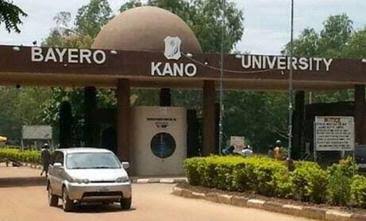
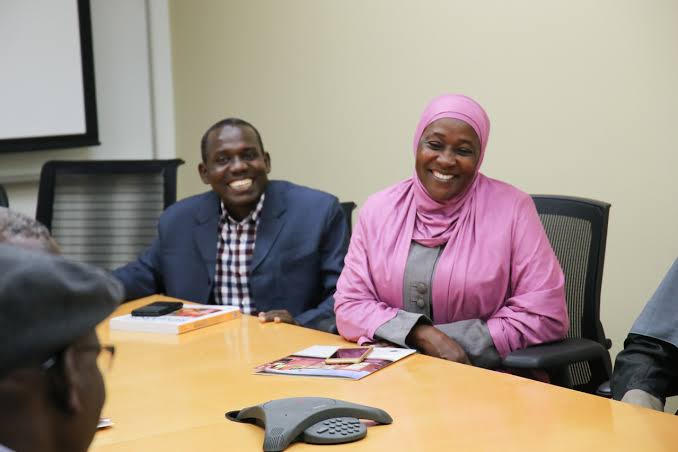
Professor Sagir Adamu Abbas, the vice chancellor of Bayero University, Kano (BUK), has revealed that the university has implemented a job programme for students in which the university hired students to do some jobs for it in exchange for N15,000 per month.
Delivering a speech over the weekend in Kano when he met a group from the university’s main campus and the Education Correspondents Association of Nigeria (ECAN), Adamu-Sagir said: “The university equally introduced a kind of job scheme for students, whereby they were engaged to render some services to the university, and they were paid N15,000 monthly.
“This does not affect their normal learning because it does not take much of their time as some were to clean some surroundings or render certain minor service within the university and got paid at the end of the month.”
The Vice-Chancellor bemoaned the large expense of maintaining the institution in his remarks over the rise in registration fees, particularly the exorbitant cost of providing fuel.
He disclosed that the monthly cost of power is approximately N35 million, and the cost of diesel for generator purchases is approximately N40 million.
He also noted that with a student body of almost 45,000, including postgraduates, and a staff of over 5,000, both teaching and non-teaching, it was practically impossible to provide social services. As a result, the management was compelled to hike registration fees.
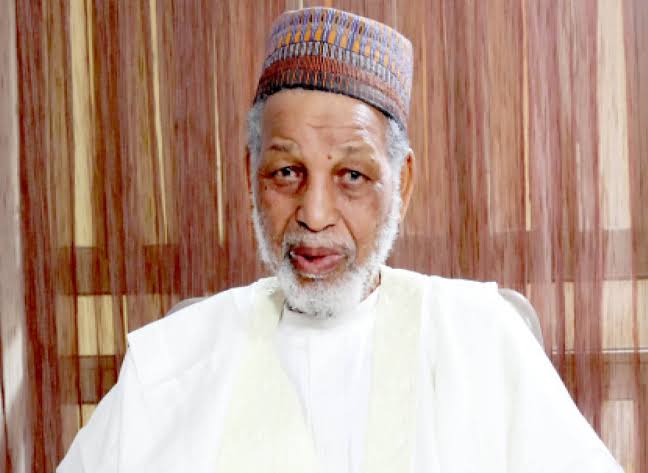
The renowned Nigerian Professor of Physics, Ibrahim Khalil Umar, aka I.H. Umar, died a few hours ago today.
I.H Umar was a Nigerian scientist of repute, and he had once been a University administrator. Wikipedia sources described that he was a Vice Chancellor of Bayero University, Kano, Nigeria, from 1979 to 1986. He held a B.Sc. in Physics and Mathematics from Ahmadu Bello University, Zaria, Nigeria, an M.Sc. in Physics from Northern Illinois University, USA and a PhD in Physics at the University of East Anglia, United Kingdom. In 1976 he became the first Nigerian academic in Physics to teach at Bayero University, Kano. In 1978 he served on the national constitutional assembly that drafted the Constitution of the 2nd Republic.
Between 1994 and 1997, the late I.H. Umar served as a Sole Administrator of the Federal University of Technology, Minna.
He also represented Nigeria at the Executive Assembly of the World Energy Council in 1990. He was a member of the Nigerian delegation to the International Atomic Energy Agency (IAEA) General Conference from 1989 and was appointed Director-General of the Energy Commission of Nigeria in 1989. He served as Chairman of the Board of Governors of the IAEA from 2000-2001. In 2004 he was the Director of the Centre for Energy Research and Training, where the first Nigerian research nuclear reactor is located.
In 2007, he was on the international advisory committee for the international workshop on Renewable Energy for Sustainable Development in Africa, held at the University of Nigeria, Nsukka in Nigeria.
I.H Umar was among the first five Professors in Nigeria to attain the Chair of an Emeritus Professorship from Bayero University, Kano, Nigeria.
Comrade Yasir Abubakar, a 400 level law student of Bayero University Kano, has been elected the National President of the Law Student Association of Nigeria, LAWSAN.
The LAWSAN Electoral Committee, LECOM , declared Abubakar winner after he polled 30 votes in the election of the national executives of the association held at Swiss Spirit Hotel, Porthacourt on Friday night
Abubakar polled 30 votes to defeat his closest rival, Ann Lyam Iverem of Bingham University, Nasarawa, who polled 26 votes.
All efforts to reach the president-elect of the association as at the time of writing this report were futile. However, Abdullahi Farouk , BUK LAWSAN President happily confirmed the development to the Daily Reality on Saturday morning.
According to Farouk, the victory is well deserved and they are grateful to God and Law students all over the country for the confidence in Abubakar.
He said: “We are extremely elated, It is a well deserved victory, because Yasir Abubakar has done his best, over the years he has served the association in different capacities, he has travelled across the regions and he has acquired all the skills necessary to steer the association to a greater height. We are grateful to God and the entire LAWSAN for reposing confidence in Yasir Abubakar. We assure you that you won’t regret choosing us.I pray that Allah make it easy for him to discharge his shouldered responsibilities effectively and efficiently”
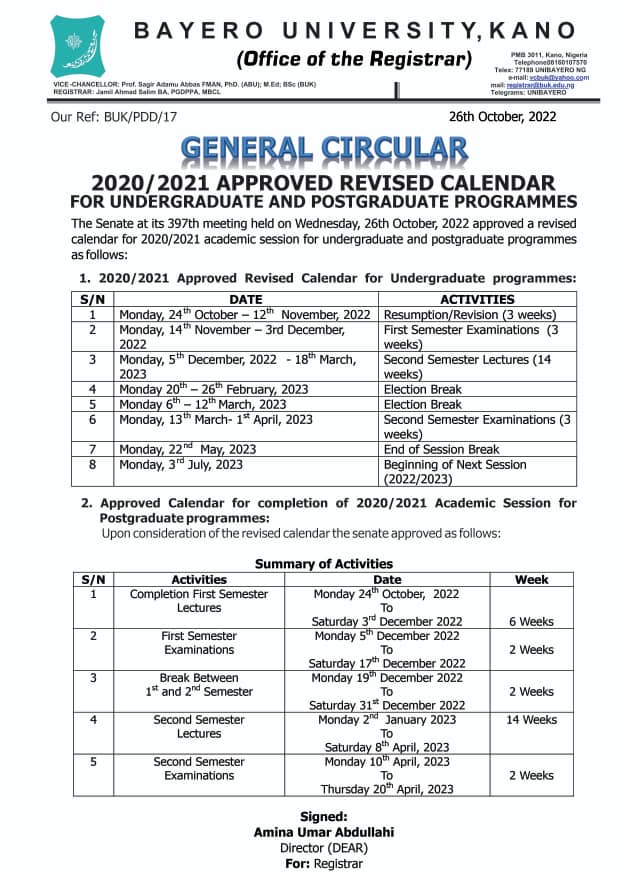
Following its resumption on Monday, the Management of Bayero University, Kano (BUK), revised its academic calendar, giving the students three weeks to revisit their previous lectures before exams.
The decision by the management was a result of a Senate Meeting held today, Monday, October 26, 2022, at the university’s Convocation Arena.
The university was about to start its first-semester examination on February 16 when the Academic Staff Union of Universities (ASUU) embarked on a strike.
The industrial action by the union, which lasted for eight consecutive months, started on February 14, 2022.
The university lecturers embarked on the total shutdown of the universities to press their demands home, which they said the Federal Government failed to fulfil.
However, after several disputes between the Federal Government and the ASUU, the union ended its strike just recently. Still, many students, parents and even most lecturers are not enthusiastic about the resumption. This is simply because the lecturers are still left stranded by the FG without payment of their salaries. If the salaries are paid, it will surely and greatly serve as a motivating factor for a vibrant return of the lecturers to their classes.
A Senior Advocate of Nigeria, Prof. Mamman Lawan, has described government’s interference in court’s decisions as one of the major challenges facing judges in Nigeria.
Prof. Mamman Lawan stated this Tuesday, 4th October, 2022 during a one-day seminar organized by Faculty of Law, Bayero University, Kano, in collaboration with Bn Baaz, Kariya and Naseeha Foundations.
The seminar held at Islamic Forum of Nigeria Hall, Farm Center, Kano, was themed: “Justice as a Panacea to Insecurity in Northern Nigeria.”
He decried how big office holders and politicians stick their noses into the courts’ decisions, thereby making it difficult for judges to do justice in their decisions.
Lawan stated: “Politicians used to interfere with the courts decisions and spend millions of naira in the cases they have interest in.
“Therefore, judges and lawyers need to know that it is ethically wrong to collect bribe and do injustice. Without justice, there would be no society and there would be chaos and insecurity.”
Govt needs to increase allowance for judges, lawyers to tackle corruption
Corruption roams our courts today and affect their decisions. The reason was believed to be unconnected with poor salary and allowances by the government.
One of the Judges confidentially told the TDR reporter after the event that the monthly salary of judges is between N100,000 and 180,000 and N125,000 as furniture allowance after every four years.
Lawan said that there is a need for government to increase allowance for the Nigerian judges and lawyers to tackle corruption in the courts.
He added, “Government does not provide our judges and lawyers with enough allowances to halt corruption in our courts.
“This will help stop the judges from taking bribe from any politician,” he suggested.
Lawyers contribute to injustice in Nigeria
Also speaking, the Kano State High Court Judge, Justice Saminu Nasiru, blamed Nigerian lawyers for contributing to injustice in court decisions.
He said, “For this reason, it has become necessary for lawyers and judges to fear God and to remember meeting with their lord in the day of judgment.”
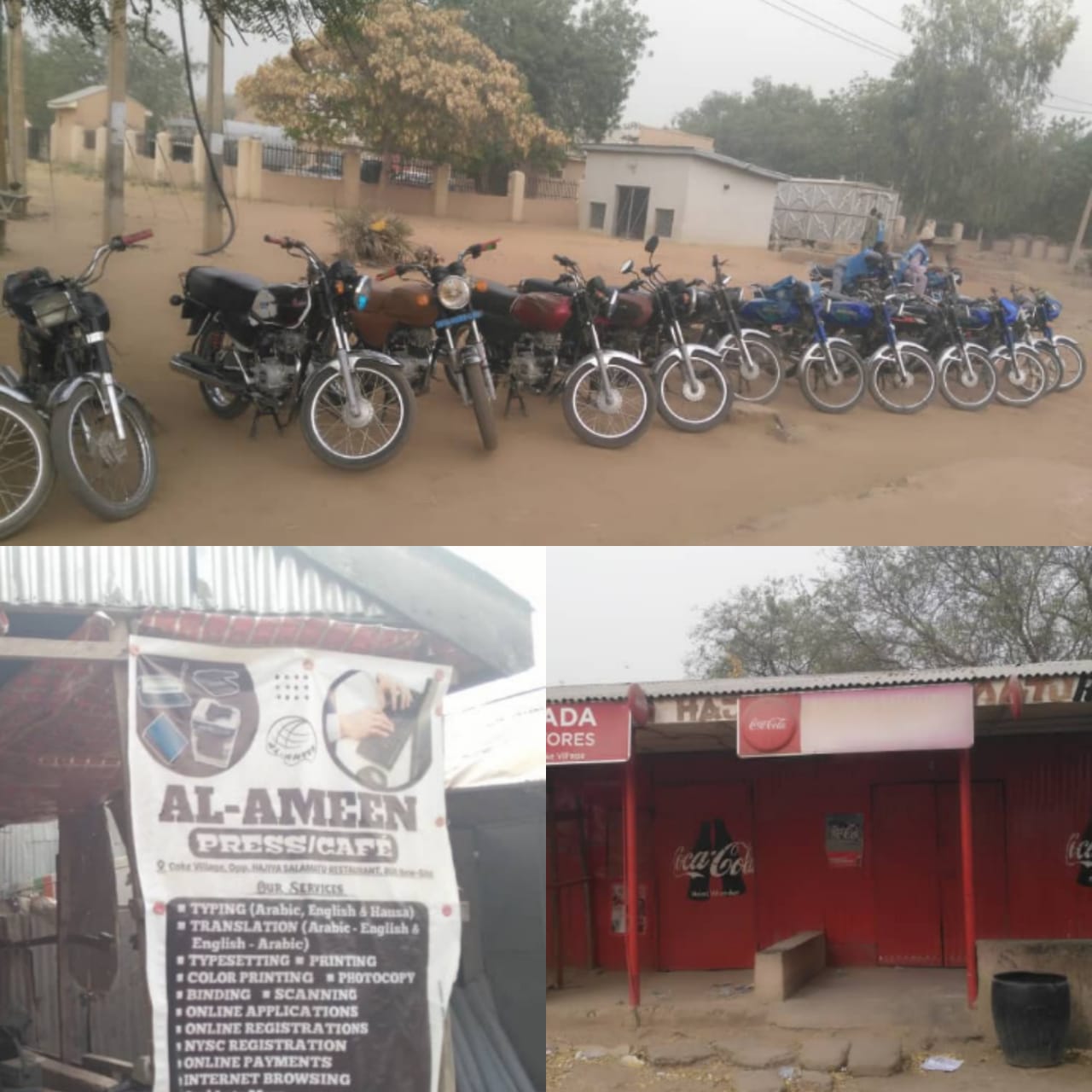
Campus-based businesses in and around Bayero University and Yusuf Maitama Sule University Kano have mostly closed following strike action by the Academic Staff Union of Universities (ASUU), leading to the loss of multiple jobs amid the harsh economic situation in the country.
The strike, apart from terminating academic activities across the campuses of the Universities, has left the institutions desolated as the absence of students grounded business activities to a halt.
A cross-section of petty traders, okada riders, restaurateurs, typesetters and other campus-based artisans have complained about how the strike is taking a toll on their businesses, scuttling their means of livelihood amid soaring inflation in Nigeria.
Nigerian public universities have been on industrial action since 14th February 2022 to pressure the government to fund the universities and settle some outstanding issues as contained in the 2009 Memorandum of Understanding (MoU) and 2020 Memorandum of Action (MoA) as negotiated by the Union of the University teachers and the Federal Government.
Why is ASUU on strike?
The university teachers signed an agreement with the Federal Government of Nigeria in 2009 for the revitalisation of public universities, which will enable the ivory towers to access 200bn annually for six consecutive years. The FG reneged as it only released once in 2013.
Government’s inability to implement other issues of 2009 MoU and 2020 MoA, such as salary upward review after three years relative to the strength of naira-dollar, payment of Earned Academic Allowance (EAA), etc.
The continued use of the controversial Integrated Payroll and Personnel Information System (IPPIS) did not capture university peculiarities and refusal to accept ASUU’s alternate payment system called University Transparency and Accountability Solution (UTAS).
Another point of concern by ASUU is the proliferation of universities by the federal government without adequate funding for the existing ones, which the union argues will further jeopardise the entire Nigerian public university system.
From warning strike to “extended” warning strike
The university dons have completed a 4-week long warning strike in an effort to press home their demands for the Government to honour the agreements. However, after a series of talks between government delegations and the leadership of ASUU, the union extended the warning strike by another eight weeks “to give the government enough time to implement the agreement”, according to ASUU President Prof. Osodeke.
Equally, meetings between the minister of education and the leadership of the National Association of Nigerian Students (NANS) did not yield the resolution of the bone of contentions.
Businesses disrupted, livelihood lost
As the industrial action continues, its effect is taking a toll on businesses and vocations on and around the campuses, with many business owners facing bankruptcy. Although most businesses, such as petty traders, cafés, restaurants, typesetting and photocopying centres, barbing shops etc., have closed down, the remaining few yet to close narrate their harrowing experiences at Bayero University Kano and Yusuf Maitama Sule University.
Ummi Abdulaziz, whose shop in BUK could not sell goods of N1000 a day due to the absence of students, described the ongoing ASUU strike as unfortunate, adding that “The strike affects us really seriously. There are no customers now. There are no people around. We open our shop, but there are no buyers. We are adversely affected. Sales have drastically reduced or even stopped. I can’t even make 1k a day now…”
Ummi, who called on the Federal Government to meet up with ASUU’s demands, said the plight of students and campus-based business people should not be allowed to suffer for long. She urged the two parties to have “A discussion and resolve this problem once and for all.”
Another business owner who identified himself as Sarkin Noma Maitireda BUK said the strike had brought misery and deprivation to their lives as his sole means of survival was being threatened. He was thinking of moving out of campus to find ways to feed his family.
Maitireda further lamented, “Honestly, we are not happy with the strike. We are pained because of our business. Everything on the campus isn’t functioning now. We only sit down by our stalls and shops sometimes to even nap. It badly affects our lives negatively.”
He recalled nostalgically how he survived past strikes partly by leaning onto his savings and ultimately on support from family and friends, saying, “We used to survive on our savings, then we borrowed from friends and family. When the strike ended, and businesses normalised once again we repay our debts”.
He decried that the current situation in the country makes it extremely difficult for him to obtain any support from friends and family, saying “everyone is battling with his challenge.”
“We call on the Federal Government to consider their demands so that they resume their activities and our university to reopen.” He appealed as he narrated how he naps by his stall due to no patronage.
Adamu Aliyu, who used to rake N30, 000 daily on average through his stationery stall but now less than N1000, argued that business people suffer the multiplier effects of the strike more than other members of the university community, including students.
Adamu called on the Federal Government to fulfil its promises to the academics and observed that “the situation in the country today is very terrible. So, I call on the FG to consider the situation of the country generally and consider the students and campus-based businesses specifically.”
Mohammed Kabir of Chiroma Business Centre in BUK, whose typesetting and stationery business vicinity remain desolate, said the strike alongside soaring inflation in the country makes his survival as a father and a husband very difficult.
Narrating his challenging sailing through the harsh reality of the economy compounded by the ongoing strike noted that “it has been difficult for me to survive because before now we were feeding from hand to mouth because of the economic situation. Most of the materials we were using have skyrocketed because of inflation…and now strike….”
Kabir lamented further that, unlike previous university strikes where few works were available, currently, “Probably due to the economic situation of the country, everything stopped. Nothing comes.”
Kabir pleaded that in the interests of students and the nation, even if business owners would not be considered, the two parties should resolve their differences to allow academic and business activities to return to universities as soon as possible.
”As a matter of urgency, the Federal Government and ASUU should come together and have a dialogue to resolve the issue. For the interests of the students’ even if they won’t recognise us, business owners… FG should fast track implementation of the issues so that at least the strike can be called off”, he further stressed.
It is no different at Yusuf Maitama Sule University (YMSU), as academic and business activities are grounded following the declaration of the strike. Unfortunately, like students, most businesses on the campus have closed due to poor patronage created by the vacuum left by students.
Abdussalam Adam was among a few business owners that come around to open their business for a few hours daily but now is considering total closure.
His business centre that provides Café services, typing, printing and photocopying to students has been badly hit by the ongoing strike. As a result, his average earning of N5000 has been depleted to around N500.
A stranded business centre
“Seriously isn’t easy for us that have business here on campus. The strike isn’t affecting students alone. It affects us. When the students were around, there was much work to do. I used to make 5k, 6k a day but now ….since morning I am just having 500 naira with me”, he complained.
He stated that “If I have the opportunity to talk to the federal government, I would advise them to consider ASUU’s demands and resolve the issue. They spend more than what ASUU is demanding on their personal issues. Why not on universities?”
“New World Cyber Café has already temporarily disengaged its staff because of the strike, but they will resume work when the university’s academic activities resume’’ said Bitrus Monday, who operates the biggest cyber café at BUK.
Bitrus Monday, who decried that strike is becoming habitual in Nigerian public universities, stated that there is an urgent need for the parties to have dialogue that will lead to settlement of the burning issues soonest.
“We are negatively affected. They should help us settle themselves. They should have a round table discussion and sort things out. It is obviously becoming a yearly habit in our universities.” He said.
Food and vegetable sellers worse hit
Food-related businesses that serve the universities and their communities are currently facing unique challenges that differ from their past experiences during varsity strikes in the past.
Alonelyvegetableseller
Shamsu Haruna, whose famous Gurasa Joint at BUK serves hundreds of students, staff and other university community members daily with this Kano delicacy, appeared visibly hapless due to the destructive effects of the strike on his business.
Shamsu soberly recalled how busy and deeply engaged his staff were when students were on campus. He noted that more than ten people were fully engaged in full-time jobs in his Gurasa Business but now are rendered jobless because of the strike.
He reminded the relevant authorities of the ephemerality of power and authority should they fail to discharge it for the public good, adding that “Other powerful, influential people have gone so also the current leaders will go. But what they do now is what they will be remembered for. They should try and leave a good legacy. They should consider the situation of the country and resolve the problem.”
He further noted that although members of non-teaching university staff are not on strike, his business has lost over 85% of its customers, expressing that “As we are in a very difficult situation because if you consider the market, we’ve already lost over 85% of our customers. This is not a small loss in business. We pray that God intervene in this situation… But Federal Government and ASUU should remember that life is transient.”
Restaurateur Fatima Ibrahim owns Al-Khairat Restaurant and has been in the campus-based food business for years, but the current strike is giving her a hard knock.
The strike is painfully touching for Fatima as her once-booming food business is struggling to recover after a near-death experience occasioned by the corona pandemic lockdown. “I used to go to the market to supply foodstuff on a daily basis, every blessed day, but now we go to market once a week. Unfortunately, after you prepared the food, there were no customers. Sometimes you sell, some other times you dispose of it.” she noted, adding that “FG and ASUU should please sympathise with the students and us to solve this conundrum so that they shouldn’t jeopardise the future of the students.”
Similarly, at Medinat Restaurant, the disturbance of the peace caused by the lingering university academics’ strike is making resilient Medinat Mohammed have sleepless nights. Her narration reverberated unpalatable experiences by other business community members of the university since the commencement of industrial action in public universities.
Adesertedrestaurant
”I used to cook 4-5 mudus of rice and prepare other varieties of meals, but now half mudu doesn’t finish a day. No students. No teachers”, she bemoaned
Determinedly tenacious, Medinat said of her over 20 years of experience in the business, this is the most devastating strike she experienced, alluding to the spillover effects of coronavirus pandemic lockdown “Sometimes we take a loan and after the cooking children will eat, and we (staff) too eat from it and pay transport…for over 20 years selling food, this strike is the worse because we did not recover fully from corona lockdown. It is only through the grace of God that we survive.”
She appealed to the Federal Government to settle critical issues it had earlier agreed on with ASUU so that normalcy return to the university campus.
Unlike other businesses, vegetables and fruit sellers are the most hit, languishing in their anguish due to the perishable nature of their supplies. Their harrowing experience cannot be understood entirely from the outside as they had already lost some quantity of their goods the very first week students deserted the university as explained by Alh Isah Gurgu Maikayan Miya, “With this strike, our business was completely put to a halt, completely grounded. Things have turned off. Our reliable customers, students, are no longer on campus. Academic staff no longer come. Some vegetables decomposed the week the student left because we brought them much and no buyers. So to get our daily meal now proves to be extremely difficult.”
He sadly revealed how he is now making an average of N1000 a day which is far below his average daily sale of N10000 before the strike, which according to him, “cannot cater for my family needs.”
He urged the Federal Government and ASUU to “please sympathise with students and we business owners”.
The Vice-Chancellor of Bayero University, Kano (BUK), Prof. Sagir Adamu Abbas, has commended the new book lesson started by the quintessential West African Islamic scholar, Dr Sani Umar R/Lemo at the university’s new Friday Mosque in the new campus on Wednesday, February 9, 2022.
Prof. Abbas made this remark during the first lesson of the book “Alfawa’id” By Ibnul Qayyim Aljauziyya, which will be taking place on Wednesdays, saying that the plan had been in the pipeline over the years.
He stated that the intent was to shape the thought of the youth through the provision of knowledge for peaceful coexistence.
He said, “Going by the general belief that youth are the hope of the future for any given society, we don’t have a future if our youth go astray. It is also part of our plan to provide an Islamic Centre that will be providing members of the public with a fatwa concerning the issue of a time.”
The VC added that “[In our effort to achieve] all this, I had to contact our great teacher, Prof. Sani Zahraddeen, who was a former Vice-Chancellor of this university, for advice.”
However, Prof. Abbas also promised that efforts to provide a similar lesson at the Old Campus of the University are on top gear.
Dr Bashir Aliyu Umar, the chief Imam of Al-Furqan Mosque, is tipped to commence a new book lesson.
Commenting, Sheikh Umar Sani Rijiyar Lemo commended the effort of the Vice-Chancellor, saying the university is blessed with such a leader.
Head of Information and Media Studies Department, Dr Nura Ibrahim, who is also the secretary of the Mosque Committee, has urged people to cooperate.
It has been widely confirmed and unanimously agreed by academics and other educational stakeholders that the culture of reading is fast dying across the globe, especially in Nigeria. This may be the reason why Bayero University, Kano, in collaboration and support of Florida State University, USA, established “The Nigeria Centre for Reading Research and Development” at Bayero University, Kano.
The Centre’s main aim is to encourage, support and upgrade the nature of reading and revive the reading culture, which, according to experts, is the only way and key to development of any nation.
The Director of the Centre, Professor Talatu Musa Garba, disclosed this development today during the opening ceremony of the 3rd National Conference on Children’s Book and the Teaching of Early Grade Reading in Nigeria.
Garba added that “It is my pleasure to announce that the Centre is now focused to develop various courses, in collaboration with the Department of Education, Bayero University, Kano, following the expiration of its collaboration with Florida State University earlier this year.
The Postgraduate Diploma in the Teaching of Reading approved by the university and advertised on the BUK official website has already commenced this academic year, which opened last week, on 1st November, 2021. The Centre has also concluded arrangements to offer the Certificate in the Teaching of Reading beginning in July 2022″.
BUK Vice-Chancellor, Professor Sagir Adamu Abbas, revealed that the Nigeria Centre for Reading, Research and Development is now entirely under Bayero University, Kano. He further added that “We in the management pledge to support its operation fully. In this regard, I am pleased to inform the conference that the construction of the permanent building for the Centre has reached an advanced stage, as the physical structure is currently being furnished and equipped, accordingly. What remains is the landscaping, and the university is making provision for that before the end of the year.
The conference is still ongoing, and it will dwell and deliberate on “Children’s books as tools for the effective teaching of reading skills in the early grade in Nigeria”.
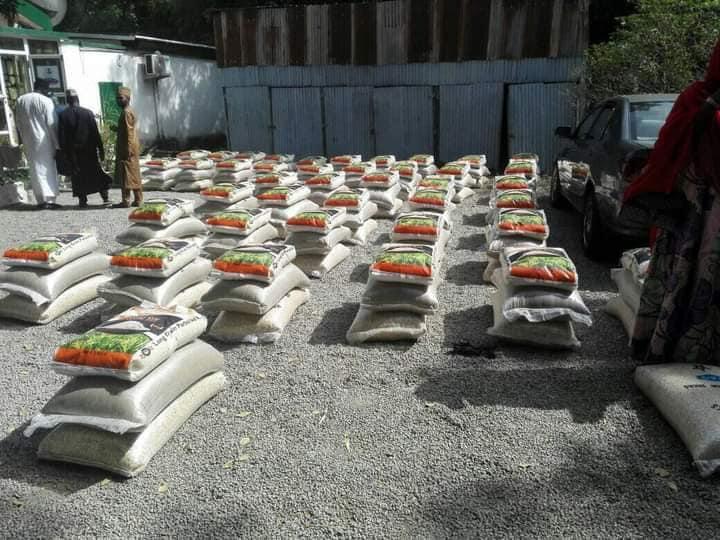
As many Muslims around the world are celebrating the birthday of Prophet Muhammad (Peace be unto him), the former Executive Secretary of Tertiary Education Trust Fund (TETFUND), Dr Abdullahi Baffa Bichi has distributed food items to over 500 households as a philanthropic gesture to commemorate the 1443 Maulud Celebration.
Speaking during the distribution exercise, that took place in his residence at Bayero University Kano, Old Campus, Dr Bichi said the essence was to put smile on the faces of people by cushioning the effect of harsh economic situation in the country.
He noted that many people are finding it difficult to feed their families and therefore, his action was to make them happy on this festive period.
The donated items included a bundle of cloth, bag of rice, millet and maize each and a portion of meet.
“As we are today celebrating the birth of our Noble Prophet SAW, we feel obliged to put smiles on the faces of our brothers who could not afford a good food for their families”.
Many people who benefitted from the gesture expressed their appreciations by describing him as the rising politician who has the interest of a common man at heart.
After collecting his items, Malam Abubakar Idris said, “the items came handy as he had no single grain in his house with a family of five.
Another woman busted into tears of joy, lamenting that it has been over a week since last they cooked a solid food in the house. They just rely on other difficult means.
“We were surviving on crunches for the last few weeks, as we have nothing in the house, my husband died last year during the Covid-19 pandemic, he left me with five children and no one to feed us. The selling of akra I was doing did not last long due to lack of capital. In addition to the food items, he equally supported us with a by to take-off money to start a business. We really appreciate him and may Allah continue to guide him. Alhamdulillah.”
A director in the One 2 Tell 10 campaign organisation of Baffa Bichi, Honourable Ghali while explaining the concept of human empowerment, noted that the desire was to bail out the needy especially widows, orphans and other needy persons in the society.
Honourable Ghali disclosed that the only way out of the economic crunch is for all the wealthy and public sprites individuals to come up with program that would have a positive pact on the lives of the less privilege by providing them with capital money so as to be independent and self reliant.
“Our desire is to empower people to be self-reliant so that they can as well be productive to the society. No nation can grow and prosper if the teeming populace are in abject poverty and economic dependency. Ours is to teach a person how to fish so that he can be productive in the society,” he declared.