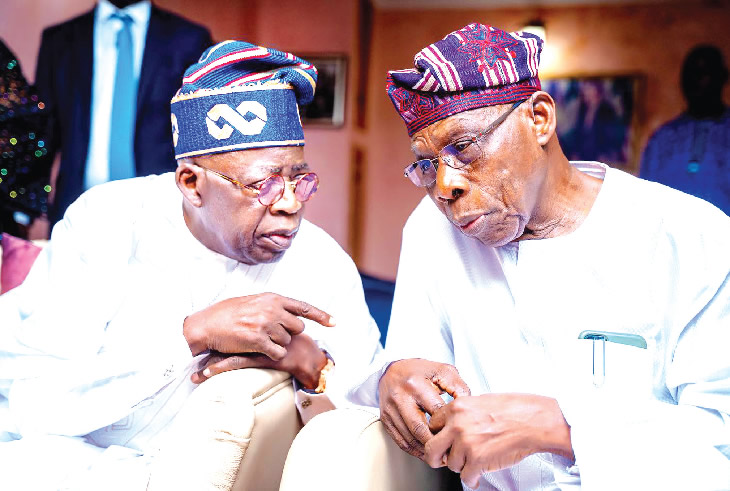
Bola Tinubu

Tinubu Approves Land Allocation in Abuja for Ambassadors-Designate


By Anwar Usman

President Bola Tinubu has approved the allocation of plots of land to Nigerian ambassadors and high commissioners-designate in Abuja, the Federal Capital Territory minister, Nyesom Wike, disclosed on Wednesday.

The minister made the announcement while receiving the envoys on a courtesy visit at his official residence in Life Camp, Abuja.

The delegation was led by the Permanent Secretary of the Ministry of Foreign Affairs, Dunoma Umar Ahmed, as part of an induction programme for the newly appointed ambassadors.

According to the minister, the president’s decision was driven by the need to give Nigeria’s overseas representatives a permanent foothold in the capital for when they return for periodic briefings.

“The President believes that most of you do not have a place in Abuja… he will encourage you to see how you will put up where you can stay. Before you leave this morning, each and every one of you should have your form to apply for a land allocation in Abuja,” Wike said.

The minister further used the occasion to charge the envoys with the responsibility and urged them to defend and project Nigeria’s international standing. “You are, in essence, the mirror of this country. The way the world sees you is the way it will see Nigeria,” he said.

He tasked them with reinforcing the economic diplomacy work that President Tinubu had been conducting through extensive foreign engagements.

Mr President has travelled extensively to attract investment and partnerships. It is now your role to reinforce that effort by building confidence in Nigeria as a viable destination for investment,” the minister stated.

Wike also drew attention to development opportunities in the FCT, pointing to infrastructure expansion across the six area councils — Abaji, AMAC, Bwari, Gwagwalada, Kuje, and Kwali — as evidence of Abuja’s growing stature as a global capital.

Wike also announced ongoing partnership talks with Saudi Arabia and Egypt to develop key sectors, as well as plans to engage the European Commission on development cooperation.

He expressed confidence in Nigeria’s near-term prospects, saying: “I remain confident that by 2027, Nigeria will be more peaceful, more united, and stronger as a nation.”

FG Launches ‘Renewed Hope’ Programme to Lift 10 Million Out of Poverty


By Abdullahi Mukhtar Algasgaini

The Federal Government has announced that approximately 10 million Nigerians are set to benefit from its newly unveiled Renewed Hope Ward Development Programme, a poverty-reduction initiative targeting all 8,809 wards across the country.

Minister of Budget and Economic Planning, Senator Abubakar Bagudu, disclosed this while accepting his appointment as the Grand Patron of the National Councillors’ Forum of Nigeria.

Speaking after the honour, Bagudu said the recognition would inspire him to intensify efforts aimed at revitalising grassroots economies for the benefit of the majority. He reaffirmed President Bola Tinubu’s commitment to improving living standards through extensive local governance reforms embedded in the programme.

The initiative, he explained, will map dominant commercial activities in each ward to identify beneficiaries eligible for government support. This strategy, according to the minister, is expected to give a significant boost to the Tinubu administration’s poverty-reduction objectives.

Bagudu thanked the Forum for their continued support, noting that the councillors’ endorsement of the President’s second term reflects a broad appreciation of ongoing reforms that are steadily improving the nation’s economy.

The Forum, which comprises all 8,809 serving councillors, stated that the appointment recognises Bagudu’s remarkable contributions to national development. “Your dedication to public service and to the development of our country makes you a perfect fit for this prestigious position,” the appointment letter dated April 23, 2026 read.

During a weekend visit, Forum President Hon. AbdulRazak Sama’ila presented the letter to Bagudu, expressing hope that the minister would play a crucial role in promoting good governance, transparency, and accountability at the grassroots level. “We hope to work with him and benefit from his insights and expertise,” Sama’ila added.

President Tinubu Approves N15bn Police Academy Campus in Ogun State

By Abdullahi Mukhtar Algasgaini

President Bola Ahmed Tinubu has approved the establishment of a new Nigeria Police Academy campus in Erinja, Yewa South Local Government Area, Ogun State, with a N15 billion special take-off grant.

The approval fulfils the Nigeria Police Academy (Establishment) Act, 2021, which provides for the expansion of the academy’s main campus in Wudil, Kano State, into multiple campuses across the country.

The intervention fund will be drawn from the Tertiary Education Trust Fund (TetFund) 2026 allocation. It will finance priority infrastructure, academic facilities, student accommodation, and core training assets.

A high-level consultative meeting involving the Minister of Police Affairs, the Minister of Education, Dr Tunji Alausa, officials of the Federal Ministry of Education, the Inspector-General of Police, and the Executive Secretary of the National Universities Commission (NUC) recommended the Erinja location.

The meeting considered student intake capacity, funding realities, academic quality assurance, and the long-term needs of the Nigeria Police Force, which is currently recruiting more personnel.

President Tinubu said the expansion would strengthen institutional governance, modern policing education, and national security.

Fresh Killings Reported In Plateau Hours After Tinubu’s Visit

By Sabiu Abdullahi

Less than a day after President Bola Tinubu met with families of victims in Plateau State, fresh violence has been reported in the area.

The president had visited Jos, where he held a brief meeting with grieving families at Yakubu Gowon Airport following earlier attacks in Angwan Rukuba, Jos North Local Government Area. During the visit, he reassured residents of improved security.

“To the victims, there is nothing I can give you, whether in billions of naira, but I can console you and promise that this experience will not repeat itself,” Tinubu had said.

Despite the assurance, gunmen struck again on Friday night. The attack occurred in Nyango Gyel community, located in Jos South Local Government Area. Reports indicate that at least three people lost their lives.

Sources said the assailants stormed the community at about 10:40 pm. They fired shots indiscriminately before escaping from the scene.

The Secretary of the Berom Youth Moulders Association (BYM), Rwang Tengwong, confirmed the incident. He condemned the attack and described it as another act of violence against residents.

“This cycle of attacks on our rural communities must stop. We call on security agencies to act swiftly and bring the perpetrators to justice.”

“We urge heightened vigilance among residents of rural communities in Jos South, Riyom, and Barkin Ladi Local Government Areas,” he said.

Police authorities have yet to provide full details on the incident. The Police Public Relations Officer in Plateau State, Alfred Alabo, said he was in a meeting when contacted and promised to respond later. He had not issued further comments as of the time of filing this report.

The latest attack has raised fresh concerns about security in Plateau State, especially in rural communities that have faced repeated violence in recent times.

Foreign Affairs Minister Tuggar Resigns To Join Bauchi Gubernatorial Race

By Uzair Adam

The Minister of Foreign Affairs, Yusuf Maitama Tuggar, has resigned from the cabinet of President Bola Ahmed Tinubu to pursue his ambition of becoming the governor of Bauchi State in the 2027 elections.

The Ministry of Foreign Affairs confirmed Tuggar’s resignation on Monday through its spokesperson, Kimiebi Ebienfa.

It was gathered that the minister submitted his resignation letter to the president shortly after noon and is expected to contest the governorship election under the platform of the All Progressives Congress (APC).

His resignation follows a directive issued earlier in March by the presidency.

The order, conveyed through the office of the Secretary to the Government of the Federation, George Akume, required all political appointees intending to contest elective positions in the 2027 general elections to resign from their positions on or before March 31, 2026.

The directive affects ministers, ministers of state, special advisers, senior special assistants, special assistants, personal assistants and heads of federal government agencies.

It is in line with Section 88(1) of the Electoral Act 2026 and is aimed at preventing conflicts of interest as preparations for the 2027 elections gather momentum.

OPINION: Tinubu’s Policies Are Systematically Destroying Northern Agriculture While Boosting Southern Businesses

By Dr. Umar Musa Kallah

Nigeria’s food import bill has more than doubled under President Bola Ahmed Tinubu, rising from ₦3.83 trillion in 2023 to ₦7.65 trillion in 2025, according to the National Bureau of Statistics data.

This surge is not the result of global shocks or natural disasters alone. It stems directly from a deliberate policy of granting liberal import waivers on maize, rice, soybeans and other staples. Announced repeatedly as a measure to crash food prices, these waivers have instead achieved a far more targeted outcome: the collapse of Northern farms and agro-processing industries while delivering clear economic advantages to Southern importers, poultry conglomerates and port-based processors.

The contrast with the Buhari administration is striking. Between 2015 and 2023, agriculture was positioned as a cornerstone of national development. The Anchor Borrowers’ Programme channelled over ₦800 billion to more than four million smallholder farmers, enabling cultivation on more than five million hectares.

Rice production rose sharply from between 2.5 million and 3.7 million metric tonnes to peaks of 8.5 million to nine million metric tonnes, positioning Nigeria as Africa’s largest producer and, for a time, a net exporter in the region. The 2019 land border closure protected local value chains and revived rice milling, soybean crushing, groundnut and cotton-seed processing across the North.

More than 150 modern rice mills emerged nationwide, with over 100 located in Northern states. Oil mills in Kano, Kaduna, Gombe and Jigawa thrived on locally sourced raw materials, generating tens of thousands of direct and indirect jobs and triggering a strong post-harvest multiplier effect that spread prosperity through transport, packaging, marketing and local services.

That progress has been reversed under the current administration. Milled rice production has fallen to a projected 5.5 million metric tonnes in the 2025/26 season, down from Buhari-era peaks. According to the Rice Processors Association of Nigeria, nearly 90 of the country’s 150 rice mills have shut down since 2023, with many surviving mills operating at 30 per cent capacity.

Northern facilities have suffered the heaviest losses. Soybean, groundnut and cotton-seed crushing plants that once benefited from protected local supplies now run at below 20 per cent capacity or have been forced to liquidate assets. Fertiliser prices have escalated dramatically, with a bag of urea selling for  ₦58,000 and NPK for ₦120,000 in many markets.

Diesel and pms costs have tripled following the removal of fuel subsidies. At the same time, farm-gate prices for staples such as maize have collapsed to as low as ₦38,000 per 100kg bag, often falling below the cost of production, which exceeds ₦1 million per hectare in many areas. Farmers are abandoning their fields, selling at a loss or leaving the sector entirely.

These outcomes are not accidental. The import waiver regime, which offers zero-duty and VAT exemptions on key commodities and was first announced in 2024 before being effectively extended, has operated without any parallel measures to reduce input costs or protect local processors.

Maize waivers have primarily benefited major poultry conglomerates concentrated in the South, where the feed industry is dominated by Southern operators. Soybean imports allow Southern processors to bypass local crushing altogether. Rice milling is visibly shifting southward, with imported paddy now processed in expanded Southern facilities and the finished product shipped back to Northern markets.

Northern oil millers, who lack direct access to seaports, are placed at a severe disadvantage. They cannot import raw soybeans competitively and are instead forced to purchase already-crushed crude soybean oil from Southern refiners who enjoy the logistical advantages of Lagos and Port Harcourt ports. As a result, capital that once circulated within Northern communities now flows southward to port operators, importers, logistics firms and Southern feed mills.

The regional imbalance extends far beyond farming. Unemployment has risen sharply in the North, where agriculture remains the primary source of livelihood for the majority of the population. Each closed rice mill has eliminated hundreds of direct jobs and thousands of indirect positions in farming, transport and allied services.

With nearly 90 mills out of operation, tens of thousands of Northern livelihoods have disappeared. Rural underemployment has increased as the traditional post-harvest economic surge has vanished. Northern states, already facing challenges of insecurity and weak infrastructure, are experiencing accelerated rural-urban migration, higher youth joblessness and deepening poverty. In contrast, Southern urban centres have gained from expanded import-related activities, including more jobs in ports, poultry processing, logistics and distribution services tied to cheap foreign inputs.

Other factors compound the North’s disadvantage while strengthening the South. Billions of naira invested in Northern agro-industries during the Buhari years are now stranded or liquidated, while Southern processors with direct sea access and waiver-backed imports continue to attract fresh capital and expand operations.

The classic multiplier effect that once spread prosperity from Northern harvests across the national economy has been reversed, with money draining out of the North and concentrating in Southern hands. Food security has been undermined for the entire country.

A population exceeding 230 million now depends increasingly on volatile imports for basic staples, exposing Nigeria to global price shocks, foreign exchange crises and potential supply disruptions. The South, as the hub of processing and distribution, benefits from short-term consumer price relief and sustained industrial activity.

No policy under the Tinubu administration prioritises the strengthening of local farms and industries over importation. Instead, the waiver regime actively discourages domestic production by making imported raw materials artificially cheaper than locally grown equivalents, without corresponding support for Northern farmers or processors.

Government statements continue to celebrate minor drops in consumer prices while ignoring the collapse of local capacity. The pattern is consistent and unmistakable: repeated public commitments to crash farm-gate prices, unchecked waivers and complete neglect of Northern processing infrastructure.

Nigeria cannot achieve sustainable development by weakening its primary food-producing region. The deliberate marginalisation of the North’s agricultural economy risks mass unemployment, rural depopulation, social instability and long-term national food insecurity. Northern governors, traditional rulers, farmers’ associations, rice processors and business leaders must now break their silence. The evidence shows a clear agenda to render the North economically redundant so that Southern interests can dominate value chains and resource flows.

The mills cannot remain silent and the fields cannot be left fallow indefinitely. A nation of this size, increasingly dependent on foreign food while one of its most productive regions is systematically impoverished, faces grave danger. The people of the North must act to defend their economic future before it is lost forever. This is not development. It is calculated dispossession, and it must be confronted without delay.

Dr. Umar Musa Kallah wrote in from Kano, Nigeria.

Nigeria In Deeper Trouble Than When Tinubu Came – Baba-Ahmed

A former Special Adviser to President Bola Ahmed Tinubu on Political Matters, Hakeem Baba-Ahmed, has said Nigeria is facing more serious challenges now than when the current administration began in 2023.

Baba-Ahmed spoke on Tuesday during an interview on aTV show. He assessed the country’s situation in areas such as the economy and security. He argued that the present conditions show that the government has not met the expectations it set when it assumed office.

According to him, the level of insecurity and violence has worsened since the start of the administration.

“We are in deeper trouble than when you came. Violence are becoming a lot more serious than we anticipated. Three years into President Tinubu’s presidency, we’re seeing an escalation in the pattern of violence and its magnitude and impact on our people that we’ve never seen before.

“This is a president who came to power promising to put an end to this insecurity and to create a new path for Nigeria, create new living conditions for Nigerians, make life safer and more abundant.

“The president himself would admit that he has failed to do this, to live up to the promises he has made and to make Nigerians safe.”

Baba-Ahmed also referred to the recent state visit by President Tinubu to the United Kingdom. He noted that the trip involved many government officials and ministers.

“A few days ago, the President and the huge entourage of ministers and government officials traveled to the United Kingdom on state visit. It was a very festive event, from the media reports, very happy event.

“It occurred at a moment when, in just a few days earlier, there were one of the most horrendous attacks in Borno state, a few days before the departure of this huge contingent that the President led,” he lamented.

His remarks add to the ongoing debate about the country’s economic and security conditions under the current administration.

President Tinubu swears in Taiwo Oyedele as Minister of State For Finance

By Sabiu Abdullahi

President Bola Tinubu has officially sworn in Taiwo Oyedele as minister of state for finance.

The ceremony took place on Monday at about 2:30pm inside the president’s office at the State House in Abuja. The event was brief but marked Oyedele’s formal entry into the federal executive council.

Speaking during the occasion, Tinubu congratulated the new minister and expressed appreciation for his willingness to serve. He commended Oyedele’s contribution to Nigeria’s tax reform efforts and highlighted his commitment to national development.

“You are just a very dedicated and highly determined individual. It didn’t take much for me to decide where you fit and where you need to be to further help the country,” the president said.

Tinubu also pointed out that the role comes with serious responsibility. He noted that managing fiscal policy at a time when the country is working towards economic stability requires firm leadership.

Oyedele’s appointment followed his confirmation by the senate five days earlier. During his screening, he assured lawmakers of his readiness to push reforms that would boost revenue, promote realistic budgeting, and improve fiscal governance.

The president had sent his nomination to the senate in a letter dated March 3, 2026, in line with section 147(2) of the 1999 constitution.

Oyedele, who hails from Ikaram-Akoko in Ondo state, has more than 20 years of experience in public finance and taxation. Before his new role, he led the presidential committee on fiscal policy and tax reforms, which was set up in August 2023.

Under his leadership, the committee produced four key tax reform bills designed to simplify Nigeria’s tax system. The reforms included incentives such as zero income tax for individuals earning N800,000 or less annually, as well as tax relief for small businesses with turnover below N50 million.

The national assembly passed the four bills in 2025, and the president signed them into law on June 26 of the same year. The new tax framework came into effect on January 1, 2026.

Before joining government, Oyedele spent 22 years at PricewaterhouseCoopers (PwC). He rose to the position of fiscal policy partner and Africa tax leader during his time at the firm.

He holds a higher national diploma in accountancy and finance from Yaba College of Technology. He also earned a degree in applied accounting from Oxford Brookes University in the United Kingdom. In addition, he has attended executive programmes at several institutions, including the London School of Economics, Yale University, and Harvard Kennedy School.

Oyedele currently teaches at Babcock University and also serves as a visiting scholar at Lagos Business School.

He takes over from Doris Uzoka-Anite, who has been reassigned to the ministry of budget and national planning as minister of state.

During his senate screening, Oyedele described his appointment as “a call to serve at a time of great economic challenges and opportunities,” as he pledged to support the country’s fiscal management efforts.

Tinubu approves posting of 65 ambassadors to foreign missions, UN

By Sabiu Abdullahi

President Bola Ahmed Tinubu has approved the deployment of 65 ambassadors-designate to Nigeria’s diplomatic missions across the world and to the United Nations.

The list includes 31 career diplomats and 34 non-career appointees. The Senate had confirmed the nominees in December last year.

A statement issued by the Special Adviser to the President on Information and Strategy, Bayo Onanuga, said the postings cover several strategic countries and international organisations.

Among the non-career ambassadors, Senator Grace Bent was posted to Lome in Togo, while former presidential aide Senator Ita Enang will serve in South Africa. Former Abia State governor Victor Ikpeazu was assigned to Spain, and Nkechi Linda Ufochukwu will represent Nigeria in Tel-Aviv, Israel.

Other notable appointments include former INEC Chairman Mahmood Yakubu to Qatar, Reno Omokri to Mexico, and former Minister of Health Professor Isaac Folorunso Adewole to Canada. Former Aviation Minister Femi Fani-Kayode will serve in Germany, while former Chief of Defence Intelligence, Lieutenant General Abdulrahman Bello Dambazau, was posted to China.

Senator Jimoh Ibrahim was named Nigeria’s Permanent Representative to the United Nations. Lateef Kayode Are was assigned to the United States, while Ambassador Joseph Sola Iji will represent Nigeria in Russia. Aminu Dalhatu was posted to the United Kingdom.

The career ambassadors were also deployed to various countries. Ambassador Nwabiola Ezenwa Chukwumeka will serve in Cote d’Ivoire, while Besto Maimuna Ibrahim was assigned to Niger. Other postings include Mohammed Mahmud Lele to Algeria, Ahmed Mohammed Monguno to Egypt, and Muhammad Saidu Dahiru to India.

Additional assignments include Abdussalam Habu Zayyad to Senegal, Shehu Ilu Barde to Ghana, Aminu Nasir to Ethiopia, Abubakar Musa Musa to Chad, and Ibrahim Danlami to Kenya.

According to the statement, some host countries have already granted diplomatic approval for the appointments.

“The Ministry of Foreign Affairs has already received agrément from the United Kingdom for the High Commissioner-designate, Ambassador Aminu Dalhatu. Similarly, France has sent the agrément for Ambassador Ayo Oke.”

The presidency added that the Ministry of Foreign Affairs has forwarded the nominations of the remaining envoys to their respective host countries for the necessary diplomatic clearance.

“The Ministry has also conveyed the nominations of the other 62 designated envoys to all the countries concerned, including a request for their agréments in line with standard diplomatic practice.”

President Tinubu also directed the Ministry of Foreign Affairs to begin preparations for the ambassadors before they assume duty.

“President Tinubu has directed that the Ministry of Foreign Affairs should immediately commence the induction programme for the ambassadors-designate and High Commissioners.”

The induction programme is expected to prepare the envoys for their diplomatic responsibilities before their deployment to various missions.

Tinubu seeks used helicopters from Germany to strengthen Sahel security

By Sabiu Abdullahi

President Bola Ahmed Tinubu has asked the German government to provide used helicopters to support intelligence and reconnaissance operations in the Sahel region.

The request came during a telephone conversation with German Chancellor Friedrich Merz on Wednesday. This was disclosed in a statement issued by Bayo Onanuga, Special Adviser to the President on Information and Strategy. The discussion centered on ways to deepen security collaboration between Nigeria and Germany.

Onanuga said both leaders showed concern about the deteriorating security situation across the Sahel corridor. He stated, “The two leaders also expressed worry over the situation in the Sahel region. President Tinubu called for the supply of used helicopters to help in intelligence reconnaissance in the region.”

Quoting the President further, he added, “The Sahel corridor is bad and needs our support. Intelligence support reconnaissance is needed.”

Security was not the only issue addressed. Talks also covered Nigeria’s electricity sector, with emphasis on the Presidential Power Initiative. Tinubu stressed the country’s need for support in power transmission.

In response, Chancellor Merz assured that Siemens would offer technical assistance, while Deutsche Bank would show readiness to finance the project.

Onanuga noted that both sides also discussed partnerships in other sectors. According to him, “the two leaders also expressed their willingness to cooperate in creative arts and skill development”.

Railway cooperation also formed part of the conversation, alongside collaboration in arts and vocational development.

Merz spoke about diplomatic relations as well. He said, “Germany is eagerly awaiting the arrival of Nigeria’s new ambassador to Germany.”

Onanuga added that the German leader highlighted cultural cooperation. “He also spoke about the importance of the arts and called for the establishment of the Great Museum of African Arts,” he said.

The phone call started at 2:01 p.m. and ended at about 2:10 p.m., the statement concluded.