Bauchi State

Tragedy in Bauchi: Federal Polytechnic Lecturer Dies in Motorbike Accident

By Muhammad Abubakar

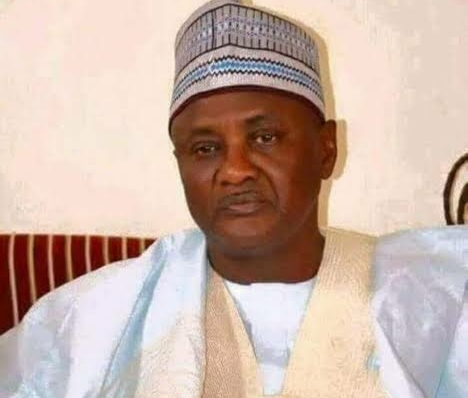
The Federal Polytechnic Bauchi has announced the death of one of its staff members, Malam Ahmadu Maidorawa, following a motorbike accident along the ATBU Gubi campus road in Bauchi.

According to the institution, Maidorawa died on Monday afternoon as a result of injuries sustained in the accident. His sudden passing has been described as a profound loss to the Polytechnic community, where he served in several key academic and administrative roles.

Maidorawa was a former Head of the Department of Computer Science and the immediate past Dean of the School of Science and Technology. Until his death, he was the Deputy Director of the ICT Geospatial Centre of the Polytechnic.

Family members have announced that his janaza (funeral prayer) will take place later today at his family residence in Unguwar Bauchi, Bauchi.

Colleagues, students, and well-wishers have expressed grief over his death, praying for Allah’s forgiveness and eternal rest for the deceased, and for strength and comfort for those he left behind.

[OPINION]: Gov. Bala’s Political Clock Is Ticking — And His Men May Pay The Price

By Nasir Yakub

As time races toward May 29, 2027, when Bala Mohammed exits office, uncertainty has become the loudest voice in his political camp.

Those around him who harbour ambitions for governorship, National Assembly seats, state assembly positions, or other elective offices may be heading into avoidable doom — not because they lack aspiration, capacity or relevance — but because they remain tied to a leader who now appears politically unattached, operating like a freelance politician with no clear party destination.

The questions are no longer minor. They are urgent.

Will they remain in an “alive but dead” Peoples Democratic Party, a platform steadily losing strength, structure and national momentum?

Will they gamble on the emerging African Democratic Congress and hope it grows fast enough into a serious electoral vehicle before the race fully begins?

Or will they attempt the near-impossible route into the ruling All Progressives Congress, where tickets are neither cheap, automatic, nor freely handed to late arrivals?

These are not ordinary questions. They are questions of political survival.

As for Bala himself, the road ahead appears just as uncertain.

Does he remain in PDP and risk sinking with a weakened structure?

Does he seek refuge in APC, where political realignment may offer renewed relevance, stronger federal connections, and breathing space against looming anti-corruption scrutiny?

Or does he move into ADC, positioning himself as a heavyweight opposition figure ready for a fresh national bargaining table?

Every option carries gain. Every option carries danger. But delay now carries the highest danger of all.

Politics rewards movement, not hesitation.

While some are still waiting for signals, others are already building structures. While some remain loyal in silence, rivals are already negotiating alliances. While some hope for last-minute direction, others are quietly securing delegates, mobilising resources, and planting their flags ward by ward.

That is how elections are won long before voting day.

Those waiting endlessly around Bala should understand one hard truth: loyalty without direction can become political self-sabotage.

Aspirants need time. Structures need nurturing. Supporters need certainty. Defections need timing. Campaigns need preparation. None of these things flourish in confusion.

The tragedy ahead may not be that Bala loses influence. The real tragedy may be that many around him lose opportunities simply because they waited too long for one man to decide.

Time waits for no one.

And the earlier Bala chooses a road, the better for those whose futures still hang on his next move.

Because when the final whistle sounds, excuses will not be on the ballot.

Nasir Yakub writes from Bauchi State Nigeria and can be reached via nasiryakub990@gmail.com.

Suspected Phone Snatchers Maim Bauchi Varsity Student During Robbery

By Sabiu Abdullahi

A 200-level Biology Education student of Sa’adu Zungur University (SAZU), Gadau, Maryam Yakeem, has been seriously injured after suspected phone snatchers attacked her in Bauchi State.

The incident took place in Gadau town, within Itas Gadau Local Government Area, but outside the university premises. The attack has sparked concern among residents, who say violent phone theft has become more common in the area.

Witnesses said the assailants, said to be four in number, confronted the student and demanded her mobile phone. During the attack, one of them allegedly used a knife to cut off two of her fingers and part of her ear before fleeing with the device.

Residents in the area expressed worry over the frequency of such incidents. They urged security agencies to increase patrols and ensure those behind the crimes are arrested.

The Bauchi State Police Command has confirmed the development. The Police Public Relations Officer, SP Nafiu Habib, said the victim suffered severe injuries. He added that efforts are ongoing to apprehend the suspects, recover the stolen phone, and bring the culprits to justice.

The student is currently receiving treatment at a health facility in Gadau. There are indications she may be transferred to the Federal Medical Centre in Azare for further care.

Meanwhile, the management of SAZU has dismissed reports suggesting that the attack occurred within the school campus.

Mallam Auwal Hassan, Public Relations Officer of the University, in a statement, said, “The unfortunate incident occurred outside the University environment, contrary to some misleading reports circulating in certain online media platforms suggesting that the attack took place within the University premises.

“The University Management wishes to categorically state that this claim is false and does not reflect the reality of the situation.

“It will be recalled that the Vice-Chancellor sometimes ago paid a courtesy visit to the State Commissioner of Police to further strengthen collaboration and enhance security support for the University community.”

According to the statement, the institution’s Chief Security Officer and Dean of Students Affairs visited the victim at the hospital, where she was reported to be in stable condition.

The Vice-Chancellor, Professor Fatimah Tahir, also conveyed sympathy to the student and reiterated the university’s commitment to the safety of both students and staff.

The management called for calm among the public and urged responsible reporting. It also reaffirmed its collaboration with security agencies to strengthen safety measures within and around the university community.

Bauchi Governor’s Planned Defection To APC Collapses Over Power-Sharing Dispute

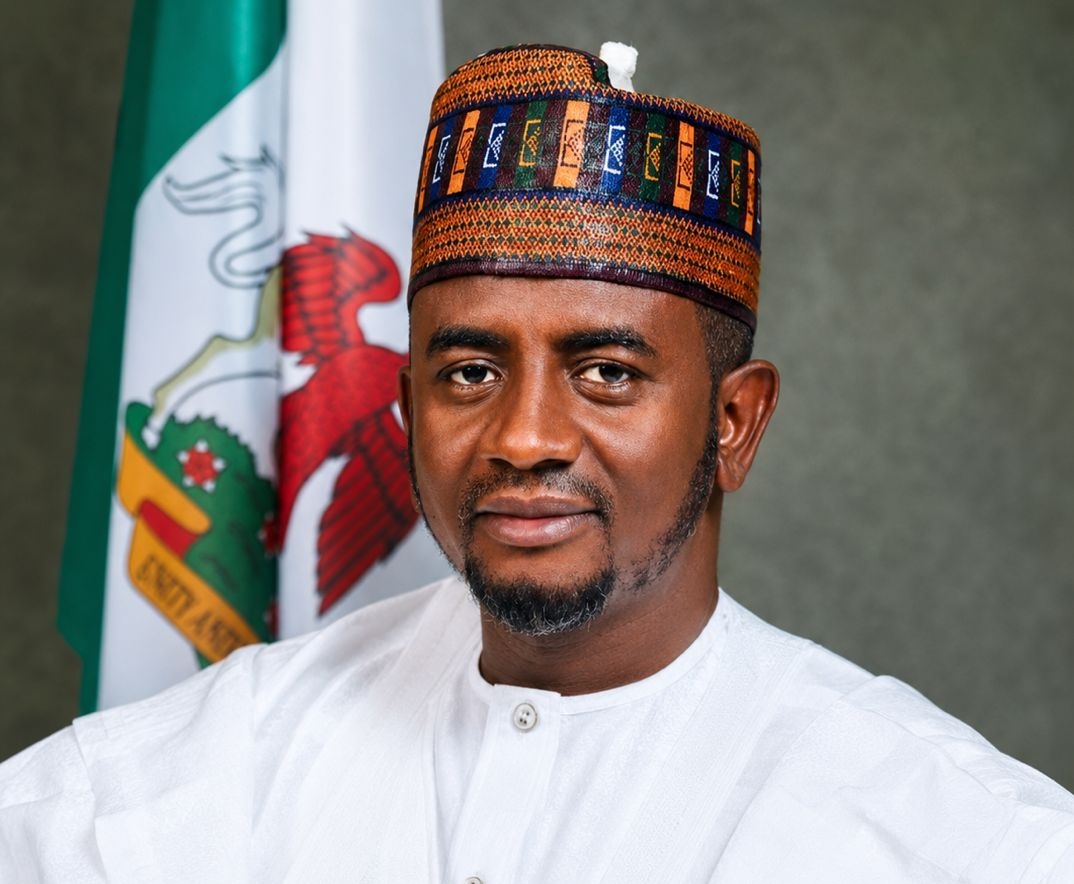
Plans by Bauchi State Governor, Bala Mohammed, to leave the Peoples Democratic Party (PDP) for the All Progressives Congress (APC) have broken down after both sides failed to agree on how to share control within the party.

Talks between the governor, his Turaki-led PDP faction, and leaders of the APC ended without resolution. The disagreement centred on a proposed 60–40 arrangement for control of the party structure in Bauchi State, which the APC was said to have rejected.

Despite the setback, the governor’s camp has indicated that it may still pursue political realignment. His supporters said they are open to working with other parties and are already considering new options for possible defection from the ward level up to the state.

Speaking with newsmen on Saturday, the Chairman of the Turaki-led PDP faction in Bauchi, Sama’ila Burga, said the outcome of the talks showed the APC was not prepared to integrate the existing PDP structure or accommodate the state government.

Bala Wunti: Bauchi’s Unifying Force

By Usman Abdullahi Koli

At a time when many are engulfed with fear of impending internal rancour that is probably capable of causing disunity and despair among key players, a time of reorganisation of the political landscape at both the national and subnational levels, comes a unifying figure who brings solutions to the upheaval experienced, particularly in the recent electoral outing.

The political atmosphere, particularly in Bauchi State, is known for turbulence and vested interests. As the state faces numerous challenges that demand more urgent structural readjustment, this is pertinent, and it raises the question of who can deliver these set goals. That is why Bala Wunti matters.

Among the political players who roll up their sleeves in aspiration to win elections, one critical issue is the unity of purpose. Unity against the monster of poverty, insecurity, hunger, unemployment, and others that are clogging the wheel of our development.

There are individuals whose presence answers questions that institutions struggle with and whose conduct reassures even the most cynical that character still matters in public life. Dr Bala Maijama’a Wunti belongs to that rare category. His story is not merely one of rise, but of formation. It is a journey shaped by early trials, sharpened by discipline, and guided by a clarity of purpose that has endured across decades.

Born into circumstances that offered little advantage, early life required resilience and self-reliance. Throughout his life, it has been punctuated by uncertainty. Yet, instead of breeding bitterness, these experiences shaped restraint, empathy, and a steady internal discipline that would later guide his every choice. Where others might have faltered, he remained composed. Where others might have hardened, he stayed measured.

Profile, professional and industry roles

His pursuit of education must be seen in that light. It was not a smooth path through institutions, but a determined journey through obstacles. From his studies in Chemistry at Ahmadu Bello University to advanced training in management at Abubakar Tafawa Balewa University and beyond, each step reflected commitment, not convenience. What emerged was not simply an educated man, but a prepared mind, one that understands complexity, respects structure, and values clarity over noise. In a world that often rewards speed, he chose depth. In a system that often tolerates shortcuts, he insisted on process.

When he joined the Nigerian National Petroleum Company Limited in 1994, he entered one of the most demanding environments in the country. He did not arrive at prominence; he earned it. From his early role as the Production Programming Officer to his eventual position as Chief Upstream Investment Officer, his trajectory shows a rare pattern in public service: steady progress built on competence rather than visibility. He learned the system from within, understood its contradictions, and positioned himself not as a spectator but as a contributor to its reform. While others chased recognition, he built relevance. While others pursued titles, he mastered responsibility.

His contributions to the oil and gas sector are best measured through results. He was part of efforts that strengthened investment frameworks, restored operational discipline, and brought structure to systems long plagued by inconsistency. Initiatives such as Operation White did more than fix technical inefficiencies. They proved that accountability was possible, even in the most complex spaces. In a sector where decisions carry national consequences, his approach has always been cautious, forward-thinking, and committed to long-term value over short-term applause. That distinction separates those who merely manage systems from those who shape them.

Yet reducing his life to professional milestones would miss the larger picture. What distinguishes Bala Wunti is not only what he has done within institutions, but what he has done beyond them. The memory of hardship has stayed with him, not as a weight, but as a compass. It informs his giving, shapes his interactions, and explains the consistency of his interventions in others’ lives. His philanthropy is not occasional; it is part of who he is. Students have been supported, communities uplifted, and individuals in distress assisted through actions that are rarely announced but widely felt. The recent support for students across tertiary institutions is not a single act; it is part of a pattern that reflects a deep conviction: opportunity should not be determined by circumstance alone. Many give when it is convenient. He gives because it is necessary.

There is also a discipline in his personal conduct that deserves attention. He does not champion causes he does not believe in. He does not bend for advantage. In a political and professional culture where flexibility is often mistaken for wisdom, this restraint is rare and powerful. It gives his actions credibility and his decisions weight. His faith, central to his life, reinforces this clarity. It is visible not only in words, but also in choices that remain steady under pressure.

When he stepped out of public service on May 30, 2025, he did so quietly. There was no spectacle, no fanfare. The moment felt calm but confident, the kind of confidence that comes from knowing your work speaks for itself. Influence does not depend on the office, and in his case, it had already moved beyond it. What he carries into the next phase is not a title, but a reservoir of experience, credibility, and trust. These qualities are far more valuable than any position could ever be.

The emerging political conversation around Bauchi State must be seen through this lens. The state is no longer at a point where familiar patterns can be recycled without consequence. The challenges are deeper, expectations sharper, and the margin for error thinner. This is not a time for comfort; it is a time for deliberate choice. What is required is not just political skill, but administrative depth, economic understanding, and the ability to translate intention into results.

Bala Wunti presents a compelling case, not because he seeks attention, but because his life commands consideration. He understands systems at a level that allows him to engage governance beyond slogans. He has managed scale and complexity in ways that meet the demands of statecraft. He carries a social awareness rooted in lived experience rather than abstract empathy. Most importantly, he stands outside the entrenched rivalries that have defined political competition in the state. That distance is not detachment; it is clarity. It allows him to be seen not as a continuation of old conflicts, but as a bridge beyond them.

The argument for his consideration is therefore not emotional, even though his story moves the heart. It is rational, grounded, and difficult to dismiss. It rests on capacity, consistency, and a record that proves he can think, act, and deliver. In a context where trust is scarce, his credibility becomes stabilising. In a climate where division is costly, his neutrality is strategic. At a time that demands both firmness and thoughtfulness, his temperament aligns perfectly with the responsibility ahead.

This is not to suggest perfection. Leadership is not shown by ambition; it is revealed by preparation. In his case, the evidence is alive. From a childhood shaped by absence to a career defined by impact, his path is intentional, tested, refined, and sustained.

Bauchi faces a choice deeper than personalities. It is a choice between repetition and recalibration, between what is familiar and what is necessary. If the state is to move toward a future defined by stability, competence, and inclusive progress, it must recognise preparation when it sees it.

In Bala Wunti, experience, character, and capacity converge in a rare combination. He does not need to declare his worth. It is evident in the systems he has strengthened, the lives he has impacted, and the consistency he has maintained. The question, therefore, is not whether he has something to offer. The question is whether Bauchi is ready to choose what it truly needs.

If so, the answer is already in front of it.

Usman Abdullahi Koli wrote via mernoukoli@gmail.com. 
Bauchi Governor Raises Concern Over Removal Of Rail Infrastructure In State

By Sabiu Abdullahi

Bauchi State Governor, Bala Mohammed, has raised alarm over the dismantling of railway sleepers along the Alkaleri–Tafawa Balewa rail line, warning that the development could harm the state’s economic prospects.

The governor encountered the activity on Saturday during a trip to Alkaleri Local Government Area, where he had gone on a condolence visit. He reportedly saw contractors removing parts of the rail infrastructure.

Disturbed by the situation, Mohammed called on security agencies and relevant authorities to step in and provide a clear explanation.

He questioned the justification for removing such vital infrastructure. He said assets of this nature should not be altered without proper engagement with the state government.

The governor directed his Chief of Staff to formally contact the Federal Ministry of Transport to seek clarification. He expressed worry that important facilities within the state were being taken apart without the knowledge of local authorities.

Security operatives present at the site reportedly told the governor that the contractors were acting on instructions from the Federal Government.

Mohammed, however, said the explanation did not adequately address the concerns, given the role of the rail corridor in transporting agricultural produce across the area.

He cautioned that the removal of the sleepers could deepen transport difficulties and disrupt economic activities in communities that depend on the railway for moving goods.

The governor also called for better coordination between federal and state governments. He stressed that decisions on critical infrastructure should reflect their impact on livelihoods and local economies.

Further findings suggested that the contractors were operating with a letter said to have been issued by the Federal Government, which approved the removal of the rail tracks. No reason was stated for the action.

Speaking to residents, Mohammed assured them that he would take up the issue in Abuja. He reiterated that rail transport remains one of the most reliable and affordable options for moving goods and services.

He also raised concerns about whether there are still plans to rehabilitate railway systems across the country, especially in the North-East, which he said continues to face infrastructure deficits.

CITAD Condemns Alleged Police Assault On Journalist In Bauchi

The Centre for Information Technology and Development (CITAD) has denounced the alleged assault on Albarka Radio reporter, Mohammed Adamu, by police officers during the Eid Durbar celebration in Bununu, located in Tafawa Balewa Local Government Area of Bauchi State.

According to the organisation, in a statement signed by the Executive Director of CITAD, YZ Ya’u, the incident occurred while the journalist was on assignment to cover the event.

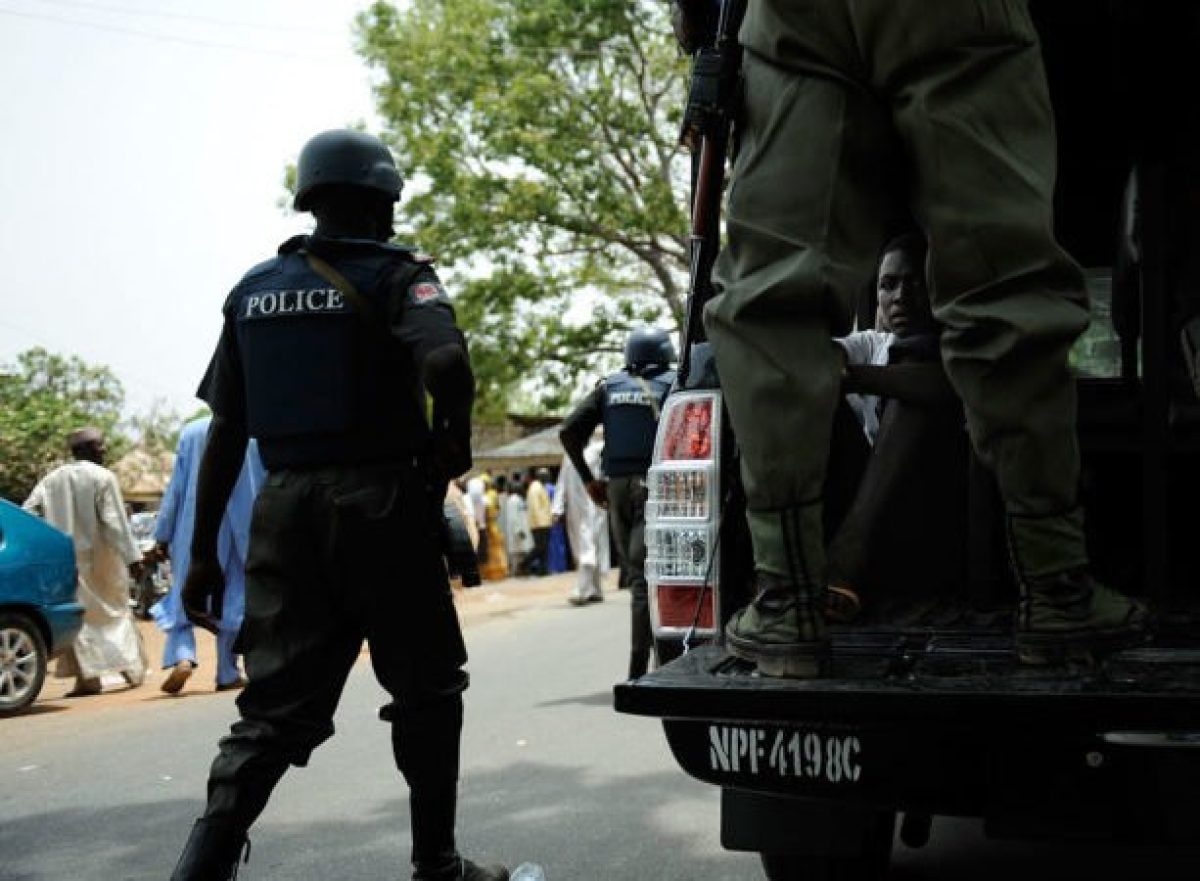
He was reportedly stopped by police officers led by the Divisional Police Officer, Jamilu Kabir. Although he identified himself and made efforts to reach the designated media section, officers allegedly attacked him.

The assault left him with head injuries and compelled him to seek medical care.

CITAD described the development as “a grave violation of press freedom and a direct attack on the fundamental rights of journalists in Nigeria.”

The group stressed that journalists remain vital to public awareness and accountability. It added that any form of intimidation or harm against media professionals weakens democratic governance and undermines the rule of law.

The organisation also noted that the incident reflects a broader concern. It stated that cases of harassment and violence against journalists by security personnel have become frequent.

According to CITAD, such actions create fear and hinder the ability of the media to function independently.

“We therefore call for:

1. An immediate, thorough, and transparent investigation into the incident.


2. The identification and prosecution of all officers involved in the assault.


3. Adequate compensation and protection for the assaulted journalist.


4. Clear directives and training for security agencies to respect and protect journalists in the course of their duties.”


CITAD further urged the Inspector-General of Police and other relevant authorities to act decisively to address what it described as a growing pattern of attacks on journalists and to ensure those responsible are held accountable.

The organisation emphasized that Nigeria must remain a country where journalists can perform their duties without fear.

It maintained that protecting press freedom is essential for the preservation of democracy and the rights of citizens.

BREAKING: Governor Bala meets, briefs President Tinubu on rising bandit attacks in Bauchi State

By Sabiu Abdullahi

President Bola Ahmed Tinubu received Bauchi State Governor Bala Mohammed on Friday for a security briefing following renewed disturbances in parts of the state.

Governor Mohammed met with the President to provide updates on the security challenges facing several communities, particularly in Alkaleri Local Government Area.

Speaking after the meeting, the governor said he highlighted “the disturbing activities of bandits in Alkaleri local government area of Bauchi state, which requires a timely attention.” He emphasized that the situation demands urgent intervention to prevent further deterioration of security in affected communities.

The discussions also touched on recent political developments, including the wave of defections from the Peoples Democratic Party (PDP) to the ruling All Progressives Congress (APC). Governor Mohammed acknowledged that elected officials have the constitutional right to join any political party. He, however, affirmed his decision to remain in the PDP despite the shifting political landscape.

Media reports in recent months have documented repeated bandit attacks in parts of Bauchi State, especially in Alkaleri and other border communities. Villages have experienced killings, abductions, and mass displacement of residents.

Local populations have raised concerns over the frequency of these attacks and have called for a stronger security presence to protect lives and property. Security agencies have reportedly deployed personnel to affected areas as part of ongoing efforts to contain the violence and restore stability.

Social activist urges Bauchi governor to arm locals amid rising banditry

By Sabiu Abdullahi

A social media activist, Adamu Bello Karofi, has called on the Bauchi State Governor to take urgent measures to curb the rising wave of killings, kidnappings, and banditry in the state.

In a post on his Facebook page, Karofi advised the governor to provide local communities with firearms similar to those used by bandits, specifically citing AK-47 and AK-49 rifles.

He suggested that young people in affected towns should receive weapons training and be armed.

Karofi expressed concern over what he described as the Nigerian government’s failure to protect lives and property.

“Everyone can see how bandits have overpowered most states in the Northwest. We fear the same will happen in our Bauchi State,” he wrote.

He argued that the only deterrent against banditry is armed citizens. “Bandits only understand weapons. If townspeople are armed, there will be peace, because what the West calls a ‘balance of power’ will be restored,” Karofi added.

The activist concluded his post by praying that the governor would heed his advice.

Burra community urges telecom companies to establish network services in Burra

By Umar Saleh Burra 

‎Residents of Burra District in Ningi Local Government Area of Bauchi State have renewed their appeal to telecom companies to establish a fully functional telecommunications network within their community.

‎With an estimated population of over 80,000 people, the Burra District remains without access to reliable mobile network services. Community members report that the only available network provider in the area delivers inconsistent and poor connectivity, making communication extremely difficult for residents.

‎Speaking on behalf of the community, Umar Saleh Burra, the absence of a stable telecommunications network has significantly affected economic activities, healthcare communication, education, security coordination, and access to digital financial services. Business owners lament that unreliable connectivity disrupts transactions and limits opportunities for growth.

‎“Students face challenges accessing online educational resources, while families struggle to maintain contact with relatives and essential services. 

‎Community leaders emphasised that in today’s digital age, telecommunications services are not a luxury but a necessity. They noted that expanding network coverage to the Burra District would enhance socio-economic development, promote financial inclusion, improve emergency response systems, and strengthen overall community connectivity.

‎“We are law-abiding citizens who contribute to the economic and social development of our state. We humbly appeal to Nigerian telecom companies and relevant authorities to consider establishing network infrastructure in Burra District,” Saleh stated.

‎The people of Burra are also calling on political leaders, policymakers, and relevant regulatory agencies to support this request and facilitate collaboration with telecom companies to address the communication gap affecting the district.

‎As Nigeria continues to expand its digital economy, communities like Burra urge telecommunications providers to extend coverage to underserved rural areas to ensure inclusive national development.