Bauchi State

Five years of mental restructuring

By Sulaiman Maijama’a
In this life, there exist folks endowed with a God-given passion for propelling the progress of others. They drive pleasure in nurturing younger ones by shaping and improving their cognitive ability, making them emboldened to face the realities of life early, to navigate their way to the promised land and get rid of the traps of the terrain. To call these people mentors, in my view, they are underrated. They are God-sent and, therefore, worthy of being celebrated. If Allah, the Almighty, wishes you good, He makes you come across them, thereby opening a new page in your life.
Every successful person, I believe, has a story of someone to tell. My story will be incomplete without mentioning Malam Abdul Ahmad Burra, a teacher-turned-mentor whose seminal ideas instilled in us are inspirational and fruitful. My five years encounter with him opened a fresh perspective in my life. I believe, in the process of my narration, words will fail me. I may not put it as perfectly as it is, but my oratorically more skilful friends can best tell the story.
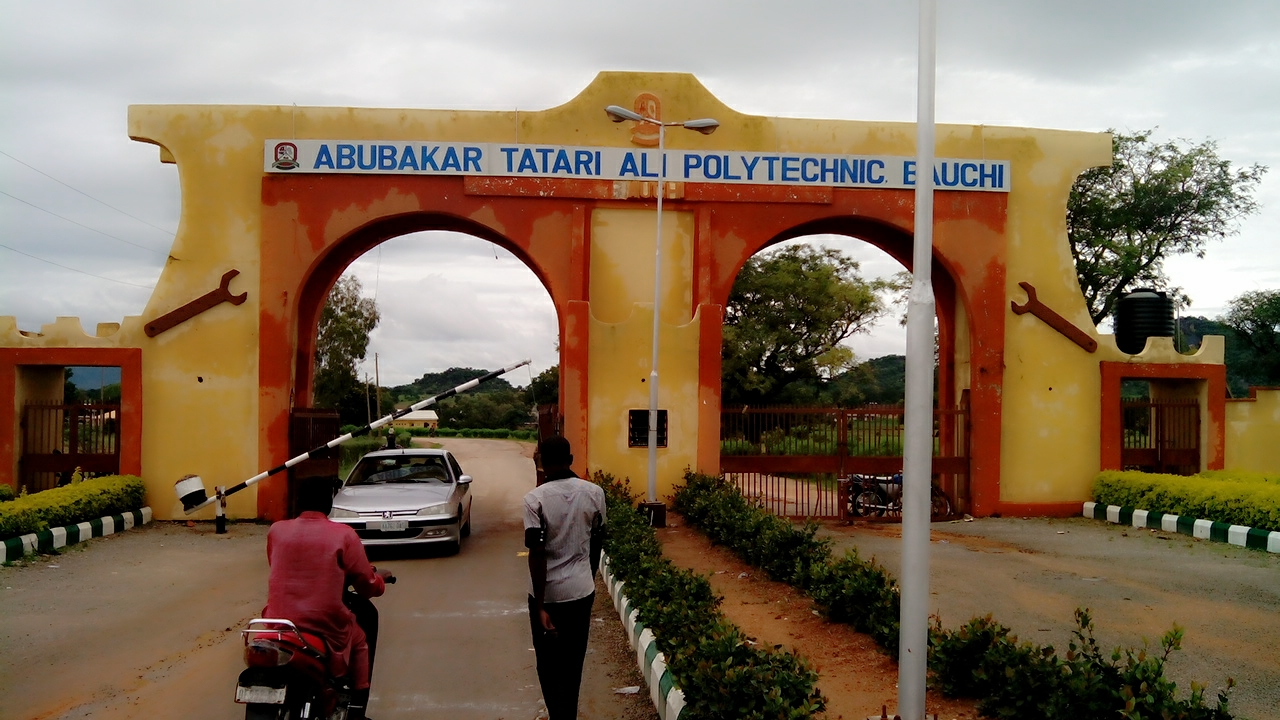
I did not know Abdul Ahmad Burra before 2016. In late 2016, however, Abubakar Tatari Ali Polytechnic, Bauchi recruited new teachers cut across respective departments of the institution. Malam Abdul was among the lecturers recruited in the Mass Communication department. During a sessional break a few weeks to the completion of our Industrial Attachment and so, immediately we resumed ND Two, we had a good fortune to have been the first set of students he taught.
His first impression in the class spelt the type of person he is; a down-to-earth, serious-minded person with a wealth of experience within and outside academia. This imbued in us, sense of determination, commitment and perseverance to pursue our lofty dreams to the best of our ability. Shortly after that, he introduced to us a new method of teaching with which we were not familiar. Every week before the commencement of his lectures, he would challenge the class to bring updates of topical issues in the country. If you told the story, he would annihilate you with a barrage of follow-up questions as if you were giving analysis on CNN. This made our class always keep abreast of happenings in the country, and before we knew it, we became so conversant with National Discourse.
I was almost always the student who updated the class, and that is how Malam Abdul discovered me. Our relationship, therefore, grew and blossomed into a brotherhood. A couple of weeks after taking a semester examination, Malam called and issued me a list of about seven students, including myself, and asked me to summon them.
“A glad tidings to you”, he said, “you are the best students who scored ‘A’ in my course’ “.  He offered us pieces of golden advice and motivated us to maintain the speed. Later, when he realised that my CGPA was moving with Distinction, he became a driving force, propelling and challenging me to ensure that I graduated with it.  In 2017 when we graduated,  as our final result was about to be released, he was the one who excitingly broke the news that I graduated top of my class with Distinction. Thanks to Allah to whom I owe it and the encouragement of Malam Abdul!
After my graduation in 2017, Abdul did not leave me alone; he instructed that I should not, in all conscience, waste a year at home, should apply for a university immediately. I intended to apply to ABU, Zaria. Going by my preference for language comprehension, I wanted to switch to BA English. However, Malam Abdul protested that Mass Communication was the best destination for me. He further suggested that I go to Bayero University, Kano (BUK), for the institution has the best communication department, professors and facilities. In order not to put all our eggs in one basket and end up losing, my friend Shamsudeen Musa and I came up with two plans: to make two separate applications, one for BUK and the other for ABU, Zaria. We did.
Meanwhile, generous Malam Abdul Burra went from Bauchi to Kano to ensure that we secured the BUK admission that year. While waiting for the admission, he suggested that I start volunteer work with any of the radio stations in Bauchi to be well-grounded in the practical aspect of Journalism. When I told him that I did not have a connection with any of the stations, he took me to Bauchi Radio Corporation (BRC), which made the process possible for me to work.  The first report I presented to the Editor was given a headline. My reader will guess, with more than scientific precision, how excited I was. I worked with the BRC for almost a year.
In the same vein, one evening in early 2018, this idol invited me to his house for a fruitful discussion. He told me that since I had the upper hand in broadcast practice, and being an intelligent boy, according to him, I would make a good writer, and so, he wanted me to put my hand in the writing business so that I would be multiskilled. I was too young and inexperienced but, he encouraged me that whether I “write right” or otherwise, it is a learning process, which with practise would eventually lead to close perfection. I heeded the advice; began to write since then. Should I live without writing now, I would feel incomplete. The impact it has had on me today is immeasurable. To whom the credit goes?
Late 2018, when the BUK Direct entry admission list for the Faculty of Communication was out, to our great excitement, only my friend Shamsudeen and I, whom Malam Abdul worked for, made to the list in the whole Bauchi State. Upon informing him, his excitement defied expression. Having faith and confidence in us, a further challenge he put on us to go to BUK and made him proud. Did I have any excuse to relent?  I felt the urge and thirst for learning to justify the confidence Malam reposed in me. I worked harder and expanded my reading time because I thought that anything less than First Class would be a disappointment to him.
Four semesters down the line, Alhamdulillah! With all sense of humility, I made First Class in Two semesters. Two semesters to my graduation now, I feel obliged to pen down this tribute in acknowledgement of the tremendous impact his mentorship has had on me.
I would not do justice to myself if I did not mention that Malam Abdul facilitated me ways to work for financial earnings at different points in time. For example, during the 2019 election, he engaged me in a particular assignment. My budget for that year was, therefore, increased!
May the light in him continue to flicker, ameen.
Maijama’a wrote from the Faculty of Communication, BUK. He can be reached via sulaimanmaija@gmail.com.

1 person killed, 1 other injured as gunmen storm Bauchi community

By Muhammad Sabiu

The Bauchi State Police Command has confirmed an incident that led to the killing of one person and injuring of another by some unidentified gunmen on Saturday in Burshin Fulani, a community on the outskirts of Bauchi metropolis.

Confirming the incident, a police spokesperson in Bauchi, Ahmed Wakil, told journalists that the deceased was a senior staff at the Federal Polytechnic, Bauchi.

He was quoted as saying, “Gunmen attacked Burshin Fulani village and killed one, Abubakar Muhammad, a senior staff of the Federal Polytechnic, Bauchi.

“He was shot on the neck and died on the spot. Policemen who rushed to the scene evacuated the victim to the Abubakar Tafawa Balewa University Teaching Hospital (ATBUTH), Bauchi, where he was certified dead.

Mr Wakil added that policemen stationed close to the scene of the incident quickly responded on hearing gunshots of the gunmen.

He said, “Our patrol team stationed at the polytechnic gate on hearing gunshots from the direction at about 4:000 am quickly rushed to the area, on sighting the light of the patrol van the gunmen fled.

“The deceased came out to rescue his children who were struggling with some people at the gate, and immediately he emerged, they shot him.”

Azare New Market: Appeal to Gov. Bala to construct roadway pavement

By Tajuddeen Ahmad Tijjani

Let me draw the attention of the listening Bauchi State governor, Senator Bala Muhammad, to the nail-biting hardships of Azare New Market, Katagum LGA, on the urgent need to construct rural roads in the said area for the economic development of the zone and beyond.

Azare is the Bauchi state’s second-largest city and is also the headquarters of the Katagum zone. It is bordered on the east by Damban LGA and Potiskum, Yobe state. On the south by Misau local government and Jama’are local government in the west; and on the north by Itas/Gadau LGA. All these towns rely heavily on the Azare market for their commercial activities. That’s why Azare economic viability is very significant, particularly in the state and northeast in general.

Remember that the former Central Market was destroyed by fire on June 18, 2018. This caused traders and business people to relocate to the new market built during the military administration of Theophilus Bamigboye. Though recently, the market was expanded, and new shops were erected with the donations made after the inferno of the old market. Unfortunately, this new market lacks a rural road that would facilitate the transfer of goods and farm produce from rural areas to markets with significant concentrations of demand.

Unfortunately, the fire that destroyed the ancient market spread due to a lack of access roads for fire engines. The lack of roadway pavement in the new market, God forbid, could exacerbate the situation. Also, the government should checkmate, as a matter of priority, new allocations of shop spaces by local government administration, particularly around the current access road, to avoid repeating previous mistakes.

The new market is situated off Kano road. However, lack of access road delays in conveying farm products and movement of people to acquire their daily demands. In the same vein, people find it very difficult, especially during the rainy seasons. Moreover, drainage and flooding cause severe hardships to the people. It looks like a pond, especially after rainfalls. 

Governor Bala has made infrastructural development a top priority without a doubt. This has transformed the narrative. Necessary infrastructures are essential for growth. As a result, we’re appealing to our state’s workaholic leader to come to the people’s rescue. Internal Revenue will perhaps increase due to this because the inflow of goods and services will be greater than before.

For Bauchi to become the envy of other states, good infrastructure must be put in place, which would, indeed, attract investors to inject their resources into the state. We’re all aware of how insecurity has drastically retarded development in the northeast. Thank God, Katagum and Bauchi are relatively peaceful, which made them a destination for economic activities. But, without good roads, the gains made, would be diminished.


Tajuddeen Ahmad Tijjani writes from Galadima Mahmoud Street, Kasuwar-Kaji Azare, Bauchi State.

Education: Bauchi, other northern states have highest number of out-of-school kids

By Muhammad Sabiu

In a report released by a Lagos-based research firm, SB Morgen, Bauchi is the state with the highest number of out-of-school children in Nigeria, with figures rising to 1,239,759.

Figures in the report have indicated that Katsina State is second to Bauchi, with about 873,633 out-of-school children, who might have been prevented from going to school due to so many reasons.

Bringing the above figures, SB Morgen discussed recent occurrences in Kaduna State, which came fifth on the list and where schools remain closed until further notice due to the rising rate of kidnappings and other security challenges in the state.

“The Kaduna State Government has said that all primary and secondary schools will remain closed until the security situation improves across the state,” SB Morgen wrote.

It’s now apparent that one of the major factors that hinder the progress of education in northern Nigeria is kidnapping, which is not quotidian in only Kaduna. Most northwestern states have been witnessing kidnap of students in their hundreds, which usually forces authorities to order the suspension of school activities “until further notice.”

Not only northwestern states, recently, Niger State in the north-central part of Nigeria saw students in their hundreds kidnapped from their school, with many still being held by their abductors.

Officials also lament the general backwardness of education in Nigeria as there are approximately over 10 million out-of-school kids.

The Minister of State, Education, Chukwuemeka Nwajiuba, was in June 2021 quoted by the News Agency of Nigeria as saying, “The current challenges affecting the Nigerian education system has left much to be desired, the system is characterised by high illiteracy level, infrastructural decay and deficits.”

“We have inadequate number of qualified teachers, inadequate infrastructural facilities/resources and poor funding,” he added.

The figures, which are said to have been sourced from the Federal Ministry of Education, are presented as follows in order of the size of the number of out-of-school kids:

BAUCHI: 1,239,759

KATSINA: 873,633

KANO: 837,479

KADUNA: 652,990

GOMBE: 567,852

KEBBI: 484,702

ADAMAWA: 483,702

NIGER: 478,412

OYO: 463,280

SOKOTO: 462,164

YOBE: 405,100

ZAMFARA: 383,952

BENUE: 383,022

TARABA: 338,975

BORNO: 266,178

OSUN: 260,222

PLATEAU: 258,256

LAGOS: 229,264

NASARAWA: 204,771

RIVERS: 196,581

A’ IBOM: 194,018

DELTA: 181,995

KOGI: 169,316

OGUN: 158,797

EBONYI: 151,000

KWARA: 141,325

CROSS RIVER: 140,944

IMO: 125,414

FCT: 121,587

ENUGU: 117,091

ONDO: 113,746

EKITI: 99,778

ANAMBRA: 92,332

BAYELSA: 86,778

ABIA: 86,124

EDO: 79,446

Looking at the above statistics, out of the first 15 states on the list, only one is in the southern part of the country: Oyo.

Therefore, this calls for more effort and attention of stakeholders to put their shoulder to the wheel to curb this problem of the rising number of out-of-school children.

River Jama’are needs ecological fund attention

By Mallam Musbahu Magayaki

It is no longer news that flooding has washed away about 1,567 farmlands on Tuesday 10 August 2021 in Jama’are Local Government Area of Bauchi State. According to reports by Daily Trust, there were seven villages affected by the menace.

However, Jama’are River, also known as the Bunga River in its upper reaches, starts in the highlands near Jos, Plateau State, Nigerian, and flows northeast through Bauchi and Yobe States before joining the Hadejia River to form the Yobe River. Therefore, if and when over flooding occurs, the resultant effect would undoubtedly lead to the loss of countless lives of peoples’ and destroy their farmlands because of its wide range.

Furthermore, mitigating flooding hazard is one of the responsibilities of ecological fund management by funding the projects to alleviate and manage social-ecological knots. And by extension, the management concerned can liaise with the state government witnessing devastating and uncontrollable flooding risk.

Remember that almost 80 per cent of Jama’are dwellers are farmers where they find it too difficult to get their farming crops for sale in the market when flooding occurs. People from various regions of this country are struggling in Jama’are to buy farming materials. As a result of continuous flooding each rainy season, there are attendant of loss of farming produce.

The government is negligent in mitigating the flooding menace. As the federal government fully knows all the areas submerged by flooding in the rainy season, the government should do the needful before the season.

Advisably, the government should set up committees for monitoring flooding affected areas by observing the type of works that the site needs.

In a nutshell, ecological fund management and state government should, in a matter of urgency, collaborate with World banks flood protection projects to seek their assistance because the projects are capital intensive.


Mallam Musbahu Magayaki writes from Sabon Fegi, Azare, Bauchi State. He can be reached via usbahumuhammad258@gmail.com.

Bauchi payroll scam: Please, name, shame and jail them

By Sulaiman Maijama’a


Reading the report of the disheartening revelation that the Bauchi state government has uncovered over 7000 ghost workers and pensioners from its payroll, which will enable it to realise over 500 Million Naira savings monthly, has given me sleepless nights this week. This is one of the terrible experiences I have had in recent times. I did not know when I was engulfed by raw, unadulterated pain, thinking about how the state’s governor, Bala Mohammed, is taking bold steps to sanitise civil service and block all leakages, other ungodly and unpatriotic people are sabotaging his efforts. If the government is to employ fresh graduates on the N50,000 salary scale, 500 million is equivalent to 10,000 employees.


 When the global economy is ravaged, and governments all over are trying to cushion the effect. Bauchi State is not an exception; these people fail to have the conscience, unleash their cruelty on the resources of the poor masses. And while these fraudulent people, whom I describe as “demons in human structure”, are benefiting illegally from this organised financial scam, the Governor is unjustifiably being criticised for being seen at fault, and the civil servants are in difficulty. This is, indeed, more than double jeopardy. However, if justice is to prevail, one cannot point an accusing finger at the citizens of the state who have been registering their discontent and throwing a barrage of questions to the State Governor, Sen. Bala Mohammed, seeking clarification on why are the salaries of some workers not paid as at when due. Those who think to seek clarification on issues of this nature is a crime know nothing about the Constitution because every citizen is entitled to ask questions on any public issue, except for classified matters, as by law established.


For a couple of months ago, there have been concerns by the Bauchi State citizens, especially civil servants, as regards the hitches that result in delay of the payment of some workers’ salaries in the State. Because Bauchi State is a civil service state, the problem appears to be the greatest concern of the people these days. The opponents of the PDP led administration take that to their advantage by crashing in, posing questions to the Government in power as to why the delay and why despite death, retirement and record of no employment, there has been an exponential rise in the wage bill?


This fraud in civil service started long before Senator Bala Mohammed came on board as the executive governor of Bauchi state. Though his approach to bringing it to a halt is extraordinary, It appears we have a long way to go as the efforts have always proven to be an exercise in futility.


To address the challenges on the issue in September 2020, Governor Bala hosted a Media Parley with civil servants, labour leaders, Government’s officials, elder statesmen, stakeholders and the Media where massive corruption in the system was exposed. A financial consulting firm, DYNATECH Solutions Limited, contracted by the State Government to sanitise its payroll and nominal roll, had revealed that ghost pensioners had been paid over N700 million within one year. While addressing the government, DYNATECH said the sum of N744,000,000 had been siphoned out of the state treasury.


I was then happy when the Governor resolved not to spare anyone found behind the organised financial crime on the Government’s payroll. Unfortunately, however, less than one year down the line, some people could be brave enough to summon the courage and orchestrate their devilish act, just a replay of last year. Something then is wrong!  For Senator Bala to find a lasting solution to this, he must begin to speak to those found to be involved in collecting undeserved salaries and pensions “in a language that they understand”. What language do they understand?


I remember a couple of months ago when some crooks found to be behind financial scams on the state’s payroll were publicised; their names published on national dailies along with pictures and their places of work. Please, your Excellency, sustain this. Whoever is found indulging in such a shameful act, regardless of his social status, should be breaking news for the day on national dailies, radio and television stations. Their names should make the banner headlines, and their pictures take the front pages of the newspaper. This is the best way to embarrass them, just like they embarrass the responsibility they are entrusted with. It will also serve as a deterrent to others.


Since these people do not mean and wish well for the society as their actions result in general affliction in the society with public institutions being grounded to a halt, please, your Excellency, we want to see them facing the fullest wrath of the law, being chased to jail, for they are nothing but calamity to our journey to promised land.


Maijama’a writes from the Faculty of Mass Communication, Bayero University, Kano. He can be contacted via sulaimanmaija@gmail.com.

Bauchi: Suspension of all private NCE licenses is long overdue

By Tajudden Ahmad Tijjani

The Bauchi State government has indeed taken the bull by the horns by suspending the license of all private NCE awarding colleges. It’s a fact that any society that does not prioritise education will retrogress.


The state government’s decision is a welcome development. All private National Certificate of Education ( NCE) granting institutions have had their license revoked in the pearl of tourism because of their negative contribution to the state’s educational development. The standard of education in the state is persistently getting lower. 


For the operators of such mushroom NCEs, losing their license will be a tough pill to swallow. Notwithstanding, it’s the right call from the government’s side because allowing them to continue operating results in the graduation of incompetent, quack teachers who are the benchmark of our state’s underdevelopment.
Indeed, anywhere In the world, the importance of education can never be overemphasised; quality education is essential for long-term development.


Last September, the United Nations (UN) ratified 17 Sustainable Development Goals (SDGs) to serve as benchmarks for every nation to ensure global prosperity, protection of the planet, and poverty eradication.


All countries and stakeholders acting in collaborative partnerships will implement the plan Goal 4—Quality Education: Ensure inclusive and equitable quality education and promote lifelong learning.


The call for a Quality Education, not merely access to any education, by the UN is a great step in ensuring that all children and adults, not just those born with a silver spoon, have access to quality education.


Education is more than just a content delivery system; it is a system designed to help all children and adults reach their full potential and see themselves as contributing partners of society. The former UN Secretary-General Ban Ki-moon set the SDG process in motion in 2012 by declaring that every child must be in school. The quality of those schools must improve so that students are prepared to be productive citizens ready to lead the future. 


Indeed, supporters of our beloved state should applaud the Bauchi state government’s decision to not only renew the licenses of these schools but also to sanction any defaulting so-called institutions per existing laws.


 However, let the government ensure that standards are strictly followed, that rich content is provided, and graduates are produced who are assets and productive in the twenty-first century, rather than liabilities.


Tajuddeen Ahmad Tijjani writes from Galadima Mahmud street, Kasuwar-kaji Azare, Bauchi State.

Eid al-Kabir: Prices of rams skyrocket in Bauchi

By Muhammadu Sabiu

Slaughtering of animals on the tenth day of Zul-hijja is one of the core forms of worship for that day. Those animals include rams, sheep, goats, cows, camels. However, the ram is always preferable to the other animals, especially with respect to the tradition of the Holy Prophet Muhammad (SAW).

In Islam, this tradition of slaughtering originated since Prophet Abraham (AS), when Allahu (SWT) commanded him to slaughter his son as a form of sacrifice. However, on laying him to the ground to slaughter him, the divine command changed. Then the Almighty sent him a ram to slaughter instead of his beloved son.

With the coming of Prophet Muhammad (SAW), the final Messenger sent by Allah to preach to humankind, the tradition of slaughtering got attached a full-fledged form of worship.

As part of “ibadat”, it’s highly recommended for every sane, financially capable Muslim to get any of the animals mentioned above—preferably a ram—to slaughter on the tenth day of Zul-hijja.

Looking at how the nation has plunged into an economic quagmire that bites harder, ram buyers are groaning over the high prices of ram in Bauchi. We, therefore, tried to survey the cost of rams and a comparison as to how they were sold in 2020 and how they are sold this year.

A buyer of ram, who bought a ram from Durun market in Bauchi State alongside his other two friends and who pleaded anonymity said, “Rams that ranged from ₦30,000 to ₦31,000 now cost from ₦48,000 to ₦50,000 thereby amounting to an increment to the tune of ₦20,000 each. Each of us bought rams, whose prices were ₦48,000, ₦49,000 and ₦50,000.”

Also, a seller of rams, who also wanted his name not to be mentioned, said, “First of all, I am engaged in the business of selling animals, and Eid el-Kabir is just around the corner. But there is one problem.”

When asked what the problem was, he added, “The animals have become untouchable because their prices are too high. Money is not circulating among people. Only those that are financially strong come to buy. Common people no longer come; they can only buy a goat worth like ₦12,000 or ₦13,000 and get back home. Last year, people had money, unlike this year.”

He confirmed that there had been an increase of about ₦20,000 when compared to last year. “And again, a ram that was worth ₦30,000 last year would now cost up to ₦50,000,” he added.

Tuesday, July 20, was declared Eid Day and, thus, a public holiday in Nigeria.

Designate Bauchi as oil-producing state — Rep. Wakilin Birni

By Adamu Bello Mai-Bodi


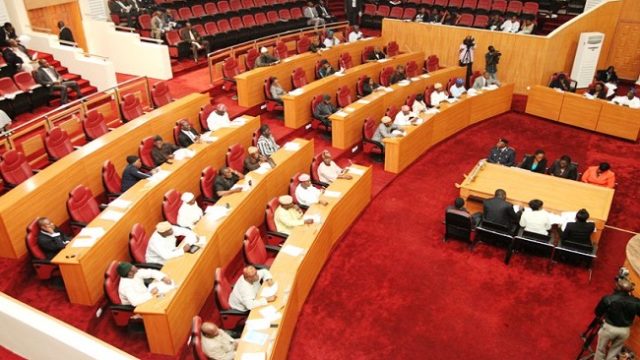
The member representing Bauchi Federal constituency, Hon. Yakubu Shehu (Wakilin Birni) pulled up his trousers and went into the gutters to ensure Bauchi State is rightly apportioned what it deserves from the Federal Government. Furthermore, the lawmaker moved a motion during the plenary on Thursday 15, July 2021, seeking to declare Bauchi State an oil-producing state given that oil exploration started in 2018 in Alkaleri LGA of the state. This is nothing short of bravery; it depicts Yakubu’s sheer love and concern for the development of his state.


Yakubu boldly puts it bare on the floor that it has become imperative to ascertain the fortunes at the disposal of the Federal Government in Alkaleri LGA so as to hasten the process of giving effect to the provisions of the new Petroleum Industry Bill, 2021, in terms of the economic benefit the host community stands to gain.


As a Bauchi citizen, I couldn’t hold back my applause when Yakubu asserted that any community from whose location oil is discovered and or produced is entitled to some extra monetary packages for the upkeep of its environment, infrastructure and health impact. He went further and bolder to make a case for the people of Bauchi to start benefiting from the 13% derivation being the constitutional right in the form of an incentive to the host community.


As expected, the motion, which Hon. Mansur Manu Soro seconded nearly divided the House for obvious reasons, one of which is that there are no reports of production from the Kolmani Well. Notwithstanding, the Ayes have it after a third submission by the Speaker of the lower chamber. It is a crying shame that most of southern Nigeria’s media houses hypocritically reported that the House overwhelmingly rejected the motion despite the fact that the Speaker ruled in favour of the Ayes.


By sponsoring such a critical motion, Wakilin Birni has won a bravery medal for himself and some degree of prestige and assurances for the Pearl of Tourism. Moreover, the motion gives Bauchi people a sense of victory, for it puts Gombe’s unfounded contest over the oil field to a permanent rest. It also serves as a groundbreaking argument for declaring Bauchi an oil-producing state in the country, which shall come to pass God willing.


However, the most crucial component of the brave Yakubu’s motion was his prayer to mandate the committee on petroleum resources (upstream) to invite the Nigeria National Petroleum Corporation (NNPC) to give a comprehensive presentation on the level of work in the oil exploration currently undertaken in Alkaleri and the successes recorded. This is because we don’t want to be taken for a ride or fall into the same ditch as the Mambila hydropower project that was nearly completed on paper. Bauchi people and Nigerians need to know what is going on in the Kolmani River.


As I applaud Hon. Yakubu, I want to assure him that all well-meaning Bauchi citizens are solidly behind him on this. He must not relent, especially on mandating the committee on petroleum resources (upstream) to invite the NNPC to give a progress report on their undertaking of oil exploration in our state.


Adamu Bello Mai-Bodi writes from Gidado Bombiyo residenceK/Kaji Azare. He can be reached via 08067481928.

A case for technical colleges in Nigeria

By Adamu Tilde, PhD.

For a while now, Nigeria has been witnessing exponential growth in the rise of certificate-awarding institutions and massive production of holders of certificates of all kinds: diplomas, NCEs, degrees, masters, PGDs, etc. Ordinarily, this should be a welcome development. But, unfortunately, this phenomenon comes at the expense of acquiring quality skills, thus resulting in the production of certificate holders with no skills at all or with some skills that are not in demand and/or have no economic value whatsoever.

One comes to realise the effects of this phenomenon when one does a simple close-proximity analysis—for example, over sixty registered and unregistered colleges of education award NCE certificates in Bauchi state alone. Most of the courses offered in these colleges are combinations of English/Hausa, Social Studies/English, Arabic/Fulfulde, etc. The questions to ask are: what are the specific skills that an average NCE holder acquires in the three years they spend in college? Do these skills, if any, have any economic value? If yes, how many NCE holders, for example, does Bauchi state need at any given time?

Again, in Toro, one out of the twenty local government areas of Bauchi state, there are six colleges of health technology and counting. Most of the courses offered in these colleges are diplomas in Medical Records, Environmental Health, Community Health, Laboratory Technology, etc. I may sound so dismissive of these courses, but don’t get me wrong. These are significant courses and, perhaps, with valuable skills to offer, but we already have enough to go around. And, trust economics, its laws are no respecters of irrational decisions: the higher the supply, the lower the demand and invariably the price. So the need to rethink why we do certain things instead of other things could not be more urgent.

Way Forward

To be very clear, I am not presenting anything novel. Our pioneer leaders had envisaged the inevitable need for technical skills for economic growth and development, and that’s why they established monotechnics, polytechnics, and technical colleges across the country. No thanks to unimaginative leadership and penchant for mass production of certificates-wielding graduates that had led to having polytechnics with more students studying mass communication, theatre arts than engineering, computer science, statistics, etc. Nothing can be more ironic.

In the following subheadings, I will argue on why we should pay more attention to technical skills and invest more in establishing technical colleges:

Guaranteed employment

Rest assured that employers lined up waiting for you once you possess skills like plumbing, welding, woodwork, carpentry, masonry, tiling, electric wiring, programming, website and apps development, etc. With an increase in population comes corresponding demands for housing, food, and services. So these skills will forever be in need, so long as we breathe. And in the event you don’t want to be on the payroll of anybody, you can monetise the skills by employing yourself. For example, a diploma holder in animal health and production can engage in the private practice of visiting farms and local markets to provide first aid treatment. There are too many farms to go around. We can say the same about a plumber, tiler, painter, etc.

Less time than conventional schooling

Most technical skills can be acquired in a record time, probably in a year or two, and then you are good to go. The most interesting thing about a given skill is that the more you practice it, the more you master it. Moreover, it is more difficult for a person to forget a set of skills than the paper-based theories learned in school. Very unlike typical schooling (a diploma or a degree), where you would spend 2 or 4 years with no specific skills to show and then sooner you would forget the little theoretical knowledge you have acquired since you are not practising.

High return on investment

Compared to the money spent to acquire NCE certificates, diplomas in health-related courses, and some instances, degree courses, you are better off having any of the aforementioned technical skills. NCE holders and, in some cases, degree holders hardly make up to ₦30,000 per month in many private schools. In fact, even in public service, NCE holders fetch ₦36,000 per month in Bauchi state. When you analyse the time, money and energy expended to acquire the certificate and the monetary reward after that, you will struggle to make economic sense of the decision. So many Keke Napep guys make more than that amount in a month. So much for a heap of certificates!

Again, as a private investor, you are better off establishing a technical college, especially if you would engage in vertical integration by employing your products (graduates). For example, you can set a company that specialises in finishing and look for contracts. Trust me; we have a paucity of skilled workforce in the building industry. We do import tilers, plumbers, welders from outside. That’s how bad things are, and that’s how vast the opportunities are.

And for those who want to ‘japa‘ (to go abroad), your chance of securing a visa and employment abroad is greatly enhanced if you have any technical skills. This is for non-medical professionals and exceptionally brilliant computer wizards.

Note

The argument here is not whether an NCE certificate or health technology diploma or even degree certificate, for that matter, is good or not. No! The idea here is that we should go to colleges and universities to acquire skills that we can use to improve our financial situation. If the so-called certificate(s) you have obtained cannot fetch you a job or equip you with skills that people can pay for, you need to rethink why you were in school in the first place. We have tonnes of graduates and varying certificate-holders roaming the street for jobs that are not there and crying for lack of employment; meanwhile, they have no skills worth employing. We are massively producing what we do not need and under-producing what we urgently need. Something is wrong.

We have to appreciate the dynamics of time. Long ago, all it takes to climb the mythical social ladder and join the much-vaunted middle-class is a certificate of any kind. Whatever or not you studied in the university is immaterial; public jobs were waiting for you. But that was then. Those years of yore have passed for good. There are no more public jobs for everyone. Internalise this and know peace. As for private companies, well, first of all, they are not charity organisations. Secondly, they are profit-driven, so they don’t employ people to fill any underrepresented state’s quota. Thirdly, they reward value— what you have to offer is what counts. You need much more than a certificate to survive. You need skills, not just any skills, but skills that have economic value.

You need to wake up and smell the coffee. Hello!

Dr Tilde can be reached via adamtilde@gmail.com.