Barack Obama

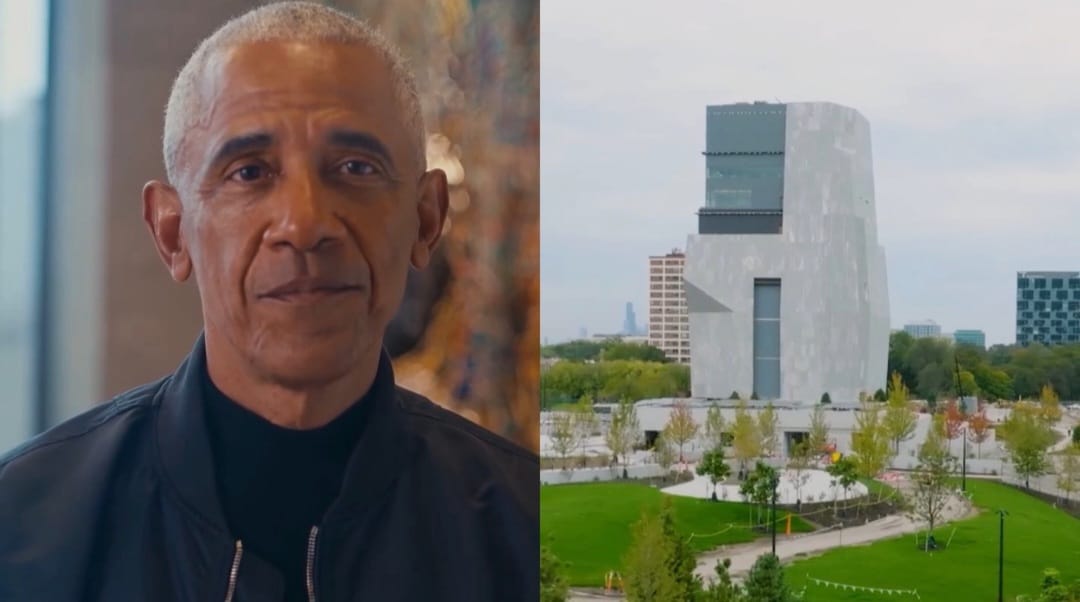
That Obama Presidential Centre

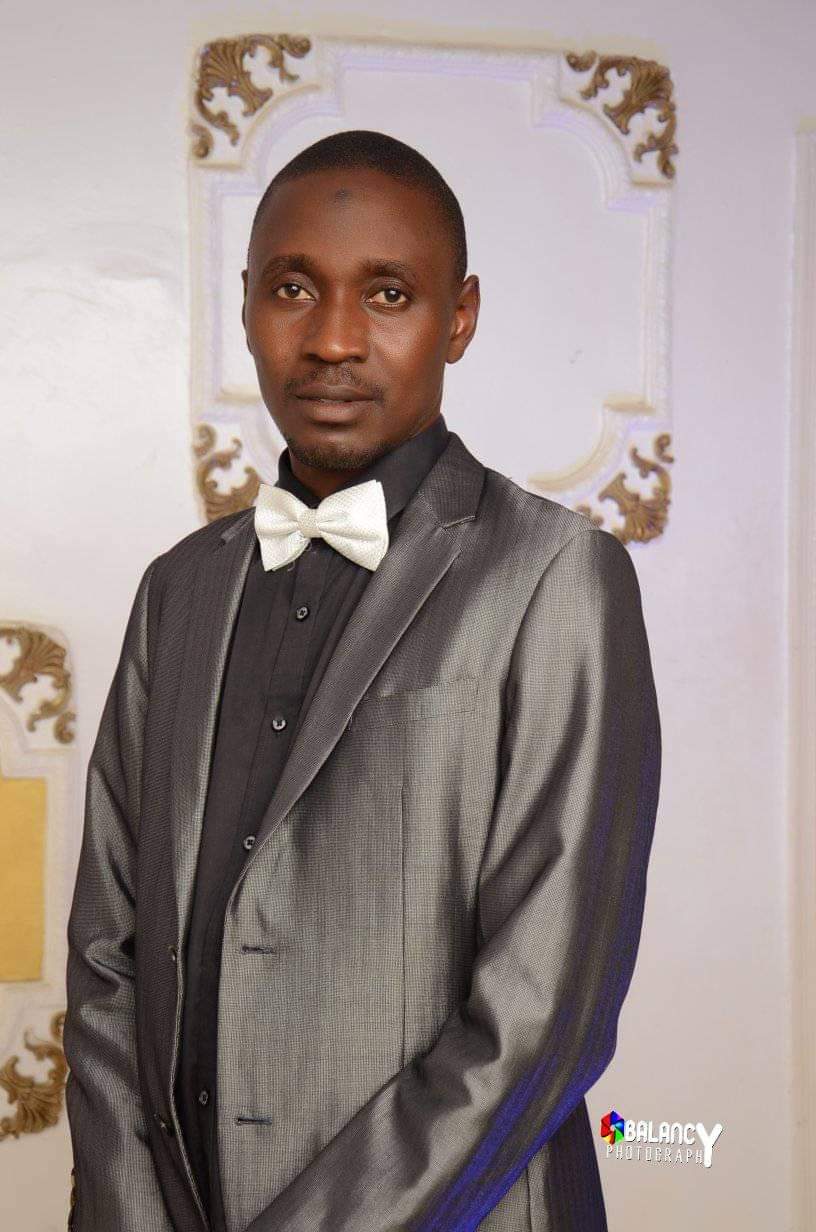
By Nura Jibo MRICS

The man, President Barack Hussein Obama, will never cease to amaze me. In 2008, when Obama was campaigning for his presidential bid against John McCain, I was in the Sudan Savanna region of Northern Nigeria, managing a N6 billion redevelopment of the Yankari Animal Game Reserve Holiday Resort and Safari Project in Bauchi State.

At that time, the 2i/c in my office, Dr Aminu Bashir, was scheduled to visit the United States. He asked me if there was anything that I needed him to buy in America. I humbly requested two (2) books: The Audacity of Hope and Dreams from My Father, both written by Barack Obama.

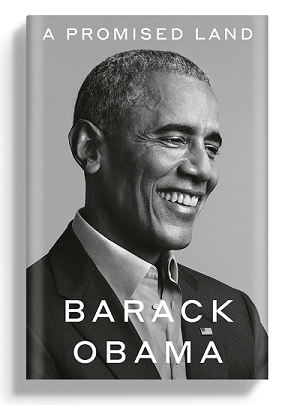
Indeed, it was a joyous moment for me the very day I laid my hands on the two of Obama’s international bestseller books. 

For those who are not aware of what qualifies a book to be labelled a bestseller, any book that its publishers sell an average of more than 10,000 copies within a week is automatically considered a bestseller under US standards. Obama’s “Audacity of Hope” immediately qualified for the New York Times bestseller list because of its profundity.

Today marks exactly 18 years since Barack Obama made history in the United States of America. And today, which marks the day of another victory with the launch of the Obama Presidential Centre on Juneteenth 2026, is not only a win for the US Democrats and democracy, but also a day when consistency meets sincerity and the ability to reemerge.

Chicago has been home to Obama, his wife Michelle, and their children, Sasha and Malia.

The lessons I learned from the Obamas are not only about courage and conviction but also about inspiring me to rise and do more with my life.

1. Personally, Obama’s personality (behaviours and appearance), as defined in simple psychology, inspired me to write my first book that debuted in 2010, which I sent to him and his wife, Michelle, one copy each-in 2010, via the US Embassy in Nigeria. At that time, my aim was not really to practice quantity surveying as a meal ticket. My dream was to immerse myself in the study of global literature and novels by renowned authors, such as the Russian Fyodor Mikhailovich Dostoevsky and the Chinese Sun Tzu’s The Art of War. I sincerely cared less about studying physics and chemistry books because I believed they offered less to humanity, as they contributed more to inflicting havoc on the scientific world via bombs, drones, and missiles. 

I deeply thought that science was never favourable for me. I was quite surprised when I see myself today practicing a segment of it and excelling in quantity surveying at an appreciable speed and awe, because my thinking was to one day appear in a global debate with world leaders such as Barack Obama to discuss the West and Africa and seek an explanation from my Kanoonline super writer friend, Dave McEwan Hill’s candid observation, who averred that: “If we want to keep our best people at home we have to provide a better country for them to operate in. If Nigerian leaders were honest, progressive, and ambitious, they would have rewarded high achievers rather than multibillion-dollar thieves.” McEwan Hill believes that many of our best brains would have stayed at home to build the nation.

However, most of them have gone overseas to be in more satisfying and more remunerative employment in better-run communities.

While I can’t agree with Dave as little as he does, his double-decker challenge was just like the way the Obamas challenged the late McCain and Trump, with his trumpeting of our cosmopolitan world in a George Galloway manner. Indeed, Dave McEwan Hill acknowledged what he described as my impressive contributions that nonetheless read like special pleading to ignite curiosity that the “blacks” are any less intelligent than the “whites. ” To which the question is more complex than that, as he asserted elsewhere that all members of all races function just as well as each other when placed equally in advanced environments. The key question is why some environments get so far ahead of others. 

So far, I have repeatedly featured and succeeded in debating the world at the United Nations Conference of the Parties level for umpteenth times.

2. Hence, anytime I listen to Obama, I come away with something new and extraordinary, not in my professional field, but outside my constituency. For example, before the birth of Obama’s Presidential Centre, I established a 3-hectare tree shelterbelt and two high-powered solar boreholes as a community organiser and climate change advocate in Nigeria. In my shelterbelt, biodiversity has already been restored for the people of Asayaya village across a comprehensive 3-hectare area, with a grant of no less than £70,000 from the BCDA.

3. After succeeding in biodiversity restoration, I looked up to the United States of America to leverage the establishment and registration of a segment of my NGO: the African Climate Change Research Centre (ACCREC), which I affiliated with the UNFCCC Secretariat in Bonn, Germany, as its climate observer organisation for well over sixteen years now. Prof. Bello Makama–an African American Chemist of all time, painstakingly registered ACCREC in New York and became its first US Country Director at SUNY-ERIE, courtesy of following the Obama legacy.

4. Now that Obama has launched his Presidential Centre in Chicago, with Presidents George Bush Jr., Biden, and Clinton in attendance, only God knows what is going on in my mind regarding what I will come up with in a couple of months. I will not digress, but I take a huge lesson from the veracity of Obama’s amazing construction, which cost well over $850 million, with Tod Williams Billie Tsien Architects and Michael Van Valkenburgh Associates as its landscape architects; the centre is designed to receive an average of 1,666 visitors every week. They will enjoy learning, sports, entertainment and music to the zenith.

5. Indeed, anytime I read and watch the Obamas, rest assured I will come up with something new, especially when I reflect on their times as a husband and wife in perfect harmony.

6. The time they spent in Chicago, with Michelle as an Associate Dean and Obama as a professor of law, often reminds me of the days I traversed and visited nearly fifty countries for my international career. I lived in Europe, North Africa, South America, West Africa and the Arabian Peninsula, sharing ideas and presenting my case studies to the international community, my immediate community and African neighbourhoods.

7. Anyone who wants to know more about what I am up to in a couple of days can watch this space for my open letter to President Obama. This letter is certainly going to be different and very unique from the one I wrote and sent to President Donald John Trump at his house in Mar-a-Lago!
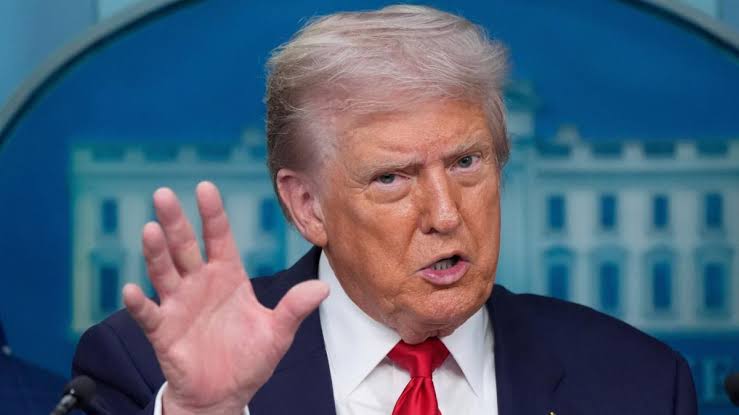
Trump defends sharing racist video of Obamas, says ‘I didn’t make a mistake’ despite deleting clip

By Sabiu Abdullahi

United States President Donald Trump has stated he did not err in sharing a video on his official Truth Social account that showed former President Barack Obama and former First Lady Michelle Obama depicted as apes.

Speaking to reporters aboard Air Force One on Friday, Trump insisted he “didn’t make a mistake” and said he does not need to apologize.

“I didn’t make a mistake,” he emphasized.

Trump acknowledged that he had not watched the entire video before it was posted. He explained:

“I didn’t see the whole thing. I looked at the first part, and it was really about voter fraud in the machines, how crooked it is, how disgusting it is. Then I gave it to the people. Generally, they look at the whole thing. But I guess somebody didn’t.”

When asked whether he condemned the video’s content, Trump replied, “Of course I do.”

The video, posted late Thursday, promoted a conspiracy theory about voting machines used during the 2020 election and included a racist portrayal of the Obamas. It remained on Trump’s account for about 12 hours before being deleted Friday morning after bipartisan calls for its removal.

Earlier, White House Press Secretary Karoline Leavitt defended the post in a statement, describing it as “from an internet meme video depicting President Trump as the King of the Jungle and Democrats as characters from The Lion King.”

She added, “Please stop the fake outrage and report on something today that actually matters to the American public.”

Hours after the statement, the video was removed from Trump’s Truth Social account.

World Speech Day, 2025: Know your audience or don’t speak to them

By Bello Sagir Imam                                           

In 2005, Prof. Auwal Yadudu of the Faculty of Law, Bayero University Kano, had to speak to a bench of Kano state Sharia courts judges at Aminu Kano College of Islamic and Legal Studies (AKCILS), where I was studying Law at Diploma level. I was even nicknamed as Senior Advocate of Nigeria (SAN) by my colleagues. The college management invited me to represent students as the Public Relations Officer (PRO) of Redemption Chambers, an association I co-founded at the AKCILS.

The legal luminary started his speech by addressing the judges in English, smiling. After about six minutes, I noticed him slowing down, and he completely paused. While silence overtook the venue, making it a graveyard, the lawyer examined the hall, making eye contact with some of us as if searching for something in our eyes. Then he returned to his speech with full force but this time with a bit of speed. We were all shocked to have discovered that Prof. switched to speaking in the Hausa language instead of the English language he was using earlier, which I enjoyed because of his near-native speakers’ control of the language I sensed in it.

Prof. Yadudu spoke for a while in Hausa, as if trying to do what he knew best: “defense”. He then paused and quickly said: “na tsara jawabi na gabaki dayansa a harshen Turanci, amma, tun kafin na yi nisa, sai na fahimci cewa, kaso mai tsoka daga cikinku ba sa fahimtar abin da nake fada yadda ya kamata, saboda da harshen Turanci nake magana, shi ya sa na yi sauri na koma yin magana da harshen Hausa.”

He mentioned his full name as “Barrack HUSSAIN Obama.” The former US president deliberately added the middle name (i.e., Hussain), a Muslim name, in his address to Turkish Muslims that he came from a Muslim background. This is unusual; Obama does primarily address Americans or other non-Muslim audiences.

Malam Aminu Kano, in his time, was hated by many Kano elites, including monarchs, politicians, and clerics. Why? Because he opted to always please the masses (talakawa), to the detriment of the elites, in his speeches. Why? Perhaps the masses cast votes en mass, while the elite, who were much fewer, hardly voted, and the Malam, a politician, needed votes.

The three stories above demonstrate the power of knowing your audience as a speaker for an effective speech.

Eugene Ehlich & Gene R. Hawes have recommended finding the answers to the following questions for any speaker who wishes to speak effectively to the audience. For instance:

What is the:

  1. Age
  2. Gender
  3. Educational status
  4. Religious inclination (including sectorial affiliation)
  5. Social status
  6. Their knowledge of you (the speaker)
  7. Their familiarity with your subject matter
  8. Race
  9. Peculiarity
  10. Career of the audience.

A series of phone calls ensued between me, the secretary, and the Chairman of Elite Coven of the Faculty of Law, Bayero University, Kano, last month, shortly after I accepted their invitation to train them in public speaking. That was in my effort to find answers to some of the questions above. For instance, number 2,3,7 etc. The aspiring lawyers furnished me with all the answers, accordingly.

One of my public speaking students asked me what she should do if, despite her effort to know her audience, she couldn’t succeed. My response was: “Don’t speak to them. Simple!”

In conclusion, “Unexpected Voices: 10 Years of Speaking for the World” is this year’s World Speech Day (WSD) theme, marking the 10th anniversary. All the voices that shaped the world, Like Malala’s, King’s, and Danfodio’s, that WSD aimed to celebrate and promote would not have been heard if the people behind them were oblivious of who their audiences were. The fate of future voices is going to be bleak, except if the knowledge of the audience is understood.

Bello Sagir Imam is a Public Speaking Coach at Domain Leadership Academy, Zoo Road, Kano. He can be contacted via belsagim@yahoo.com.

Celebrating World Speech Day 2024

By Bello Sagir

Today is World Speech Day (WSD), 2024! This year’s theme is “Speech for a Better World.” WSD is a day of celebration for all Nigerians and people around the world.

In 2015, Simon Gibson founded WSD at the Athens Democracy Forum to celebrate free speech, public speaking, and public speakers. In 2016, WSD was inaugurated and first celebrated in Athens and Singapore. By 2020, over one hundred countries celebrated WSD. As a result of this milestone, Facebookers and YouTubers began live-streaming the event.

World Speech Day is a celebration day for all Nigerians because, prior to 1960, when we officially became an independent nation from Britain, there were a series of speeches by Sir Abubakar Tafawa Balewa, Herbert Macaulay, Nnamdi Azikiwe, etc., in Britain, some African countries, and, above all, in Nigerian media and during processions and campaigns, all in a bid to free Nigeria from the shackles of the colonial masters.

Sheikh Uthman Danfodio reformed Islam in northern Nigeria, not because he was the most pious or educated person nor because he was the most fearless warrior, but largely, if not solely, because he was a very persuasive speaker.

The same is true of Malam Aminu Kano, who won the Kano East constituency in the federal legislature during the Second Republic. Similarly, in 1979, his party, the PRP, won the Kano and Kaduna gubernatorial seats in a landslide victory.

As we are Black and African, so is Barack Obama, whose father went to the United States from Kenya. Therefore, his political victory affects us. According to analysts, Obama became the first Black African American President because he could speak persuasively to the audience.

Teaching is a form of speech that falls under informative public speaking. That is to say, all educated people are educated because teachers have taught them. Imagine the world without teachers! Would there be medical doctors who take care of our health, engineers who design and make cars for us, pilots who fly us, military and other security personnel who secure us, bankers who keep and manage our money, or even journalists who hunt for news professionally and inform us? Would there be all these personalities and many more?

Regardless of the religion you follow, it reached you through public speakers who are God’s agents. They used largely informative and persuasive public speaking to extend the religion to people. Also, you learn how to worship God through public speakers who teach you at schools the performance of the religion, as prescribed by God and his messenger.

See how public speaking has been instrumental in Nigeria’s independence, the reformation of Islam in Northern Nigeria, educating Northerners (of that time), resisting bad governance, and a person of African descent becoming president of the powerful United States of America.

Additionally, considering how public speaking is responsible for the creature comforts and peace we enjoy, among other things, it is not amiss to conclude that World Speech Day is worth celebrating every year by all of us in our various capacities because, in a way, celebrating the day is celebrating all the public speakers responsible for the civilized world we are all proud of today.

Bello Sagir Imam

Public Speaking Coach

Book Review: ‘A Promised Land’ by Barack Obama

By Marzuq Ungogo

I have read Barack Obama’s A Promised Land for the past five months. I started with an E-book and bought the hard copy, hoping to speed up my reading. While I have read dozens of books this year, this 751-page book is the most impactful I have read.

Obama started with a summary of his life and his foray into politics while trying to avoid repeating details present in the Dreams from My Father and Audacity of Hope. After that, in an impressively comprehensive style, Obama described the chronology of events in the Democratic Party nomination.

One thing was clear that in addition to the fact that he was well prepared, Obama happened to be in the race just in time when there was a need for a fresh voice, a different perspective at the face of the failure of the familiar. His informed opinion about the Middle East and Afghan war, the American economy and the plight of ordinary citizens, have endeared Obama to many. Notably, Obama put forward an agenda for national unity using stories that revealed how much reality and fate Americans share beyond racial and demographic characteristics. The fact that he was running against a respected woman, Hillary Clinton, with a track record of excellence and dedication to family made the competition for the Democratic candidature very tough. However, it did not come as a surprise when Obama won the candidature, making history as the first black person to go that far.

However, the race even got hotter as Obama faced the Republican candidate John McCain and his running mate Sarah Palin. But he was ready! Obama was able to speak in a language young people, progressives, people of colour, minorities, anti-war, affordable healthcare advocates, and environmentalists could understand. Benefiting from a coordinated network of internet-savvy young volunteers, Obama’s message ‘Yes, We Can’ spread far and wide, growing number of supporters and currying more dollar donations. Knowing fully that many of his potential voters, the youth and minorities, were not registered to vote, a part of his campaign was dedicated to ensuring new voters were duly registered.

As Americans went to poll in November 2008, victory was well in sight for the 47-year-old contestant. Barrack Hussain Obama won the seat of the 44th President of the United States of America following a victory in both electoral college and popular votes.

Going forward, the book dedicated some chapters on how Obama assembled his cabinet and staff. There were two key priorities, economy and security. Unfortunately for Obama, he won the seat when a recession was ripe, arising from Wall Street and other financial malpractices. Sadly, the Bush administration underestimated the whole situation and its impact on average citizens who lost both their mortgages and jobs. Therefore, Obama and the new team started working on injecting and stimulating the economy before his inauguration. Given his promise to minimise America’s troops and funding in the Middle East and Afghan war, strategic appointments related to security were also carefully made to ensure that.

Obama was not economical with words on his proud The American Recovery and Reinvestment Act. This detail provides outsiders like me with a deepening explanation of the American senate and house politics in a straightforward language. Factors and concepts such as the filibuster, lobbying, the categories of republicans and democrats, and the arts of political compromises were alive throughout. The project involved injecting 800 billion dollars into the account through multiple sectors. This big money was hoped to halt the worsening of the recession, build consumer and investor confidence and at the same time drive some infrastructure development.

At last, the bill was passed to the relief of the economic team. As Obama would claim later in the book, the project has tremendously contributed to putting the US economy in shape. In addition, Obama worked towards a bill that protects consumers against future recklessness of the banks and other financial institutions. A similar level of detail was used to describe the politicking around Obamacare Act and decarbonisation agenda, and so on.

In a dedicated section of chapters ‘The World as it is’, Obama narrated his global political agenda, actions, visits, and collaborations. Obama generously educated his writer about the structure and place of Iraq and Iran in the scheme of Middle East geopolitics, of course, through the American lens. The writer did the same epistle on Russia, China and other world political players. He narrated his famous visits to Russia, China, Egypt, Japan and other countries in an attempt to promote world peace and extend a handshake with America’s perennial rivals. Although there were some futile attempts at balance, the writer didn’t hesitate to black paint Iran, Russia, and China in that typical American cliche. Nevertheless, ‘A promised land’ provides an interesting short course on global politics.

Another part, ‘In the barrel’, was dedicated to an exhaustive account of Obama’s life as the US President and other day-to-day internal affairs. Disasters, damage control, action, response, bills, acts, and politics all sandwiched in a maze that keeps the president of the USA exhausted. This was followed by the last part, ‘On the High Wire’ centred around the fight against terror and yet again the complex international politics. Notably, Obama proudly gave a detailed account of the Abbottabad raid that led to the successful neutralisation of Osama Bin Laden in 2011. The book was carefully terminated at that point, amplifying victory against evil and a sense of fulfilment for the families of victims of 9/11.

Obama tried not to go into details on the politicking process for the 2012 presidential election. This suggests that the stories were saved for another day, likely packaged currently in a different book.

The author’s mastery of language, the gift of oration, interesting sense of humour and occasional sarcasm have beautified the book in a manner that captures the imagination of the reader.

In summary, the writer successfully highlighted lessons in politics of principles, the audacity to dream the ‘impossible’, the perseverance to push against all odds and the smartness in utilising modern technology and the resource of young people. The book also extolled the virtue of intense preparation for aspiring leaders. In addition, this book highlighted the achievements of Obama’s first presidency, especially the control of economic recession and creation of jobs, better access to healthcare, decarbonisation efforts, international alliance and fight against terror.