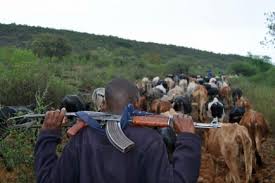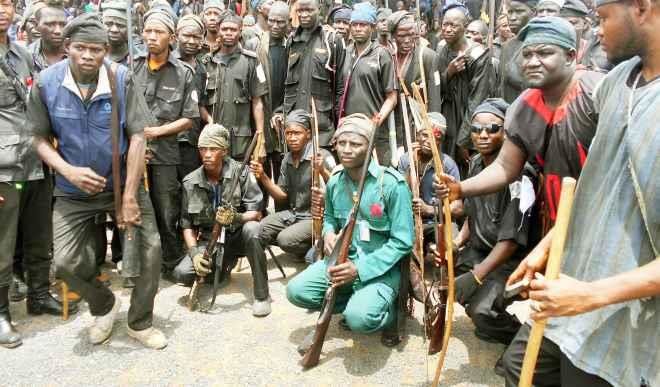
Bandits

FG: Why bandits are not declared terrorists

By Uzair Adam Imam


The Federal Government has disclosed why it declined to designate bandits as terrorists, saying that it is because of international best practices.
Recall that in November, last year, a Federal High Court in Abuja granted an ex parte application for gunmen and terrorists to be declared as terrorists.


The Attorney-General of the Federation and Minister of Justice, Abubakar Malami (SAN), made the disclosure in a TV show, NTA’s Good Morning Nigeria Show.


He said that the process would be concluded in a matter of days, adding that the court judgement that ordered the government to declare bandits as terrorists would be gazetted.


However, Malami was quoted as saying: “Government has a responsibility to act but within the context of acting, you equally expected to operate within the confines of international best practices associated with engagement and one of such best practices is that you can only use maximum force on groups, individuals that are declared terrorists and that is where the application of the Terrorism Act comes in place.


“With that in mind, Nigeria acted, first by proscribing IPOB, taking into consideration the threats to lives and properties they have caused in the nation. Boko Haram was proscribed.


“The gazetting of a court order or judgement is a process but what matters fundamentally within the context of [the] international convention is the judicial declaration and that has been obtained; the court has declared bandits, kidnappers, cattle rustlers as terrorists.


“So, with or without the gazette, what gives effect to such declaration is a judicial pronouncement but the gazette is a mere formality and it has been on and I believe within a matter of days, it will be concluded,” Malami added.

Have we not reverted to the ugly old days?

By Abba Muhammad Tawfik

The prime priority of every government is always to ensure the safety of its people by providing adequate food and security and other necessities of life to make a pleasant bustling of it (life). However, the inability to reach that satisfactorily had made Nigerians call it an anathema on President Goodluck Jonathan’s stewardship and pinned him with the harsh tags of incompetence and murderer in northern Nigeria. For that, we prayed consistently and did everything practically possible within the sphere of our human influence until we had him ejected from power.


General Muhammadu Buhari is very well acquainted with his antique military stature of rational thoughts. And, of course, zero tolerance to nonsense and his political confederates in APC wooed us by the “change” cliche. They strategized their political expedition by accentuating majorly on Jonathan’s incompetence to ensure the security of life and property in the Northeastern states of the nation.


As hapless and helpless as we were with our lives at the grabs and pangs of insurgents, we put our complete trust in Buhari and APC, with the expectation and hope of fulfilling their promises of strengthening security setbacks and restoring peace in the nation. As a result, APC attained the peak of our love and succeeded with the power of our lives and thumbs.


Early in their (APC) administration, as they vowed before God and the good people of Nigeria of addressing the security challenges, we can honestly say that the waterloo of Nigerian enemies was celebrated. Normalcy was restored in most Northeastern states like Adamawa, Gombe, Bauchi, Yobe, and Borno, which were then wrecked by detonations and eruptions of improvised explosive devices.


Expectations often fail, and most often, most of their promises fail. The accomplishment of the war being waged furiously against insurgents turned out to be a mirage. It was short-lived, and insurgence spread its tentacles ubiquitously across the nation.


Up to now, a two hour thirty minutes drive from Damaturu to the once known “Home of peace” is like penetrating through the boundaries of the “Bermuda triangle” despite having an airforce base that is well equipped with military fighter jets in Maiduguri. The road will be barricaded for hours, and people would be wantonly slaughtered like animals in abattoir by insensate humanlike beasts without any intervention.

Sadly, the enormity of the matter is that even those who have taken the solemn oath and are saddled with the heavy responsibility of protecting the lives of innocent Nigerians are not spared.


Moreover, the country’s Northwest and the Northcentral segments have also responded to the topsy-turvydom of insecurity and have become a furnace hell on earth. The Kaduna–Abuja road remains a highway of death where people are daily being mercilessly forced to breathe in death and exhale life and stripped of their chattels by kidnappers. 


One of the worst tribulations that betide one in today’s Nigeria is being a resident of Zamfara, Sokoto, or Katsina. The daily news reaching us from the region is that of kidnappings. Bandit terrorists bathe in the bloodstream of innocent souls, turning wives into widows and children into orphans.

Despite the economic hardship in the country,  one has to struggle to fulfil Darwin’s law of survival. But, unfortunately, only our vital forces dearly pay the cost of so doing. May Allah, in His infinite mercy, restore peace to our dear nation. Amen. 


Abba Muhammad Tawfiq is a 500L Medical Rehabilitation student at the University of Maiduguri. He can be reached via abbamuhammadtawfiq@gmail.com.

Fulani: The endangered species of Nigeria (II)

Ahmadu Shehu, PhD.

The first part of this essay published here highlights the necessary ingredients for genocide which are vividly in the advanced stage in Nigeria against the Fulani, one of the largest ethnic groups in the country. The socioeconomic and sociopolitical conditions that preluded genocide in various countries worldwide have been well documented in history books. Therefore, the worst anyone could do is to fail to see the looming disaster in Nigeria.

Decades ago, some political leaders had set the ball running when Bola Ige, a prominent Yoruba leader, called Fulani the “Tutsis” of Nigeria. Threatened by Fulani leaders’ socioeconomic and political clouds, politicians across the country who saw the Fulani not just as rivals but as a threat to their desired political hegemony borrowed a leaf from Ige’s playbook.

Those were the framers and promoters of diabolic stories against the North and northerners, especially the region’s political leadership. The narratives of “owners of Nigeria”, “northern oligarchy”, “Kaduna Mafia”, and such epithets as the cabal, northern domination, Islamization agenda and the completion of Danfodio jihad were given persistent, often aggressive, currency in the Nigerian public domain.

Another set of narratives to debase the intellectual competence and meritocracy of the North is put behind the federal character, with any northerner attaining success being assumed to be a beneficiary of some affirmative action, sheer luck or even the corrupt Nigerian system, regardless of their proven intellectual and mental capabilities.

This constant and persistent brainwashing has blindfolded a large chunk of southerners to the extent that many of those I meet believe that being Hausa-Fulani, even the richest black man on earth – Alh. Aliko Dangote – did not actually earn his wealth. So some of them would ask if I got some favours to be able to obtain a PhD from Europe, or question my academic job in Nigeria even when I teach them in Hamburg, Cologne or Vienna.

An average southerner has been made to believe that a northerner is an empty shell, a dullard, an illiterate who is incapable of any mental or physical success. Of course, these deliberate, false narratives are geared towards maligning and disorienting the North. But, the North is one large, diverse, but culturally interwoven community that cannot be beaten as a whole. There is, therefore, the need for a scapegoat.

Indeed, the orchestrators of this scheme got a few points wrong, but one thing they got right was the point of attack, i.e. the Fulani. Yes, Fulani, because they are the traditional rulers. They are the religious leaders. They are the political leaders. They have become Hausa-Fulani, and therefore the focal point of unity. The cultural war of the ’70s has failed to disunite the North simply because the Fulani historical and cultural orientation was left intact.

However, an opportunity presented itself when the media stereotyped the Fulani as herdsmen in all the reportage around herder-farmer conflicts – a stone-aged human resource conflict that has existed for ages – but only to be used as a tool for demonization and stereotyping of the Fulani people.

Populist politicians ala Ortom, Darius and their cronies in the North and South of the Niger seized the moment to first and foremost cover up their asses against the glaring failures of their administrations and to complete the agenda for the social, if not geographical, disintegration of the North. It was yet another tool for fighting a perceived Fulani president.

Throughout 2015 – 2019, the electronic, print and social media was flooded with the “Fulani herdsmen” stories. Headlines, editorials, columns, opinions, misinformation, disinformation, fake news – the word “Fulani” became the vogue in the media.

Today, this stereotyping has taken us a step closer to the looming genocide. Displaced Fulani herders in the northwest have become easy targets for recruitment into banditry and kidnapping. While arms dealers, informants, financial collaborators from other ethnic groups have established a business cartel in robbery, banditry and kidnapping, young, impoverished Fulani herders have become the foot soldiers that carry out these physical acts of crime.

Their knowledge of the forests and ecological terrain, their military-like lifestyle, bravery, coupled with the excruciating economic conditions, have made these unsuspecting lads easy prey of the city-based cartels. These are nomads who knew nothing, had nothing, and depended on nothing other than livestock, which is no longer a dependable source of livelihood, as indicated in the first part of this essay.

Millions of nomadic and sedentary herders’ continued destitution provided a vast army for crimes and criminalities we see today. This fact has been confirmed by research and is attested to by the governments. For example, in a recent in-depth study of banditry in northern Nigeria, Dr Murtala Rufa’i of Usman Danfodio University shows that bandits are victims of circumstances and tycoons from all other ethnic groups in the country.

Although this has been a known fact, have we ever heard of Igbo arms dealer, Hausa kidnap kingpin, Bagobiri kidnapper, Kanuri Boko Haram, Nupe informant, etc.? Do we know of Hausa yan-sa-kai, Bagobiri yan banga, etc.? How many people know that bandit Turji is actually ethnically Bagobiri and not Fulani? Why do we hear of “Fulani kidnappers” or “Fulani herdsmen”?

The implications for this sweeping criminalization of a whole community are as dangerous as they are numerous. Firstly, it has set the most united, cohesive ethnic groups, Hausa and Fulani, on each other’s throats. This is the arrow that might break the camel’s back in the scheme of setting the North on fire.

Secondly, it has criminalized the most important northern ethnic group in the sociopolitical front, making political cohesion impossible. Thirdly, it legitimizes crime and criminals by ascribing them to ethnicity or other human value systems. Fourthly, and sadly, that is the last bus stop on the road to Kigali.

When a whole community, ethnic group or society is viewed as criminal, worthless and or dangerous, the natural reaction is a sweeping, conscious and deliberate elimination of the community. Their elimination becomes a duty as the larger society feels unsafe in their presence. And yes, these feelings are illusions but have been entrenched in people’s minds to the extent that restraint becomes impossible.

Today, people (including Fulanis) consciously or subconsciously talk of killing the “Fulani” in Zamfara, Sokoto or Katsina. But then, in reality, when you kill Turji or his lieutenants, you do not kill Fulani. Because when you killed Shekau, you did not kill a Kanuri, neither did you kill Igbo by killing Evans. You have, in reality, killed a blood-thirsty criminal.

Now, why is the Fulani case different? Why are the media and various sections of this country bent on demonizing millions of Nigerians in the bad light of a few rugged criminals? At the risk of sounding conspiratorial, I will give my take in the next part of this essay.

Troops raid terrorist bandits’ den in Sokoto, scores killed

By Muhammad Sabiu

Reports from Sokoto State in the northwestern part of Nigeria have indicated that the Nigerian military has launched a series of attacks on the enclave of the terrorist bandits who operate in the region, ChannelsTV reports.

A number of the terrorists were said to have been killed, while many others were injured in the wake of the military attacks.

Recall that Satiru and Katanga, two villages in Isa LGA, were recently attacked by bandits, resulting in the deaths of numerous inhabitants.

On the other hand, the military claimed to have raided the marauders’ hideouts on Thursday and Friday, killing many of the gunmen.

According to sources, several of the bandits who escaped the raid were spotted attempting to leave around the fringes of Bafarawa hamlet, some on motorcycles.

All attempts to contact the division’s army spokesman in the division were fruitless as of the time of reporting this article. More information on the situation is expected in the coming hours.

Travellers killed, dozens abducted as bandits block Kaduna-Zaria highway

By Uzair Adam Imam

Reports from Kaduna disclosed that one person was shot dead while many travellers were abducted when gunmen blocked the Kaduna-Zaria highway in the state.

The incident happened around Mawai village, also known as Gonar Magajin Gari, on Monday night.

A source identified the victim killed as one Alhaji Sani Dogara and was heading for Kaduna from Zaria.

Reports also disclosed how the bandits operated ‘unchallenged’ for almost three hours.

However, an eyewitness said that the bandits came in vehicles and stationed them around Tudun Gaude village.

He added that the vehicles were used to evacuate their captives to an unknown destination.

Bandits abduct Mother of Yahaya Bello’s Chief of Staff

Uzair Adam Imam

Unknown gunmen have abducted Mrs Seriya Raji, mother of Abdulkarim Jamiu Asuku, the Chief of Staff to Governor Yahaya Bello of Kogi State.

Reports disclosed how the gunmen raided her residence in Adavi Local Government Area of the state on Monday night.

An eyewitness confirmed that Mrs Seriya Raji was abducted moments after she observed her evening (Ishai) prayer in a mosque within the house.

According to the source, the abductors were about six and wore masks concealing their identities.

Up to now, the abductors have not made any contact with the family since the incident.

Buhari’s popularity plummets to new low – survey finds

By Sumayyah Auwal Usman

President Muhammadu Buhari’s popularity has plummeted to the lowest level since he took over as the country’s leader in 2015, according to the latest Vanguard for Good Governance Initiative (VGGI) survey.

Results of the survey compiled by VGGI, show President Buhari’s popularity has declined sharply during the past two months with his approval rating dropping from 58 percent to 21 percent.

On specific issues, the survey found Nigerians, especially northerners, were unhappy over matters of heightened insecurity. Moreover, concerns about the economy, especially the cost of living and rising inflation are now seeing the president’s popularity hitting an all-time low among Nigerians.

The survey also reveals that the IPOB activities in the South-East is crippling the economy of the region.

VGGI says its survey consisted of phone calls, emails, interviews and text messages over the past three months to slightly more than 150,000 people.

Bandits storm Sokoto community, kill 3, injure several others

By Uzair Adam Imam

Three persons were killed by suspected bandits at Kurawa village in Sabon Birni local government area of Sokoto state.

It was gathered that the attack took place a few hours after Governor Aminu Tambuwal left the area.

Tambuwal was said to have been in Sabon Birni to commiserate with the families of the travellers burnt to death by bandits along Sabon Birni-Isa road on Monday.

The Daily Reality gathered that the bandits raided the village around 8 pm on Thursday, shooting intermittently.

“They came during late-night prayer, shooting sporadically. They killed three of our people and injured several others who are currently in the hospital,” a resident said.

The attempt to hear from the spokesman of the Sokoto Police Command, ASP Sanusi Abubakar, was fruitless.

President Buhari, others shun Sokoto tragedy, attend Akande’s book launch

By Sumayya Auwal Ishaq

Amid the national grief over the death of 42 passengers burnt by bandits in Sokoto, President Muhammadu Buhari, Senate President, Ahmed Lawan; National Leader of All Progressive Congress (APC), Ahmed Bola Tinubu; Governors of Yobe and Kebbi States, members of the National Assembly attended the public presentation of a memoir of Chief Bisi Akande, titled “My Participations”.
 
President Buhari’s attendance is drawing condemnation from Nigerians who questioned his absence in Sokoto to commiserate with the families of the deceased and his perceived lack of empathy.

Nigerian military neutralizes many ISWAP terrorists

By Muhammad Sabi’u

The Nigerian military on Saturday has an encounter with members of the deadly Islamic State of West African Province (ISWAP) in Askira Uba of Borno State.

A number of the terrorists were said to have been neutralized in the said encounter, which also led to the recovery of arms vehicles by the military.

This was disclosed in a statement released today via Nigerian Army’s official Facebook page and signed by Brigadier General Onyema Nwachukwu, who is the Director Army Public Relations.
However, four soldiers, unfortunately, lost their lives in the course of the encounter.
Read Nigerian Army’s full statement:
OPERATION HADIN KAI: TROOPS NEUTRALIZE SEVERAL ISWAP TERRORISTS DESTROY, EQUIPMENT IN ASKIRA UBA ENCOUNTER
 
Troops of Joint Task Force, North East Operation HADIN KAI have neutralized several Islamic State West Africa Province (ISWAP) terrorists during a recent encounter in Askira Uba Local Government Area of Borno State. In the fierce encounter which is still raging as at the time of filling this report, troops supported by the Air Component of OPHK have destroyed five A – Jet, two A-29, two Dragon combat vehicles and nine Gun Trucks.
 
Sadly, a gallant senior officer Brigadier General Dzarma Zirkusu and three soldiers paid the supreme sacrifice in a very rare display of gallantry as they provided reinforcement in a counter offensive against the terrorists, and successfully defended the location. The family of the senior officer and soldiers have been contacted.
 
The Chief of Army Staff Lt Gen Faruk Yahaya deeply commiserates with the families and relations of the fallen heroes. He has also directed that the troops continue in the ferocious counter offensive and hot pursuit to eliminate the remnant of the fleeing terrorists.
 
ONYEMA NWACHUKWU
 
Brigadier General Director Army Public Relations 13 November 2021