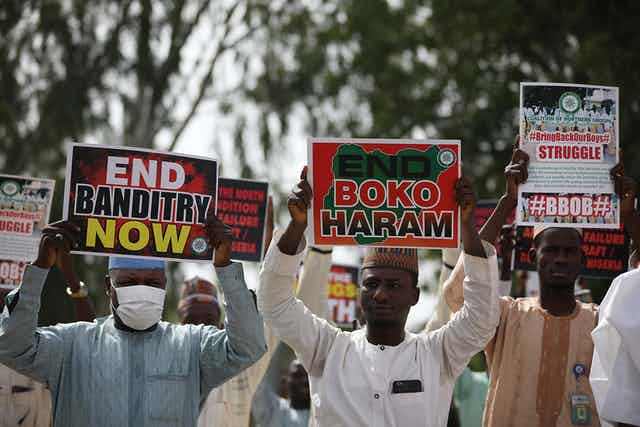
Banditry

Arewa’s potential and the Maitatsine syndrome

By A.F. Sesay

It’s difficult to fathom how a region of such numbers, resources, and beautiful cultural heritage/pedigree came to become such a scourge on national conscience in a space of forty years. What happened to the passion of the Sardauna, the native pride and dignity of your people, the welfarism that always motivated your brothers from the south or neighbouring countries to stay beyond those initial dates of return or even decide to be permanent residents?

If you were to canvas for answers,  different answers would come from different sources based on intellectual and cultural biases or leanings. That’s also the case with all matters of human endeavour. So, no shaking! And the more complex the issue the more divergent opinions and perspectives.

But in the case of recent events in northern Nigeria, with an emphasis on the Muslim hemisphere, there is something striking in the people’s unwanton love for the material side of life, contrary to the previous cultural ethos. Equally matched by this is the fear for death which naturally comes with more cravings for the transient pleasures of life. What happened to the studious efforts of the serious and sincere ulama (religious scholars)?

Let me hazard a few guesses. While some unscrupulous elements in both local and international media make it look like Arewa is Africa’s human abattoir where people are killed for the fun of it, non-northerners who have lived there before this litany of crises have fond memories of a people who are peaceful to a fault. This peace, which was largely a product of a contented heart, died with the pressure to keep up with the Joneses. And in that pressure was buried the deep fear of death. Before this, you knew people who were courageous, who stood for what they believed in no matter whose axe was gored and no matter the deadly consequence.

Crimes like kidnapping and banditry couldn’t reign supreme because criminals weren’t feared. We all remembered the courageous youths of Azare who risked their lives to confront armed bandits in 2012. Instances abound when community leaders (mai unguwas) coordinated young people to serve and defend the community within the ambit of the law. So, what happened?

How did we come to this period of life when people in a region of over 100 million people stood by and watched unknown faces and small groups of scums hack away their future and that of their children, one local government at a time?

Maybe we should look at the trends and evolution of materialism. Look at a few nations whose socio-economic progress have been meteoric in the last 50 years and look at northern Nigeria, you will see a striking lack of priority as well as a  lack of agency and urgency. And what underlies all this is the base love for material things among the elite which oozed out into the wider society rubbed off on the talakawa (proletariat) Suddenly, suddenly every Bala wants this: a luxurious house with a tall gate, a fleet of cars, tall, fair and wide-eyed women and other fine, yet fleeting things of life. Yet, neither the education nor the economy was tailored to sustain this onward rush to glitters: new trends come up annually in the design of houses, new brands of cars, new phones and so on.

Whoever is going to keep up with that has to have unrestricted access to money either through commerce or a job that pays an incredibly high salary. In the absence of this is another companion to money: stealing and everything extortion. Under this falls the myriads of problems we see today: unbridled corruption in governance, banditry, kidnapping and the rest in this nefarious family of ills.

Let’s say we flipped the conversation and say the fault is not in the people, but their enemies. It is logical to think that a region this steeped in tradition, with such great potential in numbers and unexplored resources is bound to be a target of both visible and invisible enemies, what is not logical though is when this becomes an excuse for inertia, baseless polemics, cancel culture and hurling of insults left right and centre. About enemies, who hasn’t had one? About insults, we haven’t seen one- I mean- we haven’t had an economy built solely on the foundation of the people’s ability to hurl insults at each other.

While there are certainly smithereens of enmity and animosity smothered on all of the region’s myriads of problems (a common case is a bias in data and reportage on and about the north, but let’s not digress), there is certainly a need for deep introspection. What happened? Are these manifestations of problems long foretold? Could something be wrong with the very approach to problem-solving? Or is this a huge cultural gap nobody is willing to talk about? Does it have something to do with population or outright carelessness on the part of the ruling class?

The north, in its long political sojourn as part of a nation in which it was severely disadvantaged in education, yet extremely well-positioned in Politics and Administration, has had its fair share of wins and losses. What remains to be seen is the ingenious manipulation of pluses and minuses. The world is watching and history’s pen is looming over you!

All told, the current state of affairs should remind you of the popular hadith of Prophet Muhammad (peace and blessings of Allah be upon him). And if this is a behavioural problem like it was rightly observed, then it’s going to require a behavioural solution: moderate the wanton love for material things and be courageous enough to confront death when your dignity and that of the generations unborn are at stake. 

A.F. Sesay sent this via amarasesay.amir@gmail.com.

Insurgency: Bandits use better equipment than our forces – El-rufai

By Uzair Adam Imam

Kaduna State governor, Nasir El-Rufai, has decried over the menace of insurgency rocking the North-Western part of the country while lamenting that the bandits use better weapons than the Nigerian security forces.

The governor who described bandits as “massive monsters” stated this while reacting to some questions on banditry and kidnapping in the North- West. El-Rufai spoke on Thursday in Abuja during the weekly briefing organised by the Presidential Communication Media.

He reiterated that insurgency in the North-West is far more severe than the Boko Haram crisis, going by the growing number of people killed and kidnapped every day.

“I am persuaded that the insurgency in the North West is far more serious than Boko Haram, both in terms of the numbers of the people affected. I have shown you the numbers in Kaduna. I can assure you that the numbers on Zamfara and Katsina are up to three times. The numbers in Sokoto, Niger, and Kebbi are also very alarming.

“We are talking of tens of thousands of people getting killed, getting kidnapped. It is far more serious than Boko Haram. The only thing is that these guys don’t occupy territory. They are in the forest and ungoverned spaces.

“So, they do not attract the kind of single-minded attention that Boko Haram does. And because Boko Haram’s ideology is religious, intentionally religious, it elicits more passion, but really, this is a far more serious problem.

“Because, this is a situation largely in which people of about the same ethnicity, same religion are killing each other, stealing each other’s property, creating an industry out of criminality. It’s very serious, and it requires single-minded attention,” said El-Rufai.

Who will save our children?

By Lawi Auwal Yusuf

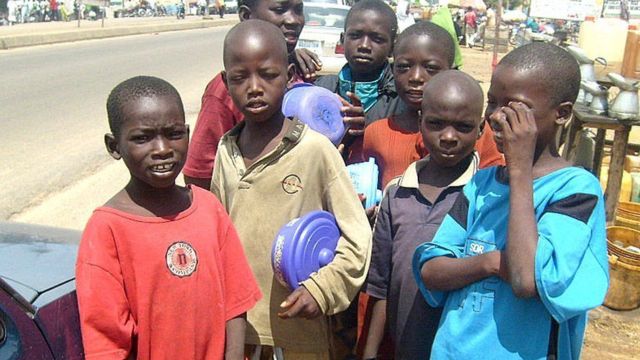
Any sympathetic person will surely ask himself these questions over the unfortunate fate of Almajiris: what wrong have they done to deserve such ruthless treatment? Are they not humans? Are they divinely condemned? Is it because we have heartless hearts? Or is it just because we have brainless brains? 

However, the Social Contract Theory extrapolates the relationship between the State, Citizens and Laws. Both the state and citizens have an overwhelming obligation to obey the law. These laws made it possible for leaders to assume the office and couples to marry and have legitimate children. Through these laws, leaders must cater to the needs of people and parents to take care of their children. Ultimately, justice is the philosophical underpinning and moral wisdom behind this idea. 

I wonder why leaders and parents breach the trust bestowed on them. Indeed, we need a professor in the law of trust to prove this before a jury so that the culprits will be locked up in prisons. 

Politicians have made these innocent children scapegoats of their misrule. They are severely castigated for offences committed by the government. Also, the lackadaisical and pitiless attitudes of parents worsen their plight. Even animals don’t dump offspring. On the contrary, they vigilantly look after them and guard them fiercely against any harm until they can take care of themselves.

Everyone abandons these children. They are left on their own to fend for themselves. Therefore, they scavenge through garbage, looking for food, wearing shabby clothes. They wander freely without a specific purpose or destination, with no shoes in the scorching heat. They equally have no one to attend to them when they fall sick. It seems like the ancient Indian caste system is gradually manifesting in 21st century Nigeria, and Almajiris form part of the Dalit (Untouchables) social group. 

When you ask them to define democracy, they will tell you that “it’s a government of the elites, for the elites and by the elites.” This is because it is purposely designed to cater to the needs of nobles only in their perception. It’s nothing to commoners but an inevitable woe. So they see it as subjugation, tyranny and distress. 

Almajiris have carried the cross for too long. They’re tired of this impudent desertion and have endured this problematic situation, and cannot withstand it any longer. Finally, they’ve been pinned down by the neck and are crying out for help with a thunderous scream, “we can’t breathe!” But, of course, this is cruelty in its cruellest form. 

These children are the future custodians of our society. Their desolation denotes that we undermine its continuity, progress and prosperity. We will bequeath to them a country that negligently failed to help them, forsake their welfare and future. They will take over a nation unable to develop humans, plagued by injustice and misery. Hence, it is unlikely that they will be patriotic to Nigeria. Is this what we are preparing for the next generation?

Indeed, they will remember us as imprudent forefathers that ruined their lives, put them in dismay and plotted the doom. The ones that disappointed them, those that couldn’t save them from grief. Those ancestors whose labour had been in vain. Indeed, they will utterly forget us, let alone pray for our eternal rest. 

We expect Tsangaya schools to consistently roll out erudite personalities, honourable scholars like late Dr Ahmad Bamba, Sheikh Ja’afar Mahmud Adam, Prof. Isa Ali Pantami or prof. Muhammad Sani R/Lemo. Unfortunately, we saw something entirely different. 

Nowadays, Almajiris are not purposely taken to Tsangaya for learning. Due to a lack of awareness concerning contraceptives, parents incessantly born children they can’t support. At long last, they discard them. How will a minor learn without provision for his necessities, vehement supervision of parents and also fend for himself far away from home? It can NEVER be possible.  

Let’s assume there are only one million Almajiris in the North, and only 5% ended up in criminality. Hence, there will be an additional 50,000 criminals to terrify the region, which is about 15% of the police workforce. So, how many more millions are there? 

Consequently, we are paying the price for our actions and inactions. We are suffering due to failure to resolve this criminogenic problem. We’ve undergone the agonies of Maitatsine dogmatism, and now we are in the bondage of Boko Haram, banditry, kidnappings, to mention a few. Have we learned lessons, or we will remain indifferent? Or are we now determined to dispel the injustice and save these downtrodden children? 

Lawi Auwal Yusuf wrote from Kano, Nigeria. He can be reached via laymaikanawa@gmail.com. 

Of criminality, economic stability, birth control and northern Nigeria

By Zakari Abubakar

It is evident that whenever there is an upsurge in criminal activities in parts of northern Nigeria, a perennial debate usually rears its head among those interested in the root causes of the problem. This is understandable. Without identifying the cause of a problem, its solution may not be in the offing. Like virtually every year, this debate is also gaining traction in this early part of 2022.

Admittedly, this view adds to the existing number of discussions on this topic. Those who are following the debates are not unaware that there are a group of people who link the rise in criminal activities in the north and the rate of excruciating poverty among its people, mainly to the large number of children born in virtually every family in the region. This group of people base their argument SOLELY on the superficial and generalised assumption that people with a large number of children, more often, engage in irresponsible parenting.

Another reason why this group of people see an individual with a large number of children as a potential source of criminality and economic stagnation is that Nigerian authorities have for long been finding it difficult to provide social services such as education, electricity and other life essentials to these growing number of citizens which leads to more people becoming poor. This is where I find their argument too simplistic. Because the same authorities are providing these services to themselves, their families or their cronies.

Going back to their first argument, it is glaringly verifiable that for every individual with many children who fail to cater for them, hundreds, if not thousands, bore many children and saw to their responsible upbringing. This example is on the level of individuals. There are many more such examples on the societal level. For instance, several countries and regions of the world have nearly the same population as northern Nigeria or are more populous but are not facing the same challenges.

Those societies have considered such a phenomenon as a gift and therefore utilise it positively. To buttress this point, the five most populous countries in 2021, according to sources, are China, India, the United States, Indonesia, and Pakistan. Although these countries may be facing their security and economic challenges, the standard of living in those societies is by far more robust than what is obtainable in northern Nigeria.

To cite a specific example: about 90% of China’s population is Han Chinese. They are over a billion people, yet, there is no accusation from the rest of the population in that country or the Hans themselves that the Hans are a potential source of poverty or criminality. Similarly, the most populous state in India is Uttar Pradesh, with over 200 million inhabitants. But go to India. How does Uttar Pradesh fare compared to the rest of Indian territories in terms of economic prosperity?

No one is disputing that northern Nigeria is recently replete with a high rate of criminality occasioned by poverty among its growing population. But to solely link this problem with the region’s birth rate is to accord the topic attention that is less than it badly desires. For example, what about the other seemingly systemic problems that have to do with governance and political leadership?

One may say, why do people resort to adding problems for themselves by producing more children since the government failed to sustain their needs? Then I would say, instead of blaming those who fail to provide those essentials (though they are providing them for themselves and their families), we resort to blaming the poor, despite his effort to always get himself out of the effects of poor/bad political leadership?

Elsewhere, other regions of the world are complaining of a decline in their population. Thus, they outsource other remedies for their problems, like encouraging men and women to engage in economic activities. Therefore, no matter how small, we should demand accountability from our political leaders and seek other possible options that are more viable than resorting to birth control, which has its implication on man’s overall health.

Zakari Abubakar is with the Department of Physical and Health Education, Aminu Saleh College of Education, Azare. He can be contacted via zakariabubakarnng@gmail.com.

How bandits stripped me naked, cut off my two hands – Mechanic

By Uzair Adam Imam

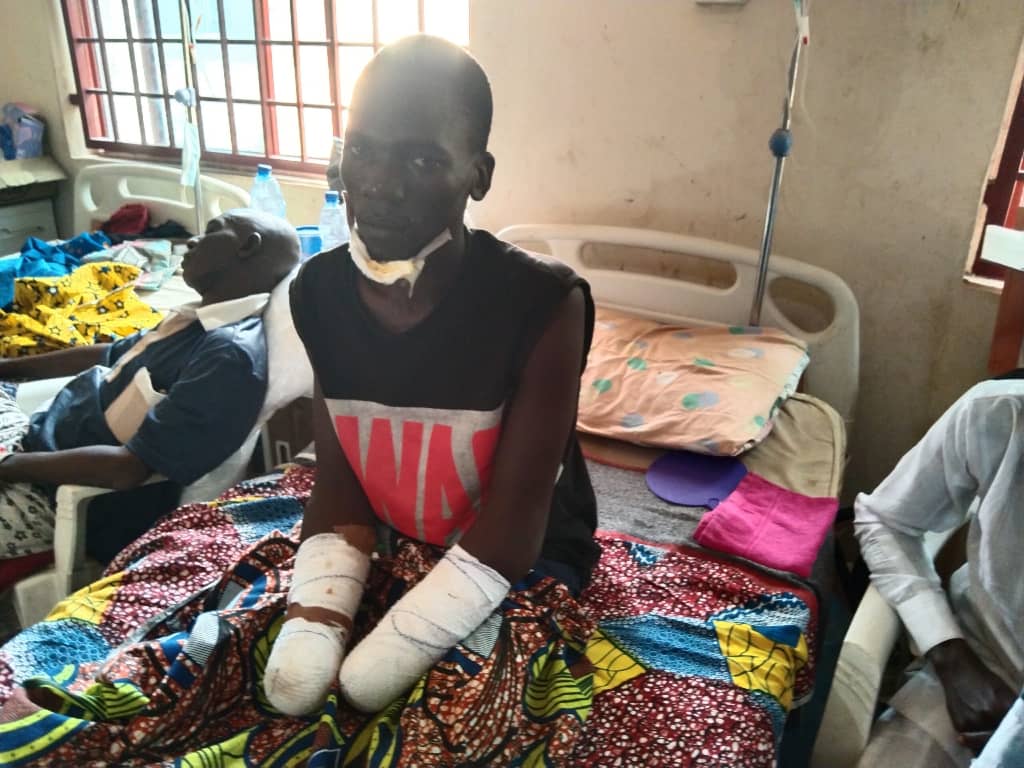
A 25-year-old mechanic, Yahaya Muhammad Galadima, has recounted how he got his two hands cut off by unknown gunmen Tuesday on his way back from Agbabo along Rukubi before Yeluwa in Nassarawa State.

Galadima was reported to have been attacked while returning home from Rukubi after fixing a client’s J5 vehicle.

Narrating the incident, Galadima said that the incident occurred around 8 pm on Tuesday.

He said, “It happened around 8 pm on Tuesday night. I was with one of my boys, Salisu Haruna, who followed me to Rukubi, in Doma Local Government Area of the state. We went there on my motorcycle to work in one of my customer’s houses as his J5 had developed some mechanical fault.

“While on our way back from Agbabo along Rukubi before Yeluwa, all of a sudden, we were ambushed. Before we knew what was happening both of us felt off my motorcycle and my boy sustained some injuries on his left leg. However, they didn’t hurt my boy.”

He added that after they succeeded in stopping them, “They started shooting sporadically into the air, asking that I should give them money. I immediately handed over all the money I had on me, including his mobile phone.”

He also disclosed that after they had inflicted several matchete wounds on him, they snatched his motorcycle.

“Before asking them what was wrong, they cut off my two hands,” he added.

Asked if his boy was also attacked, Galadima explained saying, “My boy was not hurt at all. He was watching helplessly how they cut off my hand.”

The victim is currently receiving medical care at the Dalhatu Araf Specialist Hospital, in Lafia Local Government.

ASP Nansel Ramhan, the Nasarawa State Police Public Relations Officer, said the command was yet to be informed about the unfortunate incident.

Insecurity and food insecurity In Nigeria

By Safiyanu Ladan

Banditry and kidnapping for ransom have created a sense of fear in many farming communities in North-Western and Central parts of the country. Alas, thousands of farmers are left with no other options than to leave and abandon their farmland uncultivated for some years now for safer and more secure environments, mainly as refugees, in urban areas.

The displacement of farming communities by bandits as a result of incessant attacks which prevented them from tilling their farmland, the abrupt cessation of rainfall, the increase in the price of farm inputs, among others, are listed as the major factors that affect food production in Northern Nigeria.

This has significantly been attributed to the hiking in the price of agricultural produce and will ultimately lead to food insecurity.

In July this year, an official of the United Nations Dr Rhoda Dia, was reported to have warned that an estimated 13 million people in northern Nigeria face the risk of acute food insecurity in the next few months.

The Project Manager, United Nations Development Program – Global Environment Facility (UNDP – GEF), in charge of the Resilient Food Security Project, said the warning had become imperative because the country is facing growing levels of acute food insecurity due to decades of insecurity across the country, saying that the insecurity had resulted in increasing poverty and economic crises.

She, however, stated that the situation had been worsened by the COVID-19 pandemic and, recently, the series of clashes between farmers and herders.

According to an agriculturist, the insecurity we’re facing now, especially in the North-Western part of Nigeria, has dramatically affected crop production and will go a long way in enabling food insecurity.

The fact that most of the agricultural activities in northern Nigeria are done by peasant farmers who live in rural areas and have been subjected to unprecedented attacks almost daily by bandits is alarming.

In many aspects, insecurity has affected food production. Naturally, this can be associated with the increase in food price, even though there are other factors like the Covid-19 pandemic, as we can see in other countries. But, still, our peculiar problem that aggravated the situation is the issue of banditry.

While lamenting the security situation, some farmers in one of the most troubled states said bandits had captured more than 30% of their farmlands.

Given the foregoing, the food insecurity is imminent, and it’s so glaring that there’s nothing the government can do about it as it has failed the country.

Safiyanu Ladan writes from Zaria via uncledoctor24@gmail.com.

Insecurity: Reengaging ‘Yan Sa-Kai and the need for caution in Zamfara

By Suleman Ahmad Tudu

One of the immediate decisions of Gov Bello Matawalle’s administration was disbanding the vigilante group popularly known as Yan Sa Kai as one of the conditions for dialogue with bandits in his efforts to bring a solution to the decade of bloodshed in Zamfara state. The dialogue has recorded some early successes in almost a year of its initiation.

Unfortunately, despite being given this ample opportunity for the bandits to completely lay down their arms and embrace a lasting peace, some of them refused to subscribe to the dialogue. They continue launching and intensifying their deadly attacks on communities—killing, kidnapping and rapping women unabated, taking advantage of the vacuum created by disbanding their sworn enemies, the Yan Sa Kai.

Some negative implications of disbanding the Yan Sa Kai are that many communities that gallantly resisted bandits before the disbandment have now submitted to them. Palaces that were no-go-areas to bandits before have now become accessible to them. As a result, the morale of many vigilante members has been killed. The bandits have also taken advantage of the dialogue to deceive the government and get many resources. They kidnap many people, including school children, for ransom to procure more arms.

But we can honestly understand the justifications behind the disbandment of Yan Sa Kai in the first place as a sine qua non for dialogue to thrive. The activities of this group have fuelled the crisis for their jungle justices—extrajudicial killings and ethnic profiling of criminals. All Fulanis are bandits to the Yan Sa Kai, which is wrong!

Now that Gov Matawalle has reversed his decision to reactivate the Yan Sa Kai in the fight against terrorism (banditry), which is very good, there is a need for a caution in the recruitment, administration, and operations of the about to be born-again group. We need Yan Sa Kai guided by rules of engagements, monitored by security forces and coordinated by established authority. We need Yan Sa Kai with some basic military training and improved weaponry, not the locally fabricated, non-cartridge guns, bow and arrows that cannot match the arsenal of the terrorists.

Achieving this requires efficiency right from the recruitment process. Government should not simply dust off the list of the previous members without scrutiny to fish out those whose morale has been killed or no longer believe in the course of the group. Liaising with traditional institutions will be an effective way only if those who have cases to answer are side-lined in the process. Government should also not mistake recruiting members of the born-again vigilante group from the communities that were adjudged to have wholly submitted to bandits before or during the dialogue initiative. These measures could help avoid enlisting bad eggs who would compromise or sabotage the group’s activities.

Training of the carefully selected and thoroughly profiled members of the group will go a long way in shaping their mindsets and inculcating in them the rules of engagements, discipline, command, control and coordination. It will also mend their relationship with the security forces with which they should work together as a team. This can be possible within at least a month of rigorous training.

Granted that Yan Sa Kai knows the bandits, their collaborators and hideouts better than the security forces, yet storming weekly markets in the name of hunting bandits or their collaborators is a flawed strategy that has to be changed. They used to carry extrajudicial killings during such operations that sometimes affect innocent people. This time around, the group’s approach should be offensive by jointly reaching out to the bandits’ enclaves together with security forces now and then. And if the group has to defend and hunt, the defence should be restricted to every member’s immediate community while the hunt should be on the checkpoints to be placed in strategic places. 

While NO suspect deserves to be (extrajudicially) killed but arrested and prosecuted accordingly, I can command that any civilian seen wielding an AK-47 rifle should be “shot at sight” as ordered by President Muhammadu Buhari!

May Allah grant us everlasting peace in Zamfara and Nigeria at large. Amin.

Suleman Ahmad Tudu wrote from Nasarawa Mailayi of Birnin Magaji local government, Zamfara state. He could be reached via suleatudu@gmail.com.

Terrorist bandits kill 2 soldiers, one police officer, 13 civilians in Kebbi

By Muhammad Sabiu

At least 16 individuals were reported dead in a suspected bandits’ attack in Kebbi State’s Danko Wasagu Local Government Area on Friday.


Two soldiers, a police officer, and 13 people were murdered in the attack at Dankade village, according to the state’s police spokesperson, Nafi’u Abubakar.


The police spokeswoman further refuted reports on various news outlets that the incident resulted in 50 deaths.


Mr Abubakar, who confirmed the amount to the News Agency of Nigeria (NAN), said the incident happened on Friday at 3.00 p.m.


He claimed that suspected bandits from Zamfara infiltrated the community and terrorized civilians and security officers.


When the police patrol squads learned of the incursion, they mobilized to the village and engaged them in a gunfight, killing one of our officers and two army officers.


According to Mr Abubakar, the bandits also set fire to some homes.

Road to 2023: A race to inherit a weak system

By Nusaiba Ibrahim Na’abba

As Northern Nigeria continues to be engulfed by violent activities of terrorists by the day, the thoughts of dreadful terror acts of the famous Sunni Ali of Songhai who conquered the old, widely acknowledged historic city of Timbuktu keeps reappearing on my mind. The likes of late Muhammad Yusuf, late Abubakar Shekau and most recently Bello Turji and Dogo Gide, including some of the ‘unknown’ alleged sponsors of these activities, are no different than Sunni Ali – ‘tyrannical, cruel and merciless’.

The only probable difference is that the miniature Sunni Ali’s of our time live under the protection of a democratically elected government that vowed to protect our lives. This system we all thought would salvage us from the brink of destruction. With all the high hopes for this salvation purposely adopted to elect President Buhari into office, it is under his watch that in 2018, the Nigerian army gave an order to halt the near-arrest of late Abubakar Shekau in the depths of Sambisa Forest.

While at secondary school, it used to be quite fascinating to read and learn about the legends of some of the most powerful kings in Africa. Timbuktu’s Mensah Musa, Usmanu Bin Fodio of Sokoto, the rulers of Ghana’s Asante Kingdom and their powers on their followers, especially their strength, have always remained interesting references for their followers, especially history scholars and political leaders around the world. From leadership structure, means of sustenance, warfare and particularly military strength devoid of politicking have remained exemplary and worthy of emulation as legends have primarily documented.

Inherent in today’s Nigeria, a ravaging systemic corruption, unambitious leadership, lack of education prospects contributing to a staggering number of unemployed youths (some even throwing their hats in the ring and retiring from the state of being called youths), poor security apparatuses and myopic economic vision that continues to increase our foreign debt figures without pans of paying back. Not even the vibrancy of our historic leadership structure is being inculcated in the ‘democratic system’ we (African countries) borrowed from our colonial bosses.

Nigerians are already hopeless as the nation races towards the 2023 general elections. About two months back, I went shopping in Abubakar Rimi market (alias Sabon Gari market). All I could hear filling up the sky were words of hopelessness about the state of our dear Nigeria. “I would rather lose my voter’s card than to elect anyone in 2023”, “Our leaders will not make heaven, I tell you,” and “I’m just hoping to make it to next year alive; we are not celebrating anything” among many unending agonies. 

It is no coincidence that the President himself vindicated these agonies in an interview NTA aired on January 8, 2022. He warned his political party that “the opposition Peoples Democratic Party (PDP) could win the 2023 presidential election and return to power, if the All Progressives Congress (APC), does not settle crises that have stymied the party”. Of course, a speech of such nature and coming from the President is subject to multiple interpretations from analysts, experts, particularly politicians and lay-Nigerians. However, the President has undoubtedly depicted a lack of confidence in his party to exacerbate an already hopeless situation. His first thought is PDP winning elections to continue from where they stopped – over a decade of misrule.

Indeed, it is pretty late that Nigerians realize that both APC and PDP are birds of a feather that flock together. During an interview with Talk to Aljazeera on February 15 2015, then-presidential candidate General Buhari highlighted the weakness of PDP’s 16-year-misrule. He, specifically, lamented on the rising insecurity and the deteriorating economy as oil prices dropped significantly. A year later, when he had a similar discussion with the same Aljazeera on his visit to Qatar in early 2016, he tried to admit that he hasn’t failed Nigerians – as Boko Haram held some strategic places in the outskirts of Maiduguri. Over the years of his administration, we now fully understand who has failed Nigerians the most.

Like every race to a general election in Nigeria, we all scale through hurdles and hitches. However, what is particular about the 2023 general elections is that it showcases the real wielders of the entire Nigerian system – the elites. Indeed aspiring candidates are fully aware of problems they will undoubtedly inherit from their predecessors. They also know that they may worsen existing situations in most cases. Thus, they shall race through rising insecurity than ever before, calls for secession from the Eastern part of the country, deteriorating economy, a staggering number of unemployed youths and out of school children, dilapidated schools, bloodshed, brain drain of medical personnel, weak security apparatuses, widely acknowledged electoral violence and, to cap it all, systemic corruption.

Since Nigeria’s return to democracy in 1999, every political aspirant has been fully aware of the problems ahead of them, but they always divert followers’ attention by being optimistic. This is why it was pretty easy for most Nigerians to succumb to President Buhari’s change agenda.

Be it as it may and with almost nothing to redeem ourselves, expectations are meagre as the race to 2023 heats up. It’s no longer news that the country’s entire political economy continues to suffer in the hands of the few ‘powerful’. The masses do not wield enormous influence in the system that steers the affairs of Nigeria. So, we absolutely cannot change the country’s political structure without owning the system. Therefore, there is no confidence or trust in the election processes with ‘inconclusive elections’ that have come to stay with us since they favour the wielders of the system. 

Nonetheless, we will remain optimistic that Nigeria will prosper as a united and incorruptible country no matter what it takes. This storm shall pass. Borrowing from the words of South Africa’s Apartheid icon Nelson Mandela, “I am fundamentally an optimist. Whether that comes from nature or nurture, I cannot say. Part of being optimistic is keeping one’s head pointed towards the sun, one’s feet moving forward. There were many dark moments when my faith in humanity was sorely tested, but I could not give myself up to despair. That way lays defeat and death”.

Nusaiba Ibrahim Na’abba is a master’s student from the Department of Mass Communication, BUK. She is a freelance writer and researcher. She can be reached via nusaibaibrahim66@gmail.com.                                     

Kidnappers cart away many traders on Kaduna highway

By MMuhammad Sabiu

Suspected bandits kidnapped an unknown number of traders from Birnin Gwari Local Government in Kaduna State on Wednesday.

According to a witness, the gunmen blocked the roadway between Birnin Gwari and Kaduna at Unguwar Yako bush, where the traders were taken.

According to the source, the abducted people were among dozens of people travelling on business from Birnin Gwari and nearby areas in Niger State to Kano.

The source was quoted as saying, “We were travelling in a convoy with security escorts but they (bandits) abducted those who moved ahead of the convoy, which made them easy preys for the bandits.“We came and met about four empty vehicles, while seeing the bandits moving into the forest with the captives.

The soldiers are tracing them, we are stranded at a dangerous spot in the forest (Unguwar Yako) while the security escorts are chasing to rescue the abducted traders.”

As of the time of filing this report, police in Kaduna have not released an official statement on the incident.