Atiku Abubakar

A letter to Prof. Farooq Kperogi

By Muhammad Rabiu Jibrin (Mr.J)

I write this letter to you as a Nigerian and your follower for a long time. I am deeply concerned about having a better Nigeria, which is only possible if responsible leaders are elected. Leaders who have the country at heart think of her first before themselves or their families.

But the process or the means of discovering remains the problem to many Nigerians due to so many factors. We need to face that and address it as soon as possible. In so doing, Nigerians need to be guided by farsighted men like you. 

Prof. Kperogi, if Buhari, Osinbajo and Tinubu are “a troika of a treacherous villain” or “tarred with the same brush or the monsters of deceit and fraud” and Atiku happens to be among the “warhorses of corruption and ineptitude” as you pointed out in your recent piece, then who do you think should Nigerians go for come 2023?

It is indisputable that those you called names failed Nigerians on many fronts and seem not equal to the task based on the historical antecedents. But just pinpointing their lacunas that justified them as incapacitated and incompetent alone can’t suffice.

As a patriotic citizen, a critical thinker of reasonable foresight, with a wealth of experience and vast knowledge, you can endorse someone for Nigerians to vote for. Please, who do you think can lead Nigeria to the promised land?

With your pen, which is mightier than the sword they say, you can attempt changing the narration and have the Nigeria of our dream. Out of the 78,250 followers and 4999 friends you have on Facebook alone, plus those on your other social media handles, only God knows how many you can influence. As you shape their minds, they can also do the same to others, and the trend will go continuously. 

Nigerians want to stop being “clueless” and take off their heads the laurels of “enablers of Nigeria’s descent to the nadir of hopelessness”. So let’s do this together and make 2023 different.

Muhammad Rabiu Jibrin (Mr J) wrote from Gombe State via muhammadrabiujibrin@gmail.com.

PDP can still zone presidency to the North

By Abdulhaleem Ishaq Ringim


Zoning, especially of the presidency, is not a product of a national consensus but that of certain political parties’ internal dynamics. It is pertinent that we understand that. Nigerians did not sit in a national conference and agree to zone or rotate power. So it is not binding on the broader national politics.

The idea of zoning started with the PDP in 1998, it was entrenched in PDP’s constitution in Article 7, Section 7.2(C), and it prescribes that “In pursuant of the principles of equity, justice and fairness, the party shall adhere to the policy of rotation and zoning of party and public elective offices and it shall be enforced by the appropriate executive committees at all levels”.

Chief Olusegun Obasanjo, a southerner, became president in 1999 and prevailed as president for two terms representing eight uninterrupted years. In 2007, Umaru Musa Yaradua was nominated to fulfil this zoning principle and rotation of power to the North. Hence, he was supposed to also prevail as president for eight uninterrupted years as the president of Nigeria.

Unfortunately, he was only able to serve for about three years due to his ill health and subsequent death. As a result, president Goodluck Jonathan, who was the Vice President, assumed office as Acting President through the invocation of the “Doctrine of Necessity” principle and completed the term, which was supposed to be between May 2007 to May 2011.

However, according to the zoning agreement, it was still the turn of the North as a Northern President was supposed to go for eight uninterrupted years. But Goodluck Jonathan was not going to have it; he insisted on contesting the presidency, thereby jettisoning the PDP’s zoning principle.

A serious crisis erupted within the party, and a section of the party’s membership was hell-bent on adhering to the zoning agreement and even went ahead to endorse Atiku Abubakar as the Northern Consensus candidate to complete the North’s uninterrupted eight years.

The stalemate prevailed until a case was made that Jonathan would only be completing the Yaradua Ticket, which he was initially part of. And it was agreed that Jonathan would only be going for a single term. The decision still contravened the zoning arrangement, but Jonathan had his way; he contested and won the 2011 elections.

Jonathan, however, went back on his promise and still contested for the 2015 elections even while it was supposed to be contested by a Northern candidate as per the 2011 agreement and the broader zoning principle. And he lost.

Hence, it is only fair that the presidency is rotated back to the North “In pursuant of the principles of equity, justice and fairness”.

So no matter where the party chairmanship is zoned, the party’s zoning principle will still favour the North for the Presidency. And come to think of it, the circumstance is not novel, for this is not the first time a Northern Presidential candidate would emerge during the chairmanship of a Northern Party Chairman in the PDP. Col Ahmadu Ali was PDP’s Chairman from 2005 to 2008, and Yaradua was nominated to fly PDP’s flag and was voted to office in 2007 while Col Ali was still chairman.

Coming back to the National outlook, the (unofficial) zoning agreement in the APC favours the South for the 2023 elections, while that of the PDP favours the North. And this is where the calculation is!

Peradventure the parties adhere to these zoning agreements, and we get a PDP Northern Candidate (for example, Atiku Abubakar with a running mate like Peter Obi, Nyesom Wike or Okonjo Iweala) and an APC Southern Candidate (for example, Asiwaju Bola Ahmed Tinubu with a running mate like Babagana Zulum, Maimala Buni or Boss Mustapha), who would the calculation favour?

Answer this, and you would understand why PDP would want to lure APC into fielding a Southern candidate!

Abdulhaleem Ishaq Ringim is a political and public affairs analyst. He writes from Zaria and can be reached through haleemabdul1999@gmail.com.

Atiku, Kwankwaso, Tambuwal, others shut out as PDP zones national chairmanship to North

By Ibrahim Siraj

There are indications that Nigeria’s main opposition party, the Peoples’ Democratic Party (PDP), would zone its presidential ticket to the Southern part of the country. This follows the decision of the party to zone the national chairmanship seat to the North ahead of its national convention coming up later this month. 

Although the party is yet to formally decide on the zone that will produce its flagbearer in the 2023 presidential election, the latest decision provides some clue because, based on convention, the party has never zoned the two coveted offices to the same region.

Announcing the decision Thursday, Governor Ifeanyi Ugwuanyi of Enugu State, who is also the Chairman of the party’s zoning committee, said the decision was arrived at at the end of his committee’s meeting.

He said his committee was not mandated to zone the presidential ticket. According to him, “The mandate of the committee does not include zoning of the president, vice president and other executive and legislative offices of the Federal Republic of Nigeria”.  

The decision of the party to zone the offices, the Governor adds, “is in line with the constitution of the party on zoning and rotation of party and national offices in the interest of justice, equity and fairness”.

By implication, the decision by PDP to push the national chairmanship seat to the North is likely to dash the hope of politicians eyeing the party’s presidential ticket from the North. Going by tradition, it is almost impossible for the party’s national chairman and presidential candidate to come from one zone.

Prominent among those affected by the party’s decision are former vice president Atiku Abubakar, former Senate President Bukola Saraki, Governor of Sokoto State Aminu Tambuwal and former Kano State Governor Rabi’u Musa Kwankwaso. These four politicians are among many others of Northern extraction who dominated the party’s presidential convention in 2019, with Atiku Abubakar eventually emerging as the winner. However, Mr Atiku was defeated by President Muhammadu Buhari of the ruling APC to win reelection.

Atiku unperturbed – Campaign Group

Speaking to The Daily Reality on the development, Alhaji Abdullahi Abdulkarim Gama, leader of Atiku Arewa Reporters, a campaign group rooting for the candidature of the former vice president, said his principal remains unperturbed. He said as far as they are concerned, the decision of the zoning committee is not final and only reflects the position of PDP governors. Moreso, he said, the Governor Ahmad Fintiri-led Convention committee is yet to conclude its assignment and submit its report regarding the party’s convention. He maintained that scheming for the party’s presidential ticket would continue until the last minute.


Situation sceptical yet no cause for alarm – Kwankwasiyya leader

On his part, Dr Aliyu Isa Aliyu, a leading Kwankwasiyya member in Kano, warned that the situation remains sceptical even though no cause for alarm as far as Kwankwaso’s presidential ambition is concerned given that the party has not formally taken a final position on the matter. He cited a situation in 2007 wherein late President YarAdua emerged as PDP’s presidential candidate and went ahead to win the presidency even though the national chairman at the time, Col Ahmadu Ali (Rtd), was also a Northerner. Col. Ali was replaced in 2008 by Chief Vincent Ogbulafor following the zoning of the position to the South. 

Agitation for power rotation not in the interest of Nigerian masses – Don

PDP’s decisions came when the North and the South are deeply entangled in a heated agitation for power rotation. The Southern governors have, on several occasions, made it utterly clear that power must shift to their region, and the North must shelve any thought of retaining the presidency beyond 2023. This position was, however, countered by Northern governors who consider it as “foolish”, “unconstitutional”, and “undemocratic” any attempt to dictate to the North who to vote for as president.

At the end of the governors’ meeting earlier this week which other leaders from the region also attended, the governors advised their Southern counterparts to explore dialogue and compromise as against confrontation and undemocratic tendencies if they are really interested in securing the support of the North for power to shift to the South. 

As the political tug of war between the North and the South continues over the zone that produces the next president, a university don has warned that the rotational presidency is undemocratic and thus has no place in Nigeria’s Constitution.  Answering enquiry from TDR, Dr Riyauddeen Zubairu Maitama of the Department of Political Science, Bayero Univerisity, Kano, explains that although so much importance has been attached to the issue of power rotation, what should be more significant for the citizens is justice and development. Of utmost importance to Nigerians, he said, is choosing a leader who will tackle corruption, poverty and widespread insecurity irrespective of the political party or the region such a leader comes from.

Dr Riyauddeen further lamented how politicians from both divides are becoming more preoccupied with zoning and power rotation at the expense of the welfare of the Nigerian masses who voted for them.  He described the agitation for secession championed by the likes of Sunday Igboho as Southern Nigeria’s gimmick to harass the North and to exact political concession ahead of the presidential election. 

Crucial months ahead

With less than a year and a half to Nigeria’s 2023 presidential election, the next few months will be crucial as zoning, and other issues are expected to dominate the discourse on the political scene. While the major political parties continue to gear up for their separate national conventions to choose national officers, Nigerians will continue to observe with keen interest how political events will unfold in search of President Buhari’s successor in 2023. The pertinent question for now is: can zoning succeed in ultimately sealing the fate of those presidential hopefuls from the North, or would they be able to come up with something dramatic to turn things around? Only time will tell!

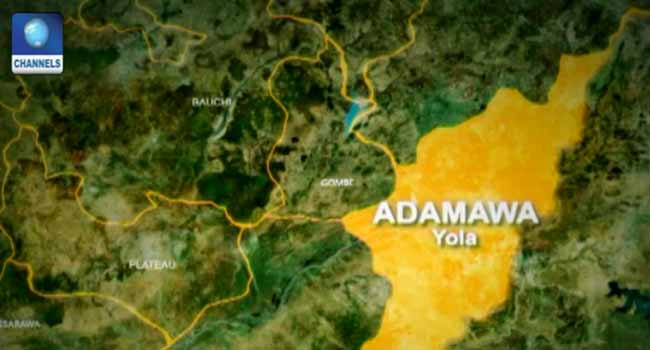
Emerging intrigues in Adamawa politics

By Mohammed Zayyad

The Ward and Local Government Congresses of the All Progressive Congress (APC) and the replacements at the wards, and the preparation for the LGA congresses by the Peoples Democratic Party (PDP) have brought to the fore the emerging intrigues in Adamawa politic: The attempt to outweigh each other in the control of the two party’s structures among the party stakeholders is apparent.


The APC congresses, in most cases, were conducted based on Abuja’s directives of consensus and that the incumbents offer the Right of First Refusal, including accommodating newcomers. While for the PDP – if you have held the office for up to 8 years, death or resignation, your office is automatically vacant.


An interesting scenario in the APC is in Mubi North and Mubi South LGAs – the place has a former immediate governor – Bindow Umaru Jibrilla, and a sitting Senator, Ishaku Cliff Abbo. Abubakar Jafaru Member Representing Mubi North, Mubi South and Maiha Federal Constituency appeared to have been schemed out. For instance, while the Bindow and Cliff group were at Yazaram Cinema waiting for the election to be conducted, the actual election took place at Yelwa Primary School, with Jafar having the upper hand. What also weakened Bindow active participation was the issue of the leaked audio against President Muhammadu Buhari.


Another place of interest is Yola North, Yola South, Girei and Song LGAs- Senator Aishatu Dahiru Ahmed Binani, Adamawa Central, wanted to replace most of the Exco at those LGAs, but all her candidates lost woefully. Many people were surprised by Binani’s politics. The Excos Binani wanted to replace were those that assisted her in getting the senatorial ticket by narrowly defeating Aliyu Wakili Boya, Sarki Matasa.
In the APC congresses, three governorship hopefuls- Muhammadu Umaru Jibrill Bindow, Senator Cliff Ishaku Abbo and Senator Aishatu Dahiru Binani were casualties, while three other governorship hopefuls Modi Halilu, Nuhu Ribadu and Abdul Razak Namadaz appeared to have made their intelligent moves silently. Namdas doesn’t have any issues at his constituency.

On the other hand, Boss Mustapha was not that enthusiastic – he only showed interest in one or two places in Yola North and Hong LGA. Former Governor Murtala Nyako played the role of a stabilizer and elder. The person that called the shots the most was Comrade Mustapha Salihu, APC NorthEast Vice Chairman. He doggedly implemented the APC Caretaker Committee’s instruction of consensus, giving the incumbent the right of first refusal and accommodating newcomers. The big game will be at the state congress. In particular, the State Chairmanship position- the big picture will be more precise- the grievances, crises, and contentment from each stakeholder and the group will be more open.

The PDP, being the party in power in the state and having some considerable interest within it, its replacements at the ward level and preparations for other congresses were unique. Governor Ahmadu Umaru Fintiri made some political attempts- Most of the loyalists of Chief Joe Madaki and former Governor Boni Haruna were blocked.

An interesting place is the Numan Federation, where the Deputy Governor comes from. Crowther Seth was made ineffectual at his base; the person pulling the string is the Member Representing Numan, Demsa and Lamurde constituency, Kwamoti Laori; he is Fintiri’s right-hand man. It is still a surprise to many that Crowther Seth was made ineffective at Numan Federation. However, some pundits said it shouldn’t be surprised- Seth, as Deputy Governor, still operate from his house, of which the road to the house is not even tarred. Therefore, many people see Numan Federation as the big losers in the Fintiri government, despite being the joker for the PDP in the 2019 governorship election.

To be fair to Governor Fintiri, a sitting governor often dictates the direction of his party, and, Fintiri’s politics now goes beyond Adamawa; it has national elements in it- so he must have ‘the home’ in his control. Fintiri has some big PDP national assignments. This is also knit with his political ambition and the Wike connection. It was reported that Governor Wike flew to Yola twice or thrice in a specific week to confer with Fintiri and left within some hours. – Any political tête-à-tête that cannot be done via a cell phone is a big one.

There is a report that Fintiri will definitely try as much as he can to replace A.T. Shehu as the state chairman of the PDP. That’s why some politicians are of the view that Fintiri refuses to empower Shehu economically.


Fintiri means business, you can’t blame him. Recently, when the move to fill in the vacant position at the PDP Board of Trustee which was created by the death of former Governor Wilberforce Juta, Fintiri presented the name of Hamza Madagali Adamawa PDP Organizing Secretary, but former Vice President Atiku Abubakar and PDP former National Chairman Uche Secondus intervened, and presented the name of Boni Haruna, being a former Governor as Wilberforce Juta.


As the intrigues in both the Adamawa PDP and the APC further unfold, we will analyze it from the angle of the moment.


Zayyad I. Muhammad writes from Abuja, 08036070980, zaymohd@yahoo.com.

Where will Buhari retire to?

By Ahmadu Shehu, PhD

Since The Daily Reality has become the darling medium through which northern elites are called to task, I would instruct them to extend a short message to President Muhammad Buhari this weekend. Although Nigerians are used to the deafening silence of this administration to most of our perils and concerns, the president needs to be reminded of a few disturbing, foreseeable facts.

Let me first state that the people of this country, especially his brothers and sisters in the north, can’t wait to see the end of his rule. His ethnic group, the Hausa-Fulani, have carried his cross for too long. For over a decade, they gave their lives, wealth and resources for his candidature, and for seven years, they bore the blames, stereotypes and animosities for his presidency. What is their gain? An avoidable but seemingly inevitable genocide. If the president does not know, I will tell him that the people of this region are tired! They are no longer looking for what he can do for or to them. They are only anxious to survive the remaining days.   

I want the president to observe a few things. First, all Nigerian leaders lucky to have left the Villa alive went back to their hometowns after their tenures. For instance, Shehu Shagari, who was overthrown by then General Muhammadu Buhari, moved permanently to Shagari, securing a serene, fruitful life after that. While in retirement, Shagari remained relevant and served in various traditional positions within the Sokoto Caliphate. His love for his people, his engagements with his roots throughout his career, his pride in his people and culture and constant, persistent and proud leaning to his region endeared people to him even after his tenure. That love held him physically and psychologically intact, made him relevant and happy all through his old age.  

General Ibrahim Badamasi Babangida, who succeeded Gen. Buhari, retired to Minna, his birthplace from where he and his wife established great organizations that engendered socio-economic development. As a result, Babangida’s home became a centre of excellence in Minna metropolis, and people trooped to his doors for all kinds of support and favours.

General Abdussalami Abubakar became the Head of State after the death in office of Gen. Sani Abacha. Abdussalam followed the footsteps of his predecessors and retired in Minna, his hometown. This was possible for the two Generals only because of their good to their people and region. To date, Niger and indeed the North-Central are thankful for their service as Heads of State. They gained relevance and recorded developmental strides hitherto impossible without the emergence of their worthy sons.   

Then came Olusegun Obasanjo, who returned to power for the second time. After eight years in office, Obasanjo moved to Otta – not even Akure – to start a new life as a statesman. While Yar’adua died in office, his successor, President Goodluck Ebele Jonathan, immediately vacated Asorock for Otuoke, his birth village and assumed his gentle duty as the breadwinner of his people and region. Jonathan has was devilishly maligned as the enemy of the north, the clueless president of the country. But he ensured that the Niger Delta amnesty program succeeded, for he was conscious of life after office in the creeks. He, therefore, begot for himself and his people a place to live in peace. 

Here at home, the breadwinner of Adamawa state, former vice president, Alhaji Atiku Abubakar, ensured that the state’s economic strength is sustained. He established institutions, provided hundreds of thousands of employments, empowered businesses and established banks for entrepreneurs and start-ups. Atiku Abubakar built his retirement home in Jada and moved his business headquarters to the state. He ensured that human development services, such as education, healthcare, media and IT industries only obtainable in the cultural West are brought home to the doorsteps of his compatriots. Thus, he was able to stay at home and proceed with his political career gracefully.  

But with all the situations in the northwest, especially Katsina – his home state – and Kaduna – his preferred haven, where does President Buhari intend to retire and spend the rest of his life? For one, at 80, Buhari will be the oldest Nigerian president to leave office and probably the sickest at that weak point of human life. That is the moment he needs people the most and will undoubtedly go through the most painful retrospections of his administration’s actions and inactions. Then, he would face realities – poverty, inhumanity, misery, deprivation, etc. – that have become the norm on Nigerian streets. At that point, Buhari would need Nigerians, and Nigerians would not need him for anything.

The excoriating economic disaster in Buhari’s northwestern region today has not been seen in a long time. Thousands of people are homeless, hopeless and desperate for food and shelter. In Daura, for instance, hundreds of thousands of youth are unemployed. At the same time, his close relatives and families have bought over most farms and grazing lands around the emirate, extending the wicked hands of poverty to more people than ever. As it stands, hundreds of thousands of people are fleeing this region for safety, as kidnapping and banditry have overtaken citizens’ daily lives. Worse still, the president’s disposition and sheer lack of concern on anything “north” make it impossible for him to enjoy his cult-like mob that kept his military retirement years afloat.

Sadly, there is no going to be Buhari the messiah, Buhari Maigaskiya or Buhari jagoran talakawa. There will be only one Buhari in the world: the one who became president and failed to help his people. The one that has disappointed his most loyal supporters; the messiah that couldn’t save his people from hunger, deprivation and poverty. The Buhari who oversaw the worst economic period of his country. That Maigaskiya supervised the most criminal and cruellest regimes of corruption. The one that promised heaven but gave hell. How life looks for someone at that age in this condition will be very interesting to see.

Dr Ahmadu Shehu is a nomad cum herdsman, an Assistant Professor at the American University of Nigeria, Yola, and is passionate about the Nigerian project. You can reach him at ahmadsheehu@yahoo.com.
Elitism and the future of Nigerian masses

By Salisu Yusuf

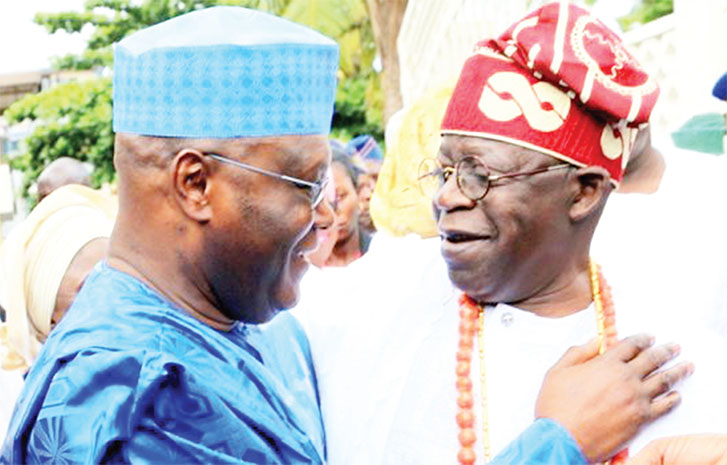
Saturday, the 21st of August, 2021, marks a black day in our march towards achieving social equilibrium among Nigeria’s two social classes: the poor and the elites. The picture on social and conventional media of President Buhari, former President Jonathan, Atiku Abubakar, Femi Fani-Kayode, etc., dining, laughing, exchanging banter, posing for the camera at Bichi speaks volumes on the future of the masses in Nigeria.

On the one hand, these men would quarrel, argue and set their followers against each other just to win elections. But, on the other hand, they shower elitist solidarity to one another when anyone in the circle is celebrating or mourning. Alas, it’s the poor who’s socially excluded even though it’s through him they rode to power. 

While the glitz and glamour were going on at Bichi and Aso Villa, in Batsari, Danmusa and many palaces, people are running for their lives; some are bereaving the dead ones. Moreover, many are abducted by bandits. For example, over 150 Islamiyya students from Attagina (Tegina) in Niger State were, for months, in captivity. Six died, including a three-year-old boy. What do you think if these children belong to the upper class? It’s high time our politicians show class, empathy and maturity.

Today, Nigeria represents every aspect of George Orwell’s Animal Farm. “All animals are equal, but some animals are more equal than others,” says the satiric work! Clover, one of the most loyal and hardworking characters, symbolises the Nigerian poor. For the poor is the only symbol of loyalty and toil to the Nigerian state like Clover. Clover’s realisation toward the end of the novel of betrayal of the so-called revolution depicts the current sad reality:” if she herself had any picture of the future, it had been a society of animals set free from hunger and the whips, all equal, each working according to his capacity, the strong protecting the weak.” 

Photos of the number of jets grounded at Aminu Kano International Airport on social media depicts the sad reality. On the one hand, it reveals the massive gap between the elites and the poor. But, on the other hand, it reveals the security situation in the country and why our elites are reluctant to address it; they travel on planes, we travel by road, where kidnappers set up roadblocks. 

From the wedding scene, receptions, the phones distributed, to Abuja where the bride is conveyed, the glamour exhibited reflects how far we’ve regressed to the version of 18th-century capitalist Britain and its attendant ‘Enclosure System’. Oliver Goldsmith sums up our predicament in his famous ‘The Deserted Village’ when he says, ” to see profusion one cannot share, to see ten thousand baneful arts combined.. to pamper luxury and thin mankind.” 

Today, there are designated federal parastatals and ministries such as Petroleum, Finance, CBN, Federal Inland Revenue, etc., where the children of the poor can’t work; for them, these covetous places are uncharted territories. They’re meant for the rich.

Today, our leaders are attributed with everything elitist and why elitism represents. One salient legacy our man will be remembered is his earnest response to elites’ birthdays. They’re the hallmarks of elitism because they’re the only group who celebrate it. However, a poor isn’t after birthdays; he contends with his security and daily bread in a hostile socio-economic environment. Thus, he neither gets the bread nor feels secured; he’s barred from farming by a group that catches him and demands a ransom from his low-income family members who are too hungry to pay.

Sadly, the so-called ardent supporters couldn’t differentiate between sad reality and fantasy. Those who sometimes cried in the past, when we were in the new normal, can’t cry now when the new not normal sets in. We’re besieged from every angle of our home. The attack on the Nigerian Defence Academy (NDA) this week is the last straw…the definition of Nigeria and what it symbolises: chaos.

The government has so far mastered the art of rhetoric. They can rhetorically speak in the language the criminals understand; but can’t speak in the language the Talakawa understand: that provides the basic social services.

Never in the history of politics in Nigeria has a political figure garnered so much goodwill and solidarity from the poor like President Buhari. But, alas, the goodwill and the solidarity aren’t reciprocated. A conscientious man can’t sleep soundly when his subjects are daily hunted like dogs. Those poor masses who toil and sweat… 

As for now, the hope of the poor is so slim, for hunger, bandits, and elites besiege him.

Salisu Yusuf writes from Katsina. He can be reached via salisuyusuf111@gmail.com.

Celebrity branding of political parties, politician ineffective, new study shows

By Daha Tijjani, PhD

Celebrity endorsement is a technique in advertising that possesses persuasive power to influence consumers’ decisions and target audiences. As a result, it remains a popular way for marketers to promote their brands, products, and services.

In political communication, it is one of the tools used to project the image of political parties and candidates in the minds of electorates and ultimately influence voters’ decisions.

However, numerous studies have found that several products have failed to attract customers’ attention despite being endorsed by celebrities.

Several researchers have investigated the effect of celebrity endorsement on products. However, few studies have looked at the impact of celebrity endorsement on political parties and their candidates. Also, little is known about the effects of celebrity endorsement and branding of political parties when it comes to developing economies.

Thus, knowing the effects of celebrity endorsement and branding of political parties and their candidates will give valuable insights to the party leadership on what strategy they should adopt when embracing a celebrity to help their brand.

As a result of this perceived lacuna, a group of researchers from universities in Nigeria, Ghana, Malaysia, and Germany examined the effects of celebrity endorsements of political parties using the Nigerian 2019 Presidential elections as a case study. The study report was published by Technium Social Science vol 22 (2021): A new decade for social change

The study investigated and discerned the factors motivating eligible voters in Nigeria to vote, using the predictors (Endorser Credibility, Political Brand Credibility, Political Brand Equity, and Voting Intention). The study also examined the mediating role of Political Brand Credibility (PBC) and Political Brand Equity (PBE) towards Voting Intention (VI).

The data for the study was collected in 2019 from 320 eligible respondents with Permanent Voters’ Cards (PVC) from the cluster of 6 geopolitical zones in Nigeria, including the Federal Capital Territory.

The study has found that the endorsement of celebrities alone does not necessarily influence electorates to vote for political candidates. Instead, the credibility of the party and its equity play a pivotal role in the voting intention of voters.

Despite being credible with attributes such as Attractiveness, Trustworthiness and Expertise, the study further revealed that the celebrity endorser is not a good predictor of positive voting intentions. Likewise, the findings revealed that a credible endorser would not have a positive and significant effect on a political party’s brand equity.

Taken collectively, the new empirical findings in this study would provide a new understanding of this new political marketing strategy in the Nigerian context. Furthermore, the insights gained from this study may assist the political parties to focus and invest more effort, resources, and energy in branding their parties with meaningful manifestos that would touch the lives of the electorates.

How to Cite: Abdurrahaman, D. T., Owusu, A., Bakare, A. S., Apejoye, A., Ibrahim, M. M., & Ahmad, T. H. (2021). Assessing the effects of Celebrity Endorsements of Political Parties: An empirical study of Nigerian 2019 Presidential Elections. Technium Social Sciences Journal, 22(1), 676–699.Retrieved from https://techniumscience.com/index.php/socialsciences/article/view/4266

Note: The corresponding author can be reached via dahatijjani@gamil.com or Twitter handle @dahatijjani.

Bichi Wedding Gathering: lessons to the discerning minds

By Adamu Bello Mai-Bodi

The wedding Fatiha of Yusuf Buhari and the daughter of Sarkin Bichi was held with pomp and pageantry. All roads led to Bichi on Friday, 18 August 2021. As many as 80 aircraft brought guests to kano to witness the first son’s tying the knot to a Bayero descendent princess. To the amazement of many, the guests were dignitaries and politicians of different persuasions from across the country, who, albeit their differences, gathered to bless the occasion while they wine, dine, and exchange banters with each other. 

The sportsmanship they exhibited was awe-inspiring and outlandish for Nigerian politicians. It may be unintentional, but it should be an eye-opener to Nigerians at the bottom of the ladder. It sent a strong message to the youths, especially bootlickers, sycophants and the so-called media warriors who are ever ready to insult, blackmail, curse, condemn, disrespect and assassinate the characters of their bosses’ supposed political enemies at the expense of their self-esteem. There is no point in attacking and counterattacking one another in defence of these pretenders who only follow their aggrandisements without definite ideology whatsoever.

On Friday, the cliche about “no permanent friend or enemy in politics” was in full gear at Bichi Emir’s palace. Buhari, Atiku and Jonathan were present. Many former and serving Ministers, Governors, Senators Representatives and many other shot callers bundled themselves in Bichi palace with no regard to PDP, APC, South, North or East etc. Everyone was eventually their brothers’ keepers. Most notable was the unexpected comradeship between the former Aviation Minister Femi Fani Kayode and Malam Isah Pantami, the current Minister of Communication and Digital Economy. Given the hostility shown by the former towards the latter, many people were shocked.

If these old guys can forget their bitter differences and mingle to celebrate and or commiserate with one another depending on the situation, I think the downtrodden, especially youth are in a better position to embrace the culture of tolerance and to desist from being the tool for political attacks between these dissemblers who would be at each other’s throats only when their whims and caprices differ and would befriend themselves when their path crosses.

Hopefully, many discerning minds would heed this event and free themselves from unnecessary hatred, criticism, and resentment. Let love, mutual respect and fair play lead the way in all endeavours regardless of affiliations, be it political, regional or religious. “Experience,” they say, “is the best teacher”. May we be guided.


Adamu Bello Mai-Bodi writes from Gidado Bombiyo residence, K/kaji Azare.