Asiwaju Bola Ahmed Tinubu

Security: The Nuhu Ribadu Formula

By Zayyad I. Muhammad 

Before the emergence of President Bola Ahmed Tinubu’s administration, Nigeria’s security architecture was grappling with deeply entrenched challenges, particularly in the Northwest and Southeast regions. The situation had deteriorated to alarming levels, with criminal elements and secessionist movements establishing a disturbing level of control in certain areas.

In the Northwest, banditry had evolved from sporadic attacks to the full-scale occupation of territories. Vast stretches of land, especially in states like Kaduna, Zamfara, and Niger, fell under the influence of heavily armed groups. The Abuja-Kaduna highway, which was once a vital economic and commuter route, became a perilous stretch, notorious for frequent kidnappings and ambushes. 

The Northwestern security threats extended further, with the Kaduna–Birnin Gwari–Lagos road effectively shut down due to sustained bandit activity. Even commercial life suffered significantly; the Birnin Gwari cattle market, a major hub for livestock trade, was forced to cease operations under the pressure of violence and extortion.

Meanwhile, in the Southeast, the situation was compounded by the secessionist agitation led by the Indigenous People of Biafra (IPOB). Through fear and coercion, IPOB succeeded in enforcing a weekly sit-at-home directive across several states in the region, paralysing economic activities every Monday. Businesses were shuttered, schools closed, and the freedom of movement was severely curtailed, undermining both governance and development efforts.

This was the grim reality that the Tinubu administration inherited. However, at the heart of the renewed fight against insecurity stands a strategic recalibration: what many now refer to as the “Nuhu Ribadu Formula.” As National Security Adviser, Ribadu brought a fresh, intelligence-driven approach to tackling Nigeria’s security woes. With an emphasis on coordination among security agencies, restoration of public confidence, and targeted offensives against criminal enclaves, his methods have begun yielding tangible results.

While challenges persist, especially in remote and hard-to-reach areas, the difference in tone and trajectory is becoming increasingly evident. The Ribadu-led security strategy has not only focused on reclaiming territory but also on addressing the root causes of unrest, be it poverty, weak governance, or community grievances. It is this multidimensional and proactive approach that may well define Nigeria’s path to lasting peace and stability.

Mallam Nuhu Ribadu, the National Security Adviser, has been pivotal in reshaping Nigeria’s national security framework through a clear and strategic vision built on three foundational pillars.

The first is the carrot-and-stick approach, which balances kinetic (military force) and non-kinetic (dialogue, reconciliation, and development) strategies. This dual-pronged approach acknowledges that not all security threats can be addressed solely through force. By combining targeted military operations with community engagement and deradicalisation efforts, the approach aims to neutralise threats while addressing the root causes of violence.

The second strategy is a shift from rhetoric to action, a deliberate move away from endless briefings and political grandstanding towards concrete, measurable outcomes. Under Ribadu’s watch, security interventions are now judged not by promises, but by performance. The focus is on restoring peace, reclaiming lost territories, and enabling displaced persons to return to their communities.

Third is the promotion of synergy and intelligence sharing among security agencies. Previously plagued by inter-agency rivalry and fragmented operations, Nigeria’s security forces are now operating with improved coordination. Through unified command structures and shared intelligence platforms, responses have become faster, more precise, and increasingly proactive.

These strategies have already begun to yield visible results. The recent resurgence of attacks in Plateau and Benue States, as well as isolated Boko Haram assaults on soft targets in Borno and Adamawa, were swiftly countered using the same framework. Rapid deployment of forces, community-based intelligence, and coordinated operations prevented escalation and restored calm.

Still, the road to full recovery is a gradual one. While the machinery of state security has been retooled, the average citizen may not immediately perceive these gains. Part of the challenge lies in the persistence of outdated or unverified reports in some sections of the media, which can paint a distorted picture of the current realities. Nevertheless, those on the ground, especially in previously hard-hit areas, are beginning to sense a shift.

The “Nuhu Ribadu Formula” is proving to be more than just a tactical adjustment; it is an evolving doctrine that prioritises effectiveness, accountability, and collaboration. With sustained implementation and public support, it could well become the blueprint for enduring peace in Nigeria.

Zayyad I. Muhammad writes from Abuja, zaymohd@yahoo.com.

Buhari loyalists reaffirm support for Tinubu, pledge to remain in APC

By Uzair Adam 

Amid speculations of discontent within the ruling All Progressives Congress (APC), key loyalists of former President Muhammadu Buhari have reaffirmed their support for President Bola Tinubu and pledged to remain in the party.

The group, operating under the Forum of the defunct Congress for Progressive Change (CPC), made the declaration in Abuja on Thursday, countering reports that some Buhari allies were planning to exit the APC.

Those present at the meeting included Katsina State Governor Dikko Radda, Niger State Governor Umar Bago’s representative, former Nasarawa State Governor Senator Tanko Al-Makura, former Katsina State Governor Aminu Bello Masari, and Chairman of the National Drug Law Enforcement Agency (NDLEA), Gen. Buba Marwa (retd).

Other notable figures in attendance were former Voice of Nigeria Director General Osita Okechukwu, former presidential aide Okoi Obono Obla, former APC National Secretary Waziri Bulama, ex-lawmaker Farouk Adamu, a representative of Speaker Tajudeen Abbas, and Foreign Affairs Minister Maitama Tuggar.

The forum emphasised that although individuals are free to pursue personal political interests, they should not do so under the guise of representing former CPC members.

Responding to whether the bloc would support Tinubu beyond the current administration, Hon. Farouk Adamu expressed confidence, saying, “We are with Tinubu just like our leader (Buhari), and it is our hope that Tinubu continues to remain our leader.”

Nigeria clears IMF debt, exits debtor list

By Muhammad Abubakar

Nigeria has officially cleared its outstanding debt to the International Monetary Fund (IMF), marking a significant milestone in the country’s economic recovery efforts. This development follows a series of substantial repayments totalling $1.22 billion between the fourth quarter of 2023 and the second quarter of 2024, reducing Nigeria’s IMF debt from $3.26 billion in June 2023 to $1.16 billion by June 2024.

The IMF has acknowledged Nigeria’s commitment to meeting its financial obligations, noting that the country has no overdue payments as of April 30, 2024. This achievement reflects the government’s dedication to fiscal responsibility and economic reform.

In a statement, IMF First Deputy Managing Director Gita Gopinath commended Nigeria’s efforts, stating that the country’s debt level is “moderate and not high risk,” provided that sound economic policies are maintained. She emphasised the importance of continued domestic revenue mobilisation and targeted social interventions to sustain this progress.

Nigeria’s Finance Minister, Wale Edun, highlighted the government’s initiatives to enhance social investment programmes and strengthen domestic resource mobilisation through tax reforms and digitalisation. He also noted increased crude oil production, significantly boosting national revenue.

This financial turnaround positions Nigeria to engage more robustly with international financial institutions and investors, potentially attracting increased foreign investment and fostering economic growth.

The successful clearance of IMF debt underscores Nigeria’s commitment to economic stability and sets a positive precedent for other nations facing similar challenges.

President Tinubu vows to crush terrorism, boosts military welfare 

By Abdullahi Mukhtar Algasgaini

President Bola Ahmed Tinubu has issued a strong charge to the Nigerian military, urging them to intensify efforts in ending terrorism and banditry while promising improved welfare for troops.  

Speaking to soldiers of the 17 Brigade in Katsina on Friday, Tinubu described the security crisis as a pivotal moment in Nigeria’s history. He called for unwavering resolve in defending the nation’s sovereignty and restoring peace.  

“This is a defining moment,” Tinubu declared. “Nigerians are counting on you to reclaim every inch of our territory. Let the enemies of Nigeria know—their time is up.”  

The President assured troops of better housing, healthcare, timely allowances, and family support. He praised their bravery in combating banditry in Katsina and beyond, stating, “You are the shields of Nigeria, standing between our people and terror.”  

Tinubu’s visit included inaugurating a 24km dual-carriage road and an agricultural mechanisation centre. His message was clear: Nigeria will not surrender to terrorists, and the military will receive full backing to end insecurity.  

“To those who seek to destabilise us,” he warned, “Nigeria will not bow.”

Workers demand action on killings, wages at May Day rally

By Uzair Adam 

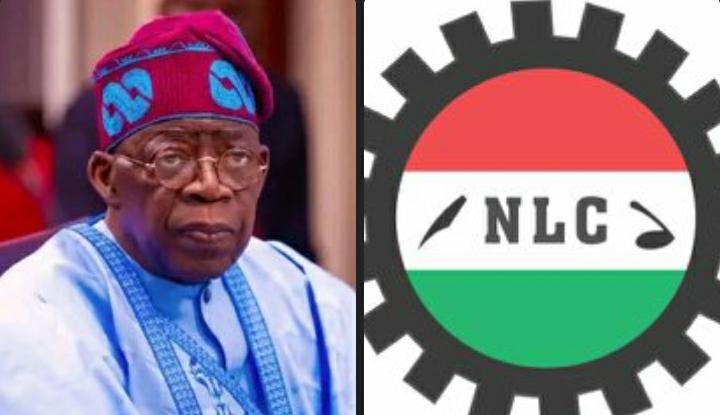
At this year’s Workers’ Day celebration in Abuja, organised labour unions issued a strong 20-point demand to the Federal Government, calling for urgent measures to address Nigeria’s deepening socio-economic crisis, including rising insecurity and wage stagnation.

In a joint address, leaders of the Nigeria Labour Congress (NLC) and the Trade Union Congress (TUC) urged the government to end the widespread killings across the country and implement economic reforms that prioritise the well-being of citizens. 

They also advocated for justice, respect for democratic principles, and transparency in governance.

Themed “Reclaiming the Civic Space in the Midst of Economic Hardship,” the event saw the labour centres decry what they described as unconstitutional actions, particularly the suspension of the elected government of Rivers State through a declaration of emergency, which they argued lacked a legal basis.

Other demands included an immediate salary review aligned with the economic situation, clarity on the Pay-As-You-Earn (PAYE) taxation system, and the withdrawal of controversial tax bills before the National Assembly. 

Labour also called for more inclusive policymaking, emphasising that workers must have a seat at the table when critical decisions affecting their welfare are being made.

Details to follow…

When Plateau dies and FG watches

By Abdulhamid Abdullahi Aliyu

In the early hours of Friday, April 12, 2025, Zike village in Bassa Local Government Area of Plateau State was reduced to a theatre of blood. At least 40 people, including women and children, were brutally killed by armed assailants who invaded the community under the cover of darkness.

Homes were set ablaze, farmlands destroyed, and hundreds displaced — once again. This is not an isolated tragedy. In less than four months, Plateau State has lost over 400 lives to mindless violence across Mangu, Bokkos, Riyom, Barkin Ladi, and Bassa LGAs.

According to data from local community leaders and humanitarian groups, more than 150 villages have been attacked since January 2024, with thousands displaced and properties worth billions destroyed.

Yet, the response from government authorities has been chillingly muted. Standard condolence statements have followed each carnage, but little in the way of justice or proactive security. For many in Plateau, it feels like being condemned to die in silence.

The question is painfully simple: for how long will this continue? The victims of these attacks are not armed militias or combatants. They are primarily farmers, traders, women, and children — people asleep in their homes, utterly unprepared for war but caught in its crosshairs.

The attackers, on the other hand, are described as well-coordinated, heavily armed, and operating with an eerie sense of impunity. The carnage in Plateau should not be seen as just a “communal crisis.” It is terrorism — plain and simple.

Any act that involves the targeted killing of innocent civilians on such a consistent and organised scale deserves to be treated as a national security emergency. The lack of urgency from both the federal and Plateau State governments is not just disappointing — it is dangerous.

The time has come for both levels of government to stop playing to the gallery and act. President Bola Ahmed Tinubu and Governor Caleb Mutfwang must rise above politics and confront this crisis with the seriousness it demands.

Enough of the empty press statements. The people of Plateau need protection, justice, and healing, not promises. There must be an immediate and thorough investigation into the Zike killings and all previous attacks across Plateau State.

The security agencies must identify and arrest the perpetrators. Communities cannot continue to bury their dead while those responsible roam free. Beyond this, a special joint military-police operation should be launched in Plateau — not as a temporary show of force, but as a sustained mission to flush out criminal elements and restore peace across all hotspots.

Such an operation should be intelligence-led, with active engagement from community leaders, local vigilantes, and civil society actors. Security operatives must also be adequately funded, equipped, and monitored to ensure professionalism and accountability in the course of duty.

Furthermore, there should be a comprehensive resettlement plan for displaced persons. The IDP camps in Plateau are filled with women and children who have been forgotten by a country that swore to protect them.

The government must support rebuilding destroyed homes, schools, and clinics in the affected communities. Most importantly, the culture of impunity must end. When killers are not punished, others are emboldened.

When justice is denied, peace remains a fantasy. Nigeria cannot claim to be fighting insecurity on one hand and tolerating unaddressed massacres on the other. This country must no longer treat the deaths of rural Nigerians as a footnote in national discourse.

The tears in Plateau are real. The graves are real. The trauma is real. And so must be our response. Plateau State is bleeding. Its people are tired. And the time to act is now — not with words, but with swift, firm, and visible action.

Abdulhamid Abdullahi Aliyu writes from the Centre for Crisis Communication (CCC) in Abuja.

Coalition, 2027 power play and the need for unity 

By Isyaka Laminu Badamasi

In the move to ouster Bola Ahmed Tinubu’s administration and the All Progressive Congress (APC) from the mantle of leadership in 2027, the need for unity among our political leaders can not be overemphasised.

The recent visit by Atiku Abubakar and other top politicians to former president Muhammadu Buhari for the post-Sallah, cast serious doubts in the minds of Nigerians who are yet to recover from the shocks of the former president’s betrayal of 2015 – 2023. The Wazirin Adamawa clearly stated that the visit has nothing to do with the proposed merger.

Be that as it may, Atiku as the prominent opposition leader should also be very careful with the crop of politicians is aligning with to achieve this objective, as some of those seen in his entourage during the visit are people with questionable backgrounds, whose their reigns in power left an indelible mark of anger and uncertainty in the minds of their people, they are heartless with no sense of sympathy to the people, they are not different with Tinubu.

As the Hausa saying goes, one need not select water in an attempt to squelch a fire, but in some situations, there is a need for that, as some waters may be more harmful than the fire. The selection of who to join hands with towards emancipating this country from the hands of incessant geezers is of the utmost importance. Sending President Tinubu out of the villa in 2027 is non-negotiable and shouldn’t be handled with kid gloves.

As it stands today, Nigerians yearn for someone who is ready to implement policies and programs that will make their lives very easy and promising, someone who will bring an end to the wanton killings all over the country caused by one insecurity or another, someone who is ready to ensure that Nigeria remains one and united. 

For this, the need for the political leaders to unite and make necessary adjustments to face the heartless APC administration head om is very paramount,  any move that can not guarantee the aspirations of common man in the streets can not move to an inch, and, it will be for the advantage of Bola Tinubu and his APC to remain in power beyond 2027.

To those power drunk, who are making a mockery of the movement, should be reminded that the pre-2015 merger that brought APC to power is still workable. APC and Tinubu should get prepared.

Isyaka Laminu Badamasi,  a public affairs commentator and advocate for sustainable development,  writes from Bauchi. 

The unfinished battle for local government autonomy

By Lawal Dahiru Mamman

In countries where governance works in favour of the people, citizens always look forward to progress and innovation. In contrast, Nigeria often clings to nostalgia, with many, including those who never lived through certain eras, romanticising what they fondly call the “good old days.”

Believing that the past was always better than the present, some advocate for a return to free education and overseas scholarships. Others yearn for the days of kobo coins, arguing that Nigeria’s economy thrived when they were in circulation and the naira held strong against the almighty dollar.

The era of Native Authorities, which largely financed itself through poll taxes and prioritised education, is also missed. Back then, local administrators ensured students were transported to and from school dormitories at the beginning and end of each term, reinforcing a system that valued structured governance and community welfare.

These administrative units, established under British colonial rule, eventually led to local governments (LGs). Initially, the LGs performed well, maintaining orderly markets, paying teachers’ salaries, and addressing essential grassroots needs.

However, over time, they lost autonomy and are now seen as mere appendages of state governments. Recognised as the most crucial level of governance due to their proximity to the people, successive administrations have made efforts to grant LGs full autonomy.

Yet, these efforts have consistently faced resistance. In 2012, former President Goodluck Jonathan declared his commitment to local government autonomy, emphasising that meaningful national development was impossible without functional local councils.

He argued that empowering LGs would have mitigated the rising insecurity. Jonathan also opposed the state-local government joint account, insisting that councils had a pivotal role in his administration’s “Transformation Agenda.”

At one point, he took legal steps to actualise this vision, but the dream of LG autonomy remained unrealised. Former President Muhammadu Buhari also pursued this goal. In May 2020, he signed an Executive Order granting financial autonomy to the judiciary, legislature, and local government councils.

Experts hailed this as a landmark move toward a more people-centred governance structure. Buhari’s rationale was grounded in Section 7 of the 1999 Constitution, which mandates LGs to oversee primary, adult, and vocational education, develop agriculture and natural resources (excluding mineral exploitation), and maintain key public services.

Their responsibilities also include street naming, house numbering, waste disposal, public convenience maintenance, and the registration of births, deaths, and marriages—basic yet crucial civic functions that remain poorly executed in today’s Nigeria.

Additionally, LGs are tasked with assessing and collecting tenement rates, regulating outdoor advertising, and overseeing public health and alcohol control. However, despite Buhari’s efforts, his administration’s push for LG autonomy, much like Jonathan’s, ultimately failed.

Now, President Bola Ahmed Tinubu finds himself at the center of this enduring struggle. He successfully secured a Supreme Court victory affirming LGs’ constitutional rights and their role in advancing grassroots governance.

He hailed the judgment as a win for democracy. However, what initially appeared to be an achievement began to feel like a setback. Many believe that state governors, who have long controlled local government resources, are deliberately frustrating the implementation of this autonomy for personal gain.

The requirement that LGs must conduct elections to receive direct allocations has further complicated the issue, as state governments continue to manipulate the process to maintain dominance.

By its very nature, local government should be the most accessible level of governance, open to all—from the ordinary citizen who walks barefoot to the community leader who mobilises residents for communal projects.

Yet, it has become a political chessboard where governors install their loyalists as council chairmen or caretakers, reducing them to mere appendages rather than independent administrators. Governors have historically played a decisive role in shaping Nigeria’s presidential politics.

With the 2027 elections casting a long shadow, party defections and quiet coalition-building are underway. This leaves Tinubu in a precarious position: will he stand firm on his commitment to full LG autonomy for sustainable economic development, or will he yield to political pressures and look the other way as 2027 approaches?

The battle for local government autonomy remains unfinished. The question now is whether Tinubu will see it through or let history repeat itself.

Lawal Dahiru Mamman writes from Abuja and can be reached via dahirulawal90@gmail.com.

FG releases ₦50bn to university unions, reaffirms commitment to education

By Muhammad Abubakar

The Federal Government has released ₦50 billion to academic and non-academic staff unions of federal universities, fulfilling a promise made by President Bola Ahmed Tinubu as part of efforts to enhance the welfare of university personnel and strengthen Nigeria’s education sector.

Announcing the development, the Honourable Minister of Education, Dr. Maruf Olatunji Alausa, described the disbursement as a strategic move to reaffirm the President’s commitment to transitioning Nigeria into a knowledge-driven economy. He emphasised that the release goes beyond a financial transaction, calling it a bold investment in human capital and youth development.

“This intervention is a reaffirmation of our President’s belief in the capacity of Nigerian youth and the invaluable role played by academic and non-academic staff in nurturing them,” Alausa stated.

In a message conveyed through the ministry, President Tinubu reiterated that ensuring uninterrupted academic activity in Nigerian universities is a core priority of his administration. “Keeping our children in school is not negotiable,” he declared, expressing optimism that strikes in higher institutions would soon be permanently resolved.

The Education Minister also acknowledged the cooperation of university unions, noting that Nigeria is currently experiencing one of the longest periods of academic stability in recent years.

The release of the funds is seen as a significant milestone in the President’s Renewed Hope Agenda and a step toward positioning Nigeria’s education system as a benchmark for excellence on the continent.

Rising through the storm: Kashim Shettima triumphs over trials

By Lawan Bukar Maigana 

From the ashes of battle-weary Borno to the powerful corridors of Aso Rock, Vice President Kashim Shettima has consistently defied the odds. His journey has never been one of privilege but of perseverance, grit, and unswerving faith in destiny.

As governor, he governed Borno State at a time when Boko Haram unleashed one of the worst humanitarian crises in Nigeria’s history. While others fled, Shettima stayed. He took bold, calculated risks to keep his people safe, rebuild destroyed communities, and stabilise a state under siege. Many thought Borno would collapse—yet under Shettima’s leadership, it stood.

Transitioning to the Senate, Shettima faced different types of warfare—political manoeuvring, underestimation, and party intrigues. Yet again, he rose above, earning his place as a voice of reason and strength within the APC, known for his eloquence, intellect, and firm grasp of national issues.

Today, as Nigeria’s Vice President, Shettima faces yet another challenge—this time from within. A coordinated campaign has emerged, allegedly pushed by political actors with ambitions for 2027, aiming to sow discord between him and President Bola Ahmed Tinubu. Fake news merchants have been deployed to twist narratives and fabricate rifts. But the facts remain stronger than fiction.

President Tinubu’s trust in Shettima runs deeper than many understand. Tinubu chose Shettima as his running mate—without pressure, without external consultation, and certainly without seeking endorsement from even the most powerful figures like former President Muhammadu Buhari. His decision was based on conviction, not compromise.

Each time the media speculates on a rift, President Tinubu swiftly dispels it, reiterating his confidence and respect for Shettima. This alliance is built on shared vision and mutual respect, not convenience.

Kashim Shettima has emerged stronger, wiser, and more determined through every fire he has walked. History shows us that adversity sharpens his focus. This latest round of animosity, though loud, is fleeting. Just like before, he will rise—not only to prove his critics wrong, but to reaffirm the values of loyalty, resilience, and visionary leadership.

The noise will fade in the end, but Shettima’s legacy—like his rise—will endure.

Lawan Bukar Maigana is an award-winning journalist and humanitarian who can be reached at: lawanbukarmaigana@gmail.com.