Argentina

Ángel Di Maria set to join Benfica

By Muhammadu Sabiu
 
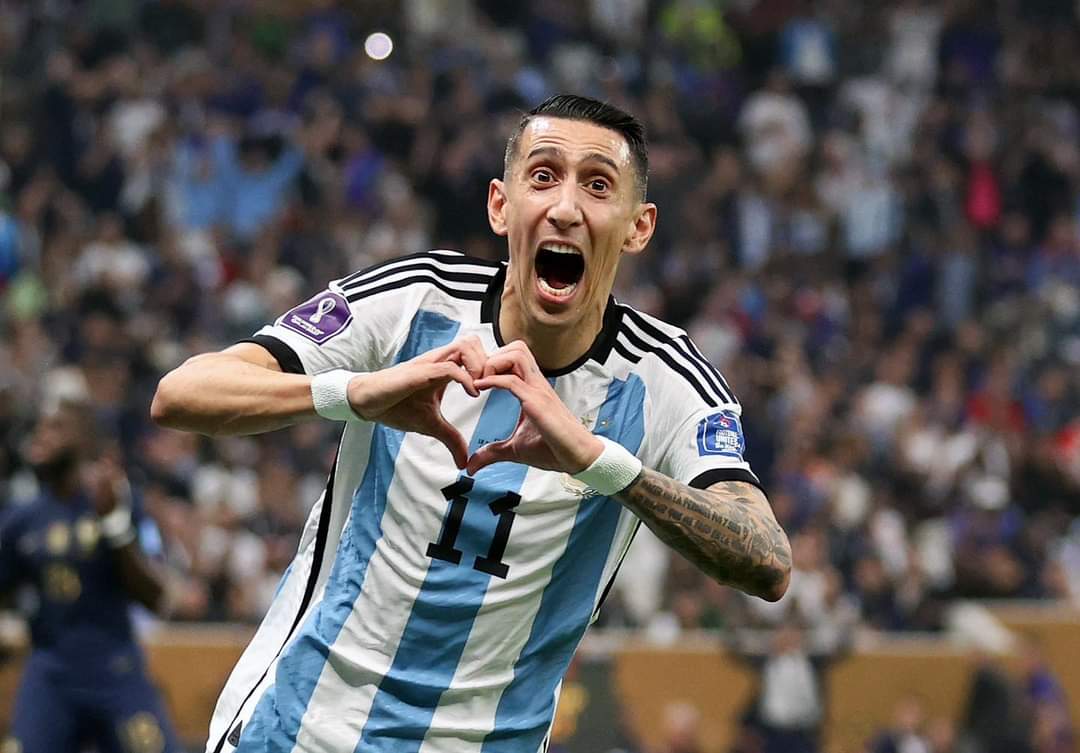
Ángel Di Maria, the Argentine winger, is set to join Benfica in a verbal agreement.
 
According to a renowned football journalist, Fabrizio Romano, “Ángel Di Maria will become new Benfica player next week, verbal agreement sealed”.
 
He added that the deal will be valid until June 2024.
 
Di Maria’s arrival is expected to boost Benfica’s attacking prowess, and the signing is being hailed as an impressive move.
 
Fans eagerly await the official announcement and anticipate the impact the talented winger will have on the team’s success.

The 2022 Qatar FIFA World Cup: Triumph of cultural tolerance and setback to clash of civilisations

By Babayo Sule, PhD

The 2022 Qatar FIFA World Cup is no doubt a beginning of a fresh era in intercultural relationships globally because of the indelible marks of perception, dynamism, fresh vigours, advancement of a new model and, most importantly, the introduction of a new style of reception, fanfare and farewell from the host to the world. Hosting a gargantuan event like FIFA World Cup is certainly a herculean task that financial muscles and political influence alone cannot earn. It takes beyond the lobby, indefatigable consultations, display of economic prowess, commitment, smart strategies that will outsmart competitors and, above that, a clandestine promise of delivery and reliability. Of course, Qatar surmounted all these obstacles and won the hosting. Beyond that, the World Cup was successfully organised, hosted, done and dusted most sublimely and fashionably way to some groups, perhaps.

Not long ago, some Western scholars, including Fukuyama (1996), Huntington (1996) and Lewis (1992), struggled hard to convince the world that the Western ideology, civilisation and system are forever the best and can never be competed with or matched in any circumstances. But for the critical counterattacks of the likes of Sa’id (2005), Harun Yahaya, Nefeily (2002) and some others, the Fukuyama-led cultural clash nearly succeeded in defeating the world to surrender to the almighty West and despair from any form of competition. Fortunately, the Sa’id-led counterattacks made us believe that cultural clash or advancing it is an act of ignorance that can be suppressed with dialogue and better understanding built on tolerance and respect. The approach of Qatar to the 2022 FIFA World Cup practically convinced us to discard the former school and hold firm on the latter.

When I learnt that the small country of Qatar, with just a population of 3 million, spent a breath-taking $200 billion, I cautioned myself to wait patiently and see what the country is after because my inner ego told me that the country is definitely up to something otherwise it will be crazy enough to believe this embezzlement amidst the myriads of squalor, deprivation, abject penury, natural disasters and other sufferings emanating from armed conflicts in the Muslim-dominated states. Qatar should have diverted this huge amount of money for humanitarian intervention in the most affected states, but my curiosity continues to deter me from concluding without seeing the actual intention. At last, it is revealed glowingly most passionately and soothingly to the global Ummah that Qatar invested in a modern and strategic Jihad.

Football is arguably the most unifying festival or even phenomenon globally, more than anything. Even religion today is not hypnotising like football, especially among youth. Take Nigeria, for example. Divisions are sharp and threatening to national unity in virtually all matters, even that of critical national importance like security, except for football. In an employment to strategic parastatals or apportion of a political position, no section of the country will tolerate the composition and the outlook of the national team, the darling Super Eagles. But in football, Ahmed Musa can score against Argentina in the World Cup, celebrate by prostrating before Allah (SWT), one of the major pillars of five congregational daily prayers and a major point of bringing one closer to his Creator, the Hausa/Fulani, Igbos, Yorubas, all the more than 400 ethnic groups, the Muslims, Christians, ritualists, animists and the North and South will unanimously celebrate the goal without minding exactly the mode and pattern of the celebration of the player. The same thing is applicable if a Christian player scores and celebrates using his religious signals and symbols. But for football, what can be tolerated that way in our mother country? Should a Minister prostrate in front of a national broadcast to celebrate the country and the achievement of his Ministry, trending impending insults among divided Nigerians will take weeks actively?

For Qatar, the small country lured the globe to its culture and way of using football as a tool. The country satisfactorily met all the requirements and fulfilled all the datelines, resources, infrastructures, provisions and all that is needed to host a successful World Cup. On several visits, the FIFA team always expressed its satisfaction with the level of preparations and provisions made by Qatar. However, some days before the commencement, Qatar boldly rose its head before the world and declared that it is a country of faith, culture, values and a system that must be respected without any compromise. Alcoholism in the stadiums, gay and other amoral attitudes are banned throughout the event, and any violation will surely attract a sanction according to the laws of Qatar governed by the Shari’ah system. Instantly, the belief that the West has in cultural clashes and the arrogant display of the ethnocentric chauvinism of superiority surfaced.

The Western media pounced on Qatar, and some even threatened to either boycott the event or Qatar must be forced to rescind its decision and guidelines for attending the event. Qatar stood firm and pledged never to compromise its stand on the ground that Qatar respects all cultures, and anywhere the citizens of the country visit, they respect and adhere to the guidelines, principles and laws of the land; then, why should her own be different? In what ways is any culture superior or advanced or super enough to bulldoze and overshadow the host culture? Fortunately, the FIFA President, being honest, frank and fair, supported Qatar fully and chided the West for, according to him, ‘its hypocrisy, intolerance, arrogance and immorality. Instead of the West apologising to the world for its more than 300 years of plunder and arrogance, it is parading tits trademark again’. The Western media, unrelenting, resorted to blackmail that the FIFA officials were bribed to grant Qatar the hosting, and the FIFA is bribed to approve the preparations and accept the conditions of Qatar without any protest.

The West, which mesmerised and dazzled the world with its modern scientific and technological advancement, effervescent skyscrapers, efficient system, and continuous innovation, failed the simple test of tolerance, respect and morality. The moral bankruptcy appears disappointing. Sayyid Qutb earlier berated the West for its handicap in a moral view. He expressed his wonders in seeing the miraculous feat achieved by the West in technology and development but rebuked them for moral emptiness, cultural intolerance, intellectual fallacies of distorting Islamic culture and values to him and bestiality exhibited by humankind in their societies. The FIFA President himself chastised the West for its sheepish behaviour and the display of immorality to the level of bestial nuptiality. The West arrogantly believed that it had the monopoly of setting the agenda for even cultural perception. The long-term monopoly in the political and economic control of the world intoxicated the West to believe that it must always determine the standard for anything, and it must have its way. But Qatar, a small but mighty country, challenged this view and put a sudden stop to it in style.

Qatar designed a Jihad model and unveiled it where all the attentions are. They say, ‘hit them where it hurts’, and Qatar hit where it hurts, but it soothes many. The opening ceremony sent waves of meticulous fantasy and a display of a fabulous enigma of people that aspired to differ in all ramifications from the acclaimed normal norm. Instead of the noisy fanfare, thunderous jamboree and a competition to display nudity and craziness of masquerades, the environment of the opening ceremony was ensconced in a serene clime with the melodious recitations of the Glorious Quran and a lullaby of the romantic Arab scents and marvellous dressing. The spectators silently listened and were hypnotised by the beauty and eloquence of the Qur’anic recitation.  

Instantly, the campaign of calumny, blackmail and propaganda swung into action in the West. The BBC declined to air the opening ceremony. The major Western media embarked on futile and baseless negative reporting. For instance, the Independent of November 21st 2022, wrote a piece mocking Qatar, the host, titled ‘Qatar World Cup defeat proves there are some things in sport you can’t pay for’. Another article in the Independent in the date titled ‘Qatar’s opening World Cup impression slips into disaster on and off the pitch’.

In another propaganda, CNN reports in an article on 20th November 2022, ‘Qatar makes World Cup in a debut controversial tournament of firsts’. The 24th November 2022 article by the Independent titled ‘What on earth is Morgan Freeman doing in Qatar? Queried why Morgan Freeman should be in Qatar. In the assumption of the Western media, Qatar spent lavishly to win. When and where World Cup opening match is won by the host? Morgan Freeman is seen either as too civilised to be in Qatar to attend a Qur’anic opening ceremony or irrelevant. The motive of Qatar is entirely a different ball game. Qatar has won the World Cup in the eyes of the fair-minded, culturally-tolerant but specifically, the Muslim world. The Jihad exhibited a moderate contemporary approach, and the resistance against the imposition of alien cultures to then host succeeded in opening the eyes of the imperialised and the international relations and international system will, of course, never be the same again.

Other resistance to neo-colonialism and new imperialism are unfolding courtesy of what Qatar did. Peacefully but assertively, Qatar altered the shape of the global political economy for keen observers. Even Huntington must revisit his clash of civilisations and rethink the remaking of world order beyond his only perceived clash.

The damages that the West self-inflicted in the effort to spoil the World Cup show in Qatar can take many decades or centuries to restore. For example, they are enlightening the world to resist any culture that it is not comfortable with, starting with their forceful imposition. They may continue to lure and influence the world using economic leverage and threats, but countries that are self-conscious, like Qatar, which internally recycled its economic buoyancy, will resist and counter. African states may take a lesson or continue to be humiliated by the world at will. The West, in its intolerance, informed the world that the crusade for human rights, democratisation and other dangerous exports (Blum, 2013) might be resisted, and it is a setback to its agenda of ruling the world using institutions and agreements.

Another lesson the world learnt from the weird attitude exhibited by the West in Qatar is to draw back and resist any attempt to denigrate or demean any culture, value, faith or nation. It is a scientific gateway for many global policymakers and key players to justify when pushing an agenda or tackling it. The worse of the scenarios is the moral emptiness and sheepish attitude of some countries and their football teams. The sport, as if it were a living organism, showed them an early exit to save the world from their embarrassment and allowed the serious-minded ones to battle it out.

One fascinating scenario in Qatar that will outlive the tournament and qualify the event to be extraordinary is that the vulgarity of Qatar is not leaving any stone unturned in its newly discovered Jihadism. The likes of Dr Zakir Naik were offered the opportunity to display their prowess in Da’awah, and the accommodation was designed to introduce the Islamic process of cleansing from impurity, a discovery that leaves many visitors dazzled and interested in Islamic teaching. The calls to prayer, display of Qur’anic verses from all angles of the city and Prophetic golden words all revealed exactly what Qatar spent its money for and not what the Independent article misperceived or tried to push deliberately. The final or closing ceremony after Argentina won the Cup was exotic. African musicians, including the Nigerian Davido, were invited but were confined to the World Cup tune prepared by a Qatari singer. The best player, Lionel Messi, was decorated in the regalia of the most valuable Arabian dress instead of the obscured juju and the usual spray of liquor and other madness that have no place in most civilisations but are being pushed down the throats of the communities by the imperial powers.

The World Cup has come and gone, but its memory will forever relish our minds and in what Qatar did, ‘Verily, in this is a Sign: but most of them do not believe’ (Q26:8). Qatar has opened a gateway for other world countries to liberate themselves from the encumbrances of new imperialism and neo-colonialism that is used to push the imperialism (Nkrumah, 1965). The small country has presented a fashionable and peaceful model of Da’awah that will strategically counter propaganda and a model of Jihad devoid of terrorism. It is a kind of Jihad that is difficult to provide a vacuum for conspiracy or damaging insults. Qatar may face stereotyping and a campaign of blackmail, and other Arabs and Islamic states may not smell the opportunity of hosting the World Cup for the next century or more, provided the West continues to control the world, but world countries can now develop the effrontery to counter abuse and disrespect of their faiths and cultures and may advance to ward off imperialism. African continent may restore its umbilical cord with Latin America and the Caribbean to re-establish a strong, surviving and successful Pan-Africanism. Qatar, in our eyes, is a blessed land of the righteous that present a model of liberation. God bless the country and the tournament!

Babayo Sule (PhD) wrote from the Department of Political Science, Faculty of Humanities Management and Social Sciences, Federal University Kashere Gombe, Nigeria. He can be reached via babayosule@gmail.com.
On the conditional lionisation of Black players and racism in football

By Musa Touray

When I saw France’s penalty squad entirely constituting black players at the final of the recently concluded World Cup, I was not happy with the composition even though I was rooting for Argentina, itself a country infamous for Black antipathy. I not only expressed my discontent at this decision but also prophesied the barbaric racism it could instigate among disgruntled fans if France lost to Argentina, as it eventually turned out.

The sole reason a legion of black football enthusiasts supported Argentina against France is their desire to see their football idol Lionel Messi win the World Cup and nothing else. The country has not done anything to deserve the symbolic outpouring of support from its African (black) fan base.

If anything, it’s the memories of affliction that Argentina meted out on their progenitors which continue to linger in their minds. History has it that the country is an inveterate anti-Black establishment that was said to have at least once led a crusade to exterminate its black residents. 

In a December 19, 2022 article titled “Messi’s emilokan – In Touch,” Sam Omatseye, a renowned Nigerian columnist for The Nation newspaper, wrote, following Argentina’s World Cup victory against France, that he “wanted France to beat Messi’s country, if I had a heartbeat for Messi’s game. It is a nation that never liked blacks. While Brazil is content to place its dark people in its ghettoes and salve its conscience by cultivating its Peles, their southern cousins decided to wipe them out. In a whitewashing sweep, they removed every trace of black people from their soils.” 

“They did not only cleanse the blacks out of their lands, they whitewashed its telling. They do not want even their forbears to know what happened. Today’s Argentines do not learn that aspect of their butchery. They were the ancestors of Hitler. But no one can deny the story. Some of their leaders are even proud of it. One of their former presidents, Carlos Menem, once quipped: ‘In Argentina, blacks do not exist; that is a Brazilian problem.’” He added.

Now that black fans—and of course, other fans—have their aim fulfilled in wanting to see Messi win the World Cup over his stiff competitor Ronaldo, most of them will not be rooting for Argentina ever again in light of the foregoing narrative.

Following England’s Euro defeat in 2020, its trio of black players, in the persons of Marcus Rashford, Jardon Sancho and Bukayo Saka, were cursed with excruciatingly racist invectives laden with all sorts of disgusting stereotypes. They were called monkeys, as if not humans. They were asked to return to their ancestral countries as if England was not where they proverbially had their umbilical cords interred. 

When Saka, Rashford and Bellingham made a name for themselves by performing excitingly and scoring goals at the recently concluded World Cup, they were lionised and extolled to the skies. Their identity and colour did not matter. They were more English than their colour could conspire to deny. Hence the caption of this article cannot be more befitting.

England progressed into the tournament—thanks to the awe-inspiring performance of their goalscoring black players—until everyone thought they would have the trophy. At last, Harry Kane’s missed penalty shoot defied people’s expectations. France knocked England out. Unlike Rashford, Sancho and Saka, Harry Kane was not subjected to any racial abuse. He survived the not-so-extreme heat of the moment.

The story would be different if a Rashford kind of player missed that penalty if the wont of English fans is anything to go by. His colour, although innocent, would have risen the anger and agitation to an unimaginable frenzy. It would invite the verbal causticity of the ungrateful trolls of a fan and pique the online devil in them. But since Harry Kane is one of their kind, his penalty miss was understood to mean nothing but destiny.

French fans have also unfailingly shown the world their racial bigotry, prompting a black French player to disable his Instagram account after having had enough of their online enormity. They blatantly disregarded black players’ overwhelming contributions and numerical significance throughout the tournament. 

Had they a pretence of gratitude, they wouldn’t resort to demonising their black players; yet, they would be busy trying to figure a way to canonise black players like Kylian Mbappé, who was literally the lifeblood of France in this World Cup.

Black players are, in other words, recognised and embraced when they pull stunning performances, ostracised and vilified when they do the contrary. It is nothing, as absurd as it sounds, other than the melanin that puts them at the receiving end of this insulting inconsistency of fans welled up in racism.

Musa Touray wrote from Sandu Kuwonku, The Gambia, via musatouray970@gmail.com.

For my friends who don’t know the Bisht

By Dr Sarah Marzouk

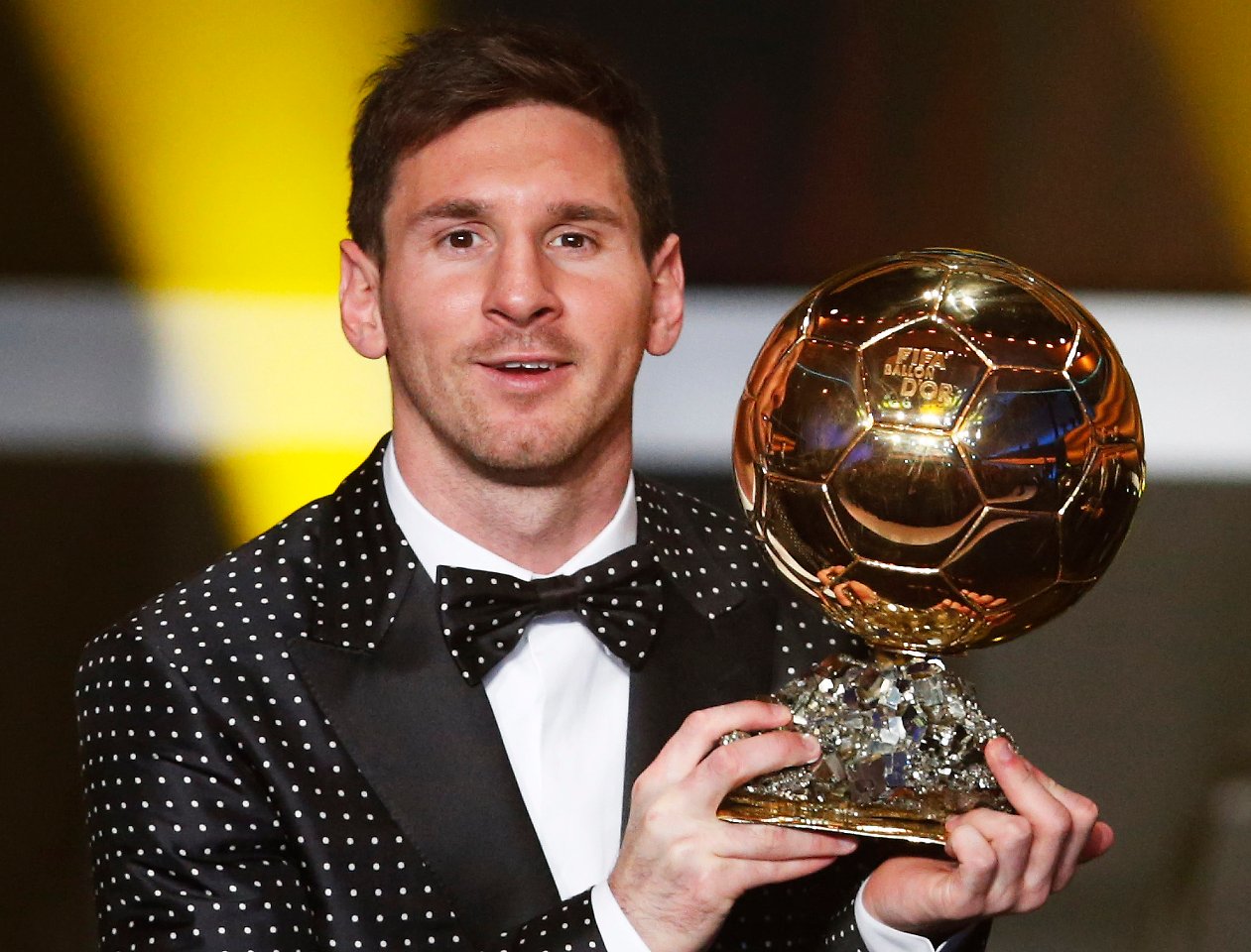
There has been quite a bit of online commentary, some of it quite derogatory, regarding the black robe that Lionel Messi wore prior to accepting the World Cup. For context, I wanted to explain its significance.

The garment is called a ‘bisht’, and it is an outer garment worn in predominantly Arab countries. The name is derived from the Akkadian word ‘bishtu’, which means ‘nobility’ or ‘prestige’.

This garment is considered a symbol of great honour. It’s a status symbol amongst royalty, the wealthy and those with high social rank, much like a cross between ceremonial graduation robes or, in Western terms, wearing a black tuxedo on a special occasion.

When it’s the Emir of a country literally gifting you the bisht, putting it on you with his own hands, it’s the highest honour that can be bestowed upon that civilian. It has nothing to do with religion at all.

Messi may not have understood what it meant when he graciously wore it, but it was the Qatari way of recognising him for the GOAT that he is.

In appreciation of Sergio Agüero

By Aliyu Yakubu Yusuf

Teenage Sergio Aguero first came into my football consciousness sometime in 2006 when his team Atletico Madrid took on their arch-enemies Real Madrid at the legendary Santiago Bernabeu Stadium. The match ended one apiece, and Aguero wasn’t on the score sheet. However, his name was on the lips of everyone who watched the game after he ran Fabio Cannavaro and Pepe ragged all afternoon long. Those 90 minutes were more than enough for me to realise that a legend was born. Before that match, I had no idea Atletico had signed the next footballing sensation from the football-mad Argentina.

Being an avid follower of everything regarding Argentina national team players, I am still surprised how I didn’t notice the presence of Sergio ‘Kun’ Aguero in the victorious Argentina team at the FIFA U20 World Cup in 2005. Perhaps, it was because he wasn’t part of the favoured starting lineup. And perhaps, it was because of the presence of another boy wonder, Lionel Messi, who won both the top scorer and the best player in the tournament. This tournament marked the beginning of a friendship between Aguero and Messi that has seen them share the same room for 16 years during national team duties.

If Aguero was upstaged in that 2005 FIFA U20 World Cup, he made up for it when he, too, guided Argentina to another title at the same tournament in 2007. And like Messi previously, Aguero also won both the top scorer and the best player gongs. That makes him the only player in football history to have played in and won two consecutive U20 World Cups. And just two years down the line, Aguero, alongside his friend, Messi, went on to win the Olympic gold medal for Argentina.

Aguero’s career is a spectacular story of success and glamour. This is a player who, at 16 years of age, became an undisputed starter in one of South America’s most storied clubs. From Independiente to Barcelona via Atletico Madrid and Manchester City, Aguero’s incredible talent, goalscoring exploits, and professionalism saw him capture the hearts of fans of all the clubs he played for.

If Aguero’s club career is that of being the first go-to man, in Argentina set up, the story was somewhat different. Despite playing alongside some of the best arrays of attacking talents in Messi, Higuain, Tevez, Lavezzi and Di Maria, Aguero more than held his own. His tally of 41 goals in 101 games is a respectable return for a player who had to share attacking duties with other illustrious names.

Although he won several trophies for almost all the clubs he played for, it is beyond doubt that the moment that best defined Aguero’s career came at the colours of Manchester City in 2011 when he scored a stunning stoppage-time winner that handed City their first-ever EPL title. This, coupled with four more EPL titles, more than 200 goals for City and being the non-European player with most EPL goals, saw him etched his name as one of the best ever foreign imports in the history of English football. And with a little south of 500 career goals, Aguero will surely go down as one of the best strikers of this generation.

As fate would have it, this remarkable player was diagnosed with a heart problem after playing just five games for his new club, FC Barcelona. As a result, doctors advise that it would be risky for him to continue playing professional football. As tearful Aguero announced his retirement from what he loves most, I just can’t shake the nostalgia. After all, this is a player with whom I shared so many happy and sad memories. All I have to say is: Adieu ‘El Kun’. The streets will never forget you.

Aliyu Yakubu Yusuf is a lecturer at the Department of English and Literary Studies, Bayero University, Kano. He can be reached via aliyuyy@gmail.com.

Lionel Andrés Messi: the end of an era

By Abdulrazak Iliyasu Sansani

As the most followed game in the world, football has moments that its fans don’t envision. Sometimes they do but keenly wish it never comes to pass. For Football Club Barcelona fanatics, that day came three days ago. 

For quite some years, Messi has been embroiled in a crisis with the Bartomeu led board. So naturally, this has affected the Argentine, who has come to identify and be identified with everything Barcelona. For someone who came as a child with growth deficiency, signed on a napkin, only to defy all odds, and cement his status as one of the greatest players of all time, arguably, the greatest player of all time. 

I first got to watch Messi play in FIFA under 20 World Cup, Netherland 2005, where he went on to score two penalties in the final and win the Cup against my dear country, Nigeria. From there, I knew a generational talent had emerged. Still, little did I know that that young man from Rosario would go on to win all competitions he has contested, except the FIFA World Cup, which he could still win in a trophy-laden career that has made only the great Brazilian utility player, Dani Alves to have won more titles in the history of the round leather game. 

There is every reason not to doubt this phenomenal player. If I ever had any doubts about the magical Messi, all were quelled when on March 10th 2007, aged just 19-years-old, the youngster was the star of the show in El Clasico, outshining his illustrious teammates Samuel Eto’o and Ronaldinho, to win a vital point for his team by scoring a hat-trick in club football most prominent feature, against the greatest football club in history, Real Madrid. On that day, for me, Messi proved beyond any iota of doubt that he would be one of the greats. 

With everything going on well from that point: with all his abundant talent, the right atmosphere, and everything in place. Still, Lionel Messi’s transformation from football prodigy to become one of the few players that deserve a place in the debate of the greatest players of all time, with so many claiming he is the outright GOAT, is impressive. Irrespective of your opinion in this debate: there are so many facts that concur with such views. 

Rarely has the world seen a better all-round football player who could function as a midfielder as well as a striker flawlessly. A player who often competes with the most clinical strikers for golden boots while struggling it out with the best midfield maestros for the most assists in so many seasons. Lionel Messi is out of this world. 

While you might not support him, you cannot deny the fact that what Messi does on the pitch, season in season out, for more than a decade, at the highest level, is the dream of every young footballer from my remote village of Sansani, to Jalingo, Bali, Arochukwu,  Ogbomosho, Freetown, Lome, London, Paris, New Jersey, and to all the nooks and crannies of the world. 

The home training I got abhor hatred. It absolutely doesn’t permit it. This has influenced all my activities. This is why some would be astonished to know that I am a Real Madrid football fan and writing all this for the greatest player of our biggest rivals, FC Barcelona. But I cannot hate greatness. If any player has made the difference for Barcelona in El Clasico, it is Leo. This had often been the difference between success and failure for Barcelona and Real Madrid too. 

To some, it should be a significant factor in making me antagonistic towards anything Messi. But I don’t think so. Of course, I cannot hate the defence-splitting passes, the vision, the offensive nous of bringing something out of nothing, the breathtaking dribbling, which once produced a physics-defying goal. No, I don’t do my things this way. 

I cherish greatness; I bow before the best in awe; I celebrate the mercurial Messi knowing this genius has entertained the football world to stupor. Wherever he goes, I wish him the very best. All things being equal, whichever club he goes will naturally have the edge to achieve their lofty ambitions. 

For those who will always view Messi’s greatness through warped lenses, I say to them don’t waste your precious time, the six-time Ballon d’Or winner has nothing to prove in this beautiful game that he has already broken almost every record breakable and set new ones, which for want of space I won’t list them here. However, they are well known by football supporters worldwide. 

Yes, he can’t break all the records; none can. But, of course, you are allowed to continue to raise the bar for him, and this football living legend will have a little problem proving you wrong while effortlessly doing what he loves best, playing football and winning trophies. 

Abdulrazak Iliyasu Sansani, a Real Madrid fan, wrote from Jalingo, Taraba State. He can be reached via abdulrazaksansani93@gmail.com.

Messi: He came, he saw and he conquered

When former Barcelona Director of Football, Carles Rexach, signed Lionel Messi on a napkin paper at the turn of the current millennium, little did he know that he had just unearthed possibly the greatest ever footballer. Barcelona have just announced the departure of their boy wonder, the messiah and the plea, after 17 years of joy and anguish, highs and lows, successes and failures. Countless goalscoring records have tumbled at the majestic feet of the boy from Rosario in Argentina. He holds the records for playing more games for Barça in La Liga, UCL and El Clasico.

To even attempt to list Messi’s accomplishments in this short thread would be foolhardy. Nevertheless, many accomplished pundits, coaches and players mesmerised and enchanted by his magic wand have showered plaudits to the little genius. After trouncing Arsenal in 2010, the then Arsenal coach famously remarked that “Messi is a PlayStation player”, effectively testifying to the impossibility of being Lionel Messi. Similarly, Pep Guardiola, who is the coach that helped nurture the talents of Messi, once said that “To compare Lionel Messi with any other player is unfair… on them”. Jorge Valdano, a Maradona teammate in the victorious 1986 World Cup-winning Argentina side, added that “Messi is Maradona every day and even Maradona wasn’t Maradona every day”.

Rodrigo De Paul, Messi’s teammate in the Argentina national team, said, “If Messi is your captain, you would want to go to war for him”. The recently departed ex-Real Madrid captain Sergio Ramos also confessed that “Messi will always have a place in my team”. This is just off the top of my head. The list of current and retired players who idolise Messi contains the creme-de-la-creme of the footballing world.

A longstanding mantra has it that ‘records are meant to be broken.’ If these Messi’s records are ever to be broken, it will take an exceptional player.

1. Winning four consecutive Ballon Dors.

2. Winning 6 European golden shoes.

3. Scoring 91 goals in a calendar year.

4. Scoring 75 goals in a league season.

5. Scoring in 21 consecutive league games.

6. Scoring 50 league goals in a single season.

7. Winning three player of the tournaments in international tournaments.

8. Scoring 40 or more goals for nine consecutive seasons.

9. Scoring/Assisting 50 or more goals for 13 consecutive seasons.

10. Winning four man of the match awards in a single World Cup.

As for Barcelona fans all over the world, the dreaded day has finally come. Most of them can still remember the scrawny, shy 17-year old Messi who scored his first-ever professional goal against Albacete via Ronaldinho’s assist. Very few people thought that that watershed moment was passing the baton from one generational talent to another. However, the future isn’t that bleak for Barça. For one, young, exciting talents are emerging from the academy. The likes of Fati, Collado, Trincao, Gavi, Pedri, Puig, Mingueza, Araujo and Dest have shown great promise. Together with the old guards such as Pique, Griezmann, Alba, Busquets and Aguero, they may just paper the gaping cracks that Messi’s sudden departure will inevitably leave.

Messi alone is capable of covering a multitude of sins for coaches and fellow players. Good luck trying to replace such a player.

As for the man himself, this is a perfect opportunity to silence his diminishing number of detractors that he can cut it away from his comfort zone — whatever that means. Of course, Messi isn’t getting any younger, but I would bet my bottom kobo for him to fare well at any league in the world.

Aliyu Yakubu Yusuf is a lecturer at the English and Literary Studies Department, Bayero University, Kano. He can be reached via aliyuyy@gmail.com.