Almajiri

[OPINION]: Almajiri: Time to Rethink

By Hauwa Ibrahim

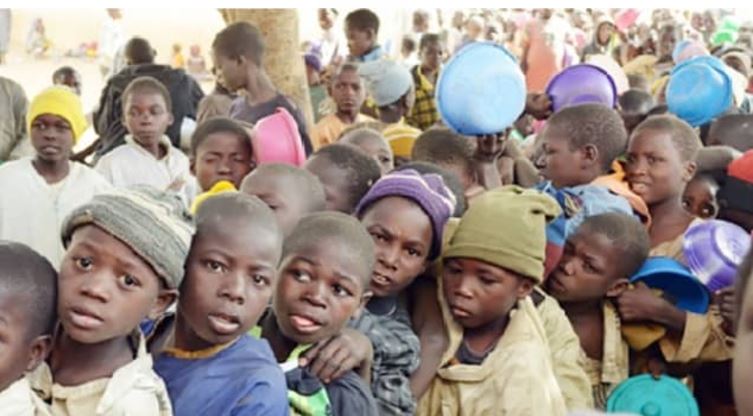
The Almajiri system has for too long remained one of Nigeria’s most visible social failures. Every day, thousands of children can be seen wandering the streets of northern cities barefoot, bowl in hand, begging for food under the guise of religious education. This practice, which was once a modest system of Quranic learning, has now degenerated into a cycle of neglect and poverty.

It is time for Nigeria to take a hard look at the Almajiri system and begin a complete rethink of its relevance and structure. The reality is that the system, as currently practised, violates the rights of children to proper education, healthcare, and protection. No child deserves to live on the streets in the name of learning.

Originally, the Almajiri tradition was a respected form of Islamic scholarship. In pre-colonial times, young pupils lived with Islamic scholars who taught them the Quran and basic literacy. The local communities supported these students with food and shelter, making it a communal effort that worked within the social structure of the time.

However, that system no longer functions as it once did. The breakdown of community support and government neglect have turned many Almajiri schools into breeding grounds for child labour and exploitation. Today, these children are left to fend for themselves in harsh conditions, begging for survival instead of receiving the education they were promised.

The consequences of this neglect are enormous. Many Almajirai grow up without formal education, skills, or prospects for the future. Deprived of opportunities, some become vulnerable to criminal recruitment or radicalisation. It is a humanitarian crisis that continues to grow silently in plain sight.

In recent years, several administrations have promised reforms. The Goodluck Jonathan government, for example, launched a programme to integrate the Almajiri system with basic education by building special schools across the North. Sadly, most of those schools have either been abandoned or converted to other uses due to poor implementation and lack of continuity.

The time has come for both federal and state governments to revisit the issue with sincerity. Reform must go beyond building classrooms. It must involve a complete restructuring that prioritises the welfare, education, and future of every child. Government must work with religious leaders and traditional institutions to design a model that preserves the moral teachings of Islam while ensuring that children are not left to roam the streets.

Community participation is also crucial. Parents and guardians must be sensitised on the dangers of sending their children away without supervision. Poverty is often the main reason behind this practice, so tackling it requires broader social welfare programmes, including free basic education, school feeding, and parental support schemes.

The role of religious leaders cannot be overstated. They must use their influence to advocate for a humane and modern approach to Quranic education. Islam encourages the pursuit of knowledge but does not sanction child neglect. Reimagining the Almajiri system must therefore align with both faith and social responsibility.

Civil society groups and the private sector can also contribute by supporting community-based schools and vocational centres where Almajiri children can acquire practical skills alongside religious learning. This will help integrate them into society and reduce the number of children living on the streets.

Education remains the most powerful tool for transforming lives. Every Nigerian child, regardless of background, deserves access to quality education in a safe environment. Allowing millions of children to live as beggars is not only an injustice to them but also a threat to the country’s future.

There is also a public health dimension to the crisis. Almajiri children, often living in unsanitary conditions, face constant exposure to diseases and malnutrition. Their situation undermines national efforts to improve public health and fight poverty.

A deliberate, well-coordinated national plan is needed to phase out the exploitative aspects of the Almajiri system. The solution lies in integration, rehabilitation, and empowerment, not neglect. Education ministries, social welfare agencies, and faith-based organisations must work together to ensure no child is left behind.

Ultimately, the Almajiri problem is not just a northern issue but a national one. A society that allows millions of its children to beg on the streets cannot claim progress. Nigeria must confront this reality and take decisive steps to end a system that perpetuates poverty and ignorance.

If the nation fails to act now, the cost will be enormous. The uneducated children of today could become the disillusioned adults of tomorrow. Reforming the Almajiri system is therefore not an act of charity but an urgent investment in Nigeria’s stability, security, and development.

Hauwa Ibrahim, Department of Mass Communication, University of Maiduguri.
Addressing the Menace of Almajiri and Out-of-school Children

By Martha Adamu

I write to call the attention of the newly established National Almajiri Commission and other relevant agencies saddled with the responsibility of tackling the crisis of out-of-school children. The issue has lingered for too long and demands urgent, pragmatic action if Nigeria is to make meaningful progress in education and human development.

For decades, the North has struggled with the twin challenge of the Almajiri system and the rising number of children who are completely out of school. This has created a dangerous cycle of illiteracy, poverty, and social vices. Every street corner in many northern cities tells the same story: barefooted children, bowls in hand, begging for alms instead of sitting in classrooms.

According to UNICEF reports, Nigeria has the highest number of out-of-school children in the world, with over 10 million children excluded from basic education. A significant percentage of these children are from the northern part of the country. This reality is not only a unfortunate but also a time bomb that threatens national security, peace, and development.

The Almajiri system, once rooted in noble intentions of imparting Islamic education, has today become synonymous with neglect, child labour, and poverty. Many parents, unable to cater for their children, send them off to distant towns under the care of teachers who lack the resources to provide proper welfare. The result is a generation of children abandoned to hunger, street begging, and exploitation.

The consequences of this neglect are glaring. Many of these children grow up without formal education, lacking the skills necessary to compete in today’s world. Worse still, they become easy recruits for criminal gangs, violent groups, and extremist movements. Nigeria cannot afford to ignore the dangerous implications of having millions of idle, uneducated, and hopeless youths roaming the streets.

The creation of the National Almajiri Commission is a welcome development, but it must not become another toothless bureaucracy. The commission must develop a clear strategy to integrate Quranic education with modern subjects such as English, Mathematics, Science, and vocational training. This will give the children both spiritual grounding and the practical skills needed to survive in today’s society.

Government at all levels must also invest massively in building functional schools across the North. The lack of infrastructure is one of the reasons many children remain out of school. Where schools exist, they are often overcrowded, understaffed, and poorly equipped. Education must be made accessible, attractive, and affordable for every child.

Equally important is the role of parents. Many parents deliberately withdraw children from school, either due to poverty, cultural beliefs, or ignorance. Sensitisation campaigns are necessary to change attitudes and emphasise the importance of education. No society can progress when its children are left behind.

Religious and traditional leaders must also rise to the occasion. For too long, the Almajiri menace has been treated with silence or indifference. Leaders who wield influence in communities must use their voices to advocate reforms, encourage enrolment in schools, and support initiatives aimed at ending child neglect.

Addressing this menace also requires economic empowerment. Poverty is at the root of the problem. Many families send their children to beg simply because they cannot provide food, clothing, and shelter. Empowering households with jobs, microloans, and skills training will reduce the burden and keep children in school.

Another critical step is the enforcement of child rights laws. Nigeria has the Universal Basic Education policy, but its implementation remains weak. States must enforce compulsory education and punish parents or guardians who neglect their children’s education. Without enforcement, policies remain mere paperwork.

Civil society organisations and international partners also have a role to play. Collaboration is key in building model schools, providing teacher training, and supporting child welfare. With proper synergy between government, NGOs, and communities, the tide can be turned.

The media must equally sustain the spotlight on this issue. The plight of the Almajiri and out-of-school children should not only make news during special events but remain a central theme in public discourse. Awareness is the first step towards action.

In conclusion, Nigeria cannot achieve sustainable development while millions of its children are excluded from education. The Almajiri crisis and the epidemic of out-of-school children must be treated as a national emergency. Education is the foundation of progress, and leaving children on the streets is nothing short of mortgaging the country’s future.

The time to act is now. The National Almajiri Commission and all stakeholders must rise above lip service and deliver real, tangible solutions. The future of the North—and indeed Nigeria—depends on it.


Martha Adamu, Department of Mass Communication, University of Maiduguri.

FG launches 119 learning centres to boost education for Almajiri, out-of-school children

By Uzair Adam

The Federal Government has established 119 learning centres nationwide to improve access to foundational education for Almajiri learners and out-of-school children.

The development was disclosed by Nura Muhammad, Spokesperson for the National Commission for Almajiri and Out-of-School Children Education (NCAOOSCE), during an interview with journalists in Abuja on Sunday.

Muhammad explained that the centres operate under two models: some enhance existing Almajiri schools with structured literacy and numeracy classes, while others focus exclusively on out-of-school children using the Accelerated Basic Education Programme (ABEP) curriculum.

He noted that this approach allows learners to complete foundational education in a shorter time frame.

The spokesperson also announced the successful development of a National Policy on Almajiri Education, spearheaded by the Minister of Education, Dr. Tunji Alausa, ensuring that Almajiri learners will no longer be classified as out-of-school children.

He added that Almajiri schools will now receive the same support and funding as conventional schools.

In strengthening its nationwide presence, Muhammad said the Commission now has offices in all states within 28 months of its establishment.

It has also launched a ward-to-ward advocacy campaign in seven pilot states – Kano, Jigawa, Yobe, Borno, Lagos, Ogun, and Cross River – to engage parents, traditional rulers, religious leaders, civil society groups, and children on the importance of regulated education and school enrolment.

“Lagos, Cross River, Ogun, and Yobe have successfully covered all wards, and the public response has been very encouraging. The remaining pilot states are making substantial progress, and the model will ultimately be scaled nationwide,” he added.

The spokesperson emphasized that these reforms align with the Commission’s enabling Act, assented to by the President in May 2023.

The mandate includes reforming the centuries-old Almajiri system through literacy, numeracy, and skills acquisition, while enrolling millions of out-of-school children into formal and non-formal education pathways.

Muhammad said that upon assuming office, Executive Secretary Muhammad Idris conducted consultations with key stakeholders, including the Sultan of Sokoto, the CAN President, the Oba of Lagos, the Shehu of Borno, the Ooni of Ife, and the Olubadan.

These consultations culminated in two Abuja retreats organized with the Office of the National Security Adviser, producing the NCAOOSCE Strategic Plan (2025-2035) to guide reforms over the next decade.

Among the Commission’s flagship programs is the Tinubu Legacy Skills Training Institute, designed to equip Almajiri youths with both religious knowledge and vocational skills.

At the Kaduna campus, 200 learners completed a nine-month intensive training program covering Arabic and English literacy, Qur’anic interpretation, and vocational skills such as POP design, plumbing, agriculture, tiling, solar installation, GSM repair, and ICT.

Trainees followed the National Board for Arabic and Islamic Studies (NBAIS) curriculum, sat for examinations, and are now awaiting results.

A second branch in Ibadan is currently training 150 girls using the ABEP curriculum, combining foundational education with vocational skills. Upon completion, the girls will be eligible to continue formal education.

“These initiatives reflect the Tinubu administration’s commitment to reform the Almajiri system and ensure that no child is left behind. From expanded learning centres to community advocacy and skills development, the Commission is laying a foundation that will shape Nigeria’s education landscape for years to come,” Muhammad said.

Addressing the menace of Almajiri and out-of-school children

By Sonia Wa Sarki

I write to call the attention of the newly established National Almajiri Commission and other relevant agencies saddled with the responsibility of tackling the crisis of out-of-school children. The issue has lingered for too long and demands urgent, pragmatic action if Nigeria is to make meaningful progress in education and human development.

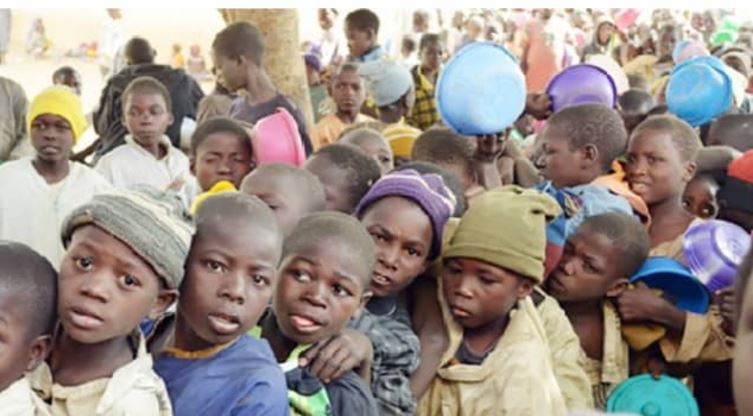
For decades, the North has struggled with the twin challenge of the Almajiri system and the rising number of children who are completely out of school. This has created a dangerous cycle of illiteracy, poverty, and social vices. Every street corner in many northern cities tells the same story: barefooted children, bowls in hand, begging for alms instead of sitting in classrooms.

According to UNICEF reports, Nigeria has the highest number of out-of-school children in the world, with over 10 million children excluded from basic education. A significant percentage of these children are from the northern part of the country. This reality is not only a unfortunate but also a time bomb that threatens national security, peace, and development.

The Almajiri system, once rooted in noble intentions of imparting Islamic education, has today become synonymous with neglect, child labour, and poverty. Many parents, unable to cater for their children, send them off to distant towns under the care of teachers who lack the resources to provide proper welfare. The result is a generation of children abandoned to hunger, street begging, and exploitation.

The consequences of this neglect are glaring. Many of these children grow up without formal education, lacking the skills necessary to compete in today’s world. Worse still, they become easy recruits for criminal gangs, violent groups, and extremist movements. Nigeria cannot afford to ignore the dangerous implications of having millions of idle, uneducated, and hopeless youths roaming the streets.

The creation of the National Almajiri Commission is a welcome development, but it must not become another toothless bureaucracy. The commission must develop a clear strategy to integrate Quranic education with modern subjects such as English, Mathematics, Science, and vocational training. This will give the children both spiritual grounding and the practical skills needed to survive in today’s society.

Government at all levels must also invest massively in building functional schools across the North. The lack of infrastructure is one of the reasons many children remain out of school. Where schools exist, they are often overcrowded, understaffed, and poorly equipped. Education must be made accessible, attractive, and affordable for every child.

Equally important is the role of parents. Many parents deliberately withdraw children from school, either due to poverty, cultural beliefs, or ignorance. Sensitisation campaigns are necessary to change attitudes and emphasise the importance of education. No society can progress when its children are left behind.

Religious and traditional leaders must also rise to the occasion. For too long, the Almajiri menace has been treated with silence or indifference. Leaders who wield influence in communities must use their voices to advocate reforms, encourage enrolment in schools, and support initiatives aimed at ending child neglect.

Addressing this menace also requires economic empowerment. Poverty is at the root of the problem. Many families send their children to beg simply because they cannot provide food, clothing, and shelter. Empowering households with jobs, microloans, and skills training will reduce the burden and keep children in school.

Another critical step is the enforcement of child rights laws. Nigeria has the Universal Basic Education policy, but its implementation remains weak. States must enforce compulsory education and punish parents or guardians who neglect their children’s education. Without enforcement, policies remain mere paperwork.

Civil society organisations and international partners also have a role to play. Collaboration is key in building model schools, providing teacher training, and supporting child welfare. With proper synergy between government, NGOs, and communities, the tide can be turned.

The media must equally sustain the spotlight on this issue. The plight of the Almajiri and out-of-school children should not only make news during special events but remain a central theme in public discourse. Awareness is the first step towards action.

In conclusion, Nigeria cannot achieve sustainable development while millions of its children are excluded from education. The Almajiri crisis and the epidemic of out-of-school children must be treated as a national emergency. Education is the foundation of progress, and leaving children on the streets is nothing short of mortgaging the country’s future.

The time to act is now. The National Almajiri Commission and all stakeholders must rise above lip service and deliver real, tangible solutions. The future of the North—and indeed Nigeria—depends on it.

Sonia Wa Sarki writes from the Department of Mass Communication, University of Maiduguri, Nigeria.