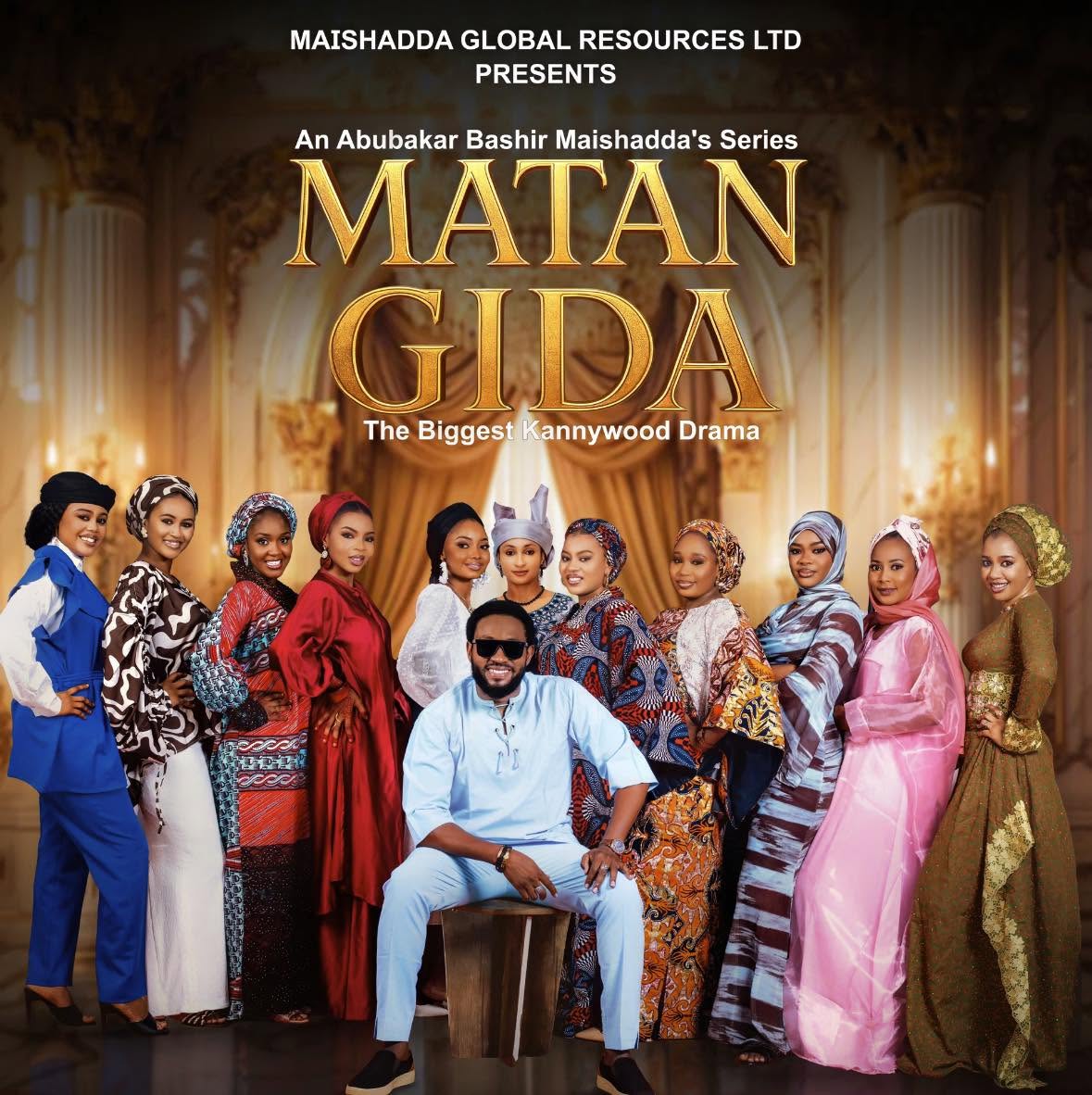
Matan Gida: The Hausa Series That Refuses to Play Safe
By Mubarak Umar
There are television series you watch for entertainment, and there are those that remind you what storytelling is truly capable of.
Matan Gida, created by Abubakar Bashir Maishadda, is one of those rare productions.
For years, Hausa television has largely remained within the familiar territory of domestic disputes, predictable romances, and neatly resolved family conflicts. Audiences have become accustomed to stories that rarely challenge expectations. Matan Gida breaks away from that tradition with remarkable confidence.
The series is driven by a screenplay that feels fearless. I can sense that when Ibrahim Birniwa opened his PC to draft Matan Gidan, he wasn’t writing to satisfy convention; he was writing to provoke thought. The script explores uncomfortable realities, moral ambiguities, power dynamics, and the hidden complexities in our everyday lives, subjects that many filmmakers have hesitated to approach. Every episode feels intentional, with dialogue that carries weight and scenes that linger long after the credits roll.
The entire cast truly deserves equal praise. The ensemble is balanced, with each actor bringing a distinct personality and energy to the screen. There is no sense of characters competing for attention; instead, every performance contributes meaningfully to the larger narrative. It is this diversity of characterisation that gives Matan Gida its emotional richness and realism.
Abubakar Maishadda deserves credit for trusting a script that challenges Kannywood’s conventional cinema. Because producing a series like Matan Gida is a creative statement. It proves that audiences are ready for mature, thought-provoking stories.
And now comes the real test.
With Season Two premiering today, expectations are high. The first season didn’t just tell a complex story—it raised the standard in Kannywood. Audiences will be expecting deeper conflicts, higher emotional stakes, more character arcs, and answers to the questions deliberately left hanging. More importantly, viewers will expect the series to preserve the boldness that made the first season stand out rather than retreat into familiar territory.
If Ibrahim Birniwa’s pen remains as fearless as it was in Season One, and if the series continues on the pedestal that challenges both the industry and its audience, Matan Gida has every chance of becoming one of the defining works of modern Hausa television.