ABU Zaria

Elder statesman Adamu Fika passes on at 90

By Ahmad Deedat Zakari 

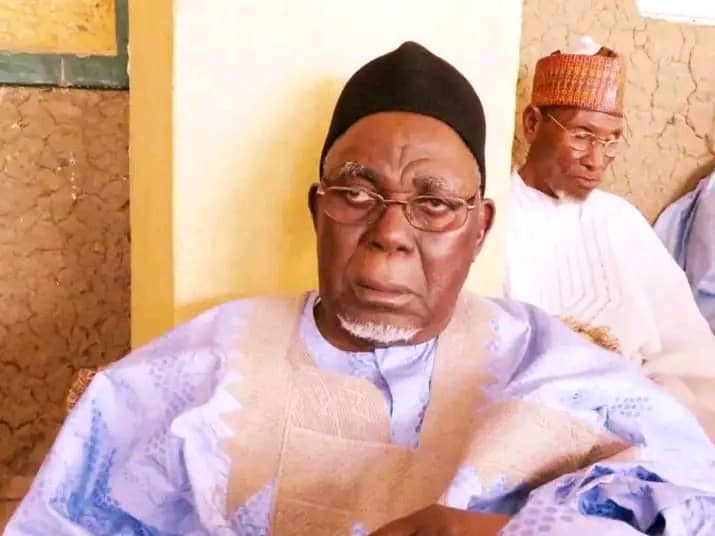
Elder statesman and Nigeria’s former Secretary to the Government of the Federation, Dr. Adamu Fika, has passed away at the age of 90. 

Sources within the family confirmed the demise of the nonagenarian to newsmen on Tuesday. 

The deceased died in London, where he has been treating undisclosed health issues. 

His funeral prayers have been scheduled to take place at the Sultan Bello Mosque in Kaduna on Wednesday by 4:00 p.m. 

He was born in Fika, Yobe State, in 1933. He was educated at Kaduna Government College, the Nigerian College of Arts, Science, and Technology, and Ahmadu Bello University, Zaria. 

He lived a life dedicated to the service of God and his country, which is evident in the position he held in his lifetime. 

The deceased was at the time pro-chancellor and chairman of the governing council at Ahmadu Bello University, Zaria.

The deceased was also the Chairman of the Board of Trustees of the Arewa Consultative Forum (ACF).

He was a permanent secretary at various federal ministries, among other things.

From school bench to professorship: The inspirational journey of Dr MI Aminu

By Tijjani Ahmad, FCA

Our lives are often shaped by the people we meet along the way, and for me, one of those people has been a dear friend whose journey I’ve witnessed since our junior secondary school days. Dr MI Aminu’s life is a testament to the power of determination, hard work, and the pursuit of excellence, leading to his remarkable success as an academic and career professional.

Our paths first crossed in junior secondary school, where we shared the challenges and triumphs of those formative years. From there, we ventured into senior secondary school, navigating the complexities of education and personal growth side by side. But our educational journey was far from over. After completing our senior secondary education, we took a significant step in our academic paths by attending the College of Arts, Science and Remedial Studies (CAS), Kano, for IJMB A-level. During these pivotal years, we solidified our friendship and embarked on a shared journey of intellectual growth.

It was after our time at CAS that our paths diverged. Dr Aminu pursued his dreams at Usman Danfodio University, Sokoto (UDUS), where he chose to study Business Administration, driven by his passion for business and entrepreneurship. Meanwhile, I ventured to Ahmadu Bello University (ABU), Zaria, to pursue a degree in accounting, charting my unique course.

While our locations and fields of study differed, our friendship remained steadfast. We supported each other from afar, exchanging stories of our academic pursuits and experiences. It was evident that a shared desire for knowledge and personal growth drove both of us. After completing his studies, Dr. Aminu entered the corporate world, working tirelessly in the banking sector for four years. During this time, his dedication to knowledge and personal growth never wavered.

The academic world beckoned at this stage, and he answered its call. He left his banking career to pursue an academic path, starting with Kano State Polytechnic. This transition reflected his commitment to knowledge and desire to inspire the next generation of leaders and entrepreneurs. His academic journey reached a pinnacle when he set his sights on a PhD in Entrepreneurship. This pursuit took him to Malaysia, where he immersed himself in research and scholarship, guided by the erudite Prof. Rosli Mahmood, one of the foremost professors in the field of management and entrepreneurship in Asia. Under Prof. Mahmood’s mentorship, Dr Aminu honed his expertise in the area he was so passionate about.

Upon earning his PhD, Dr Aminu returned and found his way to one of the prestigious universities in Nigeria, ABU, Zaria, where he was welcomed as a faculty member. His dedication to research and scholarship is evident in his publication of over twenty articles in reputable journals, leaving an indelible mark on entrepreneurship, as reflected in the impressive 160 citations garnered by his works.

Beyond his scholarly achievements, Dr Aminu’s commitment to education shines brightly through his mentorship of over 20 MSc and PhD students. With a generous spirit and fervour for guiding the next generation, he imparts the values of perseverance and academic excellence. Dr Aminu’s unwavering commitment to research and his nurturing of future academics epitomises his lifelong dedication to knowledge and personal growth, serving as an inspiring testament to the transformative influence of education and mentorship.

But the story doesn’t end there. Dr. Aminu recently achieved another milestone in his academic career – he was promoted to the coveted position of Associate Professor of Entrepreneurship at ABU, Zaria. This promotion is a testament to his years of dedication to academia, rigorous research, and his commitment to entrepreneurship. It is not just a title but a recognition of his contributions to the academic community and his impact on countless students over the years.

Dr MI Aminu’s remarkable journey reminds us that the pursuit of excellence and the fulfilment of one’s dreams are endeavours that require unwavering dedication and the courage to navigate diverse paths. His story underscores the profound impact of mentors and the importance of nurturing the next generation of leaders. It teaches us that regardless of the challenges we face or the twists and turns in our journey, with resilience and a steadfast commitment to our aspirations, we, too, can achieve greatness. His life is an enduring testament to the boundless possibilities that await those who embrace lifelong learning, pursue their passions, and inspire others.

Today, Dr. Aminu stands as a beacon of inspiration to all who have known him. His journey from our school days to his current position as an Associate Professor at Ahmadu Bello University, Zaria, is a testament to his unwavering commitment to education, entrepreneurship, and personal growth. May his story continue to inspire us all as we pursue our paths to success.

Tijjani Ahmad wrote from Kano via ahmatee123@gmail.com.
Yusufu Bala Usman – The quintessential historian

By Prof. Abdalla Uba Adamu

I was never lucky enough to come under Yusuf Bala Usman’s tutelage while I was a student at Ahmadu Bello University Zaria, Nigeria, from 1976 to 1979. Being a student in the Faculty of Education, I missed out on having to take lectures in the famous FASS – Faculty of Arts and Social Sciences, undoubtedly, the hotbed of critical theories in the 1970s.

Yusufu Bala Usman, Ibrahim Tahir, Patrick Wilmot, and Mahmoud Tukur enlivened the university with their rhetoric about culture, history, polity and anthropology. My roommate was a History student, so I gleaned a lot from him about the critical theories flying about on the campus. Those years were indeed the intellectual years of ABU. Every subsequent northern radical traces his roots to that era and its critical reflection on Nigerian society.

As M.M. Gwadabe noted in his obituary to Yusufu Bala Usman, published in Africa: Journal of the International African Institute, 2010, 80(1): 165-168.

The contributions of Bala Usman lie not only in the number of papers he has written or the publications he has left for posterity. He spearheaded the establishment of a school of thinking quite distinct from the perception of history that used to be prevalent in Nigeria before the 1970s. Before him, history was generally understood and taught within the paradigm of colonial historiography. The efforts of Bala Usman and some of his colleagues in the department liberated history teaching as they masterminded the establishment and nurturing of the School of African historiography at Ahmadu Bello University, Zaria (ABU).

And in spite of his towering intellectualism, he remained humbled by the very scholarship he served. As Gwadabe further informs us:

“In 1985, the authorities of Ahmadu Bello University, considering Dr Usman’s contribution to knowledge, promoted him to the rank of a Professor. Humble as he was, Dr Usman turned down the promotion on the ground that ‘he was not convinced that he had done enough to be a Professor’. While he was without [a] doubt qualified for the promotion, his action was an attempt to show his displeasure with the way promotions to the rank of professorship were politicized and abused. So, Dr Usman died with the rank of a Reader.”

Now compare this towering inferno of intellectualism with our intellectuals today – who, based on some newspaper and junk journal publications, proudly present themselves as professors – when no one has ever read their works or become impacted by their expected contribution to knowledge.

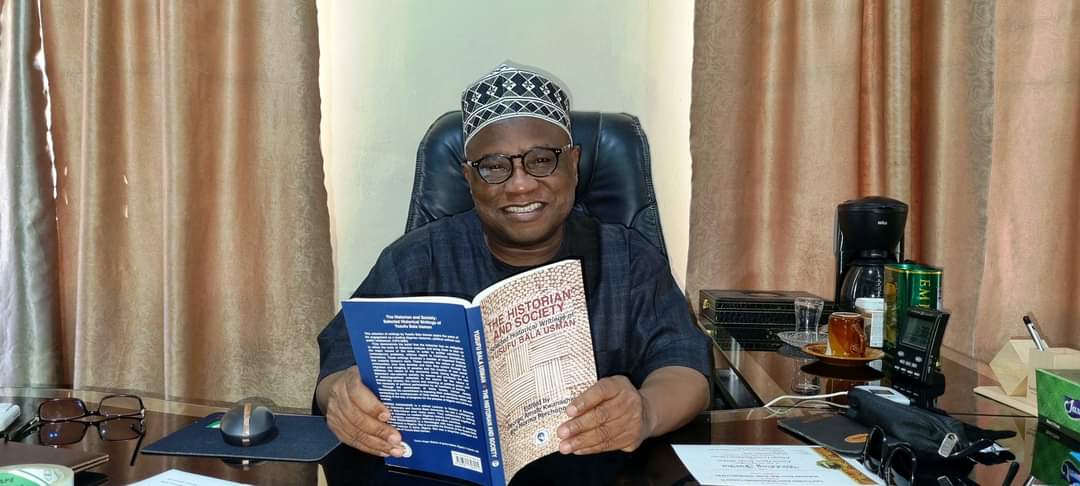
Yusufu Bala Usman passed away at 60 years old in 2005, relatively still in his prime. His thoughts and ideas, however, live on through the Yusufu Bala Usman Institute in Zaria. To refresh our memories about his fiery and critical writing, the Institute, on 23rd September 2023, released a compendium of his lectures that captured the years of engagement as a leading Nigerian historian, political activist and public intellectual, mainly from 1972 to his death, in 2005. The book, The Historian and Society: Selected Historical Writings of Yusufu Bala Usman, was edited by George Ama Kwanashie and Normal Perchonock. It provides a handy introduction to the thoughts of Yusufu Bala Usman for those who only heard about him. Going through the 12 chapters of the book would convince you that with his death, northern Nigeria has lost a formidable voice in contemporary critical theory.

The book is now available as a physical copy. There is a website for the Institute where you can order the book at 3,500 NGN.

Academic performance determines your results

By Aliyu Zainab Lawal

Students’ academic performance is measured based on their results. Poor academic performance is primarily attributed to the lack of commitment and preparation in and outside the classrooms. Academic results measure students’ understanding and skill in a particular subject or course. As said by Dr Adama Adamu, the current H.O.D of Mass Communication, Ahmadu Bello University, Zaria, exams and tests remain powerful instruments for assessing students.


Academically, results reflect students’ knowledge and understanding of the subject matter. They equally depict how well a student has better grasped the concepts and principles imparted to them in classrooms. High grades denote strong comprehension.


Reportedly, results assess how students can apply their problem-solving knowledge and skills. This is apparent in how they demonstrate critical thinking, problem-solving, analytical skills, and practical applications of theoretical concepts.


Moreover, several existing factors influence academic performance, encapsulating students’ preparations and readiness. They include effort and time investment, active learning, time management, and consistent revision. Developing These elements equitably would inevitably positively impact student’s results.


Also, academic results serve as feedback for improvement and consolidation. They enable the students to identify their strengths and weaknesses. By subjecting their results to analysis, students can focus on areas that need improvement and further develop strategies to enhance their academic performance.


The Department of Mass Communication and many other departments within Ahmadu Bello University stick to the conventional way of result release by pasting them on boards in a public place for all the students to witness. This is also the act many of the students I interviewed despised, as they believe that results are everyone’s confidential treasure. By extension, they are not supposed to be made public. Therefore, students should have their transcripts privately.


However, Dr Kabiru Danladi, a lecturer from the Mass Communication Department of Ahmadu Bello University, Zaria, shed more light on the issue when he said, “It is a law to paste results in a public place as soon as they get approved by the Senate as they now become public property”. He added that any department giving transcripts without first pasting the results violates the law.

Aliyu Zainab Lawal wrote via aliyuzainablawal442@gmail.com.

ABU wins Huawei ICT Competition in China

By Ahmad Deedat Zakari

The Ahmadu Bello University (ABU), Zaria, has emerged winner at the Huawei ICT Competition for the 2022-2023 Global Final held in Shenzhen, China.  

The management of Huawei disclosed on their website that the competition was the first to be held physically since 2019, and about 80 universities worldwide participated.

“Today, the Huawei ICT Competition 2022-2023 Global Final concluded in Shenzhen, drawing to a close the seventh instalment of this competition. The first to be held in person since 2019, the event’s culmination was a competition between finalists in 146 teams from 36 countries. Before the Final, more than 120,000 students from more than 2000 universities in 74 countries and regions around the world took part in the ICT Competition,” the statement reads.

Maryam Jimoh Olalade, Haruna Anas, Ahmad Abdullahi and Elayo Aliyu Isah represented the institution that won the prize.

ABUTH delivers first IVF baby in northwest

By Ahmad Deedat Zakari

Ahmadu Bello University Teaching Hospital, Zaria has recorded an unprecedented milestone in the North-Western region of Nigeria as the university hospital successfully delivered its first invitro fertilization (IVF) baby.

Professor Adebeyi Adesuyun of the Department of Reproductive Medicine, disclosed this to newsmen on Friday. He said, “A male baby was delivered at 10:53am on May 16 with weight of 3kg.”

The Professor noted the cost implication of the milestone and further disclosed that it was a journey began by ABUTH about twelve years ago.”

Such delivery is costly and not available in the whole of the northwest region. ABUTH is the only public health facility that offers IVF. The journey did not start today; we have been on it for more than 12 years, but paucity of funds in getting the right equipment was our major hindrance,” he said.”

He also disclosed that the hospital has patients on their waiting list to receive the treatment.

Tribute to my dear friend, Abdulaziz Ahmad Adam

By Ahmad Deedat Zakari

The last time I saw Abdulaziz was on the evening of Tuesday, May 2, 2023. He was on the way to the sick bay supported by Waziri and Albani. Nasir, the NAMLAS president, was also in their company. A bike was eventually called upon to convey them there. Sadly, that was the last time I saw him in flesh and soul. In his infinite wisdom, the Creator has decreed that “every soul shall taste death.” And the time came for Abdulaziz on the evening of Thursday, May 4, 2023.

As Muslims, we believe and submit to the will of Allah. However, a week after Abdulaziz’s demise, I still live in self-denial. Everything seems too sudden, and I still wish it is a terrible nightmare. It’s somewhat unfathomable that he did not complete the examinations he so much prepared for and started with us. Like many final-year law students, Abdulaziz’s mind was already in the Nigerian Law School, and preparation was underway. His demise was the least expected way to say goodbye.   

I have known Abdulaziz since we assumed academic activities in January 2017 at the Faculty of Law. However, we became closer in our fourth year when we shared room 90 of Ali Akilu hostel. He would spend much of his time listening to scholars of comparative religion. Videos of Zakir Naik and the late Sheikh Ahmad Deedat dominated his phone gallery. He had an unquenchable thirst for the study of comparative religion, and he was ever ready to share this knowledge.

A week before his death, he had addressed us after morning prayers in Al-Muntada Mosque and emphasised the need to study comparative religion. He undertook to take the course to willing participants in the second semester.

Like many of us, Abdulaziz was a man with dreams for a great future. When we lived together, he narrated the ordeals that led him to study law after he completed NCE and became a certified teacher. That’s a pretty long story, but the bottom line is that he had a reason to work hard, and he worked very hard. He knew where he was going and what it took to get there, and he was set for the journey to greatness at dawn. Sadly but with gratitude to the will of the Almighty, his light was blown out in his prime.

Allah endears his loved ones to people. Abdulaziz was loved by many. This was evident in the crowd that graced his funeral. His teachers, colleagues, friends, students and even non-Muslims were all at Haruna Danja Mosque to bid him farewell. The love the people had for him did not end with him; it extended to his immediate family.

A few days after his death, classmates and friends raised more than half a million for his wife and the two children he left behind. I think he is loved by Allah, who perfected his character and made him the darling of everyone whose path he had crossed. He always met all of us with a cheerful countenance, and he was never known for engaging in frivolities. As much as this is my opinion, I am not subjective. My opinion about him would not have been different if he were alive. 

Abdulaziz will be missed for many reasons and by many people. He left a positive mark on the lives of many. The local chapter of the Muslim Student Society of Nigeria (MSSN) of the Faculty of Law will miss him dearly. He had been a committed official since his admission to the faculty and was committed till his transition.

Abdulaziz’s teachers and classmates will miss him greatly. He was an exceptional student who spoke and asked questions in class when necessary. I remember vividly how he was asked to translate Suratul Kafirun by Professor Danladi in our last Jurisprudence and Legal Theory class. Unfortunately, that was just two weeks from his unanticipated exit. 

He also left a vacuum to be filled at the Kongo Campus Islamiyya, where he taught Tawhid, amongst other courses. His learned brothers at the Student Bench and Counsel, who had appeared before him while he was Khadi of the student judiciary, will miss his judicial wisdom and excellent understanding of Islamic Law.

Besides his family, whose pain at this difficult time is unimaginable, Abdulaziz will be in our pleasant memories for a long time. As the reality of his death sets in, I feel his absence. May Allah forgive him, forgive us, console us and take care of his family, ameen

ABU loses final year law student

By Ahmad Deedat Zakari

Abdulaziz Ahmad Adam, a final year student of the Faculty of Law, Ahmadu Bello University, Zaria, has passed on. 

The deceased was admitted to the university sickbay on Tuesday due to an unverified illness and died on the evening of Thursday. 

Mr Adam, before his admission to the hospital on Tuesday, wrote the Legal Research Methodology examination with other classmates. 

As of the time of writing this report, plans are underway for his funeral at the Alhaji Haruna Danja Mosque in Zaria.

Classmates and friends of the deceased have expressed shock and deep sadness over his demise. 

Yakubu Muhammad Abubakar, the Chairman Council of Principal Partners and classmate of the deceased described Abdulaziz’s death as a great loss that has left many disheartened. 

He said: “I was shocked to the marrow when I received this sad news today, But we all remember that God loves him much more than us. He was a kind, humble and dedicated someone that everyone would love to be with. May Allah forgive him and Grant him Jannah”

Abdulaziz passed on at the age of 30, and he is survived by his aged father, siblings, his wife and daughter.

Ramadan: ABU Professor distributes 40 bags of rice to students

By Ahmed Deedate Zakaria

Madinan-educated Professor of Islamic Law, Prof. Arsalan Muhammad, has distributed 40 bags of foreign rice to his students. 

On Tuesday, Professor Arsalan, who is reputed for his generosity, donated 40 bags of rice to the 400-level students of the Faculty of Law, Ahmadu Bello University, Zaria. 

The beneficiaries organised themselves into groups to receive the professor’s rare act of kindness. 

The Daily Reality gathered that all interested students got the rice irrespective of their faith.

Professor Arsalan is known for his generosity and always reaches out to outstanding students with textbooks, handouts and even money.

Below is a brief biography of Professor Arsalan Muhammad:

Professor Muhammad Arsalan was born in 1968. He attended several local Quranic schools between 1973 to 1983. Arsalan started his formal education in 1983, got admission into Jama’atu College of Arabic Studies Zaria and graduated in 1987. He then proceeded to Bayero University Kano, where he obtained his Diploma between 1987-1990.

Muhammad Arsalan travelled to the Kingdom of Saudi Arabia and got admission into the Faculty of Sharia, Islamic University Madina and graduated in 1995 and returned to Nigeria immediately and served his NYSC in 1996. 

Muhammad Arsalan got admission for his LL.M. and appointment as a Graduate Assistant in the Faculty of Law, Ahmadu Bello University Zaria, in 1996 and graduated in 2000 and proceeded to his PhD in 2001 and graduated in 2009. 

Arsalan was promoted to the rank of Lecturer 2 upon his successful completion of his LL.M in 2000 and promoted to the rank of Lecturer 1 in 2005, and to the rank of Senior Lecturer in 2009, he was also promoted to the rank of Reader/Associate Professor in 2012 and finally promoted to the rank of Professor in 2015.

Abubakar emerges Chief Justice as ABU inaugurates students’ judiciary

By Ahmad Deedat Zakari

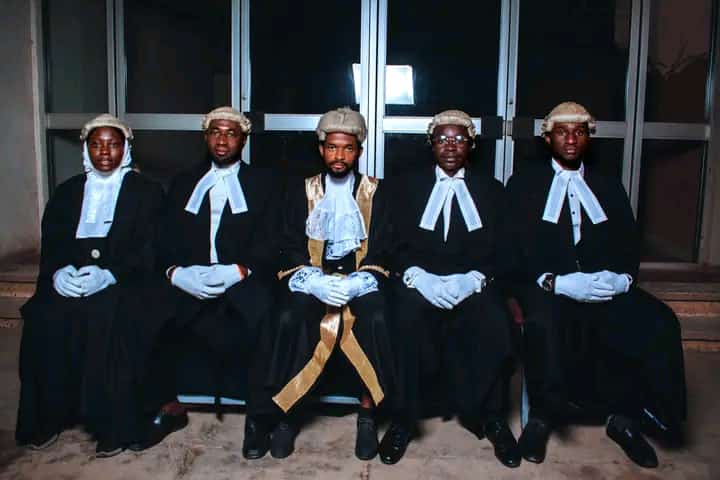
The Faculty of Law, Ahmadu Bello University (ABU) Zaria, has inaugurated its students’ judiciary.

The inauguration ceremony was held at the Faculty of Law, ABU Moot Court, Kongo Campus, on Monday. 

The event was attended by teachers and students of the faculty and other faculties across the country. 

Mustapha Abubakar, an award-winning final-year student, emerged as the Chief Justice of ABU. 

Mr Abubakar, who, until his appointment, was Justice of the ABU Court of Appeal. He is a recipient of several awards.

In 2019, Abubakar emerged as the best Advocate of Ahmadu Bello University, Zaria. 

The same year, advocacy took him to the national level as he emerged as the best and winner of the 2019 National LAWSAN moot competition.

He was also announced best and winner of the NAMLAS Moot and Mock competition in 2019.

In 2019, he also won Best Brief Writer and Best Oralist Of The Clinical Legal Education (CLE) Annual Mock and Moot Championship.

Mr Abubakar left the student Bar to the student Bench in 2020 as a Justice of the Court of Appeal, where he received a Medal of Honour as a distinguished justice of the court 2020.

The ABU Faculty of Law is where the country’s most distinguished jurists and legal practitioners were thoroughly bred. This explains why there is something particularly unique and different about the ABU student judiciary. It is the microcosm of the Nigerian Judiciary. The Courts are arranged from the Supreme Court down to the Sharia Court of Appeal.  

The Supreme Court is headed by the ABU Chief Justice, who must be a final-year Law student and must be knowledgeable in procedural and substantive law. Other final-year students are appointed as justices of the Supreme Court. 

Then we have the Court of Appeal headed by the President Court of Appeal, who must be a final-year Law student. Other justices of the Court of Appeal are appointed from the 400 level. 

The High Court is headed by a Chief Judge of the High Court, and a Grand Khadi heads the Sharia Court of Appeal. Other judges and Kadis are appointed to aid the efficient learning of the law. 

The arrangement of the court helps students in the procedural and practical aspects of the law. This is because procedures might be similar but are different in all courts.