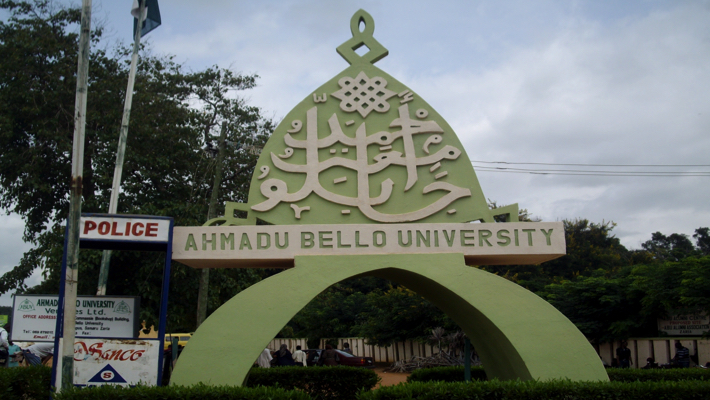
ABU Zaria

ABU law students confer teaching excellence award on Professor Kabir Danladi

By Anas Abbas

Students of the Faculty of Law, Ahmadu Bello University (ABU), Zaria, U18/19 LLB set, have presented a letter of appreciation and an Award of Excellence to Professor Kabir Muhammad Danladi in recognition of his exceptional commitment to teaching, mentorship, and student development.

In a heartfelt gesture captured on video, the students described Professor Danladi as the first lecturer who formally introduced them to core legal courses, praising his ability to simplify complex legal concepts through the use of current affairs and trending issues.

According to the students, this approach not only deepened their understanding of the law but also made classroom engagement practical and relatable.

The letter further commended the professor for his dedication to inclusive teaching, noting that he consistently went the extra mile to ensure that no student was left behind.

The set of students highlighted his strict adherence to the course outline, effective time management that ensured full coverage of the syllabus within the semester, and his openness to questions during lectures.

Uniquely, the students also acknowledged Professor Danladi’s use of a portable voice amplifier in class,an uncommon practice among lecturers which they said enhanced audibility and learning for all students.

To them, this commitment symbolized “justice in teaching,” a principle they believe reflects the true spirit of legal education.

Beyond academics, Professor Danladi was praised for offering guidance on life after university, mentorship the students described as invaluable to their personal and professional growth.

As a mark of respect, love, and gratitude, the U18/19 LLB students presented the professor with a token Award of Excellence and gifts, reaffirming their appreciation for what they termed a rare blend of knowledge, compassion, and professionalism.

End of an Era: ABU don, Prof. Sadiq Muhammad, retires after 45 years

By Musa Kalim Gambo

The atmosphere at the Red Lecture Theatre in Ahmadu Bello University (ABU), Zaria, on Saturday, December 6, 2025, was a poignant mix of celebration and profound loss. It was the valedictory event for Professor Sadiq Muhammad, who has just concluded a distinguished 45-year-long career at the institution, teaching in the Language Arts section in the Department of Arts and Social Science Education. But this was more than a retirement party; it was a powerful, two-pronged call to action for the future of Nigerian education: celebrating the professor’s unparalleled commitment to mentorship while simultaneously articulating the country’s urgent need to institutionalise this practice.

A Legacy of Selfless Service

The proceedings, themed “Celebrating a Legacy of Scholarship, Mentoring, and Academic Leadership”, quickly established the magnitude of Professor Muhammad’s impact. Prof. Abdullahi Dalhatu, the Chairman of the occasion and Dean of the Faculty of Education, characterised the event as one of “mixed feelings”, acknowledging the joy of celebrating a career “without being found guilty in one thing or the other”, but lamenting the vacuum his departure creates.

The tributes that followed were the heart of the day, painting a vivid portrait of a man who transcended the role of an academic. Prof. Ramlat Jibir Daura, affectionately known as “the mother of language arts education”, captured the sense of loss, describing Prof. Muhammad as the section’s father figure, who supervised an extraordinary over 300 PhD students. His humility and generosity were recurring themes. Prof. Sani Adamu described him as “one of the poorest professors” because of his immense generosity in using his personal funds to aid students’ education. In a touching testament to his hands-on mentorship, Dr S. A. Abdulmumin recalled an anecdote from the 1990s where the professor, on his humble Yamaha 80 motorcycle, took junior colleagues to the market to buy provisions for their families.

His daughter, Fauziyya Sadiq Muhammad, spoke for the family, describing him as a “teacher, a guide, a protector”, acknowledging the quiet sacrifices he made to balance his professional commitments with his role as a dedicated father and a community pillar who adopted and educated many non-blood-related children.

The Academic Imperative: Institutionalizing Mentorship

Crucially, the honoree insisted that the event maintain a substantive academic core, thereby turning the celebration into a discussion of national educational policy. The formal lecture, delivered by Professor Abdullahi Dada on behalf of Prof. Hanna Onyi Yusuf, was titled “Institutionalising Mentoring in Teacher Education in Nigeria: Challenges, Prospects, and Implications for Curriculum Review.

The paper, a qualitative, analytical study, proposed a reflective clinical mentorship framework and a national mentoring policy to bridge the gap between theoretical knowledge and classroom realities in teacher preparation. It highlighted significant barriers in the Nigerian context, including resource and funding constraints, the absence of a national framework, and cultural or institutional resistance. The recommendations were concrete: policy formulation, strategic capacity-building for mentors, and the formal integration of mentoring into university curricula.

Reinforcing this, Professor J.A. Gwani defined the ideal mentor’s role: “you as a mentor you are a facilitator… a facilitator does not know everything; he facilitates. He provides the environment democratic enough for people to be able to make contribution…”.

A Forward-Looking Valedictory

In his valedictory response, delivered by Professor Alti Kasim, Prof. Muhammad expressed profound gratitude and reflected on his students’ curiosity as his “compass”. More importantly, he used his final official platform to deliver a decisive call for strategic investment in the future of Language Arts: expanding teaching staff, procuring a dedicated language laboratory, and providing robust professional development for faculty.

The final remarks served as a capstone to the theme of mentorship. Dr Lawal Hamisu, a former director under the professor, credited Professor Muhammad’s direct intervention for facilitating his own appointment at the university. This final, firsthand testimonial powerfully reinforced the day’s central lesson.

Prof. Sadiq Muhammad’s retirement is not merely the end of a career but an architectural blueprint for the Nigerian educational system. His legacy demonstrates that transformative academic leadership is not solely about publishing papers or holding titles, but about the grassroots, personal investment in the next generation. As the country grapples with staffing shortages and quality control in tertiary education, the true challenge left behind is not simply replacing a professor, but answering his call to make selfless mentorship the institutionalised norm, ensuring that his 45-year compass continues to guide Nigeria’s future scholars.

Gambo writes from Zaria.

Outrage as 20 suspects in Plateau wedding bloodbath walk free on bail

By Abdullahi Mukhtar Algasgaini

There was outrage after the Plateau State High Court granted bail to twenty individuals accused of the brutal killing of thirteen wedding guests in the Mangu Local Government Area.

The decision, delivered yesterday, comes just days after the tragic attack that shocked the nation.

The victims were ambushed while returning from a wedding celebration.

They were travelling in a vehicle affiliated with Ahmadu Bello University (ABU), Zaria, from Zaria to Jos when they were reportedly set upon by a group of youths.

The suspects were subsequently arrested and arraigned before the court on charges relating to the massacre.

Presiding over the case, the judge ruled to grant all twenty defendants bail pending the continuation of their trial.

The court has adjourned the matter until October 13, 2025, for further hearing and proceedings.

The decision is likely to be met with mixed reactions from a public still grieving from the devastating attack.

31 Muslim passengers lynched in Plateau: ABU Muslim Forum demands justice

By Muhammad Sulaiman Abdullahi

The Muslim Forum of Ahmadu Bello University (ABU), Zaria, has condemned the brutal lynching of 31 Muslim passengers in Mangu Local Government Area of Plateau State, describing the attack as a “horrific act of savagery and barbarism.”

According to the Forum’s statement, signed by its Secretary-General, Dr. Munir Sani Ari, the victims—travelling in an 18-seater bus marked “ABU-Zaria”—were ambushed on Friday, June 20, 2025, while seeking directions in Mangu. Twelve passengers were reportedly killed and burned on the spot, while 18 others sustained serious injuries and are currently receiving medical care following military intervention.

Among the deceased was a staff member of ABU’s Department of Physics, who was reportedly transporting women and children to a wedding. The Forum emphasised that this was not an isolated incident but part of a “disturbing pattern of impunity-driven violence” against Muslims in Plateau State.

Criticising the response by Mangu LGA Chairman, Mr. Emmanuel Bala, who attributed the massacre to a “case of mistaken identity”, the Forum labelled the remark as “futile and insulting,” citing social media posts glorifying the attack as evidence of premeditated hate.

The Forum issued a set of urgent demands, including a full and independent investigation, public prosecution of those responsible, prompt compensation for victims, and immediate government intervention to prevent future attacks. It also called on the Kaduna State Government to support the victims’ families and cover medical expenses.

The Forum warned that continuing to fail to act decisively would only deepen national tensions, urging authorities to pursue justice beyond “mere rhetoric.”

Professor Roko’s healing hand: Governor Yusuf’s generosity

By Lamara Garba

In a world where leadership often wears the heavy cloak of command, Governor Abba Kabir Yusuf of Kano State walks a different path—one marked not by spectacle, but by quiet grace. His recent donation of N5 million to support the health of Professor Abubakar Roko, a senior lecturer at Usmanu Danfodiyo University Sokoto, shines like a candle in a stormy night—a gesture simple in form, yet profound in meaning.

This act of compassion stirred a ripple through the academic community, reaching hearts far beyond Sokoto. The family of Professor Roko, alongside the Academic Staff Union of Universities (ASUU) UDUS branch, offered their deep thanks. For them, the governor’s support was not just financial—it was a lifeline, a moment of humanity in an often indifferent world.

Professor Roko’s struggle for access to medical care echoes a troubling truth: that even those who nurture the minds of generations can find themselves abandoned in times of need. When society allows a scholar—one who has dedicated his life to the service of knowledge—to fall through the cracks, it begs the question: who among us is truly safe?

Indeed, Governor Yusuf’s gesture is more than an act of charity; it is a quiet protest against this injustice. It is a reminder that governance, at its best, is an extension of empathy. That leadership is not just about steering the ship, but about seeing those who have fallen overboard—and reaching out a hand.

Beyond the naira and kobo, what Governor Yusuf has given is dignity. His kindness says, “You matter.” It is a message sorely needed in times where those who build the foundations of our future—our teachers, our thinkers, our guides—are too often overlooked.

The ASUU Zonal Coordinator Professor Abubakar Sabo in terse verbal message of appreciation who, himself a staff of UDUS described Governor Abba as a “Messiah.” Saying, forever we shall not forget you, in our hearts. While titles are fleeting, the sentiment behind the praise is enduring. Governor Yusuf’s empathy has breathed life into the belief that leadership can still be rooted in service, not self.

In a letter penned by Professor Aminu Muhammad Bui, Head of the Department of Computer Science at UDUS, heartfelt gratitude poured forth: “This act of kindness and compassion from your esteemed office has brought immense joy and relief to Professor Roko and his loved ones.” These are not just words of thanks—they are testaments to the healing power of compassion.

Meanwhile, Professor Ibrahim Tajo Siraj, Chairman of ASUU BUK, illuminated the grim landscape of public education: dwindling morale, poor working conditions, and an exodus of talent—each one a symptom of a system that has long been neglected. His call for reform is a plea to rescue the very soul of the nation’s development engine.

Indeed, a society that does not cherish its educators weakens the roots from which all progress grows. The conditions endured by those in the education sector are not just unfortunate—they are unacceptable. Their resolution demands more than words; it requires will, vision, and urgent action.

Therefore, Governor Yusuf’s act is a glimmer in this long night, a sign that compassion can still guide power, and that true leadership is not found in titles, but in the quiet decisions that uplift lives.

It calls us to imagine a new dawn—where educators are honored, not merely with words, but with systems that support them; where acts of kindness are not rare exceptions, but a culture of care. Governor Yusuf’s compassion is a seed—may it find fertile ground in the hearts of other leaders.

And so, as the dust of this singular act settles, may it not fade into memory, but grow into a movement—a call to conscience. For in Governor Yusuf’s gesture, we find a lesson not just in leadership, but in humanity. And may that lesson echo far beyond Kano, beyond Sokoto—into every corner where hope waits to be awakened.

Perhaps, Governor Abba Kabir Yusuf’s donation to Professor Abubakar Roko is more than just a gesture of kindness; it is a reflection of his character as a leader. It shows that he is a man of compassion, empathy, and enduring humanity—one who listens not just with his ears, but with his heart.

It is worthy to note that in a time when many cry out for leaders who truly understand the burdens of everyday people, Governor Yusuf’s act stands as a quiet yet powerful answer.

It reminds us that leadership is not measured by grand speeches or lofty titles, but by the courage to care and the grace to act. His benevolence has not only lifted a man in need, but also rekindled faith in the idea that public service can still serve the public. May this gesture inspire others in power to lead not from above, but from among—and to remember that the true strength of leadership lies in the strength it gives to others.

Lamara Garba writes from Bayero University, Kano

iDanraka Care Foundation: Redefining philanthropy

by Salim Yunusa

In Zaria, the name Danraka means different things to different people. To students of Ahmadu Bello University, it reminds them of a well-known student housing area off campus. To businesspeople, it represents a strong legacy in commerce. For many in Zazzau, it speaks of a house of nobility and respect. But to countless others, it brings to mind one person—Isyaku Danraka, a town planner, businessman, and a man known for his kindness and generosity.

The iDANRAKA Care Foundation is changing how we think about giving. It is not just about donations or handouts – the usual long queues and few kobos to get the town talking. It is about creating real and lasting change in people’s lives. Whether through helping young people learn new skills, supporting sports, or providing training for the future, the foundation is giving hope to those who need it most. Danraka has quietly been given to students, widows, young people, and others in need for years. Today, his good work has grown into a full foundation that has helped more than 5,000 people.

One of the foundation’s early efforts was the ZYA Phone Repair Project. It trained 150 young people from Zaria and nearby towns in just two months. These young people now have a way to earn a living and help their families. It gave them confidence and a new sense of purpose.

In another inspiring program, 50 young people were chosen from over 800 applicants for a special digital training. They learned to use digital tools, create content, understand artificial intelligence, and find remote jobs. These are life-changing skills that open new doors and build a better future.

The foundation also focuses on those who are often forgotten. People with disabilities are frequently left out of opportunities, but not here. Through the Zaria Para Sports Competition, more than 100 athletes living with disabilities got the chance to play, compete, and be celebrated. These events bring smiles, joy, and a deep sense of belonging. They remind us that everyone matters and deserves a chance to shine.

At the iDANRAKA Football Academy, young boys who dream of playing football professionally are given a real shot. With help from an American agency, scouts from the United States and Dubai came to watch talented players from places like Kano, Maiduguri, and Zaria. For many of these boys, it was their first real chance to be seen and noticed. You could feel the excitement in the air. Dreams suddenly felt possible. I was personally there and witnessed the signing of the MoU. The foundation means business.

Young people are at the heart of everything the foundation does. One of its most powerful programs is the Youth Empowerment Lab. Open to people between 17 and 30 years old, it offers more than just training. It offers hope. It teaches digital skills and shows how to find work online. The foundation even covers transport, meals, internet access, and gives out certificates. I was lucky to speak on a panel during one of the sessions, where we talked about what truly matters in the workplace today. We spoke about creativity, problem-solving, and how real-life experience can be just as important as a university degree. The room was filled with energy and emotion. You could see young people beginning to believe in themselves.

The Zaria Para Sports Competition is now more than a sports event. It is a celebration. Winners receive cash and gifts, but what they take home most is pride. They are seen, respected, and encouraged. These moments lift not just the athletes but their families and communities, too.

In a world where help sometimes feels far away, the iDANRAKA Care Foundation is different. It listens. It understands what people need. It works closely with local communities and offers support that genuinely changes lives. Whether it is a skill to start a small business, a way to earn money online, or a chance to play football, the foundation is lighting the way forward.

The iDANRAKA Care Foundation is not just making a difference. It is spreading hope. From the streets of Zaria to towns across Nigeria, it shows us that when people are given the tools, support, and love they need, there is no limit to what they can achieve.

No women, no peace: A call for transformation in conflict-prone Northern Nigeria

By Hauwa Mohammed Sani PhD

The phrase “No women, no peace” has become a rallying cry for those who recognise the critical role of women in peacebuilding. Yet, in conflict-prone regions like rural Northern Nigeria, this vision often feels like a distant dream. During my recent visit to communities of displaced women, coinciding with the Ramadan period in March 2025, I witnessed heartbreaking realities. Despite the challenges, I remain convinced that positive change is possible and that women hold the key to it.

My first heartbreak came from witnessing the deplorable conditions in which these women live; hunger, poverty, ignorance, and social exclusion were evident in their lives. 

The second heartbreak occurred when a child fetching water fell into a deep, uncovered well. I have never felt a more profound sense of helplessness. 

Although these women may not be able to read, write, or comprehend my work, this article represents my humble contribution to the society I belong to, with the hope that it will reach the ears and eyes of those it may concern.

As a researcher, I am supported by the Science for Africa (SFA) Foundation in Nairobi, Kenya, and the Carnegie Corporation through the Preparing Outstanding Social Science Investigators to Benefit Lives and Environments in Africa initiative (POSSIBLE Africa) Postdoctoral Fellowship. My research aims to go beyond portraying women as victims to spotlight their potential as active peacebuilders in Northern Nigeria.

The statistics are staggering: In the conflict-prone zones of Northern Nigeria, women and girls suffer disproportionately from conflict, displacement, and violence. They flee their homes, lose their livelihoods, and often face trauma that leaves lasting scars. During my visit, I saw this pain firsthand. The tears I shed were more than emotional; they were a testament to the suffering I witnessed.

It is pathetic to recount that these women’s expectations have shrunk to a single plea: “May the government come to our aid.” When I inquired about their own efforts toward peace, they shared that they engage in regular prayers and fasting. Yet, they feel that their tormentors are always one step ahead because they are often accompanied by clerics. Still, they seek spiritual protection and divine intervention, clinging to faith as their last refuge. 

Some even recounted instances where women, in acts of desperation and courage, pretended to be mentally unstable or “mad”, hoping that such displays might scare off their oppressors, which in many instances worked.

This mindset illustrates the psychological toll of prolonged violence and displacement. Over time, a person’s sense of agency may erode. Many begin to see themselves solely as victims, dependent on external rescue.

But women are not just victims of conflict. They are also agents of change. In some rural Northern Nigeria, women are organising themselves into cooperatives, advocating for their rights, and supporting one another to rebuild their communities and foster peace.

How can we support these women in their quest for peace and development?

Amplify their voices: Provide platforms for storytelling, problem-sharing, and solution-finding, for example, through theatre for development, etc.

Build their capacity: Offer education, psychosocial support, and economic empowerment tools. Address root causes: Confront the structural issues, poverty, injustice, and exclusion that feed cycles of violence.

Healing Collective Traumas: From Erasure to Memory

Violent conflict does not just destroy homes; it scars communities. Healing collective trauma involves:

1. Acknowledgement and Recognition: Validating and recognising the suffering of affected communities.

2. Truth-telling and Documentation: Recording stories and preserving collective memory.

3. Community-Based Initiatives: Promoting healing through solidarity groups and cultural activities.

4. Education and Awareness: Raising understanding to encourage empathy and reconciliation.

Conclusion

“No women, no peace” is more than a slogan. It is a truth we must act upon. Women are essential to peacebuilding, particularly in conflict-prone regions like rural Northern Nigeria. By recognising their voices, supporting their efforts, and addressing the systemic roots of violence, we can build a future where peace is not just possible but sustainable.

Hauwa Mohammed Sani, PhD, is the Deputy Director of the Institute for Development, Research &Training at Ahmadu Bello University, Zaria. She can be reached at hauwamohammedsanim@gmail.com.

PhD scholarships: Scholars to study in Germany as ABU announces positions

By Ishaka Mohammed

Ahmadu Bello University (ABU) Zaria, Nigeria, in collaboration with the University of Rostock, Germany, has announced four fully funded PhD positions in Bioenergy, Green Hydrogen, Waste Management, and Circular Economy.

The positions are under a joint research program between the Bioresources Engineering Research Group at ABU and the Professorship for Material and Energy Valorization at the University of Rostock.

As shared by a lecturer at ABU, Zaria, Dr Muhammad Hashim Suleiman, the positions will involve advanced research in the aforementioned bio-resource fields, aiming to develop sustainable solutions for global environmental and energy challenges. 

Successful applicants will be offered provisional admission to the University of Rostock, Germany, where they will spend six months. However, the main research will be conducted at ABU.

The scholarship will cover tuition fees, stipends for living costs during the research period, and costs of research and laboratory logistics.

Each successful applicant will be required to conduct independent and high-quality research but will submit regular progress reports to their supervisors. 

They are also expected to publish at least two articles per year in reputable and indexed journals, in addition to performing any other tasks assigned by their supervisors, if deemed necessary, from both universities.

An applicant for each position should have a minimum of upper second class in their first degree and a good master’s degree in any field of engineering with a research focus on bioenergy, waste-to-energy, circular economy, or green hydrogen.

Each applicant must also be proficient in both spoken and written English, 35 years old or younger, and not be under any other scholarship at the time of application.

Interested and eligible applicants are required to send the under-listed documents to daie@abu.edu.ng and copy saniabbaaliyu2015@gmail.com before Wednesday, May 7, 2025. 

The documents include a detailed curriculum vitae (CV) showing a publication profile, copies of academic certificates and transcripts, proof of research in bioenergy, waste-to-energy, circular economy or green hydrogen, two reference letters from academic or professional referees, a personal statement detailing motivation and research interests related to the PhD program, a concept note of within five pages on any of the aforementioned research areas, and proof of study leave (if employed).

Ahmadu Bello University, Zaria, is the fourth oldest university in Nigeria, while the University of Rostock, founded over 600 years ago, is the third oldest in Germany.

Kongo: ABU Zaria’s IDP Campus

By Ila Garba

I’ve never seen the inside of an IDP camp—not the ones in Borno, and certainly not those in Ukraine. Nonetheless, I get the feeling that they don’t have running water. If they do, then, at least in this regard, an IDP camp is better than the student halls of Ahmadu Bello University’s Institute of Administration, Kongo.

I joined this institution in 2019 to pursue a law degree. Mournfully, my jubilation at wrapping up my program is cut short by the dawning realization that I may leave Kongo worse than I met it. The standard here is progressively falling and rapidly deteriorating. Kongo is on its knees and needs to be rescued urgently.

The institute houses two faculties (Law and Administration), a clinic, student halls, and other structures. Coupled with the hardships of being an average Nigerian, Kongo hostel occupants often patrol the school as early as midnight—not as members of a security unit but as bucket-carrying students in desperate search of water.

Until recently, occupants relied on the benevolence of the rainy season. During that time, the wells were generous. But everything changed for the worse with the seasonal shift.

Now, students have to cover several “Kongo-meters” before reaching water—if they even do. Life in previous years was intolerable and unbearable, but nothing compares to the last three years. The situation has gotten so dire that students now resemble hungry lions on the hunt—not for buffaloes, but for water to cook or clean.

With the holy month of Ramadan just beginning, occupants are filled with trepidation over a recurring ordeal they find difficult to adapt to. They fear yet another Ramadan spent in smelly bodies, unflushed toilets, unwashed clothes, unclean dishes, and late iftars.

To be fair to the university’s management, they are “trying their best.” Previously, water tankers would bring water routinely as needed. That is now history. Even as the wells have dried up, the water tankers show up only once in a blue moon. For a university that prides itself as the largest in sub-Saharan Africa, this is, to say the least, hapless and piteous. Ironically, I laugh at the realization that a Department of Water Resources Engineering exists in this institution.

The reality is that we may have stable water in the near future—or we may grow old waiting. Only the management can answer that. I sincerely hope the Student Representative Council, with its so-called “visionary leadership,” will step up to ask the right questions.

What’s even more frustrating is that students are still dealing with a 300% increase in both registration and accommodation fees. Given this, any reasonable person would agree that providing sufficient water should no longer be rocket science. However, the university’s management, judging by its attitude, doesn’t seem to consider the lack of sufficient water in Kongo a problem worth solving. I blame the students for expecting better.

To wrap up, my candid advice to occupants is to register their complaints with God. Clearly, getting water here has been reduced to nothing but hope and prayer. Perhaps, a renowned global water project like Water.org or Charity: Water will be sent to our rescue.

Ila Garba writes from Kongo Campus, ABU Zaria.

Bandits demand N30 million ransom for Katsina Qur’an recitation champion, family

By Uzair Adam 

The Katsina State Government has confirmed that the winner of the National Qur’anic Recitation Competition, Abdulsalam Rabiu-Faskari, along with his father and brother, remains in the custody of their abductors.  

In a statement issued on Friday, the state’s Commissioner for Information and Culture, Dr. Bala Salisu-Zango, clarified that contrary to some media reports, the victims were still alive.  

Rabiu-Faskari, an ABU final-year medical student, was kidnapped alongside his father and brother two days ago while returning to Faskari from Katsina, shortly after being honored by Governor Dikko Radda for his outstanding performance in the competition held in Kebbi.  

The commissioner noted that Rabiu-Faskari was set to represent Nigeria at the upcoming international edition of the competition.  

“The government has been made aware of reports suggesting that the young scholar was killed by his abductors. However, the latest information reaching us confirms that he and his family members are alive and in captivity,” Salisu-Zango stated.  

He further revealed that the kidnappers were demanding N30 million for their release.  

Governor Radda condemned the abduction, describing it as unfortunate and assuring that efforts were underway to secure the victims’ safe return.  

“My heart is with the victims, their family, relatives, and friends. We pray for their safe release. The government is taking concrete steps to ensure their rescue,” Radda said.  

He urged security agencies to intensify efforts in tracking down the kidnappers while reaffirming his administration’s commitment to addressing the security challenges in the state.  

The governor also called on the public to offer prayers for the safety of Rabiu-Faskari and other abductees.