2023 Census

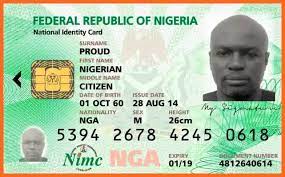
Mainstreaming marginalised groups in Nigeria’s identification system

By Muhammad Mikail

The World Bank Group’s Identification for Development (ID4D) initiative estimated that 1 billion people were without an officially recognised means of identification (ID), and the majority are women. This problem is particularly acute in Low—and Medium-Income Countries (LMICs), where the 2017 Global Findex survey estimates that 44 per cent of women do not have an ID compared to 28 per cent of men (World Bank Gender Gap Report 2021).

In Nigeria, different studies and surveys have identified many challenges and barriers as the cause of the low National Identification Number (NIN) enrolment by women, children, Persons with Disabilities (PWDs), and other marginalised groups. These groups experience challenges in obtaining ID due to the distance to travel for registration, transport costs, long wait times, and multiple visits. 

Some of the identified barriers to enrolling for the NIN for women, children, and PWDs have emanated from social norms about gender roles that allocate certain household work, responsibilities, and childcare to women, exacerbating their time constraints. Most often, women needing permission from husbands and fathers can be a huge barrier for many, especially in environments where knowledge and awareness about IDs are limited. 

Also, poor facilities combined with long wait times are particularly hard for elderly people, pregnant and nursing mothers, and persons with disabilities. These barriers to registration are even greater for pastoralists and IDPs who are less aware of pertinent registration information such as location, time, and necessary supporting documentation.

Many IDPs have low trust in the government, while people living in camps are further away from service access points. Pastoralists and migrant fisherfolk and farmers also typically have less engagement with the government and are less likely to have IDs, though this varies significantly by region. Women from these communities are likely doubly disadvantaged by their gender and their pastoral identity. Women with disabilities and internally displaced women are also likely to face additional barriers and greater exclusion from society than women without disabilities or women who have not been displaced (World Bank Gender Gap Report 2021)

The United Nations High Commission for Refugees (UNHCR) in July 2023 revealed that Nigeria has over 3 million Internally Displaced Persons (IDPs), about 2 million returnees, and 100 thousand refugees/asylum seekers from 41 countries, with the majority from the Democratic Republic of Congo, Niger, Central Africa Republic, Cameroon, Syria, Turkey, Mali, and 34 other countries. Also documented by UNHCR are over 300,000 Nigerian refugees registered in Cameroon, Chad, and Niger. 

These individuals may have difficulty accessing basic rights such as banking, telephone, education, healthcare, employment, and freedom of movement and may face a lifetime of obstacles and exclusion without access to the National Identification Number (NIN). Aside from creating a huge gap in the database in terms of inclusivity and spread, this leaves behind a very huge number of unidentified underserved persons with the risk of being excluded from government services, restriction in movements, and lack of access to healthcare. It also creates a clog in the federal government’s attempt to commit to the sustainable development goals of providing identities for everyone and “leaving no one behind.”  When you have millions of unidentified persons outside of your country’s identity database, it means your economic planning will fall short and by extension, Nigeria’s socio-economic development will suffer.

In recognition of these challenges and in commitment to achieving universal access to ID and closing the gaps, the Government of Nigeria commissioned a strategic roadmap in 2018 as part of the country’s Economic Recovery and Growth Plan (ERGP) as its overall strategy to drive the country’s economic development. Several reforms were contained in the roadmap. Principally, the country was to adopt the ecosystem approach to NIN enrolment that involved Civil Society Organizations (CSOs), ministries, departments and agencies of government, licensed enrolment partners, international Non-Governmental Organisations, and all relevant stakeholders in the ID space.  

Also, the National Identity Management Commission is working with the Nigeria Digital Identification for Development Project (NDID4D) with support from the World Bank, the French Development Agency (AFD), and the European Investment Bank (EIB) in implementing a series of sustainable and innovative reforms. The goal is to remove all current challenges and difficulties that people face in enrolling for IDs, fostering a robust, seamless, and more inclusive enrolment system where ID is provided for everyone, and no one is left behind.  

As a result, the NDID4D Project established collaboration with the National Commission for Refugees, Migrants, and Internally Displaced Persons (NCFRMI) and their international counterpart, the United Nations High Commission for Refugees (UNHCR). This is aimed at addressing these challenges and removing barriers these vulnerable individuals may face to obtaining the NIN needed to facilitate their rehabilitation, reintegration, and resettlement into society. 

As part of the collaboration, the NCFRMI has agreed to activate its enrolment licence previously issued by NIMC to participate as an enrolment partner targeting refugees, migrants and IDPs in 5 states where there are large clusters of these vulnerable groups. The states are Adamawa, Taraba, Benue, Cross-River, and Akwa-Ibom. Although refugees also live in cities including Lagos, Ijebu, Abuja, Kano, and urban areas in other States, the selected 5 states host the majority of these vulnerable populations and will, therefore, serve as a starting point for this enrolment. 

With support from UNHCR, the refugee commission is planning to procure 6 enrolment devices and nominate 20 of its staff as enrolment agents to support this endeavour. On its part, the NIMC, with support from the NDID4D Project, will onboard these enrolment devices and train all licensed enrolment partners to be deployed to the various states and locations to carry out the enrolment. The NIMC, in collaboration with the NDID4D Project, is fashioning ways to clear the backlog of enrolment fees owed to enrolment partners and has also developed a robust business model to incentivise all partners, particularly those who will be conducting enrolment in remote and hard-to-reach communities and locations.  

In ensuring that the fundamental right of every Nigerian to a verifiable identity is secured, the National Identity Management Commission needs to work overtime in introducing innovative reforms in line with global best practices. Engagements and consultations with critical stakeholders on the amendment of the NIMC Act to ensure it is in consonance with the current digital realities and ease integration with other foundational ID agencies like the NPC should be sustained. Efforts need to be geared to working tirelessly on upgrading the enrolment software and ensuring training and retraining of all licensed enrolment partners on interacting effectively with the people, global best practices in customer service and grievance handling. 

In the same vein, national awareness and information campaigns that use multiple channels inclusive of both conventional and new media to reach diverse groups in raising awareness about NIN enrolment, including information on where and how to enrol, what is required to enrol, and—especially—why enrolling is important for everyone, not just women, children and PWDs should be commissioned. This should be done while equally engaging traditional, community and local leaders especially male leaders, to proactively promote women’s and girl’s registration.

The recent collaboration between the NIMC and the National Social Safety Net Project to extend to streamline enrolment of the poorest of the poor in the national social register while ensuring those on the register are both issued a valid NIN and are captured into the National ID database is a strategic move that deserves commendation.

Enrolment centres and registration points should be located close to communities to reduce travel costs and time, enhance access to ID and adopt culturally appropriate policies to encourage and prioritise enrolment for women and girls and marginalised groups. This may involve Mobile registration centres to bring the enrolment process closer to the people in the rural/hard-reach areas.

The recent workshop held in Abuja to validate the NIMC’s disability inclusion policy represents a critical step forward in ensuring that the National Identity Management System is inclusive and accessible to all citizens, particularly persons with disabilities. Collaboration with the National Commission for Persons with Disability should be sustained.

In the same vein, digital identity can also enhance security and privacy. With robust authentication mechanisms in place and monitored by the Nigeria Data Protection Commission, individuals can rest assured that their personal information is protected from unauthorised access. This is particularly germane in an era and country like ours where data breaches, phishing and identity theft are on a steady rise. This can help bridge the digital divide by enabling greater secured access to services for all citizens and empowering marginalised communities to fully participate in the digital economy

Conclusively, the National Identity Management Commission (NIMC) faces an arduous task of showing Nigerians the value of having a NIN and its relevance in accessing critical services used by both women and men while ensuring non-possession of the ID does not exclude people from services. These will not only help in allaying the fears and resolving the complaints of aggrieved Nigerians and potential enrollees, but they will also help the NIMC win back the trust of the Nation. 

Muhammad Mikail writes from Abuja and can be reached via muhammadnmikail.mm@gmail.com.
Digital ID and the Nigerian inclusion question

By Muhammad Mikail

“Every person has a right to participate fully in their society and be recognised as a person before the law” (UDHR & ICCPR article 16). Yet, as of 2021, an estimated 850 million globally have no official proof of their identity, which is essential to protecting their rights and enabling access to services and opportunities. Around half are children, and most live in lower-income countries in Africa and South Asia. (2021 World Bank Report on ID Coverage).

The Sustainable Development Goal sixteen-target-nine (16.9) by 2030 seeks to “…, provide legal identity for all, including birth registration.” Interpretatively, the target under this goal of the broader SDGs aims to ensure that every person, no matter their background, babies, women, children, IDPs, refugees and people living with disabilities, have official proof that shows who they are and where they live. The mantra of SDG 16 is to ensure inclusion such that individuals can enrol and be issued IDs, have means of being verified from anywhere, and have a sense of belonging and integration into society, a cardinal point to fighting extreme poverty. 

So many countries like India (Adhaar), Estonia, Philippines, Turkey, Rwanda, and Kenya (Huduma) recognised the significance of having robust digital identity systems in place to help their country secure their pride of place in today’s increasingly digital global economic sphere, and as a sure way of meeting the needs of their citizens and making life easier for them have successfully enrolled all their citizens into a robust digital identity system.

Aside from providing access to the underserved and unbanked population, mostly domiciled in the rural hard-to-reach areas, to loans and credit facilities more conveniently, a robust digital identity system makes the government’s distribution of fertilisers, agricultural inputs, and subsidies to rural farmers effective by eliminating intermediaries thereby strengthening social accountability and transparency. 

In Nigeria, many have some form of identification, from driver’s licenses, passports, National ID numbers and so on, mainly owing to the fragmented nature of the ID ecosystem before now. At various points, Nigerians and legal residents desirous of any of these are subjected to fresh enrolment and biometric captures by these issuing government agencies or agents.  As expressed by a vast majority of Nigerians, this system is cumbersome, essentially insecure, weak, and unsuited for the digital era, and most times fails to safeguard people’s rights and data.  

To address this, the government of former President Muhammadu Buhari, in a show of commitment and a strong desire to harmonise the existing identification ecosystem, prepared a Strategic Roadmap for Developing Digital Identification in Nigeria. The roadmap was endorsed by the Harmonization Committee on January 31, 2018, and by the Federal Executive Council (FEC) in September 2018. The roadmap highlighted the need for a minimalist, foundational, and eco-system-based approach to identification that can be leveraged to improve service delivery in the country.

Part of the recommendation of the strategic roadmap was to create the Nigeria Digital Identification for Development Project, NDID4D, managed by a team to be supervised by a Project Ecosystem Steering Committee (PESC). The Project Development Objective (PDO) is “increasing the number of persons with a national ID number, issued by a robust and inclusive foundational ID system, that facilitates their access to services”. Similarly, the NDID4D project seeks to address the currently fragmented ID system and boost overall ID coverage and use in Nigeria. This is captured under four components: strengthening the legal and institutional framework, including data protection and privacy; establishing a robust and inclusive foundational ID system, including civil registration; enabling access to services through IDs; and project management and stakeholder engagement. 

The Project, whose implementation began in December of 2021, is to, among others, collaborate with all ID-related agencies, ministries, and departments in addressing the challenges millions of Nigerians faced during NIN enrolment, including long processing time, extortions, and administrative errors. It is also mandated to support the FG in the enactment of significant laws, including the Nigeria Data Protection Act, which is the legal framework for the protection of data of citizens in Nigeria, amendment of NIMC, NPC Acts to ensure digitisation and harmonisation of civil registry with the National Identity database, the cybercrimes and cybersecurity Acts, as well laws that protect electronic transactions in collaboration with the Office of the National Security Adviser. In the same vein, the project supports upgrading the National Identity Management Commission, National Population Commission infrastructures, and human capital development and ensures effective engagement of all relevant stakeholders in the ID ecosystem.

These will go a long way in strengthening the National Identification Number and widening the NIN issuance and enrolment net such that every Nigerian and legal resident, including women, PWDs, children, refugees, migrants and IDPs, can enrol, be issued NIN, and can have access to services. Aside from the NIN becoming the single most important form of ID required in Nigeria, the marginalised, underserved, and vulnerable groups, women, children, refugees, migrants, and IDPs will be saved from discrimination and exclusion.

This was echoed by the acting Director General of the National Identity Management Commission NIMC, Engr, Abisoye Coker-Odusote, recently. She said, “In the digital age, integrated identity is the backbone of e-governance initiatives.” According to her, an integrated identity system will strengthen the government’s fiscal management and promote good governance and transparency through inclusivity and social equality. It ensures that marginalised and vulnerable populations are not excluded from government services. 

The significance of a robust, inclusive digital identity system that enables access to services where every Nigerian has a NIN linked to every aspect of life: banking, communications, employment, security, healthcare, education, and social services is too huge to overlook. The issue of digital identity in ensuring inclusion is critical for Nigeria.

Inclusion is a fundamental aspect of a thriving society, and Nigeria’s Digital Identity system plays a crucial role in achieving this. As citizens, we must recognise the importance of having a digital identity and actively participate to ensure no one is left behind.

 The government must also ensure that the new data protection law protects citizens’ data. To achieve all these, the Nigerian government, critical stakeholders, ID ecosystem partners, traditional institutions, including civil society, and the private sector must work with the National Identity Management Commission and the Nigeria Digital Identification for Development Project to ensure no Nigerian and legal resident in the country is excluded from the ID ecosystem. By doing so, we will be on a clear path to a more just, inclusive, equitable, peaceful, and economically prosperous Nigeria for all.

Muhammad Mikail writes from Abuja, Nigeria, and could be reached via email: muhammadnmikail.mm@gmail.com.

Tricycle ban in Kano an effect of population concentration – Expert

By Aisar Fagge

Population explosion can be a boost or a doom. If resources are not well managed in a country with rapid population growth, illiteracy, divisive politics, unemployment, hunger, crime, insecurity, poor standard of living will be the topics of discussion.

Dr. Musa Muhammad Bello, a community physician consultant and also a lecturer with Bayero University, Kano, mentioned this during a maiden monthly seminar organized by the Community Health Organization (CHR) in collaboration with Youth Society for the Prevention of Infectious Disease and Social Vices (YOSPIS), held on Wednesday, 20th July, 2022 at CHR’s conference room, Kano.

In his paper titled: “Rising Population and Demographic Transition: Effect on Health and Sustainable Development” Dr Bello said “If Nigeria’s population continue growing at this pace, by 2050, it will double to over 400 million. Nigeria will become the 4th largest country on Earth.”

“There is a cause for alarm because, population increase or explosion can be a boom or a doom.”

“If the population is rapidly increasing and resources are not well managed then it will greatly affect the availability of these resources across all sectors – health, water, education, security, etc. It will stretch them to the extent that majority of the population will be suffering in misery – there will be poverty, hunger, starvation, malnutrition, there will be unemployment and poor living standard.”

“All sectors of life will suffer. Take for example Kano State government’s decision to ban tricycle movement from 10 pm to 6 am is an effect of population concentration. The rate of crime has increased. Phone snatchers are everywhere. Some of us here are their victims,” The speaker lamented.

Speaking about the preparation for 2023 census in Nigeria, Dr Bello said, “Census is very important. In fact, according to a United Nations Economic Council, the population census should be done in every country every ten years. But unfortunately in Nigeria, the last census we did was in 2006. So we are far behind.”

“Census gives you the exact number of people and ther demographic structure: gender, age, education, income, location, etc. and that will be a very good tool for planning development in the country. Lack of this statistics will negatively affect the government planning.”

“When it comes to health, you first look at it from disease possession. When there is a population explosion, there is increase risk of disease. People will interact with the environment, their daily activities will pollute the environment; air pollution, water pollution and so many other things. So there is likely going to have increase in disease that are transacted through air because of over crowding,” he concluded.

One of the discussants of the paper, Musa Abdullahi Sufi argued that “Nigeria is not over populated because of its available vast resources.” He urged the academics to do more research to engage policy makers. Another discussant, Zainab Nasir Ahmed countered that “Nigeria is over populated because the resources are in the hands of few people” while majority of the population wallow in squalor.

The seminar received both physical and virtual participants ranging from academics, health workers, journalists and members of Civil Society Organizations (CSO).