


Terrorist bandits bomb Abuja–Kaduna train conveying over 900 people
By Muhammad Sabiu
Reports coming from the northwestern part of Nigeria have indicated that suspected terrorist bandits detonated bombs on the rail track of an Abuja-Kaduna train, thus immobilizing it.
The attack was said to have taken place between Katari and Rijana.
According to sources who spoke to journalists, the attackers were said to have surrounded the train, shooting intermittently.
As of the time of filing this report, there are still no details of the number of casualties in the attack.
Special Report: Kano witnesses more divorce than wedding
By Uzair Adam Imam
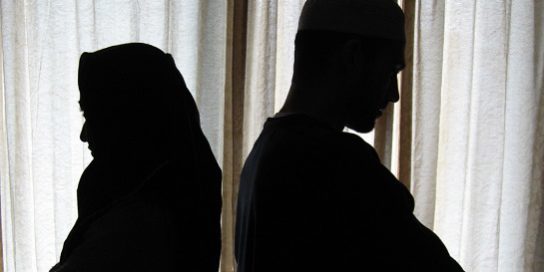
Marriage break-up is perceived as one of the major challenges bedevilling relationships in Kano State, a development that leaves a severe psychological impact on the windows. A report by the BBC Network African Programme in collaboration with the Kano State disclosed that there were over one million divorcées in the state.
The research disclosed that 32% of marriages in Kano State survives only a period of three to six months; and that many young people between the age of 20-25 years are said to have gone through three marriages at least.
The Executive Director National Association of Divorcees/Widows and Orphans, Hajiya Altine Abdullahi, decried the rate of divorce in the state. She had once threatened to protest the menace. This menacing issue of marriage break-up has continued to witness a steep increment in Kano State more recently, making it a serious problem needing mitigation.
The Daily Reality had reported materialism as one of the contributing factors militating against marriages these days.
Divorce, how abrupt it occurs
As though a competition, many husbands partake in the race for divorce. The issue has now graduated to a national problem in dire need of mitigation.
A photographer, Aminu A. Gambo, recounted the harrowing tale of how a one-week-old marriage crashed.
He said, “I once covered a wedding. The wedding took us almost a week, as they started the events from Tuesday throughout Thursday the following week and had a break on Friday.
“The events continued on Saturday and Sunday was wedding Fatiha, which concluded with conveyance of bride late evening that day.
“In the subsequent week, on a fateful Wednesday, the groom called me as early as 6 am and told me to calculate my balance and send my account number. As I did, he then transferred the amount to my account and told me that their marriage was no more,” he stated.
Also, Abubakar Umar confided in our reporter that he was rather perplexed on hearing that the marriage he attended just a week ago had broken up.
Umar said the marriage had broken up even before some relatives who attended the wedding from far places returned to their various destinations.
He added, “it came to me as a surprise that a week-old marriage had broken up just abruptly like this despite the bond between the couple.”
Understanding the root cause
Many concerned citizens argued that there are no tangible reasons behind the increased marriage dissolution.
Hashim Ibrahim described the menacing issue as a problematic phenomenon that defies every explanation.
He said, “The problem is that what triggers Mr A to divorce his wife might not be the same reason for Mr B to end his marriage.”
Muhammad Tasi’u stated that: “There are only two things that lead to the marriage breaking up; the exaltation of men and the ignorance of women.”
Aisha Mujitaba looked at the issue from a different angle, saying guys pretend to be rich in order to woo girls.
“Nowadays, both loves and marriages are based on materialism; that is how equivocation and deception have chipped in in the process of getting married.
“Guys pretend to be wealthy in order to win girls’ hearts. Consequently, when they are joined in matrimony, the true nature of what the person is will be revealed. This leads to the breakdown of relationships,” Aisha said.
Fatima Sha’aibu also believed that lying was one of the contributing factors leading to the marriage break up.
She said, “Mostly guys lie to win affections. Then after the marriage, when the truth was revealed, the girl might feel she can’t resist living with a life-faking husband.”
Aisha Buhari celebrates 22-year-old tech guru, Hawau Ibrahim
By Ahmad Deedat Zakaria
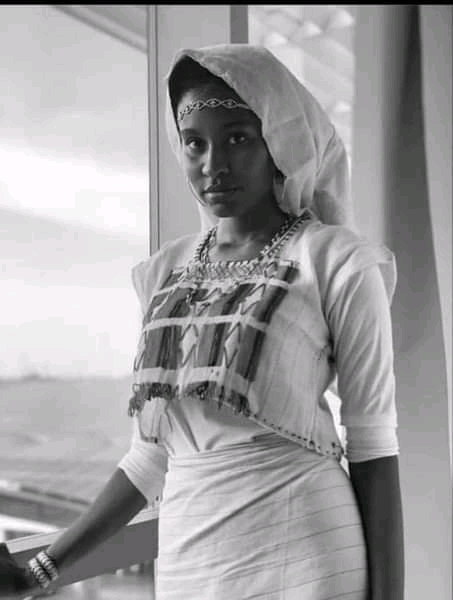
Nigerian First Lady, Mrs Aisha Buhari, has lauded the achievement of Miss Hawau Ibrahim, who developed two software applications named Archiscope and Jupimart.
The First Lady celebrated the young lady on her verified Facebook page on March 25, 2022.
“Celebrating the Achievements of young Miss. Hauwa Ibrahim, 22, [is] a developer of two exciting and innovative Apps (Archiscope) for Architects and (JupiMart) for online Shoppers,” she posted.
Mrs Buhari also wrote about the excellent performance of the young lady at both Ghana and Mauritius universities, where she attended for her first and second degrees.
“A graduate of Computer science with First Class Honors from Lancaster University Ghana and a distinction in her MSc from Middlesex University, Mauritius,” she added.
Dear diasporans, stay where you are: Nigeria is at its worst
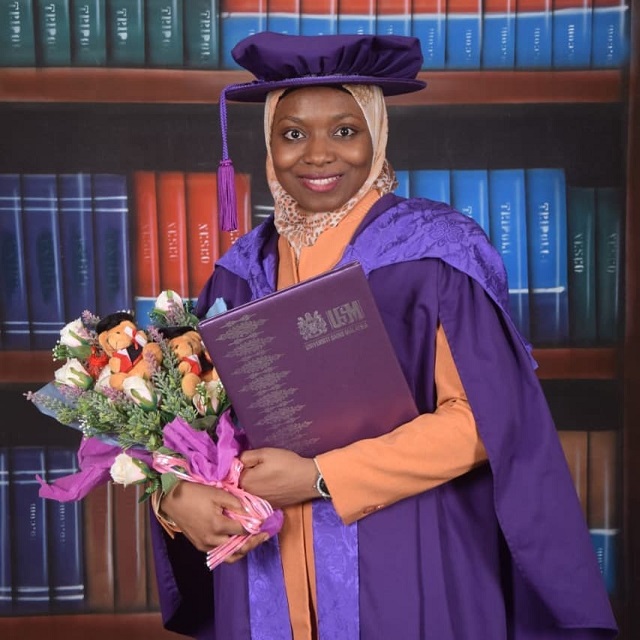
By Sadiya Abubakar Isa, PhD
It is precisely one year since we returned to Nigeria from Malaysia. My experience has been a roller-coaster ride since my return. I’ve seen the good, the bad and the ugly.
Alhamdulillah for the gift of life and a loving family. The primary reason why we chose to return was that I missed my family so much. My son would always request to see his cousins – “I want to go to ‘Naijilia’, I want to see grandma”, he cried – until my neighbours once pled with us to take him to Nigeria. He has never been there. He just wants to meet his grandparents and cousins as he has only met them via video calls. I responded.
I thought about the consequences of extending my stay abroad; what if my parents also die (like my husband’s)? Does that mean my kids would never see any of their grannies? I pondered and discussed it with my husband. Maybe we should just return home after my viva. We thought it through thoroughly, and home it is. We finalised our decision.
Of course, there were other reasons. Our scholarship tenures ended towards the end of 2020, so if we had chosen to stay back, we would have to work extra hard to manage our finances. Additionally, the world was fighting a pandemic, a not-so-good time to job-hunt. So rather than being stranded abroad, we got additional reasons to fly back home.
Many people, mainly family and close friends, tried hard to dissuade us from returning, but what do you do with homesickness? Or the fear of losing loved ones (again) without meeting them after seven years of being away? We overlooked all the negative news. We thought we could make a difference. We felt that we could directly contribute our quota to bettering our dear country by returning to Nigeria. We discussed, planned and strategised lots of projects to do when we return, but Nigerians aren’t ready – we realised.
On that fateful day, we arrived in Nigeria on the 19th of March 2021. From the airport in Abuja down to Kano airport, the manners of the airport officials and the treatment of our luggage, we knew we were ‘home’.
Sometimes I’m glad I’m home, but I often regret this decision. I have tried to settle down since, but I’m still in the process. Truth be told, if one is entrepreneurial, there are many business opportunities in Nigeria, but its challenges wouldn’t let you achieve the desired results in time. Even if you have a good-paying job, your salary is hardly enough this time, thanks to the inflation everywhere and the devaluation of the Naira. Moreover, with the overwhelming decline in Nigeria’s energy sector, things can only worsen over time.
The vulnerability of an ordinary citizen in Nigeria is very discouraging, thanks to the exacerbating insecurity in our region. You can’t travel around peacefully. You can’t trust your neighbours, not to mention strangers. You can’t even take off your attention from the kids. So we are always living in fear – fear of the unknown.
Basic amenities are still not basic in Nigeria. The first time my son experienced a light-out, he asked, “Mama, what happened? Please, put on the light, Mama I can’t see”. It was funny, and we all laughed, but it hit me very hard.
Adopting has been quite tricky for my kids. We are all Nigerians, but my husband and I are more Nigerian than the kids are. Till today when writing this, they quickly have diarrhoea resulting from food poisoning and difficulties in eating local foods. The worst is when you don’t have good enough hospitals around, and It’s tiring. I can’t count how many times we have been down due to malaria or thyroid fever; watching your child suffer from illnesses that would have otherwise been avoided is appalling. It’s exhausting and sometimes frustrating.
We were mugged at Kofar Danagundi in Kano; we have escaped a series of phone snatching scenes. I have been duped and cheated by people I tried to help out of poverty. I still cannot explain the concept of almajiri to my son. He asked, “where is the ‘almadiri’s [almajiri] mother? Why does he have to beg for food?” I still haven’t answered his questions satisfactorily.
While travelling to Borno in mid-January, I experienced what it really means to be in a war zone after slightly escaping a Boko Haram attack. By the grace of God, we are surviving in this country. When we look back at life, we see how far Nigeria is from the developed and developing world. Even India, which is still struggling with all forms of corruption, offers a better life experience than Nigeria.
I will not advise anyone to return to Nigeria if you ask me. Nigeria is currently at its worst. So don’t relocate to Nigeria if not for very tangible reasons. If you have a good job in your country of residence, please don’t come back. If you have a scholarship, do your best to prove your worth to be retained there. If you have a valid visa, look for a job; keep searching, make yourself useful in any way possible. If you can afford to stay there, don’t even think of returning. Yes, living abroad is expensive but also efficient.
It could also be exhaustive, but the basic necessities are available and accessible. You may pay too much tax but drive on good roads with cameras. You get to eat good food and sleep without battling mosquitoes.
So if you choose to return, think about the future of your kids here, think about their safety and think about the opportunities they may be missing because of your decision. But then, Alhamdulillah for everything!
Dr Sadiya Abubakar Isa can be reached via haleesad@gmail.com.
How parenting changes a person
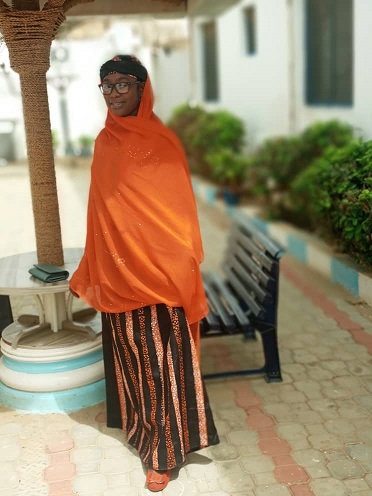
By Aisha Musa Auyo
Parenting is one of the most challenging jobs globally, a job that starts with pregnancy but never ends. It’s a lifetime commitment with many challenges, rewards, and experiences that change us, teach us and humble us. In fact, one doesn’t fully know himself till he starts bearing and raising kids. This commitment tests our patience, compassion, selflessness, strength, weakness, etc.
When I was in my teens, I didn’t have that natural love for kids, as I saw them as nuisance and disturbance, but ironically, kids love me and often extend their hands to pick them up. Usually, I didn’t bother to respond to their advances. I would look at them with a pretentious smile and move on. Later, a friend who loves babies explained that kids are attracted to me due to the constant eyeglasses in my face. That was relieving. My coursemates could not believe their eyes when they saw me on a TV program dishing out tips on parenting, child psychology, and upbringing.
A few years later, I became a mom, a fierce one for that matter, and this new responsibility has changed my entire outlook on life. It made me appreciate Allah more; the fact that a whole human being is produced in a womb from a drop of sperm, and the entire foetus transformation within nine months never cease to amaze me. The fact that milk begins to pop out from the breast after childbirth is still super.
Perhaps the most baffling is how tuwo, shawarma, rice, veggies, and whatever breastfeeding mother eats get transformed into breastmilk within minutes is brain blasting. Sometimes, I wish I could see how my body organs function to deliver this seamless production. Allah is indeed the Greatest. Tabarakallah Ahsanul khaaliqeen!
There’s a popular cliché that says if you want to change the world, change it while you are single, without a spouse, or a kid, as that is when you have freedom and might to do whatever you want because these two groups of people take your freedom and will power away. This is true in some ways. But if we look at it in another way, one can change the world when he becomes a parent by being a better version of oneself and upbringing pious, honest and loving generation.
Please permit me to list a few ways in which motherhood changes me. Perhaps others can learn, relate, realign, and prepare themselves for the unending task:
Motherhood made me more grateful to my Creator, more thankful to my parents, appreciate other parents, and made me understand to some certain extent the pain of not having kids, delayed fertility and parenting kids with special needs.
Motherhood humbled me, as all the things I never imagined myself doing are now my daily routine. From changing diapers to feeding kids, toilet training, wiping phlegm and saliva, and many activities I considered gross. I’m now cool with all of these. There was a day my husband took me to greet his friend’s family, as one of his kids had broken his ankle from the compound. I could hear the mom screaming at the kids. I was like, aww, this woman was loud, ta cika masifa.
At the time, she had five boys, and they were seriously misbehaving. Even the one who broke his ankle tried to touch a moving fan with his other hand. The others were all doing bad stuff, some using chairs as a ladder to touch the ceiling. Even so, I thought she unnecessarily shouted. As God will have it, I have only three boys. Trust me, I find myself shouting all day. It took a lot of practice, willpower and patience to REDUCE the shouting. This experience humbled me a lot. I stop judging.
There are times when you will feel relaxed, thinking that you are doing this parenting right. Then, suddenly, one of the kids will do something unpredictable, unimaginable that you will doubt yourself and all the efforts you’ve put in making and building them. That’s a reset and a humbling one, for that matter.
My selflessness and sacrifices increase: Although I intentionally always put others before me, I put my kids first without thinking, without weighing. It comes so naturally without an effort. As a mother, one finds herself the last option, the last one to be taken care of. At a point, I had to drop some of my dreams and aspirations to take good care of my kids.
Constant worry and wild imagination: I don’t know if it’s just me or all mothers do this. I don’t know if it’s the insecurity situation or the unhealthy vices of our time. I know I’m constantly worried about my kids, how they are faring in my absence, how they’ll turn out, their health, well-being, demeanour, interests, aspirations, etc. I cry a lot when they’re sick and in pain. I don’t even blink when they have a fever. I check them at least three times before daybreak. I’m always overwhelmed and have panic attacks here and there.
I start loving kids altogether, whether mine or not. If they are kids, they become my favourite persons. I love them. Nowadays, I prefer staying with kids than with adults. I enjoy their presence. This may be due to a course I studied (i.e. developmental psychology), which explains the entire human nature from pregnancy to old age. It made me understand a lot about kids and why they exhibit certain behaviours. It makes whatever kids do make sense to me. As a result, I became more empathetic and patient.
Kids make us become better versions of ourselves. Parenthood comes with the challenge that kids always look up to their parents on whatever they do. Kids look at us more than they listen to us. So, we parents know that we have to model the behaviour we want them to have. We have to show more than we tell. We have to always be conscious of our words and actions and be intentional about what we do. For example, there was a time I was reciting the Quran, not my usual tilawa time, as I’ve missed my schedule. Then my first son asked, “Mama, dama kina tilawa?” (Mama, do you recite Qur’an?) I was so baffled by the question. I answered yes, every day. He replied that he had never seen me do that, only me helping and commanding him to do his. In my little mind, I’ve chosen a time when the kids are asleep or at school so that I will not be disturbed. It never occurred to me that the kids thought I don’t do tilawa. So, we need to be intentional and specific on what we want them to see and model.
Steadfastness and patience. These creatures test your energy, patience, commitment and endurance. There’s no room for laziness or minor sickness. Your sleeping hours reduce to the minimum. They must be attended to every second of the day. Even in their absence, preparations are made for things they will need when they return. They consume your budget, plans, relationship with your Creator and creations, health, looks, well-being, and even wardrobe. If care is not taken, one loses himself in this parenting and only notice when it’s almost late. One has to be tough to survive this.
And mind you, this is coming from a mother who does not pay the bills. All expenses are taken care of. This is coming from a mother whose kids are all healthy, and none of them needs special care. The mother’s combining their motherly responsibilities with financial support, special nursing abilities, or both, I doff my hat for you. May Allah reciprocate your efforts in reward and fulfilment.
Finally, this parenting stuff is rewarding, both here and hereafter. If one is blessed with pious kids, there’s no greater joy. Even as babies, their innocent smiles instantly lighten up one’s mood. One often finds himself speaking sweet nonsense, singing non-existence lyrics, to see a baby laugh. Their love is raw, undiluted and genuine.
On a lighter note, I would like to advise myself and other mothers to take it easy; it’s okay to take care of oneself. It’s even highly recommended. Go out and have some adult interactions, discuss with other moms, watch movies, spoil yourself, and rejuvenate your mental health. You need it. Forgive yourself when you are wrong; parenting is learning in the process. You are human. Do your best, pray for God’s guidance and protection, leave the rest to the Almighty.
Aisha Musa Auyo is a doctorate researcher in educational psychology. A mother of three, parenting and relationship coach.
El- Zakzaky’s continued ordeal
By Najeeb Maigatari
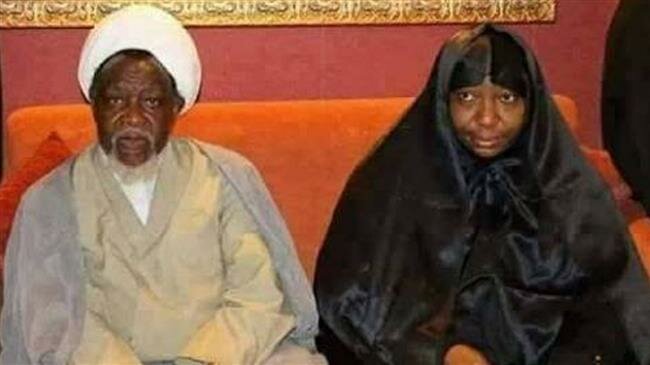
It is now almost eight months since Sheikh Zakzaky and his wife, Zeenah Ibraheem, were discharged and acquitted by a Kaduna High Court of all the criminal charges levelled against them after spending almost six years in illegal detention.
One would have thought that it would be a matter of days or a couple of months at most for the duo to jet out of the country to attend to their health that deteriorated during their stay in detention.
When passing its judgment, the Kaduna High Court made it categorically clear that the couple were not only innocent and thus discharged and acquitted, but are also entitled to freedom like every other citizen as enshrined in the constitution of the country, including among others, the right to attend to their health in any place of their choice.
But the Nigerian government, in a show of contempt to a court of competent jurisdiction, continued its systemic persecution of the ailing couple by withholding their travel documents to frustrate their quest for proper medical attention.
The NIA, NIS, and DSS initially denied withholding the couple’s travel documents but later admitted they were lost. The office of the AGF went as far as claiming that the couple were not suffering from any life-threatening condition that warrants overseas treatment. When and how did the AGF become a diagnostician capable of tracing what ailments should be attended to in the country?
It is worth noting that Sheikh Zakzaky and his wife are still suffering from various life-threatening health problems, as evidenced by a series of investigations results undertaken after their release from detention- at both public and private health facilities.
The Sheikh’s lead and cadmium poisoning is the greatest concern, which is yet to be addressed, notwithstanding the dangerous serum level. The story is no different for his wife, Zeenah, who has been a wheelchair user for almost six years now.
The couple has suffered enough. As a moral obligation, people of conscience, clergies and statesmen are pleased urged to demand that government allows the Sheikh and his wife to attend to their health. As the saying goes, injustice to one is an injustice to all.
Najeeb Maigatari, Jigawa State, and can be reached via maigatari313@gmail.com.
The political calculations of 2023
By Muhammad Sagir Bauchi
As the political atmosphere in the country started to get momentum, top political actors are back on the strategy board to put down action and execution plans for successful campaigns and elections victory. Overnight, some controversial politicians are now running away from their once arrogant and nonchalant attitudes to a born-again one, thereby looking away from whatever may dent their newly ‘customised integrity’. As a result, the usual campaign promises of provision of security, creating job opportunities, fighting against corruption, etc., now appears unsaleable talking points to the electorates as they once were.
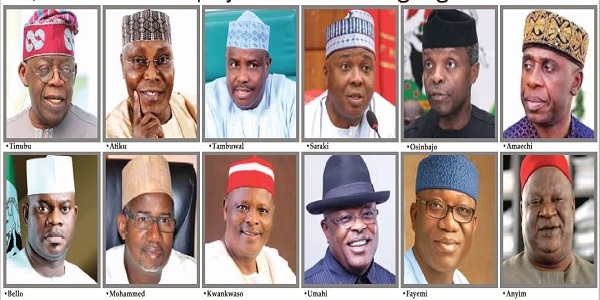
News of the inter-party crossover from some prominent politicians like former Speaker Hon. Yakubu Dogara (PDP-APC), Matawalle of Zamfara (PDP-APC), Kwankwaso (PDP-NNPP), etc., are making headlines.
Hon. Yakubu Dogara is one of the major political figures in Bauchi State politics. His role in ousting the previous governor of the state would never be neglected or underestimated. He played a vital role in his constituency and other spheres of the system.
When he decamped from PDP, the party that brought the present administration of Governor Bala Muhammad, several opinions were expressed in respect to that. To some, he joined the ruling party in anticipation of giving him the party leadership (i.e National Chairman of the party). While, to others, he was craving for the seat of Vice-President, in case the party ticket is won by a Southern Muslim. In present Nigeria, a Muslim-Muslim or Christian-Christian ticket at the presidential ticket is a non-starter, as it will polarise the country, create chaos and mistrust.
Of the two opinions surrounding the decamping of Dogara, none could totally be disregarded as they contain some elements of truth. For instance, If APC assigns Bola Ahmed Tinubu as its flag bearer, the party must pick a Northern Christian politician with popularity, high political experienced and wide acceptance among the regional religious, political and traditional leaders/institutions. The aim is to convince the electorates to go out and vote for the party on the election day. Dogara is one of those Northern Christians with broad appeal and political experience. But, can he win the confidence of his Northern block to vote for their ticket?
For that answer, we have to examine the current political doings and his image in his home state, Bauchi, to answer that question.
The present political situation in the state is a bit complicated. We all witnessed how his doings in his constituency influenced the emergence of the current governor of the state during the last gubernatorial elections. Still, events have overtaken the once-political comrades’ romance between him and the governor. His popularity has significantly dropped in 2/3 of the constituency he’s representing. And that could affect his future career in the state and beyond. Therefore, the Dogara factor alone cannot influence Northerners to vote for his party.
Now, away from Dogara to the party at large. Months ago, APC Governor’s Forum paid an unexpected visit to the former President, Dr Goodluck Ebele Jonathan. Of course, we did not know what was discussed during the visit. Still, looking at how the party is desperate to retain the president’s seat, it’ll be hard to disconnect it from what the Hausa people termed as “gaisuwa da ro’kon iri”. So they visited him, likely to ask for his blessing, sympathy and support to use his influence in the South-South to canvass support for their party flag bearer during elections. Or maybe, to lure him into accepting to contest for the presidency on the party ticket.
If we take the party entirely and put it on a scale, we can see that the party is in a dilemma of who to be entrusted with the party ticket to retain the presidential seat. But looking at how the party zoned the national party executives, now it is clear that the flag of the party would come from the South.
Among the top Southern candidates that expressed interest in the presidency are Vice President Yemi Osibanjo and the party leader, Bola Tinubu. One of these two have every chance to win the party primaries. But, who among them can be an easy sale to all the regions of the country? Would the old rivalry between Igbos and Yorubas resurrect and allow Igbos to support anyone of them? Only time would tell.
But in the North, despite the significant drop in trust and popularity of President Muhammadu Buhari, there still exist those supporters that will go for whoever PMB anointed to succeed him at the polls. But many will be in a dilemma of choosing between one of their own, an outsider or may even decide not to vote.
After the country’s return to Democratic rule, PMB was among those with a desperate ambition to rule the country again. He contested three times but lost at general elections. Fortunately for him, he won at his fourth outing. Unfortunately, during his failed bids, his body language was that he only relied on the votes of his fellow Northerners.
By 2010, Buhari realised that that illusion wouldn’t give him the presidency. So, he aligned/merges his one-man party, CPC, with an umbrella forum of some rebellious and highly influential mainstream politicians from the ruling party, nPDP, ANPP and the Southwest’s AC to form the APC. This conglomeration of parties (merger) is what solely got him the presidency.
With all honesty, looking back at the significant contribution of the Southwest politicians, this is the right time for him to pay back those that helped him actualise his presidential ambition with the party ticket on a platter of gold, especially to a Southwestern candidate.
There’s not much tension within the PDP due to their discipline and expertise in handling intra-party conflict. However, the party must be careful with an emerging conflict from Wazirin Adamawa and governors’ overzealous ambitions. In addition, they must learn from their 2015 avoidable mistake that cost them the elections and government.
Sagir Ibrahim is a graduate of Economics from the Department of Economics, Bauchi State University Gadau. He can be reached via ibrahimsagir1227@gmail.com.
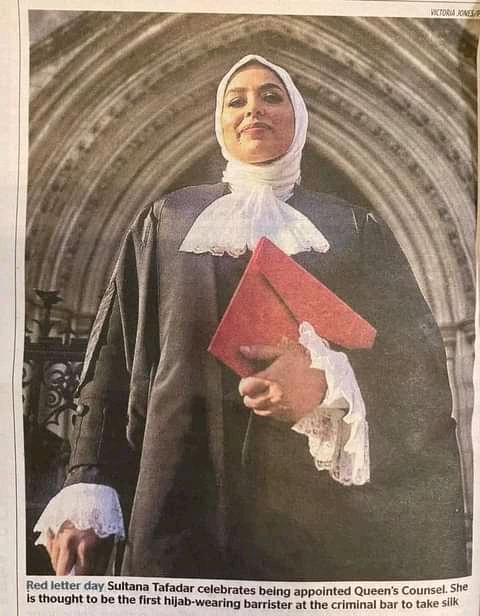
Sultana Tafadar, appointed as first muslim hijaab-wearing Queen’s Counsel in Britain
By Ahmad Deedat Zakari.
Sultana Tafadar, a hijaab-wearing Muslim barrister, has been appointed the Queen’s Counsel in the United Kingdom.
Radio News Hub reported this on their verified Facebook page on Monday, March 21, 2022.
“Sultana Tafadar received her letters Patent – the document denoting the award for excellence in advocacy – at the Palace of Westminster on Monday,” the news platform reported.
The rank of the Queen’s Counsel (QC) is the equivalent of the status of Senior Advocate of Nigeria (SAN). The QC and SAN titles are awarded to barristers who distinguish themselves in character and excel in advocacy.
Sultana Tafadar is of Bangladesh origin. Her elevation to the rank is a great inspiration to many hijab-wearing Muslim women across the globe.

Nigerian military discovers Alpha jet that went missing since March 2021
By MMuhammad Sabiu
The wreckage of a crashed Alpha Jet aircraft has been discovered in Sambisa Forest, Borno State, according to the Nigerian Army’s Operation Desert Sanity forces.
The Army reported in a brief statement that the plane (NAF 475) went off the radar on March 31, 2021, with two crew members aboard.
“Troops of Operation Desert Sanity on [a] clearance patrol in Sambisa Forest, Borno State, have uncovered the wreckage of crashed Alpha Jet aircraft (NAF475) that went off the radar with two crew members on 31 March 2021. Further exploitation ongoing,” the statement reads.
There are no further details regarding the discovery of the missing plane as of the time of filing this report.

When a father dies!
By Kharajnah Muhammed
Imagine a big mango tree with many branches, leaves and sweet fruits feasted upon by her children while also enjoying her cool shade that comes with a soft breeze, covering their heads from the scorching sun.
All of a sudden, someone cuts her off from her root. She fells down weeping, wondering how her children would survive without her, while they drink their tears day and night, searching for food and shelter, with little or no one to help them.
This is what happens when a father dies, leaving behind his family. At first, so many people will come and commiserate with them, with sugar-coated promises. His family will have hope that at least someone will be there for them even when the head of the family is no more. But what happens afterwards?
The widow(s) and her/their children are left to wander in the streets, searching for food, shelter, job to sustain their lives. Only a few are lucky enough to find help from his relatives or friends in one way or the other. It’s scary how fathers keep dying daily, leaving their families behind. Most people nowadays only do things for someone alive, someone they know they can gain something from. As soon as he is no more, they forget everything about him or his family.
As parents, I want to advise us to build a future in our children because we don’t know what tomorrow holds. Help them discover their talents and work on building them. As a husband, invest in your wife or wives, for they will never abandon your children. And she might be the only person to take care of them when you are no more.
And now, Ramadan is just a few days away. Have you ever wondered what most orphans are going through? Most of them have little or nothing to put in their breadbaskets, but they can’t ask anyone for it because they were brought up so that they can keep their family’s secret so that people will not look down on them. So, even if they ask some people, they might not help them out and probably go about telling other people or using the children’s helplessness to their advantage, especially the girl child.
I want to urge us to please help the orphans with food, clothes, and other items we can give out this Ramadan in order to gain manifolds of reward from the Almighty. You don’t have to go far. Look around your neighbourhood and start from there. Some people would rather cook plenty of food and throw it away in the morning than give someone.
Though things are hard these days, there is no harm in giving out the little you can afford. You never know what it will mean to them.
May the Almighty ease things for us, amen.
Harajnah Umar Ragada can be reached via kharajnah@gmail.com.