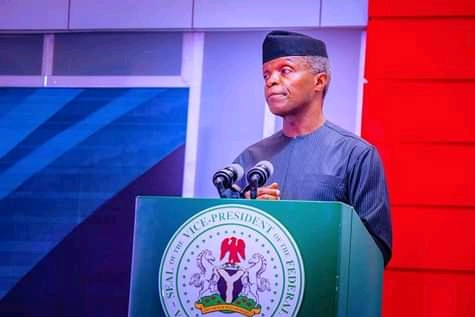
Osinbajo declares to run for Nigeria’s president
By Ahmad Deedat Zakari
Nigeria’s Vice President, Yemi Osinbajo, has declared his interest to contest for the office of the president in the 2023 presidential polls.
The declaration that came on the morning of Monday, April 11 2022 confirmed the speculation that Osinbajo wants to succeed his principal, Muhammadu Buhari, whose tenure officially ends in May 2023.
Osinbajo, who posted his declaration on his official Twitter handle, said:
“I am today, with utmost humility, formally declaring my intention to run for the office of the President of the Federal Republic of Nigeria on the platform of APC.”
In Osinbajo’s declaration speech, he also said he could relate to the suffering and challenges of Nigerians and hence why he wants to be president.
“I’ve stood where you stand and sat where you sit. I know, and I understand our hopes, aspirations and fears from a place of relatable proximity; and I believe that in those hopes and aspirations are the seeds for the great Nigeria that we all desire. I believe that the very reason why the Almighty God gave me these experiences, these insights, and these opportunities, is that they must be put to the use of our country and its great peoples.” He stated.
Osinbajo will jostle for the ruling party’s ticket with other political heavyweights, like APC’s chieftain, Bola Ahmad Tinubu, and Minister of Transportation Rotimi Amaechi, who also declared their intention to run for the presidency on the platform of the party.
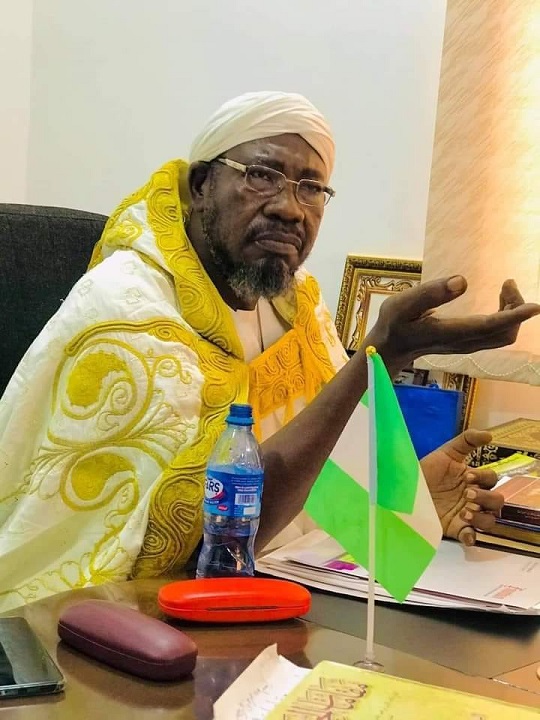
Sheikh Nuru Khalid: The way they and I see it
By Bilyamin Abdulmumin
The nation has woken up with yet another round of controversial news, as the committee to the National Assembly mosque, Apo legislative quarters Abuja, deemed it fit to suspend the renowned Islamic cleric Sheikh Nuru Khalil before sacking him later. The committee cited incitement and lack of showing remorse as reasons for the suspension and the final sacking, respectively.
Last week’s Friday prayer sermon the Sheikh delivered was the action that earned him the sack. In the sermon, reeling from the Abuja-Kaduna train attack tragedy, the Sheikh supported a boycott of the upcoming 2023 general election should the government fail to protect the lives of Nigerians. This message immediately went viral to generate a heated debate among the public on social media.
Those who support the message have some reasons. Because it was just history that repeated itself; before the 2015 general election, Nigeria, especially the North, was literally on fire. Amidst the chaos majority of the northern Islamic clerics openly criticized the government of the day – PDP, while drumming support for the opposition – APC.
Fast forward, seven years later, the table has turned. The APC is in charge, and similar to the eve period of the 2015 general election, the insecurity is threatening the country again. So, for this category of view, what is good for the goose should also be good for the gender.
Some try to strike a balance. According to these people, the Sheikh’s sermon was right, but they argue that leadership comes with responsibility. So, a leader with a large audience has both privilege and responsibility. Some of these responsibilities are eschewing opinion, unlike any ordinary person who doesn’t mince words. In other words, the Sheik should have a tread with caution.
Some categories look at it from the extremism tendency. According to them, some extremists, such as Muhammad Yusuf, the Boko haram leader, started as a spokesperson to the masses. First, he became a fierce critic of the government, but later, when his antics escalated to insurgency, those masses clapping for him became the most victims in the end.
Some sought to politicize the controversy. According to them, the Sheikh has pitched a tent around the opposition – PDP, so they claim he has been a critic of the Buhari government for the last seven years. These critics sealed their arguments with the allegations that the Sheikh was appointed an Imam at a mosque built by Atiku Abubakar, a new Jumu’at Mosque behind the Central Bank Nigeria (CBN) Quarters, Abuja.
The peculiarity of any argument is that if anyone is allowed to explain his view, one will somehow see a reason for their claim. The above four viewpoints on the same thing are good examples.
By and large, if there is anything this raging debate achieved, it is one thing: it made Nigerians forget the series of other pressing issues like the ASUU strike, fuel scarcity, the naira to dollar depreciation, VP Osinbajo, Minister Pantami, and Farooq debates, even the plight of the actual victims of the attack (may theirs be a speedy release, harmless). One Nigerian coined this scenario: “one rising issue after another makes Nigerians forget their suffering; Nigerians live for the moment.”
Bilyamin Abdulmumin is a PhD candidate in Chemical Engineering at ABU Zaria. He is also an activist for a better, informed society.

SERAP gives FG 72 hours to unblock 72 million SIMs with NIN linkage issues
By Muhammadu Sabiu
President Muhammadu Buhari has been given a 72-hour deadline by the Socio-Economic Rights and Accountability Project (SERAP) to rescind the decision to block the mobile connections of 72 million Nigerians.
SERAP tells the president to order the Minister of Communications, Isa Ali Pantami, and the Nigerian Communications Commission (NCC) to immediately revoke the seemingly unlawful decision to prevent over 72 million active telecommunication subscribers from making calls on their SIMs.
Recall that the Federal Government ‘directed’ telecoms firms this week to stop outgoing calls on all unlinked lines after the verification deadline passed on March 31.
Over 72 million users have been prevented from making calls as a result of the directive.
SERAP, on the other hand, said that prohibiting people from making calls constituted an infringement on their right to free expression.

Is Potiskum turning into a drug jungle?
By Kasim Isa Muhammad
It is socially impertinent how the vulnerable youths in the Potiskum LGA, Yobe State, have succumbed to excessive drug abuse and addiction without realizing how dangerous it could be for their lives, mental health, and what they uphold shortly.
The increase in drug abuse has become a subject that needs actual consideration and drastic action to combat its rapid growth among youths. Potiskum is the epicentre of carrying out various business and educational matters. It has been the giant pillar of Yobe State regarding population and contributions to con-constant revenue generation and youth engagement towards persuading education for the future.
But on the other hand, the locality is enveloped with thousands of dumped youths who have chosen drug abuse and are helplessly living around some areas of the town. They hardly work for themselves, and even if they did, the credit is artfully exhausted on hard drugs, thereby keeping them unconscious and capable of being involved in any act of immorality.
However, I noticed that some of them have unintentionally become addicted to sedative drugs due to unemployment. I’ve been seeing them in a place where they hide out and observe this deadly menace. I had an informative interview with one of them, who told me about the main ingredient that drove him to such activity.
Nonetheless, the most significant point here is to draw the attention of the government and public agencies with the responsibility of fighting against any felonious acts that can socially affect society. Both parties should immediately intervene to curb the growth of drug consumption and find a lasting solution.
The government should provide job opportunities for the youths, support them with funds to raise a small business scale, and educate them. Providing efficient job opportunities can securely remove the most vulnerable youths from illegal acts. It will also keep them from sabotaging government and public properties, thereby decreasing the crime rates in the town or the state at large.
Nevertheless, those drug abuse victims urgently need government or private agencies’ support with funds or facilities to grow a local business or enrol them in schools. The majority of them dropped out of school due to insufficient funding and parental support.
Furthermore, the Federal Agencies in charge of controlling drug abuse and illegal consumption should stand firm in their determination to conduct secret general patrols, seize any hard drugs, and send any guilty person to a correctional facility.
Regardless, it is very harmful to society and the government to spare those victims without any necessary security intervention. If such illegal drug consumption continues to grow among the population, the children will believe that nothing is wrong with dealing with hard drugs. Moreover, the government may find controlling the kids’ law-breaking mentality challenging.
Kasim Isa Muhammad wrote from Potiskum, Yobe state via kasimimuhd1999@gmail.com.

Firm, Cynox IT limited, unveils $500m Education Intervention in Kano
By Uzair Adam Imam
A non-governmental firm, Cynox IT Limited, has unveiled a 500 million US Dollar educational development intervention project aimed at reducing the number of out-of-school children in Kano.
The Daily Reality gathered that the project would focus more on basic and secondary education.
The project titled Education Strategic Investment and Development Initiative (ESIDI) is said to have also intervened in the areas of western, Islamiyyah and even Almajiri/Tsangaya schools.
It was reported that the project is in collaboration with the state’s ministry of education.
The Cynox Vice Chairman, Abdulrahman Abubakar Yabo, disclosed that the project came up as part of their attempt to address education challenges in entire northern Nigeria, starting with Kano.
He added that “Our ultimate goal is knowledge value revolution by increasing school enrolment in Kano and even training teachers.
“We are also working towards making students self-reliant after leaving school. The project will also focus more on Science, Technical, Engineering and Mathematics. We will collaborate with international tech giants such as Microsoft and Google in that aspect.
“Cynox is working in raising $500 million from local, national and international donor agencies, philanthropists and the host state (Kano) in raising the money.”
Yabo also explained that the Kano Government would provide 30 per cent of the amount.
Also speaking, Kano State Commissioner for Education, Muhammad Sanusi Sa’id Kiru, said the state had signed a memorandum of understanding with the firm.
He said, “this will go a long way in complementing the state’s free and compulsory education.”
NITDA strengthens relationship with Google
By Ahmad Deedat Zakari
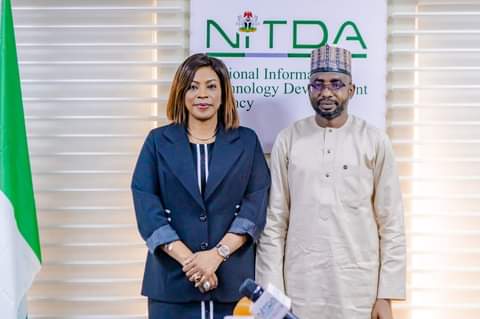
The Nigerian Information Technology Development Agency, NITDA, strengthens its relationship with Google West Africa.
The NITDA Director-General, Kashifu Inuwa, made this known on Friday, April 8, 2022, while playing host to the Google West African Director, Juliet Ehimuan, in Abuja.
“If we can come together to strengthen the collaboration, we will eliminate duplication of efforts and working in silos,” He said.
Mr Inuwa emphasized the importance of a good relationship between the two organizations and the aim of governmental regulations.
“Together, we can achieve greater results. Governmental regulations are not to stifle or be an obstacle to your business; rather, it is to enable and unlock more opportunities and protect your business and our citizens,” He stated
Mr Inuwa also commended the effort of Google in the capacity building of Nigerians with a plan to train about five million Nigerians.
Ehimuan, in her remarks, thanked NITDA for being one of Google’s major partners in the public sector with precedence of a great working relationship.
She confirmed the fact that Google has invested in a lot of capacity building over the years.
“Our initial estimate is to contribute directly and indirectly to create about 1.6 million jobs over time and work around device financing in partnership with telcos to make sure that people have access either through infrastructure or device data to gauge the digital world”, she disclosed.
According to Ehimuan, they will be about 300 million more internet users in Africa in the next five years, which will translate to more jobs and an enormous contribution to Nigeria’s Gross Domestic Product (GDP).
Boko-Haram expansionism and the future’s gruesome picture
By Abdulhaleem Ishaq Ringim
The Abuja-Kaduna train attack has finally halted the speculations regarding Boko-Haram’s expansionism into North-West territories of Nigeria. Although warnings sounded as far back as 2-3 years ago were suggestive of the existence and operationalization of such an active expansionist agenda, it wasn’t until January 2022 that I saw what I consider the first official acknowledgement of the expansionist efforts of BH. This acknowledgement was contained in Kaduna State Ministry of Internal Security and Home Affairs’ annual security report wherein lies observations of escalating relationships between Boko-Haram groups and bandits.
It should be recalled that Boko-Haram ceased to exist as a single entity since 2014/2015 when factionalism befell the central entity. This factionalism yielded 3 different groups distinguishable by certain ideological and tactical contrarieties. They are; The Shekau Led Jama’atu Ahlis-Sunna Lidda’Awati Wal-Jihad (JASLWJ), The Al-Qaeda in the Islamic Maghreb (AQIM) supported Jama’atu Ansaril Muslimina fi Biladis Sudan (Ansaru) and The Islamic State (IS) supported Islamic State in West Africa Province (ISWAP). And they have been fighting one another for influence and jurisdiction ever since.
Interestingly, establishing an influential presence in North-central and North-west Nigeria has always constituted a major aspect of these groups’ grand agenda. But for years, it had proven hard for this objective to be achieved by any of the groups even after staging several operations in the 2 subregions as none of them was able to establish that desirable level of hegemonic presence and influence.
However, among the three groups, Ansaru remains the most influential in the North-west even though it is thought to have hibernated after the face-off that ensued from the factionalism. Terror watch reports suggest that while in hibernation, Ansaru embarked on a strategic recruitment exercise targeting NW’s most dominant non-ideological criminal groups – the bandits – through infiltration, training, tactical assimilation and arms supply. Apart from Ansaru, Shekau-led JAS through some commanders(like Adamu Bitri before he defected to ISWAP and eventually died) also established and maintained contact and relationship with leaders of some bandit groups.
Last year, Nigeria’s terror network experienced heightened volatility due to the escalation of the conflagration between the two major terrorist organizations —the Shekau-led Jama’tu Ahlis Sunna Lidda’awati wal-Jihad (JAS) and Al-Barnawi-led Islamic State in West Africa Province (ISWAP) — operating in the North-east and Lake-chad basin. This resulted in the death of Abubakar Shekau by suicide which sparked serious disarray within the network and rendered the JAS somewhat defenceless.
Consequently, ISWAP issued an ultimatum to all JAS commanders and fighters to either defect to ISWAP and pledge allegiance to Al-Barnawi or vacate all former JAS territories which now fell under their control. Some commanders and fighters complied and defected while many others surrendered to the Nigerian Army with the aim of becoming beneficiaries of the Nigerian government’s amnesty program(Operation Safe Corridor). The third group of JAS commanders and fighters who neither defected nor surrendered to the Nigerian army were thought to have migrated to NW to forge alliances with bandit groups.
By implication, the above-stated events suggest that while Ansaru continues to remain the closest to NW bandits, ISWAP and former JAS fighters might have also re-ignited links with bandit groups in the NW. While ISWAP might have taken over control of the vast network of bandit groups that were formerly affiliated to Shekau-led JAS due to the carpet-crossing of JAS commanders (some of whom are the keepers of the link between JAS and the bandit gangs in the North-West just as Adamu Bitri) to the ISWAP side, JAS fighters that refused to surrender to both ISWAP and the Nigerian Army might, however, have also migrated to NW to forge alliances with bandits and escape ISWAP’s wrath.
Now, the changing dynamics, improved weaponry and renewed offensive tactics seen in recent attacks thought to be staged by bandits are testimonials to an improved alliance between Bandits and members of BH groups. These attacks carry BH signatures all over from attacks on public infrastructure (as in the case of the two train attacks) to attacks on military formations (e.g NDA and the Birnin Gwari Army Forward Operational Base) and the efficient use of IEDs for offensive have increased in frequency in NW states. The recent videotape that was released in the aftermath of the release of the Bank of Agriculture’s MD also signals this unholy alliance.
At this pace, North-west Nigeria is on the verge of becoming a deadlier terror zone than the North-East ever was. This is because we are dealing with two groups with complementary terror/criminal expertise synergy which holds the potential for the establishment of the most sophisticated terror network Nigeria has ever seen. The bandits indubitably boast of an unmatched knowledge of the local terrain and geography of North-west’s forests and other ungoverned spaces while BH groups, be it Ansaru or ISWAP, boast of a very deadly extremist-ideological core with a sophisticated array of terror-based expertise and affiliation to global terror networks through Islamic State(IS) African subsidiaries(for ISWAP) and Al-Qaeda in the Islamic Maghreb (AQIM) (for Ansaru) that allows them access to global terror resources and funding.
The bandits also have numbers sourced from a rich population of child soldiers. Their numerical preponderance, nonideological-cum-uneducated nature and relatively young base makes them extremely vulnerable to indoctrination and a suitable source for terror manpower. Sadly, the use of child soldiers for terror activities is attributed to both ISWAP and Ansaru, but ISWAP has gone further to institutionalize child recruitment and indoctrination using international terror recruitment standards. Hence, ISWAP might leverage this rich child-soldier manpower source opportunity more effectively.
As I write this piece, I must confess to experiencing the oscillation of an overwhelming shockwave of fear that has been travelling through the deepest core of my body since I discovered ISWAP’s new recruitment and indoctrination strategy through open-source terror watch networks. And here is why:
The largest bandit-manpower source is predominantly the forsaken, uncivilized and uneducated population of forest-based Fulani. Several testimonies from victims of kidnapping further affirm that the bandits are mostly young boys aged 14-18. They have been adjudged to be tremendous in terms of population and now BH groups (ISWAP, ANSARU, fmr JAS) have infiltrated the vast bandit network due to the government’s avoidable mismanagement of the entire situation which metamorphosed from the farmer-herder crisis. Unfortunately, the continued mismanagement of this crisis now holds the potential of further transfiguring into an implosive generation-long extremist insurgency.
ISWAP has instituted a new recruitment and indoctrination initiative. This initiative aimed at recruiting an army they term “The Empowerment Generation” focuses on training and indoctrinating children aged 8-16 as seen in a propaganda video released by the group. The implementation of this training and indoctrination exercise is done through the instrumentality of a well structured educational institution named “Khilafah Cadet School”. Cadets, otherwise called “Cubs of the Caliphate” are drilled in extremist Islamic education; tactical military, arms and infantry training; and Jihad and enemy execution techniques.
This school boasts of having a well-structured curriculum consistent with global terror standards and a strict entry requirement as students have to pass entrance exams before getting admitted. The school is well-funded and resourced. The scariest aspect of the video is the scene that shows the cadets practising special force warfare tactics. In the scene, the cadets are shown entering a building in special forces style to extract enemies. The enemies used for this drill were Nigerian soldiers captured by ISWAP. After the extraction, the 3 soldiers were made to kneel and they were all shot in the head by three different child soldiers barely aged 15. The precision, the tact and the efficiency in execution are consistent with that which is usually seen in war movies.
The “Cubs of the Caliphate” are a product of a long-term strategy envisioned by ISWAP to continue the ideologically-driven war for another generation, serving as a formidable and inexhaustible manpower source for the terrorist army. As I watched that video, I reflected with fear on the young bandit population in the NW and the possibility that most of them might end up getting admitted into such kinds of indoctrination programs as a result of the strategic alliance between bandits and these terror groups. I could not help but weep at this gruesome picture of the future, asking what if Boko-Haram groups succeed in assimilating a major section of the young bandit population operating in this part of the country?
The catastrophe that would result from this scenario is indescribable. Nigeria has managed to mismanage every security situation that it had ever faced. But we cannot afford to continue mismanaging this crisis for the future looks gruesome unless a de-escalation happens. But how do we tame this menace?
The only security situations in Nigeria that the government had been able to manage to an extent are those that benefitted from robust dialogue and amnesty programs. And the closest we got to destroying insurgency through the use of brute force was when mercenaries were hired to fight Boko-Haram in 2015. But just like dialogue, the implementation of completely annihilating military offensives is as well another efficient option in countering terrorism and insurgency. But in Nigeria’s context, this method carries the smell of impossibility all over it. In fact, brute force clearly constitutes precedential failures in the fight against terror and insurgency in Nigeria.
The highest level of brute force(since the completely annihilating one has so far been simply unachievable) we have been able to exert could not tame Niger-Delta Militancy, it hasn’t been able to crush Boko-Haram for almost two decades now. And it is yet again proving inefficient in the fight against bandit-terrorists even before the infiltration of the very tactical and well-resourced Boko-Haram groups.
We are left with two options; the Gumi option of dialogue and strategic engagement with stakeholders in the affairs of these bandits with the aim of securing a ceasefire and ultimately, surrendering of arms in exchange for amnesty and redress(before they completely get assimilated into the ideological war BH groups are fighting) or the Elrufai solution of engaging the services of mercenaries to perform a sweeping operation targeting all forests and hamlets harbouring these bandit-terrorists and their BH affiliates since the implementation of such method by our military seems impossible.
Principally, the fundamental responsibility of every government is to safeguard the lives and properties of its citizens. Nigeria’s government under President Buhari has failed in that responsibility but we can no longer tolerate this failure for it holds the potential of consuming us and the country at large. Nigerians must rise up and demand an end to this barbarism NOW!
Abdulhaleem Ishaq Ringim is a political/public affairs analyst. He writes from Zaria and can be reached through haleemabdul1999@gmail.com.
What’s the fate of the Almajiri?
By Abdulsalam Alkali
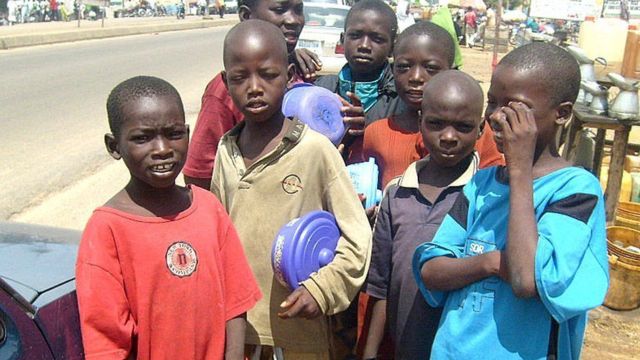
Almajiranci is an informal educational system that is predominantly practised in Northern Nigeria. Almajirai are teenagers ages 4-17 who are sent away from their dwelling by their respective parents to seek Islamic knowledge, a source for sustenance and clothe themselves by begging for alms from people.
The Almajiri system has produced prime leading Islamic intellectuals in Northern Nigeria. Still, along the cord, the system has been altered with the rise in population, making it a system that makes children of tender age susceptible to danger.
It’s awful how Almajirai are abandoned to cater for themselves even though parents should be responsible for their children’s needs and provide them with education. Sadly, parents choose to neglect their responsibility towards their children and abandon them at the early phase of their lives. This is unfair and should be tackled; else, it will erode our societal values.
Numerous discussions and symposia have been held on the predicaments of the Almajirai and how to reform the system. But it is all an exercise in futility because there has been practically no action to stem the tide.
The government, civil society organisations and traditional leaders have a role to play. First, the government should enact legislation prohibiting parents from taking their children to the Almajiri school. In addition, the government should make primary and secondary school free and compulsory so that poor and vulnerable parents can send their children to both formal and informal schools for our society’s good.
Abdulsalam Alkali writes in Maiduguri, Borno State, via abdulsalamyusufalkali71@gmail.com.
Publicizing privacy: How our personal information hunts us
By Sulaiman Badamasi (Mahir)
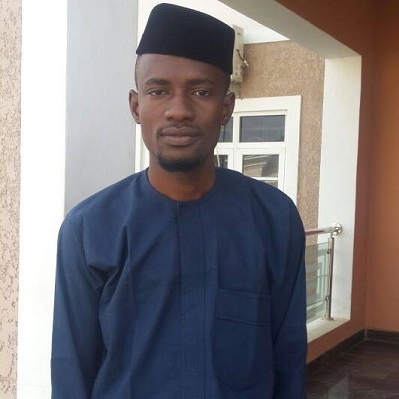
Social engineering (also known as human hacking) is the art of psychological manipulation of human beings to trick them into making privacy blunders to giving out delicate confidential information. The perpetrator (social engineer) digs background information of the potential victim to identify key necessary weak points and possibly gain the victim’s trust to use the information against them. Before the emergence of social media, it took social engineers a long, frustrating time to acquire as much information as possible about their targets.
However, the dawn of technology saw the 21st century as the swiftest ever in terms of information circulation. The world has appeared at a height where a single tweet (for example) reaches a billion people in seconds. Thus, information runs fast, businesses nurture, distances diminish, causes foster, coverage enlarges, relationships are created/strengthened, thus making us and our lifestyles more publicized and learned about.
Despite its tremendous impact on making life more relaxed, social media compels us to unconsciously reveal vital personal information about ourselves, families, friends, etc., which could be easily used against us. In other words, what you need to know about people to trigger any havoc on them and their close ones is almost certainly on social media. People’s personal info has become so plentiful that they have a copy of their voter card, national ID card, and driver’s license posted on social media.
Moreover, people reveal their workplaces, positions, type and colour of their vehicles, wives and children (by number, names & faces), schools where their children attend (including class, level, course, location), the colour of their children’s uniforms, favourite food, the interior of their rooms, the kind of electronic devices they own/use, current location, movement plans and means of transportation (motorcycle, car, truck, train, plane) with picture evidence. You know when they sleep/wake, to mention a few.
The recent #KanuTrain attack is a decent scenario of how our personal information can be used against us. The intruders appeared to have readily gathered background details of some of the passengers, including their sitting positions on the train and their social profiles. In a video interview, the killer of Hanifa, the primary school pupil who was allegedly abducted and murdered by her teacher, explained how he took his time, gathered adequate information, and built up his fraternity before executing the unfortunate assault.
The fact is, no ill group/individual strategizes and carries out a successful attack devoid of having sufficient information, which of course, we give generously. Without data, plans go wrong, and they (perpetrators) hardly take these risks nowadays. Repeated evidence has struck our screens on how ill-doers use human informants, drones, and social media accounts to gather information about target victims before carrying out attacks on them, including military bases.
Ethical hackers do not just attack or penetrate internet environments or webservers. Instead, they do footprinting and reconnaissance to know the strengths and identify weaknesses in the system they plan to attack and then exploit them.
Have you ever wondered how your profile pictures can be grilled to reveal more information about you? We often change profile pictures on several occasions. Let us assume you have been on Facebook for ten years and have changed your profile picture ten times (once each year). These ten naturally varying images can be processed using deep learning and natural language processing to understand, for instance, the rate at which you are ageing, how happy/angry/suspicious/innocent you are looking, how healthy or otherwise, to mention a few.
A 30-minute walkthrough of the pictures you have uploaded in the last five years reveals what calibre of people you do mingle with, the state of structure your house is in, the number of countries, states, or towns you have visited, conferences you have attended, how beautiful your wife looks like, which of your siblings/parents/children you love the most, and more. Do you know that a data scientist who knows where you have been going for one year or less can use that data to predict where you will possibly be going next?
All these can be used to perpetrate evils against you/us, thus, informing a possible abductor/kidnapper whether you look like someone who/whose family can afford a ransom payment. Knowing a lot about your family tells them of the softer target amongst them. Of course, they would find it easier to abduct that daughter of yours whose school name, picture, name, age, the colour of the uniform, time to and from school you have made available than you.
Unless we have underlying valid reasons to do so, making our private information and our families public could make them more vulnerable to unnecessary access. Life now looks as if the more your sensitive information is made private, the less you are prone to some unfortunate events.
So, beware!
Sulaiman Badamasi (Mahir) can be reached via sulaimanmahir@gmail.com.
Accident: Buhari commiserates with Jonathan over personal staff’s death
By Uzair Adam Imam
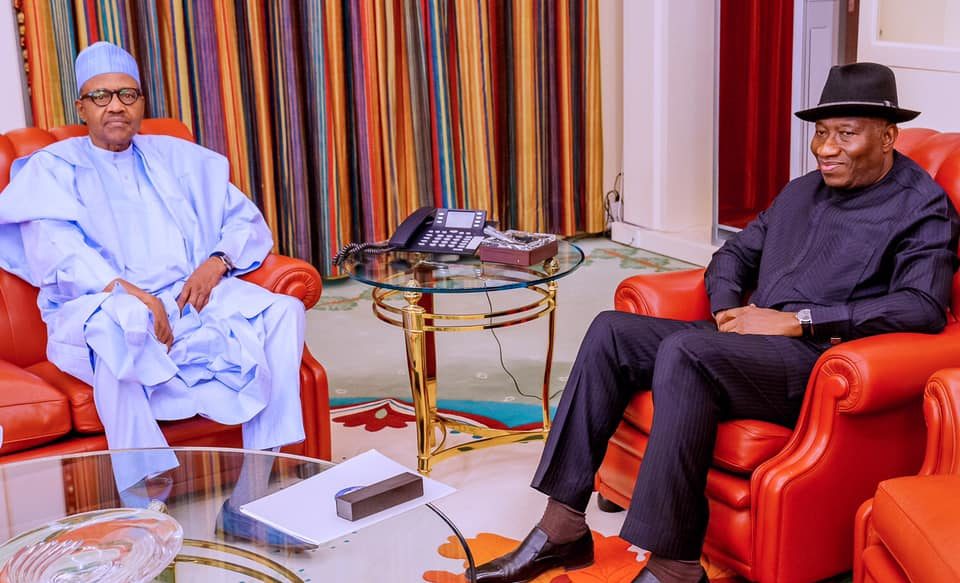
President Muhammadu Buhari has commiserated with former President Goodluck Ebele Jonathan over the death of his two personal staff in a road accident.
A statement signed Friday by the presidential media aide, Garba Shehu, contained the commiseration.
The President expressed gratitude to Almighty God for having the former president escape unhurt from the accident.
However, he also advised Jonathan not to be distracted from his frequent local and international travels.
Reports disclosed how the former president’s convoy was involved in an accident in the vicinity of Nnamdi Azikiwe International Airport, Abuja.
The accident that took place Wednesday had claimed the lives of two orderlies.