




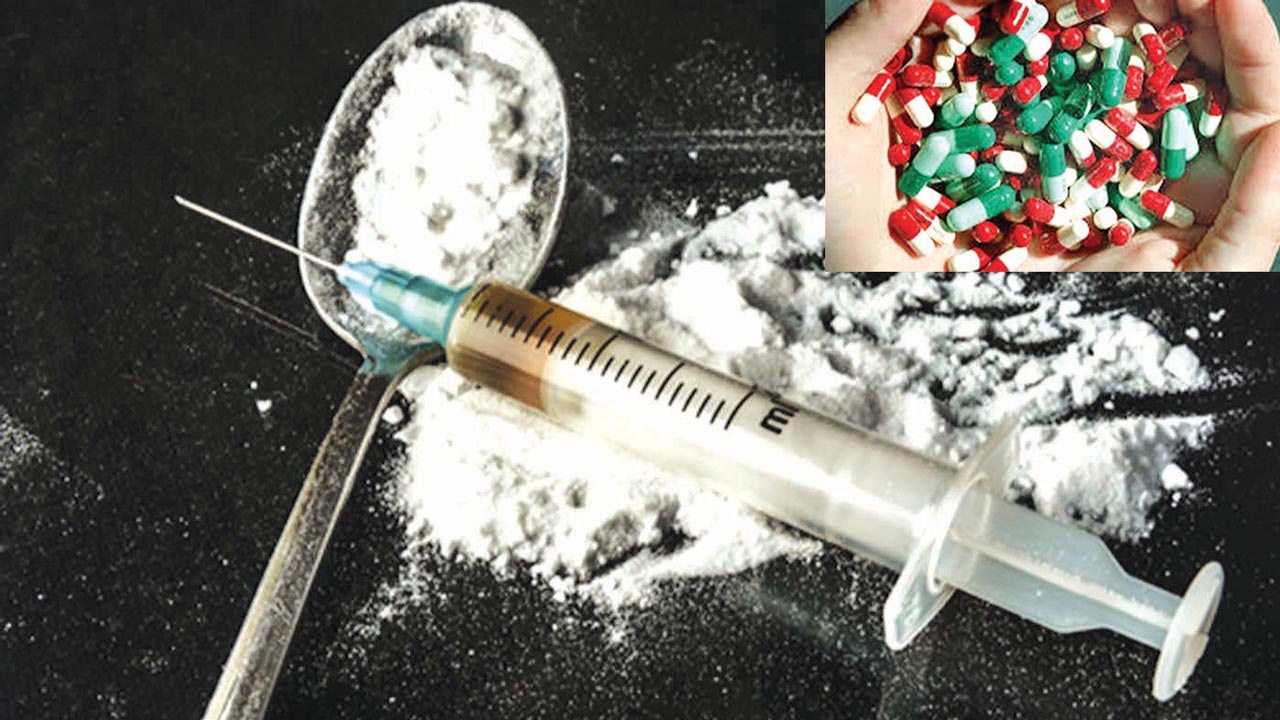
Northern youths and the malaise of drug addiction
By Lawan Bukar Maigana
After watching a Hausa video from Kano State a few days ago on different social media platforms, I was deeply saddened to witness a young man confessing to security officials how he fatally stabbed and murdered his father. Saying he committed the act “out of love for him” forced tears out of my eyes.
The most heartbreaking part was when he acknowledged his father’s care, provision, education, and immense love towards him, expressing that he killed him to ensure his father’s peaceful rest in heaven.
When asked about his name by the interrogator, he confidently said, ” My name is Abu Kasim Bin Ya’u Bin Ibrahim Bin Abubakar.” Surprisingly, he doesn’t even know the crime he committed before his arrest by the staff of the Nigerian Civil Security and Defense Corps (NSCDC).
While reminding him that he killed his father, he unapologetically explained that whoever is killed goes to heaven—paradise—without any questions from angels. ”I killed him, and whoever kills someone will go to hellfire. I am a certified member of Hellfire, but my father is a dweller of paradise, and I don’t care about the situation I will find myself in. That is not my problem.”
When asked why he didn’t kill himself, he replied, saying he loves his father more than himself. ”He paid my school fees, and I became a wayward person and killed him, qualifying me to be judged accordingly. We must tell the truth no matter what. I am in the know that I killed him, and I will not lie to you, Officer.”
These were the words of the young man from Nigeria who killed his hard-working and promising father after getting high on hard drugs, exposing the level of crime that a drug addict can commit if he or she is high.
Similarly, I overheard a story of a young man, 21, who forcefully slept with his 17-year-old sister after being high at night, leading to her pregnancy. He said he thought he was at a hotel where he spent the night.
Another case of drug addiction that got me thinking some months ago was a case of a man who threatened to kill his father if he cautioned him about his lifestyle.
Yesterday, I read a report by TheCable that the National Drug Law Enforcement Agency, NDLEA, has raised concerns over the abuse of psychoactive substances among Borno’s young people, outlining fermented human urine, lizard dung, camel urine, Lipton soaked in gin, and mentholated spirits mixed with soft drinks as the most abused substances in the state, which resulted in prostitution, extortion, and other social ill-practices.
This was contained in a statement by Iliyasu Mani, the Commander of the Narcotics of the NDLEA, Maiduguri, Borno State.
He explained that some youths are inhaling toilet fumes and gutter dirt to get high and commit different kinds of crimes to the detriment of the state, aside from the ongoing insurgency that has claimed thousands of lives and businesses, leaving people poor and helpless.
Mani went on to say, “Let me categorically state here that these new psychoactive substances that are commonly abused today include cannabis sativa, skunk, cough syrup with codeine, ice, tramadol, rRohypnol diazepam, pentazocine, rubber solution, and glue,” concluding that some use 10-year-old human urine to get high.
According to the United Nations Office on Drugs and Crime, a household survey conducted in 2018 and reviewed in 2021, the level of substance abuse in Nigeria is at 14.3 percent which was three times higher than the 5.6 percent global average. This alone calls for action to come up with realistic and achievable ways of tackling drug addiction in the country.
Recently, one of my relatives escaped death after a botched attack by terror drug addicts at his residence in Gwange Sabon Layi in Maiduguri. They went to his house at night, attacked him with knives, and snatched his cell phones, one among the many crimes they commit daily.
This is the situation of many young people today in the North. Their addiction to hard drug consumption has already taken a frightening dimension. That is why the government must do something to arrest the dangerous situation.
Lawan Bukar Maigana writes from Borno State and can be reached via email lawanbukarmaigana@gmail.com
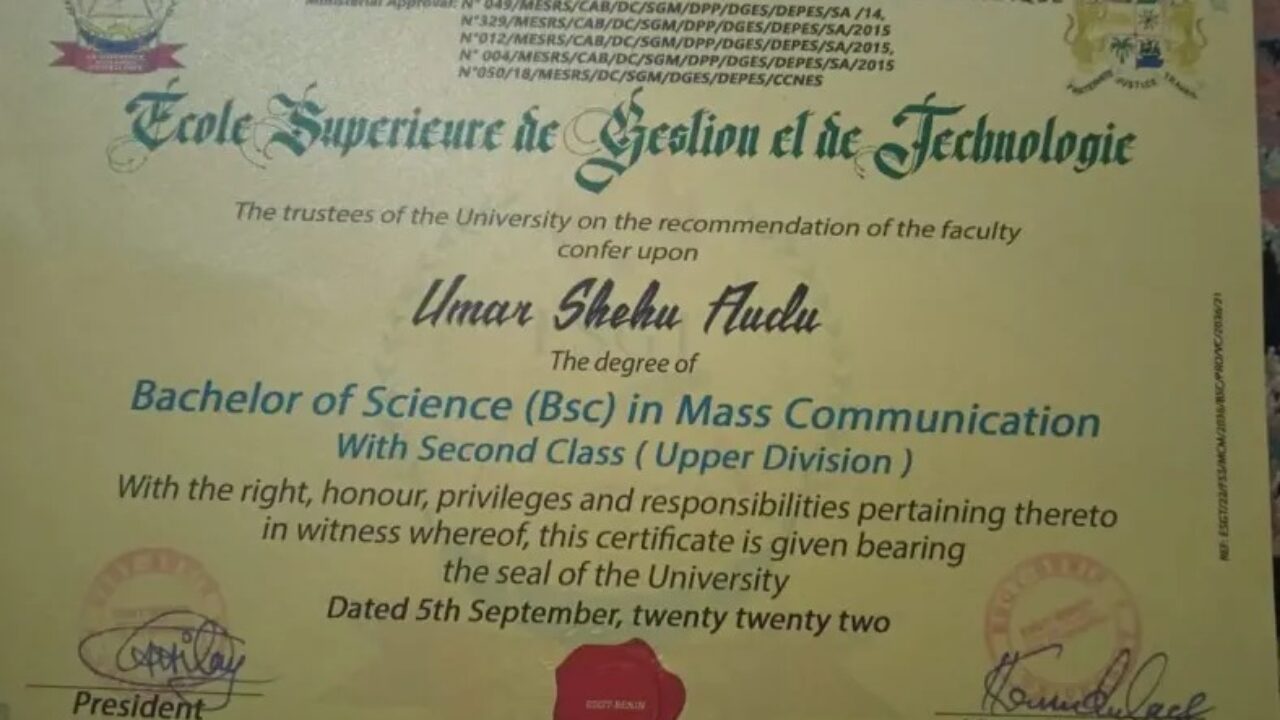
The dangers of the ‘Cotonou Certificate’
By Zayyad I. Muhammad
The excellent investigative report by the Daily Nigerian and the subsequent suspension of accreditation of degree certificates from Beninese and Togolese universities by the federal government of Nigeria has put a dent in every certificate genuinely or ill-obtained from institutions in these West African countries and some other African countries. This includes certificates from Eastern Africa as well.
The urge for these certificates, particularly among young Nigerians, is simply the price we pay for our inclination toward seeking easy solutions and allowing personal interests to override the national image.
One interesting aspect of the Cotonou ‘easy’ certificates is that they predominantly attract young people from Nigeria’s ‘semi-middle’ class and lazy individuals from wealthy families. For them, obtaining a bachelor’s degree often involves pursuing studies at Benin or Togo universities, which admit anyone can pay for the desired degree.
Another unfortunate aspect is that someone who obtains a bachelor’s degree in less than two months can easily secure a job in a sector involving life and death, make critical decisions in vital areas of Nigerian public life, or lead a group of competent individuals who have diligently earned their certificates. We hope there are no doctors, pharmacists, engineers, etc., practising in Nigeria who obtained their certificates through ‘crooked ways’ from Benin, Togo, etc. However, Nigeria’s professional and regulatory bodies should have prevented them from gaining entry.
Fake certificates pose a serious threat to the nation. This issue would be treated as a ‘war’ against the country in more developed countries. The Nigerian government should suspend accreditation from these countries and take decisive action to shut down these irresponsible institutions targeting Nigeria and punish the perpetrators.
However, Nigeria shouldn’t throw away the baby with the bathwater; some individuals have obtained certificates from reputable institutions in these African countries. Nigeria should address the issue from both ends—domestically and with these countries. Domestically, authorities must address why our young people opting for universities abroad. The answer lies in our universities being plagued with incessant strikes, some lecturers being unnecessarily sadistic, and sometimes foreign certificates being undeservedly celebrated.
Secondly, serene learning environments are attractive; some of Nigeria’s university lecture classrooms and theatres are overcrowded and in poor condition. In contrast, foreign universities provide beautiful and appealing learning spaces. Additionally, it raises questions about why graduating from a private university in Nigeria is often easier than a public university, especially when many lecturers at private universities are the same individuals teaching at public universities.
To address the issue at its source in these African countries, Nigeria should leverage its diplomatic influence in West Africa, compelling these nations to mandate that private universities adhere to established standards and penalise offenders. Those implicated should face legal consequences, as certifying unqualified individuals is akin to warring Nigeria’s human resources development and socio-economic sectors.
Fake degree certificates from Benin and Togo involve two actors: the institutions in those countries and their collaborators in Nigeria. Moreover, fake degrees are not confined to Benin and Togo; they are a global issue. According to a report by the Academic Credentials Evaluation Institute, Inc. (ACEI Global), based in Los Angeles, CA, USA, on December 2, 2023, Israeli police arrested 40 Israeli doctors, medical interns, and pharmacists who had presented false credentials to Israel’s Health Ministry. These individuals are suspected of purchasing medical and pharmacy degrees from three universities in Armenia despite never completing studies at those institutions—St. Tereza Medical University, Haybusak University, and Mkhtiar Gosh Armenian-Russian International University. The report also highlights controversies surrounding Punjab Technical University (PTU), India, including the issuance of fake degrees, leading to the arrest of four administrators for aiding failed students in passing.
If someone has genuinely obtained their degree from Benin or Togo, the current controversy has cast a shadow over it, and it may take some time to restore its credibility.
Zayyad I. Muhammad writes from Abuja via zaymohd@yahoo.com.

Rampant culpable homicide in Kano: A case of confusion
By Salihi Adamu Takai
The case of culpable homicide has become a daily report case in Kano State. The crime is a rampant nuisance that disturbs the whole country today. This is horrible in a state like Kano, which is the most populous state in Nigeria.
The rampancy of the crime is not only confusing but also the human, physical, and emotional proximity of the parties that are involved in the commission of the crime. The case of the rampancy of the commission of the crime is abnormal considering how it has been in records in police stations and contained in many cases of laws.
Most of the reported culpable homicides in Kano show the relationship and social proximity of the parties involved in it. The accused persons of the reported cases had proximity to the dead persons. This started – (as I have noticed it) – from the Hanifa’s case. Hanifa was kidnapped and killed by her teacher. There was a human proximity between the dead person and the accused person.
The Chinese man who killed his girlfriend had human proximity to the dead person engaged in courtship, and he eventually killed her. The recent case of Hafsa is also a case that confuses lots of people in Kano. The accused person had proximity to the dead person, and she killed him. Yesterday, it was reported that a person raped and killed his sister in Kano.
Therefore, this rampant nuisance in the report of the cases of culpable homicide in Kano is not a mere thing of crime inconsistent with the Penal Code; it’s beyond human perspectives and avoidable. What a relationship that puts people into a dilemma! Son kills his mother, and mother kills her son!!
It’s a collective responsibility of the Kano State community to engage in the proper investigation of the causes of these crimes. Islamic scholars shall always deliver sermons to admonish people on such offences, and the life of the Prophet (SAW) shall be part of the sermon so Muslims can always remain in touch with it.
Mushroom Universities: Other Togo and Cotonou sisters
By Muhammad Sani Usman
It is not just in Togo or Cotonou; mushroom universities are widespread in Asia, especially in India, Thailand, Indonesia, Malaysia and even some parts of core Europe.
The incident with this Cotonou one-year degree made me curious to discuss the issue with a student in Germany. He told me about the presence of substandard schools even in Germany. If such universities can be found in Germany, I wonder, where is safe? Most often, our federal universities in Nigeria, in comparison, seem to offer a more reliable education.
The significance of university rankings becomes apparent, particularly in the West, during job hunting. Employers often emphasise the importance of your university’s ranking in their consideration for an interview.
That’s why you’ll see graduates from places like Sudan or Cyprus facing challenges in passing medical and dental council exams in Nigeria due to the issues associated with their questionable degrees and institutions.
The situation in India is the worst one, and our best Nigerian students are often directed to these quack private universities, which are not on the accreditation list globally.
You’ll be seeing celebrities flaunting their graduation pictures and certificates obtained from Cyprus private universities while we know they are here in Nigeria shooting “Izzar So” and whatnot. How and when they studied still remains a mystery to all.
While not intending to generalise, our thirst for foreign certificates poses these challenges. Until we go for the best, our education and leadership will go nowhere.
Our government did an excellent job on these Benin and Togo degrees/certificates, until a system is established to check and authenticate these universities, the proliferation of quack PhD holders, which can indeed be detrimental to our growth will surely be the order of the day. Investing in our own institutions and striving for excellence globally should be our main priority and concern.
Muhammad Sani Usman can be reached via muhdusman1999@gmail.com.

JUST IN: President Tinubu sacks FCCPC, BPE CEOs
By Sabiu Abdullahi
President Bola Tinubu has dismissed Mr Babatunde Irukera, Chief Executive Officer of the Federal Competition and Consumer Protection Commission (FCCPC), and Mr Alexander Ayoola Okoh, Director-General/CEO of the Bureau of Public Enterprises (BPE).
The move is part of a broader plan to restructure and revitalise critical agencies of the federal government.
In a statement released on Monday by Ajuri Ngelale, the Special Adviser on Media and Publicity to the President, it was announced that the dismissed CEOs are instructed to hand over their duties to the next most senior officers in their respective agencies.
This transitional measure is in effect pending the appointment of new chief executive officers.
The presidency affirmed that the removal of the chief executives takes immediate effect, signifying the swift implementation of President Tinubu’s directive.
The decision aligns with the government’s commitment to restructuring and repositioning key agencies, with a focus on safeguarding the rights of Nigerian consumers and fortifying the foundation for increased contributions to the nation’s economy by pivotal growth-enabling institutions.
As the nation anticipates the appointment of new leadership for these agencies, the restructuring efforts shows some signs of the administration’s dedication to fostering efficiency.
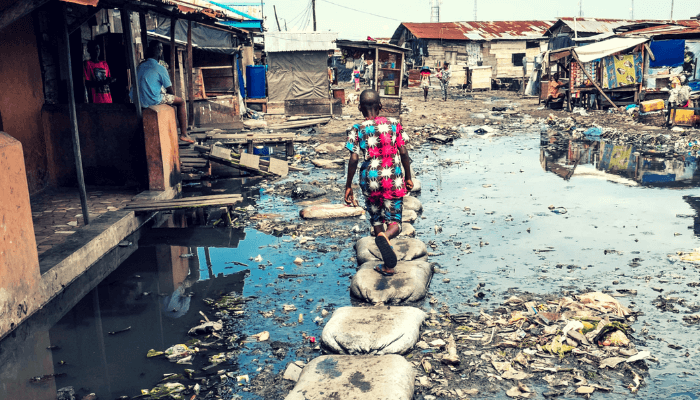
The impact of poverty on health, education, social structure, and crime
By Umar Sani Adamu
Poverty has far-reaching consequences on various aspects of society, including health, education, and social structure. Understanding these repercussions is crucial for addressing the root causes and developing effective strategies to alleviate poverty and its associated issues.
1. Health
Poverty significantly impacts health outcomes. Limited access to nutritious food, clean water, and adequate healthcare services contributes to a higher prevalence of malnutrition, infectious diseases, and chronic conditions among the impoverished. Lack of resources often results in substandard living conditions, exposing individuals to environmental hazards. Additionally, stressors associated with financial insecurity can lead to mental health issues, further exacerbating the overall health burden.
2. Education
Poverty creates barriers to educational attainment. Families struggling with economic hardships may prioritise immediate needs over investing in education. Children from impoverished backgrounds often face challenges such as inadequate access to quality schools, resources, and educational support. Limited access to books, technology, and extracurricular activities hinders their development. As a result, the cycle of poverty continues, as these individuals may find it challenging to break free from their circumstances through education.
3. Social Structure
The social fabric of a community is intricately linked to economic well-being. Poverty can contribute to the fragmentation of social ties as individuals grapple with the stress and uncertainty of their circumstances. Communities with high poverty rates may experience increased social inequality and a lack of social cohesion. This can manifest as reduced community engagement, weakened support networks, and a diminished sense of belonging.
4. Crime
Poverty is often identified as a significant factor contributing to crime. Several mechanisms explain this relationship. Firstly, individuals in poverty may resort to criminal activities as a means of economic survival. Limited opportunities for legitimate employment can lead some to engage in illegal activities to meet basic needs. Additionally, impoverished communities may experience higher rates of substance abuse, which can further contribute to criminal behaviour.
Furthermore, the lack of access to quality education and limited social support in impoverished areas can result in a higher prevalence of delinquency. The frustration and hopelessness stemming from persistent poverty may lead individuals, particularly young people, towards criminal behaviour as an alternative to breaking free from their challenging circumstances.
Addressing the Link Between Poverty and Crime
A multi-faceted approach is necessary to mitigate poverty’s impact on crime. Policies to reduce poverty through economic empowerment, education, and healthcare access are crucial. Investments in education, vocational training, and job creation can provide individuals with opportunities to escape the cycle of poverty and reduce the likelihood of resorting to criminal activities.
Social support programs that strengthen community bonds, mental health services, and addiction rehabilitation can address some of the root causes of criminal behaviour associated with poverty. Additionally, targeted efforts to improve law enforcement-community relations and reduce systemic inequalities can contribute to crime prevention.
In conclusion, poverty has profound consequences on health, education, and social structure, with a direct link to increased crime rates. Breaking this cycle requires comprehensive strategies that address the systemic issues contributing to poverty and simultaneously provide individuals and communities with the tools and resources needed for positive transformation.
Umar Sani Adamu (Kawun Baba) wrote via umarhashidu1994@gmail.com.

JUST IN: Minister Edu suspended amidst allegations of financial irregularities
By Sabiu Abdullahi
President Bola Tinubu has suspended Dr. Betta Edu, the Minister of Humanitarian Affairs and Poverty Alleviation, in response to an ongoing investigation into allegations of financial irregularities.
Previously announced by the Presidency, the investigation revolves around the transfer of N585.189 million by Minister Edu.
Bayo Onanuga, the President’s Special Adviser on Information and Strategy, assured the public that appropriate action would be taken pending the conclusion of the inquiry.
The controversy unfolded as reports surfaced indicating that funds designated for vulnerable groups in Akwa Ibom, Cross River, Ogun, and Lagos states were diverted into a private account.
This revelation sparked widespread public outrage and fueled demands for Edu’s dismissal and subsequent prosecution.
A leaked document bearing Edu’s signature detailed the direct disbursement of N585.189 million into the private account of Bridget Mojisola Oniyelu.
The veracity of this leaked document confirmed that the funds indeed found their way into Oniyelu’s account.
Addressing the escalating situation, Edu, through her Special Assistant on Media and Publicity, Rasheed Zubair, stood firm, asserting that the payment strictly adhered to due process.
The suspension adds a new layer to the unfolding saga, raising further questions about the financial transactions under scrutiny.
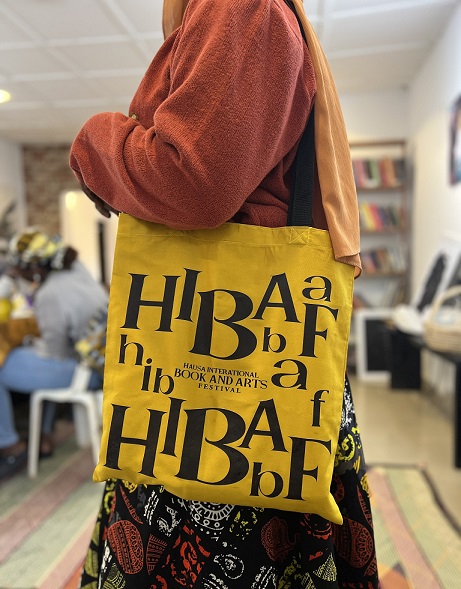
The conscious reawakening of Northern storytelling: HIBAF and its long way to liberation
By Sa’id Sa’ad
In 2021, I sat at Arewa House. I listened to Late Ummaru Danjuma (Kasagi) thunder – in his old throaty yet commanding voice – bitterly about how Hausa culture and stories have diluted over the years. His face, though saddened, lit by fluorescence – old, yet much alive – spread goosebumps throughout the room, reawakening all the murdered tales back to life. No one would think that that command births the reawakening of not just Hausa culture, stories, and language but northern Nigeria’s stories.
That was the maiden edition of the Hausa International Book and Arts Festival (HIBAF)—a time when literary festivals have suffered lashes of COVID-19. Literary enthusiasts, writers and journalists were once again full of life to reconnect. While some see it as a promising beginning for a new Jaipur Literature Festival of Northern Nigeria, a lot thought it was just a naming ceremony of yet another Nigerian literary festival that will soon wither due to shrinking funds.
Hausa or northern Nigeria literature – before now – couldn’t afford itself a “consistent” arts festival that solely promotes and celebrates its artistry, culture, and stories until the advent of HIBAF. However, there were several one-off attempts previously, but mostly political. One might argue that festivals like Kaduna Book and Arts Festival (KABAFEST) have blanketed the same purpose. Still, I would differ because KABAFEST is an international festival bringing international guests with national stories to a northern city. KABAFEST is – or now probably was – an arts festival “in” northern Nigeria, while HIBAF is an arts festival “for” northern Nigeria. This is not a dismissal of the influence KABAFEST had on northern Nigeria. It would be stupid to dismiss that.
However, as the region continues to suffer stereotypes about its literary prowess, HIBAF could stand on the edge of liberating northern Nigeria from such an ugly view. Perhaps the birth of what can be predicted today is the conscious reawakening of northern stories.
For a young festival with such an ambitious name, the question is: Is HIBAF only representative of the Hausa people or northern Nigeria?
It is easy to assume that HIBAF solely represents Hausas and their stories, especially for those who view them from the outside. This is mainly because, unlike other art festivals in Nigeria and around the world founded to represent a geographical entity, such as Lagos Book and Arts Festival, HIBAF is one of few whose nomenclature represents a tribe. In previous seasons, the festival granted conversations in the English Language; therefore, that says a lot about HIBAF going beyond Hausa “alone” in its programming, which I find healthy.
It would be great if HIBAF were only for Nigerian Hausas. It is okay if it is for Hausas globally. But it will be graciously honourary if HIBAF is for northern Nigeria in general. The value of this ambitious festival is in its capacity to reconnect Hausas and Hausa cultures with cultures around it through diversifying into introducing tribes that have existed with Hausas, such as Fulani, Nupe, Tiv, Igala and other northern tribes to its programming. This will mean Hausas and communities of non-Hausas in Hausa communities could re-share a space in arts and shape a positive narrative of the region in terms of collective literary and artistic prowess. This will create a unified northern story(ies).
Another issue that can’t be dismissed is the problem of northern consciousness – this time, refusal – to appreciate northern initiatives. It is a similar case for HIBAF. It is seldom difficult to see a representation of famous northern personalities – especially from Kannywood and music sub-sectors, aside from a few interested in literature such as Aminu Ala or Ado Gidan Dabino. Most hardly care. This does not mean that such personalities – who don’t care – will decline invitations from similar festivals in other parts of Nigeria. They certainly will accept. Now, the question of the “potentiality” of the festival in creating “value” and “shaping northern stories” has everything to do with bringing people of value, not just in literature but from other art sub-sectors such as Kannywood and Hausa music space into its fold.
Knowingly or unknowingly, the Kannywood industry needs more fora this time than ever. Imagine Ali Nuhu, Rahama Sadau, Fauziya D. Sulaiman and Salisu Balarabe on a panel to discuss how northern creative writers could get their – more well-written stories – to Kannywood screens. This panel can pave the way for collaboration that could place both the creative writing and Kannywood film industries decades ahead—a potential both industries share.
With its ambiguous programming nature of inculcating cultural programmes, the festival could give life to northern cultural heritages on the verge of fading with the recent digital revolution. It will be fascinating to see HIBAF Durba, HIBAF Tashe, HIBAF Dambe, Dandalin HIBAF, HIBAF Mawakan Gargajiya and other numerous HIBAF’s all-year-round that could bring back the northern cultural heritages while also Including non-Hausa cultural programme. Again, this creates unified northern cultural narratives.
This year’s HIBAF, in its third year of awesomeness and vibrancy – though still wounded by honest negative feedback from the second season – is bringing diasporic faces back home. Simply put, ‘going international with locals, and for locals.’ Such a breed can give life to a new dimension of cross-geographical collaboration between northern storytellers in the diaspora and Nigeria—a remarkable feat to a tremendous progressive bond.
While the festival, through its host organization, is becoming a spot for learning and sharpening creative and artistic mastery through workshops and seminars, it depicts how it can create a birthplace of yet new sets of Abubakar Imams and Zaynab Alkalis who would live to tell the stories. But this can also be limited if the focus is Hausa and literature alone as, thus, expansion both in language and sub-sector is where the growing inclusive value lies.
From pages of novelists to the rhymes of poets, from scenes of playwrights to screens of filmmakers, from the vocals of singers to the lyrics of songwriters, from the colours of culture to the lens of photographers, from northeast to northwest and northcentral, HIBAF could cook a recipe of blended stories – of all that have been around Hausa – to a valuable northern unified story.
Though all these are a long walk to a new revolution for northern Nigeria’s stories, it can place HIBAF at a point of liberating the region and demolishing its stereotypes.
Sa’id Sa’ad is a Nigerian writer, playwright and journalist from Maiduguri. He won the Peace Panel Short Story Prize 2018 and the NFC Essay Prize 2018. He writes from Bonn, Germany. He can be reached directly at saidsaadabubakar@gmail.com

Nigerians call for the sack of Betta Edu
By Ahmad Deedat Zakari
Following the allegations of corruption in the Ministry of Humanitarian Affairs and Poverty Alleviation, Nigerians on the micro blogging platform, X, are calling for the removal of its minister, Dr Betta Edu.
In a document which has now gone viral and purportedly signed by the minister, she wrote to the Office of the Accountant-General of the Federation and directed the disbursement of N585.189 million into one Bridget Mojisola Oniyelu’s private account.
The minister had made clarifications on the allegations, she explained in a statement released on Friday that the controversial payment followed due process.
However, many Nigerians are not convinced by her explanations and are demanding that President Tinubu should relieved her of her job.
According to Farooq Kperogi, the allegation presents an opportunity for the Tinubu government to do the right thing and not tolerate corruption like the previous administration.
“This is a momentous moment for Tinubu. If he does not fire Edu forthwith and bring her to justice, he has already lost the moral high ground to try Buhari’s corrupt honchos.”
A human right lawyer, Inibehe Effiong, said she ought to have resigned immediately.
“Has Betta Edu been interrogated by the EFCC yet? When is she tendering her resignation letter?” He wrote.
“If Betta Edu still has a job by tomorrow morning, then we will know that Bola Ahmed Tinubu is not ready to lead this country. You cannot be swift in suspending Halima Shehu while Edu Betta, who has suspicious academic records and serious allegations against her, still has a job. Suspend her now and allow @officialEFCC to invite her for interrogation” an X user, simply identified as Sarki, posted.
Thousands of Nigerians and civil rights organizations are calling for thorough investigation and her removal.
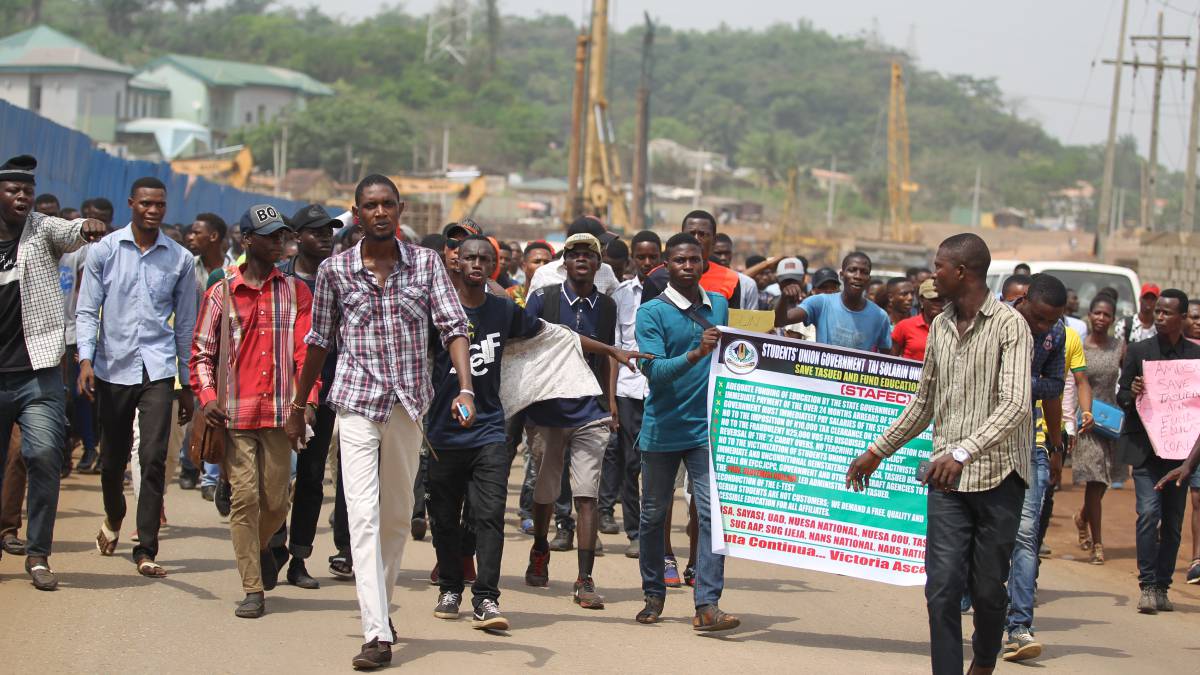
Struggles of students: A cry for justice
Usman Muhammad Salihu
In the hustle of everyday life, many people find themselves navigating through challenges, and for some, the journey includes the demanding world of academia. A recent encounter with a university student sheds light on the harsh reality students face on the path to education, especially in Nigeria today.
As a graduate waiting for our results to be released, I engaged in a rickshaw business. As I was moving through the city of Jos, Plateau State, I picked up a young woman who, by all appearances, seemed to be a dedicated university student. Little did I know that the shadows of academic hardships marred her journey.
Her phone conversation with a fellow coursemate delved into the frustrating realm of carryovers and spillovers. According to her, some lecturers seemed to wield their power recklessly, subjecting students to the ordeal of repeating courses, even after graduation. What struck me was the claim that these burdens were inflicted upon students who resisted inappropriate advances.
With a frustrated tone, the young lady spoke of the financial strain that accompanies repeating courses. Despite the current economic challenges faced by many Nigerians, students find themselves compelled to pay registration fees to rectify the consequences of what appears to be an unjust system.
If the allegations are indeed true, and this is a manifestation of the notorious “sex for grades” issue, it raises serious concerns about the ethical conduct within our educational institutions. It is a cry for justice that cannot be ignored.
In response to these distressing revelations, a collective responsibility falls upon the government, the Students Union, and the wider public. The government must ensure a thorough investigation into these claims, holding accountable any lecturer found guilty of such misconduct. The Students Union has a vital role in advocating for the rights of its members, providing support, and pushing for systemic changes that protect students from exploitation.
Moreover, the public must not disregard the struggles faced by these students. Awareness is the first step towards change. By shedding light on these issues, we collectively contribute to fostering an environment where students can pursue education without fear of victimisation. Only through collective action and a commitment to transparency can we hope to eradicate these hardships and create a safe space for education to flourish.
Usman Muhammad Salihu writes from Jos, Nigeria, via muhammadu5363@gmail.com