


OAU denies granting permission to illegal miners operating on campus
By Uzair Adam Imam
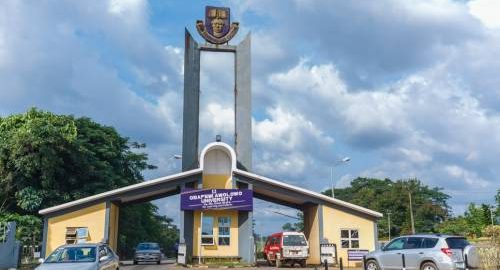
Obafemi Awolowo University (OAU) in Ile-Ife, Osun State, has refuted claims of issuing any lease agreements to illegal miners found operating on university grounds.
The university also revealed that they had previously reported these activities to the relevant federal government agencies to stop the illegal operations.
The presence of illegal miners on campus raised concerns about the safety of students and staff.
Some miners claimed to have licenses to operate, but the university firmly denies granting such permission.
In a statement released by the university’s Public Relations Officer, Abiodun Olarewaju, on Saturday, OAU clarified their position: “While the University has, since becoming aware of the illegal activities of these miners, written a formal complaint to the appropriate government authorities, it is equally important to inform the general public that the claim of these trespassers are totally false.”
The statement further notes that OAU has not granted permission for any mining activities on its land.
“The University therefore wishes to use this medium to inform the general public, especially our alumni and other stakeholders, that the University did not give any consent to any individual, group, company or association to obtain any license to carry out mining activities on its land.”
They reiterate that no agreements have been signed with any individual or group regarding mining activities.
The university assures its stakeholders and the public that they are taking legal action to stop these “trespassers” who pose a significant environmental hazard and negatively impact the university’s image.
They also confirm receiving assurances from federal authorities that their complaint is being addressed.

NDLEA warns of fake officers targeting families with travel scams
By Uzair Adam Imam
The National Drug Law Enforcement Agency (NDLEA) is alerting the public, particularly those with loved ones abroad, to a new scam that targets innocent families.
Fraudsters are impersonating NDLEA officers and contacting unsuspecting citizens with a fabricated story.
As described by NDLEA spokesperson Femi Babafemi, “Under this new scam scheme, the fraudsters will call unsuspecting citizens to inform them of the arrest of their relatives at the Murtala Muhammed International Airport Ikeja Lagos or any other international airport in Nigeria with illicit drugs upon arrival in the country.”
Babafemi continued, explaining the scammers’ tactics, “After throwing the family members into panic, the scammers then make a demand of millions of naira to facilitate the release of such persons from NDLEA custody.”
The NDLEA has successfully thwarted similar attempts in the past. Babafemi highlighted, “At the moment, there is one of such scenario the Agency has just investigated.
“In this case, the picture of a Nigerian man based in the US is being circulated with an audio of a purported NDLEA officer negotiating the payment of N5 million with a female relative for the release of the US-based Nigerian man purportedly arrested at the Lagos airport on Friday 22nd March upon his arrival with a ‘contraband.”
The NDLEA emphasizes that these claims are entirely fabricated. “Just like in previous instances, our investigation has also shown that the current incident is the work of scammers,” affirmed Babafemi.
He reiterated, “No NDLEA officer is involved in the audio conversation and the person whose photo is attached to the audio recording being circulated is not in our custody at MMIA or any of our Commands either as at yesterday or any other day.”
The NDLEA urges the public to exercise caution and avoid falling victim to these scams. “The family members involved in this case are advised not to part with their hard-earned money to scammers,” advised Babafemi.
“Nigerians with loved ones abroad are also urged to keep discussions on travel plans of their relatives to themselves to avoid the hijack of such by criminal elements for devious schemes.”
If you encounter a similar situation, the NDLEA provides contact lines for assistance: “+2347064670026 and +2348033326327.”
NANS demands investigation after stampede at NSUK claims lives of students
By Uzair Adam Imam
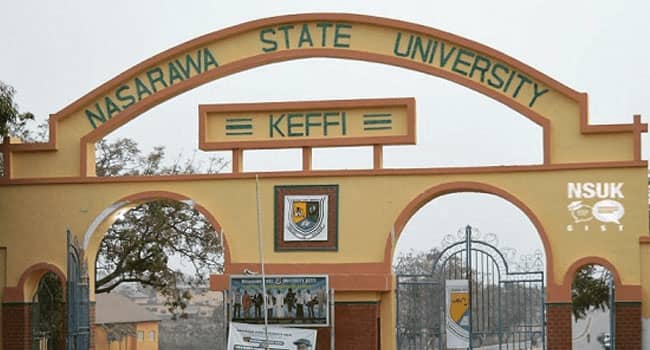
The National Association of Nigerian Students (NANS) expressed outrage over the deaths of two students at Nasarawa State University, Keffi (NSUK) during a stampede caused by the distribution of palliatives.
NANS President, Comrade Lucky Emonefe, called for a “thorough investigation” into the incident.
“The tragic event at Nasarawa State University, Keffi, which resulted in the loss of two lives and numerous injuries, is vehemently condemned,” Emonefe said in a statement.
He offered condolences to the bereaved families and demanded that “those responsible for the mishandling of the distribution of palliatives be held accountable.”
NANS urged authorities to adopt “modern distribution methods” to prioritize safety during aid distribution.
They also called on the university to provide counseling and support services to the affected students.

From passion to perfection: How the world is developed
By Ismaila Academician
Have you ever noticed that some pillars don’t stand upright, some dresses don’t fit well, and some bathroom tiles slope in the wrong direction, requiring sweeping after use?
The underlying cause is often a lack of passion among the professionals who create them. While they may appear cheerful and enthusiastic on the front end, their motivation primarily stems from financial gains attached rather than genuine passion from the back end. Passion is the driving force to perfection. It is the pacesetter towards excellence and success.
In the Western world, passion is evident in how professionals, artisans, and experts discharge their duties. They work not just to earn a living but also for a sense of fulfilment. It motivates them to innovate and develop new ideas, leading to the creation of products and services that are nothing short of perfect. Overall, it makes their countries grow and stay afloat no matter the storm.
Nigeria is blessed with a wealth of talents. We have the potential to innovate and develop new ideas—products and services that can compete favourably with those made abroad. But that talent remains unutilised.
A close look at the Facebook Reels section reveals that while Western and Eastern individuals are busy advertising their talents and sharing innovative ideas, Nigerians are often preoccupied with sharing content such as elegant weddings, club sessions, presidential convoys, and comedies. While these are not inherently bad, they do not reflect the depth of our creativity and innovation.
Social media is a powerful tool that can help us showcase our skills to a large and diverse audience. We can attract potential customers, business partners, investors, or employers. It also can help us build reputation, credibility, and influence. We need to craft a better narrative for Nigeria. We need to showcase our creativity and innovation. We need to display our knowledge and skills to inspire and motivate others.
In conclusion, the journey from passion to perfection is a transformative one. It requires passion. As Nigerians, we have what it takes to embark on this journey. We have what it takes to bridge the gap between local and foreign products. We have what it takes to craft a better narrative for Nigeria. All we need to do is to harness our potential and channel it towards the pursuit of perfection. But passion can’t do the work alone. We need to supplement our passion with action – creativity and innovation.
Remember, ideas develop the world, and people are willing to bring these ideas to life. Let’s be those people. Let’s make Nigeria a better place.
Ismaila Abdulmumini wrote from Kano, Nigeria, via ismailaacademician@gmail.com.

Fairness to business owners
By Ishaka Mohammed
Apart from a business trip to Enugu within 24 hours, I’ve spent all my life in northern Nigeria, but it was in 2014 that I learnt that “Arewa” means “North”. In fact, I had once referred to the word as the name of a bloodsucking occult society, thanks to rumour-mongers.
As children, my peers and I heard about “Ogbenu” (occultists who sucked children’s blood). Although the “bloodsuckers” were believed to be far away from our land, we were constantly warned to avoid them.
We received one of such warnings around 2003 or 2004, when a new brand of notebook was generating massive sales in our village.
The cover of the book had an inscription, “The great people of the great land…the people of Arewa land,” and featured pictures of some men wearing Hausa traditional attire on horses. It was rumoured that the men were Ogbenu, so writing in the book would drain one’s blood, while exhausting all pages would cause death.
Consequently, as some children and I avoided the book, various others destroyed the copies they already had. The brand disappeared from our community.
For the sake of context, I’m from Inye, a village in Ankpa Local Government Area of Kogi State, and I was a pupil at Engineer Bob Alfa Primary School (EBAPS), Ojuwo-Inye, at the time of the incident.
If a single rumour could be that effective by mere word of mouth, imagine how damaging it could be in this age of digital revolution.
You have the right to review products or services but be fair to brands and companies. Business owners struggle for the survival of their establishments, so it’s wicked to ruin their efforts. A single sentence could make or break an establishment. Business owners are also human beings, so they deserve fairness.
Nonetheless, whoever wants to be obstinate should either be ready to provide sufficient evidence or ask one Chioma Egodi Jnr. A single Facebook post and some comments about Nagiko Tomato Mix forced Erisco Foods Limited to deal with her. Deleting the post didn’t help matters, as the company involved the law and insisted that she prove her claims about the product.
Some people have argued that the company overreacted, but I think otherwise: she deserved what she got.
Ishaka Mohammed can be reached via ishakamohammed39@gmail.com.
Revealing the unseen: How climate change fuels infectious diseases in Katsina State
By Ibrahim Adamu Ingawa
In the vast expanse of Nigeria’s Katsina State, beneath the scorching sun and amidst the sporadic rains, a silent predator lurks, imperiling the health and well-being of its inhabitants. Climate change, though often overlooked, poses a formidable threat to public health in Katsina State, catalyzing the emergence and spread of infectious diseases at an alarming rate.
In recent years, the fingerprints of climate change have become increasingly evident, leaving behind a trail of devastation in its wake. From the bustling streets of Dutsin-Ma to the tranquil valleys of Bakori, the impacts of rising temperatures and erratic rainfall patterns are unmistakable, reshaping the landscape of disease transmission in profound ways.
Take, for instance, the surge in malaria cases that swept through Dutsin-Ma Local Government Area in 2019. Heavy rainfall and flooding provided the perfect breeding grounds for disease-carrying mosquitoes, resulting in over 500 confirmed cases within a month. Similarly, the parched earth of Kankia Town bore witness to a cholera outbreak in 2017, fueled by drought conditions and inadequate sanitation infrastructure, claiming the lives of several hundred individuals.
But the toll of climate change extends beyond the realm of vector-borne diseases, reaching deep into the fabric of public health in Katsina State. The specter of Lassa fever loomed large over Bakori Local Government Area in 2016, as changing climatic conditions facilitated the spread of this deadly virus, leaving a trail of devastation in its wake. Meanwhile, in Funtua, rising temperatures and increased mosquito activity paved the way for a dengue fever outbreak in 2015, further exacerbating the burden of disease in the region.
Yet, perhaps the most poignant manifestation of climate change’s impact on public health lies in the floods that ravaged Jibia in 2018. As torrential rains inundated the town, turning streets into rivers and homes into islands, a silent menace took root. Stagnant floodwaters became breeding grounds for disease vectors, leading to a surge in malaria cases and exacerbating the plight of already vulnerable communities.
In addition to the visible impacts on infectious disease outbreaks, climate change is also facilitating antimicrobial resistance (AMR) in Katsina State, thereby exacerbating public health challenges. The rising temperatures and erratic rainfall patterns create favorable conditions for the proliferation of resistant bacteria, as well as the emergence of new strains which are resistant to the drugs that are meant to kill them. Increased use of antimicrobial agents in response to climate-related infectious disease outbreaks further contributes to the selection pressure driving AMR. This alarming synergy between climate change and AMR underscores the urgent need for comprehensive strategies to address both phenomena and safeguard the health of Katsina State’s population.
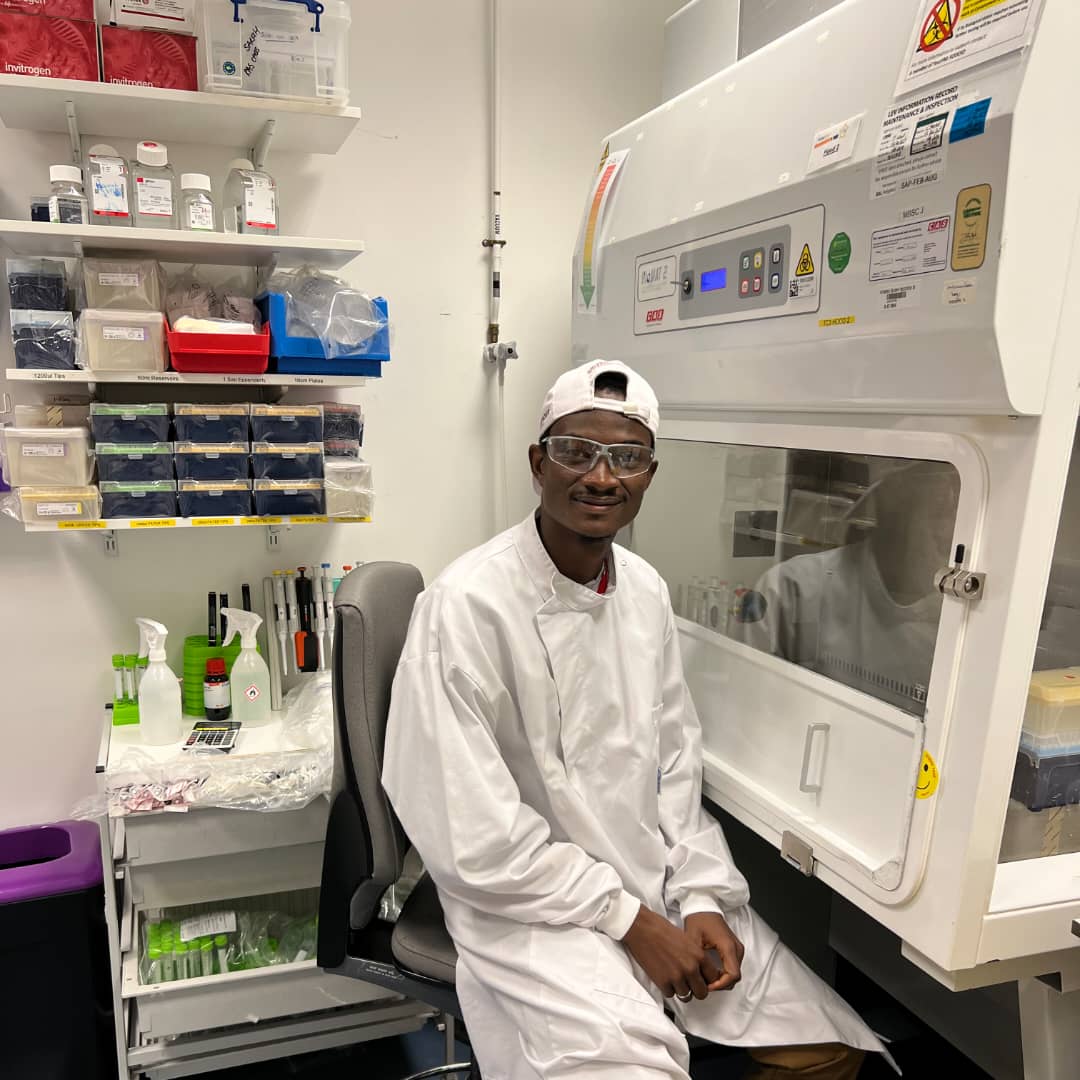
Despite the magnitude of these challenges, hope remains on the horizon. Armed with knowledge and skills I acquired in addressing the most pressing issues of public health over the past few years, I am committed to leveraging my expertise to develop innovative interventions aimed at tackling the consequences of climate change on infectious disease outbreaks in Katsina State. From outbreak preparedness and prevention to the implementation of robust control mechanisms, I am zealous in my determination to contribute in safeguarding the health and well-being of my fellow citizens at the Home of Hospitality. But my journey has not been without its obstacles.
Since my return from the United Kingdom after my internship at the world-leading genomics research institute (the Wellcome Sanger Institute, Cambridge), there has been interference from certain elements, which has impeded my ability to implement meaningful change. Yet, in the face of adversity, my resolve remains unshaken, fueled by a burning desire to make a tangible difference in the lives of those most affected by the ravages of climate change in my dear State.
The impacts of climate change on infectious disease outbreaks represent just one facet of the multifaceted challenges confronting the public health milieu of my beloved State. I remain resolute in my commitment to driving forward the positive transformation of Katsina State’s public health sector. Anticipating the opportunity to deploy my skills and expertise, I stand ready and poised to seize it at any moment.
As I look towards the future, I am filled with optimism, knowing that together, we can overcome the challenges posed by climate change on ever-increasing infectious disease outbreak and forge a path towards a healthier, more resilient Katsina State. I believe that through collaboration, innovation, and unwavering determination, we can turn the tide against this invisible threat and pave the way for a brighter, healthier tomorrow.
Ibrahim Adamu (Ingawa) writes from Katsina State. He’s a
Project Grantee at The Foundation to Prevent Antibiotic Resistance (Sweden). He can be reached via ibrahimassalafee@gmail.com/ +2348134386907

WAEC releases first-time WASSCE-CBT results
By Sabiu Abdullahi
The West African Examinations Council (WAEC) in Nigeria has rolled out the results of its pioneering Computer-Based West African Senior School Certificate Examination for Private Candidates, 2024—First Series.
This signifies a notable departure from conventional paper-based assessments towards a digitally-driven format.
As per a statement from the council, the groundbreaking CB-WASSCE utilised a blended approach, projecting questions onto computers while candidates submitted real-time answers for multiple-choice questions and provided responses in booklets for essays and practical components.
The examination spanned from January 31 to February 17, 2024. An analysis of the results revealed that out of the 8,139 candidates who participated, 3,424 individuals, constituting 42.07%, attained credit or above in a minimum of five subjects, irrespective of English language and mathematics inclusion.
The statement read, “2,519 candidates representing 30.95 per cent obtained credit and above in a minimum of five subjects, including English Language and Mathematics.
“The coordination of examiners and marking of candidates’ scripts were carried out at three marking venues in Lagos, Enugu and Kaduna from March 1 to 16, 2024. A total of 459 Examiners participated in the Coordination and Marking Exercise.
“The entry figure of 8,362 candidates showed a 4.30 per cent decrease in candidature when compared with the 2023 entry figure of 8,738. 8,139 candidates sat the examination at 140 CBT centres spread across the country.
“Amongst the candidates that sat the examination, 21 candidates, with varying degrees of Special Needs, were registered for the examination. Out of this number, nine were visually challenged, two had impaired hearing and two were Albinos.
“All these candidates with special needs were adequately catered for in the administration of the examination.”

“LGBT movement” added to Russia’s terrorist list
By Muhammad Abdurrahman
Banks should freeze funds and suspend services to individuals and groups included on the list.
Russia’s Federal Financial Monitoring Service (Rosfinmonitoring) expanded its list of individuals and organizations involved in extremist activities or terrorism on Friday to include the LGBT movement. The updated list is available on the agency’s website.
According to the law, banks are required to freeze the funds of individuals included on this list and suspend services to them.
Last November, the Russian Supreme Court upheld the Ministry of Justice’s recognition of the international LGBT movement as extremist. The court also recognized its structural divisions as extremist and banned them.
According to Interfax sources, the law “does not affect citizens’ right to privacy and will not entail any negative legal consequences.” The restrictions are related to the need to comply with the ban on LGBT propaganda, advertising, generating interest, and involvement in the LGBT movement.
Source: RT
A solution to procrastination
By Muhsin Ibrahim
Procrastination affects not only writers but also people from almost all walks of life. We all have tasks to do. However, due to procrastination, we keep saying that we will do them later again and again until the time is gone.
When I was writing my dissertation, I struggled with procrastination. I often put off writing, thinking I could do it later. This led to a lot of stress and anxiety as deadlines approached. However, I was determined to find a solution. I tried different techniques, such as setting strict deadlines for myself and breaking up my work into smaller, more manageable tasks. Eventually, I found a solution that worked for me.
I was reading a book with a ‘funny’ title: The Subtle Art of Not Giving a F*ck, when I found the following:
‘When I was in high school, my math teacher, Mr. Packwood, used to say, “If you’re stuck on a problem, don’t sit there and think about it; just start working on it. Even if you don’t know what you’re doing, the simple act of working on it will eventually cause the right ideas to show up in your head.’ (Manson 2016, p. 109).
I printed out the page and hung it in my room. I highlighted the above and another line. So much like the author, whenever I open my computer, a voice from within tells me to write something, not just to sit there.
Don’t hesitate to jot down your thoughts; the longer you wait, the more likely they will evaporate. Instead, take action and write! Remember, you can always revise, edit, and refine your ideas later. So go ahead and let your creativity flow without hesitation.
So, in Manson’s words, “Don’t just sit there. Do something. The answers will follow.” Do it in no haste, but don’t keep delaying it. Writing is unlike a speech; there’s almost always a time to revisit what you have written.
Dr Muhsin Ibrahim writes from Cologne, Germany and can be reached via muhsin2008@gmail.com
Nigeria Customs Service, NEPC strengthen partnership to enhance export activities
By Sabiu Abdullahi
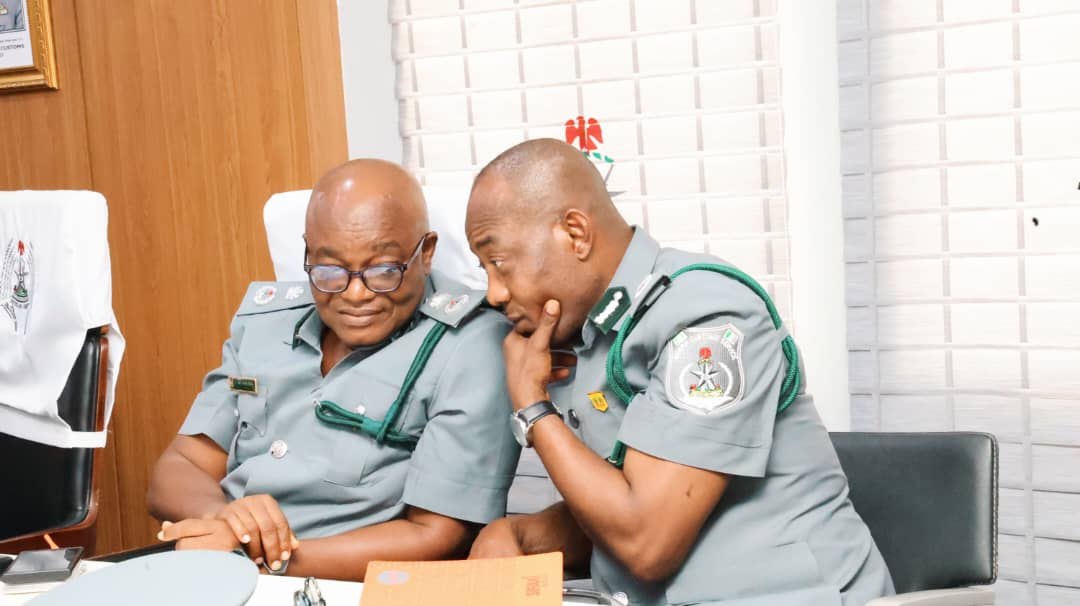
The Nigeria Customs Service (NCS) has affirmed its commitment to collaborate closely with the Nigeria Export Promotion Commission (NEPC).
The announcement came during a significant meeting held on Tuesday, March 19, 2024, as the management team of NEPC paid a courtesy visit to the Customs Corporate Headquarters in Abuja.
Comptroller-General of Customs, CGC Bashir Adewale Adeniyi, expressed the NCS’s eagerness to join forces with NEPC to streamline export processes, alleviate bottlenecks, and foster a conducive environment for exporters.
He stressed the pivotal role of this collaboration in redefining exports to enhance outbound trade volumes.
During a joint session at the Customs Corporate Headquarters, CGC Adeniyi underscored the imperative of supporting exports, particularly in addressing logistical challenges.
His words were echoed by Nonye Ayeni, Executive Director and CEO of NEPC, who commended CGC Adeniyi’s notable achievements since assuming office.
Ayeni stated Nigeria’s wealth of resources, especially in agriculture and solid minerals, highlighting the pivotal role of advocacy in addressing exporters’ challenges.
Se further reiterated the importance of non-oil exports for economic growth and called for concerted efforts to actualize the “Export 35 redefined” initiative.
She also urged sister agencies to actively contribute to mitigating logistical hurdles and proposed the establishment of aggregation centers to facilitate smoother export processes.
In response to the discussions, Comptroller Ajibola Odusanya, Customs Area Controller Lilypond Export Command Lagos, amplified the necessity of the Nigeria Export Proceeds (NXP) to repatriate export proceeds.