




Gunmen attack church in Kaduna
By Muhammadu Sabiu
Gunmen believed to be bandits launched a devastating attack on Saint Raphael’s Catholic Church in the Zangon Kataf Local Government Area of Kaduna State. The assailants set fire to the parish house, resulting in the tragic death of a seminarian.
The police authorities and the Catholic Church in Kaduna State have yet to issue official statements regarding the incident.
However, an eyewitness account provided to Channels Television shed light on the horrifying attack.
The bandits, numbering in large groups, descended upon the Saint Raphael parish, located in Fadan Kamantan, Kafanchan Diocese, under the cover of darkness on Thursday night.
In a cruel act, they set the parish house ablaze, incinerating the building and a vehicle parked within its premises. Tragically, Seminarian Stephen Danlami lost his life during the attack. Reports suggest that he succumbed to smoke inhalation while attempting to escape from the inferno.
Fortunately, other priests who were inside the parish house at the time managed to escape the onslaught. The incident has sent shockwaves through the community, leaving many in grief and disbelief.
As the authorities and the church grapple with the aftermath, there is an urgent need for comprehensive investigations into this heinous act and the apprehension of the perpetrators to ensure justice prevails.
The motive behind this attack remains unclear, but it serves as a stark reminder of the security challenges faced by various communities in Kaduna State and the need for concerted efforts to address them.
The Catholic Church, along with government authorities, must work together to protect places of worship and the lives of the faithful. As the nation mourns the loss of Seminarian Stephen Danlami and grapples with the brazen act of violence, the people of Kaduna State, as well as Nigeria as a whole, are calling for swift action to bring those responsible to justice and to prevent such tragic incidents from happening in the future.

WhatsApp status update dilemma
By Muhammad Ubale Kiru
In today’s digital age, it’s undeniable that sharing every aspect of our lives on social media statuses has become the norm. From announcing joyous occasions like the birth of a child to celebrating birthdays and achievements, we’ve come to believe that posting on our statuses is the ultimate expression of love and support.
But let’s take a step back and consider: Is our affection, loyalty, or friendship genuinely defined by what we post online? Do we measure the depth of our feelings by the number of reposts and likes?
For instance, when a dear friend welcomes a new bundle of joy, do we really need to rush to post it on our status to show our happiness? Should we assume jealousy or indifference if we don’t? Or when someone celebrates a birthday, must we repost it to prove our love?
The truth is that authentic connections thrive beyond the digital realm. True love, genuine friendships, and sincere empathy are expressed in actions, in the support provided when no one is watching, and in the real moments we share.
Let’s resist the notion that it’s not genuine if it’s not on our status. Authenticity is found in the personal gestures that come from the heart, not the public displays.
Next time you feel pressured to post every emotion or occasion, remember that your feelings are far more meaningful than what appears on your screen. Let’s focus on nurturing our connections beyond the virtual world.
Actions speak louder than status updates and true love and friendship are felt, not just seen.

Sheikh Argungu: MURIC condoles JIBWIS
By Abdurrahman Muhammad
The Muslim Rights Concern (MURIC) has condoled the Chairman of Jamā’atu Izālatil Bid’ah wa Iqāmatis-Sunnah (JIBWIS) Nigeria – Sheikh Dr Abdullahi Bala Lau, on the death of a member of the executive of the organisation, Sheikh Abubakar Giro Argungu.
In the condolence message signed by its National Secretary, Malam Ibrahim Musa Yelwa Al-kisa’i, MURIC said that the deceased was reported to have passed away on Wednesday night and buried at his hometown cemetery in Argungu after Zuhr yesterday.
Giro was reported by his son to have sought forgiveness from his friends and family, and in the end, he uttered the Kalimatush-shahādah (the last testimony of belief in Allah). Sheikh Giro was known to be a committed and consistent Islamic scholar throughout his lifetime and had little or no attachments to worldly materials.
His death is indeed a national and international tragedy that befell Muslims, yet we admit that death is a necessary end, and it must be accepted by devoted Muslims in the right way.
The National Secretary prayed on behalf of the organisation for Allah to forgive the deceased and to give all those bereaved by his death the fortitude to bear the loss.

How does verbal appreciation affect marriage?
By Aisha Musa Auyo
A beautiful marriage comprises couples who see and know how to appreciate one another by verbalising their positive estimation of each other. Some couples don’t just internalise their appreciation of each other’s beauty but voice it out.
Men, when you see your wife as she is dressing up, don’t keep quiet; it’s an opportunity to tell her how beautiful she looks, for you are her mirror. I started with men because they are the gender that is very stingy with words. It’s the same gender that was telling you how beautiful you were before marriage. Now they became mute; I wonder what happened.
Men, you are the only ones who see the fabulous underwear your spouse is wearing, which others will never have an opportunity to see or compliment. If she does not have undies worth complimenting, get her one! Who is more qualified to tell a woman she is beautiful than her husband?
It is very encouraging for a spouse to know that their partner appreciates how they look and still thinks of them as handsome or beautiful, not minding the number of years they have been together as a couple. It does not matter how old you are or how long you have been married. Simple appreciation, no matter the form, is a beautiful way of adding colour to your marriage. The food is delicious, the home smells nice, the bathroom looks spotless, this hairstyle looks great on you, etc., will cost you nothing but earn you a lot.
As much as men enjoy verbal appreciation, they also crave respect and admiration. Admiration for their hard work, masculinity, sacrifices, and admiration for their ideals, deeds, and wins.
When a spouse knows they are highly appreciated or valued, the one who receives the love will always have an urge or a longing to give back what they have received. So it’s a win-win.
Even if you have been giving and not receiving compliments, don’t despair. You will agree that giving of appreciation has a package attached to it: the joy of giving. A gift which lightens your heart and sends waves of fulfilment to you whenever you show gratitude. It’s a win-win situation.
Remember, your spouse is an opportunity to show love, kindness and gratitude; the best expression of meekness and humility and, above all, the best person after God to lavish all the praise you can fathom.
Aisha Musa Auyo is a Doctorate researcher in Educational Psychology, a wife, a mother of three, a homemaker, a caterer and a parenting/ relationship coach.

Man accused of murdering own 100-year-old grandmother in Hamburg
By Muhammadu Sabiu
A shocking case of alleged homicide unfolded in Hamburg, Germany, as a 37-year-old man faced trial for the brutal murder of his 100-year-old grandmother.
The accused, a German native born in Estonia, appeared in court on Thursday to answer the grave charges against him.
The prosecution’s case revolves around the accused’s inability to care for his elderly grandmother, who was 100 years old and suffered from dementia.
The prosecuting lawyer emphasised this point in court, stating, “He could not cope with looking after her.” The horrifying incident took place in the early hours of March 6, when the accused reportedly launched a vicious attack on his defenceless grandmother inside her Hamburg home.
The elderly woman, struggling to fend off her assailant while sitting in a wheelchair, endured a harrowing assault.
According to the prosecution, the victim suffered at least 16 blows to her head and neck during the violent encounter. The brutal attack resulted in her falling to the ground, sustaining a broken shoulder, and ultimately succumbing to spinal injuries.
The accused, in a chilling turn of events, took it upon himself to alert emergency services to the grisly act he had committed. When the police arrived at the scene, they discovered the lifeless body of the 100-year-old woman.
Remarkably, the man offered no resistance and surrendered himself to the authorities without incident.
As the trial unfolds in the northern German city of Hamburg, the court will delve further into the circumstances surrounding this tragic incident.
The accused faces a charge of homicide, and the legal proceedings will determine his guilt or innocence in the murder of his own grandmother.
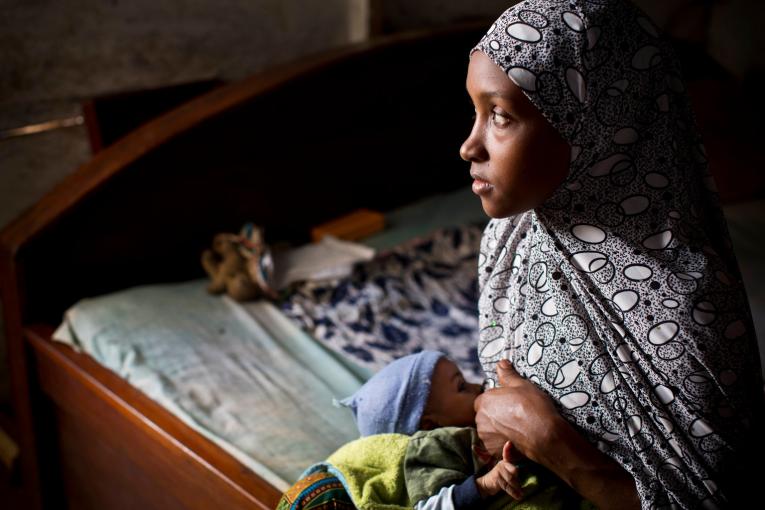
A clarion call to make breastfeeding and work, work!
By Tukur Hafsat Sani
The art or science of breastfeeding can be projected to be as old as the childbirth phenomenon itself. Some historians have hypothesised that this important act became a widespread practice about 2.6 million years ago.
Inappropriate marketing of breast milk substitutes, stigmatisation, body image crisis, and public shaming, among others, have continued to undermine the efforts of medical experts and world organisations to improve breastfeeding rates and duration worldwide. With the world evolving, this is gradually changing.
In view of the importance of breastfeeding, over 30 years ago and even more precisely on February 14th, 1991, the World Alliance for Breastfeeding Action (WABA) came up with the World Breastfeeding Week (WBW), of course in partnership with World Health Organisation (WHO), United Nations Children Fund (UNICEF), government agencies and other non-governmental organisations across the globe.
The event was innovative, aiming to establish a global breastfeeding culture and provide support for breastfeeding mothers or even surrogates everywhere while promoting exclusive breastfeeding for a minimum of six months.
Therefore, World Breastfeeding Week is an annual tradition celebrated from the first and ends on the seventh of August worldwide, each year with a peculiar theme or slogan. Interestingly today, more than 100 countries globally participate in this important event.
On themes, for example, WABA, for the year 2020, chose “Support breastfeeding for a healthier planet’’ as its theme. The focus of WBW 2020 was aligned with thematic area 3 in WBW-SDG 2030 and is on the impact of infant feeding on the environment or climate change and the imperative to protect, promote and support breastfeeding for the health of the planet and its people owing to the fact that breastmilk is environmentally safe; produced and delivered without pollution.
In 2021 it was “Protect Breastfeeding: A Shared Responsibility”, which was with respect to the survival, health and well-being of women, children and nations, as well as how nursing mothers can be supported. For last year, it was “Step up for Breastfeeding – Educate and Support”. The WABA for this year set a theme – “Enabling breastfeeding: making a difference for working parents.”
Breastfeeding is the process of feeding a mother’s breast milk to her infant – newborn baby because, apart from the bond of love that is built between a mother and her child through the process, breast milk is the most important and essential food an infant should receive due to colostrum it contains, and this colostrum possess antibodies and other immunological benefits that can give babies a healthy boost.
Universally, breastfeeding is of two types, exclusive breastfeeding and partial breastfeeding, which only a few in our society are able to differentiate and know the significance of.
Exclusive breastfeeding implies availing a child only breast milk without any solid food for the first eighteen weeks of his or her life, while for partial breastfeeding, an infant receives both breast milk and solid or semi-solid food. Noteworthy of the fact that exclusive breastfeeding is highly recommended by health professionals both for the benefit of mother and child.
Since is singular act of breastfeeding helps mothers, according to studies, reduce conditions such as depression and breast cancer while simultaneously breeding children who are physically, biologically and mentally alert, it becomes imperative to help drive the 2023 campaign of “Let’s make breastfeeding and work, work!” – a campaign which focuses on promoting practices that can help support workplace-related breastfeeding in different countries.
Hence, employers of labour should support working-class mothers in different countries across different contract types and sectors and promote action that can be taken to help ensure breastfeeding works for all working-class women.
This can be achieved through sensitisation, supporting rather than stigmatisation of this prime natural process, and providing secluded areas where working mothers can feed their babies without eyes preying on them needlessly while at work.
While mothers across the globe are encouraged to keep up the good work of breastfeeding in other to build a healthier and smarter global population, providing them access to breastfeeding their babies while at work would mean that we are making breastfeeding and work, work!
God Bless All Mothers Across the World.
Hafsat, a 200-level Student of Ahmadu Bello University, Zaria, Kaduna State, writes via hafsasarney@gmail.com.

Bridging linguistic worlds
By Abdussamad Yahya Sufi
My Literature teacher cautioned me in secondary school to avoid using Pidgin English during communication. Mr. Ibrahim Bello would always tell me that using pidgin in the infancy of learning English would affect my budding standard English. Since then, I have never used it and always try to avoid it in writing and speaking.
Now that I’m at university, I have met different people from southern Nigeria who always use pidgin. At first, I feared what would happen to my infant English. However, later, I realised that I could still maintain the standard since they all understood standard English; they just chose not to use it.
During my first days at university, the pidgin speakers in my hostel irritated me the most. Everyone used the language, and I didn’t understand 80% of it. When someone talked to me, especially my roommates, I would ask them to translate what they said.
After a few days, many of the guys in the hostel noticed me and began teasing me, thinking I simply chose not to speak the language until they understood that I didn’t understand it. They started calling me ‘English Man,’ which didn’t bother me as I had heard such names before.
Some invited me to their rooms to tell me stories, and I never rejected that opportunity. I knew it would help me improve my English skills. When I told them stories, they paid attention and asked questions in good English, not bad pidgin.
Honestly, that helped me build my public speaking skills, and I appreciate the guys for understanding me then, unlike before. Even when I meet any of them on campus now, they introduce me as the ‘English Man.’ to their friends, and they all speak good English while exchanging greetings.
I don’t mind being silly while learning; I don’t hide myself when interacting with my schoolmates and friends. They are my laboratory, where I practise what I have learned. Even if they laugh at me or call me names, I use those experiences to practise my learning skills.
Abdussamad Yahya Sufi wrote via abdussamadsufi744@gmail.com.

Gov Uba Sani’s 100 days in office
By Uzair Adam Imam
Governor Uba Sani of Kaduna State has expressed gratitude to Allah and the Kaduna state people for their enormous supports and confidence reposed on the administration in the crucial first 100 days in office.
Govenor Sani’s first 100 days in office has taken several key interventions across security, health, education, infrastructure and rural development.
The Chief Press Secretary to the Governor, Muhammad Lawal Shehu, disclosed this in a statement he issued on Wednesday.
The statement reads, “To mark this milestone,several activities were lined up and several projects cutting across the 7 pillars of the SUSTAIN manifesto were announced and commissioned.
“With safety and security as the first pillar of the SUSTAIN manifesto, the Kaduna State Government in partnership with other security agencies commenced the training of 7,000 recruits of the Kaduna Vigilance Service (KADVS).
“The recruits were drawn from the 23 Local Government Areas of Kaduna State. This move to strengthen the Kaduna Vigilance Service to assist the police and other security agencies in the state in combating crime has been welcomed by all well-meaning citizens.
“In efforts to upgrade infrastructure, the construction of 32 rural roads covering about 406km across our 23 Local Government Areas has commenced as part of efforts to transform our rural areas, a main policy thrust of this administration.
“In health, state-of-the-art-mobile diagnostic trucks purchased by Kaduna State Government were commissioned and essential medical equipment are currently being distributed to our 290 Primary HealthCare Centres. The mobile trucks come fully-fitted with medical diagnostic equipment to render integrated health services in hard-to-reach and underserved communities across Kaduna state.
“Similarly, a fully-equipped Women and Child Shelter at Katuru Road was commissioned ,to serve as a transit home for children and women who are subjected to violence abuse by offering them medical, psychosocial and legal support.
“In continuation of activities marking the first 100 days in office, and as evidence of his commitment to education especially girl-child education, Governor Uba Sani commissioned a constructed/renovated 200-bed capacity hostel block, 16 classrooms, and a sickbay at the Government Girls Secondary School, Kawo, Kaduna North LGA.
“The Governor to the delight of parents state-wide also performed the groundbreaking for the construction of 62 Junior and Secondary Schools across the state, where he used the opportunity to reiterate that in Kaduna state,primary and secondary education in state-owned schools is free,” the statement added.
Is Tinubu’s gov’t behind the fear-monger of occultic women in Arewa?
By Aminah M. Abubakar
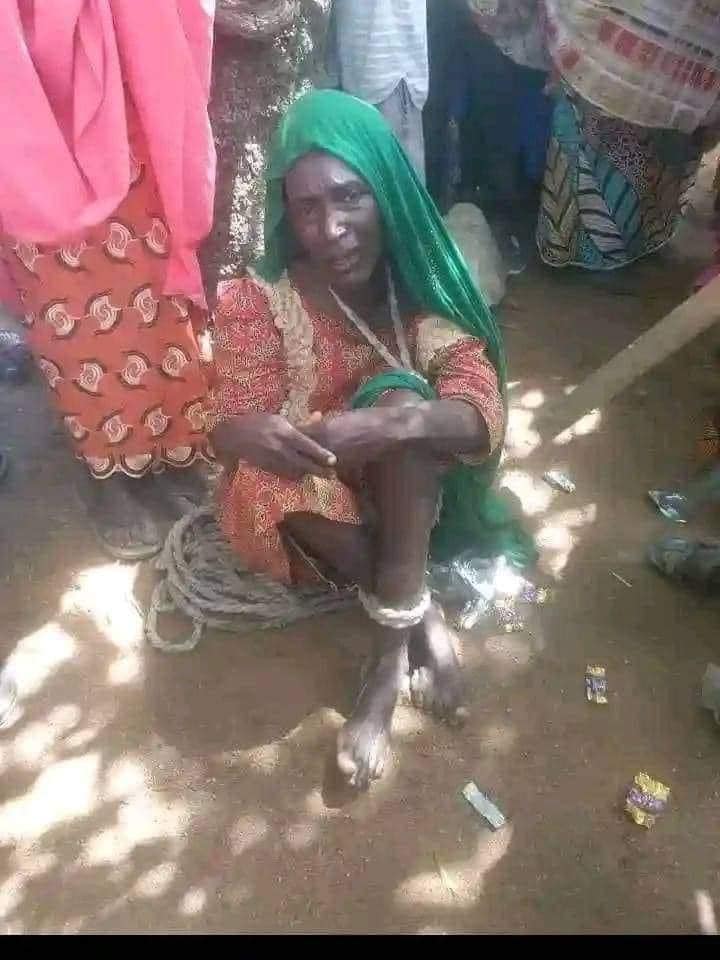
The crackdown on women begging for alms or food in Arewa communities has raised questions and fears of human rights violations. Attacks on innocent women, based on fear-mongering claims of a group of women trained as cultists to carry out nefarious missions, are becoming increasingly alarming.
Several audio clips circulating on social media alleged that about 100 women were trained by a secret society group to infiltrate Arewa communities, posing as beggars or impoverished individuals needing financial assistance. It is claimed that if you allow them into your home and offer any assistance, whether money or food, you will instantly collapse or die.
How was this baseless and manipulative statement conceived?
Who is responsible for perpetuating the fear-mongering that endangers women’s lives in Northern Nigeria?
Why do many, including the educated class, believe such a narrative paves the way for the blatant abuse of vulnerable women?
Why haven’t religious scholars and traditional leaders investigated to uncover the truth behind this notorious fear-mongering, which poses a threat to innocent women struggling with poverty and hunger?
At times of every new power shift in Nigeria, there has been different tribulation and tension. Hence, rumourmongers have a role to play in creating chaos and instability.
Islam condemns rumour-mongering. It is well known that Islam enjoins its followers to act cautiously and verify any story or news that comes to them according to Shari’ah because Allah says in the noble Qur’an:
“Believers, when a dishonest person brings you a piece of news, carefully ascertain its truth, lest you should hurt a people in ignorance and afterwards you become regretful for what you have done.” ~ Surah Al-Hujuraat 49:6.
While I may be mistaken, my instincts compel me to question the authenticity of the initial stories that struck fear into the hearts of people, creating tension and distrust towards women seeking financial assistance at a time when most families struggle to afford decent food.
I wonder if the fabricated fear-mongering was aimed at silencing people and preventing them from voicing their grievances toward government policies that exacerbated the existing economic breakdown caused by the previous administration. It’s always difficult to discern the extent to which those in power will go to manipulate and conceal their shortcomings.
Just two days ago, I witnessed a disturbing video on Facebook where two destitute women were mercilessly beaten by a group of teenage boys for no apparent reason other than their quest for food or to visit another community. Similar incidents can be found on WhatsApp groups, where women have been stripped almost naked and beaten by groups of youths over flimsy allegations, such as causing the collapse of someone merely through conversation. Treating vulnerable women is unjust and unwarranted, as any form of human rights violation is profoundly concerning and illegal.
Those who pushed the fabricated narrative that 100 or 1000 occultic women were capable of killing people by simply greeting or begging have now created the violent “monsters” that are now taking advantage of the situation to attack or even kill poor women – widows & mothers whose means of survival depend only on going out to beg for food or financial support.
We are all aware that the harsh economic situation created by the new government has increased the number of people seeking food and financial assistance. This group includes mentally ill and poverty-stricken citizens. Millions of Nigerian families have been enduring significant hardships due to the new government’s policies and are unsurprised.
It has always been the usual norm in Nigeria: the politicians and elites live in luxury, indulging in the finest pleasures – lavishly eating the best whenever they desire, living in luxurious homes they build, while the ordinary citizens who entrusted politicians with their votes suffer from poverty and the consequences of self-serving decisions made by the elites.
I hope this brief piece sheds light on the fabricated fear-mongering prevailing in Arewa communities, emphasising the gravity of human rights violations. It also underscores how impoverished and hungry women have been made scapegoats by a nonsensical false alarm intended to divert attention from the harsh economic realities that adversely affect people’s health and well-being.
Aminah M. Abubakar sent the article via mbubakar.minah@gmail.com. She can also be contacted via her X handle (formally known as Twitter): @MinahMbubakar11.
Sheikh Abubakar Giro Argungu passes away, leaving Muslim community in mourning
By Muhammadu Sabiu
The Muslim world mourns the loss of Sheikh Abubakar Abdullahi Giro Argungu, a highly respected Islamic scholar whose teachings and dedication to Islam resonated globally.
Sheikh Argungu’s passing was announced on his official Facebook page on Wednesday, casting a profound sense of sorrow throughout the global Islamic community.
Sheikh Giro Argungu’s untimely demise comes as a shock to many, as he had been in high spirits while delivering a lecture the previous night.
The news of his passing has left many followers and admirers grappling with grief and disbelief.
Known for his profound knowledge of Islamic teachings and his unwavering commitment to spreading the message of peace and understanding, Sheikh Argungu was a beacon of wisdom and enlightenment.