



Diptheria hits Jigawa, kills 10
By Ahmad Deedat Zakari
The Jigawa State Government has confirmed the deaths of ten people due to an outbreak of diphtheria in the state, as there are currently about 100 suspected cases of the disease.
The Jigawa State Ministry of Health disclosed on Saturday that ten people have died following an outbreak of diphtheria across the 14 local government areas of the state.
The Permanent Secretary of the Jigawa State Ministry of Health, Dr Salisu Mu’azu, disclosed this while fielding questions from reporters in Dutse.
He said that two cases have been confirmed in Kazaure and Jahun local government areas, while some samples have been taken to Abuja for confirmation.
He said the outbreak occurred in areas with zero-dose routine immunisation against the epidemic.
Dr Ma’azu also said the ministry had already investigated, collected necessary information and data in the affected areas, and updated the National Primary Health Care Development Agency (NPHDA) and the National Centre for Disease Control (NCDC) for further action.
He said the state government is making arrangements to administer vaccines once available.
Dr. Muazu attributed the outbreak to healthcare service disruptions some years ago during the COVID-19 pandemic, when everything was suspended; hence, routine immunisation has become a major challenge in the state.
Pastor arrested for gruesome murder of young girl
By Muhammadu Sabiu
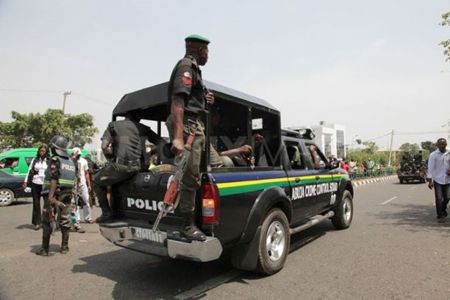
A deeply disturbing incident has rattled the Agbarha-Otor community when a middle-aged pastor, whose name has been withheld, is facing allegations of brutally murdering a young girl.
The victim’s lifeless body was found within the pastor’s residence in this rural Delta State community, with reports suggesting that a machete was used in the crime.
The motive behind this shocking act remains unclear, but some sources speculate a connection to the destruction of a local shrine.
Outraged youths in the community initially sought to take matters into their own hands, but the situation was diffused by the prompt arrival of law enforcement.
Human rights activist Israel Joe has called upon the Delta State Commissioner of Police to ensure a thorough investigation and prosecution of the accused individual.
This tragic incident has left the community in mourning, with many demanding justice for the young victim as the investigation progresses.
Prioritizing security in Zamfara State
By Dr Musab Isah Mafara
The security situation in Zamfara State demands immediate and resolute action from the state and the federal government of Nigeria. Security, undoubtedly, should be the topmost priority of any government, as it lays the foundation for meaningful development and progress. Regrettably, recent events and the ongoing spate of attacks across the state indicate that more substantial efforts are required to ensure the safety and well-being of the people.
The recent official recognition and recruitment of ‘Yan-Banga by the state government is a step in the right direction. This move acknowledges the need for additional security personnel to combat the rising wave of criminal activities. Furthermore, the swift response and the rescue of some of the kidnapped students of FUG two days ago is a testament to how the reaction time of the security apparatus in the state has improved. However, one may argue that a similar response has not been seen where the helpless victims were not students. And since we are yet to know the actual number of students kidnapped, it is not far-fetched to assume that some students may still be in captivity in addition to hundreds of Nigerians in the kidnappers’ dens in Zamfara state and beyond.
While we acknowledge that the government may be undertaking efforts behind the scenes, the prevailing situation demands a more visible and concerted response. The spate of attacks that continue to plague the state is a clear indication that there are still gaps in the security apparatus. It is imperative that the government takes swift and decisive action to bridge these gaps.
In his book, Wujubul Hijrah, Shehu Usmanu Danfodiyo discussed the need for a leader to prioritize security even if it means spending all the state resources to ensure the safety of his people. Shehu wrote:
وسيرة ائمة العدل في الفيء والخمس ان يبدا بالسد المخاوف والثغور واستعداد الات الحرب واعطاء المقاتلة فان فضل شيء فللقضاة والعمال وبنيان المساجد والقناطر ثم يفرق على الفقراء فان فضل شيء فالامام مخير بين تفرقته على الاغنياء وخبسه لنوائب الاسلام
(Words in square brackets [ ] are mine to further explain the points made)
“The history of just leaders as regards to [the wealth generated by the state through] fai’ and khumsi [two of the many means of generating income to the treasury of the state] is that the leader should start with fortifying the state [walling the cities, building garrisons, etc], procurement of armament, and paying the salaries/allowances of soldiers. If something remains [in the treasury after that] then the leader should pay the judges and civil servants, and build mosques and bridges [and by extension roads]. And then he distributes the wealth to the poor [this could mean direct cash transfer but also providing social amenities such as schools and hospitals]. If there is still money [in the treasury after all these expenses] then the leader is given the choice of distributing it to the rich or keeping it for a rainy day.”
The quoted text clearly shows the need to give absolute priority to security above all else in the running of a state. Financial investment in the security sector should be a priority, as it is an indispensable component of effective security measures. There is also a need for our security strategy to move from being reactive to attacks to being proactive and preventing attacks. So many villages have been attacked, so many students have been kidnapped that the next attack is a question of when not if. The security measures must also be sustained for the foreseeable future. What tends to happen is that every time a school is attacked, the security agencies become active in some flash points for some days only to let their guards down after a while, until we are taken by ‘surprise’ again by the bandits.
The time for decisive action is now. The people of Zamfara State deserve to live in an environment where their safety and security are guaranteed. The government must intensify efforts, allocate adequate resources, and collaborate with relevant stakeholders, especially the two ministers of defence, to fortify security across the state. Only by doing so can Zamfara State flourish, with meaningful development and progress becoming attainable goals.

Zamfara gov’t bans illegal mining to curtail lingering security challenges
By Uzair Adam Imam
The Zamfara State Government has on Saturday issued a ban on illegal mining activities as one of the measures to curtail the lingering security challenges bedevilling the state over the years.
Governor Dauda Lawal, in a statement by his spokeswoman, Sulaiman Bala Idris, also ordered law enforcement officials to take stringent action against violators.
It was gathered that Zamfara State is one of the epicentres of banditry and kidnapping that have displaced hundreds and widowed hundreds more, as well as taken the lives of thousands of innocent souls over the years.
The Daily Reality gathered that illegal mining in Zamfara State has fuelled banditry and other criminal activities.
The governor was said to have noted that “it is time to end this destructive activity and implement measures to protect the safety and well-being of the people.”
He stressed that security operatives had been given strict orders to take bold action and shoot at anyone found engaging in illegal mining.
He said: “The directive is necessary to ensure the safety and security of the good people of Zamfara and deter potential wrongdoers from committing such acts.
“It is also a swift action to enable the State Government to be in total control of state resources and block activities that endanger the lives and properties of the people.
“Illegal mining is undeniably one of the driving forces behind the rampant banditry plaguing Zamfara State. We must take swift, decisive action to curb this menace and restore peace and security to our communities,” he added.

Quick thoughts on the Kano State governorship election petition tribunal judgement
By Rabiu Gama
I had the (dis)pleasure of reading the full judgement of the Kano State Governorship Election Petition Tribunal last night, which was delivered on Wednesday, October 20, 2023, via Zoom. Here are my humble thoughts on it.
By the way, I am writing this under the safe assumption that anyone who is reading this is quite familiar with the story behind the judgment. Nonetheless, clarity is important. So, for the sake of clarity, let me quickly state that APC is the Petitioner in this case, while INEC, Abba Kabir Yusuf (AKY) and NNPP are the First, Second and Third Respondents, respectively. Nasiru Yusuf Gawuna, APC’s candidate, was not a party in the suit. The Tribunal, relying on the provision of Section 133 (1) of the Electoral Act, 2022, and some judicial authorities, held, correctly in my opinion, that Gawuna must not be a party before the Tribunal.
As I see it, NNPP’s and AKY’s lawyers did a bad job. INEC’s lawyers did worse, though: INEC’s legal team failed miserably to prove that the election was conducted in compliance with the provisions of the Electoral Act, 2022 (the burden or onus of proof was on them in that regard) as alleged by the Petitioner (the APC). The First Respondent, i.e., INEC, made a terrible and costly mistake of relying lazily on the weaknesses of the Petitioner’s case. The cost of not doing the right thing at the right time is always high!
Since the outcome of an appeal largely, if not completely so, hinges on the proceedings of the lower court (the Tribunal in this case), then it is my humble opinion that NNPP’s (AKY’s) chances of winning at the Court of Appeal might not be as promising as many hope it to be. It shocked me that NNPP’s lawyers could not even establish that AKY was a legitimate member of the party when he contested the 18th of March Governorship Election. The Tribunal was benevolent enough to point out some ways that they could have followed to establish it, but they couldn’t.
I, however, failed to grasp or discern why the Tribunal refused to apply “the principle of margin of lead” when it went ahead to declare that APC’s candidate, Nasiru Gawuna, was the winner of the election even though it had already found and, in no uncertain terms, admitted that the number of cancellations was in hundreds of thousands while its final finding showed Nasiru Gawuna was leading with tens of thousands only. The Tribunal, in my humble opinion, should have ordered a re-run: based on that finding, the election was supposed to be declared “inconclusive”.
The Tribunal also seems to have disregarded the provision of Section 63(2) of the Electoral Act, 2022 when it invalidated over 165,000 votes that were cast in favour of NNPP/AKY for the reason that the ballot papers were neither signed nor stamped, in other words, the ballot papers did not carry the official mark that was prescribed by the commission (INEC). The said provision of the Electoral Act is to the effect that even if a ballot paper is not signed or stamped, the Presiding Officer of the concerned Polling Unit can go ahead and count the ballot paper as valid.
All in all, I find some of the reasonings and conclusions of the Tribunal, based on what was laid before it, legally sound. But the Tribunal’s failure to apply “the principle of margin of lead”, as well as its apparent disregard for the provision of Section 63(2) of the Electoral Act, 2022, do not sit well with me.
Even though it is trite that nobody knows for sure what a court of law will do, I will still strongly advise that AKY’s supporters (of which I am not ashamed to admit I am one) should manage their hopes regarding the chances of success in the Court of Appeal. This is because the odds seem frighteningly balanced. The scale might tilt in favour of any side.
The right thing to do right now is to pray for a “legal miracle” – whatever that means. Some miracle might happen, hopefully in the Court of Appeal, as the Supreme Court rarely tempers with the concurrent findings of the lower courts (the Tribunal and the Court of Appeal) unless those findings are glaringly perverse or have occasioned a miscarriage of justice.
Rabiu Gama is Law student. He writes from the Faculty of Law at Bayero University, Kano. He can be reached on 09061912994 or at rabiuinuwagama@gmail.com.

Policing: Safeguarding communities from internal threats
By Ammar Yakubu Sani
The role of police officers in maintaining law and order in a society cannot be overstated. They serve as essential guardians, working selflessly to protect citizens and ensure their safety. Recently, the police officers in Katagum Zone and its environs have displayed exemplary dedication and resourcefulness in tackling various internal security challenges, with commendable successes for their efforts.
One of the significant security concerns in the area has been the menace of motorcycle snatchers. These criminals, often operating with impunity, create fear and unrest within communities. However, the diligent work of the police has resulted in a significant reduction in motorcycle snatching incidents. Through strategic patrols, investigations, and targeted interventions, police officers have demonstrated their unwavering commitment to eradicating this criminal activity, giving residents a renewed sense of safety and security.
House robbery and murder strike the hearts of individuals and families. The police have been instrumental in curbing such incidents by implementing proactive measures and enhancing community engagement. Their rigorous investigative work and swift response to distress calls have brought perpetrators to justice and deterred potential criminals. The tireless dedication of police officers has undoubtedly contributed to a decrease in the occurrence of such alarming crimes.
Under the leadership of a newly posted Commissioner of Police, Auwal Musa Muhammad, a remarkable operation was undertaken against a notorious gang of kidnappers in the Ningi Local Government Area. This operation was a resounding success, resulting in apprehending the criminals and dismantling their hideouts. The Commissioner’s astute guidance, accompanied by the unwavering commitment and bravery of the police officers, demonstrated the effectiveness of well-coordinated efforts in combating heinous crimes and preserving the peace.
Equally notable is the recent elimination of kidnappers around Jama’are and Itas Gadau Local Government Areas of Katagum Zone. Through meticulous intelligence gathering, strategic planning, and relentless pursuit, the police managed to root out this criminal network. Their determined efforts have provided a glimmer of hope and relief to the residents of the area, reinforcing their faith in law enforcement and the potential for a safer environment.
These successes affirm the assertions made by Dr. Babangida Ruma regarding the restoration and maintenance of internal security under the authority of the police force. The achievements of the police officers in Bauchi State and its environs demonstrate their capability to tackle security challenges when provided with the necessary support and empowerment. The dedication, discipline, and professionalism displayed by these officers serve as an inspiration and testament to law enforcement’s critical role in safeguarding communities.
Efforts must be made to sustain this momentum by further empowering the police force. Adequate resources, modern technology, and regular training must be provided to effectively enhance their capacity to combat evolving threats. Moreover, fostering a strong partnership between the police and local communities is crucial to creating an environment where citizens actively collaborate with law enforcement agencies, resulting in more timely and accurate information sharing.
Citizens, community leaders, and policymakers need to recognise the remarkable achievements of the police force and support their endeavours to maintain law and order. By doing so, we can work collectively towards a society that thrives on security, justice, and harmony. The progress made by the police officers in Bauchi and the wider area serves as a beacon of hope, inspiring us to invest in strengthening our internal security mechanisms and forging an even safer nation.
Ammar Yakubu Sani wrote from Wambai Salihu Street, Dabar Makaho Azare, Bauchi State. He can be contacted via ammaryakubusani@gmail.com

The election tribunal verdict and the future of Kano politics
By Rukayya Abubakar Othman
In the last few years, Kano State has been plagued by a seemingly endless and unabated fierce political war that has divided the state and truncated its progress. The two principal political empires, the Kwankwasiyya and the Gandujiyya have polarised the people of Kano along two opposing camps, each calling for the head of the other.
It is difficult for any state or country to develop under an unstable and tumultuous political climate. Kano’s experience over the past years is a case in point. The incessant strife between the Kwankwasiyya adherents and the Ganduje’s followers has created a hostile environment for economic growth and social progress.
The recent election tribunal court verdict in Kano has further opened another dimension to the whole gamut of issues. The Kwankwasiyya adherents are questioning the true meaning and concept of independence of the Judiciary.
Will those who massively voted for NNPP accept the verdict of our courts in good faith? Will it further deepen confrontational politics in Kano? The answers to these questions can only be found in the upcoming Court of Appeal and the Supreme Court judgments.
More tellingly, the recent trend will no doubt tragically change the course of Kano politics. If the governorship polls in Kano are taken out of the general election, it will become like Imo, Edo, and Ondo states, where the governorship elections are held on different dates from the general election. This will have a multiplier effect on the political landscape of Kano, considering the central role that the state plays in the region.
The political leaders in Kano must put the state’s interests first and work together to resolve their differences. The people of Kano have suffered enough from the political instability in the state. It is time for politicians to put their differences aside and work for the good of the people.
Lastly, the recent court verdict in Kano has opened up a new dimension to the already turbulent political landscape of the state. It is difficult to predict the long-term impact of the ruling, but it will significantly impact the future of Kano politics.
The political leaders in Kano must put the state’s interests first and work together to resolve their differences. The people of Kano have suffered enough from the political instability in the state. It is time for politicians to put their differences aside and work for the good of the people.
Rukayya Abubakar Othman wrote via othmanrukayya0@gmail.com.
Troops arrest gun manufacturing syndicate in Kaduna, recover 26 weapons
By Muhammadu Sabiu
Troops of Operation Safe Haven (OPSH) have successfully apprehended a notorious gun manufacturing syndicate in Kaduna State, leading to the recovery of a cache of 26 weapons, including pistols, rifles, and ammunition.
The operation was carried out following a week-long intelligence effort and was announced by Captain Oya James, the media officer for the Special Military Taskforce, in a statement issued on Friday in Jos.
The primary target of the operation was Napoleon John, a wanted gunrunner who had long evaded authorities.
Captain Oya James stated that, “This operation is in line with the commitment of Major General Abdulsalam Abubakar, the Commander of Operation Safe Haven, to decisively address criminal activities and eliminate illegal weapons within the OPSH Joint Operations Area.”
The breakthrough came when the suspect, Napoleon John, confessed to his involvement in the gun manufacturing trade and led the troops to a concealed factory located in Kafanchan, Jema’a Local Government Area of Kaduna State.
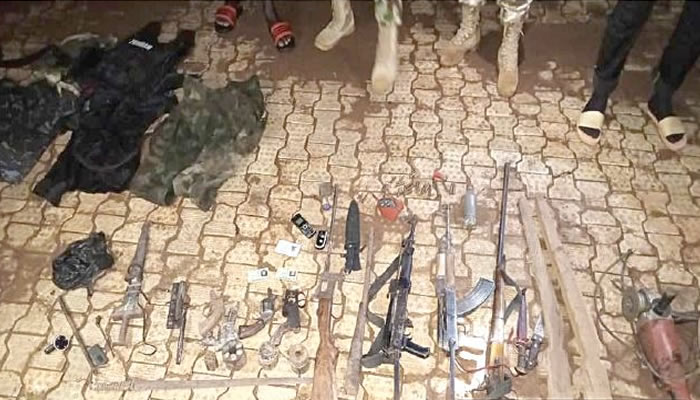
Inside the factory, authorities discovered a wide array of weaponry, including seven pistols, two locally fabricated AK-47 rifles, two military-grade AK-47 rifles, nine revolvers, one submachine gun, and various types of ammunition. The cache also included machine tools and a gas cylinder.
In a subsequent operation carried out in the early hours of September 22, 2023, troops raided a hideout in Adua 1 village in Kafanchan, resulting in the capture of two AK-47 rifles, two revolver rifles, live rounds of 9mm and 7.62 ammunition, six dangerous daggers, one hacker axe, several empty cases of 7.62mm special rounds, two police uniforms, and one military camouflage trousers, among other items.
While the major kingpin behind the syndicate remains at large, Captain Oya James assured the public that efforts were ongoing to apprehend him.
Major General Abdulsalam Abubakar, the GOC/Commander OPSH, praised the troops for their unwavering dedication and resolve and vowed to ensure that all members of the syndicate were brought to justice.
He issued a stern warning to sponsors and perpetrators of criminal activities, urging them to abandon their illegal endeavours and embrace lawful means of livelihood.
The successful operation represents a significant milestone in the ongoing efforts to combat illegal arms proliferation and maintain peace and security in Kaduna State and neighbouring Plateau states.

FG approves 35%, 23.5% salary increase for staff of tertiary institutions
By Muhammadu Sabiu
The National Salaries, Incomes and Wages Commission (NSIWC) has approved a 35% and 23.5% salary increase for staff of tertiary institutions.
This is contained in a letter from the NSIWC to the Federal Ministry of Education, dated September 14, 2023.
The letter, signed by the NSIWC Chairman/CEO, Ekpo U.O. Nta, Esq., states that the salary increase is for both academic and non-academic staff of all federal universities, polytechnics, and colleges of education.
The letter also states that the NSIWC has increased the 23.5% salary increase that was earlier approved for junior staff of tertiary institutions to 25%.
The NSIWC said it was pleased with the success of the informal discussions between the Federal Government and the Academic Staff Union of Universities (ASUU), which led to the approval of the salary increase.
The commission said it would continue to support the federal government’s efforts to reposition the education sector.
The news of the salary increase has been welcomed by the staff of tertiary institutions, who have been demanding a better pay package for several years.

Kano guber tribunal judgement: An eyewitness account
By Muhammad Shamsuddeen
On the first ground, which alleges that Engr. Abba Kabir Yusuf was not qualified to contest the election because his name was not submitted by the party 30 days before the primary election. The tribunal accepted the respondent’s contention in their preliminary objection to the effect that this ground is an internal affair of the party and mainly a pre-election matter in respect of which the tribunal has no jurisdiction.
The court then proceeded to hold that even if the evidence before the court proves the failure to submit the name as alleged by the petitioners, the court had no power to make pronouncement in that respect. Consequently, the ground was struck out for want of jurisdiction.
The second ground is that the election was invalid by reason of non-compliance with the provisions of the Electoral Act 2022 in over 300 polling units. To prove this case, the petitioners called only 31 witnesses, 30 among whom are Polling Unit agents of only 30 of the affected Polling Units. The law, as held in a plethora of authorities, is that to prove noncompliance in several Polling Units, the petitioner is under a duty to call witnesses from each of the Polling Units who saw the noncompliance first-hand.
Despite the reiteration of the above provisions in Obi v INEC and Atiku v INEC, the Kano tribunal shut its eyes against the doctrine of judicial precedent and held that it would rely on the documents dumped on the court, investigate the same at its Chambers and made findings in respect thereto.
The court, on its own, analysed the documents and held that all the Polling Units in respect of which the petitioner complained must be cancelled, and the number of PVCs collected in the Polling Units is 231,843. The tribunal, instead of making a pronouncement of inconclusive, considering that the margin between the candidates is less than 231,843, just kept quiet on that.
It should be noted that the tribunal did not advert its mind to the foundational position of the law of ‘he who asserts must prove’ and went ahead to believe that whatever was presented before it by APC was true and need not be validated by credible witnesses. The greatest error is from the tribunal’s determination of ground 3 of the petition, which alleges that the 2nd respondent was not elected by valid lawful votes at the election.
The petitioner’s contention here was that there were several ballot papers that were not stamped, signed or dated, for which reason they alleged that the votes were invalid. As a preliminary point, it should be noted that the petitioners did not plead the number of ballots affected by the alleged non-compliance. The law is that parties are bound by their pleadings.
Section 63 of the Electoral Act provides that; “(1) Subject to subsection (2), a ballot paper which does not bear official mark prescribed by the Commission shall not be counted. (2) If the returning officer is satisfied that a ballot paper which does not bear the official mark was from a book of ballot papers which was furnished to the presiding officer of the polling unit in which the vote was cast for use at the election in question, he or she shall, notwithstanding the absence of the official mark, count that ballot paper.”
The petitioners called only one Dr Harbau, who alleged that he is an expert and that he analysed the ballot papers and discovered that they were unsigned, undated, unstamped or affected by a combination of two or more of these. However, the written statement on oath of this witness was filed long after the hearing had commenced, and not along with the petition as mandated by the Electoral Act and the case of Obi v Inec decided 2 weeks ago.
Instead of discountenancing the oath of the witness, the court believed him line, hook and sinker. There is no evidence from the Petitioner that any of the ballot papers were rejected by the respective presiding officers or the collation officers. There is, therefore, the presumption that they were believed by the officials as having emanated from INEC.
Similarly, in Boni v Muazu (2004) 16 NWLR PT. 900, the Court of Appeal held that to prove ballot votes stuffing, it is the duty of the petitioners not only to produce the ballot papers allegedly stuffed, they must also produce the particular ballot boxes in which the ballots were stuffed, and same must be demonstrated before the court by bringing out the ballot papers from the boxes and counting them before the court to establish the claim. This did not happen.
The court still went ahead to unilaterally cancel the votes, namely 165,763 belonging to the 2nd respondent. With this cancellation, the margin between the parties is 36,766, with Gawuna leading. However, since the court earlier held that the number of collected PVCs in the cancelled polling units is 231,843, the only conclusion is to declare the election inconclusive. The court shut its eyes to this legal position and declared Gawuna, who is not a party in the proceedings, a winner of the election.
In the determination of grounds 2 and 3 of the petition, the tribunal refused to follow the precedent in Obi v INEC, Atiku v INEC, AYETOLA V INEC, BONI V MUAZU and several other decisions decided by the superior court. This decision is indeed one of a kind!
Muhammad Shamsuddeen is a legal practitioner based in Kano.