
President Tinubu arrives in Addis Ababa for AU Summit
By Sabiu Abdullahi
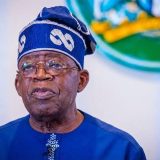
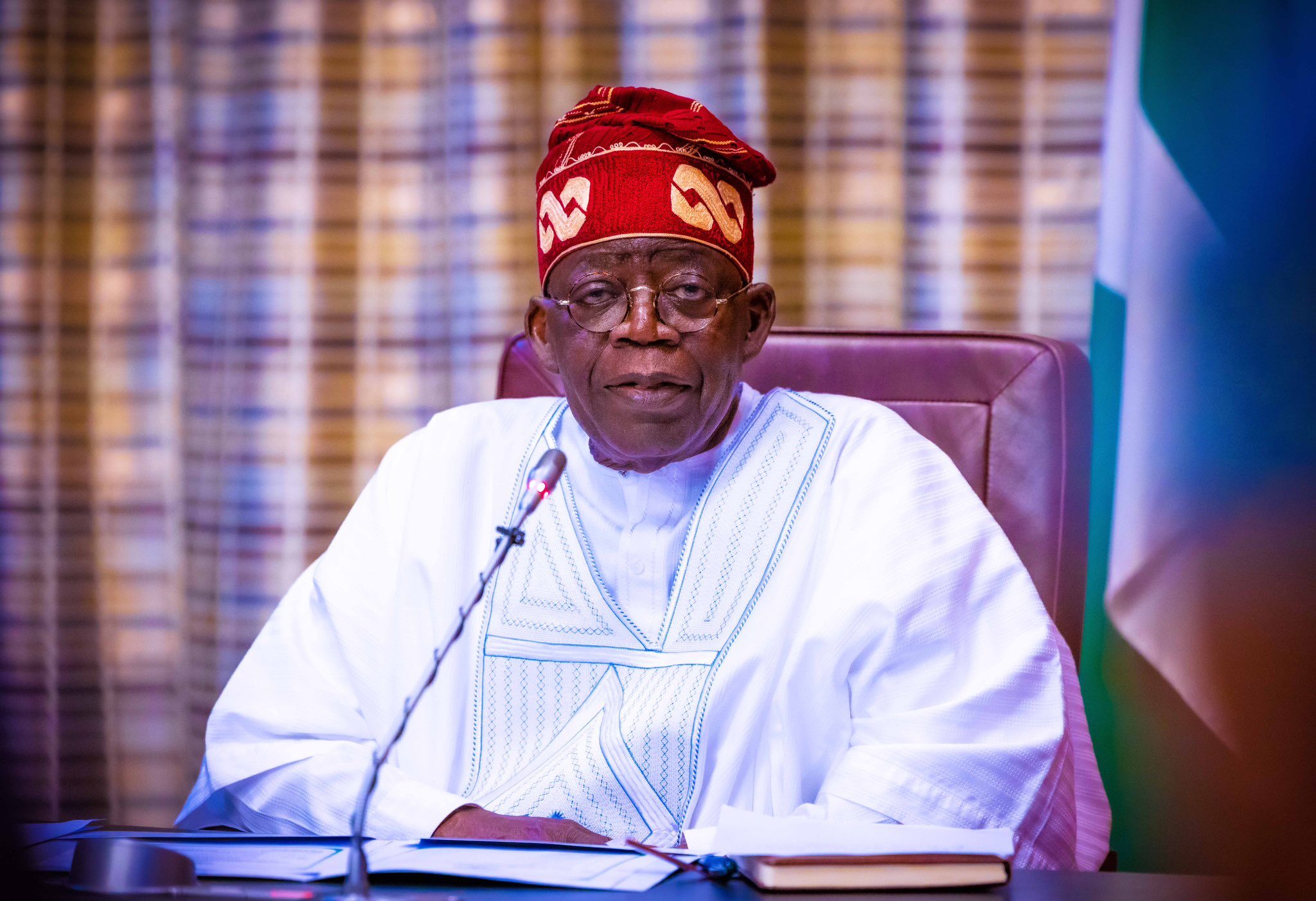
President Bola Tinubu has embarked on an official visit to Addis Ababa, Ethiopia, to participate in the 37th ordinary session of the assembly of the African Union (AU) heads of state and government.
President Tinubu arrived in Ethiopia on Thursday night, touching down past 10 p.m.
Accompanying him on the trip is a delegation of ministers and other high-ranking government officials.
The Presidency had previously announced Tinubu’s participation in the summit, where he is set to engage in discussions with other African leaders on various pertinent issues.
These discussions include deliberations on institutional reforms within the African Union, strategies for peace and security across the continent, as well as focused dialogues on thematic concerns like climate change.
Furthermore, President Tinubu will be involved in shaping the African Union’s agenda and priorities within the framework of the G20, underscoring the continental body’s stance on global issues.
The overarching theme of this year’s summit is ‘Educate an African fit for the 21st Century: Building resilient education systems for increased access to inclusive, lifelong, quality, and relevant learning in Africa.’
This theme reflects the collective commitment of African nations towards enhancing educational opportunities and outcomes across the continent.
In addition to his engagements at the AU summit, President Tinubu will also participate in an extraordinary summit of the Economic Community of West African States (ECOWAS) in his capacity as the chairman of the regional body.
This dual representation underscores Nigeria’s active role in both continental and regional initiatives aimed at fostering cooperation and development across Africa.
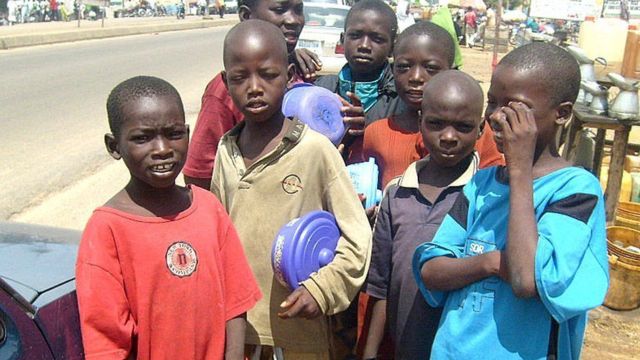
Not all street beggars are actual Almajirai
By Muhammad Isyaku
I closed late in the shop the other day at around 11:00 pm and went straight to our plaza’s parking space to take my bike since our shop was upstairs. I drove earnestly home, knowing it was already night and there was nothing I had to buy. From Malumfashi’s township market to our community is a journey. I have to pass many communities before reaching ours.
Along my way down home, around the Gwamutsawa community, I saw a small boy of 7 to 8 years crying loudly and terribly on the other side of the road. The road has a long-cemented expressway that divides it for motorists’ passage. I had to stop by and call the boy to cross the road by climbing the expressway to come and meet me where I parked. He did as I instructed but still kept on crying, which utterly moved me. I have to overpower the pity and emotions to interrogate him.
What was the matter, and from where is he? He told me he is an Almajiri of one Malam at Hawan-Usman-Lado. He added that he was hungry and didn’t want to go to school because their Malam would beat him. I asked what you did to him. He answered that he didn’t return to school for the evening lesson, for which the offence attracts a penalty.
I admonished him to return to school on time so that he would not miss any lessons that would make their Malam flog him. He obediently said, “Okay, I would.” I asked him where he was from, and he said Maraban Jos. I further asked if his parents were alive, and he answered no. His answer nearly made me shed tears, as I thought only an orphan who is abandoned by his family and a child born by a careless parent could be sent to a traditional Qur’anic school in such a faraway place at this tender age.
Two passers-by also met us on the spot and joined me in sympathy and condemnation. One of them even cursed the teacher (Malam) the child mentioned. The other person who didn’t curse the teacher, as his ally did, put his hand in his pocket and brought out some change, which he gave to the boy. I gave him my change, too, and asked him to climb my bike to take him to school and apologise to the teacher on his behalf.
Upon hearing that, he continued to cry by firmly refusing to climb my bike. Those two people asked to follow me, and he said their teacher would flog him after I left. We insisted he climb, assuring him we would not allow him to flog him. He had no option but to climb, and he did, so I made a U-turn and headed to the community where he alleged their school was located.
Unfortunately for the boy, he started asking me to drop him off before I reached the roundabout, saying he would go by himself. I ignored him and continued moving until I reached the roundabout and saw a group of Almajirai by the other roadside. I asked them if they knew him and were from the same school; they said yes. I then asked him to use the money we gave him to buy food and eat after he should then follow them to school.
They all started shouting ‘Dangari ne fa’, meaning he’s an indigenous boy! I was shocked by their confession. When I turned to him, he was nowhere to be found. They asked, “How much did you give him?’ I told them it was a small amount just for food.
I bid them good night and went home. However, I still questioned the kind of home training that boy was given and the level of his smartness for mischievously looking innocent and faking his identity. If a boy of such age could lie that way, then I wonder what he might be capable of doing if he grows into a full-fledged man.
In Allah, we seek rectitude!
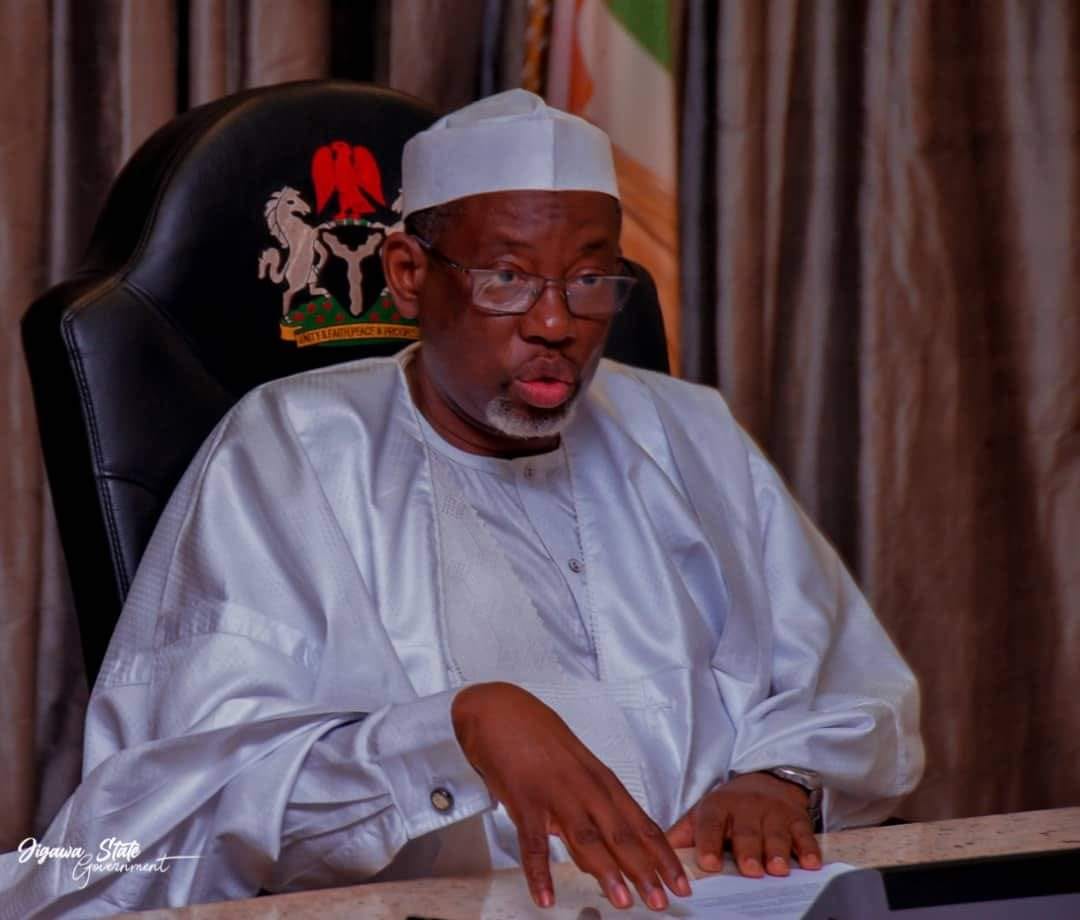
Gov. Namadi appoints chairman, members Jigawa State anti-corruption commission
By Muhammad Sulaiman Adam
Governor Malam Umar A. Namadi has approved the appointment of Barrister Salisu Abdu as the pioneer Executive Chairman of the Jigawa State Public Complaints and Anti-Corruption Commission.
This was contained in a statement signed by the Secretary to the Government of Jigawa State, Malam Bala Ibrahim and made available to The Daily Reality.
Similarly, the Governor has also approved the appointments of Musa Kallamu Uba Auyo as Permanent Member I and Hassan Hashim as Permanent Member II of the Anti-Corruption Commission.
The statement also disclosed that the Governor had approved Barrister Yakubu Ibrahim’s appointment as the Secretary of the Commission and Shehu Abdu Zakar and Dr Hadiya Aliyu as Part- Members of the Commission.
The SSG stated that the appointment of the appointees followed their screening and confirmation by the Jigawa State House of Assembly during its 118th sitting on Tuesday, 13th February 2024, equivalent to 3rd Sha’aban, 1445AH.
“Barrister Salisu Abdu was born in Gumel town, Gumel Local Government Area, in 1963. He obtained his first degree from Usman Danfodio University, Sokoto, where he graduated with an LLB in 1990, then proceeded to Nigeria Law School, Lagos (BL) in 1991 and completed his one-year NYSC in 1992 and served at the Premier Commercial Bank, Maiduguri, Borno State.”
Malam Bala Ibrahim said the new Chairman served as Director of Public Prosecution at the Jigawa State Ministry of Justice from 2000 to 2004. He also served as a Member of the Board of the Economic and Financial Crimes Commission (EFCC), representing the Nigerian Communication Commission (NCC) between 2022 and 2023.
Barrister Salisu is a trained Lawyer with vast experience in the crusade against official corruption, Bank fraud, money laundering and other economic crimes.
The appointment of the appointees is based on merit, competence and personal integrity.
“I urged the new appointees to discharge their duties diligently according to the SSG.
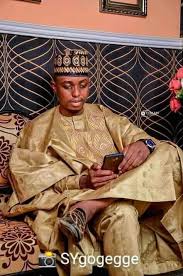
Making a difference in Jama’are
By Mukhtar Jarmajo
The importance of representative democracy is to give an avenue by which the citizenry can utilize in deciding on matters of the state through elected legislators in an assembly. In this sort of a vehicle of governance, complex decisions are made in an efficient way. More so, in spite of the fact that the majority will have their way, in representative democracy, the minority will have their voices heard. Additionally and very importantly, in this system of governance, political stability is ensured given that different interests are given a platform to negotiate and find common ground.
However, as beautiful as this picture of representative democracy looks, people can only reap the benefits of democracy when they elect competent and patriotic politicians into the hallowed chambers of their assemblies. And that is why one of the main reasons why Nigeria as a nation is facing plethora of problems is the fact that many of the elected legislators, both at states and national levels, are either incompetent or are not patriotic enough to give their constituents fair representations. And in the few constituencies that have very active representatives in the legislature, life is made better both through legislative functions and constituency projects.
The member in the Bauchi State House of Assembly representing Jama’are Constituency for example, is making a difference. Hon. Mubarak Haruna (Mairakumi) has remained very consistent in making sure that his constituency gets the dividends of democracy. He does this both through legislative functions and constituency projects. Thus far, the gentleman politician has moved many important motions in the Bauchi State House of Assembly that have direct bearing on the people of Jama’are. He moved the motions for the dualization of the 3km township road in Jama’are and the rehabilitation of the Adamami/Disina/Jama’are road. Both motions have been adopted and are already in the 2024 Bauchi State budget.
More so, Mairakumi moved a motion for the establishment of the House Committee on NGOs. With the increasing need to provide oversight of the numerous NGOs operating in Bauchi State in order to ensure transparency in their activities and adherence to regulations, the importance of the House Committee on NGOs cannot be overemphasized. Also, the Committee will facilitate enhancing collaboration and coordination between the NGOs and the Bauchi State government. And on matters of public importance, Mairakumi was quick to call on the attention of the Bauchi State government to intervene when there was outbreak last year, of diphtheria in Jama’are and elsewhere across Bauchi State.
And shifting attention on constituency activities, upon inauguration as a member of the Bauchi State House of Assembly, Hon. Mubarak Haruna immediately established Jama’are Constituency Committees on Health, Education, Higher Education, Admissions, Water and Sanitation, Empowerment, Employment, Emergency and Sports. The various Committees were set up to look into the problems in their sectors and provide succor to the people of Jama’are by providing solutions. Thus far, the Health Committee has provided free eye care services to 70 people, sponsored hernia surgery for 20 others, fumigated Jama’are Constituency at the cost of N1.6 million and provided health assistance worth over N500,000.
The Higher Education and Education Committees have expended N3 million on scholarships and supported Corp members with transport fare to their states of postings with over N700,000. They have also sponsored over 220 students for JSCE, expended over N600,000 in exams assistance and distributed books, biscuits and sweets to primary schools pupils in the sum of N1million. More so, the Admissions Committee has secured 20 more slots for the people of Jama’are Constituency in several schools to study health related courses, pharmacy, law and other courses.
The Water Committee has thus far rehabilitated about 150 boreholes and constructed almost 10 new more. The Committee on Employment has secured more than 20 job slots in various organizations. On Empowerment, the Committee has distributed a car, 3 motorcycles and cash worth over N8 million. On women empowerment of small businesses, more than N4 million has been distributed. The Emergency Committee has expended over N2 million attending to cases of urgency. The Sport Committee has expended more than N1 million on football competitions and jerseys.
While Hon. Haruna’s work in Jama’are is commendable, it serves as a microcosm of the larger challenges facing Nigeria’s democracy. His dedication highlights the crucial role which individual representatives play in shaping their communities’ well-being. However, his efforts also emphasize the need for systemic change. We must strive for a broader landscape where competent and committed representatives are the norm, not the exception. This necessitates increased voter participation, stricter vetting processes for candidates, and unwavering vigilance from the citizenry. Only then can the promise of representative democracy be truly realized for all Nigerians.
Jarmajo wrote from Lobito Crescent, Wuse 2, Abuja
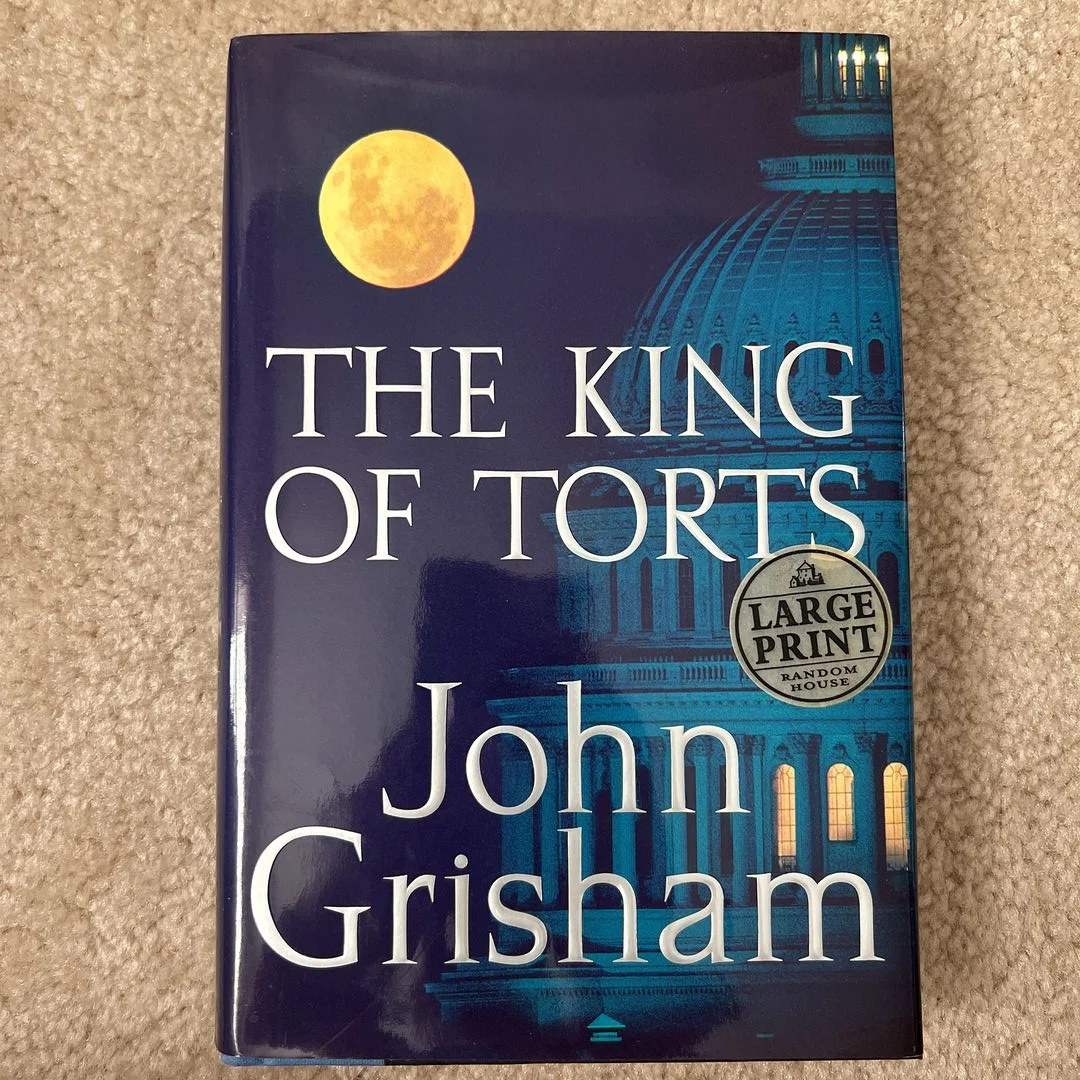
The King of Torts: The problem with overnight riches
By Saifullahi Attahir Wurno.
John Grisham’s The King of Torts tells the story of Clay Carter. He is a Washington city-based, poorly paid lawyer who works as a public defender on the city’s outskirts. Like most employees, he was unsatisfied with his job as it hardly paid his monthly expenses. Another problem with Clay was that he had been dating Rebecca for a long time, and her parents were unhappy with their relationship. These issues kept Mr Clay’s poor mind busy, always thinking of nothing but how he would become rich.
One afternoon at the office, a man named Max Pace appeared before Mr Clay, claiming to be an insider of one pharmaceutical company that secretly carried out a clinical trial on some prisoners without their consent. The story goes that a drug called Tarvan had a side effect that forced its victim to carry out senseless killings without any remorse. Mr Clay became interested in the case and went to investigate up to the prison and interviewed the victims.
Mr Clay gathered enough evidence to sue the pharmaceutical company involved. Before that, he went into an agreement not to disclose or involve Max Pace in the dealing. After lengthy litigation, the company pleaded guilty and made a massive settlement for the victims through Mr Clay’s hands. This made Mr Clay a hot cake within a month.
Surprisingly, Max Pace appeared again while trying to adjust to his new life, promising Mr Clay that more litigation cases needed another lawyer for the investigation, so he advised Mr Clay to try his luck. Ever greedy with money, without question, Clay accepted the challenge and plunged into action.
This one involved another giant pharmaceutical company called Ackerman Laboratories that developed a drug called Dyloft, which was found to be carcinogenic (potential to cause cancer). This time, Mr Clay raised a campaign in TV and magazines until, eventually, the Ackerman laboratories pleaded guilty and agreed to pay a 100 million Dollar settlement. Barrister Clay became an overnight Millionaire and the talk of the city, with magazines featuring and making stories about him; they even nicknamed him ‘The King of Torts’.
Typical of a man longing for cool Dollars, Mr Clay bought a new black and latest Mercedes Benz for a couple of millions, purchased a house in a neighbouring suburb, leased a building and founded a private law firm just for handling litigation cases. He hired more smart rookies ( young lawyers) and decorated his office building to appear prominent and affluent.
The problem with soft Dollars is that they often affect our thinking negatively. This time, Mr Clay’s relationship with Rebecca becomes sour, and he begins to distance himself from her, although they genuinely love each other. The fact that her parents are not happy with their relationship and would not allow them to live together forced Mr Clay to date other young girls secretly. He was always roaming from one five-star hotel to another, paying huge bills to satisfy his desire.
He entered the big league of Great lawyers in town, spending lavishly, travelling around the country attending conferences in a state-of-the-art private Jet he leased! and travelling to the Caribbean Islands during holidays to enjoy his wealth.
He eventually met a lady named Ridley, who was a beauty Model. Ridley (modern-day prostitute). That is where Mr Clay was losing his soft Dollars quickly and without noticing. He bought many properties in her name, fearing to lose them to the FBI, thinking he trusted her enough and their relationship would be permanent.
As for his work, he was luckily getting more dollars, litigating more pharmaceutical companies, the latest involving a company called Goffman that produced a drug called Maxatil. Thinking it’s always a win, he invested heavily in this case by orchestrating expensive adverts, hiring expensive lawyers, and even recruiting fake victims just to get the soft Dollars. Unfortunately, Goffman was not ready to back down; they hired more expert lawyers and conducted a deeper investigation. Eventually, Mr Clay lost the case.
Losing for the first time, Mr Clay lost his balance, and more trouble awaited as the Goffman company sued him for blackmailing their products; this forced Mr Clay to lose a large proportion of his fortune.
Mr Clay was sued again before the court by the clients on whose behalf he collected a massive settlement for not paying them enough to cover their hospital bills after leaked news by one of his close allies. Without saying, Mr Clay becomes more deeply in trouble.
He was eventually investigated by the FBI, risking a jail term or a settlement that would cost him almost all of his fortune. He has the option for the latter. He lost all his assets and new ‘friends’, including Ridley, who fled without a trace. He fled the country, and surprisingly, all this while, his original lover Rebecca was married to another man but got divorced later. Finding out Mr Clay’s story, she travelled to meet him, console him and offer her genuine care and love. They continued to live afterwards, and Mr Clay learned his lessons.
History has continually shown that overnight riches or those who stumble upon a vast fortune suddenly and effortlessly are similarly more susceptible to losing it. The problem with overnight riches is that they impede our positive thinking, allowing us to dive deep into fantasies, opening unrealistic doors, and drawing us toward deceptive paths.
This story can reference some of our lives today; this insatiable search for soft money by all and sundry, hook or crook, could remind the old maxim that happiness, contentment, genuine wealth, and loving family matter more.
Love your job: Rethinking the nobility of work in a societal context
By Iranloye Sofiu Taiye (Optimism Mirror)
In today’s society, the value placed on labour appears to be diminishing, leading to job seekers being labelled as lacking vision. The prevailing mindset prioritises monetary gain over the intrinsic significance of the work itself and fails to question the ethical implications of wealth accumulation.
Throughout the annals of history, labour has consistently been regarded as noble, transcending various economic systems such as feudalism, the industrial revolution, legitimate trade, slave trade, colonialism, and the post-colonial era. Regardless of the prevailing economic orientation, whether capitalist, socialist, or communist, the consensus remains that individuals must sell their labour, skills, or ideas to earn a commensurate wage, stipend, or salary.
Selling one’s labour is undeniably the most legitimate means of earning a living. However, it is worth pondering why employment has become synonymous with working exclusively in corporate organisations. It is both peculiar and disconcerting that those engaged in seemingly menial jobs, such as shop attendants, cashiers, bolt drivers, waitresses, security personnel, graphic designers, and others, are frequently dismissed and their contributions overlooked.
In reality, the services provided by these individuals are indispensable to our collective well-being as a society. Imagine a world devoid of bricklayers, furniture makers, plumbers, teachers, tailors, farmers, and countless others—can we guarantee survival under such circumstances? This serves as a stark reminder to anyone engaged in any form of work that they should consider themselves honourable contributors to the fabric of society.
Regrettably, our society is currently grappling with the pervasive issue of the “get-rich-quick” syndrome, which is predominantly prevalent among the youth. Parents, religious leaders, friends, and elders openly encourage and support their offspring to pursue wealth by any means, irrespective of the nobility of the endeavour. Labour is now seen as optional, and the value of hard work has been overshadowed.
Consequently, we find ourselves in a problematic situation where numerous graduates, lacking practical work experience, wander the streets searching for white-collar jobs that offer exorbitant salaries. They are unwilling to consider jobs that would cover their basic expenses and provide personal growth and development opportunities. It is vital to acknowledge that not everyone is destined to be an entrepreneur or business owner—some individuals will sell their expertise, labour, and creativity to others. CEOs and business leaders require a workforce to carry out essential production activities.
Nevertheless, loving and appreciating the value of one’s work is imperative and essential. No one should succumb to intimidation, bullying, or dehumanisation for engaging in an honest means of livelihood, as long as it is legitimate. It is of utmost importance to recognise that the dignity and worth of work extend far beyond the confines of corporate offices.
Significantly, we must re-evaluate our societal perceptions of work. We must wholeheartedly embrace the notion that all forms of labour contribute to the well-being of our communities. By cherishing and honouring our work, regardless of its nature or scale, we can foster a society that recognises and respects the nobility of every individual’s contribution.
Iranloye Sofiu Taiye (Optimism Mirror) is a political/public affairs analyst, writer, public speaker and youth advocate. He can be reached via iranloye100@gmail.com.

Nigeria Customs Service, WASP partner to boost trade security
By Sabiu Abdullahi
The Nigeria Customs Service has come up with a strategic alliance with the West Africa Security Project (WASP) to boost trade.
The collaboration, announced on Tuesday, February 13, 2024, aims to equip customs officers with enhanced security awareness for more efficient trade facilitation.
Speaking at the meeting held at the Customs Corporate Headquarters in Abuja, Comptroller-General of Customs (CGC) Bashir Adewale Adeniyi, MFR, hailed the partnership as a important step towards combating smuggling and illegal trafficking.
Emphasising the significance of the initiative, CGC Bashir underscored its potential to empower officers to execute their security duties effectively.
Outlined within the collaboration are various benefits, including cargo profiling, handling of small arms and light weapons, and participation in global shield programmes targeting chemical and radioactive elements.
CGC Bashir also highlighted the opportunity for resource-sharing among stakeholders to foster synergy.
According to the CGC, “there is an existing project managed by the world bank that looks at the Lagos-Abidjan corridor whose aim is to promote trade facilition. Bringing in this new project that looks at the security aspect will boost our performances and potent a lot of opportunities for us.”
“We will be able to account for 60% of the GDP if we are able to cooperate effectively. This project requires the cooperation and collaboration of all the Customs administrations involved,” he added.
Moreover, the programme entails the active engagement of field officers in brainstorming sessions and knowledge exchange to identify smuggling routes and minimise illicit activities.
Terry Wall, the project manager of WASP, echoed the sentiment, emphasising the programme’s focus on identifying high-risk cargo, providing training in the national Customs Enforcement Network (nCEN), and delivering geospatial intelligence.
As the Nigeria Customs Service aligns with WASP, the collaboration signifies a concerted effort to fortify trade security, foster regional cooperation, and mitigate transnational threats, underscoring a commitment to safeguarding economic interests and promoting lawful commerce.

“Mine is bigger than yours”, professorial count, that is!
By Prof. Abdalla Uba Adamu
The recent Facebook ribbing about the number of professors from states and localities in various northern cities with universities reminds me of the male adolescent macho posturing of “mine is bigger/thicker than yours” game played behind classrooms! I am even mentioned as a trophy — “yes but WE are the ones with a double professor!” referring to my being from Bayero University, Kano (BUK), in Kano State (Daneji in Kano Municipal).
The whole thing was ignited by an infographic with its origin in ₦airaland Forum where one Zafsy75 posted the graphic. Right away a fierce debate ensured on the forum with many commentors disputing the figure. Zafsy75 themselves did not provide additional scientific methodology on how they arrived at the figures. Nevertheless, they infographic became viral — and started the prideful ‘mine is bigger than yours’ ribbing.
The infographic was from Statisense which uses Generative Artificial Intelligence to generate its data! A search on its site revealed another graphic of “most professors” in Nigerian universities, in September 2023, with the University of Jos leading with 530 professors. BUK had 434 professors which included 10 women. I can personally count more than 20 women professors in BUK in 2021, not 2023! No methodology was provided as to how the figures for the universities were arrived at.
People should be aware that AI generated data is based on what the engine can find — it does not create the data. Thus, it is actually not possible to accurately determine the number of professors per state or local government even based on the much-quoted NUC Directory of Full Professors, 2021 (link to the publication attached below).
This is because the directory lists professors by DISCIPLINE in order to promote research collaboration and networking amongst Nigerian academics. Also, the Directory was not based on official submissions by various universities, but voluntarily by INDIVIDUALS which was synthesized and summarized by NUC. Additional source for the AI was personal websites where a professor proclaims to come from a particular university.
Thus, not EVERY professor agreed to submit their details to be captured. With this, it therefore becomes very difficult to accurately determine the number of professors from each state, as that was not the focus of the Director (or NUC’s intentions).
You can only get the official number of professors from individual universities. As of October 2023, BUK had 381 professors with the largest category being in Medical Sciences. All the professors were, however, not listed by their States or Local Governments, but their DEPARTMENTS or specializations.
So, I can’t see how the game of ‘mine is bigger than yours’ started. I believe; however, it was started by the infographic floating around showing the number of professors per UNIVERSITIES in the various states. The graphic was not providing the number of professors per state of origin, but per the universities IN the state. It made it clear by stating it is “by state where the school is located.”
Thus, if you are from Anambra and are a professor in BUK, this infographic will capture you as being from a university in Kano, but you will not be captured in any university in Anambra. In this way, it does not tell you the number of professors from indigenous to Anambra.
Right away, it is faulty (or fake). As of October 2023, BUK had 381 professors. Last week another 11 were announced bring the total to 392 as of February 2024. So how can Kano have 428 professors in 2022? Granted there are many universities in Kano, but the main prominent ones — Aliko Dangote University of Science and Technology, Yusuf Maitama Sule University — are basically tributaries of BUK. Indeed, most of the others rely on BUK professors as ‘visiting’ to their faculties.
Kaduna State where Ahmadu Bello University is located has at least eight universities — and you want me to believe the entire universities in the State have 62 professors? I am sure Kaduna State University (KASU) alone had either more than or close to that.
While the ribbing was fun while it lasted, at least it wakes us up to the idea of fake data and weaknesses of Generative Artificial intelligence.
As promised, below is the link to the authentic number of professors voluntarily submitted to NUC as of 2021. BTW, yours truly is listed TWICE on page 836. They still pay me single salary, though!
Directory of Full Professors in the Nigerian University System, 2021: https://shorturl.at/yKV34
NUJ Sokoto State Council plans maiden Shehu Shagari Memorial Lecture, late Usman Faruk to receive posthumous award
By Ukashatu Ibrahim Wakili
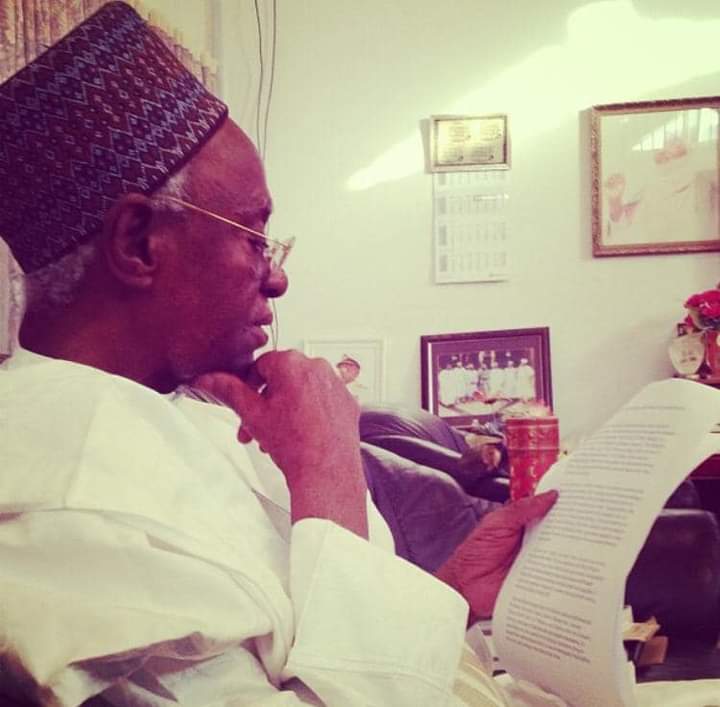
In honor of the late President Shehu Usman Aliyu Shagari, GCFR, Turakin Sokoto’s legacy, the Nigerian Council of Journalists, Sokoto State Council, is organizing the maiden edition of the Shehu Shagari Memorial Lecture.
This came to the fore at an Extraordinary Congress of the Council held yesterday at the State Press Center. Speaking, the Chairman of the Union, Comrade Tsalhatu Abdullahi Safiyar Magori, of the NUJ, believed that this event would help preserve the legacy of the late President Shehu Shagari and inspire future generations to learn from his works.
“The Council already started making an effort to involve all relevant stakeholders, including the state government, the Sultanate Council, and some elders with proposals, which they hope will receive a positive response,” he said.
The event was proposed to be held on the 25th of February, which is the birth anniversary of the late Turakin Sokoto.
It will feature fundraising for the promotion of his legacies and ideals, such as education (especially sciences), historical literary works, and political documentation of his works.
Also, the NUJ Sokoto Council moved to confer a posthumous award on the late Usman Faruk, the first military governor of the then North-Western State, who donated his building to the council in 1992. The building is now being used as the NUJ’s state secretariat.
Similarly, various committees have been inaugurated at the congress to assist in achieving the collective goals. The committees include a steering committee, contact committee, finance committee, accommodations and reception committee, lecture committee, and speechwriting committee.
Additionally, the committees were given seven days to submit their reports.
Making noise for Mambila Hydro Power Plant Project
By Bilyamin Abdulmumin
In the dramatic Gabon coup d’etat late last year, after all the hope seemed to be lost for Ali Bongo, he resorted to the last glimmer, he appeared in a recorded video that went viral appealing for the public to make some noise, apparently to deter the Junta from succeeding. To paraphrase the former Gabon president, in the spirit of the success of the Mambila hydropower project, let us make some noise!
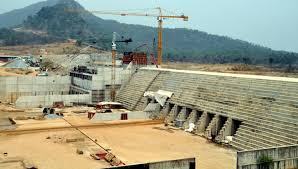
When the news of the contract between Nigeria and the government of China to undertake the project broke, it threw the country into much celebration. The project was said to have been conceived about 40 years ago, but each government came and went without moving the project an inch. A presumable turning point came when the then president, Buhari, met with the Chinese president and both governments were said to have agreed on the formation of a joint venture by the three companies, CGCC, SINOHYDRO, and CGCOC under the guidance of the Chinese authorities for the project building. The total cost of the project was estimated at 5.8 billion dollars, With the Chinese government providing a loan of 4 billion dollars from Exim Bank, and the Nigerian government providing the rest. The news of the strategic bilateral agreement went all over the internet with several stories surrounding it. Given its potential for improving the socio-economic status of not only the community around the Taraba State but Nigeria at large. The Nigerian President even likened the project to China’s Three Gorges Dam.
Currently, Nigeria (after generation, and transmission finally) distributes a meager 4 to 5
MW of electricity for more than 200 million Nigerians, but the Mambila alone is proposed
to add about 3.5 MW to the national grid, one now can fathom not only the extent of
Nigeria’s energy poverty but why the euphoria about the project.
From 2017 when the news of the contract was broken down to 2023, the project
development news kept flying around, fueling the hope and happiness of the public as
such painting the government of the day white. Some government zealot supporters
even circulated colorful pictures of other projects at the completing level purporting it to
be the Mambila hydro-power project.
The back and forth, mystery, and uncertainty surrounding the project triggered BBC
Hausa to embark on a fact-check mission, making a few-minute documentary about the
project. This fact-check mission steered up the honest net making the news become the
major public discussion. The public felt utterly betrayed by the government and thus
questioned its transparency resulting in straining the government’s image like never
before. It emerged that the project purported to be at the completion stage with finishing
pictures circulating has yet to be torched an inch.
This development forces the government through Garba Shehu to come out for damage
control. Unknown to the public, while all the euphoria was going on about project
completion, the government was battling court litigation. According former special
adviser, a businessman named Leno Adesanya, through their company Sunrise Power
Transmission Company of Nigeria Ltd (SPTCL) has filed about 2.3 billion dollar lawsuit
at the ICC International Court of Arbitration, Paris, against the Federal Government of
Nigeria (FGN) for breach of contract” which they have secure the right in the 2003
agreement to construct the 3,050MW plant in Mambila, Taraba state, on a “build,
operate and transfer” basis.
On March 26, 2020, the then attorney general and minister of justice Malami secured an
out-of-court resolution with this company, to pay the sum of $200 million as a “full and
final settlement” to discontinue the arbitration and set the government free from all
liabilities in the dispute. The only soft landing that could warrant the project to proceed.
However, Buhari, in his reply, a month later, rejected the settlement: “FG does not have
200 million dollars to pay SPTCL. Shehu echoed this response while responding to BBC
Hausa’s report: The Nigerian government could only call on him to show nationalism to
withdraw unconditionally, to allow the project to continue.
Now that those who are holding to ransom, the Mambila power project is clear: the
government and SPTCL company, let’s make more than just noise – let’s make a
resounding call for transparency, justice, and the release of a project poised to be a
game-changer for Nigeria’s socio-economic landscape. The Mambila hydropower
project deserves more than a viral plea; it deserves a roar of collective voices
demanding accountability and progress.