


Nigeria Customs Service initiates 2-day ICT/modernization retreat for management team
By Sabiu Abdullahi
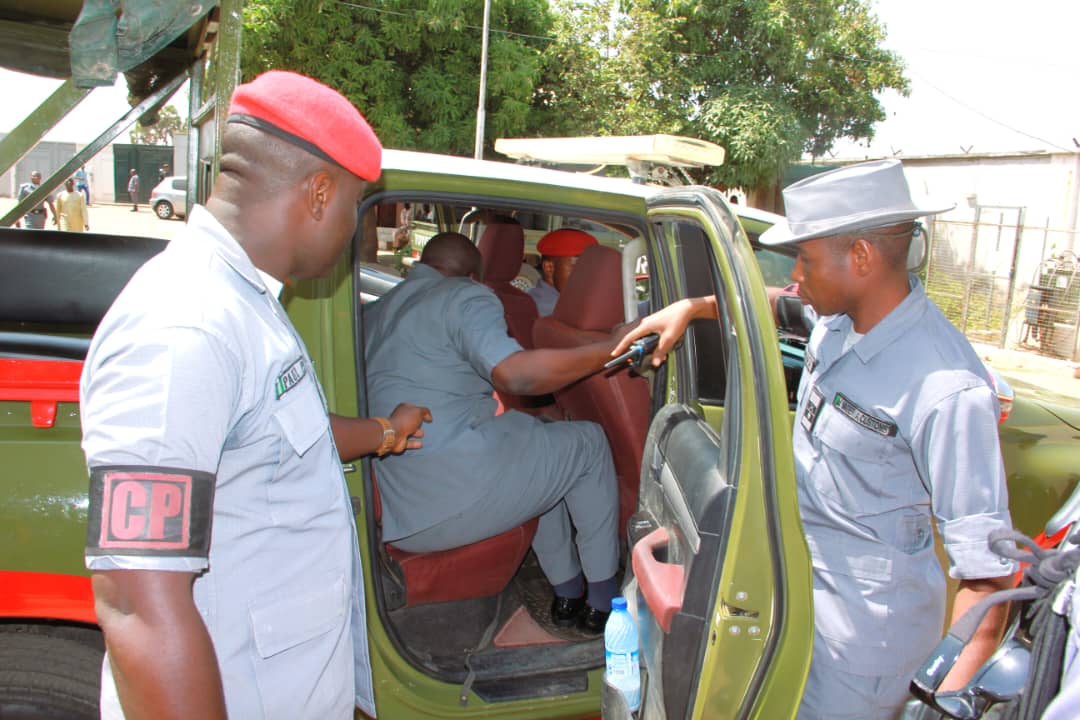
The Nigeria Customs Service (NCS) commenced a 2-day ICT—Modernization Management Retreat in Abuja, spearheaded by the Comptroller-General of Customs (CGC), Bashir Adewale Adeniyi. The event, which began on Friday, March 1, 2024, marks a significant milestone in the service’s journey towards digital transformation.
In his address to attendees, CGC Bashir Adewale stated the imperative of embracing technology to enhance customs operations.
He stressed the need for collaboration with stakeholders to ensure the seamless execution of the modernization project, citing the demand for efficiency and transparency from stakeholders. CGC Adeniyi urged his Management Team, particularly in ICT, to lead the digitalization efforts and utilize internal resources to expedite the implementation of the electronic cargo tracking system.
He noted the importance of modernizing every aspect of the Customs Enforcement Ecosystem to fortify operations. Alhaji Saleh Ahmadu, Chairman of Trade Modernization Project Limited, commended the CGC’s commitment to modernization, recognising the pivotal role of trade in national development.
He expressed optimism that the initiative would revolutionise NCS operations, facilitating trade across Nigeria and the African continent.
Assistant Comptroller-General of Customs in charge of ICT/Modernization, ACG Kikelomo Adeola, lauded the CGC’s dedication to the modernization project, emphasising its significance in reshaping and digitising NCS activities. She welcomed participants to the retreat.

Hisbah Arrest: Law and morality
By Aliyu Zangina
The people of Kano State woke up to the news of the resignation of the Commander-General of the Kano State Hisbah Board (Hisbah). This came after criticisms directed at some of the activities of the Hisbah Corps by His Excellency, AbbaKabirYusuf, the governor of the state.
The Hisbah Board is a creation of the Kano State Hisbah Law 2003. Its primary responsibility is to advise on and enforce religious morality within the state. Despite this mandate, the corps has been criticized for violating moral codes and secular laws of the land by making illegal arrests, which are a damning affront to human dignity. It is on this premise that I seek to explore law and morality vis-à-vis the arrest in controversy.
THE INTERSECTION BETWEEEN LAW AND MORALITY
Arguments on the relationship between law and morality in the jurisprudential sense have lasted for ages and still rage on. The controversy surrounding Hisbah brings it to the fore.
Laws are loosely defined as enactments by a state, with binding and coercive force on individuals and institutions throughout the state.
While morality can be loosely defined as a proper behaviour in differentiation of what is right and wrong.
The major difference between them is while a breach of law attracts sanction, A breach of morality can only attract moral reprehension. The long age principle of law is that law and morality are poles apart. However, in the celebrated case of R v. Dudley & Stephens (1884)14 QDB 273 DC it was states that
“Though law and morality are not the same, and many things may be immoral which are not necessarily illegal, yet absolute divorce of law from morality would be of fatal consequence.”
In practice, morality complements the law, as many enactments were propelled by the moral demands of the people. For example, laws prohibiting theft and murder are rooted in the moral consciousness of the fact that taking other people’s property or life is morally wrong. Many laws embody moral principles within them, protecting and guaranteeing fundamental moral values. At the same time, the fundamental force is given by its moral obligation.
ACTIVITIES OF HISBAH
The term Hisbah in Kano has always been associated with controversy from its inception to date. When it is not President Obasanjo accusing the institution of jihadist tendencies, then it is people from the southern part of the country attacking the institution for destroying trucks of alcoholic drinks. The body has always been (in)famous for enforcing morality despite its efforts in curbing social and moral vices.
In November of last year, the Hisbah corps came under attack after raiding several hotels. A video of their operation surfaced on the internet, evidencing male officers harassing and apprehending female suspects and grabbing them in a commando style. Indeed, it was an affront to Islamic moral values. The actions of the Hisbah corps could be qualified as degrading treatment and, hence, unconstitutional. Allusions made to the video by the governor of Kano state prompted the commander-general’s retirement on March 1, 2024.
ARE LAWS REGULATING ARRESTS IN NIGERIA AT CONVERGENCE WITH OUR MORAL VALUES?
Unlike laws regulating search where the search is to be conducted by “persons of the same sex with strict regard to decency” and “reasonable time to withdraw” which must be given to a woman in purdah before a search is conducted on a premise she occupies, the laws regulating arrests in Nigeria have less regards to our moral values and culture as they do not have similar provisions regarding arrests to be conducted by persons of same-sex.
Therefore, the arrest carried out by the Hisbah corps is illegal only to the extent that it was done without a warrant, and their conduct violates the dignity of the suspect. However, the confinement of the female suspects by the male officers with excessive restraint cannot be faulted legally if there was a reasonable apprehension of violence, as our law does not mandate that the arrest of a woman be carried out only by a woman. This is not to serve as a justification for the degrading treatment meted out to suspects by the Hisbah corps during the arrest. They are suspects, not convicts, and even convicts are only deprived of their liberty, not their dignity.
CONCLUSION
“It is tempting to speak of law and morality as if they constitute two completely normative system whose prescriptions sometimes coincide and sometimes conflict. Maybe it is much more exact to consider law and morality as complementary. The complementarity of law and morality belies their separateness even though the two are not parallel streams whose water never mixed at any time.” UZOUKWU V. IDIKA (2022)3NWLR, (PT1818) (P, 462, paras G-H)
Many laws overlap with moral codes in Nigeria. Some laws were enacted to uphold our morality, but where the law does not contemplate our morals, it is our duty to call upon our senses of right and wrong. The Hisbah male officers should not have carried out the arrest of women, even though that alone cannot make the arrest illegal. It is their moral duty to have sent in their female officers to handle the entire scenario with a modicum of professionalism.
It is therefore put forward to our legislators that our Administration of Criminal Justice laws be amended to accommodate the model of arrest that will reflect our morals, culture, and dignity, just like the provisions on search.
Aliyu Zangina is a lawyer, and can be contacted via zanginaaliyu96@gmail.com.
On Shaikh Daurawa’s resignation
By Ibrahiym A. El-Caleel
Resignations are normal in the corporate world. Corporate culture makes employees understand that they work for their bosses, not really the organization per se. Your deliverables are the deliverables of your boss. If you achieve them, he will achieve his. If you fail, he fails. This is why bosses hold employees with high sense of accountability.
As such, employees leave bosses. They don’t really leave organizations. Whenever it goes sour between you and your boss beyond reconciliation, then you look for another job! Take a bow and go. It’s very normal there. That’s what they do. In fact I have met a high performing CEO of one of Nigeria’s beverages companies who told me that he spends a maximum of 5 years in any organization that hires him. And he leaves whenever the ovation is high. Within 15 years of starting his career, he is already an MD/CEO!
It’s only in civil service and public service that people think resignation is a big deal. In corporate world, it’s part of the culture. It is okay for both employee growth and corporate efficiency and effectiveness. An organization does not deserve an employee who is not happy with his job, or who believes his boss is frustrating his job. It impacts corporate performance. You cannot get anything significantly great from an employee who is not motivated to deliver.
Shaikh Daurawa’s resignation from Kano Hisbah is both good for him as an individual, and perhaps Hisbah as an organization. Had he stayed, he will feel tied down by the public condemnation he received yesterday from his boss, Gov Abba Kabir Yusuf. He will not be able to give Kano Hisbah his very best again. He would be an apathetic leader, who no longer cares about how TikTok’s Murja is corrupting the moral upbringing of Kano adolescents. He will now be very doubtful of every single operation he is going to make. What will be the reaction of my boss, Gov Abba? Will he be happy or not? Will he publicly lash me? These questions will always ring a bell in his heart.
Now that he has resigned, he has saved his image and mental peace. It also opens doors for him to greater job opportunities because his next boss will know that the man cannot compromise on his work ethics. It will be part of his discussion with his next boss. And if there’s a governor who truly has interest in moral policing, he would be happy to employ Shaikh Daurawa.
For Kano Hisbah, perhaps Gov Abba will have time to reflect on what he truly wants the organization to be doing under his tenure. Chase alcohol only? Or cut the hair of youth who styled them badly? This resignation gives the governor an opportunity to re-define how the enforcement agency will function in his tenure.
If you ask me, Shaikh Daurawa did very well by resigning. I could have done the same. I wish him the very best in his next job. I also wish Kano Hisbah the very best in getting their next Director-General.
Ibrahiym A. El-Caleel writes from Zaria, Kaduna State.
Kano Hisbah boss Daurawa resigns following governor’s criticism
By Sabiu Abdullahi
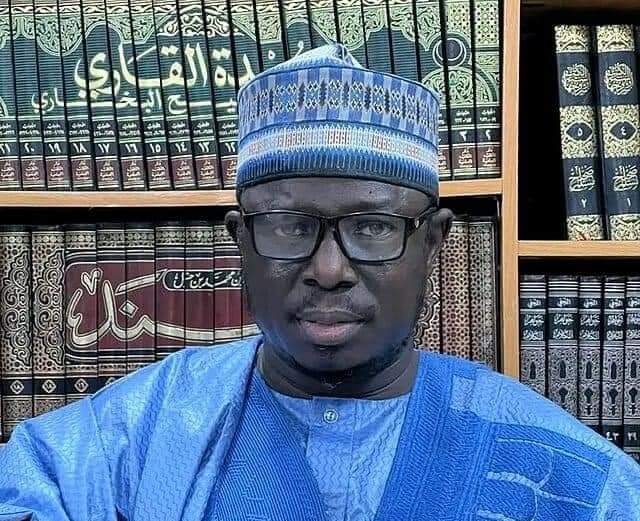
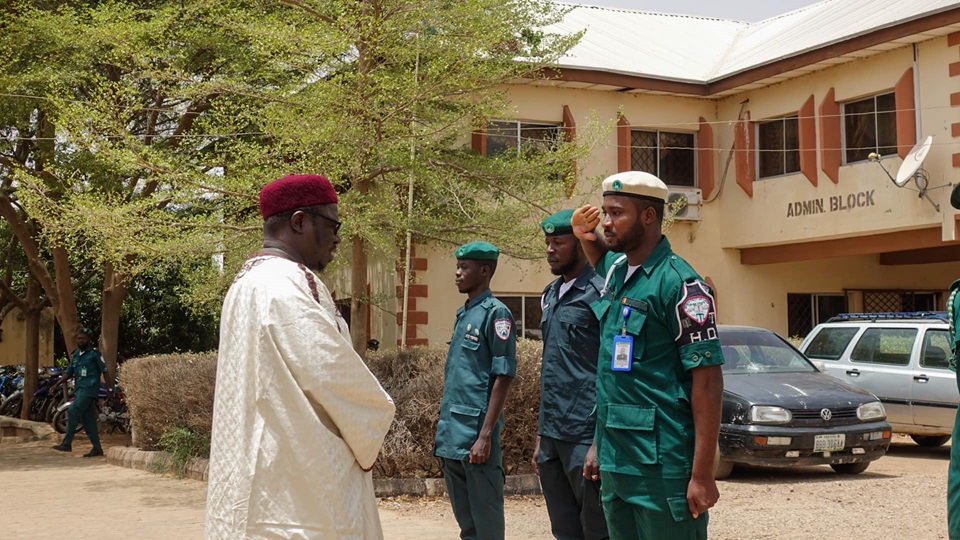
The Commander General of Kano Hisbah Board, Sheikh Aminu Ibrahim Daurawa, has tendered his resignation following criticisms from Governor Abba Kabir Yusuf over the board’s methods of operation.
Sheikh Daurawa announced his resignation in a brief video clip posted on his official Facebook page on Friday.
His departure comes less than 24 hours after Governor Yusuf expressed disapproval of the tactics employed by Hisbah in combating acts of immorality within the state.
Governor Yusuf, while addressing Ulama at the Government House on Thursday, voiced his objections to the approach of Hisbah, particularly condemning their practice of conducting raids on public spaces to apprehend individuals engaged in immoral activities, which he deemed uncivilised.
The governor also expressed dissatisfaction with the methods used by Hisbah in apprehending suspects, urging the board to reevaluate its current operations to address societal wrongs.
In response to Governor Yusuf’s remarks, Sheikh Daurawa defended the actions of Hisbah under his leadership, stating that the board had taken measures to combat immorality, particularly targeting social media influencers.
He asserted that Hisbah’s actions were in accordance with Islamic principles.
However, acknowledging the governor’s stance, Sheikh Daurawa announced his resignation from his position and extended well wishes to Governor Yusuf and his administration.
The resignation of Sheikh Aminu Ibrahim Daurawa marks a significant development in the ongoing discourse surrounding the methods and effectiveness of Hisbah’s operations in Kano State.
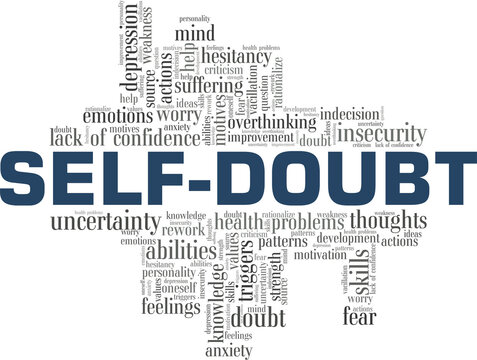
Navigating the risky waters of self-doubt
By Tijani Abiola
Confidence is often identified as one of the most important things in the complicated and vital
tango of life to make us closer to climbing the zenith of achievement and satisfaction. But there remains a counterintuitive danger of this confidence in low confidence. This perverse situation exposes a series of pitfalls to anyone who dares venture for his rescue from falling into the lake of un-assuredness.
Low confidence is a silent saboteur that can keep an individual’s real potential at bay and stop him from dead in his growth years. The problem is not just the lack of self-assurance; it is also that in the bargain, one may lose out on several choices and chances that come one’s way. Damaging to confidence, it makes it a self-fulfilling prophecy that will not allow people to reach their potential, dreams and its dreamer as an example.
Here’s one major pitfall to the detriment of decision-making. Confidence acts like a north star, which helps manoeuvre through choices wide and small. Yet if confidence wanes, decisions become a minefield of hesitation and second-guessing that often results in blown chances and unrealised potentials, taking a chance with all efforts put into that dream beautiful, and in the end, it ends in the cloud.
Moreover, low confidence may develop a fear of taking risks. Innovations and success often require moving out of the comfort zone, and low confidence becomes a formidable bar to step into the new possibilities.
The amplified fear of failure causes individuals to shy away from challenging situations that prevent personal and professional growth. In self-reflection, high expectations by oneself and getting negative feedback from what you know and believe you are best at can drop down your level of confidence.
Poor self-confidence also takes its toll on interpersonal relationships. Confidence in oneself, both in their personal and professional contexts, attracts others to affiliating in pursuit of collaboration and cooperation. On the other hand, relying on low confidence would draw people further away, thereby stifling interactions and bilateral communication.
Sailing through the treacherous sea of self-doubt will require an intentional snapping out of the chains of low confidence. Seeking mentorship, investing in personal growth and learning to celebrate small wins will be critical in building and maintaining confidence. By embracing challenges, learning from failures, and reframing negative thoughts, low confidence will change gradually into powerful catalysts for growth.
In conclusion, having confidence at your lowest level is a delicate challenge that calls for self-reflection and conscious action. Realising the effects they can have on one’s life and engaging actively in building confidence opens up opportunities they thought could not come by, instilling them with resilience and confidence even when situations are uncertain.
Tijani Abiola is an executive assistant at Skyline University Nigeria with a passion for writing.
Letter to Malam Isa Yuguda
By Mukhtar Jarmajo
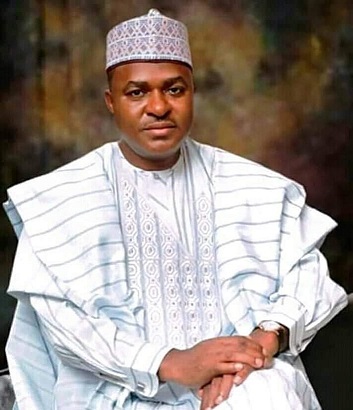
Your Excellency, during your tenure as the Governor of Bauchi State from 2007 to 2015, you initiated and oversaw the implementation of various initiatives in the education sector. The long-term effects of these initiatives on the state’s citizens are still being evaluated.
One cannot overstate the significance of the Bauchi State University, Gadau. Established during your administration, the university has transformed into a thriving institution, empowering thousands with higher education. These graduates are not merely individuals equipped with knowledge, they are the architects of a brighter future for the state.
Furthermore, your decision to hand over the Bauchi State Specialist Hospital to the Federal Government paved the way for the establishment of the Abubakar Tafawa Balewa University Teaching Hospital (ATBUTH). This seemingly simple act had profound consequences. ATBU, previously lacking the facilities for medical courses, now flourishes with a thriving medical program. Last week, a milestone was achieved – the graduation of the university’s first set of doctors.
These achievements, Your Excellency, stand as a beacon of your forward-thinking approach. You recognized the critical role education plays in empowering individuals and propelling the state’s development. Your decisions, made with foresight and a commitment to the betterment of Bauchi state, continue to resonate till today.
While your time in office has since lapsed, the legacy you leave behind continues to flourish. You have earned the gratitude of the people you served, and your story serves as an inspiration to aspiring leaders who understand the transformative power of education.
Mukhtar Jarmajo, Lobito Crescent, Wuse 2, Abuja.

Urgent calls to address food prices in Nigeria
By Abdullahi Adamu
Addressing the issue of food inflation and its impact on Nigerian students requires comprehensive and multi-faceted solutions.
The government, educational institutions, and non-profit organisations must work together to implement measures that alleviate the burden on students and promote their well-being.
Firstly, the government should prioritise policies that curb food inflation, including strategies to reduce transportation costs, enhance local agricultural production, and strengthen supply chain management. Such measures can help stabilise food prices and make essential items more affordable for students.
The detrimental impact of food inflation on Nigerian students extends beyond financial constraints and compromised nutrition. The inability to access adequate and nutritious meals takes a toll on students’ mental and physical well-being, affecting their academic performance.
Dr Fatima Adeyemi, a nutrition expert, says the consequences: “Poor nutrition affects cognitive function, memory, and concentration. Students who do not receive sufficient nutrients are at a higher risk of experiencing fatigue, reduced productivity, and even mental health issues such as depression and anxiety.”
The situation has made many Nigerians poorer than they were in 2023, with 63 per cent of the population (133 million) said to be suffering from multidimensional poverty last year.
“I can’t even afford to eat properly again as food prices continue to surge. Once I can feed my children twice daily, I am satisfied,” said Hajiya Maryamu, a stylist at Kuje Modern Market. “People are trying to reduce costs to survive the difficult moment. As part of the cost measures, ladies now wear wigs instead of making their hair. This is taking jobs away from us. So, how can I afford a balanced diet for my children or myself?
Increases in prices of oil and fat, bread and cereals, fish, potatoes, yam and other tubers, fruits, meat, vegetables, milk, cheese and eggs caused the rise in food inflation year-on-year.
Abdullahi Adamu wrote via nasabooyoyo@gmail.com.

‘Entirety of Hamas is a terrorist organization’ —New Zealand
By Sabiu Abdullahi
New Zealand has escalated its stance against Hamas, extending its classification of the group as a terrorist entity to encompass its entire organization.
This decision, announced by the Ministry of Foreign Affairs, signifies a significant shift in New Zealand’s policy towards the Palestinian militant group.
Prime Minister Christopher Luxon condemned Hamas for its role in the brutal terrorist attacks that occurred in October 2023, leading to this decisive move by the New Zealand government.
Luxon’s statement affirmed the severity of the attacks and the government’s unwavering stance against terrorism.
Foreign Minister Winston Peters elaborated on the rationale behind the expanded designation, citing the inability to differentiate between Hamas’s military and political wings following the October incidents.
According to Peters, the organisation as a whole bears responsibility for the “horrific terrorist attacks,” prompting the comprehensive designation.
With the new classification in place, any form of material support or financial transaction with Hamas within New Zealand’s jurisdiction becomes a criminal offense.
However, Luxon clarified that the designation is targeted at Hamas as an organisation and does not hinder private humanitarian assistance to Palestinian civilians.
Despite the firm stance against Hamas, Luxon reaffirmed New Zealand’s commitment to providing humanitarian aid and future development assistance to benefit civilians in Gaza.
This distinction aims to ensure that the punitive measures against Hamas do not exacerbate the humanitarian situation faced by innocent civilians in the region.

Ghanaian parliament passes controversial anti-LGBTQ bill
By Sabiu Abdullahi
The Ghanaian Parliament has stirred heated debates by approving the Promotion of Proper Human Sexual Rights and Ghanaian Family Values Bill, commonly referred to as the anti-LGBTQ bill.
The bill, spearheaded by Sam Nartey George, Member of Parliament for Ningo-Prampram, aims to criminalize LGBTQ activities and any form of advocacy or funding associated with them.
Under this new legislation, individuals found engaging in LGBTQ activities could face imprisonment ranging from six months to three years, while supporters or promoters may be sentenced to three to five years behind bars.
The bill’s passage follows years of parliamentary deliberations, marked by both support and opposition.
Despite calls from civil society groups, including Professor Audrey Gadzekpo, the Board Chair of the Ghana Centre for Democratic Development, urging President Nana Akufo-Addo to reject the bill, Parliament forged ahead with its approval.
Takyiwaa Manuh, a senior fellow at the Ghana Centre for Democratic Development, expressed dismay over the bill’s passage, citing concerns about its compatibility with Ghana’s constitution and democratic principles.
Manuh noted the potential negative repercussions of the bill on various sectors of society, urging President Akufo-Addo to uphold the nation’s values and constitution.
However, the bill now awaits the president’s approval, with its fate uncertain.
This move by the Ghanaian Parliament mirrors similar controversial legislation enacted in Uganda in May 2023, where strict anti-LGBT laws, including severe penalties such as the death penalty for certain homosexual acts, were implemented.
My Language, my pride
By Abdurrazak Muktar Makarfi
Have you ever stopped to think about the language you speak and how awesome it is? Well, I’m here to tell you about the Hausa language, and let me tell you, it’s pretty amazing! As someone who speaks Hausa, I’m bursting with pride to share why this language is so special.
Let’s take a little trip back in time to the historical kingdoms of the Hausaland, nestled in what is now called Nigeria and some other neighboring countries. That’s where the Hausa language started to take shape, blending influences from trade, migration, and cultural exchanges over the centuries.
Now, here’s the cool part – Hausa isn’t just a local language. Nope, it’s a global superstar, ranking as the 11th most spoken language in the world! Can you believe it? From Africa and beyond, millions of people speak Hausa, making it a real powerhouse in the linguistic world.
But Hausa isn’t just about saying words; it’s a whole vibe, a cultural identity that connects people across borders. It’s like a treasure chest of traditions, stories and values passed down through generations. The Hausa language is the heartbeat of West Africa, pumping life into its rich cultural tapestry.
Okay, let’s talk on business and politics. Hausa isn’t just chilling in the background; it’s making things to happen. As a lingua franca in West Africa, it’s a language of trade, commerce, and diplomacy, bringing people together and driving progress in the region.
Now, let’s zoom in to education. Imagine learning in a language that’s close to your heart, that speaks to your soul. That’s what Hausa language education does for millions of kids, giving them a solid foundation in learning while celebrating their roots.
Sure, Hausa language faces challenges like any other, but it’s also full of opportunities. We’re talking about initiatives that promote awareness, document our language’s rich history, and bring Hausa into the digital age.
So there you have it – the awesomeness of Hausa language in a nutshell! It’s more than just words; it’s a celebration of culture, a bridge between people, and a source of pride for millions. As a proud Hausa speaker, I’m shouting it from the rooftops – Hausa language rocks!
From the pen of Abdurrazak Muktar Makarfi, a proud Hausa speaker