



CGC Adeniyi reads Riot Act to newly inaugurated ACTU members in Abuja
By Sabiu Abdullahi
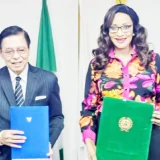
The Comptroller-General of Customs (CGC), Adewale Adeniyi, has stated the importance of tackling corruption and other related offenses head-on, as he read a riot act to the newly inaugurated Anti-Corruption and Transparency Unit (ACTU) members at the Nigeria Customs Headquarters in Abuja.
Represented by Deputy Comptroller-General of Customs Aliyu Alajogun, the CGC stressed that the unit’s operations must be free from corruption and uphold the highest standards of ethical conduct.
“We are tasked with ensuring that our operations are free from corruption and that we uphold the highest standards of ethical conduct in all our dealings to ensure a far-reaching impact on our economic stability and international reputation,” Alajogun stated.
He urged the newly inaugurated members to adhere to the standards of their new roles, adding, “You are the frontline defenders against corruption and environmental degradation.
Each of you has been selected for your expertise, integrity, and dedication to public service. Together, you will lead initiatives that foster accountability and restore public trust.”
Olusegun Adigun, Acting Director of the System Study and Review Department at the Independent Corrupt Practices and Other Related Offences Commission (ICPC), praised the CGC for his commitment to enhancing transparency and integrity.
“I must commend the Comptroller-General of Customs for today’s inauguration,” he said.
“It is hoped that this event will empower the unit to deliver on its mandate, which includes periodic staff training on anti-corruption and the examination of system processes.”
The newly inaugurated ACTU Chairman, Comptroller Emmanuel Osogba, pledged to implement policies enhancing transparency across Customs operations.
“Our focus will be on establishing clear guidelines for transparency, enhancing mechanisms for reporting misconduct, and engaging with different departments and units within the Service to foster trust and participation,” Osogba said.
The ACTU members took the Oath of Allegiance, administered by Barrister Nkem Ezenwa, Director of the Anti-Corruption Unit. Their tenure will span three years.

The future of public relations in Nigeria: Adopting Artificial Intelligence (AI)
By Zainab Haruna Shittu
Nigeria’s public relations sector is on the cusp of a revolution driven by artificial intelligence (AI) integration. This technological advancement transforms how PR professionals work, interact with audiences, and craft compelling narratives.
Artificial intelligence enhances creativity, streamlines processes, and provides data-driven insights, revolutionising the PR landscape. Renowned experts Professor Abdallah Uba Adamu and Mr. Yusha’u Shuaibu emphasise AI’s potential to automate routine tasks, facilitate strategic decision-making, and foster personalised stakeholder communication.
Professor Adamu, a distinguished scholar at Bayero University’s Department of Information and Media Studies, notes that AI has transformative potential. He adds, “AI can automate routine tasks, facilitate strategic decision-making, and foster personalised stakeholder communication.” However, he cautions that AI’s impact on PR is still uncertain due to limited empirical evidence.
Integrating AI in public relations offers numerous benefits, including enhanced creativity and strategic thinking, improved stakeholder engagement and crisis management, targeted messaging and personalised storytelling, and increased productivity through automation.
Despite AI’s potential, challenges persist, including technical issues, infrastructure constraints, a lack of skilled manpower and training, high costs and budget constraints, potential biases, and ethical concerns.
Professor Adamu cautions, “AI can perpetuate biases if not critically evaluated. PR practitioners must develop expertise to recognise and mitigate these biases.” To maximise AI’s benefits, PR professionals should invest in AI training and capacity building, develop critical thinking to evaluate AI outputs, and balance AI-driven efficiency with human touch.
Mr. Issa Ali Musa, a leading media and IT expert, notes, “AI tools have increased productivity by automating tasks like media monitoring, sentiment analysis, and stakeholder segmentation.” However, he emphasises the need for human judgment and creativity.
Looking ahead, experts agree that AI will enhance PR practice in Nigeria. By embracing AI, Nigeria’s PR sector can improve efficiency, precision, and creativity, ultimately leading to better communication strategies.
PR professionals must build the capacity for expertise and criticality to recognise AI biases. As Nigeria’s PR sector evolves, embracing AI will be vital to staying ahead of the curve. By adapting to AI-driven changes, PR professionals can unlock new opportunities, enhance their skills, and drive business success.
Zainab Haruna Shittu wrote from Bayero University, Kano, via harunazainabshittu7567@gmail.com.

A shocking mockery called “election” in Kaduna State
By Suleiman Usman
Is our democracy sinking so low that few truly grasp the seriousness and future impact of what happened today in our beloved Kaduna State? Let’s be clear: there was no actual election in Kaduna State on the 19th of October 2024.
What happened sets a dangerous example that has wholly destroyed democracy in the state. Governor Uba Sani, a self-proclaimed Hero of Democracy, oversaw this tragedy disguised as an election. This is not just a disappointment but a calamity of epic proportions.
Although I have friends running for positions, mainly from the APC, that I supported, hoping for a fair election, I cannot stay silent or be part of this open robbery, political deceit, and the destruction of what little respect remains in our weak democracy. I refuse to accept any of those wrongly declared (as chairmen and councillors) through this unfair process, regardless of our friendship.
How can those wrongly elected people comfortably assume these roles without feeling guilt or shame? If what happened in Kaduna is seen as democracy, then we are facing something worse than slavery.
Many in the government are unhappy about this but remain silent for their ‘daily bread.’ But is life solely about sustenance and comfort? Should we tacitly condone this heinous act to safeguard our livelihoods? Do we even think about what message we are sending our children by staying silent in such situations, especially those of us who claim to be educated?
Since stepping down as the National Chairman of the Youth Party (YP) and joining the APC, I have chosen not to comment on political matters, especially in Kaduna State. But after today, any Nigerian hoping for a better future will be deeply disappointed. There was no actual election in Kaduna; we cannot ignore this.
We will do everything within the law to push for a change in this sham of an election. I challenge anyone with a conscience to accept or celebrate what happened in Kaduna today as a legitimate election.
I know many may question my stance. But when discussing a better nation with a firm and fair democracy, what we saw in Kaduna today was never part of that vision. I understand the consequences that may affect my actions.
As a Sociologist, I have been trained to be impartial and address issues for the betterment of society rather than individuals. As a Muslim, I am obligated to rectify wrongs through my actions, words, or silent disapproval. I, therefore, owe nobody any apology for being blunt in this enterprise.
Suleiman Usman Yusuf wrote from Kaduna, Nigeria.

Obasanjo reveals how anti-corruption agencies helped Nigeria achieve debt relief
By Uzair Adam
Former President Olusegun Obasanjo has shared the strategies he employed to secure significant debt relief for Nigeria during his administration from 1999 to 2007.
Among these strategies was the establishment of the Independent Corrupt Practices and Other Related Offences Commission (ICPC) and the Economic and Financial Crimes Commission (EFCC).
Obasanjo explained that upon taking office, Nigeria was burdened by a debt of about $36 billion, with annual servicing costs of $3.5 billion, while the nation’s reserves were just $3.7 billion.
He reiterated the need for debt relief, expressing concern over the economic toll of continuously paying interest and penalties without reducing the principal debt.
In discussions with international lenders, Obasanjo presented a transparent plan, promising that funds saved from debt forgiveness would be used for development.
The creation of the ICPC and EFCC demonstrated his administration’s commitment to fighting corruption and increasing accountability.
These efforts helped convince creditors of Nigeria’s readiness for reform, leading to eventual debt forgiveness.
Reflecting on Nigeria’s current state, Obasanjo expressed disappointment over perceived declines in ethical leadership and economic planning, warning that without genuine reforms, further debt relief may remain unattainable.
He added that responsible governance is important to avoid a repeat of past financial struggles.

Student loan: A step forward or a step back for Nigeria’s education sector?
By Musa Ibrahim
In 2016, Femi Gbajabiamila, the immediate former Speaker of the 9th House of Representatives, took a bold step by introducing a bill aimed at addressing the financial challenges faced by students in higher education institutions across the country.
The proposed legislation, known as the Student Loan Act, sought to provide students with access to loans from the federal government to alleviate the burden of educational expenses.After its initial introduction, the bill was later reintroduced in 2019.
However, when it resurfaced in 2022, it sparked a heated debate within the National Assembly, with members expressing divergent views on the matter.
The revival of the Act triggered intense discussions and disagreements among the members of the National Assembly. On one side, some legislators strongly supported the motion, citing the potential benefits of student loans for expanding access to education and reducing financial barriers.
Proponents of the bill argued that it would provide equal opportunities for students from various socio-economic backgrounds, enabling them to pursue higher education without being hindered by financial constraints.
Lo and behold! On June 12, 2023, President Bola Ahmed Tinubu signed the Student Loan Bill into law, demonstrating his administration’s commitment to strengthening the educational sector of the country.
Although concerns have been raised regarding the extent of student access to these loans, considering the persistently high rate of unemployment afflicting the country, One of the key considerations surrounding the implementation of the Student Loan Act is the number of students who will benefit from the financial assistance, as it remains unclear how many students will qualify for and receive loans.
However, some suggested that providing massive job opportunities for graduates would be a more effective approach than granting them loans. This sentiment is echoed by those who believe that most graduates possess the skills but lack the capital to enhance their businesses.
For instance, providing them with N500,000 to start a business could be a viable alternative.Whoa! The current provision stating that loan repayment begins two years after the completion of participation in the NYSC programme is being questioned.
With graduates struggling to secure employment for up to eight years or longer, the government should reassess this strategy.Given the prevailing circumstances, it is highly unlikely that the debt collectors will be able to repay their loans within such a short timeframe.
I was also taken aback when I discovered a particular element of the loan procedure: defaulters face the risk of being fined N500,000 or even being incarcerated for up to two years.This revelation left me astounded and raised an important question in my mind.
Is it, not a grave injustice to punish our helpless teeming youths who are already battling to secure jobs with imprisonment simply because they are unable to repay their loans?
The fundamental component of the loan process that exceedingly caught my attention is the requirement for students to provide at least two guarantors who must meet specific criteria, such as being a civil servant of at least level 12, a lawyer with at least 10 years of post-call experience, a judicial officer, or a justice of the peace.
This provision raises concerns, particularly for individuals residing in rural areas or those without any relatives in government positions who could serve as guarantors.
Since the loan programme intends to support the financially disadvantaged, the requirement of guarantors with specific professional backgrounds seems to create a barrier for those who lack connections with people in high positions in the government.
Another facet of the Act that appears contradictory is the provision that a student’s family must have an income of less than N500,000 to qualify for the loan.
This condition seems to limit the accessibility of the loan to only a select few people, raising questions about the effectiveness and inclusivity of the loan act.
The intention behind setting an income threshold may have been to target students with financial constraints, ensuring that those with the greatest financial need receive the necessary support.But the specific income limit of N500,000 may inadvertently exclude a considerable portion of students who could benefit from the loan.
Considering the drawbacks of the Loan Act, it becomes evident that the federal government should augment its efforts to fund tertiary institutions across the country.By so doing, education can become more affordable and accessible to a wider range of students.
The United Nations Educational, Scientific, and Cultural Organisation (UNESCO) recommended that developing nations give up to 15–20 per cent of their annual budget to public education.Nigeria’s allocation to the Education sector has not been meeting the UNESCO standard.
Dataphyte a media research and data analytics organisation with the mission to deploy data tools and technology for the socio-economic development of Nigeria stated that the analysis of the education budget between 2016 and 2022 also shows that the education sector has not received the recommended 15%.
This has indicated that the government at all levels should prioritize funding for education as a necessary step before implementing student loans.By addressing infrastructure deficiencies, making education affordable for underprivileged students, and providing needed resources, the government can create.
Musa Ibrahim Department of Mass Communication, Borno State University

Groups endorse Tinubu’s plan to retain Matawalle as defence minister
By Anwar Usman
President Bola Tinubu’s decision to retain Bello Matawaple as Defence Minister has received endorsement from some northern groups.
The Arewa Youths Consultative Forum and the Northern Awareness Network hailed the move as a big step towards addressing security challenges in the region.
Yerima Shettima, the President General of the AYCF, in a statement, described Matawalle’s retention as a “positive step” that demonstrates President Tinubu’s commitment to continuity and stability in addressing critical issues like national security.
“Matawalle’s expertise and experience, particularly in Zamfara State, are important in formulating effective strategies to fight against insurgency and other security threats,” Shettima said.
Similarly, NAN Chairman Salihu Sulaiman praised Matawalle’s leadership, citing his efforts in reducing banditry and criminal activities in the region.
He further added that Matawalle has been instrumental in addressing security challenges in Zamfara State and the North as a whole.
The group’s support comes amidst criticism from some quarters, particularly Zamfara State Governor Dauda Lawal, who has been at odds with Matawalle.
However, the AYCF and NAN have, in a statement released in Kaduna on Friday, urged Lawal to cease hostilities against Matawalle and collaborate to address security challenges in the state.
“We urge Governor Lawal to redirect his focus and state resources towards projects that will benefit Zamfara State and help it recover from the grip of criminality,” Shettima said.

Kano government announces curfew ahead of LG elections
By Uzair Adam
The Kano State government, in coordination with security agencies, has announced a movement restriction across the state from midnight to 6:00 PM on Saturday.
The measure, confirmed by Commissioner of Information and Internal Affairs Baba Halilu Dantiye, is intended to ensure a peaceful and secure environment for the local government elections set for October 26.
In his statement on Friday, Dantiye called on residents to comply with the restrictions, emphasizing the government’s commitment to a credible and transparent electoral process.
The restrictions apply to both individuals and vehicles throughout the 44 local government areas and 484 electoral wards in the state.
This directive aims to maintain order and prevent potential disruptions during the election.
However, exemptions are granted for those involved in official election duties and essential services.
The Kano State Government encourages all citizens to support this effort.
It also reiterated that strict adherence to these guidelines is crucial for a safe and successful electoral process.

Court orders KANSIEC to accept NNPP candidates list led by Dalhatu Usman
By Uzair Adam
A Federal High Court in Kano has mandated the Kano State Independent Electoral Commission (KANSIEC) to recognize the list of candidates for the New Nigeria People’s Party (NNPP) submitted by the party’s state chairman, Dalhatu Shehu Usman, in line with the NNPP constitution.
The Daily Reality reports that the ruling invalidates any alternative lists submitted for the 2024 local government elections in Kano State.
The court, presided over by Justice Simon Amobeda, also directed the Independent National Electoral Commission (INEC) to refrain from providing KANSIEC with the voters’ register for the local government election scheduled for October 26, 2024.
The suit was filed by the NNPP and Engr. Muhammad Babayo, with INEC, KANSIEC, the Inspector General of Police, and the Director of the Department of State Services (DSS) listed as defendants.
Earlier in the week, Justice Amobeda dismissed KANSIEC Chairman Prof. Sani Malunfasi and five other members and ruled against the election proceedings.
Additionally, the court instructed the IGP and DSS Director not to offer security or protection services at the election sites on October 26.

President Tinubu ready to provide everything to end insecurity – Defence minister
By Anwar Usman
The Minister of Defence, Badaru Abubakar, has instructed the troops of 17 Brigade Katsina to end the persisting insecurity and banditry in Katsina State, saying President Bola Tinubu “is ready to provide everything” needed to combat insecurity.
The minister gave the instruction while addressing journalists at the Katsina – Zamfara States border town, Gurbin Baure in the Jibia Local Government area of Katsina State on Friday while addressing troops at the 17 brigade.
Reports has it that, the defence minister was in the state to access and receive briefings on the ongoing military attacks against banditry.
The minister, told the troops that President Bola Tinubu was pleased with the progress made by the troops in fighting against banditry over the past few months.
He further added that, President Bola Tinubu has recognised the improvement in the onslaught operation against banditry in the state so far.
“President Tinubu has asked me to thank you and to also encourage you to do more in ending insecurity in these operational areas.”
The Minister, while speaking to journalists said “For the last few months there has been progress every day and I believe that all the states are cooperating in ending banditry in the North-West. We need a lot of support from the general public.
“I came here by road to assess our deployment there. Zaria-Gusau Road has been very notorious for kidnappers. We have implemented new plans and improved our deployment there and I am impressed with what I see in ending consistent attacks of motorists in the area.
The minister was accompanied by the Commander, Joint Task Force North-West Operation Fansar Yamma, Maj Gen Oluyinka Soyele and was received by the Commander 17 Brigade Katsina State, Brig. Gen. B.O Omopariola.

Kano prepares for LG elections as court clears KANSIEC
By Uzair Adam
The Kano State Independent Electoral Commission (KANSIEC) has confirmed its readiness to conduct the local government elections scheduled for Saturday, October 26, 2024.
The KANSIEC Chairman, Prof. Sani Malumfashi, made the announcement on Friday after a Kano State High Court ruled in favor of the commission, overturning a previous federal court decision that halted the elections.
Justice Simon Amobeda of a federal high court had initially ruled against the elections, removing Malumfashi and five other commission members.
However, the high court’s decision now allows the elections to proceed as planned. Prof. Malumfashi stated that security arrangements, in cooperation with the police, are in place to ensure a peaceful electoral process.
The commission chairman expressed disappointment over one political party’s refusal to participate in the election process, citing missed deadlines for candidate nominations and form submissions.
He noted that all other parties, including the NNPP, ZLP, Accord Party, NRM, AAC, and AA, have participated in the electoral preparations.
Malumfashi showed the state’s commitment to holding transparent and fair elections, as mandated by the federal government to be completed by October 2024.
He urged all stakeholders to support the process, highlighting KANSIEC’s dedication to due process in all electoral preparations, including the nomination of commissioners approved by the State House of Assembly.