



BREAKING: Tinubu set to present 2025 budget Tuesday
By Anwar Usman
The president of Nigeria, Bola Tinubu, will present the 2025 Appropriation Bill to the National Assembly on Tuesday.
Akpabio made this known during the announcement at the Thursday plenary on the floor of the Senate.
He said, “The president has made his intention known to the National Assembly to present the 2025 budget to the joint session of the National Assembly on the 17th of December, 2024.”
Akpabio said that the budget presentation will take place at the House of Representatives Chamber.
Tinubu had earlier submitted the Medium-Term Expenditure Framework and Fiscal Strategy Paper for 2025–2027 to both the Senate and the House of Representatives last Tuesday.
Akpabio instructed the Senate Committee on Finance, National Planning, and Economic Affairs to consider the MTEF/FSP documents and report within one week.
Key parameters in the MTEF/FSP include a $75 oil price benchmark per barrel, daily oil production of 2.06 million barrels, an exchange rate of N1,400 to $1, and a targeted GDP growth rate of 6.4%.
These figures form the basis for consideration and approval of the proposed N47.9tn 2025 budget.

JUST IN: Gov Yusuf announces cabinet reshuffle
By Uzair Adam
Kano State Governor, Alhaji Abba Kabir Yusuf, has carried out a reshuffle of his cabinet.
The development was disclosed by the governor’s spokesperson, Sanusi Bature Dawakin-Tofa, on Thursday via his verified Facebook page.
Further details of the changes are expected to be revealed soon.
Stay tuned for updates.

Tax reform bills: VP Kashim leads urgent NEC meeting with state govs
By Abdullahi Mukhtar Algasgaini
Vice President Kashim Shettima is chairing the 147th Meeting of the National Economic Council.
The meeting is holding at the Council Chamber of the State House Abuja and is being attended by governors and some deputy governors from across the 36 states as well as some ministers, heads of agencies, and presidential aides.
In its 146th meeting held over three weeks ago, NEC issued three states and the FCT one week to submit their reports on the establishment of state police.
It had also expressed reservations about the new Tax Reform Bills and appealed to President Bola Tinubu to withdraw them to allow for wider consultations.
The 147th meeting is expected to consider the reports on state police and also make its position known on the matter.

CoAS promises to take tougher military action against criminals
By Anwar Usman
The Chief of Army Staff, Lieutenant General, Olufemi Oluyede, has issued a warning to criminals to pack out of the country, reiterating that the Nigerian Army under his administration is coming with full force.
The COAS explained this while addressing the troops of the 1 Division Nigerian Army in Kaduna when he paid a maiden operational visit on Wednesday.
He said the adversaries should be ready to face a more serious and formidable Nigerian Army.
Oluyede disclosed that as of December 10, he signed his command philosophy, which was hinged on leadership, sound administration, and professionalism.
The COAS said that in the same command philosophy, he made it clear that soldiers would be his priority in every area.
He, therefore, said the welfare of soldiers would encourage them to give their best to the course of ridding the country of criminals.
He further added that, “I will try as much as possible to enhance their welfare in terms of accommodation, kitting, and training so that they can be better soldiers”.
Oluyede urged the soldiers at the front line to be resilient, disclosing that the Army would employ new strategies to make things better in the field by approaching operations from a different perspective.
NAN reports that the COAS inaugurated the remodeled Stallion Officers’ Mess at the division’s Headquarters.
He also inaugurated two blocks of a 30 family’s accommodation at the Kotoko Barracks, Ribadu Cantonment.
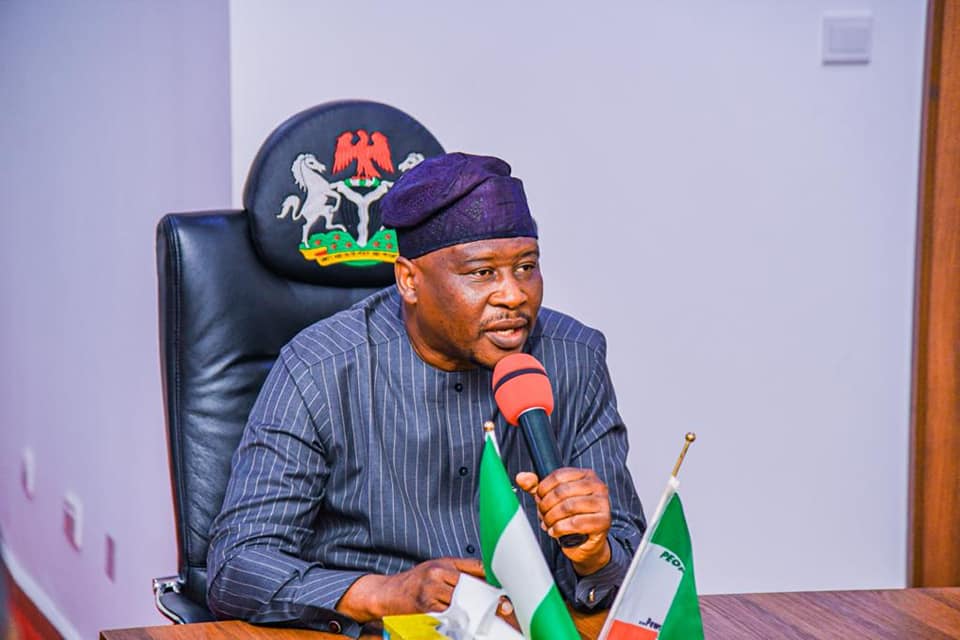
Fintiri sacks Lamido of Adamawa as head of council of chiefs
By Abdullahi Mukhtar Algasgaini
The Adamawa State House of Assembly has passed a bill for the creation of more emirates with first-class emirs in the state.
The new emirate law, now awaiting Governor Ahmadu Fintiri’s assent, was passed days after the governor assented to another law, the state’s District Creation Law 2024, which created 83 new districts on 4 December.
Mr Fintiri, in a letter to the lawmakers on Monday, requested the passage of a bill for a law to provide for the Adamawa State Chiefs (Appointment and Deposition) and matters incidental thereto.
The bill empowered the governor to create additional emirates, and appoint or depose traditional rulers.
The bill passed first and second reading at the state House of Assembly on Monday.
The accelerated reading of the bill followed separate motions by the deputy majority leader, Ahmed Rufai (Maiha LGA), seconded by Moses Zah (Michika LGA) and Bauna Myandassa (Lamurde LGA).
The Speaker of the Assembly, Bathiya Wesley, referred it to the House Committee on Local Government Affairs for legislative action.
The speaker directed the committee to submit its report on the next legislative day.
The committee was headed by Kefas Calvin with Godfrey Bulus ashis deputy, while Grace Kurkuwa served as the clerk.
On Tuesday, the lawmakers passed the bill into law. The governor is expected to announce the new emirates after assenting to the bill.
The new law stripped the Lamido of Adamawa, Mustapha Barkindo, of his title of permanent chairman of the Adamawa Council of Chiefs.
The law says the seat will rotate annually among all the first-class emirs and chiefs.
The lawmakers said the rotational chairmanship would promote fairness, equity and quality representation in traditional leadership.
The governor had on 4 December assented to the state’s district creation law at an exclusive ceremony at the Government House.
He said the new law was aimed at enhancing governance and addressing security challenges at the grassroots level.
The law weakens the influence of the Lamido of Adamawa, Mr Barkindo, by reducing the local government areas under his control from eight to three.
The Adamawa emirate covered Hong, Song, Gombi, Fufore, Girei, Yola North, Yola South, and Mayo-Belwa.

Getting rid of fraudsters’ trap
By Rabiu Sirajo Toro
How hackers manage to compromise people’s accounts, particularly on platforms like Facebook, Instagram, and especially WhatsApp, and often send messages to the contacts of the account owner, requesting money for account details that do not match the owner’s name is baffling.
They frequently claim that network glitches or limits have been exceeded to justify their requests.
This situation has occurred multiple times, yet people seem to overlook it. It’s essential to consider the different account details compared to the owner’s, as well as the context in which the message is written.
Some messages might be the first communication between two individuals, leading the recipient to act without hesitation. Instead of questioning or calling the person for confirmation, they may decide to send money immediately.
We must remain vigilant regarding anything related to money and property, as scammers are becoming more prevalent.
Many people are looking for quick and questionable wealth by any means possible.The first time I received such a message from someone of high status, I promptly contacted the owner of the phone number and discovered that I was the first person to inform her about the incident.
Whenever you receive a message that seems abnormal in your daily chats, especially one that involves a request for money, it is crucial to call that person for confirmation if you can’t ignore it.
For added security, anyone you are involved in business with or who might send you money should always confirm transactions first, preferably through phone calls rather than platforms alone or physical meetings are preferable for any monetary exchange.
We must make an effort to remember these incidents and protect ourselves from scammers.
Rabiu Sirajo wrote in from Toro Local Government Area in Bauchi State.
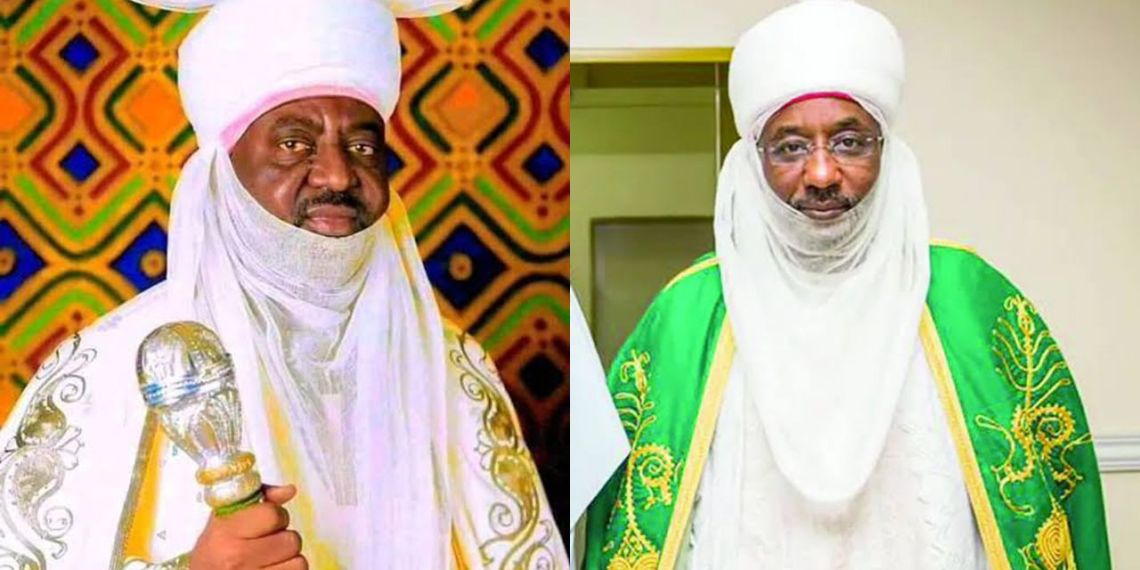
Kano Emirate Tussle: Sanusi vows to accompany district head to Bichi
By Anwar Usman
The Emir of Kano, Muhammad Sanusi II, has affirmed to the residents of Bichi Local Government Area in Kano State that the Emirate Council will ensure the peaceful conveyance of their District Head, Munir Sanusi Bayero, to assume his duties in Bichi.
Sanusi gave this assurance on Wednesday during a solidarity visit by traditional and religious leaders from Bichi, led by the Chairman of Bichi Local Government, Alhaji Hamza Sule, at the Gidan Rumfa palace in Kano.
The Emir explained that a new date would be scheduled for the transfer of the District Head, who was recently turbaned at the palace after an earlier attempt was disrupted.
“I assure you that another day will be fixed, your District Head will surely be brought to you, and everything will take place peacefully,” he said.
The pledge followed an incident last week when security personnel allegedly denied access to the palace to prevent the District Head’s planned departure for Bichi.
According to palace sources, the heavy security presence disrupted the scheduled ceremony, leaving the reasons for the intervention unclear.
“What happened was only a distraction. We still don’t know why it happened, and those involved have not disclosed the reason why they did it. However, this will not stop anything.
In his remark, Alhaji Hamza Sule reaffirmed the people of Bichi’s loyalty to the Emirate and Muhammad Sanusi II’s leadership.
“Even on the controversial day that was fixed for your visit to Bichi to accompany the new District Head, Munir Sunusi Bayero, we were fully ready to receive you, but we only heard that there was a crisis when we were already celebrating your coming.
“We in Bichi, from our Imams, Village Heads, Wards Heads, and everybody, are behind your royalty, and our solidarity is only for you.
“That is why we decided in our numbers to come today and reiterate our loyalty to you and whatever decision you have taken on your domain, Bichi,” he stated.

Naira slips to N1,585 in parallel market
By Anas Abbas
The Naira has declined in value within the parallel market, trading at N1,585 per dollar compared to N1,550 per dollar on Monday. In contrast, the official foreign exchange market reported an appreciation of the Naira, with rates improving to N1,525 per dollar, up from N1,538 per dollar earlier this week.
According to the latest data from the Central Bank of Nigeria (CBN) published in the Daily Nigerian Foreign Exchange Market (NFEM), the indicative exchange rate for the Naira has strengthened by N13, reflecting a notable shift in the official market.
Figures from FMDQ reveal a significant increase in dollar transactions on the Nigerian Autonomous Foreign Exchange Market (NAFEM). Trading volume surged by 129 per cent to $401.17 million, up from $175.15 million on Monday.
The surge has resulted in a widening gap between the parallel market and the NFEM rate, which has expanded to N60 per dollar from just N12 per dollar at the start of the week.

US-based Nigerian scholar Dr Fahad Usman develops innovative, non-invasive method for diabetes testing
By Uzair Adam
In a ground-breaking advancement for diabetes diagnostics, Nigeria-born Dr Fahad Usman, an Assistant Professor of Optical Engineering Technology in the United States, has introduced a highly sensitive optical biosensor capable of non-invasive diabetes screening.
Dr Usman’s pioneering work focuses on a surface plasmon resonance (SPR) biosensor that detects exhaled breath acetone, a key biomarker for diabetes. This innovative approach offers an alternative to traditional blood glucose tests, which are invasive and often painful.
Dr Usman’s research, published in top journals like Results in Physics and Polymers Journal, presents a novel ternary composite material made from polyaniline, chitosan, and reduced graphene oxide. With enhanced electrical conductivity and thermal stability, this material underpins the SPR biosensor, allowing it to detect acetone concentrations as low as 0.88 parts per billion.
This collaboration with researchers from Malaysia, France, Saudi Arabia, and the U.S. addresses the global diabetes crisis. With over 537 million affected worldwide and projections of 783 million by 2045, this innovation promises a significant impact. According to the National Institutes of Health, over 37 million people in the U.S. are affected by diabetes.
Due to its non-invasive nature, the optical sensor ensures greater accuracy, sensitivity, and reliability and enhances patient compliance.
Dr Usman’s work represents a significant leap forward in healthcare innovation. It positions the U.S. at the forefront of global scientific advancements.
This technology offers potential beyond healthcare, with broader industrial applications in optical sensing and materials science.

Kano Police apprehend 3 with counterfeit notes worth N129bn
By Anwar Usman
The Kano State Police Command has apprehended three persons for being in possession of counterfeit currencies amounting to N129,542,826,000.
The Spokesperson of the command, SP Abdullahi Haruna Kiyawa, revealed this while addressing journalists at a press briefing on Tuesday.
The spokesperson gave the breakdown of the fake currencies as $3,366,000, CFA51,970,000 and N1,443,000.
He added that the two individuals apprehended with the money and the person from who they were stolen had been arrested and are in the police custody, helping with investigation on the actual producers of the counterfeit money.
In the same vein, the command has recovered six live ammunition, three tricycles, eight motorcycles and three parcels of 175 wraps of dried leaves suspected to be Indian hemp.
The PPRO further revealed that the command recovered 250 pieces of diazapam tablets, 278 sheep and seven cattle.
“These approaches have resulted not only in the apprehension of criminals but also stop potential offenders from engaging in criminal activities.
“Serious cases of kidnapping, armed robbery, thuggery and drug dealings have been surmounted,” he explained.