




Bauchi: 1 killed, 2 injured in fatal truck collision on Magama Gumau highway
By Abdullahi Mukhtar Algasgaini
A fatal accident involving two DAF trucks claimed one life and left two others injured in the early hours of Sunday, April 13, 2025.
The crash occurred around 2:00 AM in Magama Gumau Town when a sand-laden truck rammed into a stationary broken-down truck.
The impact sparked a fire that engulfed both vehicles, killing 23-year-old Usman Magaji and injuring two others.
Police and emergency responders from the Toro Divisional Headquarters swiftly arrived, extinguishing the flames and rescuing the victims.
The injured were rushed to Toro General Hospital, where Magaji was pronounced dead.
The Bauchi State Commissioner of Police, CP Sani-Omolari Aliyu, psc(+), mni, urged drivers to obey traffic regulations, stressing the need for proper warning signs when vehicles break down.
He also ordered a thorough investigation by the Central Motor Traffic Department (MTD).
Authorities continue to warn motorists against reckless driving to prevent further tragedies.

US court orders FBI, DEA to release records linked to Tinubu
By Uzair Adam
A United States District Court in Washington, D.C., has directed the Federal Bureau of Investigation (FBI) and the Drug Enforcement Administration (DEA) to release information concerning Nigerian President Bola Ahmed Tinubu.
The decision was delivered on Tuesday by Judge Beryl Howell, who ruled in favour of Aaron Greenspan, an American activist pushing for public disclosure of documents relating to alleged investigations involving Tinubu and one Abiodun Agbele.
According to Premium Times, Judge Howell dismissed the argument by the agencies that withholding the documents was necessary, describing it as “neither logical nor plausible.”
Greenspan had filed the suit under the Freedom of Information Act (FOIA), arguing that the FBI and DEA violated the law by refusing to release the requested documents within the timeframe stipulated by the Act.
He alleged that the records relate to previous federal investigations into the Nigerian leader and his associate.
In 1993, Tinubu reportedly forfeited $460,000 to the U.S. government after law enforcement linked the funds to suspected proceeds of narcotics trafficking.
This issue resurfaced during the 2023 presidential election legal battle when opposition candidates Atiku Abubakar and Peter Obi questioned his eligibility.
However, the Presidential Election Petition Court upheld Tinubu’s victory.
Judge Howell ruled that the FBI and DEA’s use of ‘Glomar’ responses — which neither confirm nor deny the existence of records — was improper.
The court found that the agencies failed to justify their decision under FOIA exemptions and acknowledged that both Tinubu and Agbele had been subjects of prior investigations.
The judge added that the plaintiff successfully demonstrated that the agencies had already publicly acknowledged relevant information, thereby waiving their right to withhold it.
The ruling marks a partial victory for Greenspan, setting the stage for the possible release of sensitive documents tied to a decades-old controversy involving Nigeria’s current president.

Zulum mourns victims of highway bomb blast, calls for tighter security
By Uzair Adam
Borno State Governor, Babagana Zulum, has sympathised with victims of a deadly explosion suspected to have been triggered by Boko Haram insurgents along the Maiduguri–Damboa highway.
The attack, believed to have been caused by an Improvised Explosive Device (IED), claimed the lives of eight civilians and left 21 others injured on Saturday.
The victims were travelling in civilian vehicles when the blast occurred.Fourteen of the injured sustained serious injuries, while seven others were treated for minor wounds at the State Specialist Hospital in Maiduguri.
Speaking during a visit to the hospital, Governor Zulum described the incident as deeply regrettable, noting that Borno had not witnessed an IED-related attack in over a year.
“It is unfortunate this is happening now. We haven’t witnessed an IED attack for over a year,” the governor stated, pointing out that the highway had been closed for a month before the tragic incident.
Zulum expressed grief over the loss of lives and extended condolences to the families of the deceased.
He reiterated his administration’s unwavering support for the Nigerian military and other security agencies, urging them to step up surveillance along the highway to avert further attacks.
He stressed that the state government would continue working closely with the federal government and security forces to address the security challenges posed by insurgents.
“I assure the people of Borno that, ‘Insha Allah’, under my leadership, we will not allow the security situation to worsen,” he added.
The governor also pledged to strengthen community-based security efforts, particularly by supporting the Civilian Joint Task Force (CJTF) and youth volunteers involved in counter-insurgency operations.
Commenting on a recent security meeting held in Abuja with military chiefs, Zulum said the discussions were fruitful, especially concerning the resurgence of Boko Haram activities.
“We met with the service chiefs in Abuja and received assurances from them that they would do everything possible to manage the situation,” he said.
The Borno State government has called for stronger collaboration between local intelligence networks and security agencies to improve early warning systems and prevent similar attacks in the future.

The fall of the mighty
By Bilyamin Abdulmumin, PhD
When the PDP began its first tenure in 1999, there was a level of humility and fairness. But it was in their second tenure that their invincibility began to take shape.
As a former military Head of State, Olusegun Obasanjo did not help matters. For the second time in Nigeria’s history, he declared a state of emergency in Ekiti and Plateau and threatened several other states. During this period, the legislature was allegedly weaponized for political control, and allegations extended even to the Economic and Financial Crimes Commission (EFCC), a respected anti-graft agency.
Arguably, the PDP reached its zenith in 2007 and became so confident that it could “do and undo. ” The opposition could no longer hold any chance; instead, they covertly or overtly carried out the bidding of the powerful PDP. This exuberance and excesses of the then-ruling party culminated in a ditch for democracy: reports indicated that the 2007 presidential election results were declared while the collation was still ongoing.
In 2011, Goodluck Jonathan’s administration continued its escapade. Allegations of corruption and mismanagement ran rampant, and the PDP became a haven for anyone singing its praises. This perception was palpable, and the public echoed that anything labelled ‘dubious’ came from the party.
Complacency eventually led them to boldly declare that the party would remain in power for sixty years. Instead of sixty, the PDP barely added another six years. Even the former party chairman, who initiated the sixty-year maxim, considered leaving the party in 2015.
Never mind the masses’ outrage, founding fathers decrying maltreatment, and bigwigs, including governors, decamping to the opposition. PDP could not see the handwriting; they thought it would be normal.
The death of the PDP would be slow, with several deep cuts. One of them was shunning them by decamping opposition. Shehu Sani, Nasir El-Rufa’i, Rabiu Musa Kwankwaso, and Peter Obi should all naturally have considered the PDP as an alternative.
Another blow to the slowly fading party is an internal crisis. One crisis after another continues to shake the once-indomitable party, providing those looking to defect a compelling reason to change sides.
Perhaps the deepest cut was Nyesom Wike’s presence, who actively undermined the party from within. As Minister of the Federal Capital Territory, Wike not only revoked the PDP land title of the new secretariat but allegedly facilitated a Supreme Court victory for his ally, Mr Samuel Anyanwu, against the current party secretary.
History is replete with the downfall of the mighties. Leaders, nations, and brands often reach a status where they seem invincible, only to succumb to the very excesses that caused their rise.

AKTH clears over 20 staff of lassa fever after patient contact
By Uzair Adam
More than twenty medical personnel of the Aminu Kano Teaching Hospital (AKTH) who had direct contact with a Lassa fever patient have all tested negative for the disease.
Others who were screened through contact tracing also returned negative results, except for the patient’s husband who tested positive.
The update was made known by the Chairman, Medical Advisory Committee of the hospital, Professor Muhammad Abba Suwaid, in a statement issued by the Chief Information Officer, Maryam Aminu Usman, on Saturday.
Prof. Suwaid said the affected staff were immediately isolated and had their blood samples taken for testing.
The results, he confirmed, indicated that none of them contracted the virus.
He attributed the outcome to the diligence and professionalism of AKTH staff in handling patients.
It was gathered that the hospital’s management acted swiftly after a confirmed case of Lassa fever involving a 22-year-old pregnant woman, who was admitted to the facility on April 5, 2025.
Prof. Suwaid said precautionary measures were taken to prevent further spread of the disease within the hospital and the surrounding community.
Meanwhile, the hospital management promptly alerted the Kano State Epidemiology Unit, which has been conducting contact tracing in Garum Malam Local Government Area, where the patient was brought from.
The patient’s husband, who tested positive for Lassa fever, is currently receiving treatment under the care of the Kano State Epidemiology Unit.
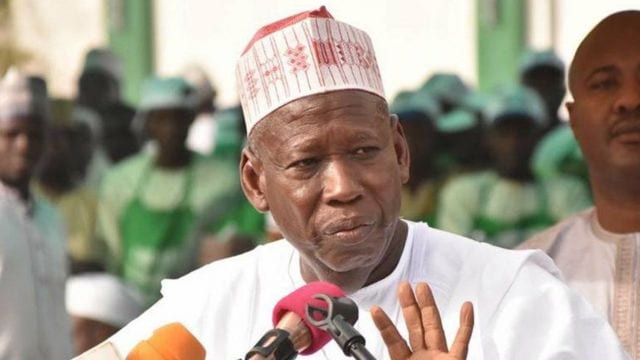
Atiku-led coalition talks are bound to fail – Ganduje
By Uzair Adam
National Chairman of the All Progressives Congress (APC), Abdullahi Ganduje, has described the ongoing discussions among key opposition leaders on forming a coalition ahead of the 2027 general elections as a failed mission in the making.
He made this known on Friday during a press briefing after leading members of the APC National Working Committee (NWC) on a Sallah visit to former President Muhammadu Buhari at his residence in Kaduna State.
Earlier that day, former Vice President Atiku Abubakar also visited Buhari, accompanied by former Kaduna State Governor Nasir El-Rufai, former Sokoto Governor Aminu Tambuwal, former Minister of Communications Isa Pantami, and ex-governors Gabriel Suswam (Benue), Jibrilla Bindow (Adamawa), and Achike Udenwa (Imo).
Atiku confirmed efforts were underway to establish a formidable opposition bloc but clarified that the visit to Buhari was unrelated to those plans.
When asked about the wave of consultations among opposition figures, particularly Atiku, Ganduje expressed confidence in the ruling party’s dominance and dismissed the alliance as unworkable.
“We are not worried at all. This is just history trying to repeat itself. They went on a joint venture, which will not work because from what we have seen, there are just some particles that cannot come together.
“It is a game, and we will not reveal our technicalities on how to handle it, but we assure you, we are equal to the task,” he said.
Ganduje boasted of the APC’s control of 21 states and described the party as “still the strongest in West Africa.”
He noted that the APC remains focused on not just retaining power, but also expanding its reach ahead of the 2027 elections.
“We are eyeing other states that will come into our fold. Either the governors themselves will come, or we go for election and defeat them to increase our tally. We are comfortable, but we are not resting. We shall continue,” he stated.

Edo gov’t to announce compensation for Kano slain hunters—Okpebholo
By Anwar Usman
The Governor of Edo State Monday Okpebhlo, on Monday said he would contact his Kano State counterpart, Governor Abba Kabir Yusuf, to decide the financial compensation for the families of the hunters who were killed by members of a vigilance group in Uromi.
The governor, who spoke through his Press Secretary, Fred Itrua, on Friday, said an agreement would be reached by the governments of the two states, adding that such agreement would be made public.
Receiving the delegation on Thursday, Okpebholo disclosed that the Federal Government, in collaboration with the state government, had also set up a fact-finding committee to look into the circumstances surrounding the recent killings.
Okpebholo said President Bola Tinubu was sad over the happening in Uromi, adding that he (Tinubu) was determined to ensure the state and nation were safe for everybody to live and do business.
He further stated that, “I can’t say what the financial compensation will be. The Kano State Government delegation arrived in Benin on Thursday and submitted a report that only the Edo State governor has seen.
“What I think will happen is that the governor will contact the Kano State governor on what financial compensation would go to the family of the deceased. What is clear is that an agreement will be reached, and it will be made public.”
He said the recommendations of the Kano State Government would be looked into, adding that Governor Yusuf would be contacted on the next line of action.

Atiku, El-Rufai, Tambuwal meet Buhari behind closed doors in Kaduna
By Uzair Adam
A delegation of prominent Nigerian political figures, including former Vice President Atiku Abubakar, held a closed-door meeting with former President Muhammadu Buhari at his residence in Kaduna on Friday.
Among those in attendance were former Governors Nasiru El-Rufai of Kaduna State, Aminu Tambuwal of Sokoto State, Gabriel Suswam of Benue State, Jibrilla Bindow of Adamawa State, and Achike Udenwa of Imo State.
While details of the meeting were not disclosed, Atiku told journalists that it was merely a post-Sallah courtesy visit to the former president.
“We came here on a courtesy and Sallah greetings visit to President Muhammadu Buhari,” he said.
When asked about the mix of political affiliations among those present, Atiku replied, “I have the right to be friends with anybody, whether political or non-political. They are all my friends.”
He also addressed speculations about the formation of a new political alliance, noting that although discussions are ongoing among opposition parties, it was not the purpose of their visit.
Atiku had earlier taken to his verified social media pages, describing the visit as a delightful one. “Today, I had the opportunity to pay a post-Sallah visit to Muhammadu Buhari… It was a wonderful time with him. As usual, he cracked me up with his peculiar humour.”
El-Rufai also briefly addressed the media, stating, “We are here to pay a Sallah visit to former President Muhammadu Buhari because I was not around during the Sallah period.”

Brice Oligui Nguema poised to win Gabon election after coup
By Hadiza Abdulkadir
Gabonese voters head to the polls Saturday in a pivotal election expected to cement army officer Brice Clotaire Oligui Nguema’s grip on power. Nguema, who led a coup last year ousting long-time ruler Ali Bongo, is widely popular for ending the Bongo family’s decades-long rule.
Unlike many juntas across Africa, Nguema has allowed relatively free elections and avoided harsh crackdowns. However, concerns remain about his democratic intentions.
A new constitution passed in November boosts presidential powers, and Nguema—though promising to step down from the military—has yet to do so formally.
International observers are watching closely, hoping Gabon can buck the trend of prolonged military rule seen in parts of West and Central Africa.
The outcome of this election may shape the country’s democratic future and signal whether Nguema intends to truly hand power back to civilians.

The insidious ascendance of antimicrobial resistance: A looming national, continental, and global pandemic
By Oladoja M.O
…and if we begin to face a threat of setbacks in our supposed success against diseases induced by pathogenic microorganisms, are we not seemingly sent back to the dark ages even as we claim to have advanced? When recounting the history of medicine, few triumphs can compare to the emergence and widespread use of antimicrobials, for indeed, it was a win for the world.
Without mincing words, Alexander Fleming’s serendipitous discovery of penicillin on his petri dish ushered in a new era in biomedicine. For just before our eyes, pathogens that had wreaked havoc for generations, perpetuating morbidity and mortality in their wake, were suddenly at the mercy of the new chemical arsenal deployed in the fight; and just like that, infectious diseases receded before the ever-rising tide of antimicrobials. Everyone felt optimistic and, in fact, predicted a swift and righteous victory over the scourge of infection.
For over a decade now, the world’s leading figures have consistently voiced concerns about the threat to global health posed by microorganisms’ resistance. It appears that humanity’s arsenal, which once assured victory over these microorganisms and their harmful effects, is now inadequate. Can we suggest that the drugs being produced are ineffective? Can we assert that our research is flawed? Or that humanity has developed a different genetic makeup? Or that these microorganisms are now clever enough to evade destruction?
Well, many questions like these are very relevant. But as we consider these questions, it is more reasonable to retrace our steps to identify the real causes and understand what has positioned the world, particularly Africa and Nigeria, toward this path of looming global, continental, and national health breakdown.
Nationally, for example, this issue is moving very rapidly. Diseases that should be treated in a short time are becoming difficult to manage, with treatment becoming elusive. Many blame the serious organized crime surrounding “fake drug production ” in Nigeria, which floods the market day and night, and yes, this is a reasonable claim. What greater factor could contribute to a drug’s ineffectiveness than poor or flawed production? However, if this were the only cause, it would be a unique issue to Nigeria; instead, it transcends even beyond that.
The individual practice can be directly linked to this whole issue without prejudice. Simply put, the consistent intake of drugs renders the individual impotent over time. The Department of Health of the Australian Government, in one of their submissions, noted that “using a drug regularly can lead to tolerance (resistance); your body becomes accustomed to the drug and needs increasingly larger doses to achieve the same effect or, even, becomes less potent.” This attitude, unfortunately, is almost a daily occurrence for many individuals, stemming from the persistent issue of self-prescription, however minor it may appear.
The US National Library, in one of its publications in 2013, stated that “Self-medication is a global phenomenon and a potential contributor to human pathogen resistance to antibiotics. The adverse consequences of such practices should always be emphasized to the community, along with steps to curb them.” I think we can all agree that many people are guilty of this act; at the first sign of discomfort, almost everyone becomes a medical expert in their own home, concluding which drug works best for them, diagnosing their own ailments, and taking antibacterial drugs for fungal issues.
A user on X @the_beardedsina narrated his experience: “A patient comes to the hospital. He has been sick for a week, having had a fever for days. A blood culture is done, and the result shows that he’s resistant to the following drugs (antibiotics): Ceftriaxone, Ampicillin, Cipro, Levofloxacin, Metronidazole, Cefepime, Meropenem, Piperacillin, Gentamicin, Amikacin, Nitrofurantoin, Vancomycin, and Chloramphenicol.” How can we survive this??
The issue of how antimicrobials are used in agriculture is another concern. The rise of industrial farming has fully embraced the prophylactic use of antimicrobials in livestock, not primarily to treat diseases, but to enhance growth rates. However, unlike clinical settings, the agricultural use of antimicrobials lacks the same oversight and prescribing guidelines.
The inconsistency in regulation allows for significant variation in the classes and concentrations of antimicrobials used in agriculture. In 2021, approximately 54% of the 11 million kilograms of antimicrobials sold for use in domestic agriculture in the United States were categorised as “medically important. “
In conclusion, this issue requires significant awareness and sensitisation of the general public regarding the dangers of antimicrobial resistance. Conservative preventive care should be promoted, and individuals should seek care from qualified professionals.
The commercial use of antimicrobial drugs must be approached with caution, and all relevant agencies responsible for this oversight at national, continental, and global levels should act swiftly before the situation escalates and threatens global health, reverting us to the dark ages of high mortality and the economic toll of microbial threats.
The world faces numerous challenges, and we should focus on celebrating our victories rather than becoming overwhelmed by this struggle.
Oladoja M.O writes from Abuja and can be reached at mayokunmark@gmail.com.