
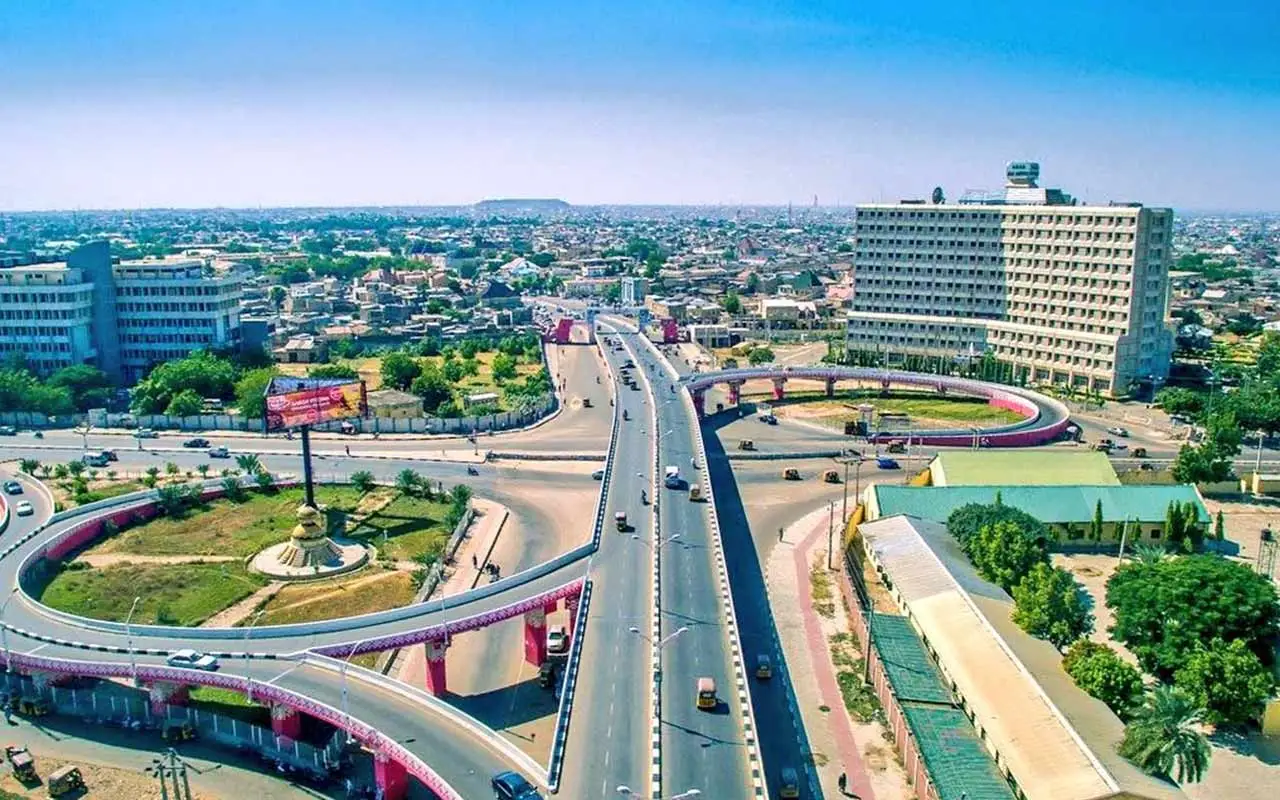
Kano beyond educational boom: A call for federal intervention to fuel growth
By Ismaila Abdulmumini
Kano, renowned for its rich history, cultural vibrancy, and socio-economic vitality, marked 57 years of statehood a few days ago. A long journey of sacrifices and transformations, usually one at a time, gives Kano the new look we see and admire today. Kano is now carving a new identity as Nigeria’s educational powerhouse, boasting four federal universities, three state-owned institutions, and over five private universities, in addition to state and privately funded colleges and polytechnics.
Equally, quantifiable challenges and rubble need to be put together to build the Kano of our dreams—the one we revere and would be proud of. The state’s transformation into a learning hub has inadvertently exposed systemic gaps in critical sectors, gaps that demand urgent federal intervention to unlock Kano’s full potential.
Despite its academic strides, Kano grapples with erratic electricity, which stifles the industries that support its institutions. Students and entrepreneurs alike face daily blackouts, which undermine research, innovation, and productivity. Experts argue that federal investment in renewable energy projects and grid modernisation could ignite industrial growth, creating thousands of jobs while sustaining the educational sector’s momentum.
Kano’s healthcare system, chronically underfunded and overburdened, struggles to serve its 15 million residents. State-run hospitals lack essential equipment, and medical personnel are stretched thin. Federal input through facility upgrades, increased funding, and partnerships with the private sector could reduce pressure, improve public health outcomes, and attract medical tourism, turning a cost centre into a revenue stream.
In Kano’s bustling large markets that serve Africa, such as Dawanau’s grains, Kwari’s fabrics, and Singa’s groceries, transactions remain stubbornly analogue. This “brick-and-mortar” mentality, experts say, stifles economic scalability in the twenty-first century. “Digitisation isn’t optional; it’s survival,” argues tech entrepreneur Aisha Musa. Federal grants to build a robust digital ecosystem, e-payment platforms, online marketplaces, and broadband expansion could connect Kano’s markets to global consumers, boosting GDP and curbing youth unemployment.
Kano’s agricultural landscape is littered with bad, indefatigable innuendo. Farms teem with tomatoes, peppers, and livestock, yet the state imports processed dairy goods. The absence of modern processing facilities leaves farmers vulnerable to waste and price fluctuations. A federal push to establish agro-industrial zones with cold storage and meat-processing plants could transform raw abundance into export-ready products, slashing Nigeria’s $10 billion annual food import bill and strengthening the naira.
Potholed roads and inefficient rail networks cripple trade, inflating costs and deter investors. Upgrading transport infrastructure, which relies heavily on the federal government, would streamline the movement of goods from farms to ports, link markets to neighbouring countries, and position Kano as a logistics hub. “Better roads mean cheaper goods, happier consumers, and a thriving economy,” notes logistics expert Tunde Okoye.
The blueprint for Kano’s renaissance is clear: targeted federal investments in energy, healthcare, digitisation, agro-industry, and transport. Such interventions promise to generate employment, diversify revenue streams, reduce import dependency, and fortify Nigeria’s economy. As the state stands at a crossroads, the message to Abuja is unequivocal: Empower Kano, and you empower the nation. Kano’s story does not need to be one of unfulfilled promises. With strategic governance, Africa’s “Centre of Commerce” could reclaim its title, this time, as a beacon of inclusive, 21st-century growth.
Ismaila Abdulmumini wrote via ima2040@outlook.com.

Russian court sentences Colombian national to 28 years for fighting alongside Ukrainian forces
By Sabiu Abdullahi
A court in Russia’s Kursk region has sentenced a Colombian citizen to 28 years behind bars after finding him guilty of fighting as a “mercenary” with the Ukrainian Armed Forces against Moscow.
The sentencing was announced on Tuesday, with Russian authorities stating that the man took part in combat operations within Ukraine’s military, including in the border region of Kursk.
In its ruling, the court declared that the individual had participated “in the armed conflict as a mercenary in the Armed Forces of Ukraine,” and added that he was “sentenced to imprisonment for 28 years.”
Russian officials have consistently maintained that foreign nationals who support Ukraine on the battlefield are violating Russian law.
The Colombian’s involvement on the side of Kyiv further reflects the international dimension of the ongoing war.
The conviction comes amid continued hostilities between Russia and Ukraine, which have seen rising casualties on both sides.
It also aligns with Moscow’s broader efforts to clamp down on foreign fighters it accuses of aggravating the conflict.
The Russian government has not released the name of the convicted individual, nor has it provided further details regarding the specific charges or dates of the alleged combat activities.
The situation remains a stark reminder of the far-reaching consequences of the war, now drawing individuals from different continents into its orbit.

Pep Guardiola delivers powerful speech on Gaza at honorary degree ceremony
By Muhammad Sulaiman
Pep Guardiola, the renowned Manchester City manager, delivered a moving and heartfelt speech on the humanitarian crisis in Gaza while receiving an honorary doctorate from the University of Manchester this week.
In an emotional address, Guardiola veered from the usual ceremonial tone to speak about the suffering in Gaza, calling for compassion and courage in the face of ongoing violence.
“It is so painful what we see in Gaza, it hurts all my body,” he said, his voice weighted with emotion. “It is not about ideology but the love of life. It is about refusing to be silent or still when it matters the most.”
Guardiola, known as much for his principled stances as for his tactical brilliance on the pitch, received a standing ovation from many in the audience, including faculty, students, and dignitaries.
The University of Manchester awarded Guardiola the honorary degree in recognition of his contributions to sport and his influence as a global figure. Yet, it was his candid acknowledgement of human suffering and his call for empathy that left a lasting impression.
Social media erupted in praise following the speech, with many highlighting Guardiola’s words as a rare and courageous gesture from a figure in elite sport.
As tensions and humanitarian concerns continue to mount in Gaza, Guardiola’s remarks have added a prominent voice to the growing international calls for peace and justice.

Inclusive leadership, not religious dominance, will save Nigeria
By Malam Aminu Wase
A presidential Muslim-Muslim ticket is not merely a political strategy. It is a catalyst for national instability. In a country like Nigeria, which is still grappling with deep-seated mutual distrust, such a move sends the wrong signal.
For Nigeria to truly progress, its leadership must reflect the nation’s rich diversity. Only through inclusive governance can we assure every citizen, regardless of faith, ethnicity, or region, that they have a rightful place in the nation’s power structure.
Malam Nasir Ahmed El-Rufai played a pivotal role in promoting the idea of a Muslim-Muslim presidential ticket. While this strategy may have been politically calculated, it encouraged religious and ethnic groups to compete for power, rather than unite under a shared national vision that addresses the hardships facing all Nigerians.
Ironically, many of the architects of the Muslim-Muslim ticket are not reaping the benefits of their efforts. The lofty expectations they once championed of inclusion and representation have been dashed. Some have even defected to other political parties, disillusioned by the very system they helped establish.
Nigerians must open their eyes. The struggle among the political elite is not about improving the lives of the masses; it is a scramble for personal gain, to secure privileges for their children, families, and close associates. We must rise above the politics of religion and region and demand leadership representing all Nigerians.
I urge fellow citizens to reject the idea of a Muslim-Muslim ticket in the upcoming election. Let us vote for candidates committed to unifying Nigeria, easing economic hardship, and introducing policies that genuinely impact the lives of ordinary people.
Malam Aminu Wase, Write from Kaduna State. He can be reached via aminusaniusman3@gmail.com.

Naval officer killed in Kaduna phone snatching attack
By Abdullahi Mukhtar Algasgaini
A senior naval officer, Lieutenant Commodore M. Buba, was fatally stabbed by a robber in Kaduna while resisting a phone-snatching attempt near Kawo Bridge.
Eyewitnesses reported that the officer, undergoing training at the Armed Forces Command and Staff College, Jaji, had stopped to fix a flat tire when the assailant attacked him. After refusing to hand over his phone, the robber stabbed him in the chest.
A vigilante, Suleiman Dahiru, who intervened, was also injured. The attacker was later lynched by an angry mob.
The officer was pronounced dead at Manaal Hospital, and his body has been moved to the 44 Nigerian Army Reference Hospital mortuary. Security forces have intensified covert operations in the area to curb crime.
Kaduna Police PRO, ASP Mansir Hassan, confirmed the incident and assured increased security measures.

Kaduna police raid criminal hideouts, arrest 27 suspects
By Uzair Adam
The Kaduna State Police Command says security operatives have stormed criminal hideouts in the Kawo area of Kaduna, arresting 27 suspected criminals and recovering weapons and hard drugs.
In a statement on Monday in Kaduna, the command’s spokesperson, DSP Mansir Hassan, said the operation was part of the Commissioner of Police’s directive to identify and dismantle criminal elements threatening peace in the area.
Hassan stated that the command carried out several raids in a joint operation with the Military, DSS, and the Kaduna State Vigilante Service, resulting in multiple arrests and the seizure of weapons.
“On Sunday, around 10:30 pm, a joint tactical operation was launched across Kawo and neighbouring areas, leading to the arrest of 27 suspects and the recovery of significant caches of weapons,” he said.
Exhibits recovered included knives, axes, cutlasses, and large quantities of dried leaves suspected to be Indian hemp, as well as other hard drugs.
Commissioner of Police, CP Rabiu Muhammad, reaffirmed the command’s commitment to maintaining law and order in the state. He warned that miscreants would not be given any breathing space.
“Kaduna remains a peaceful state, and we will not allow anyone to disrupt the peace. Those with violent intentions should desist or leave the state,” he said.

Maryam Abacha challenges claims of husband’s looted billions
By Uzair Adam
Maryam Abacha, widow of the late military ruler General Sani Abacha, has denied longstanding allegations that her husband looted billions of dollars while in power, insisting that no credible evidence exists to support the accusations.
In a recent interview with TVC, Mrs. Abacha demanded that those making the claims present verifiable evidence.
“Who is the witness of the monies that were being stashed? Did you see the signature or the evidence of any monies stashed abroad?” she asked.
She further claimed that funds her husband had secured for Nigeria quickly disappeared after his death, alleging mismanagement by successive administrations.
“The monies that my husband kept for Nigeria, in a few months, the monies vanished. People are not talking about that,” she said.
Questioning the motivation behind the persistent focus on her husband’s alleged wrongdoing, Mrs. Abacha asked, “Why are you blaming somebody? “Is that tribalism or a religious problem or what is the problem with Nigerians? I pray for Nigerians. I pray for all of us. I pray that we should have goodness in our hearts. We should stop telling lies and blaming people.”
She also criticized what she described as a media culture of “bastardizing people,” urging journalists to educate Nigerians rather than perpetuate unfounded claims.
“People are not that bad. “Twenty-seven years ago and you are still talking about Abacha. He must be very powerful and loved by Nigerians. We thank God for that,” she added.
Mrs. Abacha, responding to a comment on the relatively stable economy under her husband’s rule—characterized by higher foreign reserves and lower external debt—insisted her husband had not stolen public funds.
“So, where did he steal the money from? So where would he have stolen the money from? And because Nigerians are fools, they listen to everything,” she said.
Emphasizing the need for national unity and mutual respect, Mrs. Abacha declared, “Babangida doesn’t make Nigeria alone. Abacha does not make Nigeria alone. Abiola and everybody, nobody is big enough for Nigeria. We are all very important.
“Even the single man on the street is very important. We are all human beings, for goodness sake. All these wahala should stop. Babangida cannot make things or unmake things.”

TikTok star Khaby Lame departs US after visa overstay detention
By Hadiza Abdulkadir
Khaby Lame, the Senegal-born TikTok sensation who rose to global fame for his silent comedic videos, has voluntarily left the United States after being detained by U.S. Immigration and Customs Enforcement (ICE) for overstaying his visa.
The 25-year-old, who officially became an Italian citizen in 2022, was held at Harry Reid International Airport in Las Vegas for immigration violations. Lame had been in the U.S. on a temporary visa, which reportedly expired before his detention.
Lame, known by his handle @khaby.lame, boasts over 162 million followers on TikTok, making him one of the most followed creators on the platform. His signature style—wordless, expressive reactions to overly complicated life hacks—catapulted him to viral fame during the COVID-19 pandemic.
His detention comes amid intensified immigration enforcement under President Donald Trump’s administration, which has renewed crackdowns on visa overstays and undocumented immigrants.
Sources close to Lame say he has returned to Italy and cooperates fully with authorities. Neither Lame nor his representatives have made a public statement regarding the incident.
PDP vs. APC so-called political elders and the Gospel of Barnabas
By Nura Jibo
Whenever I see sure PDP political power losers and their APC bedfellows making historical myths and inaccuracies about their pseudo performance of national economic growth and development, it reminds one of the gospel according to Barnabas.
As a Muslim, I actually believe in the Gospel of Barnabas as a myth rather than a reality. Though his assertions are very true and apt, they are considered among Christians as a non-canonical, pseudodepigraphical gospel attributed to him. They somehow believed Barnabas was a disciple of Jesus who lived in the 14th or 15th century.
These historical myths and inaccuracies are what the so-called PDP and APC elders would wish to present to ordinary Nigerians. Indeed, their misrepresentation of facts is contrary to a detailed account of Barnabas, who, according to his Torgado Siburian theological belief, explained Jesus’ life. This account includes elements that align with Islamic reality and beliefs, such as the denial of Jesus’ crucifixion and a focus on Jesus as a prophet rather than the Son of God.
Indeed, the PDP/APC elders’ gospel on Nigeria’s political leadership/claim on its progress is nothing but something to be considered a fabrication, as it contradicts the canonical gospels and includes historical conundrums that even the so-called generals in politics that resort to this falsehood amidst public glare cannot provide an answer to!
The PDP presidency under Obasanjo and Jonathan is nothing but a political disaster.
These two presidents presided over Nigeria with impunity and first-class corruption that drained Nigerians and stripped them bare of their dignity in the comity of nations.
Obasanjo shamelessly accused his National Assembly of being a “den of corruption by a gang of unarmed robbers”.
Indeed, Evan Enwerem’s emergence as Obasanjo’s Senate president against Chuba Okadigbo confirmed his corrupt tendencies as a political but not military leader to Nigerians. This remains fresh in our psyches and memories.
The Siemens and KBR bribery scandals, which the FBI investigated, indicted President Obasanjo’s government internationally.
On the other hand, President Jonathan allowed a corrupt Diezani oil ministerial hubris of over N100 billion, alleged to have been collected by Diezani as undue enrichment.
This is not to rule out the role of his wife, Patience, in the $8.4 million and N7.4 billion linked to her by the EFCC under a file suit dubbed FHC/L/CS/620/18.
What the likes of Governors Sule Lamido, Amaechi, Nasiru El-Rufai, Peter Obi, and even VP Atiku Abubakar want to tell Nigerians after being frustrated and pushed to the periphery of power and out of national and global relevance, one hasn’t the vaguest idea.
Please note:
There is no point in alluding to the APC’s leadership under Buhari and Tinubu. Because doing so will not allow us to see the light of day, it is better not to mention the terrible economic harakiri, democratic suicide, and perturbed insecurity that the APC and, by extension, its PDP rivalries have thrown into Nigeria. Recounting APC ordeals is a déjà vu that this writer is not ready to waste more energy delving into.
Happy Eid celebration!
Nura wrote from Shahrazad Homes, 21 Zerifa Aliyev Street, Baku, Azerbaijan.

We are ruled by commentators
By Oladoja M.O
A peculiar tragedy defines the Nigerian state—a complete surrender of responsibility by those elected to bear it, a full-blown case of irresponsibility institutionalised at the highest levels. It is as if we are not being led at all. It is as if we are simply being watched, pitied, and narrated to. Our so-called leaders behave like helpless spectators, not as those with the authority to fix the very problems they moan about.
Shamefully, Nigeria lacks leadership. Instead, it has men and women who love the microphone more than the mandate. We are not governed; we are narrated. Commentators rule us.
Just days ago, a State Governor resurfaced with yet another alarming statement: that Boko Haram has infiltrated the government. Again. This is not the first time he has said something like this. Several times, he has come out to decry the killings, to point fingers, to lament the destruction. And every single time, one question keeps hanging in the air. What exactly has he, as the Chief Security Officer of the state, done about it? What has he changed? What systems has he challenged? What heads have rolled under his watch? Where is the real action beyond the endless news appearances and emotional speeches? It is not enough to wear a bulletproof vest and take a stroll in a burned village. That is not leadership. That is performance.
I mean, this individual is not a social media activist. He is not a political analyst. Not a powerless citizen. He is not a sympathiser. He is a sitting governor, for goodness’ sake! He has the resources, influence, and intelligence at his disposal. If all he can do is complain, then he has failed. And that is the bitter truth. Or how did the weight of office shrink to the mere performance of sympathy and public outrage? Because, for all I know, leaders do not just point to problems. They solve them. They don’t weep when the house burns. They command the water. But what we see here is the opposite.
It is as if holding public office in Nigeria has been reduced to a loud-speaking exercise. The governor speaks. The senators speak. The representatives hold press conferences. Everybody speaks. But nobody leads. They describe problems they were empowered to solve, like detached observers, rather than active change agents. It is nauseating. It is tragic. It is dangerous because this governor is just one symptom of a far deeper rot.
Nigeria’s leadership structure is littered with voices that echo sorrow and rage without ever lifting a finger to stop the bleeding. The National Assembly, for instance, has become a festival of talkers. Lawmakers who go to the chambers not to legislate, but to lament. Some of them even act as if their job is to criticise the government when in fact, they are the government. You hear them talk on TV and wonder if they were mistakenly sworn into opposition. These are people elected to craft laws, drive policies, and oversee the executive. Instead, they pick microphones and begin to “express worry”, “condemn in strong terms”, and “call on the federal government”, as though they are not the federal government themselves. It is embarrassing. It is pathetic. It is a national disgrace that the loudest voices in power are often the most passive in a country so battered.
And the tragedy is even louder when we look at the so-called new breed. For instance, Peter Obi has earned some Nigerians’ admiration because they see in him a departure from the past. But in reality, he’s just the same recycled blaming and deflecting game-player. Recently, when asked about the internal crisis tearing through the Labour Party, a party he is seen as the head of, his response was a flat finger-pointing exercise. He explained who caused what and who did what. Zero sense of responsibility. No ownership, nor a plan to fix it. Is it hard to understand that leadership is not explaining the problem but solving it? What are we banking on if someone aspiring to govern 200 million people cannot manage internal party squabbles?
Being soft-spoken and throwing statistics around is not leadership. Nigerians need people who carry the weight of responsibility and act with urgency, not people who are always ready with talking points.
This country is bleeding. Virtually every region, every sector, every institution is either hoping to set into recovery or picking up the pieces. From poverty to insecurity, from joblessness to healthcare collapse, from fuel inflation to decaying infrastructure, we are a nation gasping for air. And what do our leaders do? They gather at events and in press briefings to express sympathy. They talk. They hold conferences. They issue long tweets. And then they disappear. It is now a full-blown epidemic. Everyone in power wants to talk about the problem. No one wants to be responsible for the solution. They love the headlines. They love the interviews. But they vanish when it is time for hard decisions, bold reforms, and deep accountability.
This is not what leadership looks like. Leadership means bearing the burden of others. It means thinking, planning, executing, sweating, failing, trying again, and never passing the buck. But Nigerian leaders today see power as a shield from responsibility. To them, power is for glory, not for duty. It is for the title, not for toil. And we, the people, must also take some blame. Because time after time, we bring these same people back. We vote them in. We defend them. We hail them. We wash, rinse, and repackage them for another round of useless governance. It is insanity.
A time must come, and it should be now, when Nigerians wake up to the bitter reality that democracy today is mostly a circus—a time when we say it clearly and loudly: enough with all the empty noise. We do not want more commentators, glorified orators, or prophets of doom in positions of power.
We want leadership. Real, practical, accountable leadership.
If you are in the office, your job is not to narrate the problem. Your job is to change it. If you are the governor and your people are being killed, we expect action, not pity. If you are a senator and the economy is crashing, we expect reform, not press conferences. Don’t blame others if you are a party leader and your house is on fire. Fix it. Nigeria can no longer afford leaders who vanish when it matters most. We cannot survive another decade of commentators posing as commanders. The country is on the brink, and what we need now are not voices of complaint, but minds of action and hearts of steel.
Until that happens, let the records reflect it. We are not being led. We are being narrated to. And that is the greatest insult of all.
Oladoja M.O writes from Abuja and can be reached at: mayokunmark@gmail.com