



North Korea slams Israel over strikes on Iran, warns of escalating conflict
By Sabiu Abdullahi
North Korea has issued a forceful condemnation of Israel’s recent military operations targeting Iran, describing the actions as “a crime against humanity” and warning they could plunge the Middle East into deeper chaos.
In a statement published by the state news agency KCNA on Thursday, a spokesperson for the North Korean Foreign Ministry voiced strong concern over what was described as deliberate attacks on Iranian civilian, nuclear, and energy infrastructure.
The spokesperson said the operations by Israeli forces reflect “state-sponsored terrorism” and pose a grave threat to regional stability.
“The killing of civilians in Israeli attacks was an unpardonable crime against humanity,” the statement read.
Pyongyang also criticized Washington and its Western allies, accusing them of backing Israel’s actions and inflaming an already volatile situation.
“The present grave situation witnessed by the world clearly proves that Israel, supported and patronised by the US and the West, is a cancer-like entity for peace in the Middle East and a chief culprit of destroying global peace and security,” the Foreign Ministry spokesperson said.
The North Korean government also advised the United States and Europe against further involvement in the conflict.
It claimed that international opinion is watching closely as these powers, in its words, “fan up the flames of war” while blaming Iran for defending itself.
“The international community is strictly watching the US and Western forces fanning up the flames of war, taking issue with the legitimate sovereign right and exercise of the right to self-defence of Iran, the victim,” the spokesperson added.
The warning came as U.S. President Donald Trump declared that his administration had exhausted its patience with Iran.
His remarks followed a firm rejection by Iran’s Supreme Leader Ayatollah Ali Khamenei of U.S. calls for an unconditional surrender. Khamenei also warned Washington of “irreparable damage” if it chose to interfere.
According to The Wall Street Journal, Trump recently approved military plans targeting Iran but decided to pause implementation, reportedly in hopes that Tehran might reconsider its nuclear ambitions.
North Korea has cautioned that the ongoing escalation—fueled by Israeli aggression and Western involvement—risks pushing the region toward what it described as “an uncontrollable catastrophic phase.”
As tensions continue to rise, Pyongyang’s statement adds yet another voice to the chorus of global concern over the deepening crisis in the Middle East.

Amidst replacement push, Kashim Shettima stays focused on vice-presidential duties
By Lawan Bukar Maigana
Political drama recently unfolded in Gombe State as tensions escalated between the All Progressives Congress (APC) National Chairman, Dr. Abdullahi Ganduje, the APC National Vice Chairman (Northeast), Comrade Mustapha Salihu, Gombe State Governor Muhammadu Inuwa Yahaya, and Borno State Governor, Prof. Babagana Umara Zulum. At the heart of the storm were whispers of a plot to replace Vice President Kashim Shettima. But in the eye of that storm stands Shettima himself; silent, composed, and unfazed.
There has been no speech, social media post, or press release. Shettima has not acknowledged the theatrics or addressed the speculations. There is no rebuttal, no outrage, just purposeful silence—a silence that suggests a man far more committed to duty than distractions.
While the speculations make the rounds in political circles, Vice President Shettima’s schedule remains unchanged. In January 2025, he represented Nigeria at the World Economic Forum in Davos, Switzerland. There, he engaged in high-level sessions on digital trade and investment and co-chaired discussions focused on humanitarian resilience, building international bridges while avoiding the noise of local politics.
He used the global platform to launch the Humanitarian and Resilience Investment Roadmap for Africa, advocating for deeper public-private partnerships across the continent. As always, his approach was less about rhetoric and more about results.
Back home in Maiduguri, Borno State, the Vice President continues to prioritise grassroots development. He commissioned the Expanded National MSME Clinic and Fashion Hub, a project expected to create over 48,000 jobs annually. He also distributed unconditional grants to entrepreneurs and pledged continued support through public-private partnerships to boost local businesses.
Shettima also inaugurated the National Asset Restoration Programme, reinforcing his long-standing commitment to post-insurgency reconstruction in the Northeast.
His record across sectors reflects structural impact. Over 300,000 businesses have been supported, and more than one million jobs have been generated under initiatives he directly oversees. These aren’t political promises; they’re measurable achievements.
At the national level, he chairs the National Council on MSMEs, advocating for innovation, job security, and stronger synergy between the public and private sectors, all under the framework of President Tinubu’s Renewed Hope Agenda.
As a champion of youth empowerment, Shettima spearheads human capital development efforts. He inaugurated the Nigeria Jubilee Programme Steering Committee, designed to train and equip thousands of graduates with marketable skills and workplace readiness.
He has also remained active in strengthening regional cooperation. At the 5th Lake Chad Basin Governors’ Forum in Maiduguri, he emphasised the importance of pairing military security with economic inclusion to secure lasting peace in the subregion.
In every assignment, Shettima has demonstrated sagacious loyalty, not only to his office and the President but also to the people he serves. Amid swirling conversations about his replacement, he has not lost focus. He has doubled down on leadership, service, and delivery.
His calculated silence is a strategy. He understands that emotional outbursts or political mudslinging could deepen divisions within the party. His restraint underscores a higher allegiance to duty, national stability, and unity.
The Vice President’s quiet determination sends a message: true leadership is about resolution, not reaction. In a political landscape often dominated by noise, Shettima has chosen the steady path of substance, letting results, not rumours, define his legacy.
Even as political storms gather, Shettima stays the course. His silence isn’t ignorance or weakness—it is discipline. And with his continued focus on economic development, job creation, and regional security, his work speaks louder than any rebuttal ever could.
Lawan Bukar Maigana is a journalist with PRNigeria and Economic Confidential, headquartered in Abuja. He can be reached via email: Lawanbukarmaigana@gmail.com.

We’re ready to negotiate with bandits –Sokoto Gov’t
By Anwar Usman
Sokoto State government has revealed its commitment to peace and security and expressed readiness to engage in dialogue with armed groups who are ready to surrender their weapons and embrace reconciliation.
This was revealed in a statement signed by the Special Adviser to Governor Ahmed Aliyu on Security, Col Ahmed Usman (rtd).
The government, in a statement, noted that “many historical conflicts have not ended solely through the use of force, but through meaningful dialogue, reaffirming that the state is open to negotiating with bandits who demonstrate a genuine commitment to surrender and reintegrate peacefully into society.”
It also appreciated President Bola Ahmed Tinubu, the service chiefs, security personnel, for their unwavering efforts in protecting the region.
“Their sacrifices are deeply appreciated. May Allah bless the souls of our fallen heroes and grant comfort to their families,” the statement read.
While commending the federal government over the proposed deployment of forest guards across the region, the Sokoto State Government stressed the importance of integrity and community trust in the recruitment process.
The government, however, reaffirmed its unwavering support for all initiatives aimed at achieving lasting peace in the state.

Meta to introduce ads in WhatsApp, marking major shift
By Hadiza Abdulkadir
In a significant move, Meta has announced plans to begin displaying advertisements in WhatsApp, its popular messaging platform. The decision marks a major shift in WhatsApp’s business model, which has long promised an ad-free experience for its users.
Meta officials stated that the ads will initially appear in the app’s Status feature—similar to Instagram Stories—and may later expand to other areas, such as the chat list. The company says this step is aimed at helping businesses reach customers more effectively, while generating new revenue from WhatsApp, which boasts over 2 billion users worldwide.
The announcement has sparked mixed reactions. While some view it as an inevitable evolution of the platform, others fear it may compromise user privacy and the simplicity that made WhatsApp popular.
Meta has yet to confirm an official launch date but assured users that end-to-end encryption in personal chats will remain intact.

How I escaped from kidney traffickers: A true story
By Sabiu Usman
On a Thursday evening, I began to experience symptoms of a fever. I took paracetamol, which temporarily reduced the temperature, but the fever returned more aggressively by nightfall. I spent the entire night shivering and praying for dawn, hoping to visit a nearby pharmacy for further treatment.
By morning, I was too weak to leave the house alone. I contacted a neighbour who often assisted people with basic medications. He came over with some drugs, inserted a cannula into my hand, and administered an injection. After some time, I felt slightly better, just enough to perform my early morning obligatory prayers.
After prayers, I visited my parents for the usual morning greetings. They noticed the cannula in my hand and expressed concern. I explained that I had been battling a fever all night. They offered prayers for my quick recovery and good health.
I returned to my room to rest, but a few hours later, the fever returned. I decided to visit a hospital for a proper diagnosis and treatment. I informed my mother and father, who responded with prayer and support.
Just as I stepped out, NEPA restored electricity, so I went back inside briefly to plug in my phones. Then I picked up my HMO & ATM card, some cash, and headed out. I stopped an Okada taxi motorcycle and climbed. However, midway through the trip, I suddenly felt dizzy and weak. I asked the Okada man to stop so I would not fall off. He parked and waited with me for about 10 minutes. When the dizziness did not subside, he advised me to stop another Okada when I felt better, and he left.
As I sat by the roadside with my head lowered, trying to recover, I heard someone call my name: “Sabiu, what are you doing here?” I looked up and saw a man who seemed to recognise me. I told him I was heading to Doma Hospital, and he offered to give me a ride. Without much thought, I entered his tinted glass car, given my background working in places like banks, I often encountered many people, so I did not find it unusual that he knew me, even though I could not recognise him.
I did not realise the danger until the doors shut behind me. The two men in the back seat immediately pulled me to the centre and forced a long beanie over my head, covering my face. We drove for about 25 minutes. When the cap was finally removed, I found myself in an unfamiliar room with three men surrounding me.
One of them, wearing a face mask and medical gloves, opened a kit, pulled out a syringe, and took my blood. He also forced me to give a saliva sample by pressing my jaw and collected it in a small container. Then he asked for a urine sample. I told him I did not feel the urge, but he insisted. One of the men, a tall, heavy-set individual, struck me twice in the back. The pain and fear triggered an immediate urge, and I had no choice but to comply. I gave the sample.
They offered me food, which I refused. I was scared and confused, still burning with fever. I noticed a wall clock, and it was 11:20 am. They left me locked in the room around noon and did not return with food and water until late that night, around 10:00 pm. Again, I refused to eat.
Later, one of the men sitting beside me was scrolling through what appeared to be my Facebook profile on his phone. I realised he had likely performed a reverse image search using the photo he had taken of me earlier. As he continued scrolling, a call came in from a contact saved as “Dr. Gombe.” He answered briefly, and shortly afterwards, they opened the door to let the doctor in. He appeared again wearing a face mask, this time also with a pair of glasses.
He reviewed some papers and likely test results and told the others that my vitals were fine and the only issue was my fever. He handed me medication I recognised and trusted, so I took it. It relieved the fever, but I remained cautious and continued to reject all food and drinks they offered.
That night, I could not sleep. I was terrified, and I knew something terrible was about to happen.
On Saturday morning, I refused to eat the breakfast they brought. They eventually left, leaving me alone inside the room. Around 9:00 pm, they returned. I overheard a tense conversation between the men and the doctor from behind the door. The doctor confirmed that everything had been arranged for a journey to Kaduna, where a surgery was scheduled for Monday. The driver, whom I had become familiar with by voice, asked about payment and the buyer of the kidney. Suddenly, one of them realised the door had not been entirely shut and might have allowed me to overhear their plans. He quickly pulled it closed and locked it properly.
When I realised they were planning to transport me to Kaduna, surgically remove my kidney, and sell it, a wave of fear surged through me. My heart began to race uncontrollably. I knew, without a doubt, that I had to find a way to escape or I might not live to tell the story.
That night, after they all left with the doctor, I gathered what little strength I had left and began inspecting the room. The doors were solid, and the windows were tightly secured with reinforced burglar-proof bars. Then, as I looked upward, I noticed the ceiling was made of a thin, rubber-like material, not as strong as the rest of the room. I dragged a chair to the centre, climbed onto the headrest, and carefully broke through two ceiling panels. With trembling hands, I pulled myself up into the roof cavity.
Carefully crawling along the ceiling joists, I broke through another panel leading into a different bedroom. I did not stop. I kept crawling, searching for a way out, until I spotted a weak point near the edge of the roof. With all the strength I could muster, I pushed through it, and to my relief, it opened to the outside.
I jumped down and instantly heard approaching footsteps. My heart pounded as I dove into a nearby flower bed, pressing my body flat against the ground. A man walked by, sweeping the area with a flashlight. I held my breath, praying he would not see me. Fortunately, he moved on to another part of the compound. When his back was turned, I leapt up, climbed onto a drum near the wall, and scaled it, disappearing into the night as fast as my legs could carry me.
I ran blindly, barefoot, and disoriented. Eventually, I found a road. I tried flagging down cars, but most sped past. Finally, an elderly man stopped. He asked where I was going. I said Nasarawo. He said he was not going that far but would drop me at Jekadafari Roundabout.
He noticed I was barefoot and looked me over suspiciously, probably questioning my mental state, but he said nothing. When we reached Jekadafari, I got down and began walking toward Central Primary School, exhausted and disoriented. Along the way, someone who looked familiar stopped me. Though I could not remember his name, we recognised each other.
“Sabiu, what happened to you?” he asked, shocked. I did not have the strength to explain. I simply begged, “Please just take me home.” Without hesitation, he helped me onto his motorcycle and rode straight to our house in Nasarawo.
My mother was the only one at home; all of them were out searching for me. I knocked on her door and weakly said, “It’s me.” She opened it, and I collapsed in her arms, crying. She offered me water, which I drank desperately. After two sachets, I passed out from exhaustion and trauma.
My elder brother and his wife, both medical practitioners, had returned by then. They immediately began treating me. I was given injections and placed on intravenous fluids. Their swift care helped stabilise me.
I didn’t wake up until midnight the next day, Sunday. I had slept for more than 24 hours straight. My body had completely shut down from the fever, stress, and trauma.
When I finally regained enough strength to speak, I sat with my mother and narrated everything, from the moment I fell ill to my escape from the traffickers. As I said, her eyes filled with tears. She listened in horror, then pulled me close and wept.
Through her sobs, she kept repeating, “Alhamdulillah. Your prayers and ours worked. Allah protected you.” Today, I am recovering, still feeling aches and pains, but alive. I thank God for giving me the courage and the opportunity to escape.
I share my story to warn the public: organ trafficking is real. These people are organised and patient, and may even know your name or background. They work like professionals, from collecting samples to contacting buyers.
Please be cautious when interacting with strangers, even those who seem familiar. If you ever feel dizzy, disoriented, or experience sudden symptoms after a simple injection, seek professional medical help immediately.
Above all, always let your loved ones know where you are going and don’t move around alone, especially when you are unwell.
May Allah continue to protect us all, ameen.
Sabiu Usman can be reached via sabiuusman12@gmail.com.

Kano police warn against use of ‘Kidan Gangi’ to parade weapons
By Sabiu Abdullahi
The Kano State Police Command has issued a firm warning to residents against the use of traditional performances, particularly Kidan Gangi, as a cover for displaying weapons in public.
Commissioner of Police, Ibrahim Adamu Bakori, cautioned that while Kidan Gangi remains a cultural heritage, some individuals have turned it into an excuse to openly exhibit dangerous weapons and intimidate members of the public.
He said the Command would no longer tolerate such behaviour, as it poses a serious threat to peace and public safety in the state.
The police boss also condemned the increasing trend where youths upload videos to TikTok, Facebook, Instagram, and X (formerly Twitter), showcasing weapons and engaging in acts associated with gangs.
“Such acts not only glamorise violence but also encourage criminal behaviour among impressionable young people,” CP Bakori said.
He added that anyone caught brandishing weapons in public, inciting violence, or hiding arms at home would be arrested and prosecuted accordingly.
“Parents and guardians must monitor their children’s activities closely and report any suspicious behaviour to the authorities,” he warned.
The police also cautioned local blacksmiths against fabricating weapons for cultural displays or gang use.
CP Bakori noted that anyone aiding or abetting such acts would be investigated and brought to justice.
This development comes after the police conducted a three-day raid between June 13 and 15, during which 51 suspects were arrested.
Officers also recovered dangerous weapons and illegal drugs from various locations across the state.
The Command vowed to be committed to maintaining law and order.

Flood cuts off Makurdi–Abuja Highway hours before Tinubu’s visit to Benue
By Sabiu Abdullahi
Hours ahead of President Bola Ahmed Tinubu’s scheduled visit to Benue State, the Makurdi–Lafia–Abuja highway was shut down after a devastating flood rendered the road unusable.
Reports show that rising floodwaters submerged the key access route into Makurdi, causing major disruption to motorists and passengers who found themselves stranded.
Many were forced to either delay their travel plans or seek safety in nearby areas.
The timing of the incident has sparked concern, especially as it occurred during increased security and logistical activity in anticipation of the President’s one-day visit to sympathize with the people of Benue following the recent massacre in Yelewata.
The affected road is one of the major corridors linking the state capital to the Federal Capital Territory, and its closure has raised fresh questions about the state of infrastructure and emergency response in Nigeria, particularly during the rainy season.
Details about the impact on the President’s itinerary remain unclear at the time of filing this report.

MCAN mourns Benue massacre vctims, calls for balanced media coverage on insecurity
By Uzair Adam
The Muslim Corpers’ Association of Nigeria (MCAN) has expressed deep sorrow over the tragic killing of over 200 people in a brutal attack on Friday night in Yelawa, Guma Local Government Area of Benue State.
The Daily Reality reports that the development was disclosed in a statement by the National Executive Council of MCAN on Tuesday.
MCAN, in the statement signed by its National PRO, Hadi-Almu Umar Faruk, condemned the attack in strong terms and called on government authorities to ensure justice is served.
It described the massacre as a “heinously inhumane act of violence” and emphasized that the sanctity of human life is a divine trust that must be protected.
“No cause can ever justify such wanton bloodshed. A society where life can be taken with impunity is a society in crisis,” the statement said.
MCAN also urged media organizations across Nigeria to give balanced attention to cases of insecurity in other parts of the country, especially the Southeast, Northwest, and Northeastern zones, where lives continue to be lost regularly.
“Balanced and comprehensive reportage is not only a journalistic duty but a powerful tool in awakening national conscience and mobilizing the collective will to act against injustice,” it stated.
In addition, the association advised all Muslim corps members serving in volatile states like Benue, Borno, Niger, Sokoto, Kebbi, Imo, and Zamfara to remain vigilant, avoid high-risk areas, and stay connected with local MCAN units for safety.
MCAN, in the statement, offered prayers for peace and protection across Nigeria.

Lassa fever death toll rises to 143 as Nigeria battles new infections
By Uzair Adam
Nigeria has recorded a surge in Lassa fever cases, with 11 new infections confirmed in the 23rd week of 2025, raising the total death toll this year to 143.
The latest cases were reported in Ondo, Edo, Bauchi, and Taraba States, according to the Nigeria Centre for Disease Control (NCDC).
The Daily Reality gathered that tne healthcare worker was among those newly infected.In its latest situation report, the NCDC disclosed that the Case Fatality Rate (CFR) now stands at 18.9 percent—higher than the 17.8 percent recorded during the same period last year.
The Centre described this as worrying, noting it reflects a greater proportion of deaths among confirmed cases.
So far, 18 states have reported at least one confirmed case across 96 Local Government Areas (LGAs), with Ondo, Bauchi, Edo, Taraba, and Ebonyi states accounting for 90 percent of all infections.
Ondo alone contributes 31 percent of the total.Most of the affected individuals are between 21 and 30 years old, with a male-to-female ratio of 1:0.8.
Despite a general decline in cases compared to 2024, the infection of a healthcare worker highlights ongoing risks.
To address the outbreak, the NCDC has activated a multi-partner Incident Management System.
This includes enhanced surveillance, training for clinicians in hotspot areas, and integration of Lassa fever messaging into broader public health communication.
The agency’s Director-General, Dr. Jide Idris, stressed the importance of early presentation at health facilities.
“Late presentation remains a major challenge, contributing to the high fatality rate. Nigerians should seek medical attention immediately if symptoms appear,” he urged.
Response efforts include distributing personal protective equipment, Ribavirin, and hygiene materials to affected states and treatment centres.
Healthcare workers have also been trained in case management in Bauchi, Ebonyi, and Benue States with support from the World Health Organization (WHO).
However, challenges persist. These include low awareness in high-burden communities, inadequate sanitation, poor health-seeking behaviour, and the high cost of treatment.
The NCDC is continuing public awareness campaigns, community sensitisation, and collaboration with both local and international partners to strengthen disease prevention, surveillance, and treatment.
Nigerians are advised to maintain strict hygiene, avoid contact with rodents, and support community-led efforts to improve sanitation.
The NCDC reaffirmed its commitment to a coordinated national response aimed at containing the disease.
The Nigerian state has failed its people
By Muhammad Umar Shehu
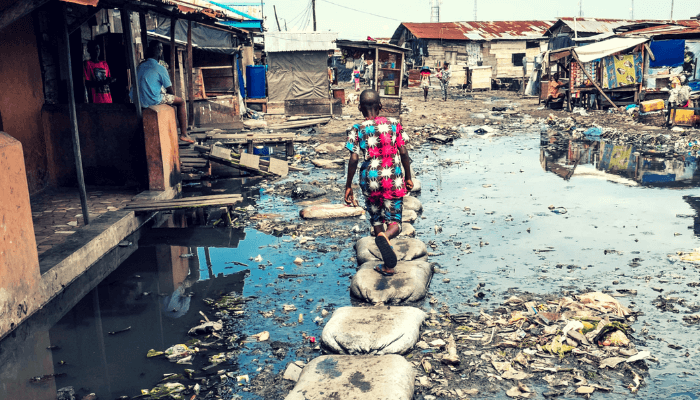
Let’s stop sugarcoating it. Nigeria’s leaders have failed the very people they swore to serve. The signs are everywhere. Millions go to bed hungry, communities are under constant threat from bandits and terrorists, and families bury loved ones over avoidable tragedies. The cry from the North to the South is the same: “Where is the government?”
For decades, we have watched politicians campaign with promises and disappear after elections. We have listened to speeches full of hope, only to wake up to worsening hardship. Whether in education, healthcare, security, or the economy, Nigerians are primarily left to fend for themselves in a country that seems to work only for the elite.
Electricity is unstable. Public schools are underfunded. Hospitals lack basic equipment. Roads are death traps. Jobs are scarce. The police often protect the rich while the poor face brutality. The gap between government and the governed has become dangerously wide.
But the failure didn’t start yesterday. It results from years of corruption, mismanagement, and lack of vision. Successive governments, both military and civilian, have chipped away at the country’s foundations while enriching themselves. The civil service, once respected, is now known more for inefficiency and bribery than service delivery.
What’s worse is that people have grown tired. Tired of voting without results. Tired of protesting with no response. Tired of hoping for leaders who never come. This fatigue is dangerous because when people lose faith in the system, they seek alternatives. And that is where chaos begins.
Still, all hope is not lost. The first step is honesty. We need to admit that things are not okay. Then, we must demand better. Louder. Consistently. In unity. Good governance doesn’t happen by chance. It happens when citizens hold leaders accountable during elections and every day after.
Nigeria is not poor. Nigerians are not lazy. The failure lies in a leadership that treats public service like a private business. Until that changes, the suffering will continue. But if the people find their voice and use it, we may turn this broken system into something that works for all.
Muhammad Umar Shehu wrote from Gombe and can be reached via umarmuhammadshehu2@gmail.com.